-
-
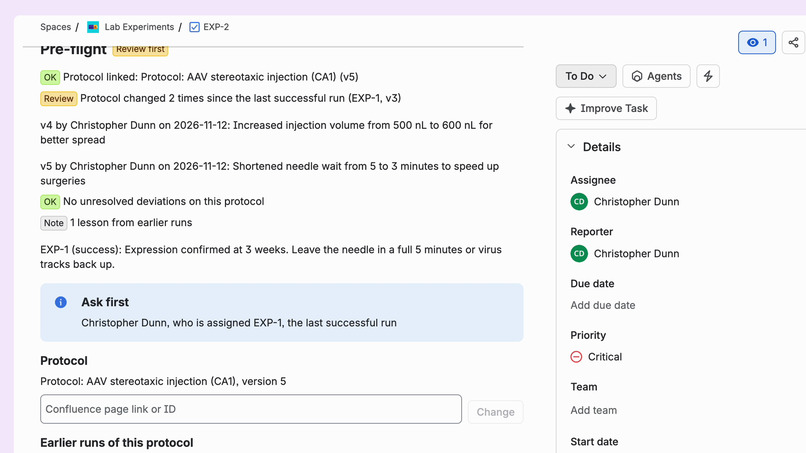
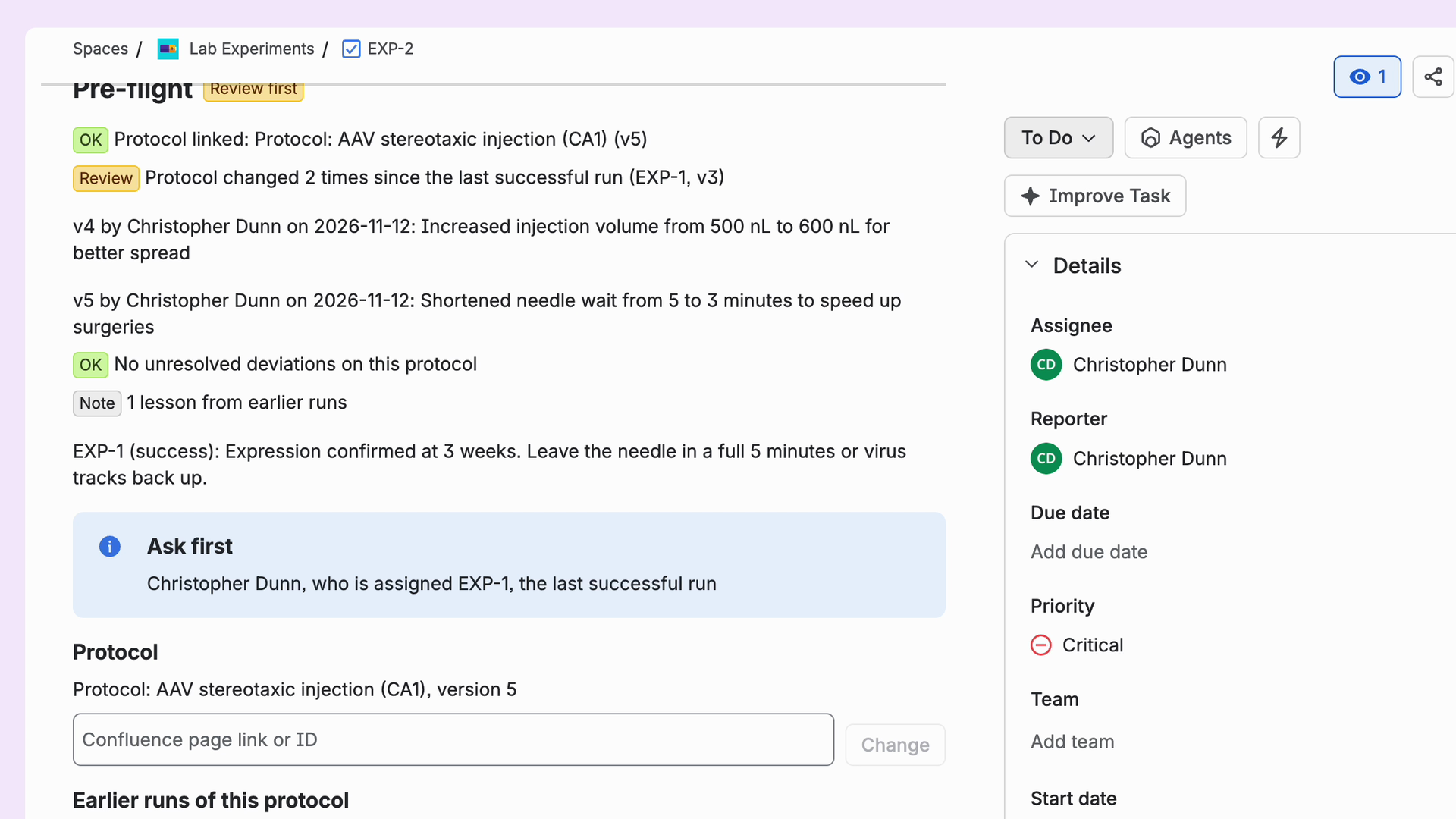
Review first: the protocol changed twice since the last successful run, right above the lesson the new edit contradicts
-
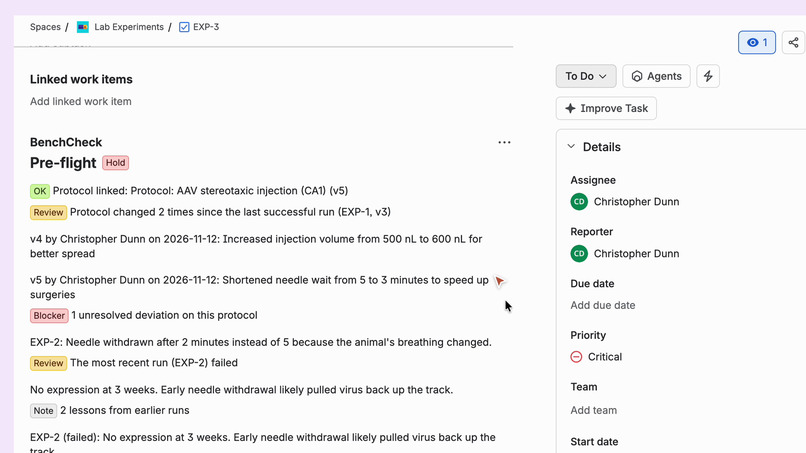
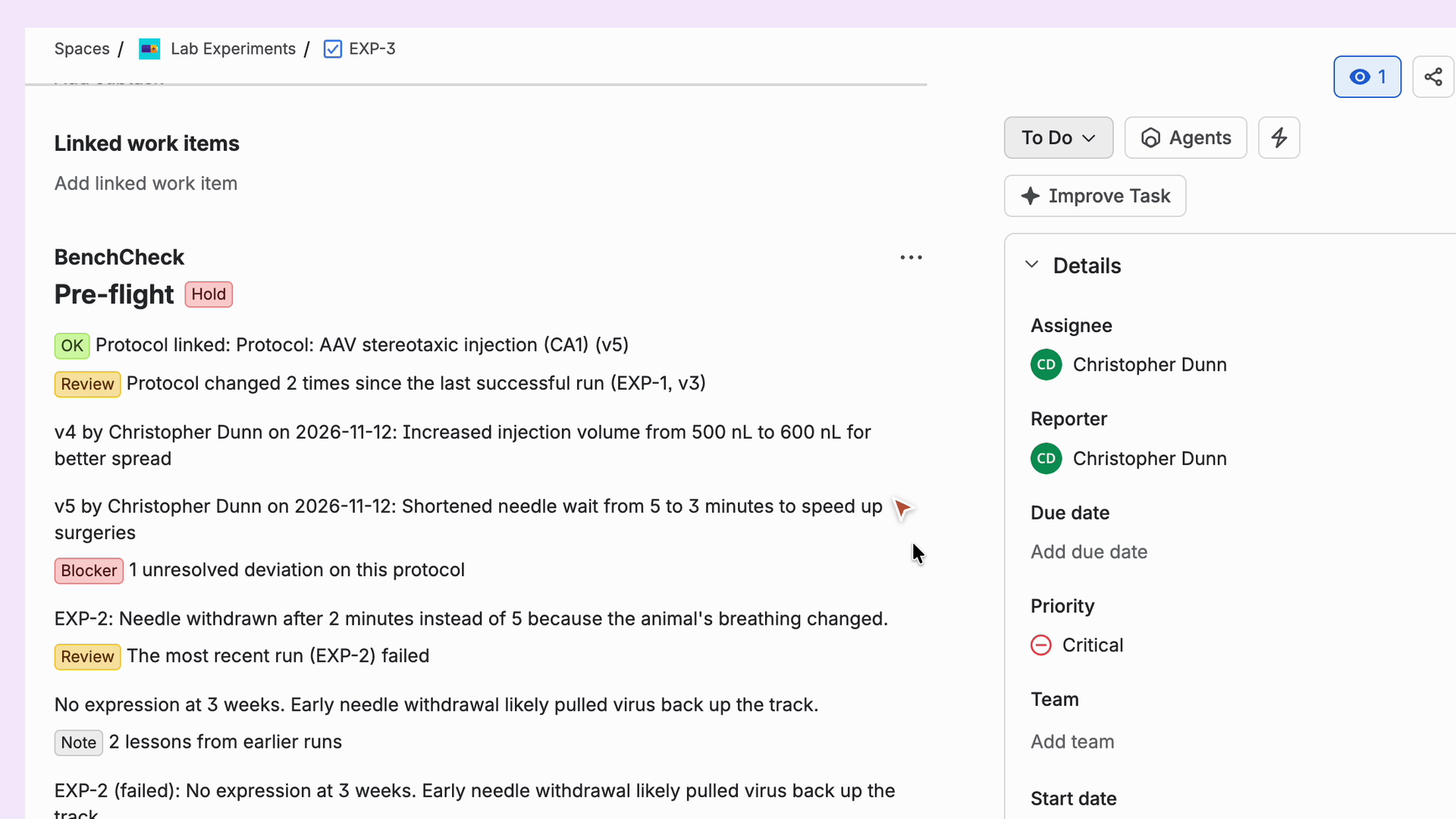
Hold: an unresolved deviation and a failed last run block the next attempt
-
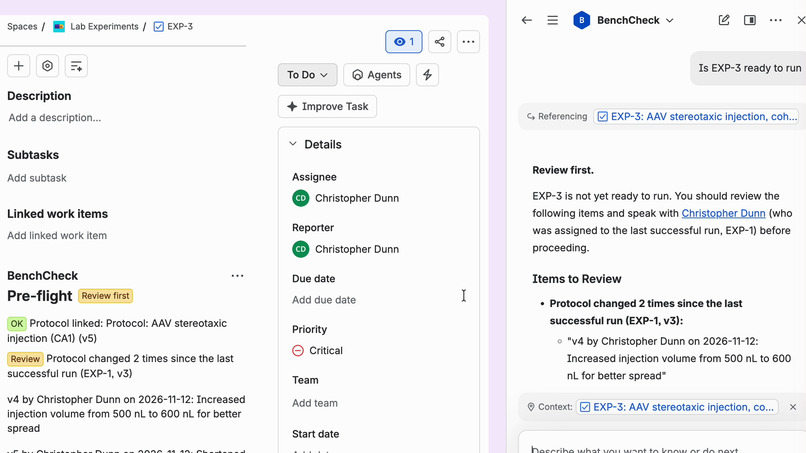
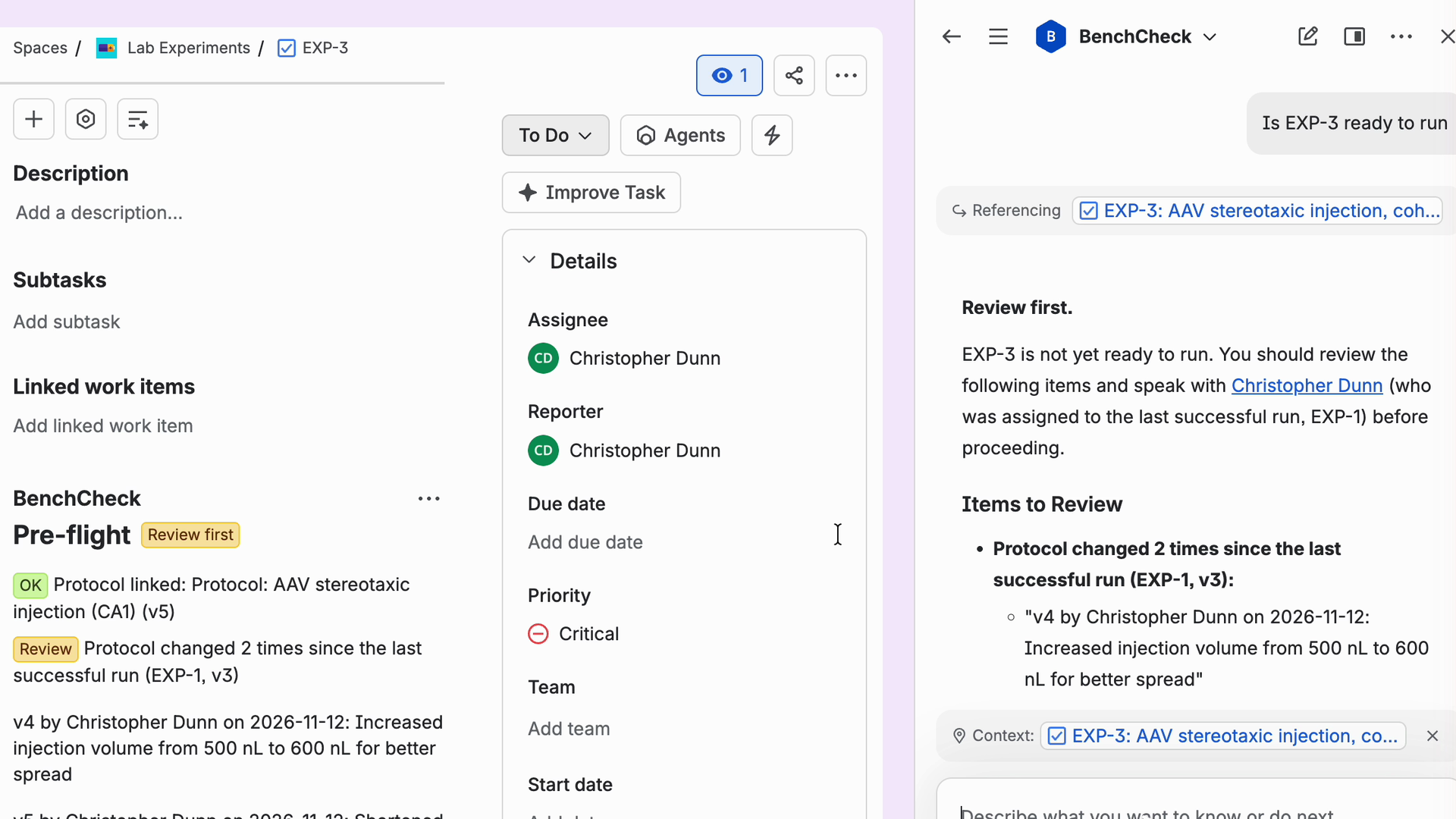
The BenchCheck Rovo agent answering "Is EXP-3 ready to run?"
-
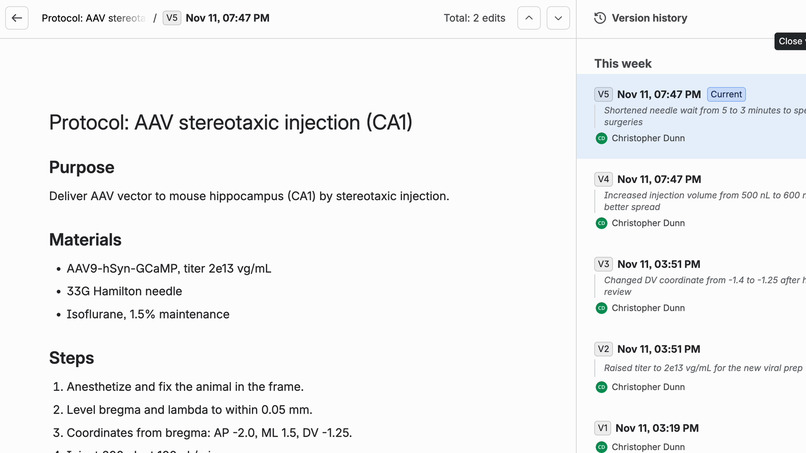
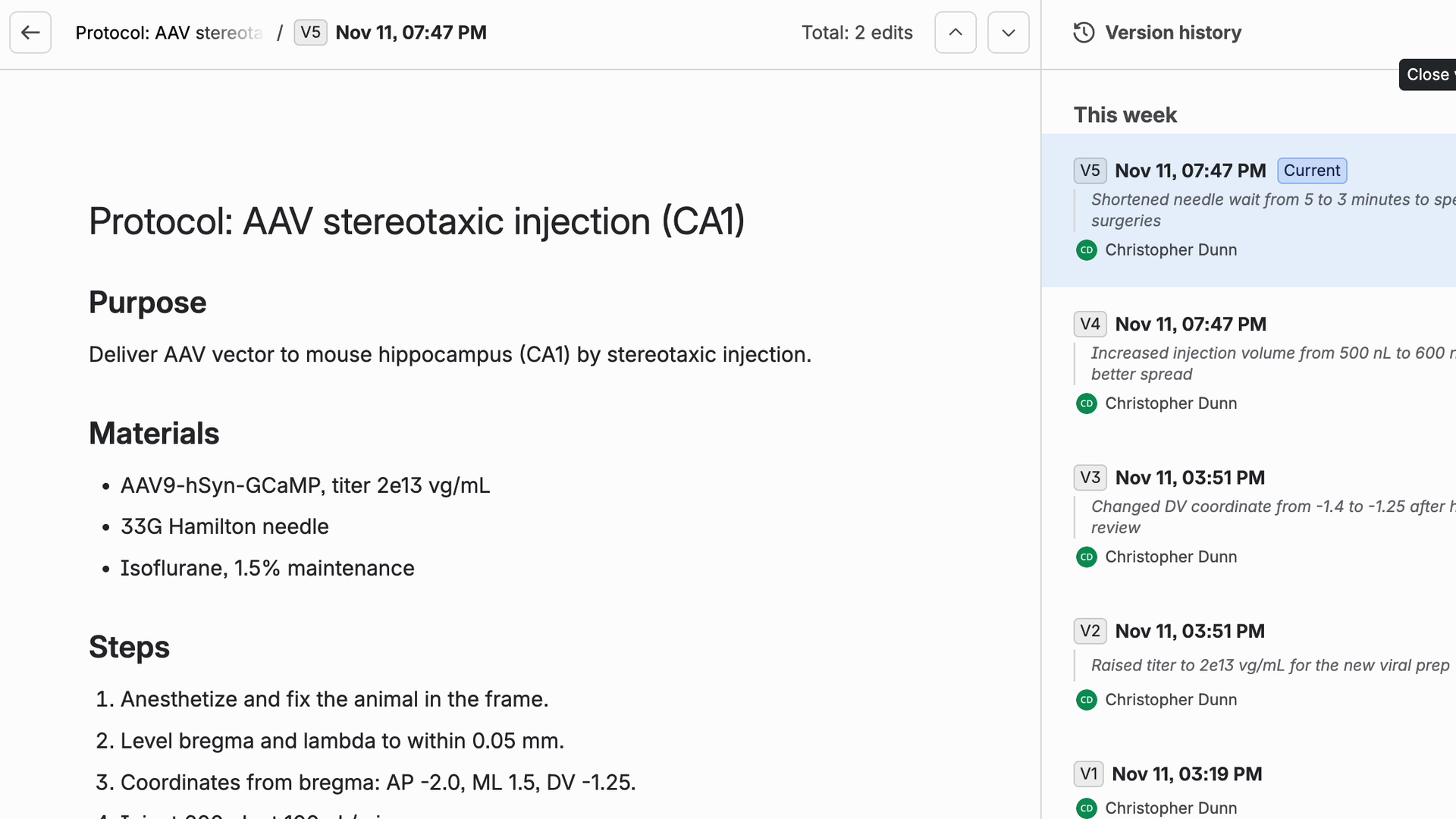
The Confluence protocol's version history that BenchCheck reads
Inspiration
In a research lab, one failed experiment can cost weeks: animals, reagents, a viral prep, a booked instrument. Many failures repeat an earlier one. Someone edited the protocol since the last run that worked. A problem from last time was noted in someone's head and never fixed. The person who knew the trick isn't in the room.
Labs already keep protocols in Confluence and track experiments as tickets. The knowledge needed to avoid the repeat is in those two places. Nobody puts it together at the moment it matters, right before the run starts.
What it does
BenchCheck adds a pre-flight panel to every experiment ticket in Jira. Link the Confluence protocol the run follows, and BenchCheck gives one verdict: Ready to run, Review first or Hold.
Behind the verdict:
- Protocol drift. Every recorded run snapshots the protocol version it followed. BenchCheck compares the current page against the last successful run and lists every edit since, with who made it, when and their change note. "Shortened needle wait from 5 to 3 minutes to speed up surgeries", sitting right above the last success's lesson to leave the needle in a full 5 minutes, is exactly what you want to read before you inject.
- Open deviations block. Log a deviation on any run ("needle withdrawn after 2 minutes instead of 5"). Until someone resolves it, every later run of that protocol is on Hold.
- The last run failed. If the most recent attempt failed, that is flagged with its lesson.
- Lessons from earlier runs. Every run's outcome and lesson, newest first, in a history table.
- Ask first. Whoever is assigned the last successful run, then who wrote the protocol (from Teamwork Graph).
The same checks are available to a Rovo agent. Ask "Is EXP-2 ready to run?" and it answers with the verdict and quotes the protocol edits exactly. It can also link protocols, log deviations and record outcomes, and repeats back what it will record before doing it. The actions are also exposed as MCP tools.
How we built it
- Forge, runs on Atlassian. A UI Kit issue panel, Forge functions behind it and behind each agent action, and Forge key-value storage for runs and deviations. No external servers; all data stays on the platform.
- Jira + Confluence in one app. Jira is the required product and Confluence optional, so one install reads protocol pages and their version history (
/wiki/api/v2/pages/{id}/versions). All calls run as the current user, so nobody sees a page through BenchCheck that they couldn't open themselves. - Teamwork Graph. The curated
confluencePageContributorsquery names the people who wrote the protocol. - Rovo. A
rovo:agentwith five actions (get pre-flight report, get run history, link protocol, log deviation, record outcome) and arovo:skillplaybook that tells the agent to lead with the verdict, never call a Hold safe, and never invent versions or names. - MCP. A
rovo:mcpmodule exposes the same actions as tools for other agents. - No personal data. Names are read live from Jira, Confluence and Teamwork Graph and never stored.
- Tested logic. The verdict engine is a pure module with 16 unit tests covering drift from the last successful run (not the last run), same-day ordering, resolved vs open deviations, and first runs. GitHub Actions runs the linter, a type check and the tests on every push.
Challenges we ran into
- Measuring drift from the right baseline. Comparing against the previous run is wrong: if the last run failed, its protocol version is the suspect. BenchCheck measures from the last run that worked.
- Same-day runs. Ordering by date alone got two runs on the same day backwards. Runs now store a full timestamp.
- UI Kit text fields dropped keystrokes when controlled; they are uncontrolled and remount to clear.
Accomplishments we're proud of
- The full loop works on a live site: link a protocol, record a success, edit the protocol twice, and the next run's panel and the Rovo agent both say "Review first" and list both edits verbatim.
- Logging a deviation on one run puts the next run on Hold; resolving it lifts the hold.
What we learned
Most of the value is in when information shows up, not in collecting more of it. The protocol history was always in Confluence; it just never appeared on the ticket at the moment someone was about to start.
What's next
- Jira workflow validator: block the "Start run" transition while the verdict is Hold.
- Snapshot reagent lot numbers and instrument IDs with each run, and flag changes the same way.
- Marketplace listing.
Built With
- confluence
- forge
- javascript
- jira
- mcp
- react
- rovo
- teamwork-graph
