-
-
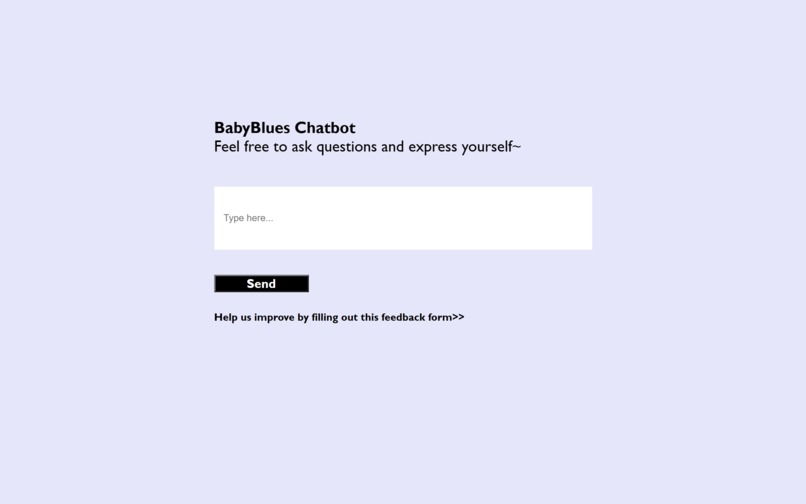
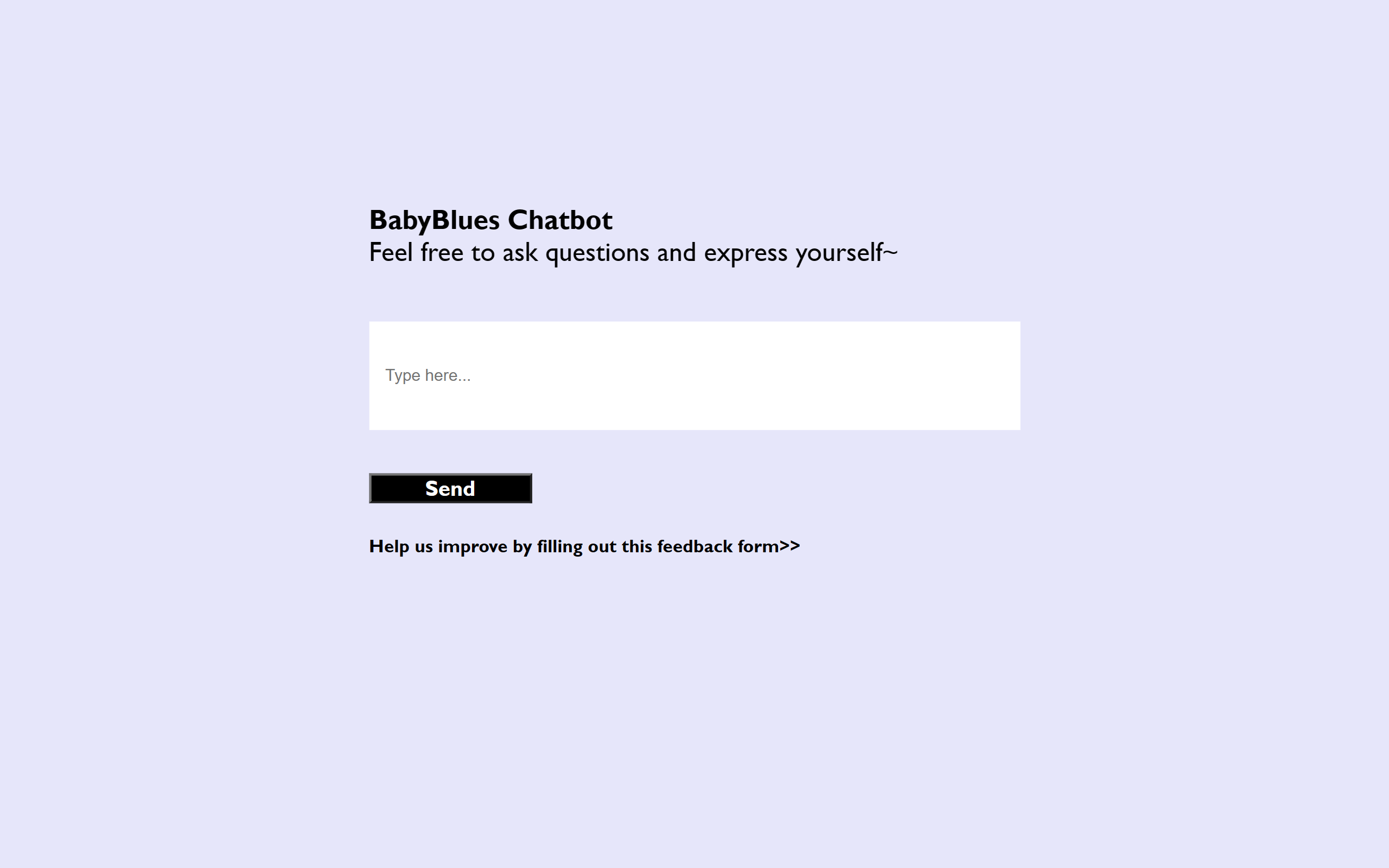
BabyBluesBot Website Home Page
-
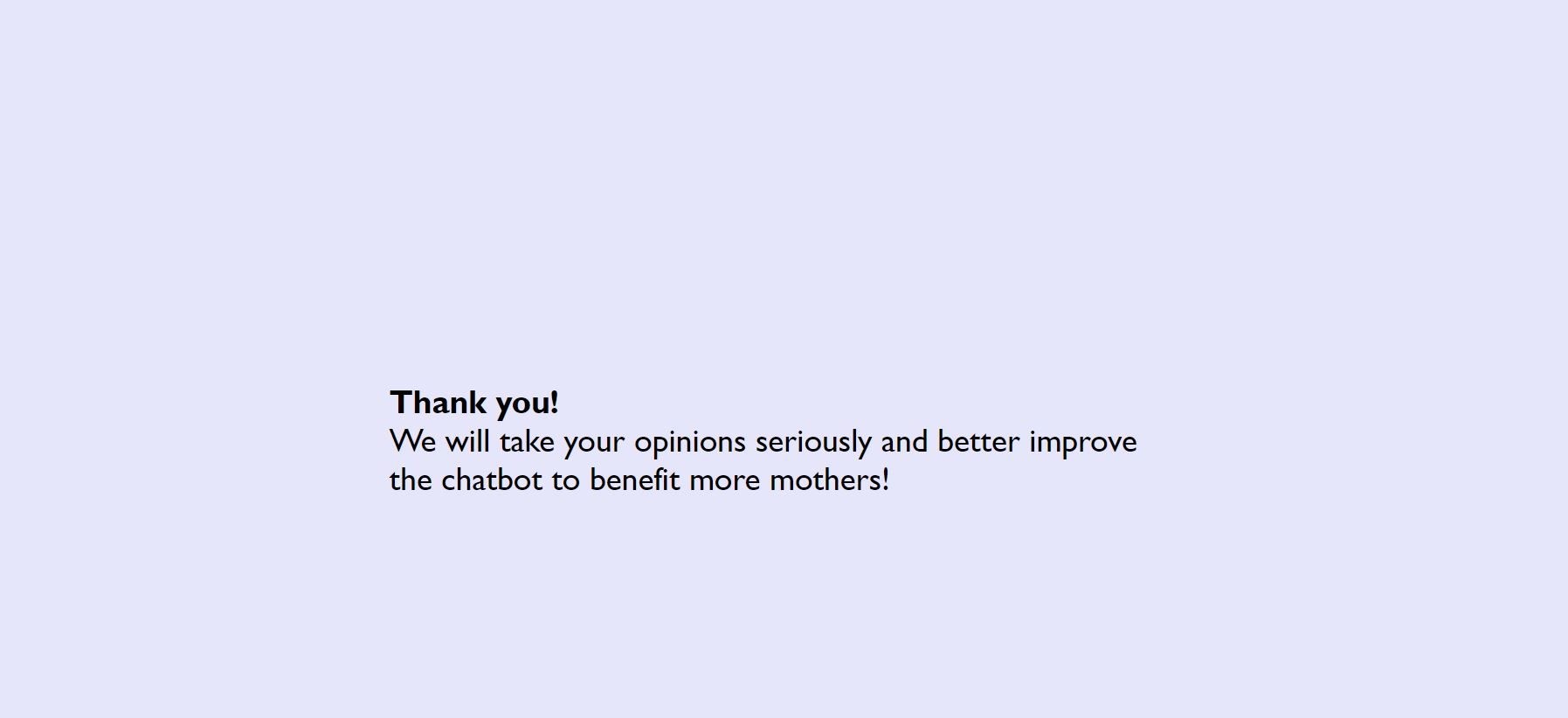
BabyBluesBot Website Submission Page
-
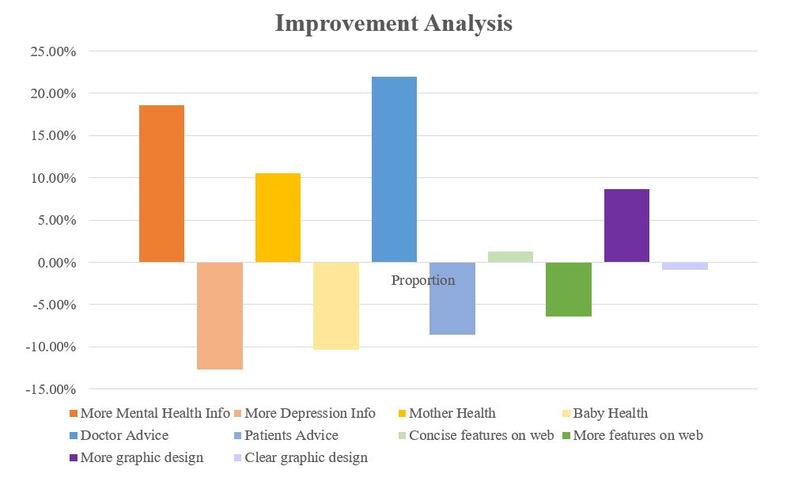
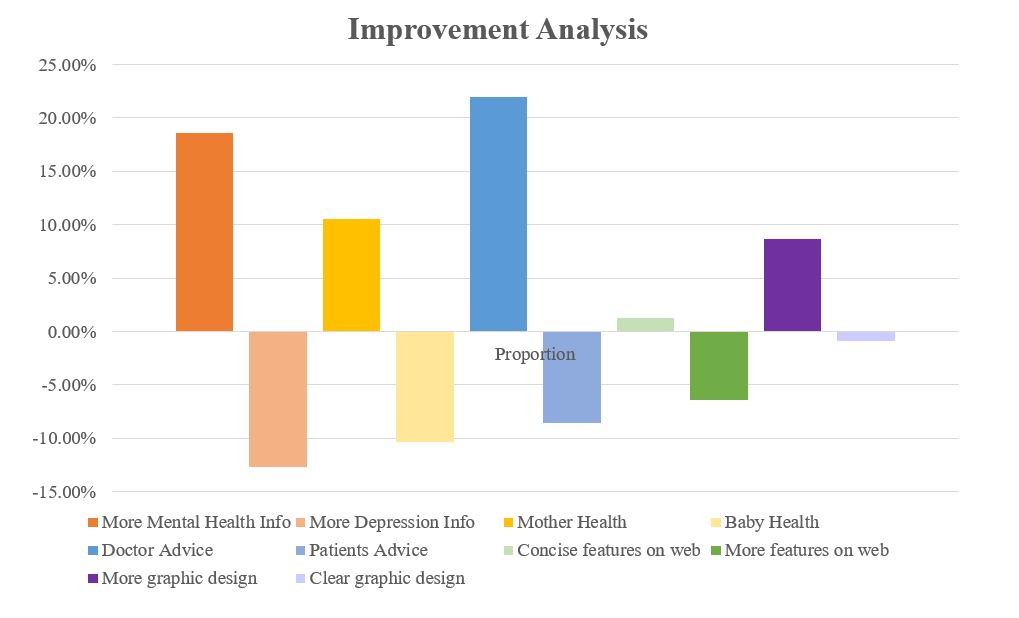
Data Visualization of Improvement
-
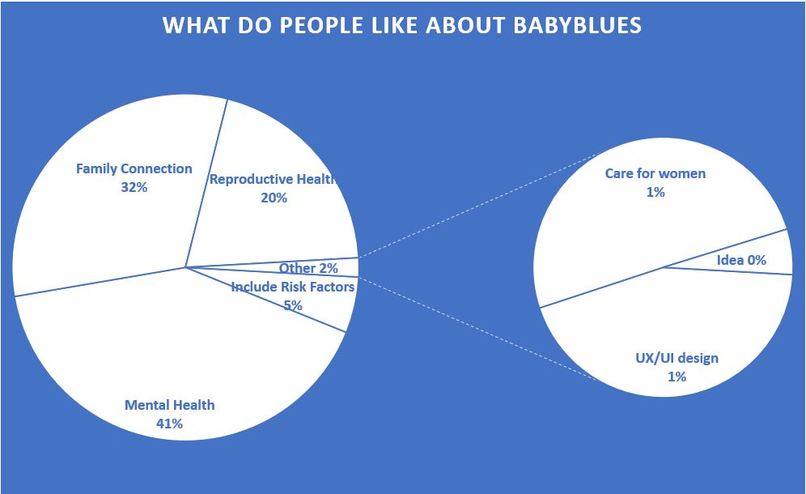
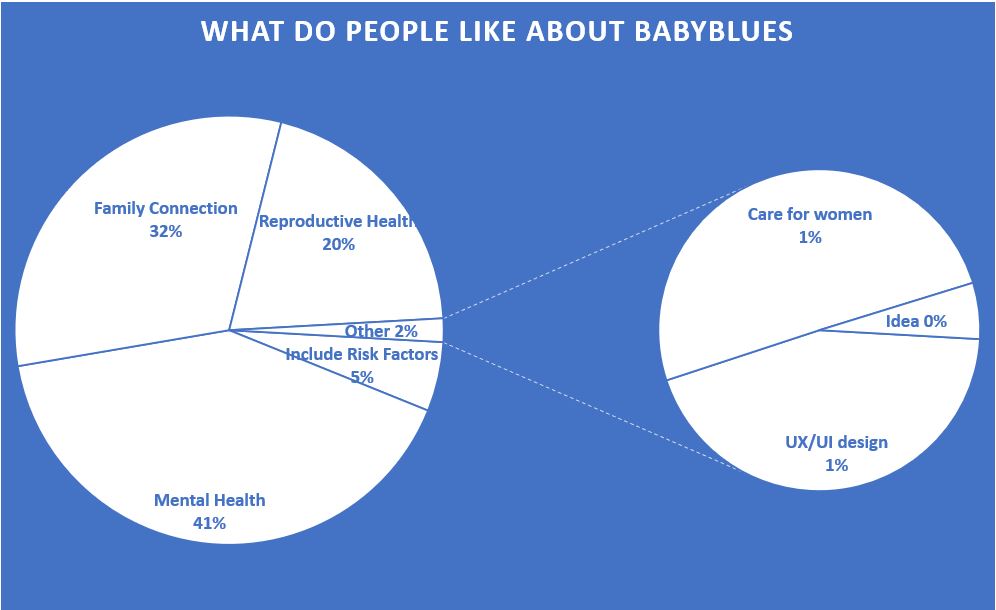
Data Visualization of Likable Features
-
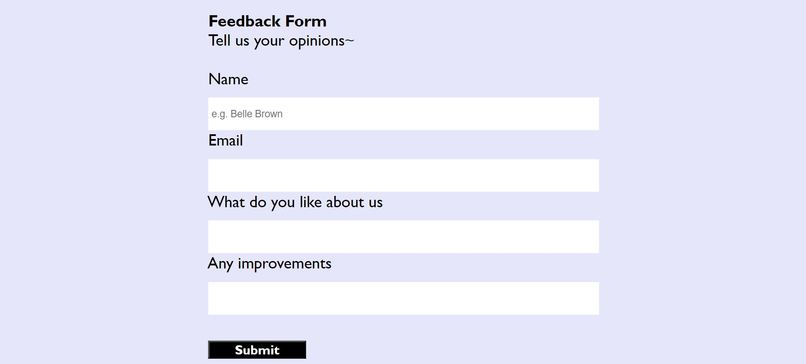
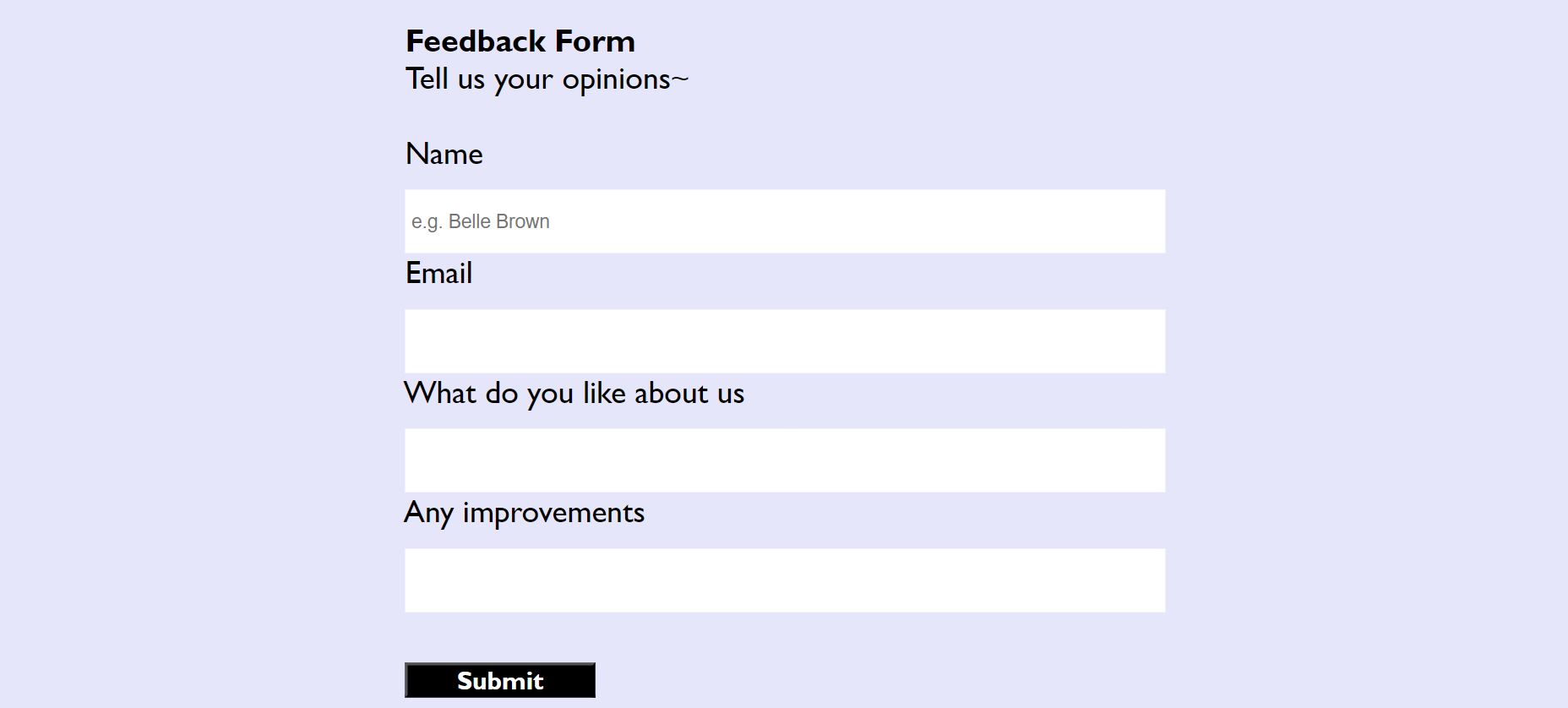
BabyBluesBot Website Feedback Page
Inspiration
I was inspired when I learned how presumed instincts that ostensibly allow mothers to create special bonds with their babies didn’t come as expected. Realizing that the dominant vision of motherhood is just an ideal expectation, I created videos to discuss fertility and my idea to use an AI chatbot to address the disproportionate lack of attention to reproductive health, which achieved 25k+ viewers. My video's popularity revealed to me that post-natal depression is still not normalized in society, and that more attention should be given to reproductive health.
What it does
I incorporated my passion in healthcare with AI model and implemented an AI chatbot in a full-stack website to bring mental and physical care for new mothers. The website features an AI chatbot which could answer questions about symptoms of post-natal depression, treatments of post-natal depression, and how family members can support new mothers. Responses would be given in real-time as users type in their questions or concerns. Another feedback page is incorporated to collect user experience to upgrade the AI chatbot database every 2 weeks.
How I built it
I first built the AI Chatbot prototype with Large Language model using PyTorch on Google Colab platform and databricks. I performed multiple algorithms from linear regression to logistic regression and adjusted loss function and evaluation metrics to maximize the accuracy of the model and optimized its prediction by minimizing the loss. I conducted preliminary UX/UI research by designing human-centered surveys and interviews to analyze the consumer personas and create prototype for transition animation and function logic flow before implementing the frontend design and machine learning model. To implement the AI Chatbot in website, I decided to use python to build the main web page, HTML as the framework, CSS as the styling, and JavaScript to execute the function for chatbox and buttons. To deploy the website, I utilized pickle to store model information, JSON files to contain my data to train the large language model, and Flask as the development server.
Challenges I ran into
To connect AI Chatbot with the web pages, the research process almost took me two whole days to finalize my ideal strategies, which is to create website using python and deploy it by Flask. Because want the website to have the best performance and stability, I tried multiple development server like Render, Pythonanywhere, and Heroku. Some are hard to deploy a machine learning model within the pages, some have size capacity that could not import the whole torch library. Finally, I found the optimal approach for my current web design and carried out the project.
Accomplishments that I'm proud of
I took proud in the two unique aspects of my project.
- My project looks into the interdisciplinary field of healthcare and AI, which can bring real-life social impact for women's health and wellness. I felt so encouraged that the idea of an AI chatbot for post-natal mothers has caught the attention of 25k+ people and 460+ mothers did try on the website function during my development stages.
- The model is constantly improving based on survey results and responses. As to improve the model of AI chatbot, I initiated online support group for 460+ mothers to try out the AI chatbot and fill out response forms for feedback and improvement. The feedbacks are collected by Segment to help me develop user profiles and connect websites or apps with analytic platforms and warehouses like Google Analytics to assess user’s interest, tendency, and demand from a heap of raw data and hence personalize their experience from email. Based on these feedbacks, I would also renew the JSON file every two weeks to improve AI chatbot model to better meet the need of our targeted users.
What I learned
I learned approaches to deploy machine learning model and specfically how to connect machine learning model with web pages using Flask. I first explored how to use python to create website since my previous experience to create full-stack websites mostly used HTML/CSS. Furthermore, I learned how to create connections between my website and data analytic platform using Segment to better collect user data for systematic analysis. Meanwhile, I also strengthened my skills in web development and machine learning model construction.
What's next for BabyBlues
I will connect and collaborate with doctors and health experts to further improve contents in the JSON file to train AI chatbot to answer more questions about reproductive health for mothers. Furthermore, I also noticed an emerging trend for mothers to care about their changing breast sizes during fertility and breastfeeding. I am now developing a "bra-size" calculator to digitize bra sizes and shapes to clarify ABCDEFG lettered cup system to help women find their most appropriate bras. This feature will be later implemented to the website as well.


Log in or sign up for Devpost to join the conversation.