



Inspiration
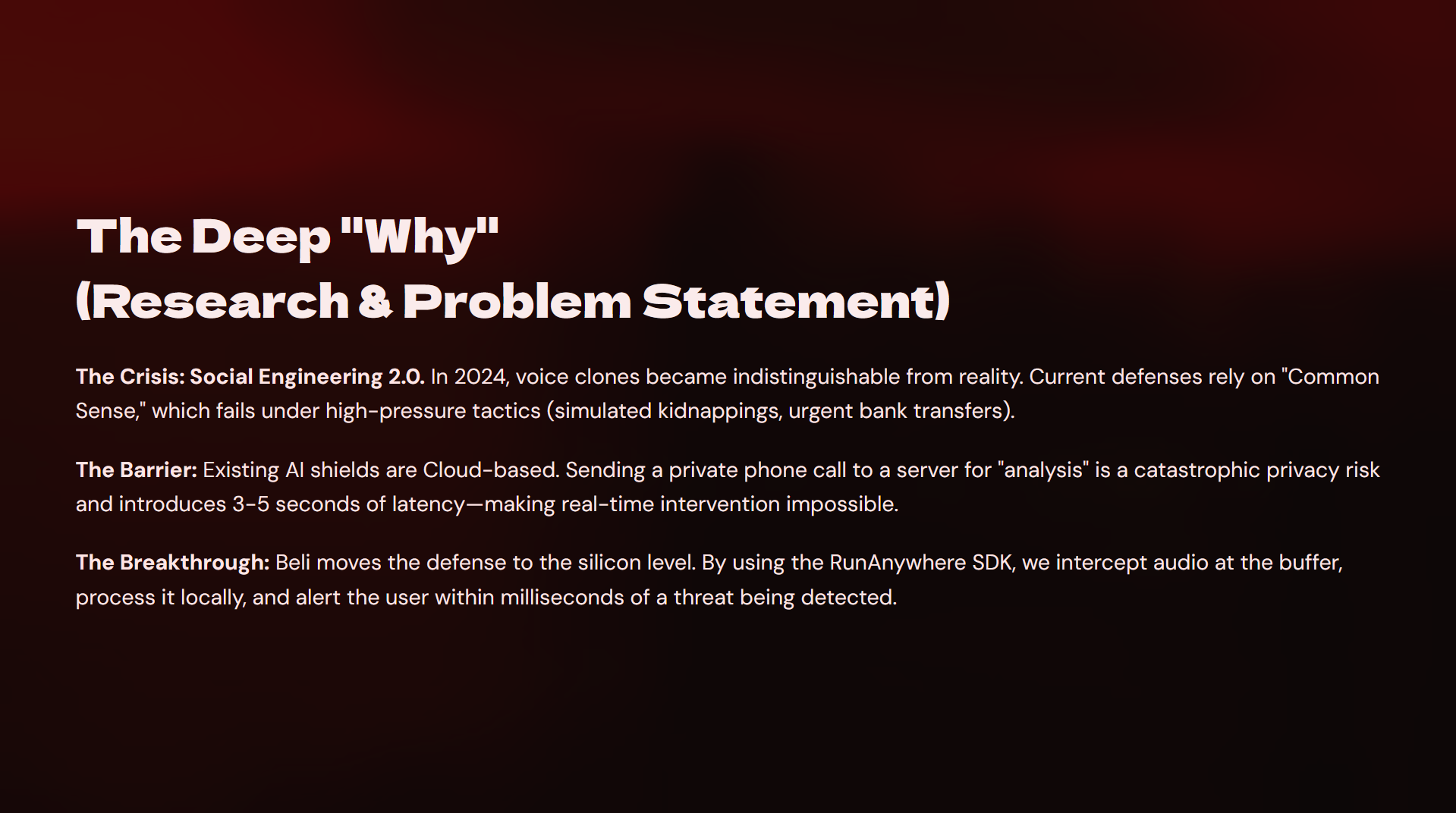
In 2024, fraud shifted from hacking systems to hacking people. AI-generated voices and high-pressure tactics began exploiting human trust during phone calls that feel completely real.
Most AI defenses today live in the cloud. They require sending private conversations to remote servers and introduce delays that make real-time protection ineffective. In moments of panic and urgency, even a few seconds of delay can lead to irreversible damage.
This sparked a simple ideathon thought:
What if a smartphone itself could understand malicious intent during a call, instantly, without the internet and without compromising privacy?
That idea became Beli. Beli means friend in Punjabi.
What it does
Beli is the on-device firewall for human conversations.
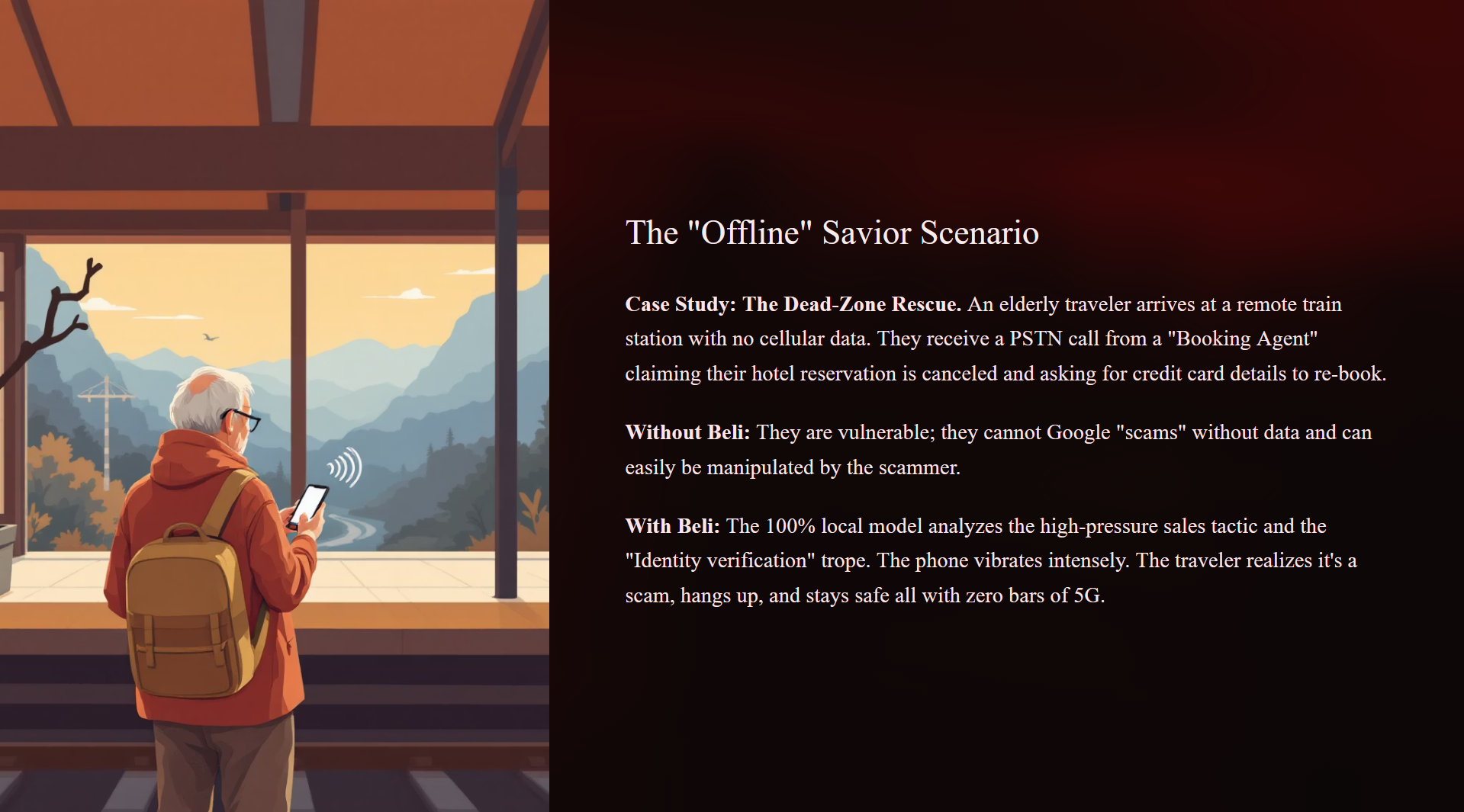
Beli is a conceptual system that would run silently during calls and analyze the caller’s speech locally on the device.
Instead of relying on blacklisted numbers or simple keyword spotting, Beli focuses on detecting psychological manipulation patterns such as:
- False urgency
- Authority impersonation
- Payment redirection requests
- Identity verification traps
If suspicious intent is detected, Beli would alert the user using discreet haptic vibration patterns, warning them without the caller realizing it.
The core principle is:
No internet. No cloud. No data leaving the device.
How we built it
We propose a realistic dual-engine edge AI pipeline that could run on modern smartphones:
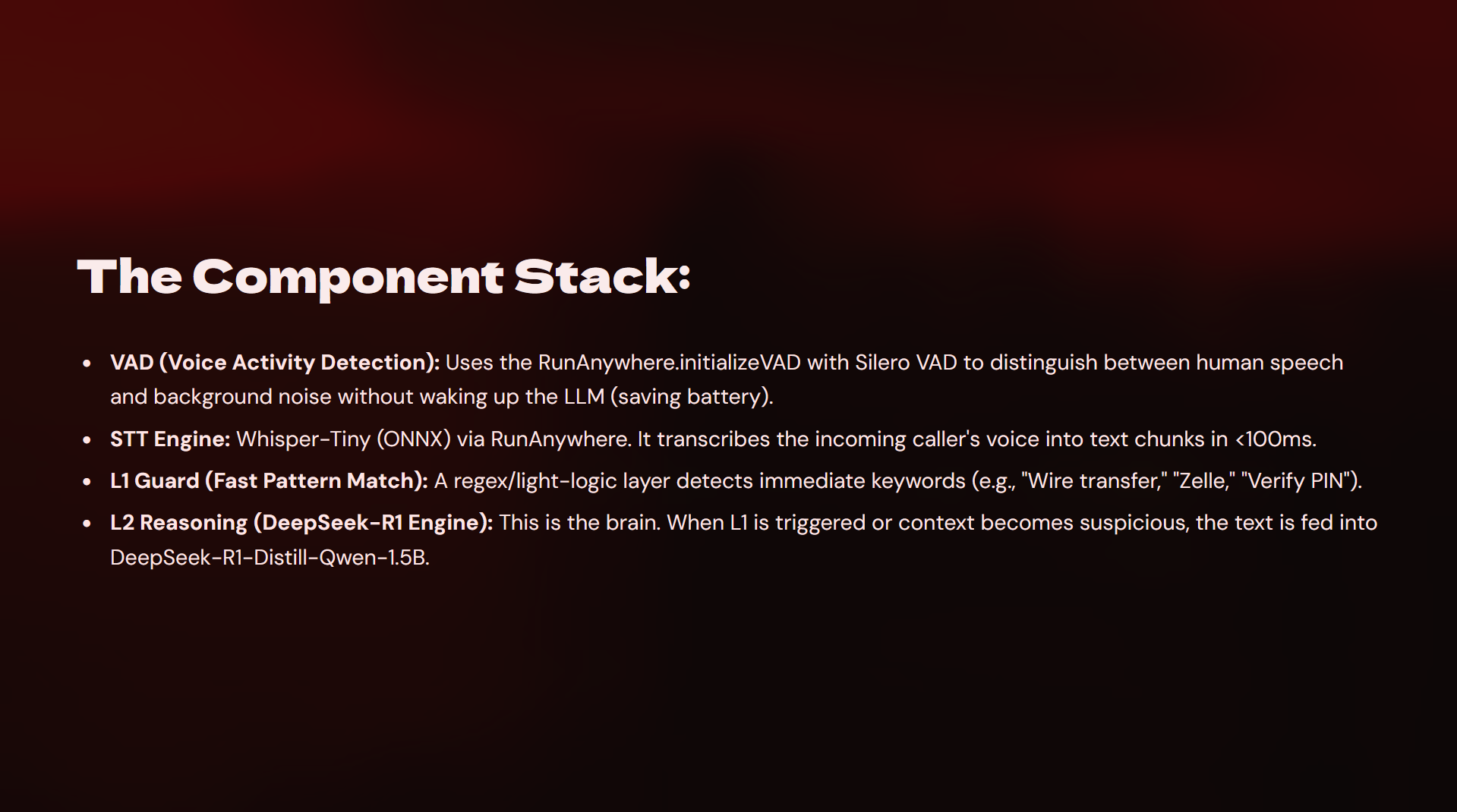
- Access call audio at the buffer level.
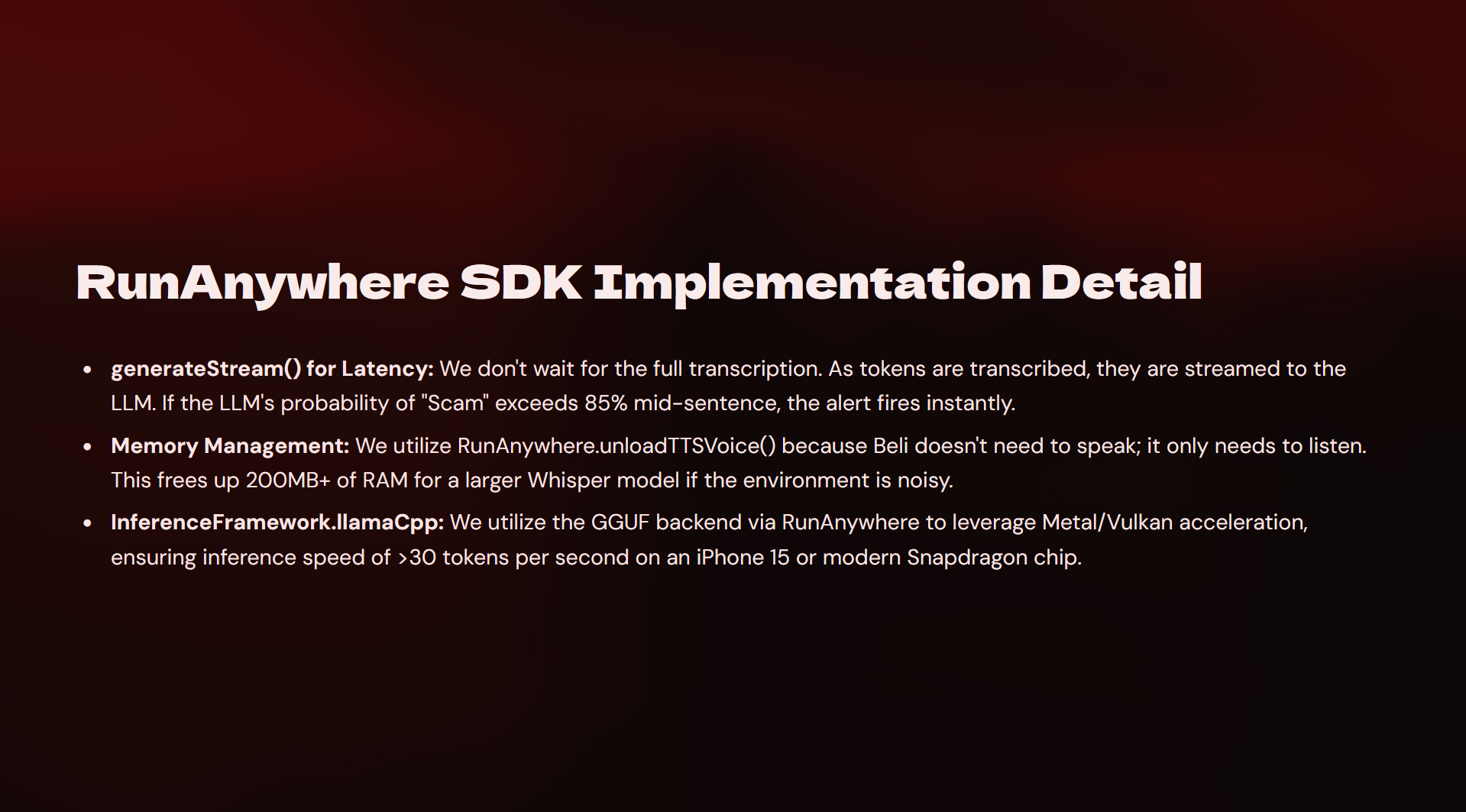
- Use Voice Activity Detection to activate only when speech is present.
- Convert speech to text in near real time using a lightweight on-device model.
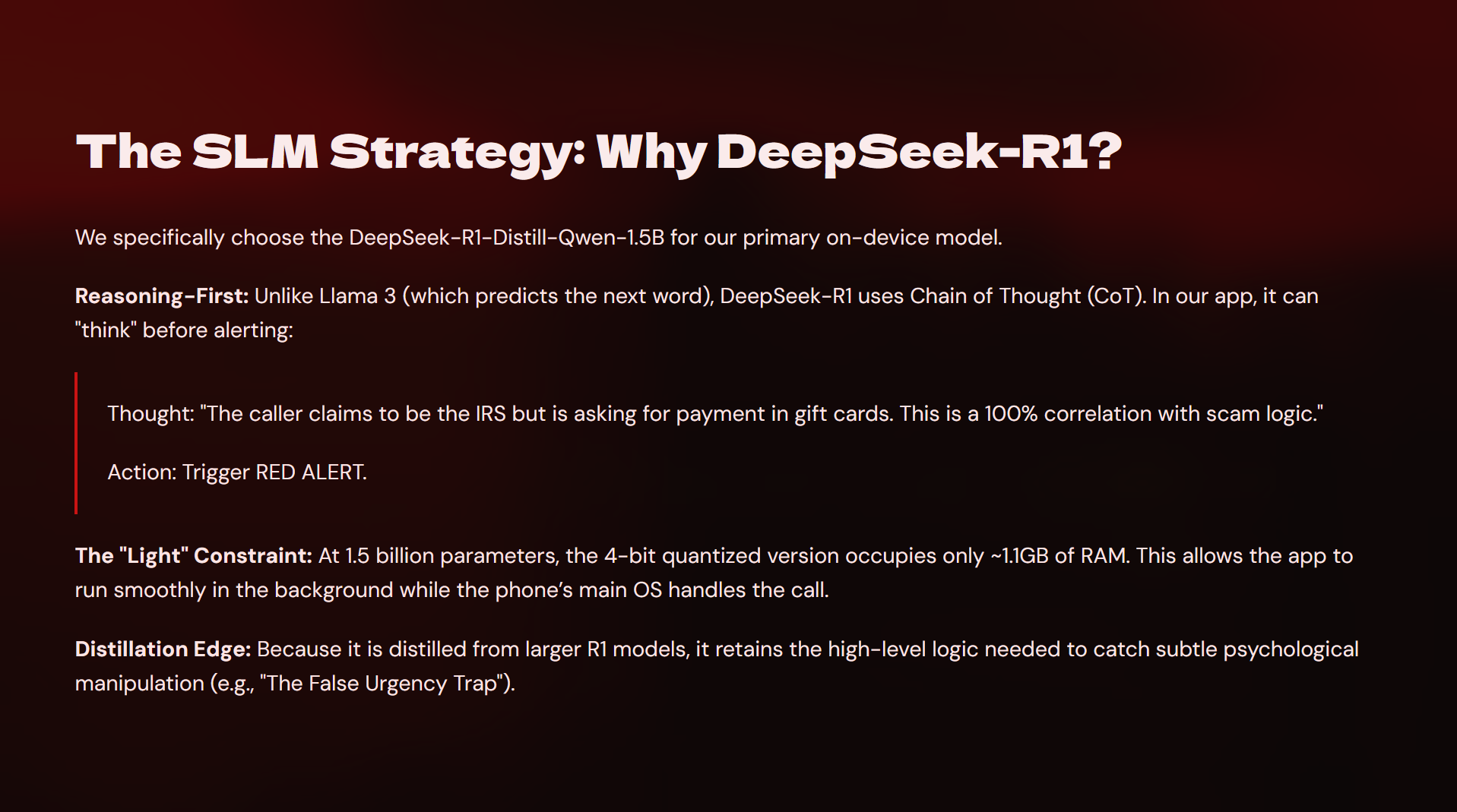
- Stream the transcription into a small reasoning-focused language model.
- Use a fast first layer for immediate risk phrases and a deeper reasoning layer for context evaluation.
- Deliver alerts through vibration patterns rather than screen notifications.
We also designed strict privacy rules where transcripts exist only in temporary memory and are deleted after the call.
Challenges we ran into
- Designing a system that balances low latency, low battery usage, and meaningful reasoning on-device.
- Moving from keyword detection to true intent detection.
- Thinking through how such deep integration would work within mobile OS constraints.
- Ensuring the user experience remains subtle and non-disruptive.
Accomplishments that we're proud of
- Creating a technically feasible architecture for real-time, offline scam detection.
- Framing privacy as an architectural guarantee rather than a promise.
- Identifying how small reasoning models could be used effectively for edge security.
- Designing a solution that works even in zero-network environments.
What we learned
- Real-time protection depends more on latency than model size.
- Reasoning capability is more important than general knowledge for scam detection.
- Subtle user alerts are critical in social engineering scenarios.
- Edge AI enables privacy-preserving protection that cloud AI cannot offer.
What's next for Beli
- Validating the concept through prototyping on real devices.
- Exploring multilingual scam detection.
- Researching synthetic voice fingerprinting techniques.
- Investigating how a privacy-preserving pattern-sharing network could enhance detection without sharing user data.
The long-term vision is to make every smartphone capable of protecting its user from social engineering attacks using only local intelligence.
My DiscordId- aryan_saxena
Built With
- runanywhere
- runanywheresdk

Log in or sign up for Devpost to join the conversation.