-
-
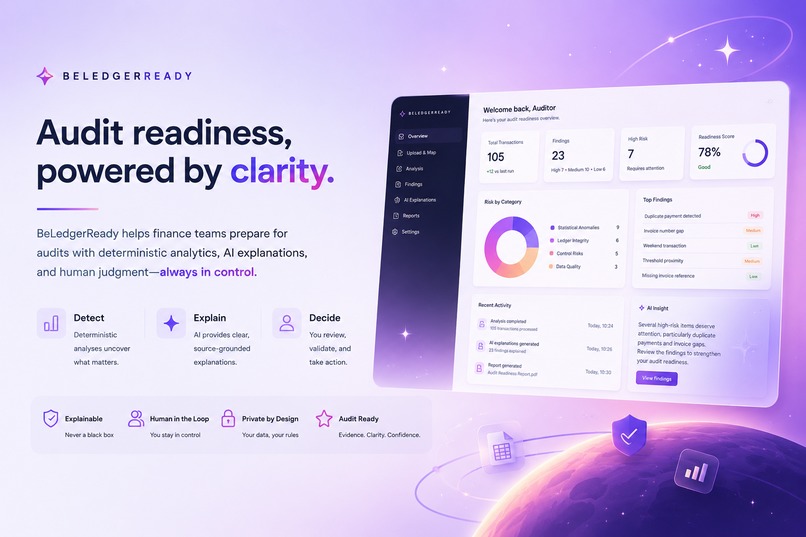
BeLedgerReady
-
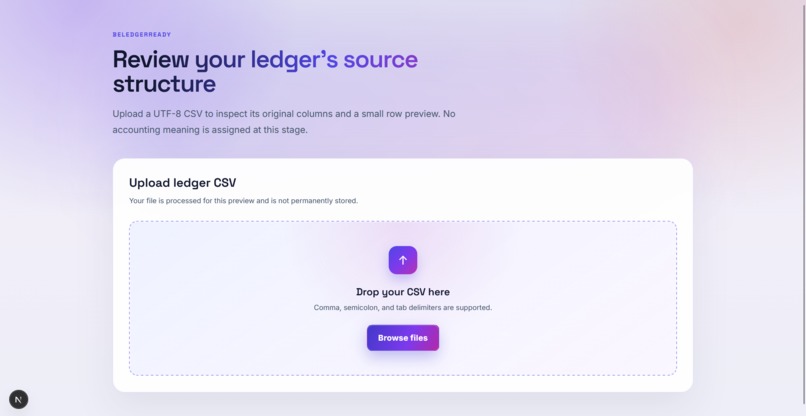
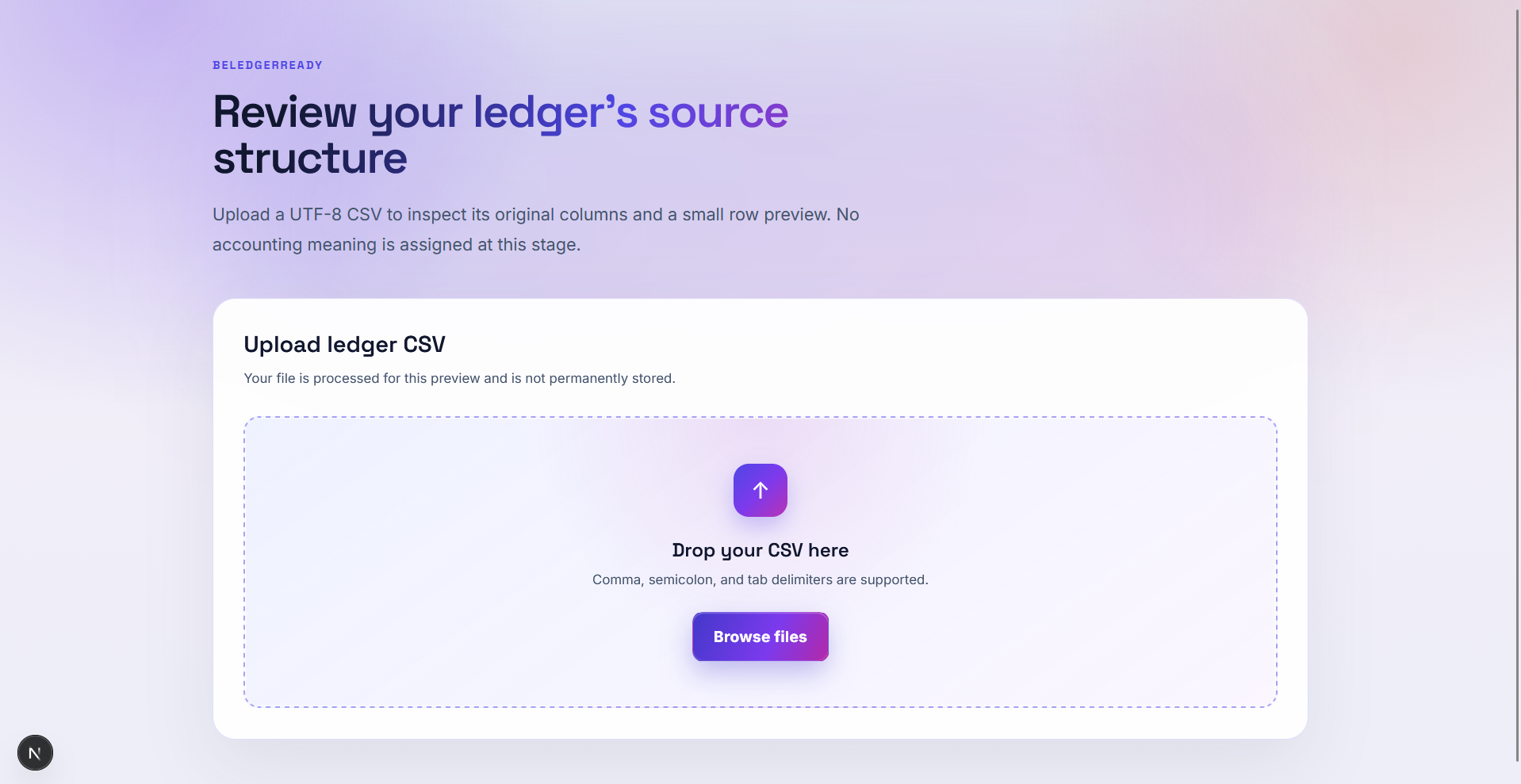
Upload a csv file
-
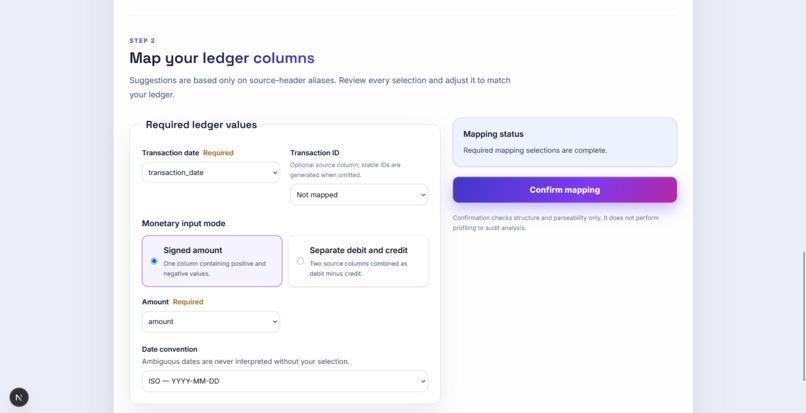
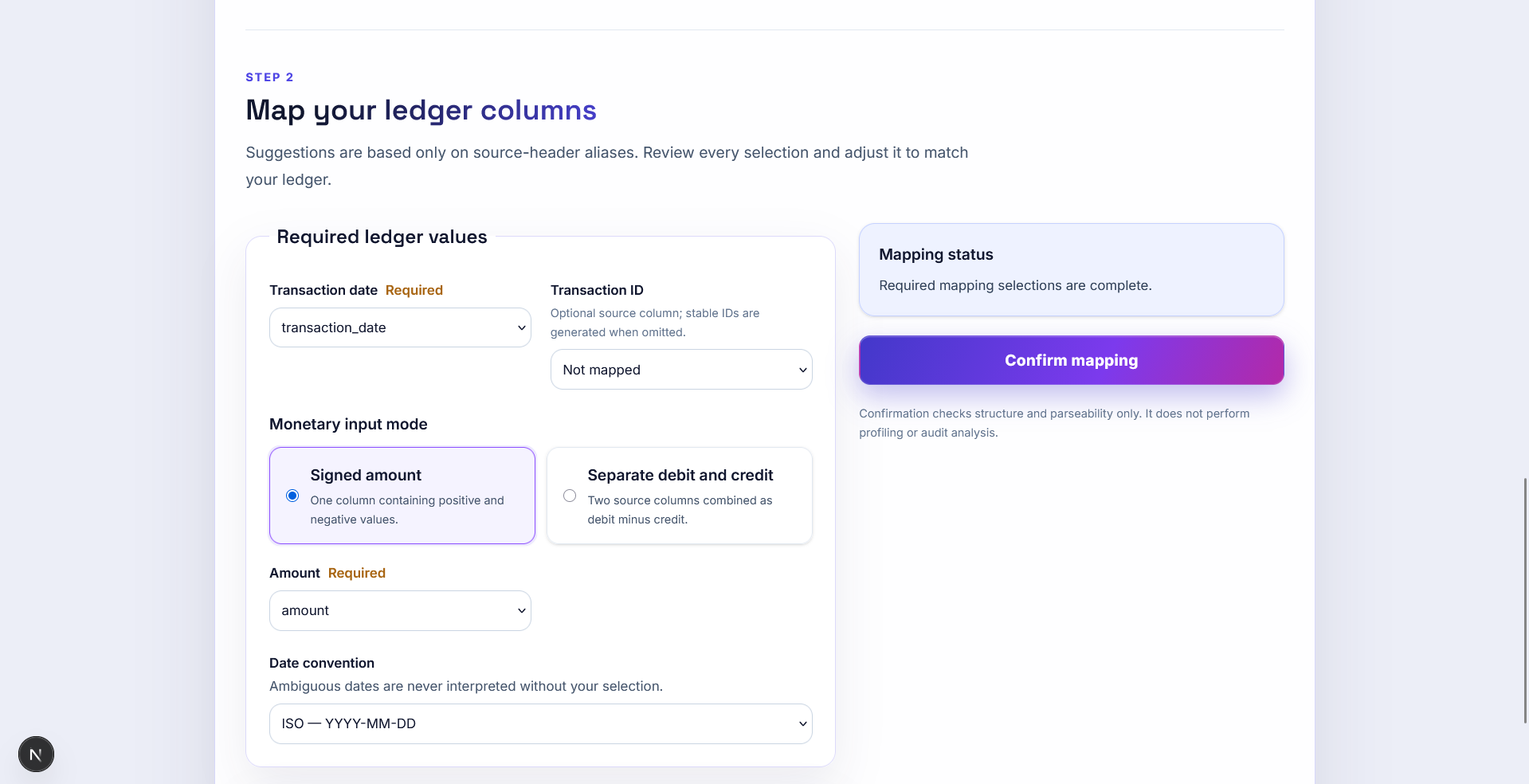
Map financial transaction data before analysis
-
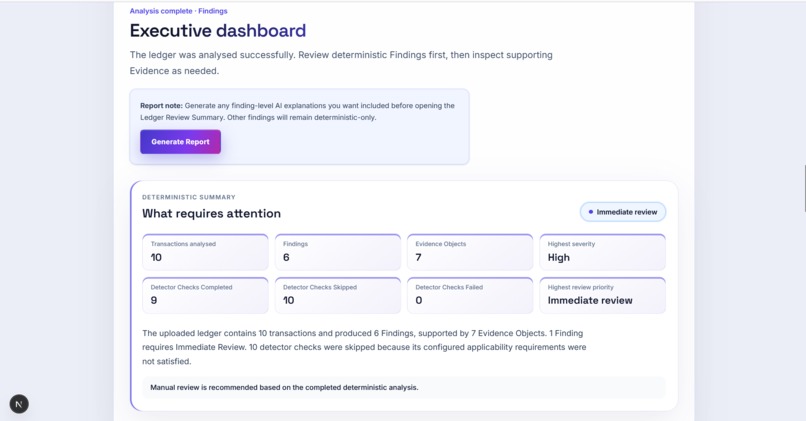
Deterministic audit-readiness analysis with transparent findings and risk indicators
-
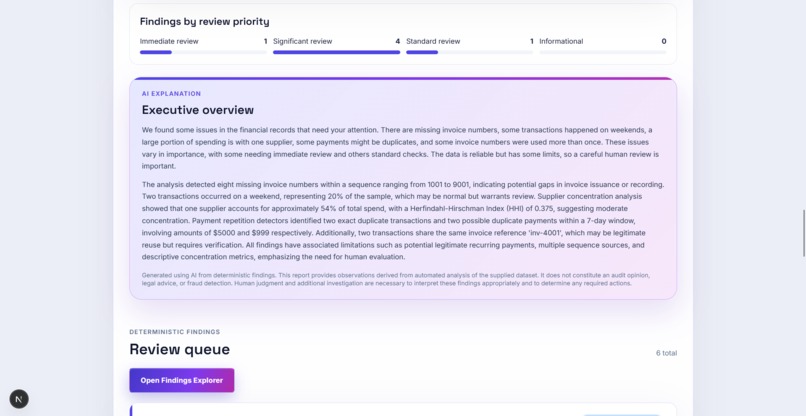
Every finding remains linked to its supporting evidence while AI provides clear, explainable summaries
-
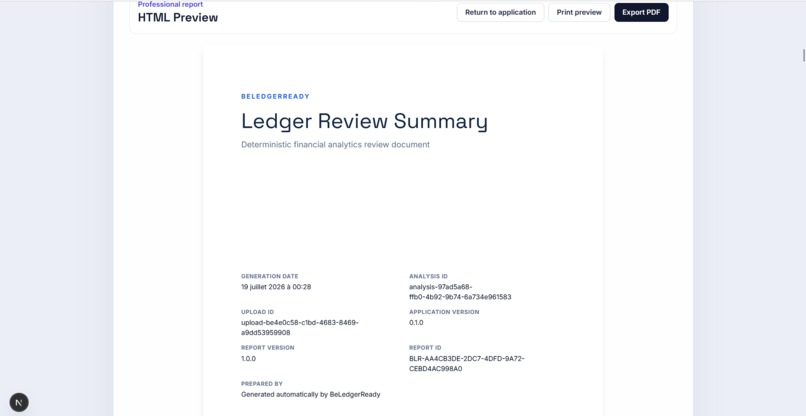
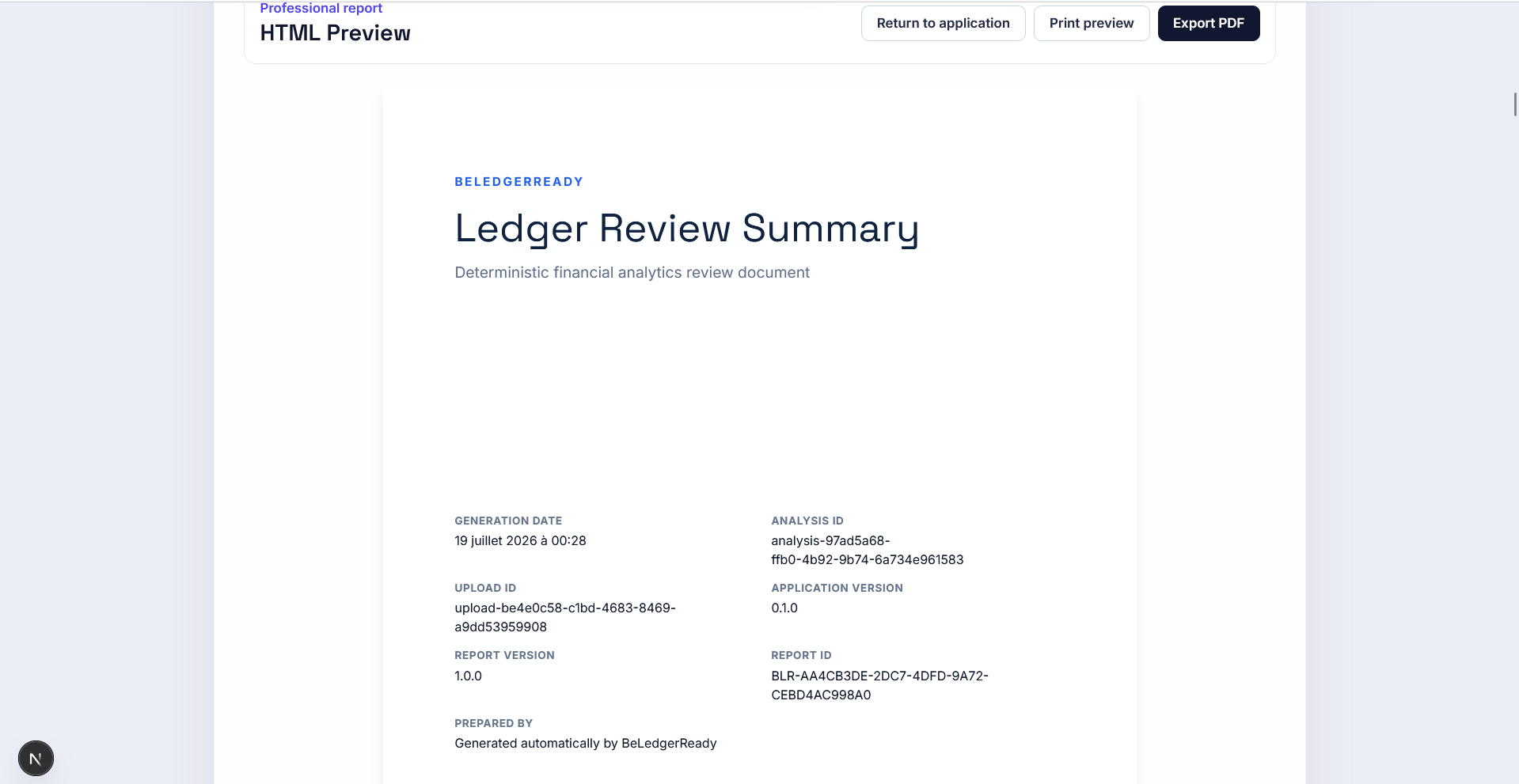
Generate professional audit readiness reports combining deterministic findings with optional AI explanations
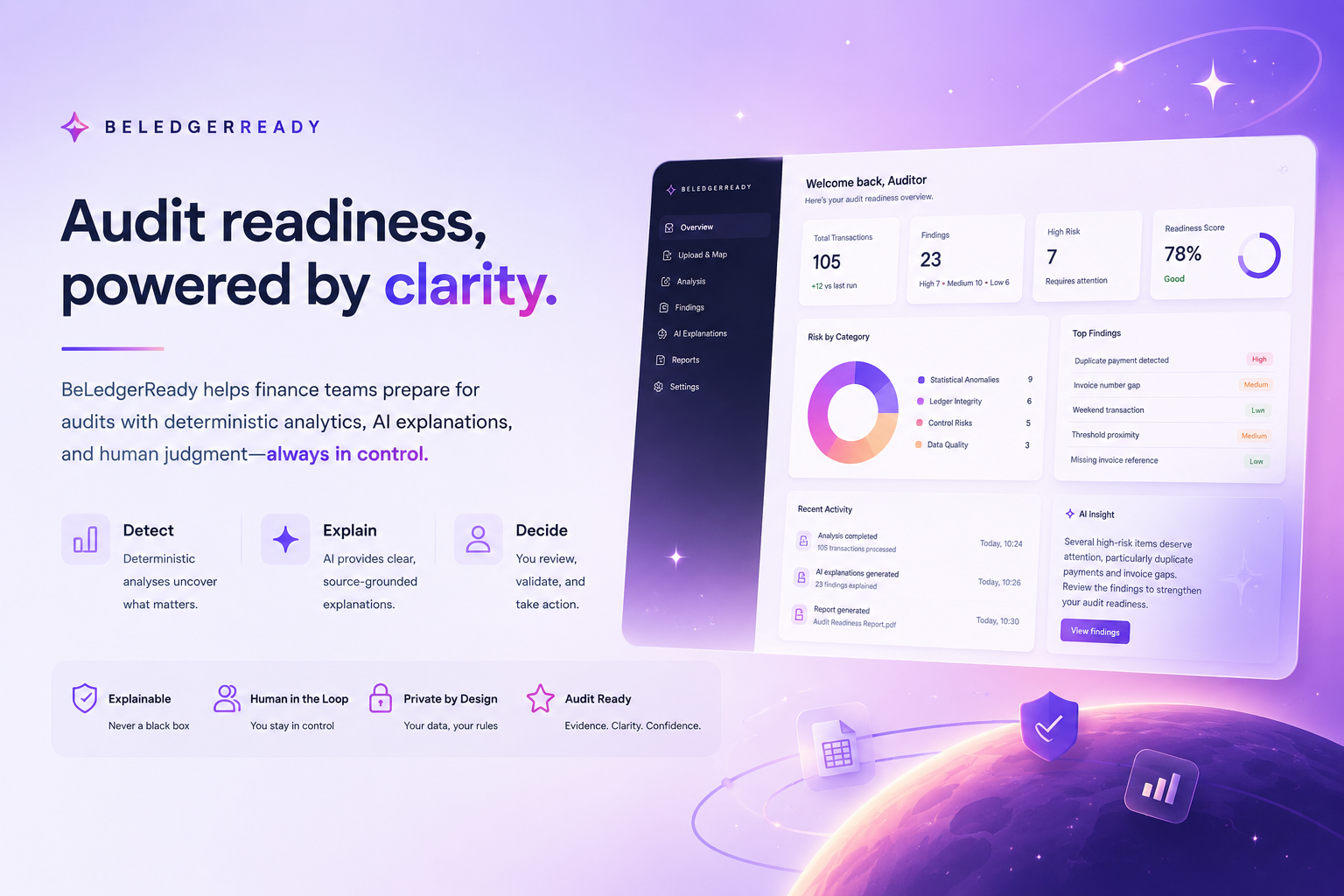
BeLedgerReady
Inspiration
Many AI systems in finance are designed to generate conclusions. I wanted to explore a more careful approach: using AI to help people understand evidence without asking it to replace professional judgement.
Small and medium-sized organisations may hold thousands of financial transactions in spreadsheets, but they do not always have the time, tools, or specialist knowledge to identify what deserves closer attention before an audit or financial review.
BeLedgerReady was created as an AI-powered Audit Readiness Assistant that combines deterministic analytics with explainable AI. The application first performs transparent, repeatable checks on the financial data. AI is introduced only after findings have been established, to explain those findings in clearer and more accessible language.
The principle guiding the project was:
Evidence first. AI explanation second. Human judgement always remains in control.
What it does
BeLedgerReady enables users to:
- Upload a financial transaction dataset.
- Map its columns through a guided interface.
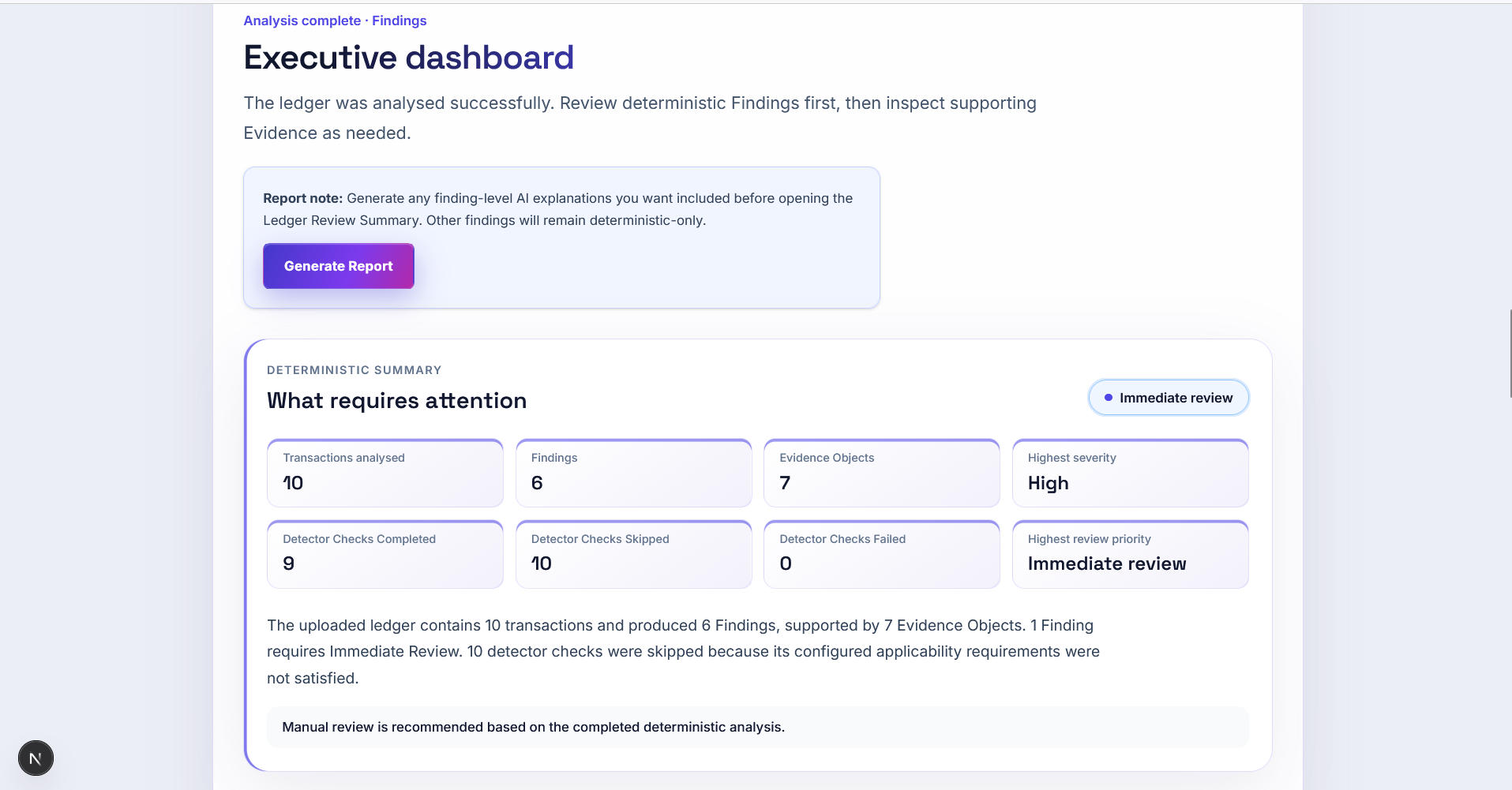
- Run deterministic audit-readiness checks.
- Explore findings alongside their supporting evidence.
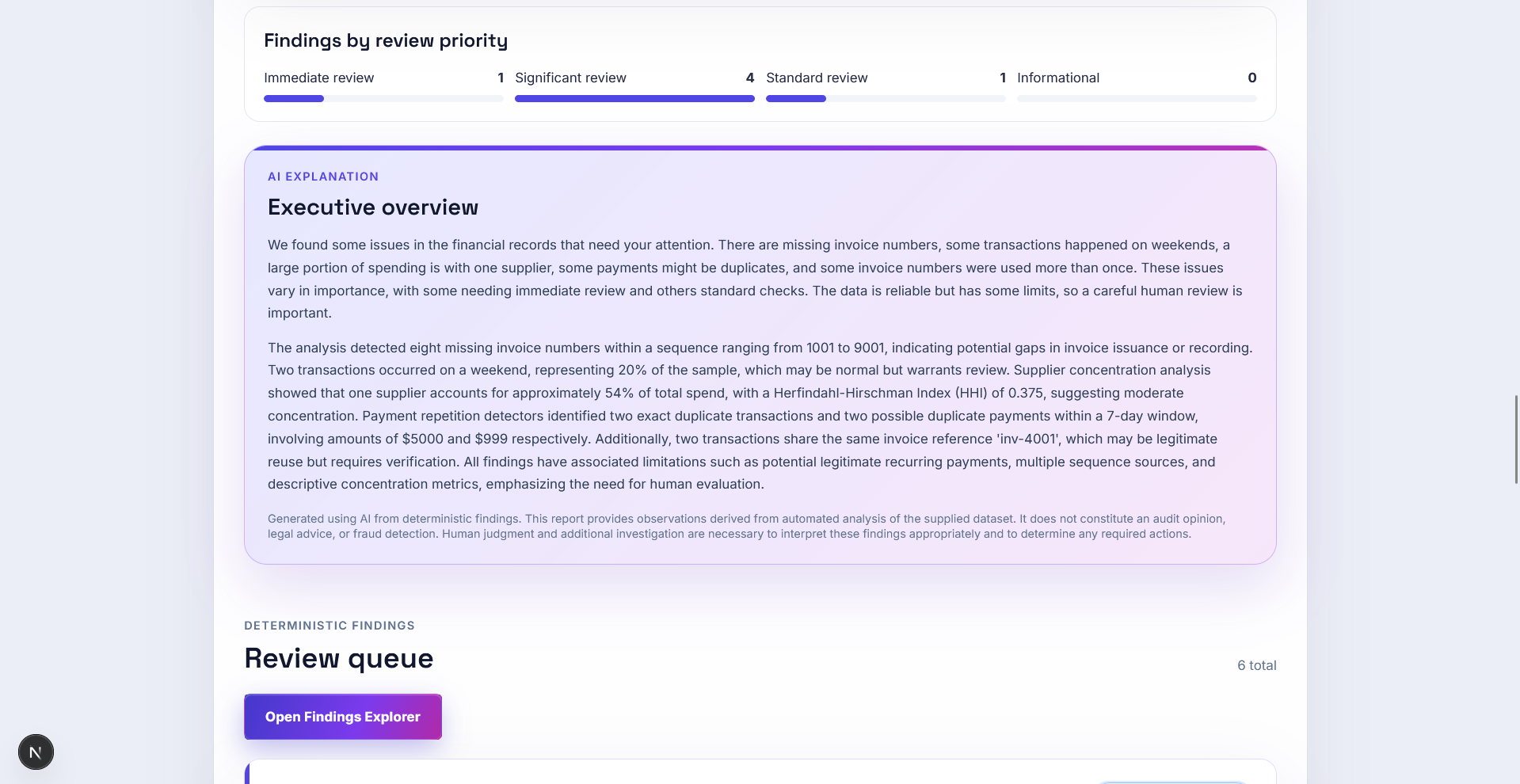
- Request AI-generated explanations for individual findings.
- Produce an audit readiness report combining evidence and optional AI explanations.
The application can highlight patterns such as potential duplicate payments, missing references, unusual numerical distributions, timing anomalies, and other conditions that may deserve further review.
These findings are indicators for human investigation. They are not accusations, fraud determinations, or substitutes for professional audit work.
How I built it
BeLedgerReady uses a modern full-stack architecture:
- Python and FastAPI for the backend.
- Next.js, React, and TypeScript for the frontend.
- A deterministic analytics engine for reproducible checks.
- The OpenAI API for evidence-grounded explanations.
- Fully synthetic datasets for demonstration and testing.
I designed the product vision, software architecture, detector catalogue, user journey, validation strategy, and overall visual identity. I also reviewed and tested the implementation throughout development.
The project was built through an iterative human-AI engineering workflow using OpenAI Codex and GPT-5.6.
I particularly enjoyed working with Codex through disciplined, structured engineering work orders. This way of collaborating matched my own structured way of thinking extremely well. Instead of asking for a complete application in one broad prompt, I divided the work into clearly scoped units with explicit objectives, constraints, acceptance criteria, and verification steps.
Codex became an effective engineering collaborator within that process. It helped implement features, debug issues, refactor code, strengthen tests, improve documentation, and move systematically through the development plan. I remained responsible for the architecture, product direction, review process, and final decisions, while Codex accelerated the implementation.
I used GPT-5.6 as a broader technical and product partner. It helped me examine design choices, refine the architecture, improve the user journey, develop the communication strategy, review documentation, and prepare the final hackathon submission.
The combination worked especially well: structured work orders gave Codex a precise engineering framework, while GPT-5.6 supported the wider reasoning, review, and product-design process.
Challenges
The central technical challenge was preserving a clear boundary between deterministic analysis and generative AI.
It would have been simpler to send raw financial data to a language model and ask it to identify suspicious activity. However, that would make the results difficult to reproduce, verify, and defend.
Instead, BeLedgerReady creates findings through deterministic checks. Each finding contains structured evidence that can be traced back to the source data. AI explanations are generated only from those established findings.
This separation can be expressed as:
$$ \text{Source data} \rightarrow \text{Deterministic checks} \rightarrow \text{Evidence-based findings} \rightarrow \text{Optional AI explanations} \rightarrow \text{Human review} $$
Another challenge was balancing analytical depth with accessibility. The application needed to expose enough evidence to remain trustworthy without overwhelming users who may not have a background in accounting, audit, or data science.
A further challenge was scope. During a hackathon, there is always pressure to add more features. The structured work-order approach helped me protect the core product logic and prioritise a coherent, working application over a larger but less reliable prototype.
What I learned
This project reinforced my view that trustworthy AI depends as much on system design as on model capability.
Deterministic methods are valuable because they produce stable and reproducible evidence. Language models are valuable because they can translate complex results into language that more people can understand. Human reviewers remain essential because findings still require context, interpretation, and professional judgement.
I also learned how productive human-AI software development can become when the collaboration is properly structured.
Working with Codex through explicit engineering work orders felt particularly natural to me. The process rewarded careful decomposition, clear specifications, verification, and disciplined iteration. It did not remove the need for engineering judgement. It made that judgement easier to apply consistently across a substantial build.
BeLedgerReady therefore represents both a product and a development approach:
Use AI to improve access to evidence, while keeping reasoning traceable and people responsible for decisions.
Built With
- codex
- fastapi
- fintech
- gpt-5.6
- next.js
- openai
- python
- react
- typescript

Log in or sign up for Devpost to join the conversation.