-
-
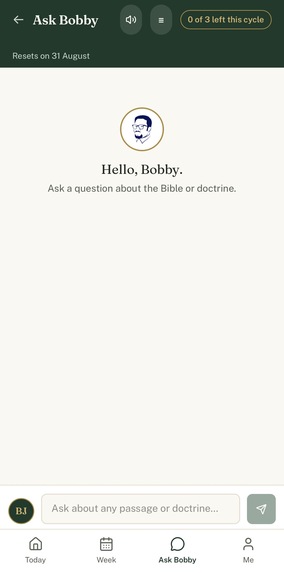
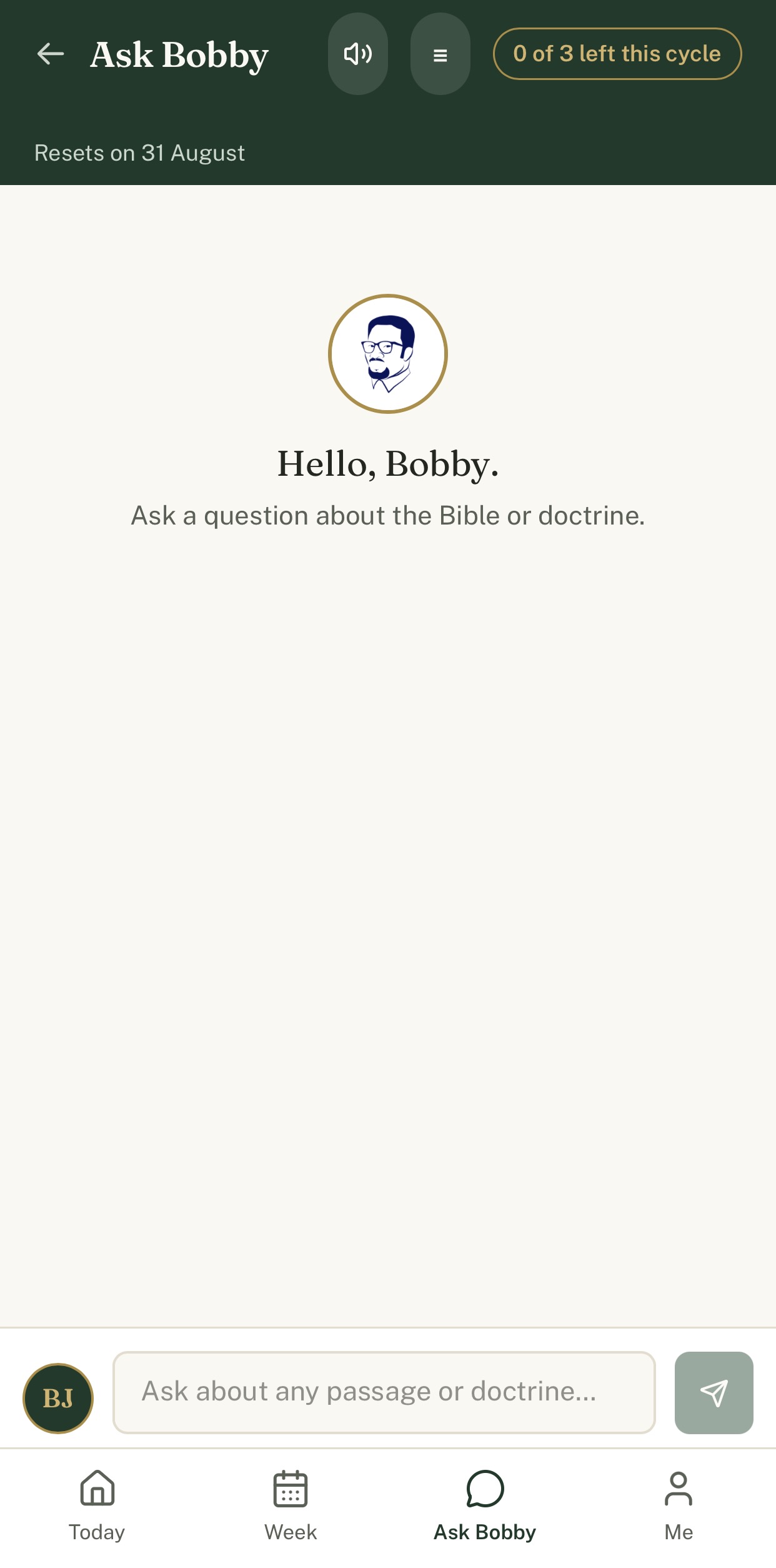
Ask Bobby with Voice
-
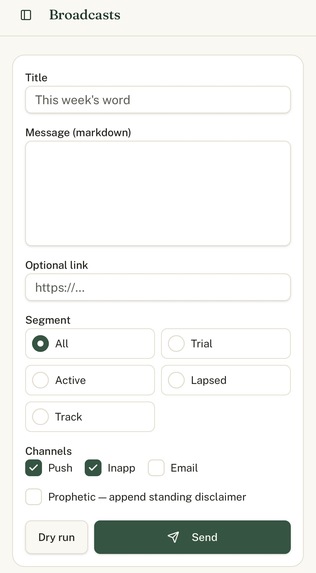
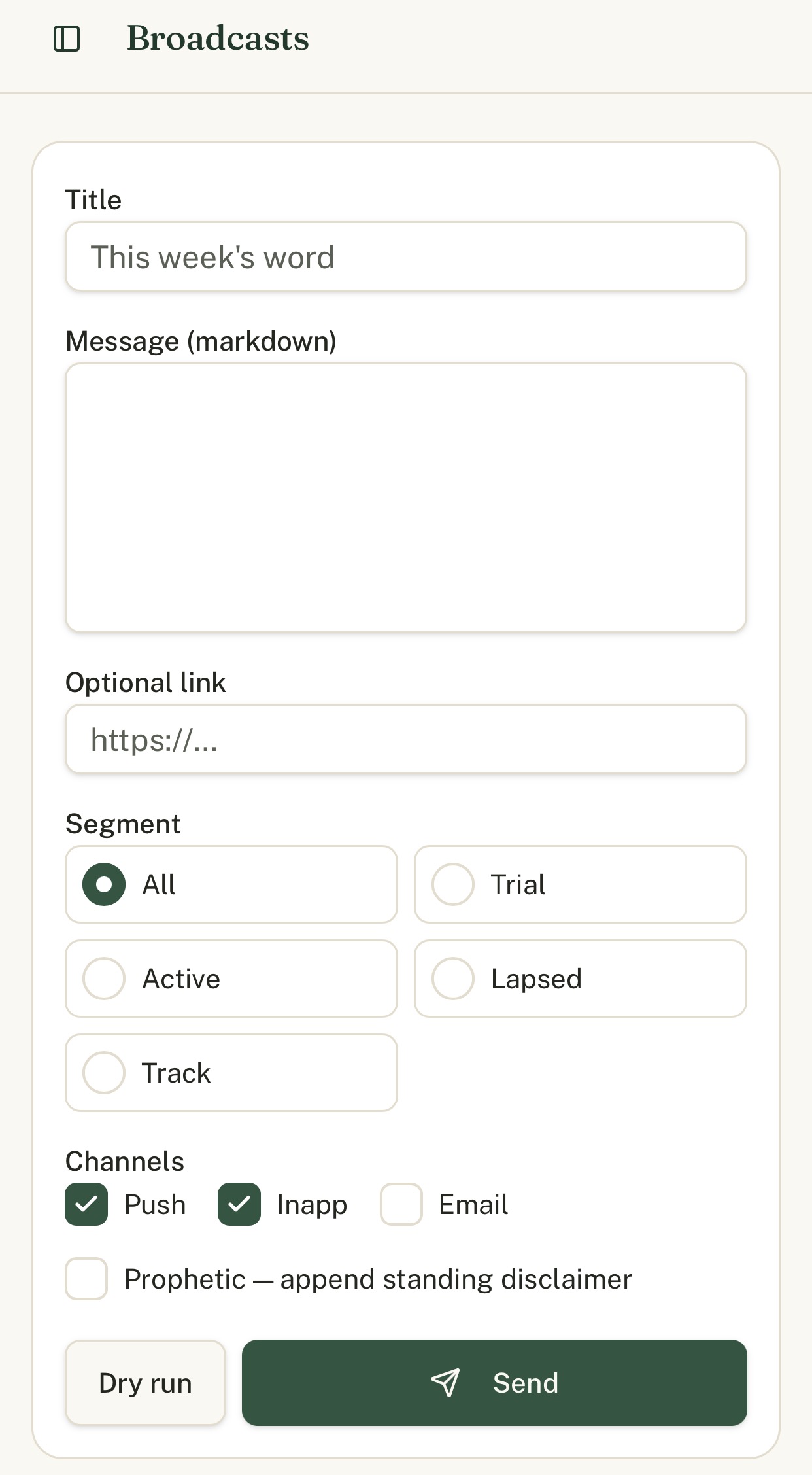
Admin Broadcast Composer
-
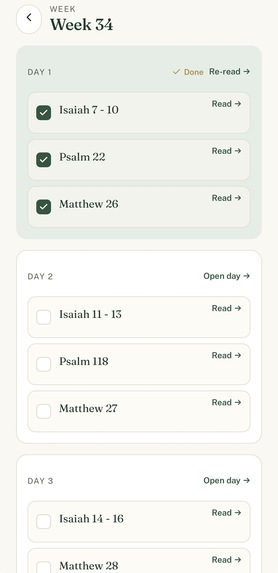
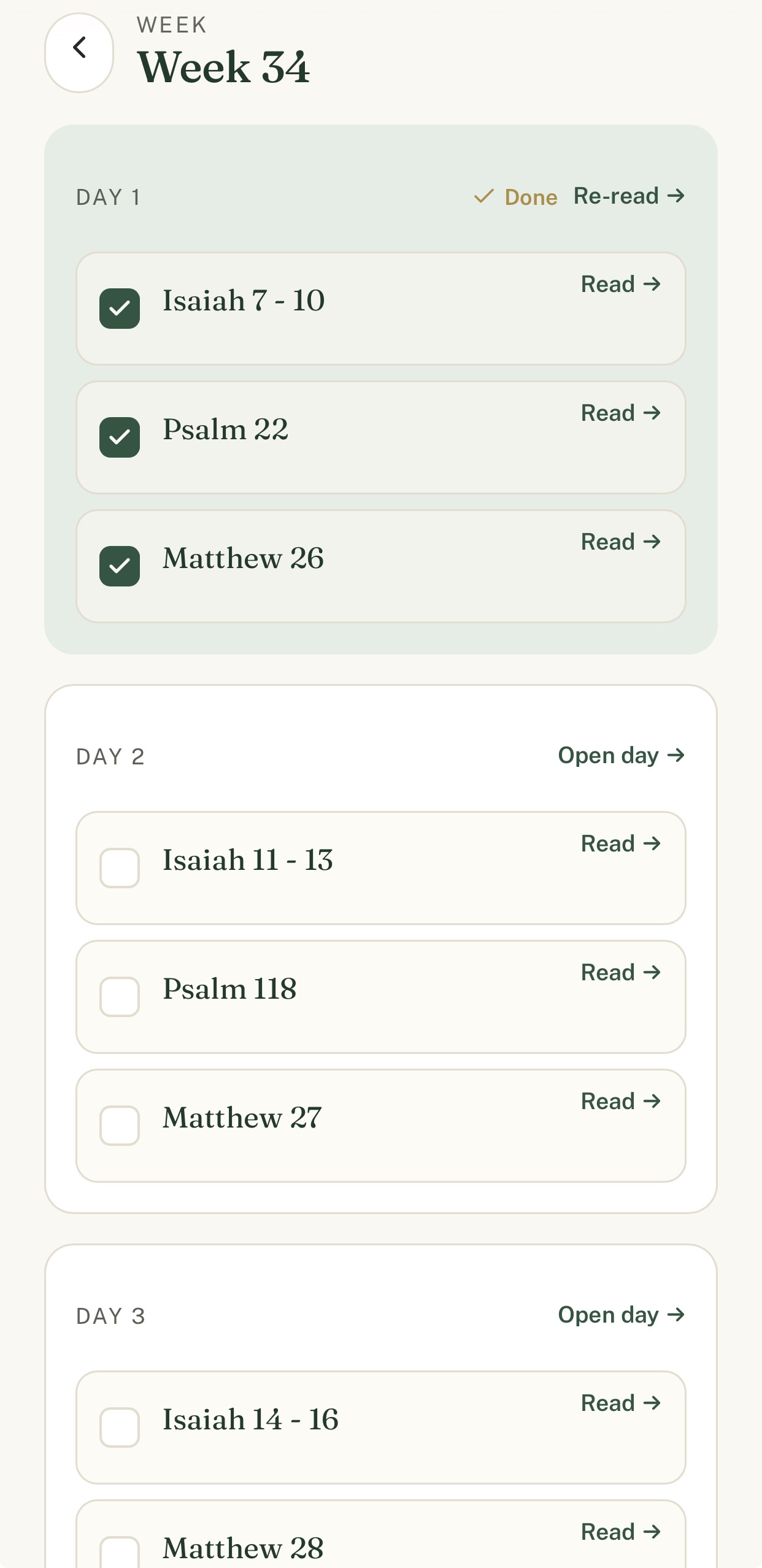
Catch-up View
-
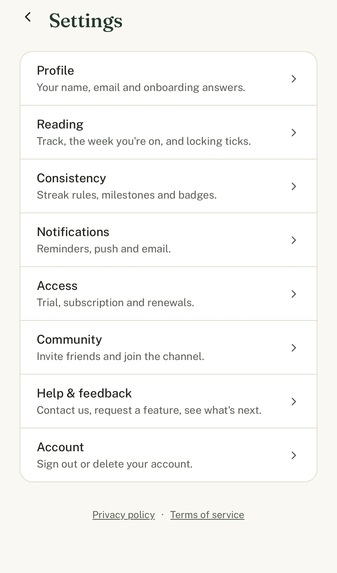
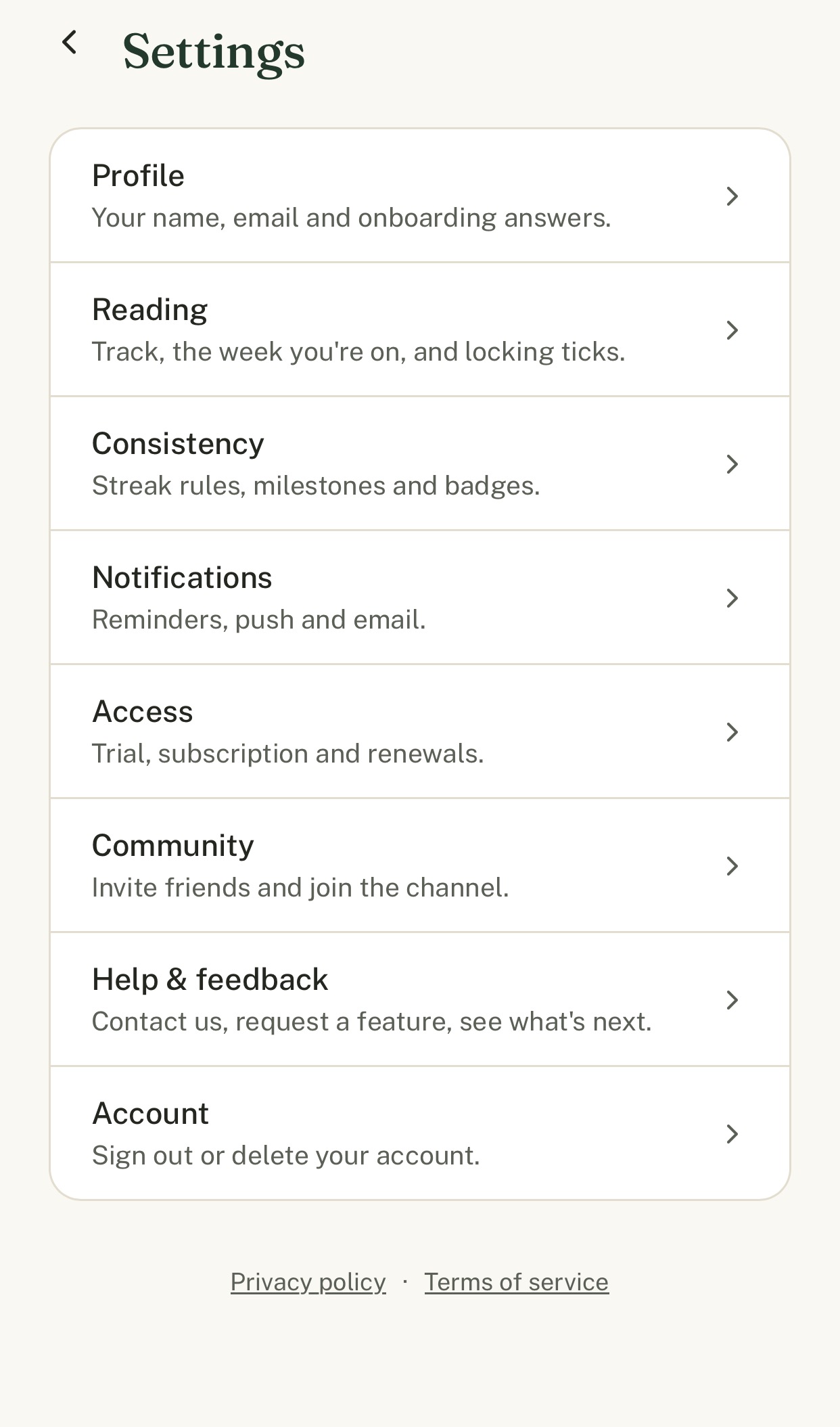
Settings Panel
-
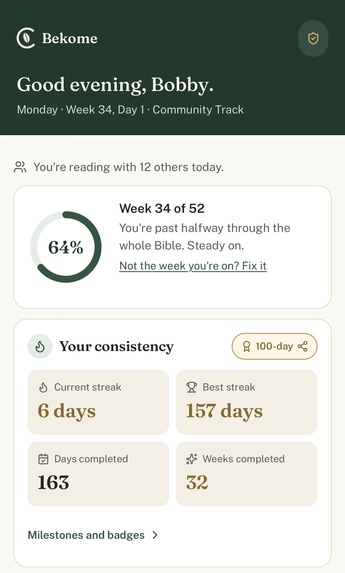
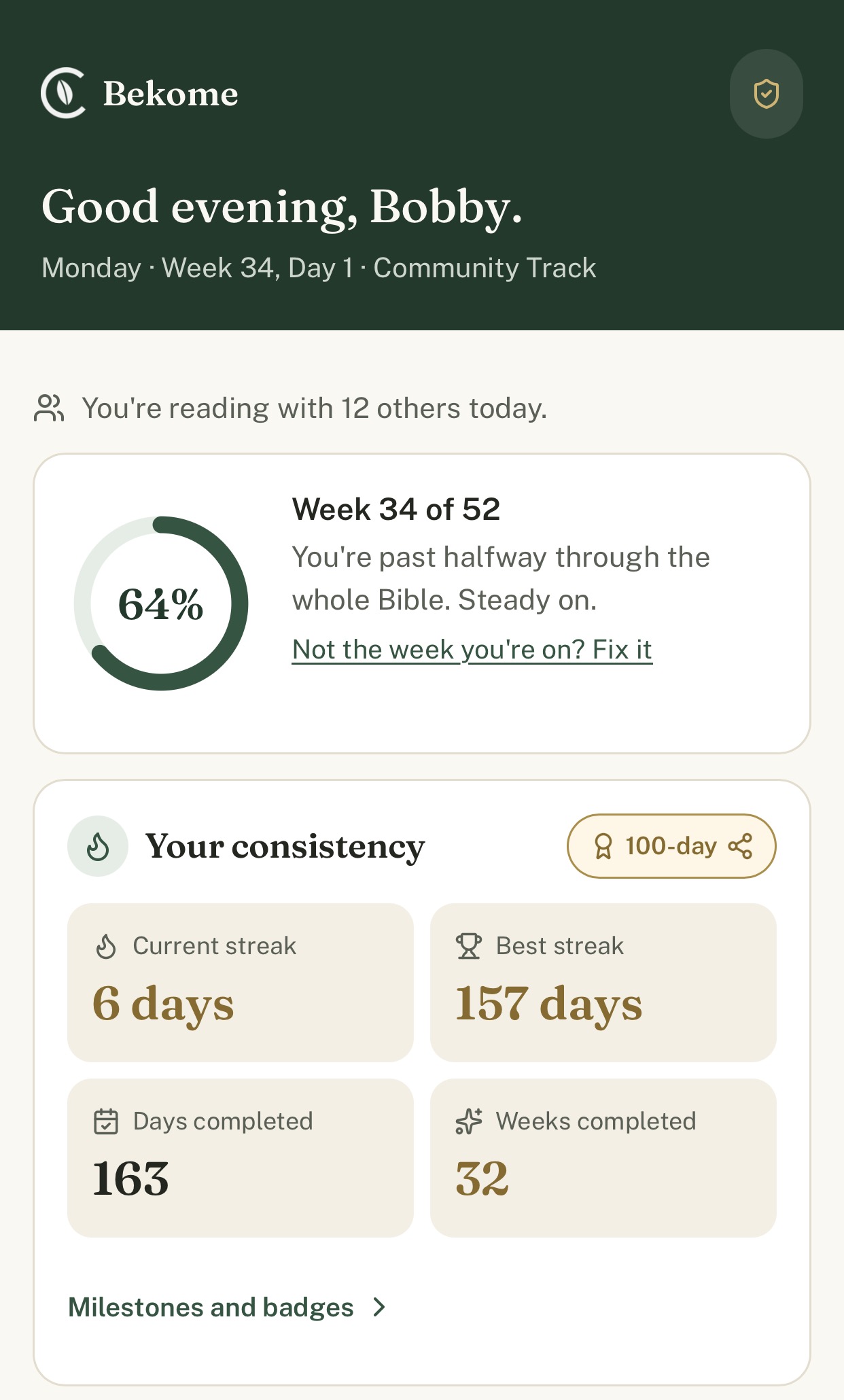
Dashboard
-
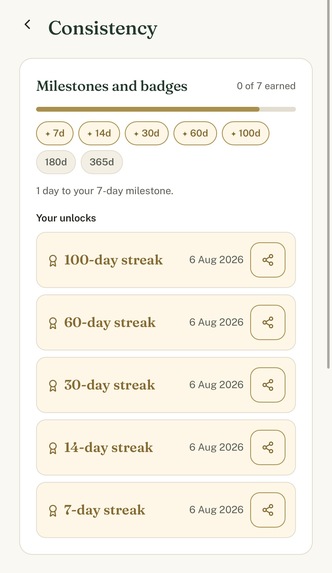
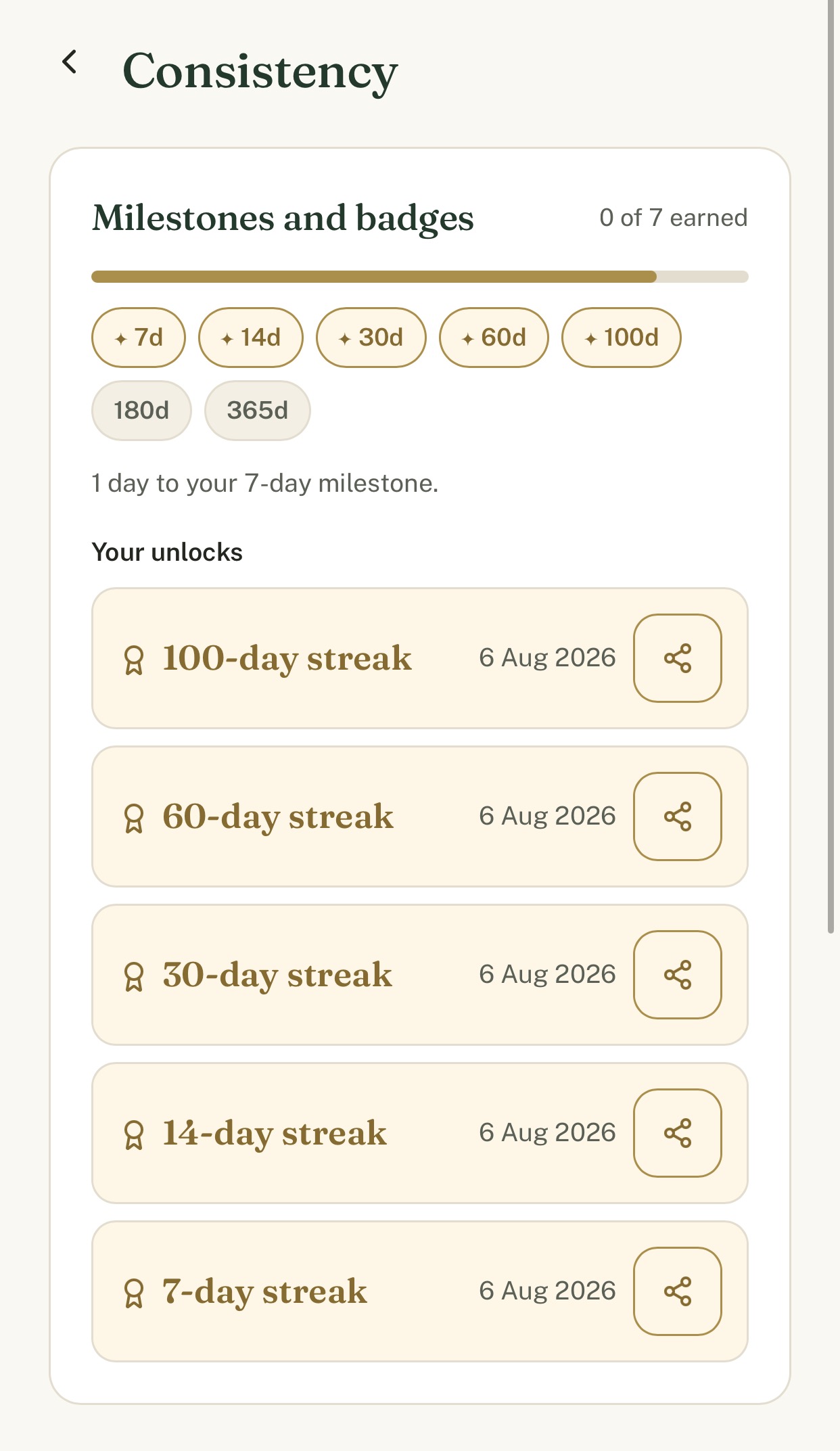
Milestones and Accountability
-
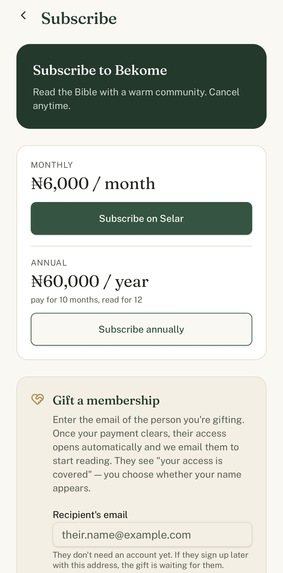
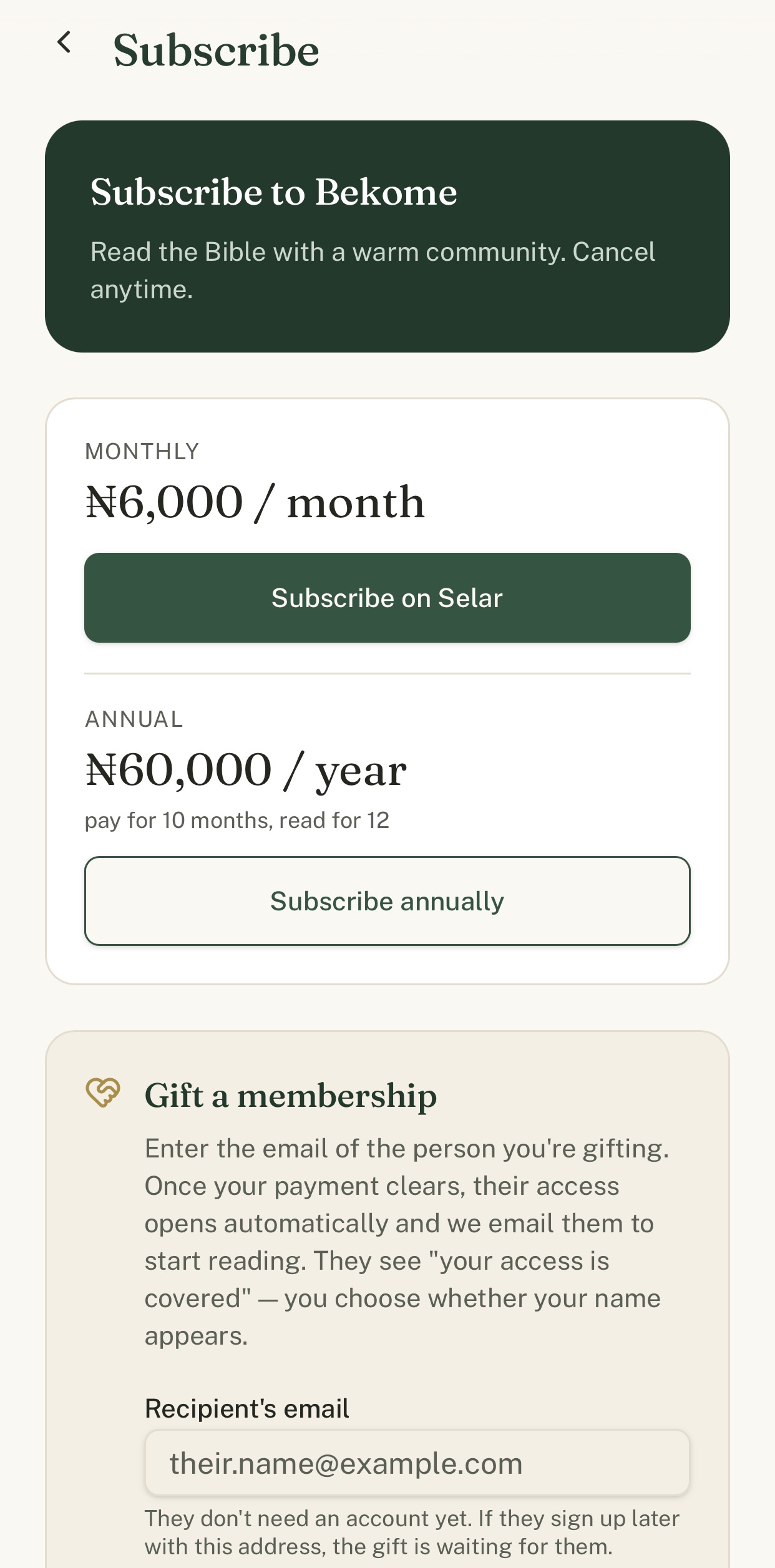
Pricing
-
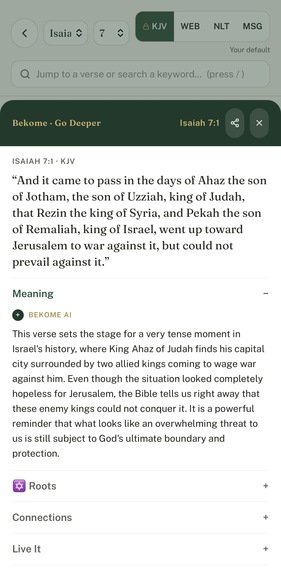
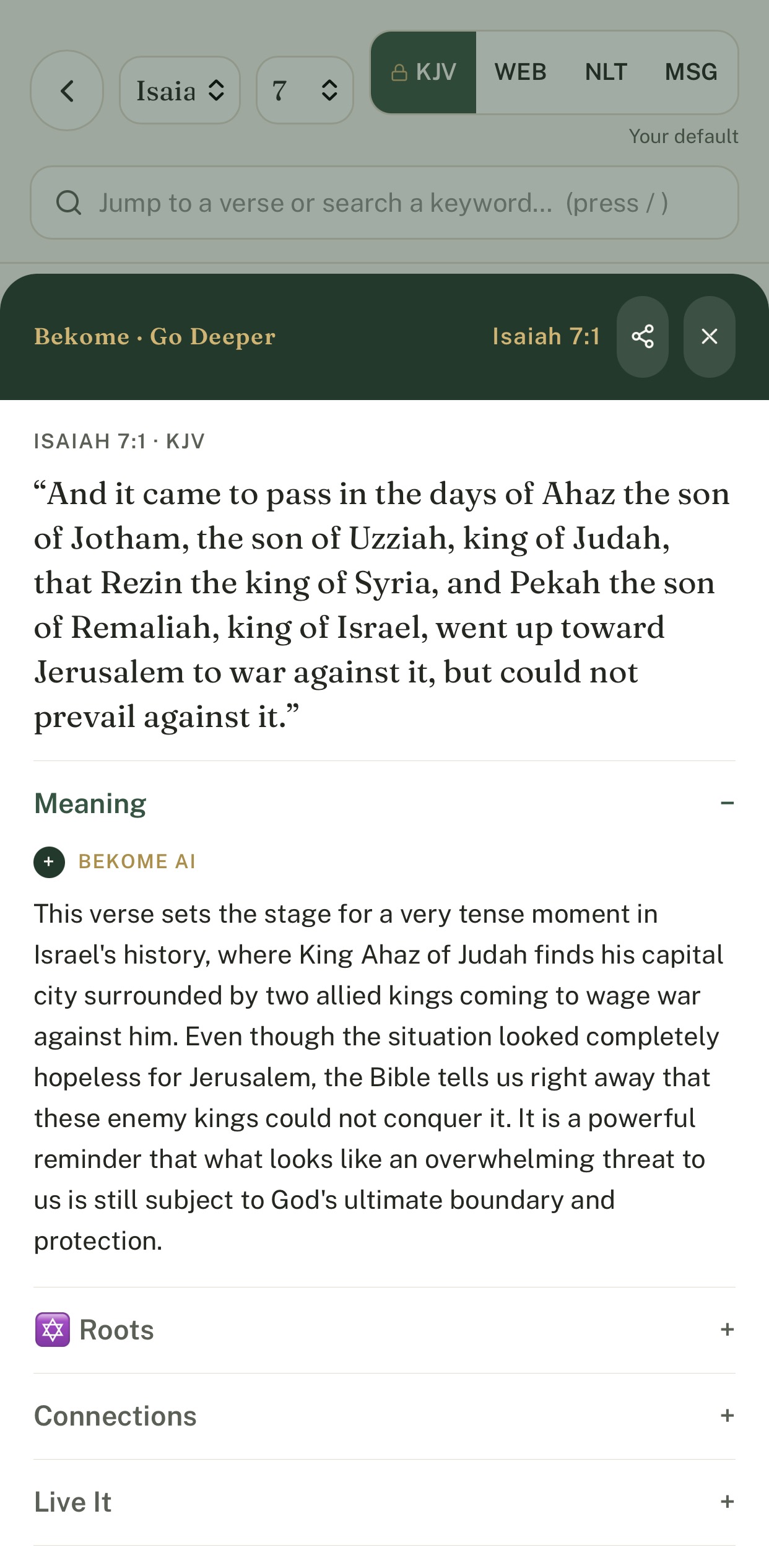
Go Deeper
-
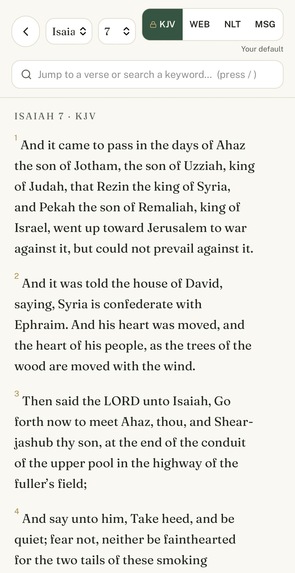
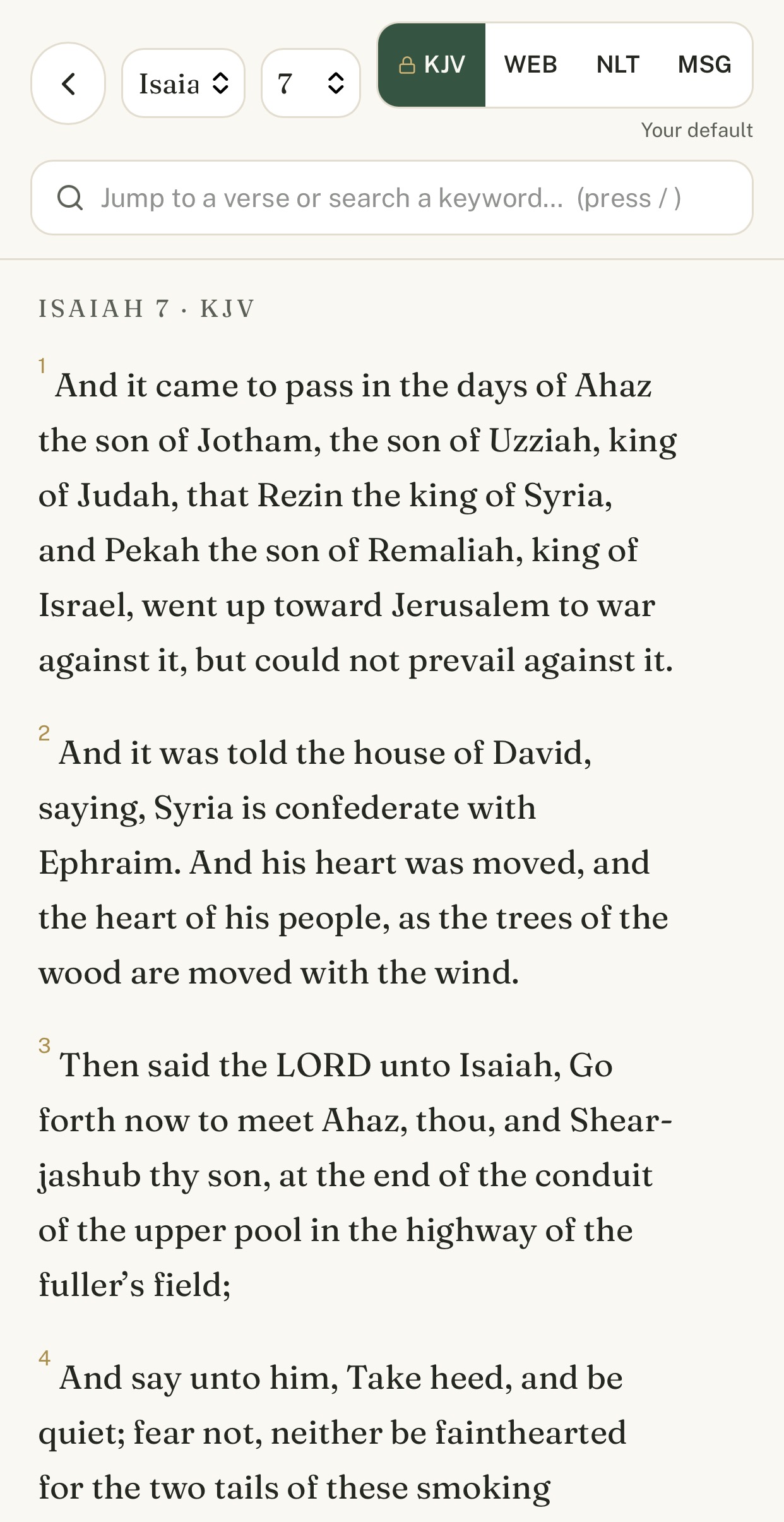
Inbuilt Bible with translations
-
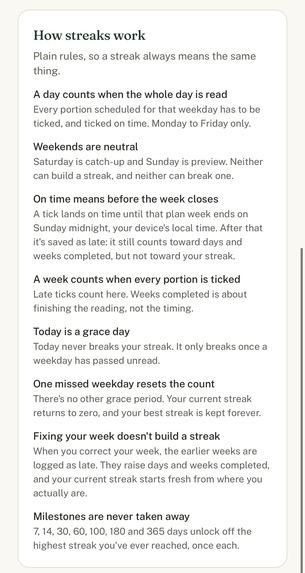
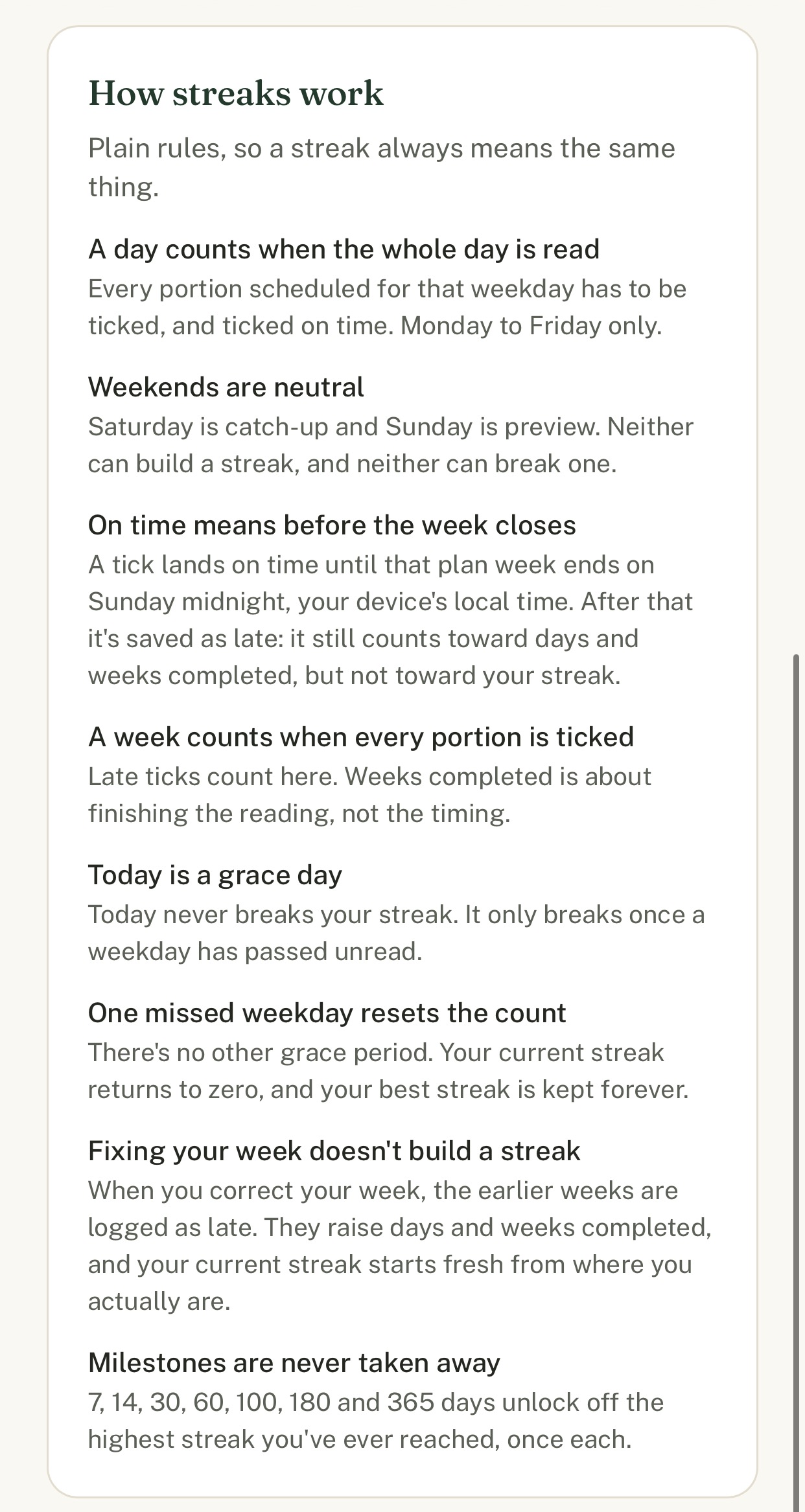
Streaks
Bekome turns a 4-year, 384-to-397-person Nigerian reading community, already paying ₦6,000 a month before a line of code existed, into software. The numbers behind that claim are bank-verified, not projected: $249.37 in confirmed revenue from 18 payers across the hackathon window, cash-basis, sourced from real bank statements. Gemini runs every doctrine answer and per-verse study note in production, continuously, with execution logs from the July 27 beta onward. And the completion record, 75% documented against the Center for Bible Engagement's "Power of 4" threshold, the strongest predictor of engagement outcomes in their research, is a track record most entrants won't have.
Inspiration
An ancient story frames it: a traveler reading Scripture is asked, "Do you understand what you are reading?" and answers honestly, "How can I, unless someone guides me?" I've watched that scene repeat in Nigeria for 4 years. Since 2023, I've led hundreds of believers through the entire Bible in a WhatsApp community I ran by hand: posting the day's reading every morning, chasing stragglers, answering questions at 6 am and 11 pm. 287 of 384 finished the whole year in 2024. By 2026, 35 members were paying ₦6,000 a month for that daily human accountability. It worked, and it hit a ceiling because I was the only one involved. Bekome is that community, turned into software, by a theologian with no coding background.
What it does
Bekome is a mobile-first PWA that gets a believer through the whole Bible in a year and helps them understand what they read. A 5-day weekly plan with one-tap check-off, streaks, and weekend catch-up handles consistency. Comprehension gets two layers: Ask Bobby, a RAG chatbot grounded in my own doctrinal corpus that answers Bible questions in writing and in my cloned voice, and Go Deeper, a per-verse study sheet with Meaning (plain-language explanation), Roots (the original Greek and Hebrew word by word), Connections (cross-references), and Live It (a reflection prompt). The whole community reads the same week together, and the design is Nigerian-first: data-light, offline-tolerant, naira-priced with dual currency, and payment grace with a no-shame catch-up flow, because our payment data show money arrives in lumps.
How we built it
I put AI to work at every layer, which is the message I teach professionally. Claude (Anthropic) served as my technical co-founder: product discovery, the full specification set, security architecture (OWASP-aligned, RLS, server-side keys, prompt-injection hardening), legal drafts, and design system. Lovable builds and hosts the app on Supabase (Postgres, auth, edge functions). The Gemini API on Google Cloud powers every LLM call: Ask Bobby's grounded answers and Go Deeper's Meaning and Live It sections, all retrieval-augmented over my curated corpus so the model never invents doctrine. ElevenLabs clones my voice, with my consent, for spoken answers and cached milestone moments. Resend handles email, PostHog analytics, Selar payments (Paystack next). Bible text is phased: KJV, NLT, and MSG on API.Bible's free tier at launch, further licensed translations added through API.Bible as publisher approvals clear.
Challenges we ran into
Keeping AI doctrinally safe came first: a faith community's trust dies on one invented teaching, so every answer is grounded in retrieval from my own corpus, out-of-scope questions get an honest refusal, and a 10-case injection test gates launch. Second, the naming journey: our first name collided with existing Bible apps, and roughly 60 candidate names were already taken; we coined Bekome (said "become") and secured bekome.io. Third, translation licensing: the translations Nigerians love (NKJV, NLT, NIV) are locked behind publisher deals, so we architected verse-reference storage that lets licensed texts switch on without rework. Fourth, designing for Nigerian payment reality: irregular, backlog-clearing payments aren't churn, they're how cash flows here, so grace and catch-up became designed features.
Accomplishments that we're proud of
35 people were paying monthly for the manual version before the app existed, which means demand was proven before a line of code. The build carries a security posture most solo products skip: server-side identity checks on every endpoint, row-level security, signed idempotent webhooks, SSRF closed by outbound allowlist, an admin audit log, and 2FA. And the product is genuinely local: designed from 4 years of Nigerian ground truth, priced in naira and dollars equally, with local-language Bibles (Yoruba, Hausa, Igbo, Pidgin) on the named roadmap.
What we learned
That AI literacy before adoption works in practice: a non-technical founder can ship a real, secure, revenue-generating product when AI does the heavy lifting and the human owns judgment. That grounding beats scale for trust-critical domains: a small curated corpus with honest refusals outperforms a bigger model answering freely. And that local design is a moat: payment catch-up flows and data-light reading came from knowing the market, and no imported template would have found them.
What's next for Bekome
Native iOS and Android apps (already wrapping via Median.co, store listings submitted mid-August), Paystack subscriptions with in-app plan switching, the licensed translations as deals clear, local-language Bibles, Bekome Buddy (1-to-1 accountability pairs), an events hub, and church and organization licensing as a B2B lane. The roadmap runs on an in-app feature-request loop, so members steer it.
Built With
- android
- api.bible
- claude
- edge-functions
- elevenlabs
- gemini-api
- github
- google-cloud
- ios
- lovable
- median
- onesignal
- postgresql
- posthog
- pwa
- rag
- react
- resend
- selar
- supabase
- typescript


Log in or sign up for Devpost to join the conversation.