-
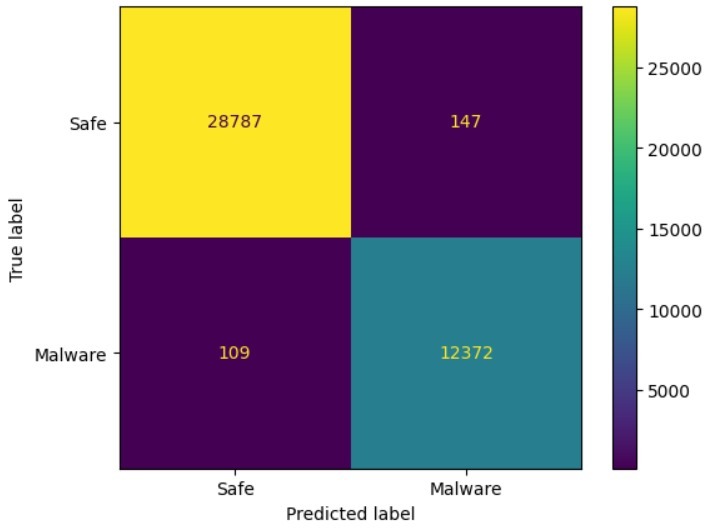
Confusion Matrix for Malware Classification
-
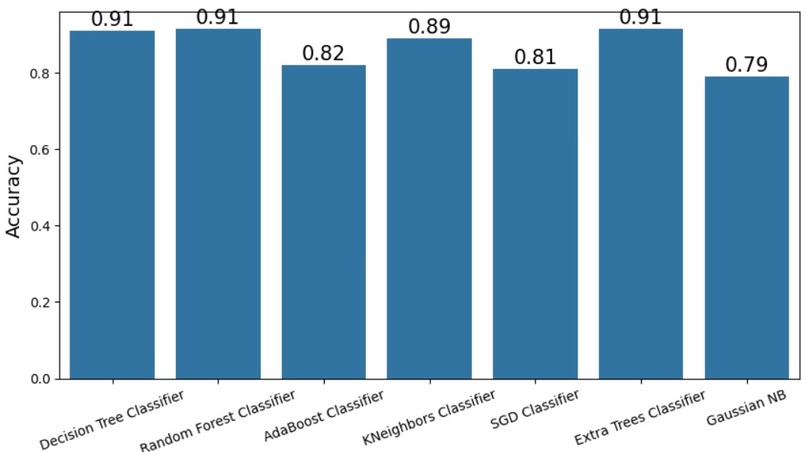
Comparison of Classifier Accuracies
Inspiration
The inspiration for creating this project stems from the increasing prevalence of cyber threats, particularly the rise in phishing attacks and ransomware incidents that pose significant risks to individuals and organizations. As online activities continue to expand, so does the sophistication of malicious actors who exploit vulnerabilities through deceptive URLs and harmful links. This project is driven by the need to enhance online security by developing a system that can proactively identify and neutralize these threats. The aim is to protect users and organizations from potential cyber attacks, ensuring a safer digital environment by leveraging advanced machine learning techniques.
What it does
This project focuses on developing machine learning models that can accurately detect and classify URLs as either malicious or benign. By analyzing the characteristics of URLs, the models aim to identify and flag phishing attempts, ransomware, and other harmful links that could pose cybersecurity threats. The system utilizes algorithms such as Decision Trees, Random Forests, and K-Neighbors to achieve high accuracy in classification, minimizing false positives and negatives. Once deployed, the project can significantly enhance online security by providing a robust, efficient, and adaptive tool that helps protect users and organizations from the growing threat of cyber attacks.
How we built it
1. Data Collection:
    Gather a labeled dataset of URLs (malicious and benign) from public sources or through web scraping.

2.Data Preprocessing:
    Extract features from URLs (e.g., length, special characters, domain info).
    Convert categorical data to numerical format and split the dataset into training and testing sets.

3.Model Selection:
    Use LazyPredict to automatically train and compare multiple algorithms like Decision Trees, Random Forests, and K-Neighbors, quickly identifying the best-performing models.

4.Model Training:
    Fine-tune the selected models from LazyPredict or manually train specific models for optimal performance.

5.Model Evaluation:
    Test the models on the test set, focusing on accuracy, precision, and recall, aiming to minimize false positives and negatives.

6.Model Deployment:
    Deploy the best-performing model into a real-time system to detect and block malicious URLs.
Tech Stack:
1.Python: Core language for data processing and model development.

2.Pandas/NumPy: Libraries for data manipulation and numerical operations.

3.LazyPredict: Automatically trains and compares multiple machine learning models to identify the most effective one.

4.Scikit-learn: Provides machine learning algorithms and tools for further model development and evaluation.

5.Flask/FastAPI: For deploying the model as an API.

6.Docker: For containerization and consistent deployment across different environments.

7.AWS/Azure/GCP: Cloud services for scalable deployment.
Challenges we ran into
1.Data Quality and Availability:
Imbalanced Dataset

Data Diversity

Data Labeling
2.Feature Engineering:
Identifying Relevant Features

Dynamic URLs
3.Model Selection and Tuning:
Overfitting

Hyperparameter Tuning

Choosing the Right Model
4.Evaluation Metrics:
False Positives/Negatives

Generalization.
5.Scalability and Real-Time Processing:
Handling Large Volumes of Data
Deployment Challenges
6.Evolving Threat Landscape:
Adaptability
Accomplishments that we're proud of
1.Enhanced Cybersecurity
2.High Model Accuracy
3.Automated Threat Detection
4.Robust Feature Set
5.Scalable Solution
6.User and Organization Protection
7.Continuous Learning
8.Integration with Existing Systems
9.Contribution to Cybersecurity Knowledge
What we learned
1.Machine Learning Fundamentals
2.Feature Engineering Techniques
3.Model Evaluation and Selection
4.Data Preprocessing Strategies
5.Handling Imbalanced Datasets
6.Real-Time Processing Challenges
7.Cybersecurity Threat Landscape
8.Deployment Best Practices
9.Continuous Model Improvement
What's next for CyberSentinel:
1.Model Performance
2.Feature Engineering
3.Data Augmentation
4.Handling Dynamic Threats
5.User Interface
6.Integration with Threat Intelligence
7.Explainability
8.Scalability
9.Deployment Automation
10.Collaboration and Feedback
Built With
- lazypredict
- python
- scikit-learn

Log in or sign up for Devpost to join the conversation.