-
-
Thumb nail
-
Concise description
Inspiration
Unlike of programmer , policy maker of the government and city cannot undergo testing of proposed nudges in the local server or something like sandboxed environment . We want to give such a local server or sandboxed environment to the policy maker where they can ask "what if?" and get an instant, evidence-backed answer.
What it does
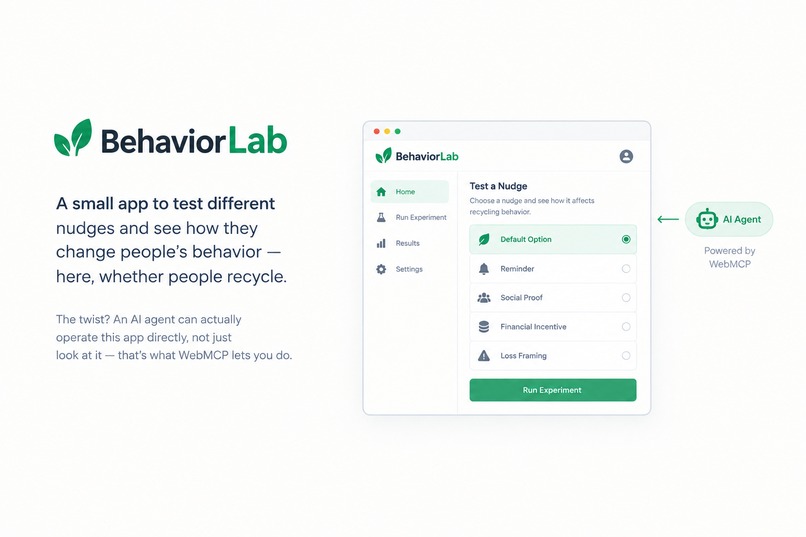
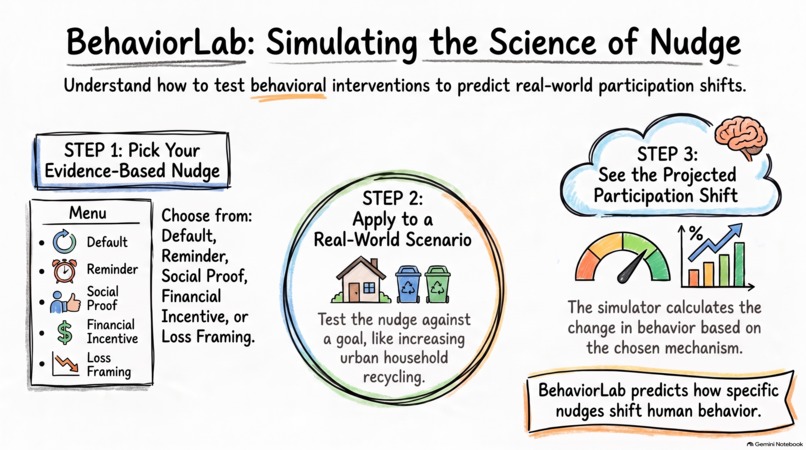
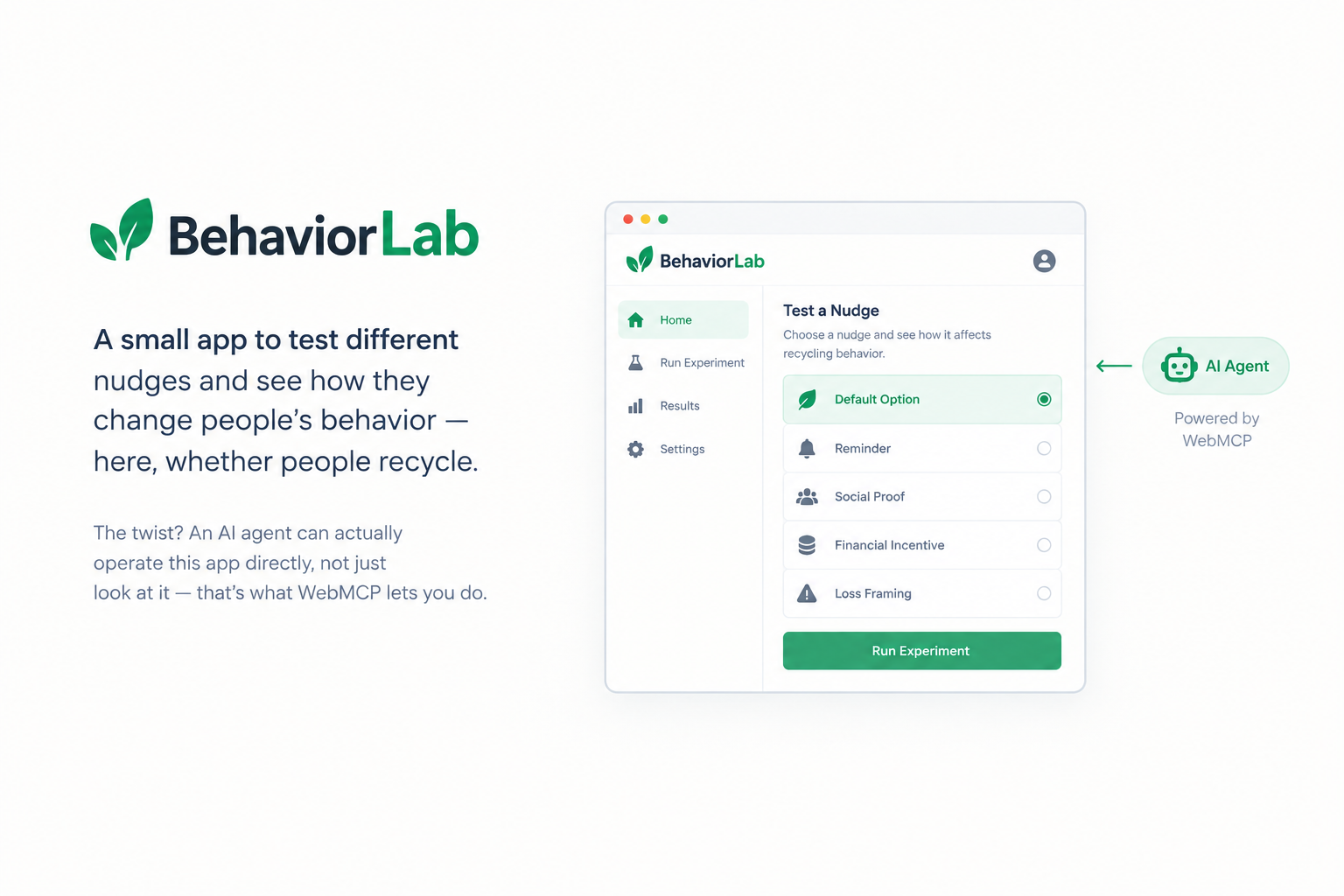
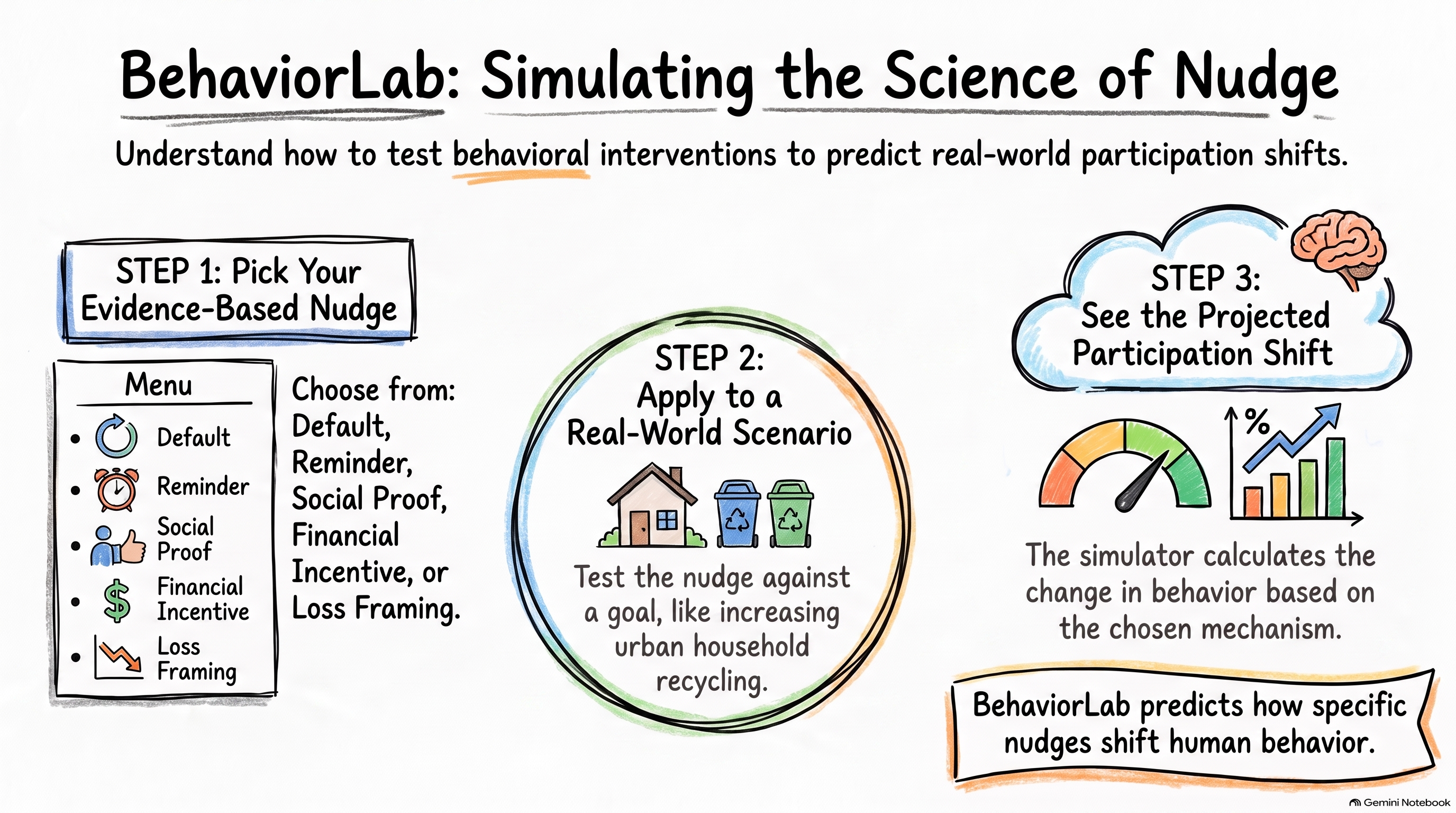
In this app , we Lets policymakers pick a nudge among this five : Default, Reminder, Social Proof, Financial Incentive, or Loss Framing and runs it against a real scenario (boosting urban recycling rates in our current MVP ).
It instantly shows the projected participation shift (e.g., 45% → 73%) and explains the behavioral-economics mechanism behind the result (loss aversion, status quo bias, etc.).
With WebMCP, an AI agent can compare all five nudges in one query and recommend the best one with reasoning.
How we built it
Tech stack: Next.js 16, React 19, TypeScript, Tailwind CSS 4.
WebMCP integration in src/webmcp/ with 5 tools (get_scenario, list_interventions, run_simulation, compare_interventions, explain_result).
Tools call the exact same runSimulation() engine as the UI—no separate code paths.
Tested with Jest to ensure tool registration and simulation logic are reliable
Challenges we ran into
The main challenge we faced that Chat gpt in app browser , which we are supposed to use for demo in this hackthon do not have the LINUX version . So i have to use WEB MCP tools extension of browser to demo my project .
Accomplishments that we're proud of
Its build up more confidence to work with MCP protocol , especially with this WebMCP one . Not only that , i am able to implement the knowledge of one domain (behaviorial economics ) into the programming . Thanks to AGentic software engineering .
What we learned
Agentic SOftware Engineering , Behavioral economics , MCP protocol ,
What's next for BehaviorLab
Expanding beyond recycling to other policy domains: health adherence, energy conservation, and financial saving.
Built With
- next
- react

Log in or sign up for Devpost to join the conversation.