-
-
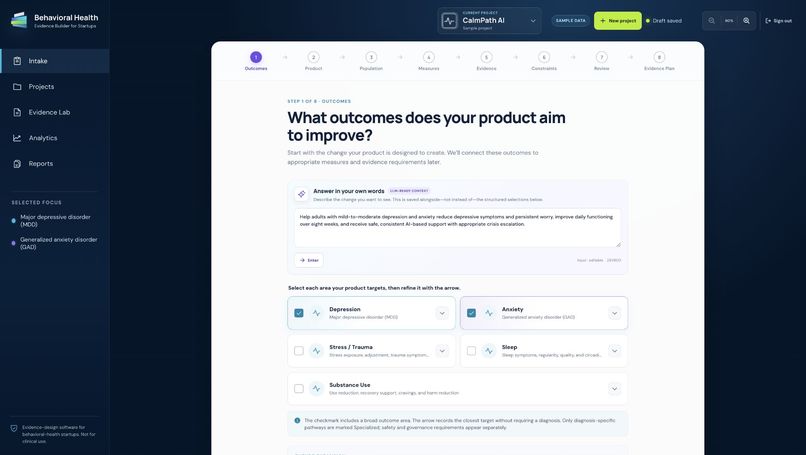
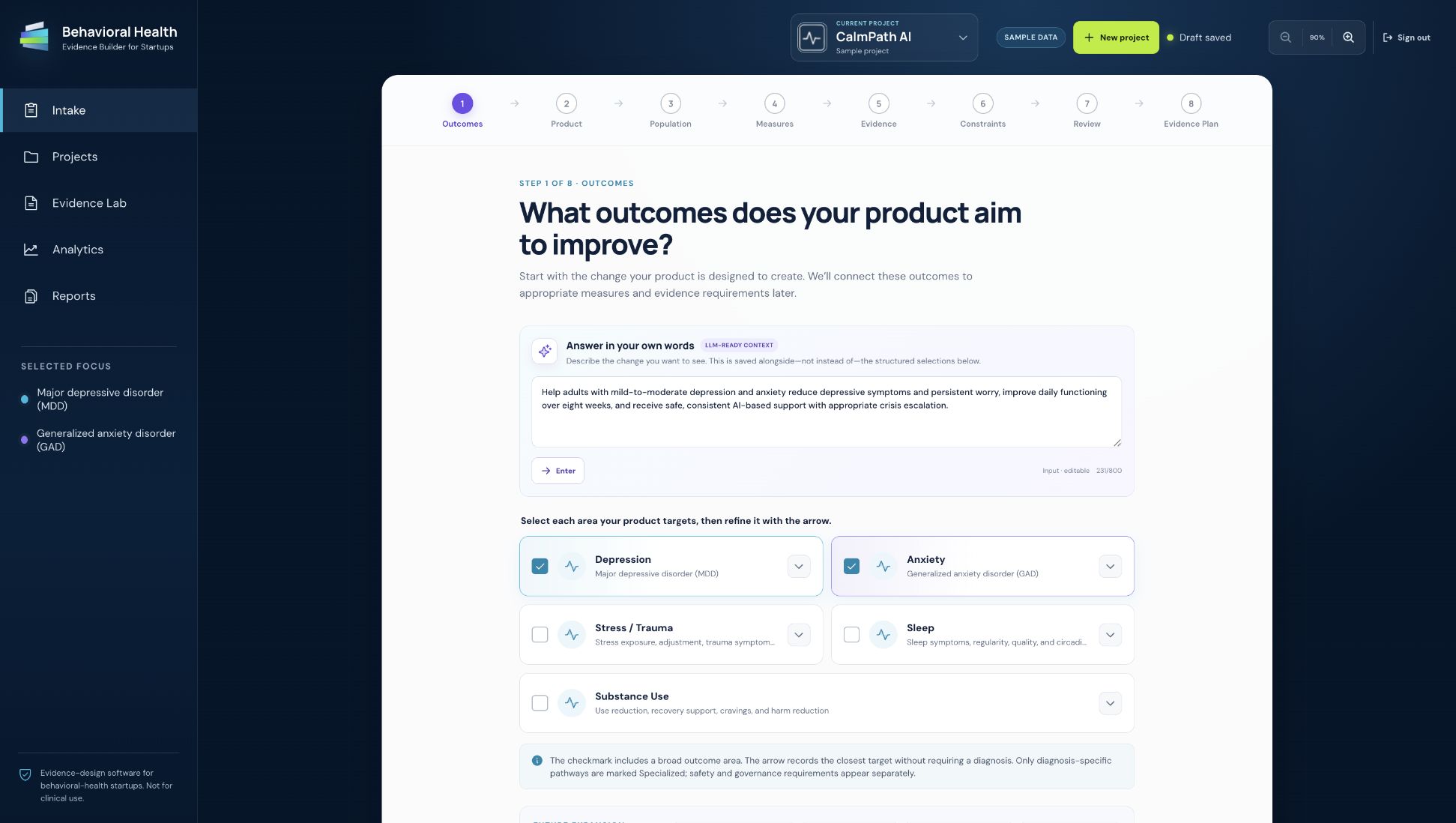
Define outcomes and behavioral-health targets.
-
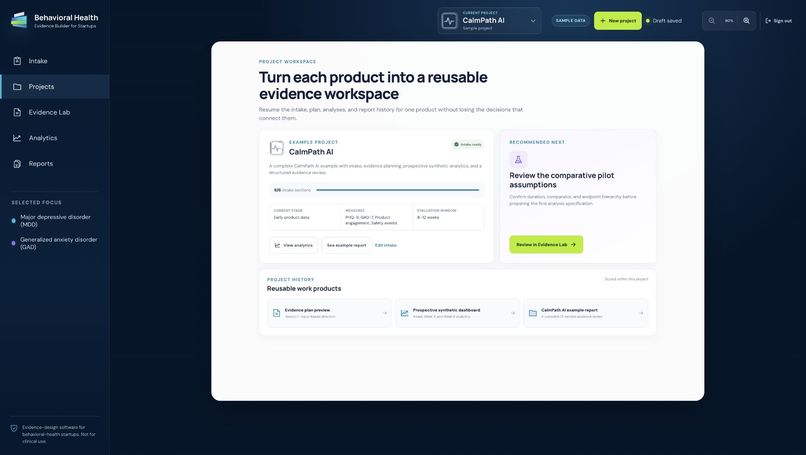
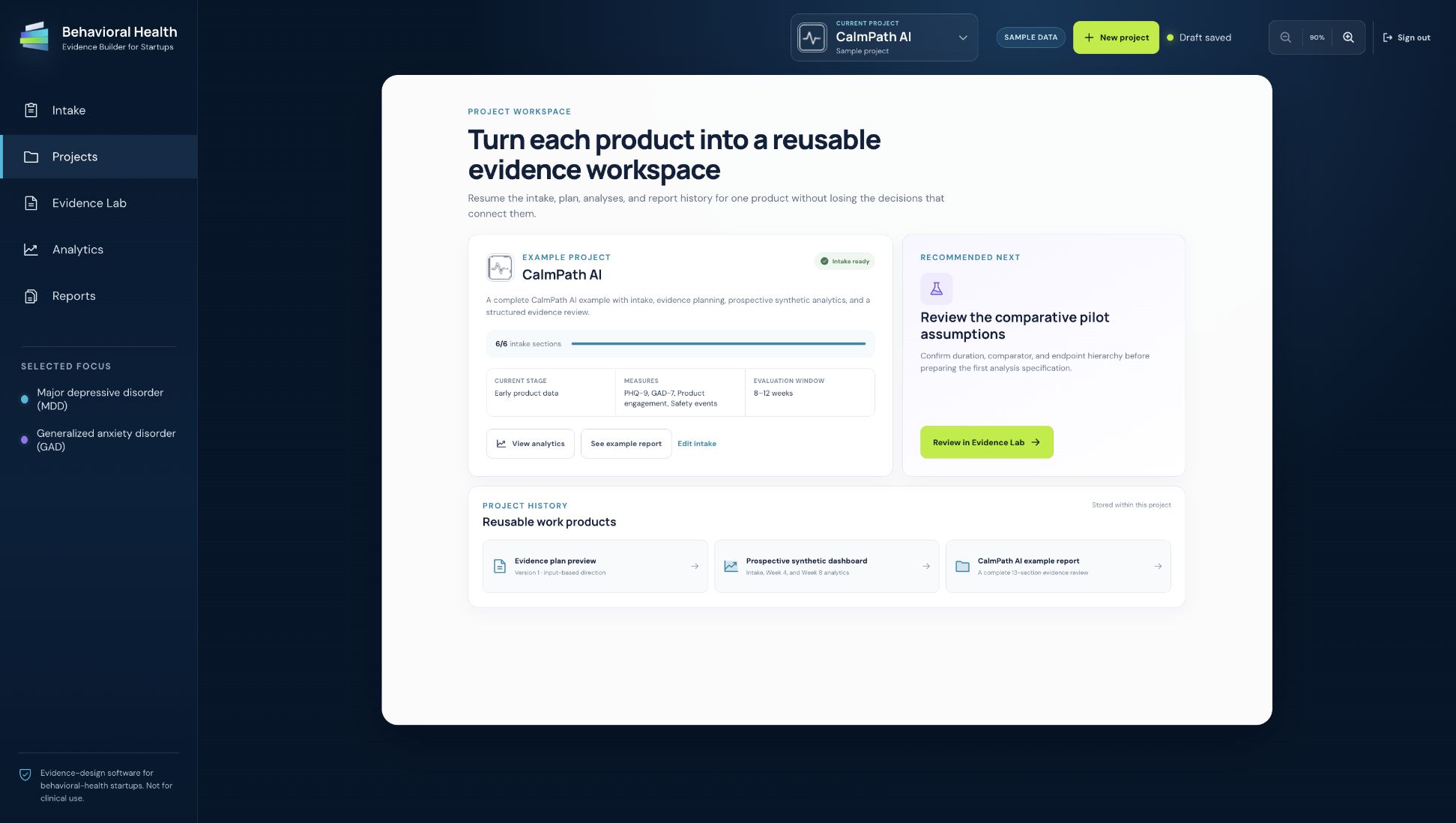
Connect intake, plans, analyses, and reports.
-
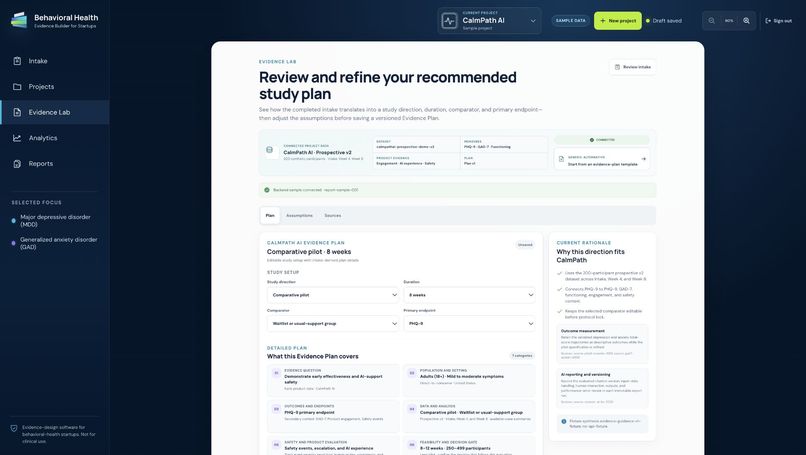
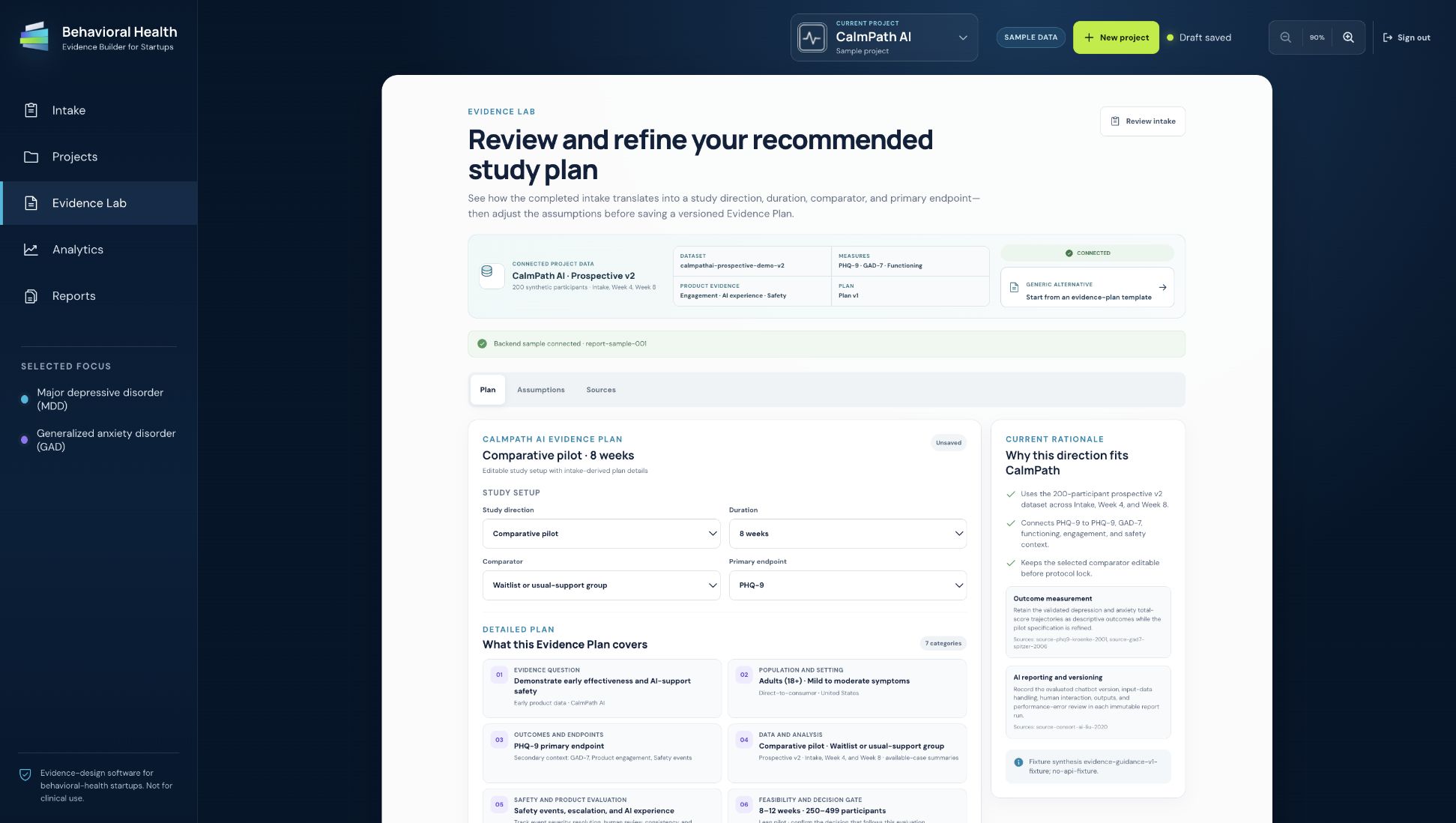
Build an editable, source-aware study plan.
-
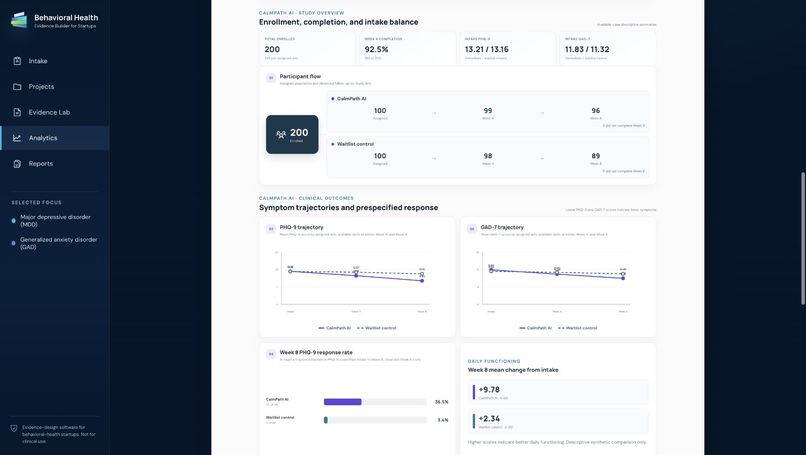
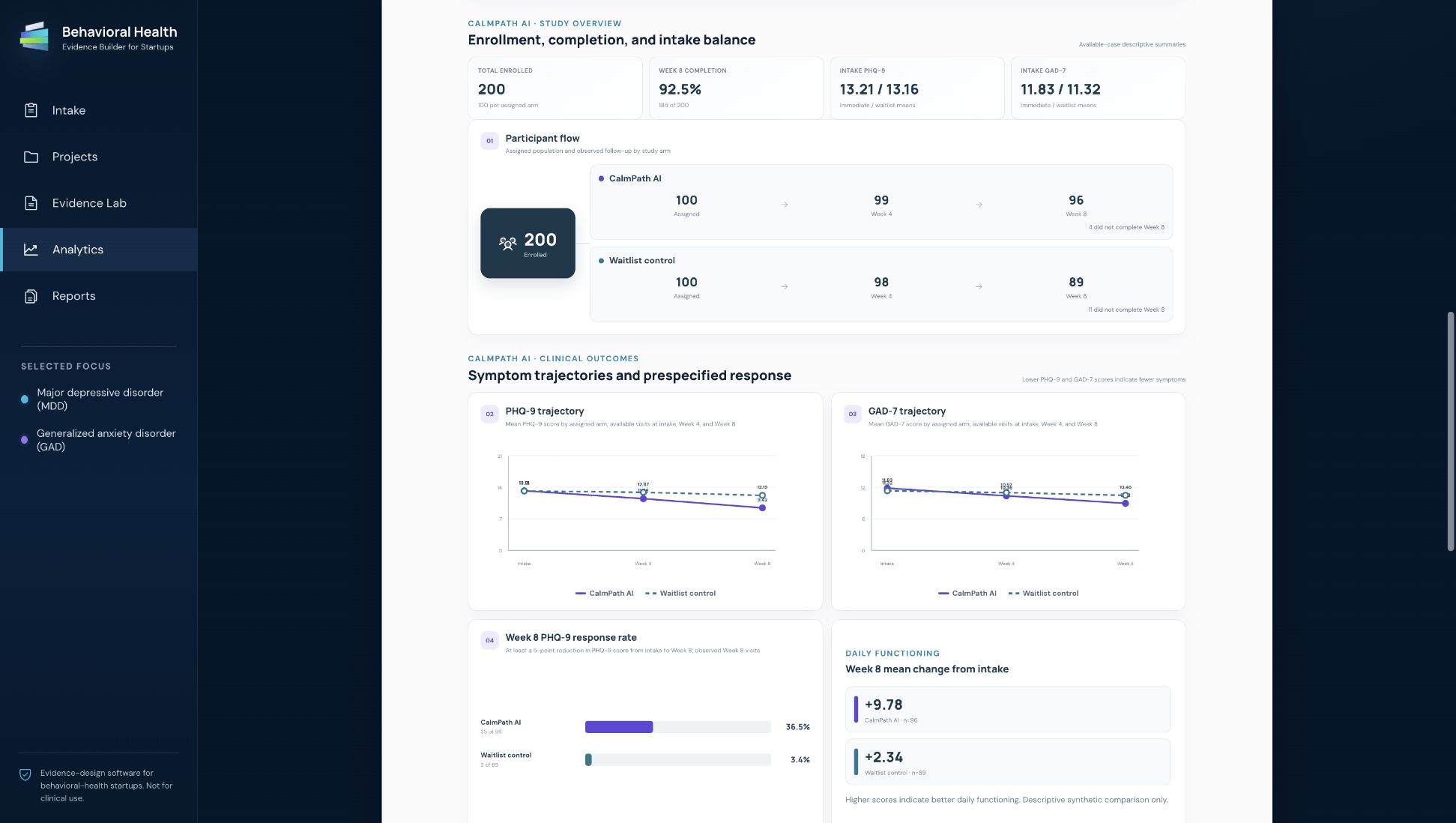
Review participant flow and symptom trends.
-
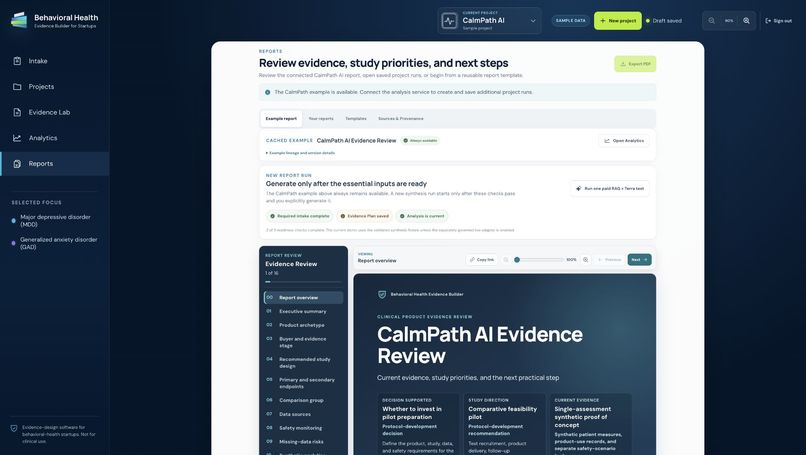
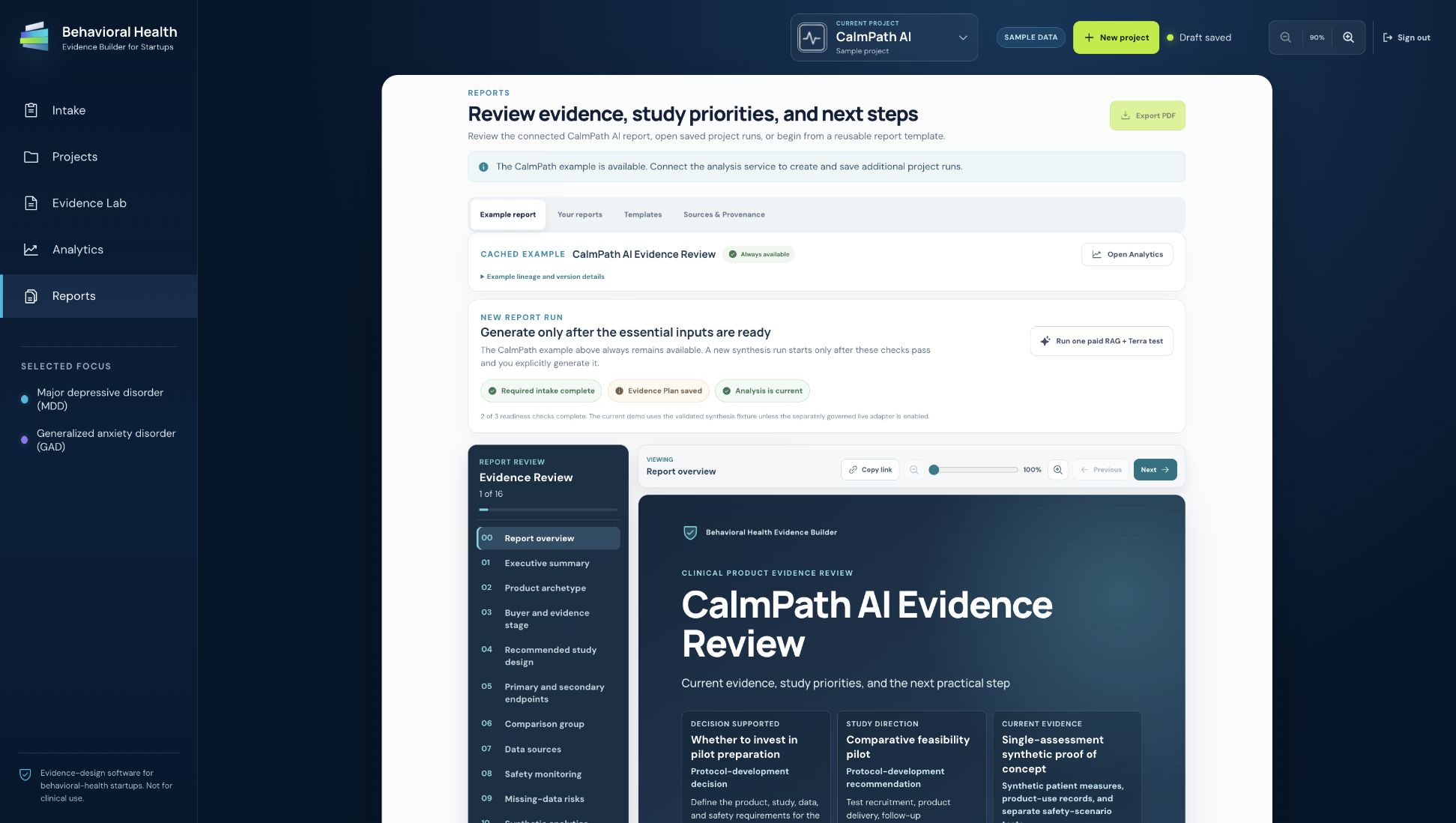
Create a traceable product evidence review.
Inspiration
As a healthtech consultant and mental health provider, I repeatedly see behavioral health companies struggle to turn promising products into credible evidence strategies. Research, outcome measures, product data, safety requirements, and clinical guidance are scattered across disconnected tools and documents and are slowly implemented.
This problem is especially urgent for AI-enabled wellness and behavioral health products, where teams have moved quickly without allowing AI-generated products to be evaluated using structured evidence plans.
What it does
Behavioral Health Evidence Builder turns product roadmaps, goals, available data, research, and practical constraints into a traceable Evidence Plan, Analytics workspace, and 5.6-terra RAG-informed reports.
It helps teams decide what to measure, what to test next, and what they can responsibly communicate. Evidence, calculations, assumptions, limitations, and AI-generated explanations remain clearly separated.
Most importantly, it lets behavioral health companies building AI tools understand what the gaps and needs of their products are to improve their quality, evidence, and scalable attributes.
How we built it
We built a React and vinext frontend connected to a FastAPI backend, with Pydantic for validated contracts and SQLite for versioned plans, analyses, and report lineage. An OpenAI vector store containing a corpus of 500+ articles to guide Terra on product and clinical strategies was also employed.
The platform combines deterministic analytics, governed evidence retrieval, and an OpenAI Responses API adapter for bounded synthesis. The demonstration uses synthetic data and check-in fixtures to begin before using patient data. Sites is used to host the website.
Challenges we ran into
Our biggest challenge was using AI to accelerate evidence work without letting it invent metrics, citations, or clinical conclusions.
We also needed to make a complex research workflow accessible while preserving traceability as products, evidence plans, datasets, and analyses change over time.
Accomplishments that we're proud of
We built an end-to-end prototype connecting guided intake, evidence planning, reproducible analysis, governed retrieval, and traceable reporting.
We are especially proud that every report remains connected to its inputs, results, sources, gaps, and limitations and that the platform focuses on better decisions rather than polished but unsupported claims.
What we learned
We learned that behavioral health teams need organization and evidence plans. They need a connected system that turns scattered information into defensible decisions. We also learned that responsible AI requires visible boundaries between calculated results, retrieved evidence, expert judgment, and model-generated explanations.
What's next for Behavioral Health Evidence Builder
Next, we plan to validate the platform with human data, expand the evidence corpus, and add more stage-aware study and reporting guidance. We plan to convert this app to a workspace for behavioral health startups and implementation science experts.
Our goal is to help behavioral health teams move from product concept to a credible evidence strategy in hours instead of weeks, while keeping every conclusion traceable and appropriately qualified.
Built With
- behavioral
- clinical
- cloudflare
- fastapi
- health
- next.js
- openai
- openai-api
- pydantic
- python
- rag
- react
- responses
- sqlite
- structured
- typescript
- vinext
- vite
- zotero

Log in or sign up for Devpost to join the conversation.