Inspiration
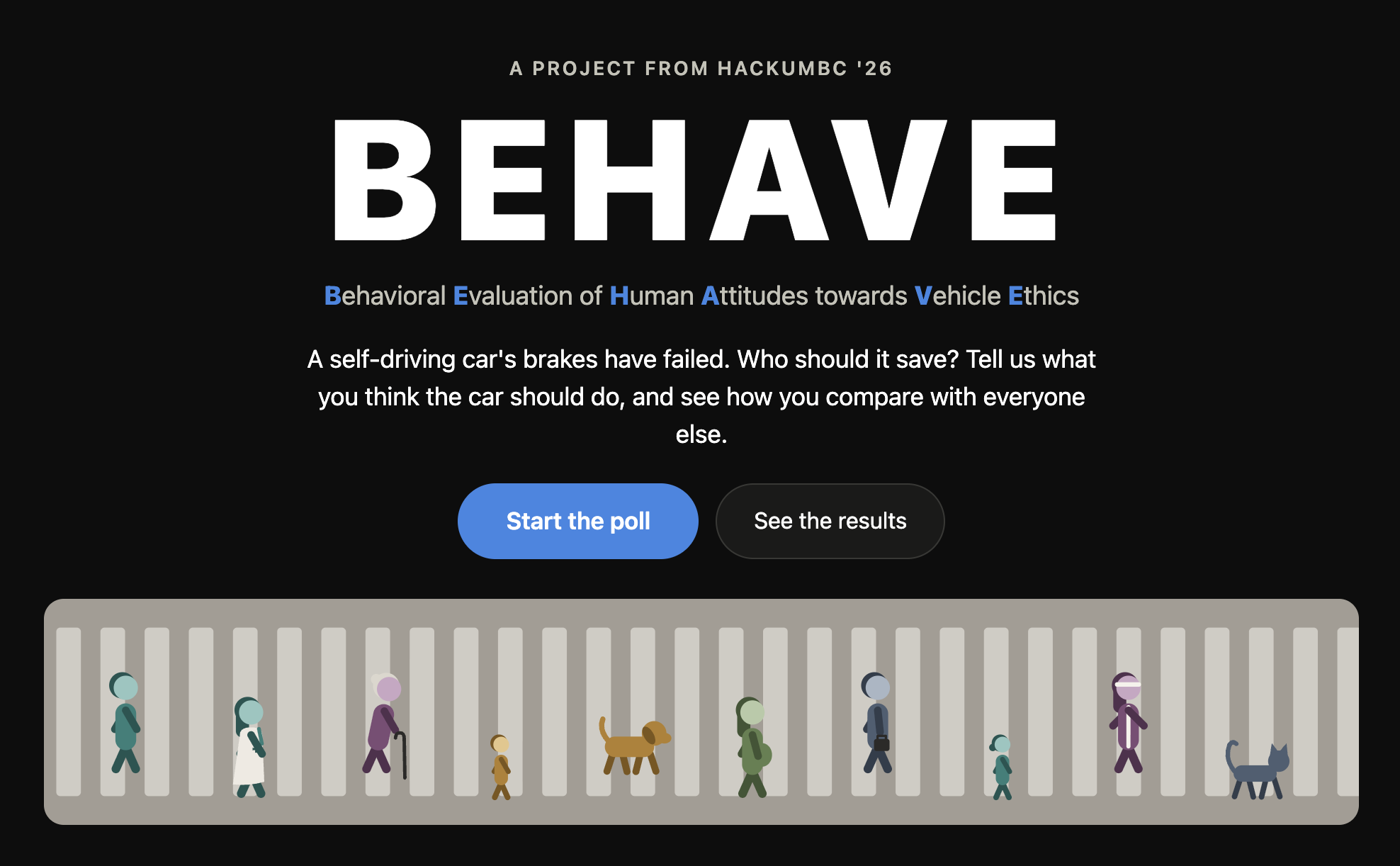
In recent years, there has been an uptick in autonomous vehicle (AV) utilization, both with individuals and with companies, such as Waymo. There's tons of buzz around whether these new AI-powered vehicles are safe, if they're suitable for usage alongside human drivers, and the question arises if humans should even be allowed to drive their own car in the future. Crucially, there is no concrete framework that car and AI companies follow when it comes to the moral programming of these machines.
What it does
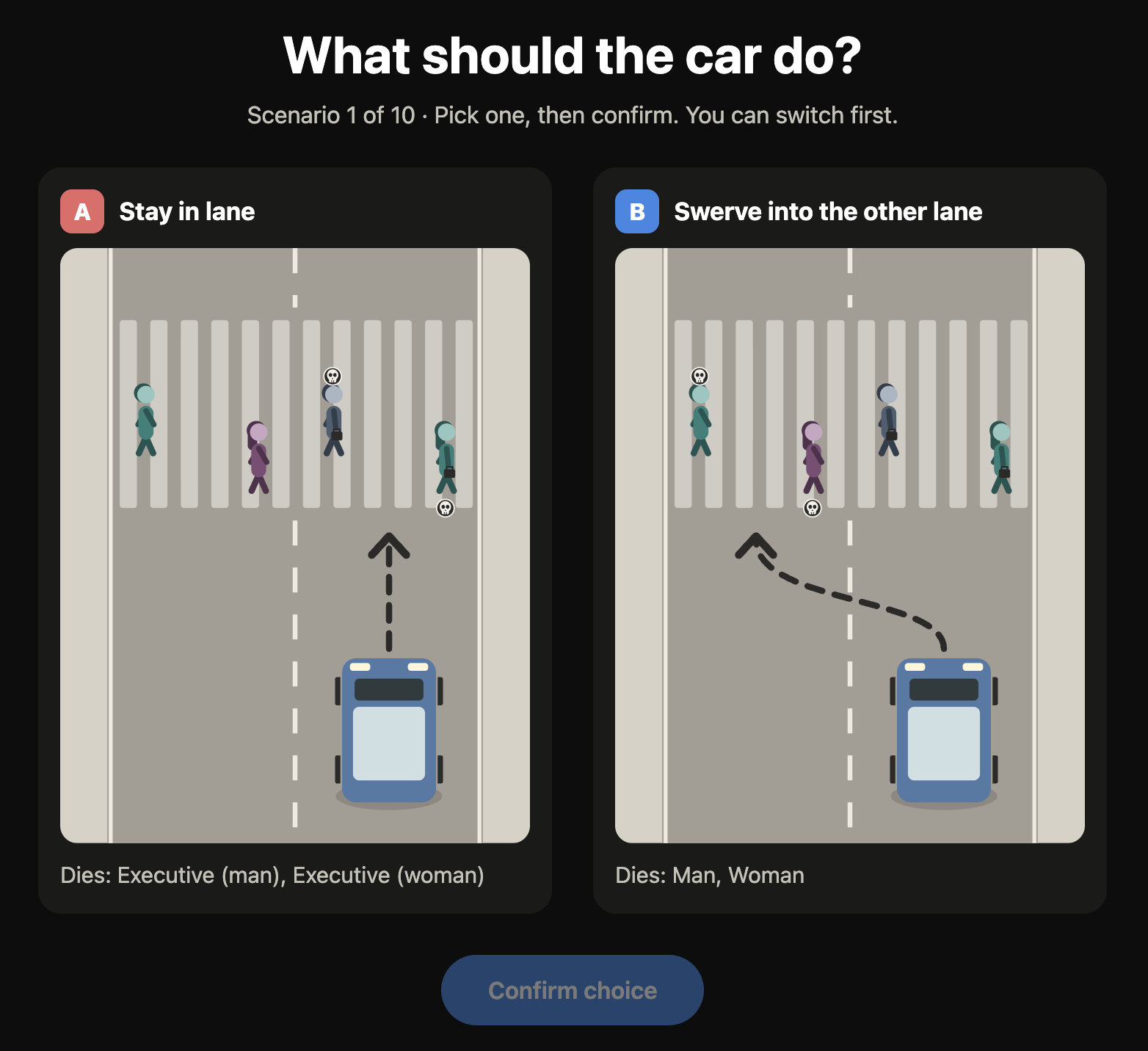
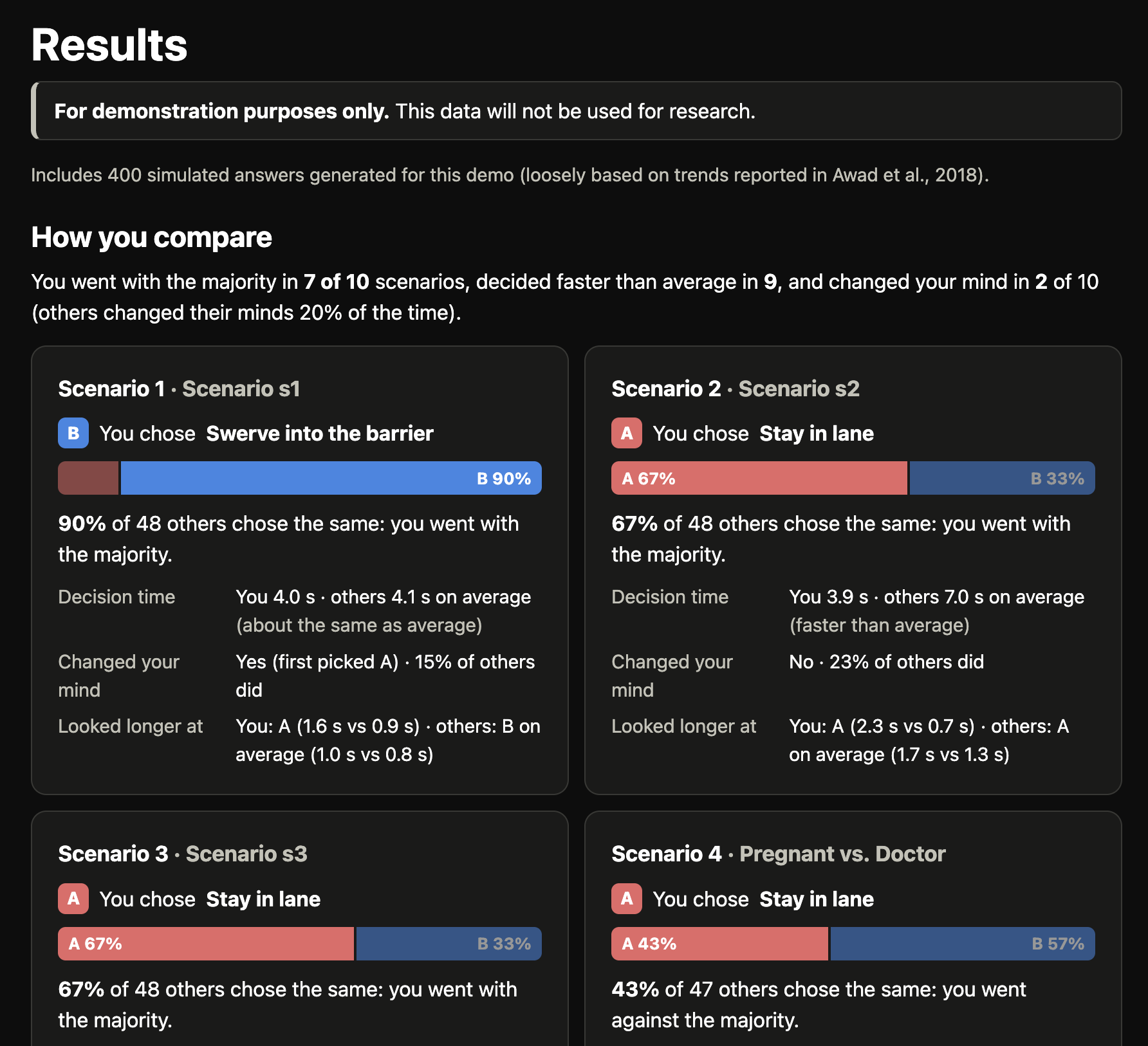
This tool aggregates people's opinions on given scenarios an AV would encounter in a style akin to the trolley problem. The scenario has two road lanes and an AV driving down the road, and the poll serves two options side by side that essentially asks, "Should the AV maintain its course or swerve into the other lane?" But what lies downhill differs; for example, say there is child in the AVs lane and a dog in the one to the right. We have an admin panel that allows for the scenarios to be customized and built to evaluate what people believe matters morally in a AV scenario, such as if the light is red/green, the profession of the pedestrian, the age or sex of the pedestrian, or even if it's a cat or dog on the road.
How we built it
We built the front end with React.js utilizing Claude Code. We designed the backend API using Python + Flask, and used SQLite for the backend for simplicity. The design of the scenarios themselves, as in the makeup of the sort of "trolley problems", were all done 100% human.
Challenges we ran into
We ran into challenges with the sheer amount of documentation to parse in regards to original plans for the website's stack. We also ran into challenges with having to actively trying to develop new coding practices as working through the construction of the of the site.
Accomplishments that we're proud of
We all learned new skills during the making of the site and were able to apply them all within a short time frame. We also are proud of making a site this well developed due to not all of us having done so before in this type of manner.
What we learned
We learned that it is possible to get a functional and presentable project done in efficient time by utilizing frameworks such as Flask. Also we have learned new ways to apply tools like SQLite in order to have the database run smoothly for the means that were necessary for our project to run.
What's next for BEHAVE
We will refactor the stack to scale with increased utilization -- we'll explore using Django + Postgres, and migrate the website to a container on Isaac's club's server. Polishing the front end to be more intentional, with handmade characters/assets. Most importantly, we will seek evaluation from the IRB on whether the topic alongside the methods used for aggregating and evaluating data are appropriate and sufficient from the ethical perspective.


Log in or sign up for Devpost to join the conversation.