-
-
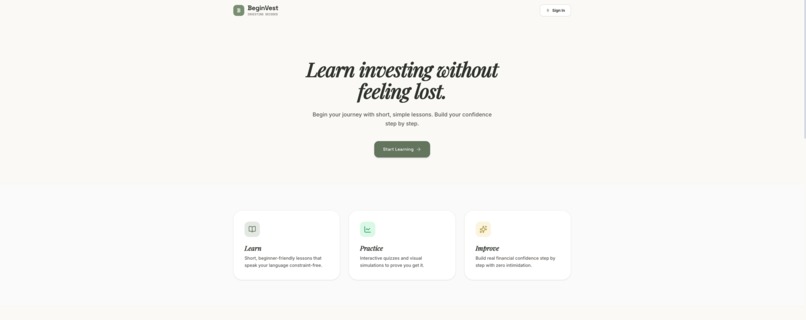
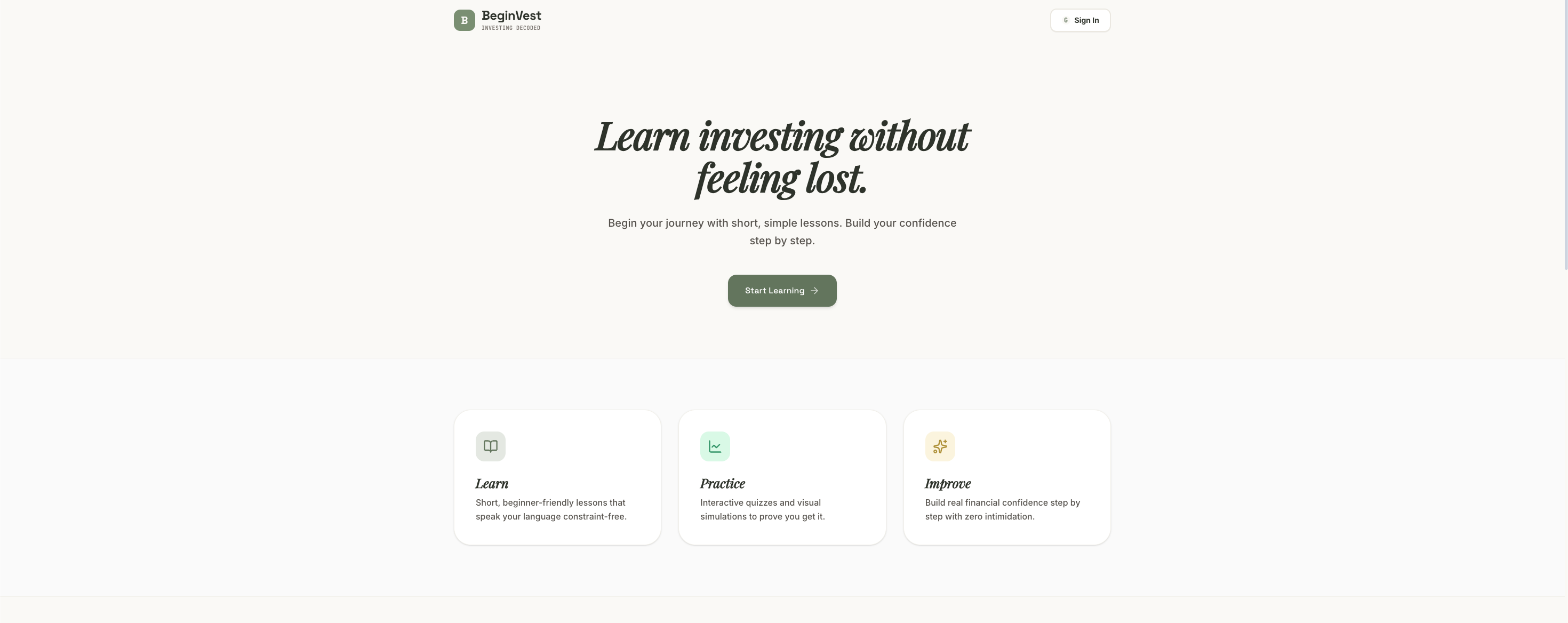
Home page before user logs on, provides brief insight of the app.
-
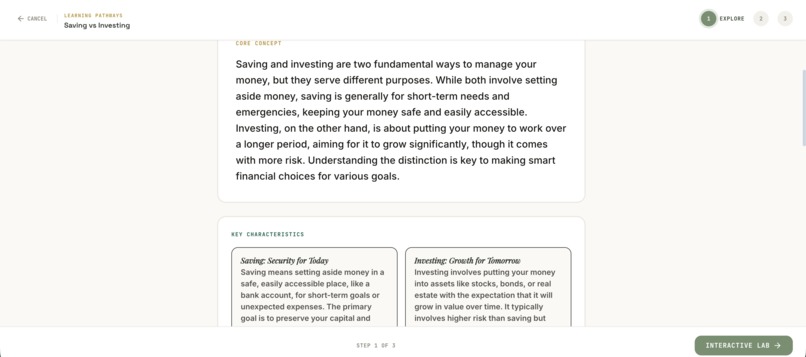
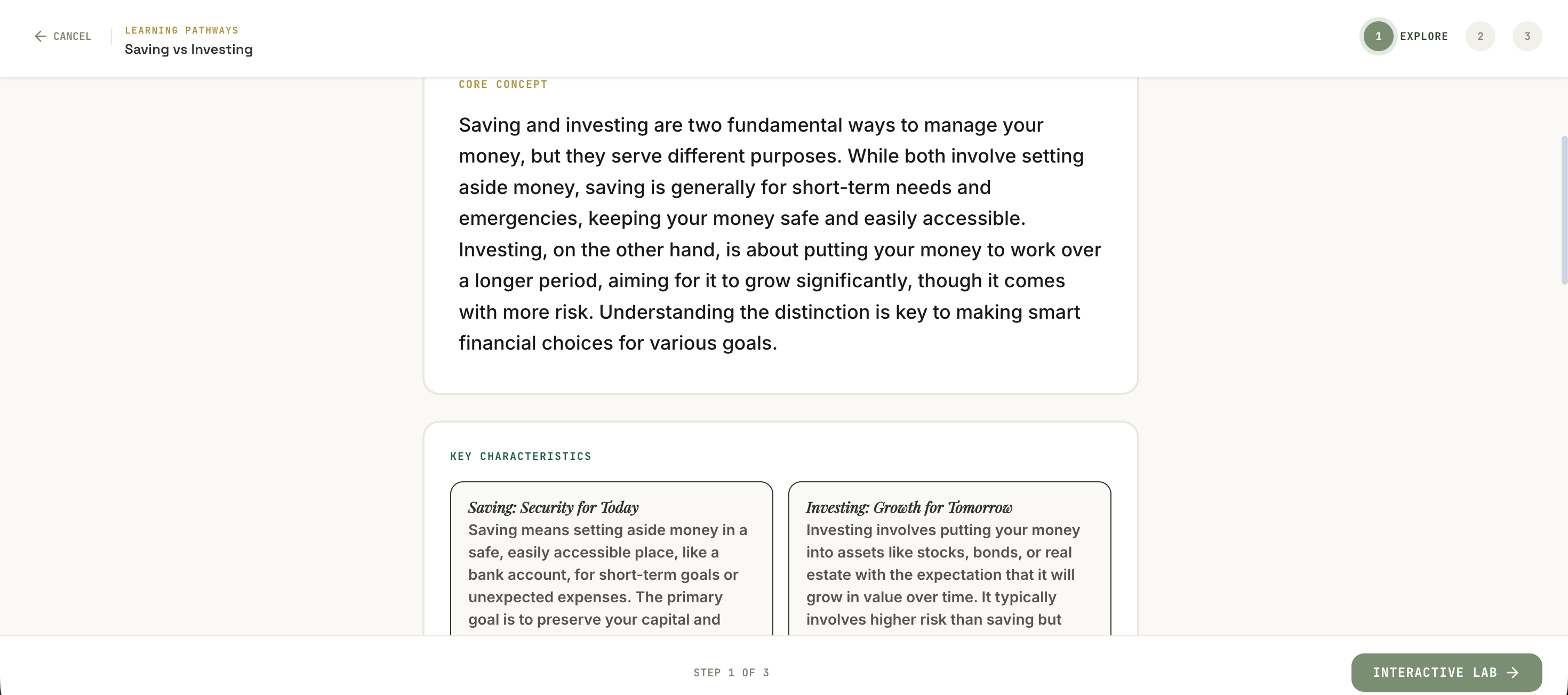
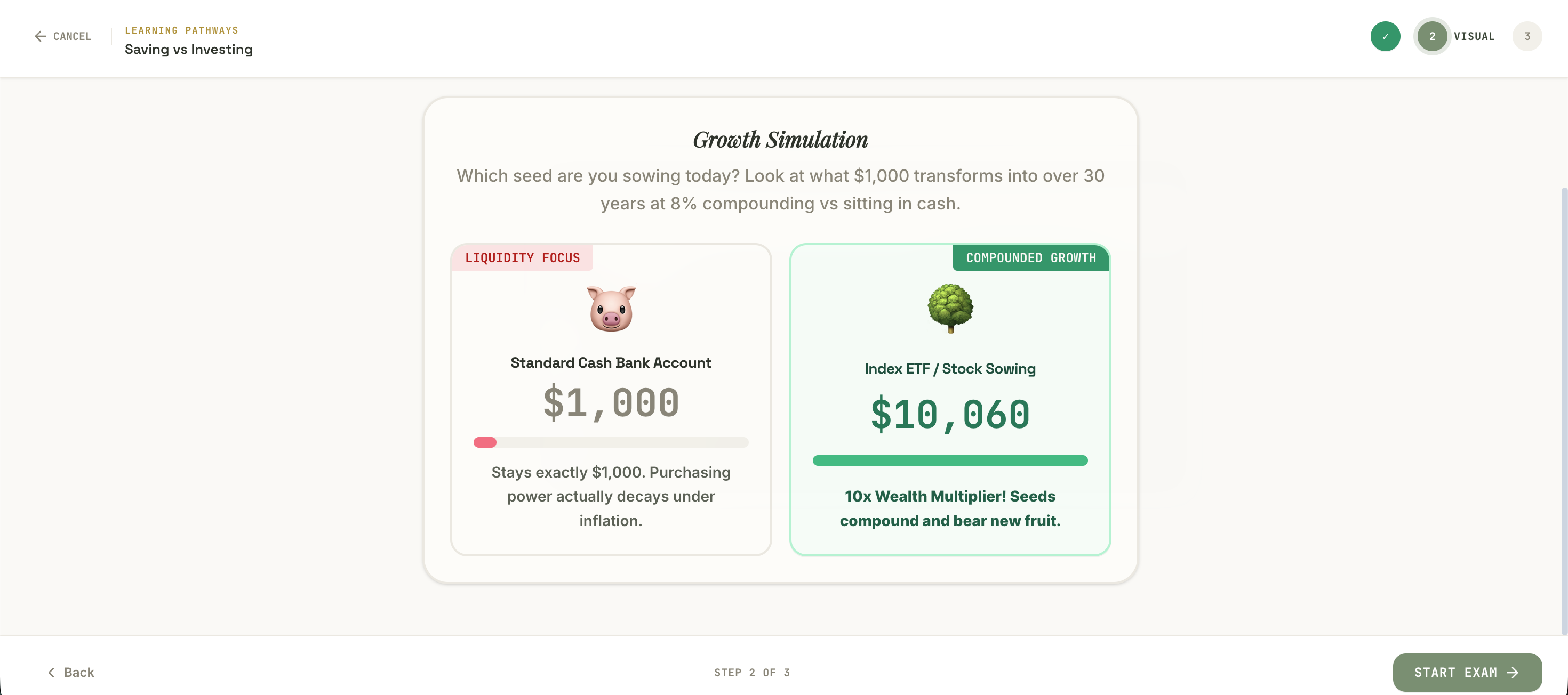
Reading page of the lesson, including Key Ideas, Common Traps, Historic Insight, Real-World Case Example, and Overall Takeaways.
-
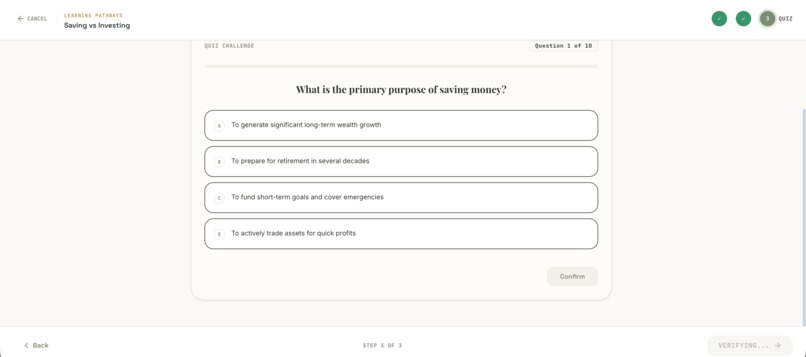
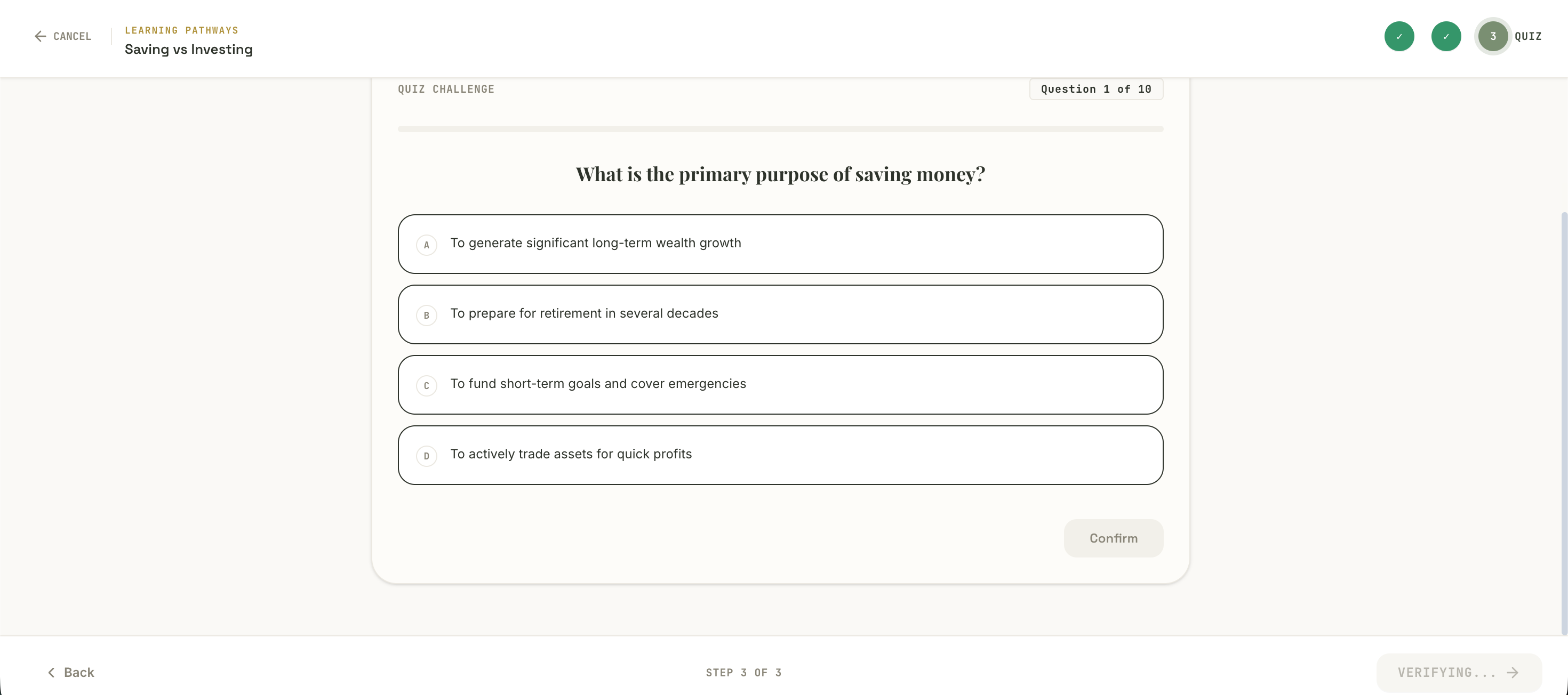
Quiz to apply newly learnt knowledge.
-
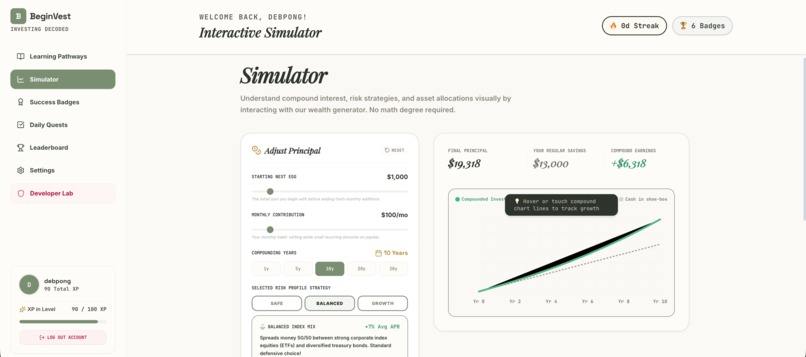
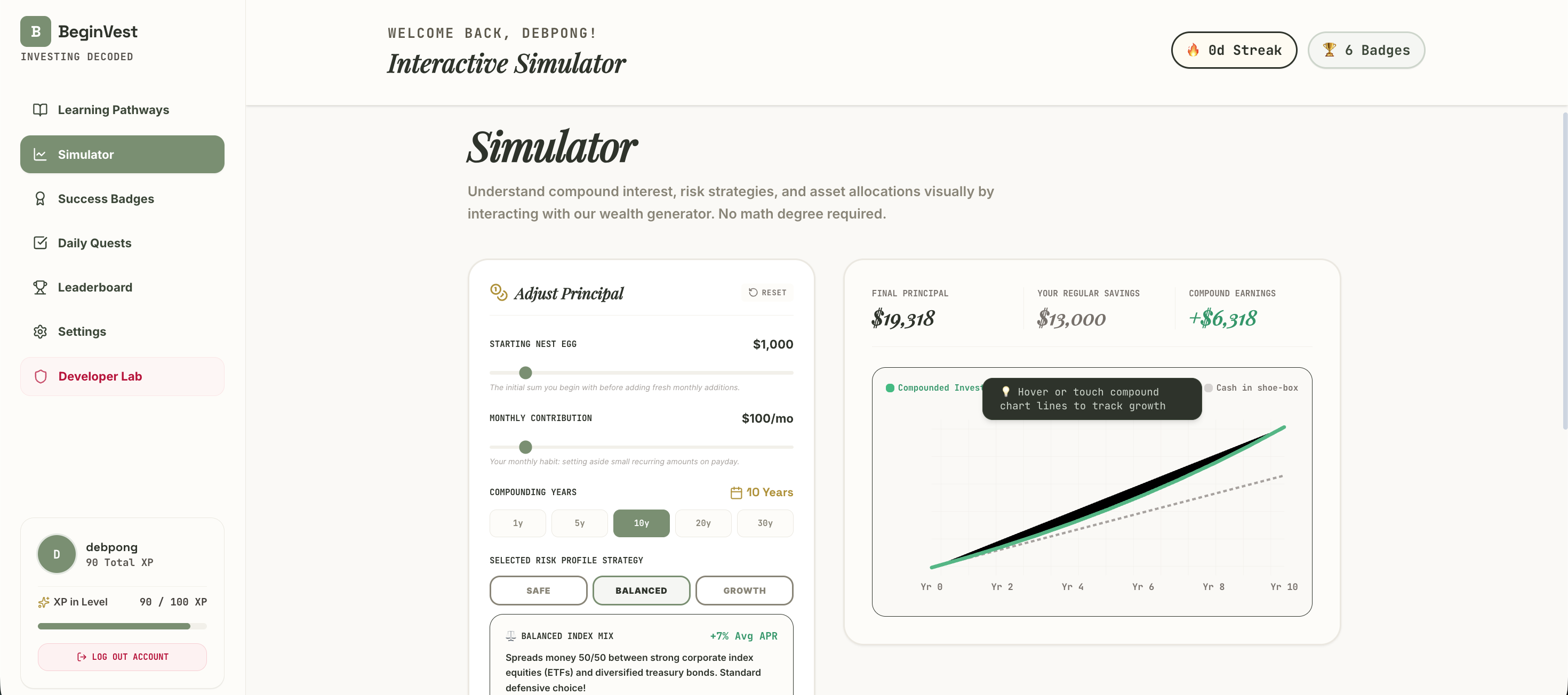
Interactive simulator to visualize monetary growth of investment over variable time.
-
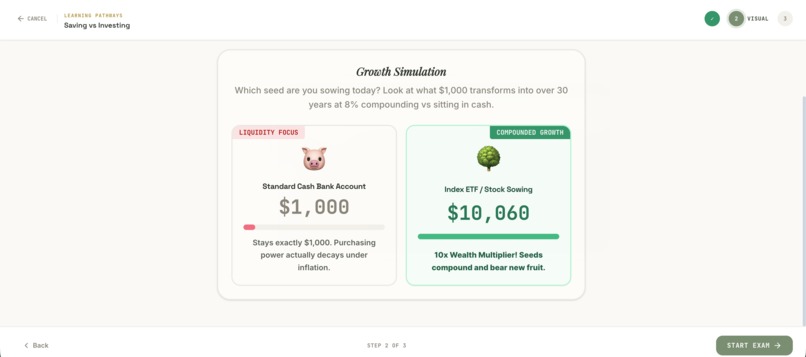
Interactive lab portion of select lessons.
-
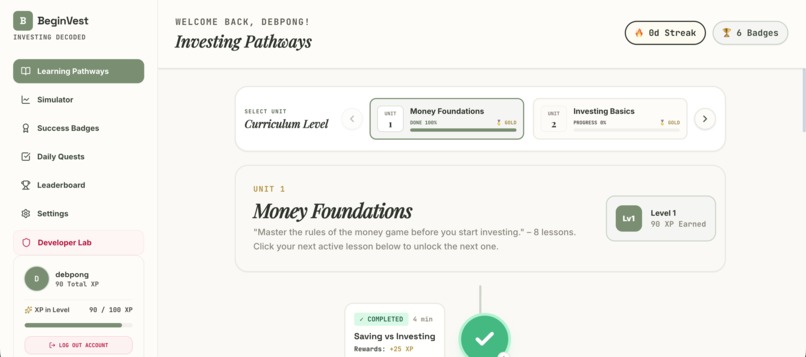
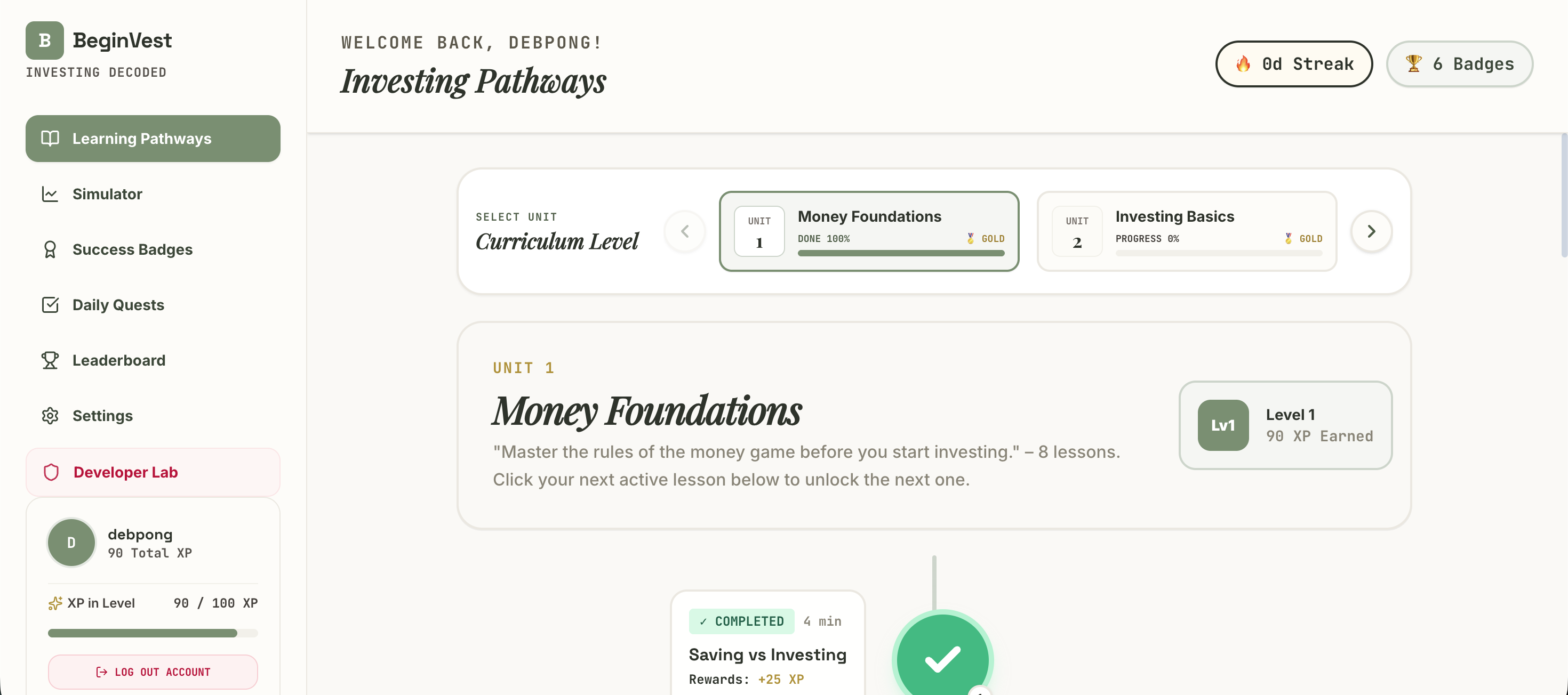
Home page following login. Includes lessons of the current unit, navigation bar, settings, etc
-
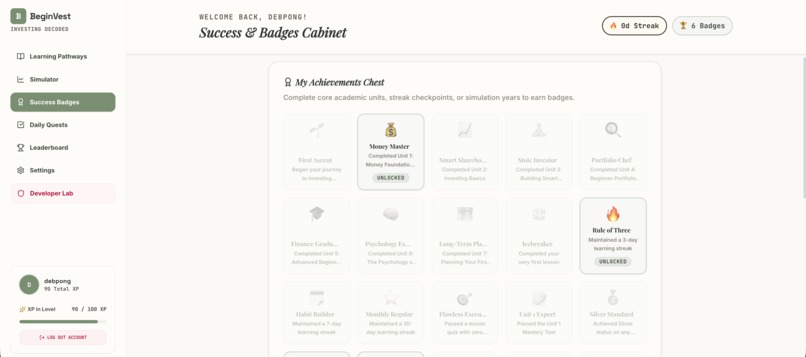
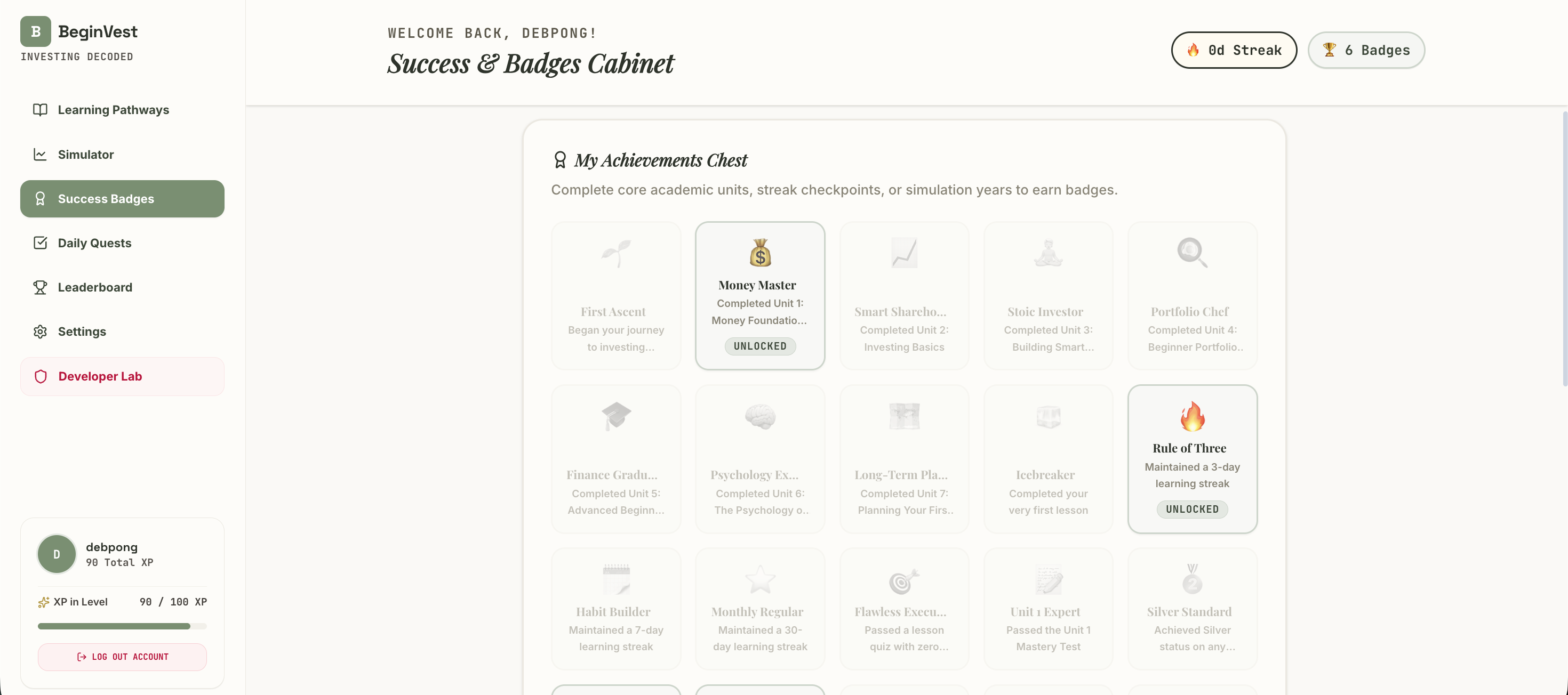
Badges to gamify the experience to continue learning
-
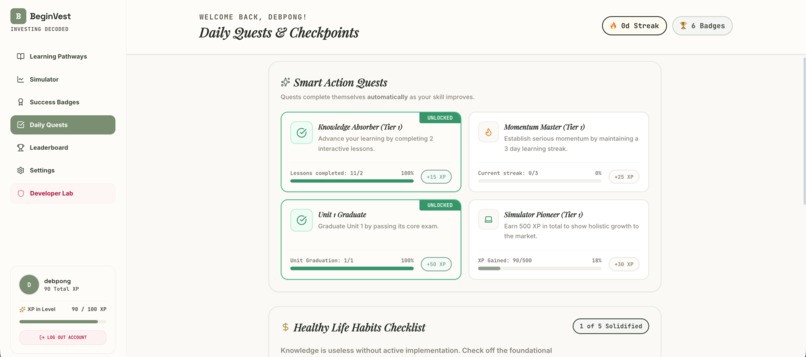
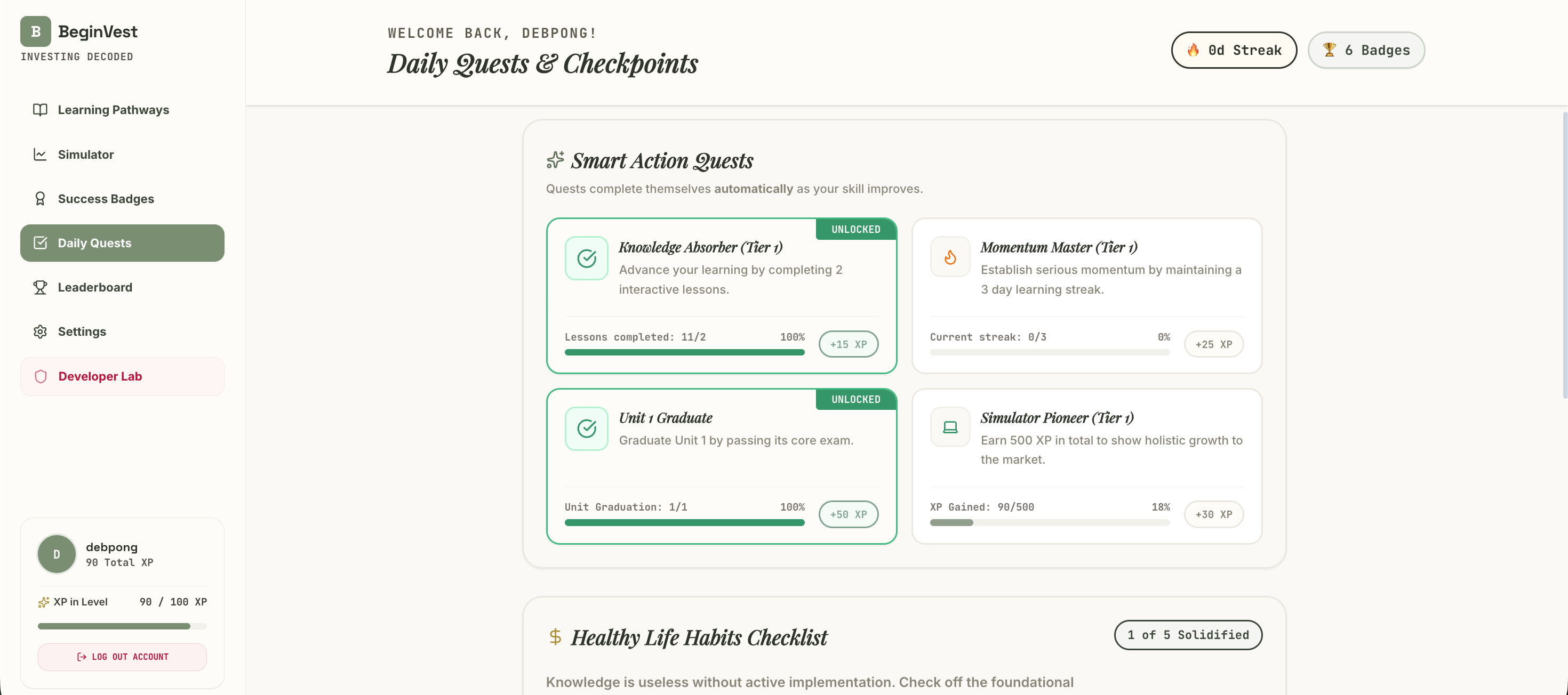
Quests to to motivate the user.
-
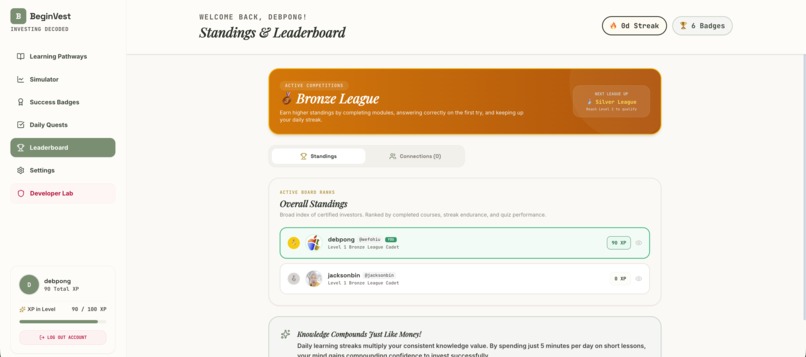
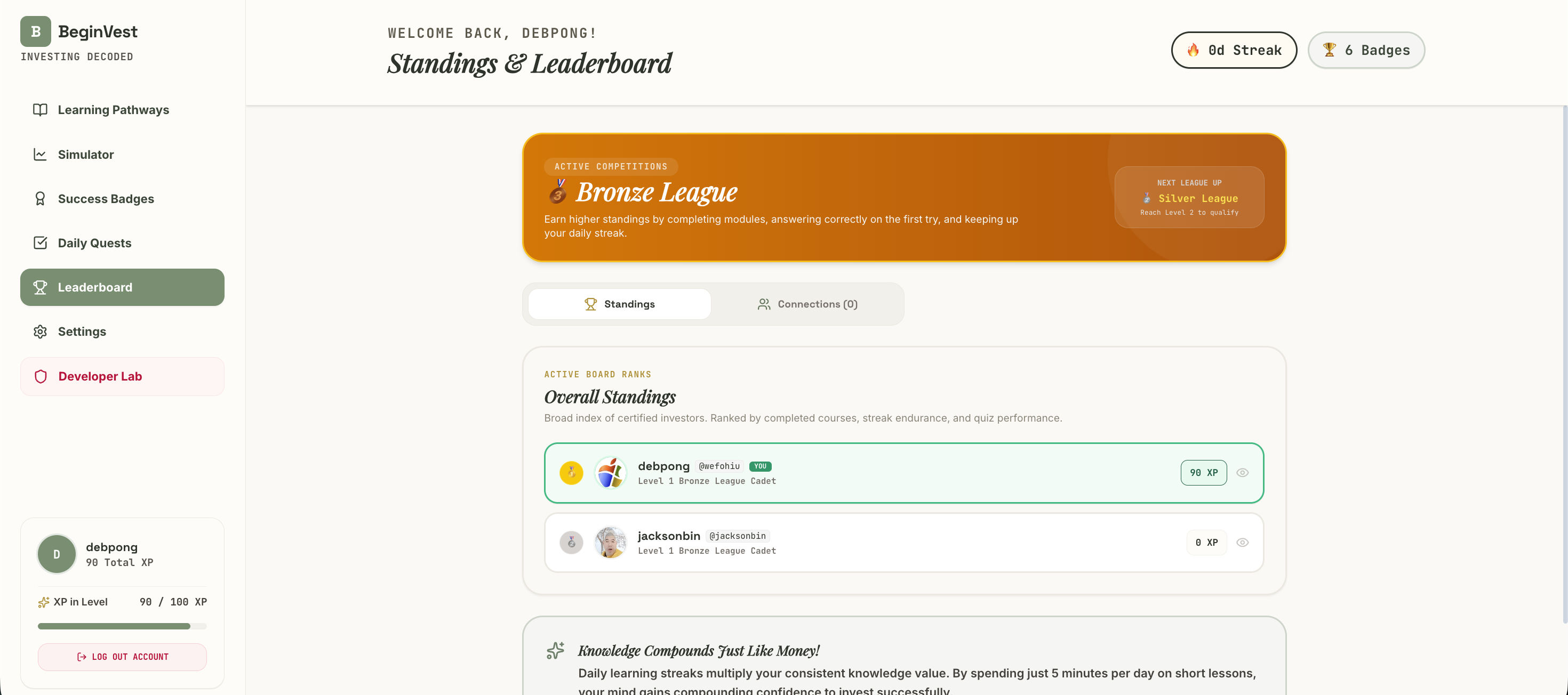
Leaderboard with other users to promote competitive spirit among learners.
-
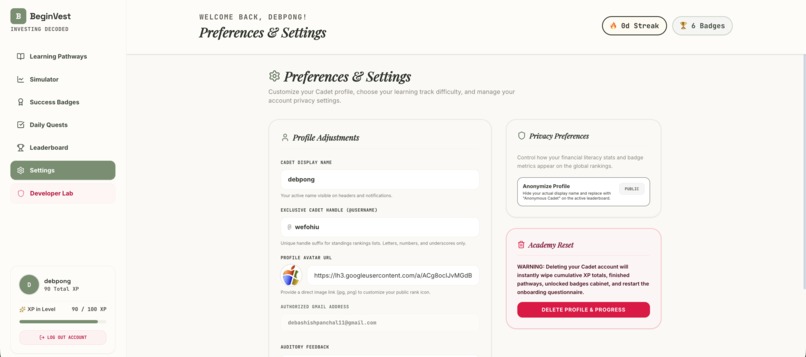
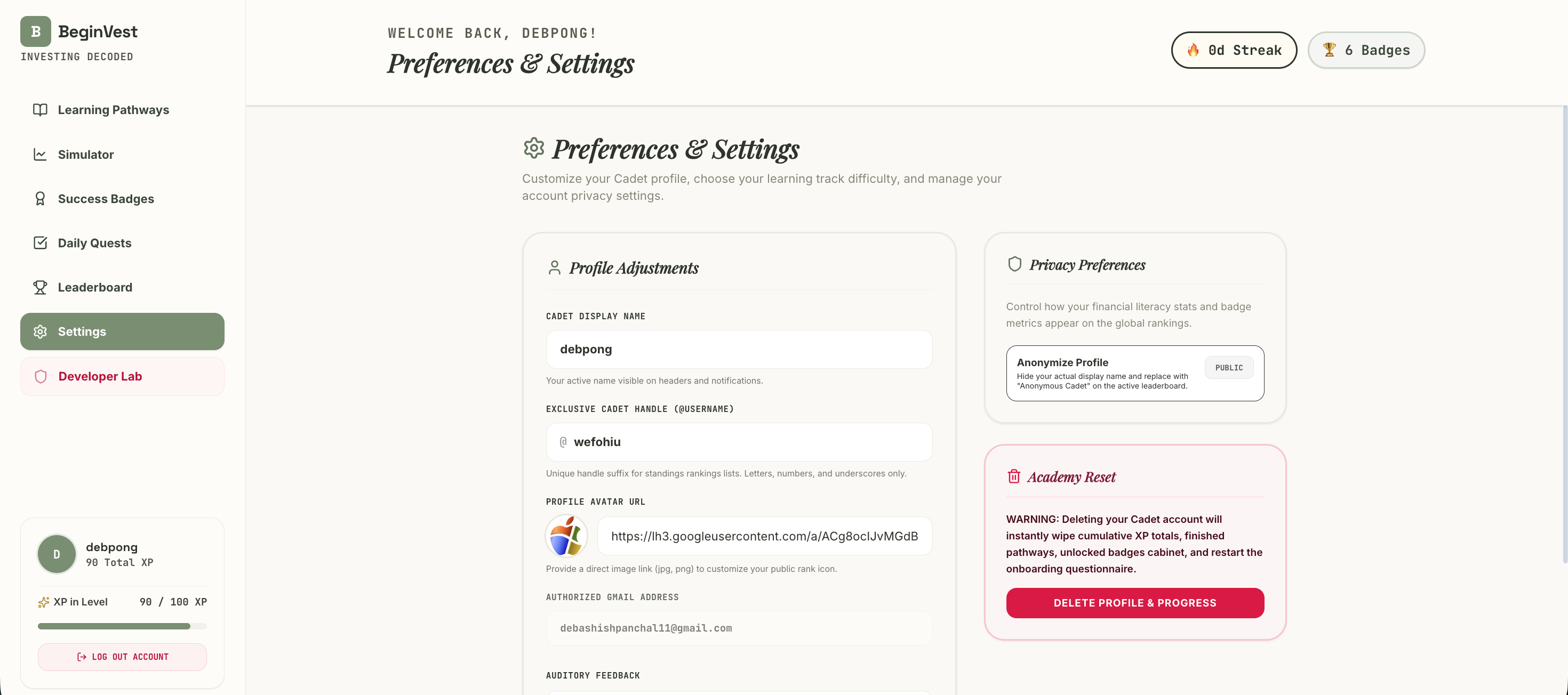
Settings page with various settings
BeginVest Project Story
About the Project
BeginVest started with a problem I kept seeing around me: a lot of teenagers, including me, wanted to learn about money, investing, and financial literacy, but most resources felt either too advanced, too boring, or not built for how beginners actually learn.
When I looked at common finance resources like Investopedia or beginner investing guides from Investor.gov, I realized the information was useful, but it could still feel overwhelming if you were starting from zero. Terms like ETFs, diversification, volatility, and risk tolerance were often explained in ways that made sense to experts, but not always to younger learners.
That is what pushed me to build BeginVest, an interactive financial education platform made specifically for complete beginners. The goal was never to help users trade real assets or chase profits. Instead, I wanted to create a safe place where people could build real financial knowledge through lessons, quizzes, simulations, and gamified progress.
Inspiration
My inspiration came from two places.
First, I have always been interested in finance and investing, but I often felt overwhelmed by how much information was out there. There were endless articles, videos, and opinions, but not much guidance on where a beginner should actually start.
Second, I noticed that a lot of educational platforms struggle to keep people engaged. Even when the content is good, students can lose interest because the experience feels passive. Reading long articles or watching lectures does not always lead to real understanding.
I wanted to make learning feel more active.
I kept asking myself:
What if learning finance felt more like progressing through a game instead of reading a textbook?
That idea became the foundation of BeginVest.
One concept that especially inspired me was compound growth. Finance becomes much easier to understand when you can actually see how money grows over time. For example, the compound interest formula
$$ A = P\left(1 + \frac{r}{n}\right)^{nt} $$
shows how a starting amount (P) can grow based on interest rate (r), compounding frequency (n), and time (t). I wanted BeginVest to turn ideas like that from abstract formulas into something visual and intuitive.
How I Built It
I built BeginVest around a structured curriculum made up of units and lessons that gradually increase in difficulty.
The curriculum starts with basic money concepts like saving vs. investing, inflation, compound interest, budgeting, and debt management. Then it moves into investing concepts like: stocks, ETFs, index funds, diversification, portfolio construction, and risk management
To make the platform more engaging, I added more than just lessons.
Interactive simulations
Instead of only reading about concepts, users can try out scenarios involving growth, risk, and investment decisions. This makes abstract ideas feel much more real and helps users connect theory to outcomes.
Quizzes and mastery tests
Each lesson includes quizzes, and larger unit exams check how well users understand everything together. This helps reinforce learning and shows where someone still needs practice.
Gamification systems
I added XP progression, streaks, badges, quests, and leaderboard systems. These features were meant to make progress feel rewarding and encourage consistency.
Product and UI design
From a development standpoint, BeginVest took a lot of iteration in both content and UI design. I kept redesigning the interface so it would feel more intentional and less generic. I also spent a lot of time refining the wording, removing repetitive templates, improving navigation, and making the whole experience feel less like a typical AI-generated product.
I built the project by constantly testing the flow from a beginner’s perspective: if someone had never heard of investing before, would they know where to start, what to click, and why each lesson mattered? That question shaped almost every design decision.
Challenges I Faced
One of the biggest challenges was realizing how easy it is to build something that technically works but still feels artificial or low quality. A lot of AI-assisted products look fine at first, but once you spend time with them, the repetitive layouts, robotic wording, and generic UX patterns become obvious. I ran into that problem a lot while building BeginVest.
For example: lesson content started to feel repetitive, quizzes became too predictable, or some interactive labs broke or disappeared. Fixing those issues meant constantly revisiting the product and making tough decisions.
Another challenge was scope, because at first, I underestimated how much work goes into building a coherent educational system. Making one lesson is manageable. Making dozens of lessons, simulations, assessments, progression systems, and consistent user flows is a lot harder.
I also learned that improving a product is not always about adding more features. Sometimes the best improvement is removing things that create clutter or confusion.
What I Learned
BeginVest taught me a lot more than finance. I learned technical lessons about: product design iteration debugging user experience system thinking
I also learned a lot about business and product thinking. Most importantly, I learned that useful products come from understanding real user pain points, not just building whatever seems interesting. A feature only matters if it actually improves the experience or solves a real problem.
I also became much more aware of quality. I got better at spotting weak design choices, generic content, and bad user flow.
Final Reflection
Through this project, I gained a much deeper appreciation for both education and software development. More importantly, I learned what it means to think like a builder: constantly asking what works, what feels off, and what can be improved. BeginVest is still improving, but the project gave me something even more valuable than the final product itself: real experience turning an idea into something usable.
Built With
- ai
- api
- css
- framer
- motion
- next.js
- openai
- postgresql
- react
- recharts
- shadcn/ui
- supabase
- tailwind
- typescript
- vercel

Log in or sign up for Devpost to join the conversation.