Inspiration
Living in a community where emergency preparedness is vital, I saw a gap: everyday people lacked accessible, interactive tools to practice first aid—skills that could mean the difference between life and death. I wanted to create something that felt intuitive, no barriers like logins, and aligned with the standards we trust (Red Cross, AHA) to make life-saving training reachable for everyone.
What it does
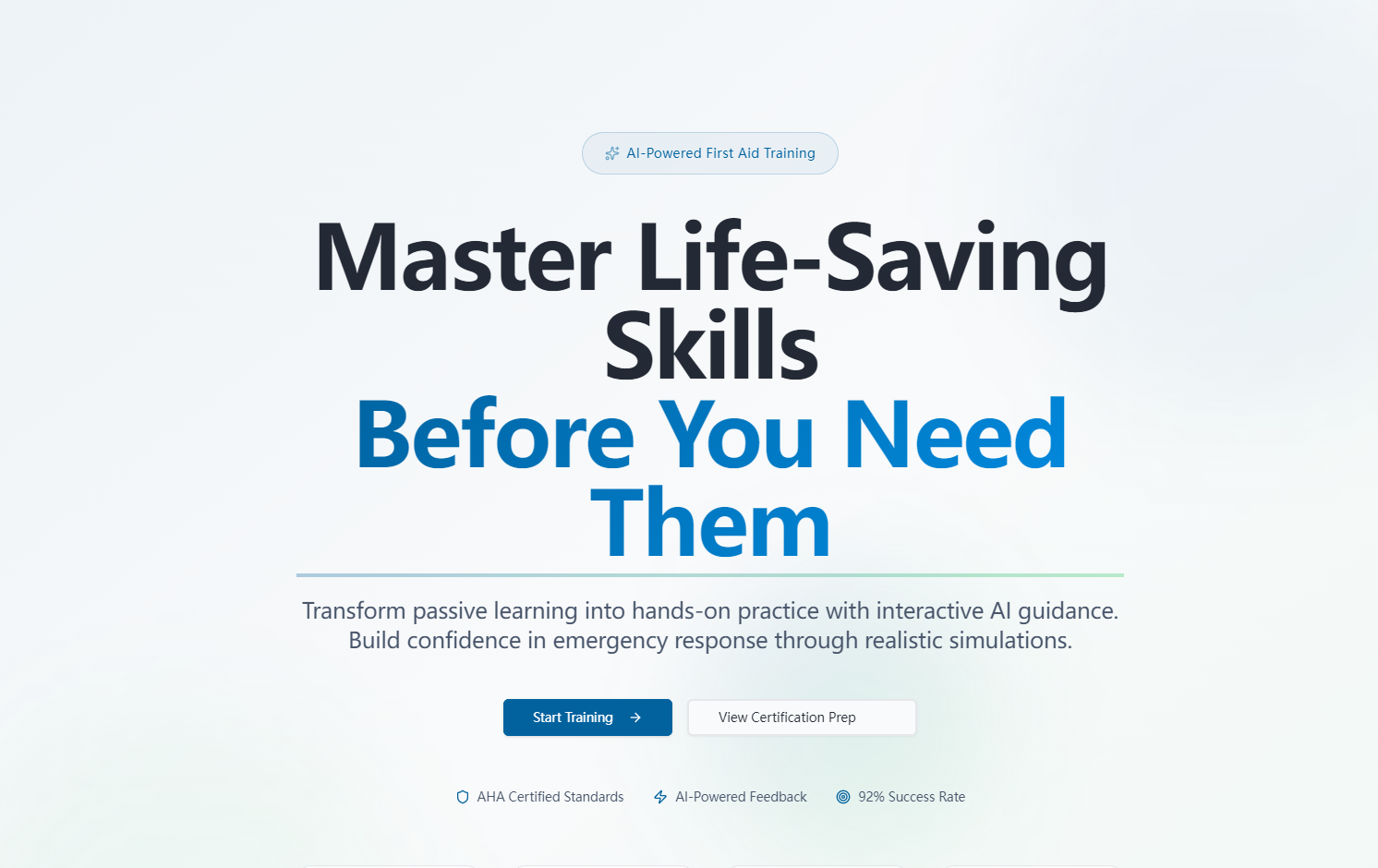
FirstAid Trainer is an AI-powered tool for mastering first aid. It offers realistic drills for cardiac arrest, choking, burns, and more, real-time AI feedback on CPR technique, step-by-step memory training, customizable practice reminders, and certification prep aligned with top U.S. standards—all accessible instantly, no account needed.
How we built it
I started with mapping core user needs (certification prep, skill maintenance) to page structure, then built the frontend with React/HTML/CSS for Western UX norms. Integrated AI APIs for CPR feedback logic, used LocalStorage for data persistence, and Chart.js for progress dashboards. Each module was designed to mirror real emergency scenarios, with color coding (medical blue/red/green) for clarity.
Challenges we ran into
Balancing real-time AI feedback accuracy with a smooth user experience was tough—calibrating the CPR rhythm/depth metrics to feel intuitive but medically accurate took multiple iterations. Also, ensuring reminder functionality worked across all browsers without login sync required creative local storage workarounds.
Accomplishments that we're proud of
Creating a fully accessible tool with no login barriers that mirrors real-world first aid standards. The AI CPR feedback module has been tested to align with AHA guidelines, and users can seamlessly move between scenario drills, quiz prep, and progress tracking—all in a design that feels familiar and non-intimidating.
What we learned
I deepened my understanding of medical first aid protocols (critical for realistic scenario design) and how to translate complex AI evaluation logic into simple, actionable user feedback. I also learned that prioritizing "no login" access meant rethinking data persistence—local storage solutions were key to keeping the tool user-friendly.
What's next for This project
Next, I plan to expand the emergency modules (adding allergic reaction and fracture care), optimize for mobile web use (even without native apps), and integrate more granular AI feedback for all scenario drills. I also want to partner with local first aid organizations to validate the tool against regional training standards, making it even more impactful for everyday users.
Built With
- chart.js
- webnotifications

Log in or sign up for Devpost to join the conversation.