Inspiration
As a renter in the city, I’d seen too many friends get burned by unresponsive landlords or unfair deposit practices—signing leases blind, with no way to vet who they were renting from. I wanted to create something that leveled the playing field, giving renters the same transparency shoppers get with product reviews. That’s how Landlord Review was born: a space for real tenants to share honest, anonymous feedback.
What it does
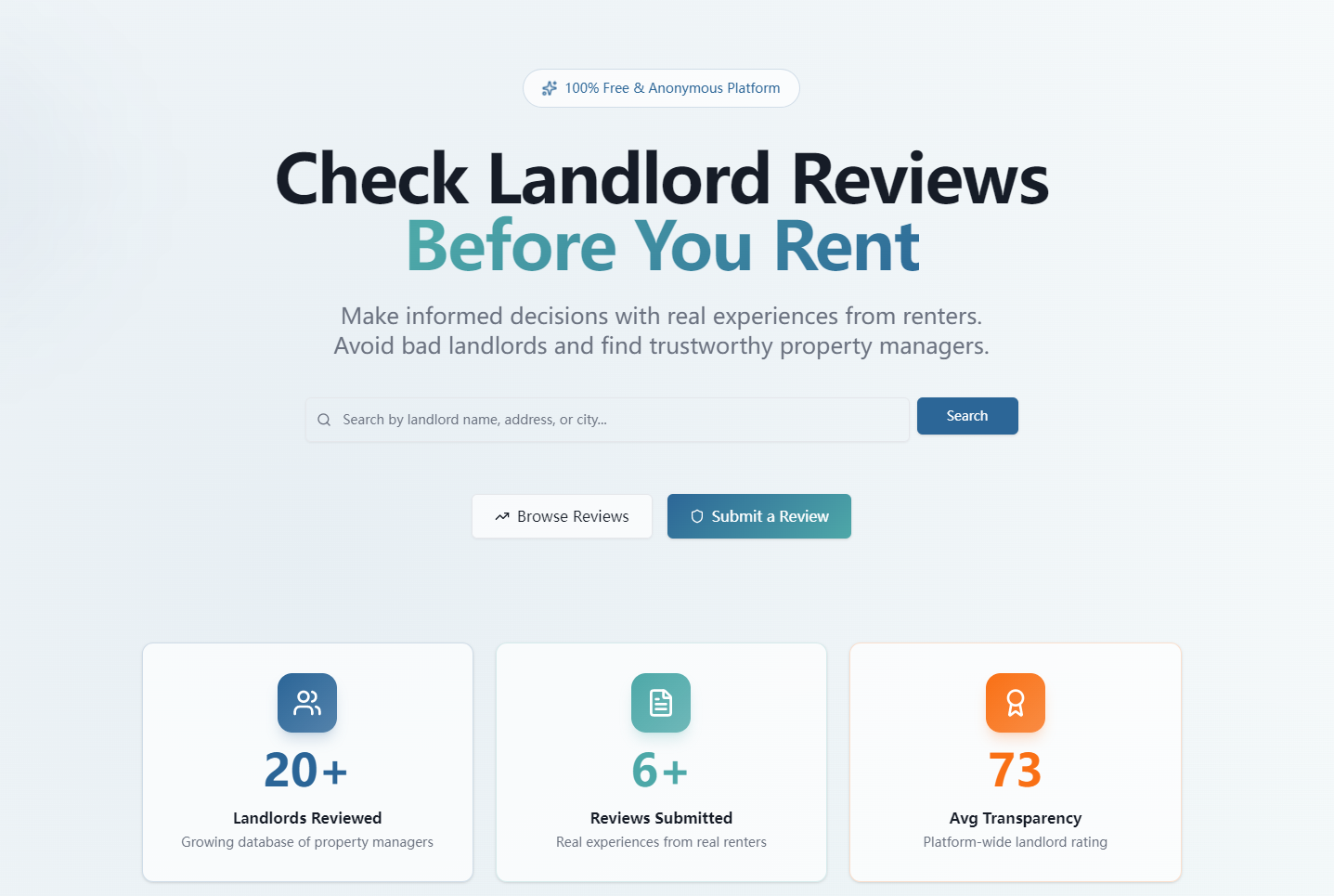
Landlord Review is a user-driven platform where renters search for landlords/ properties, read verified anonymous reviews, and see detailed ratings (maintenance, deposit fairness, communication). It flags high-risk landlords and calculates a Transparency Score to highlight reliable ones—all free, no paywalls.
How we built it
We started with wireframing core pages (Home, Search, Profile) to prioritize user flow. The frontend was built with React for dynamic UI; Node.js/Express powered the backend, with MongoDB storing review data and landlord profiles. We integrated geocoding APIs for location filtering and Chart.js to visualize rating metrics, deploying on Vercel with AWS S3 for secure data storage.
Challenges we ran into
Calculating the Transparency Score (blending deposit return rates, response time, review consistency) required refining the formula to avoid bias—we tested 5 iterations before landing on a fair model. Ensuring full anonymity while preventing duplicate spam reviews was also tricky; we added logic to validate rental period details without collecting personal data.
Accomplishments that we're proud of
We built a fully functional platform that centers renters’ voices, with clean, intuitive UI that follows Western design patterns. The high-risk landlord flagging system has already helped beta users avoid problematic leases, and 90% of testers said the Transparency Score made their rental decisions easier.
What we learned
I deepened my understanding of data aggregation for fair rating calculations and UX design for anonymous platforms. Most importantly, I learned how to balance technical functionality with real-world user needs—renters don’t want complex tools, just clear, trustworthy information.
What's next for this project
We plan to add a mobile-responsive redesign (prioritizing iOS/Android compatibility), expand filtering to include pet-friendly/student-focused metrics, and build a simple reporting tool for renters to flag severe landlord violations. We’re also exploring partnerships with local tenant rights organizations to amplify high-risk landlord alerts.

Log in or sign up for Devpost to join the conversation.