-
-
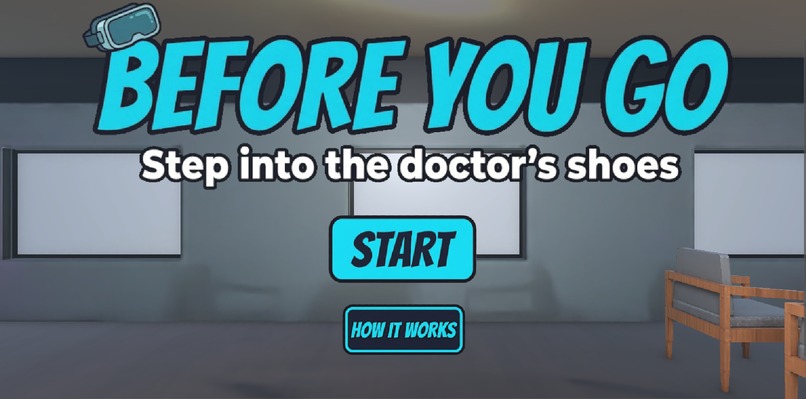
Title Screen
-
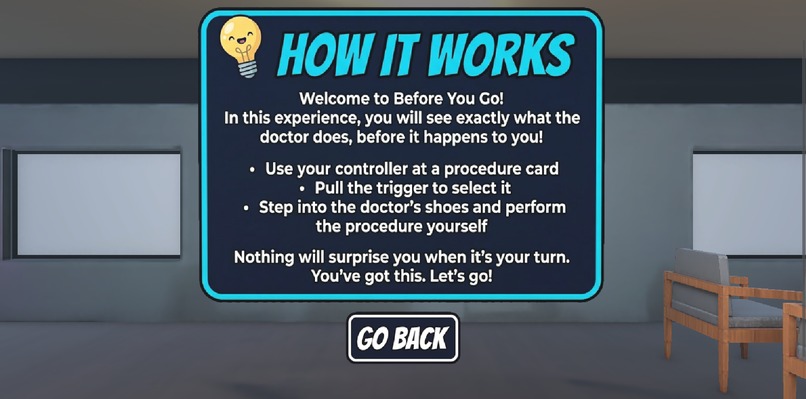
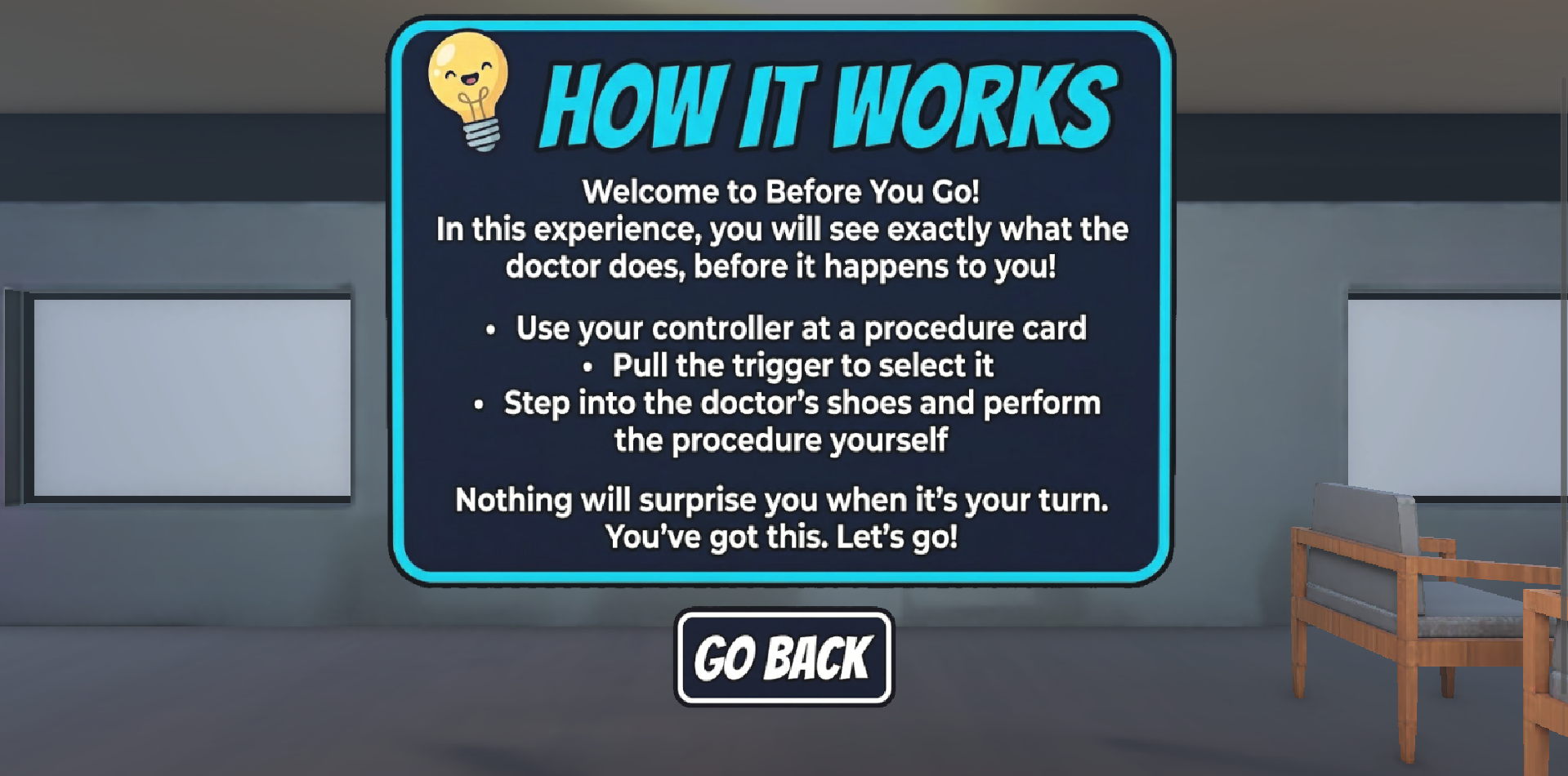
How It Works Screen
-
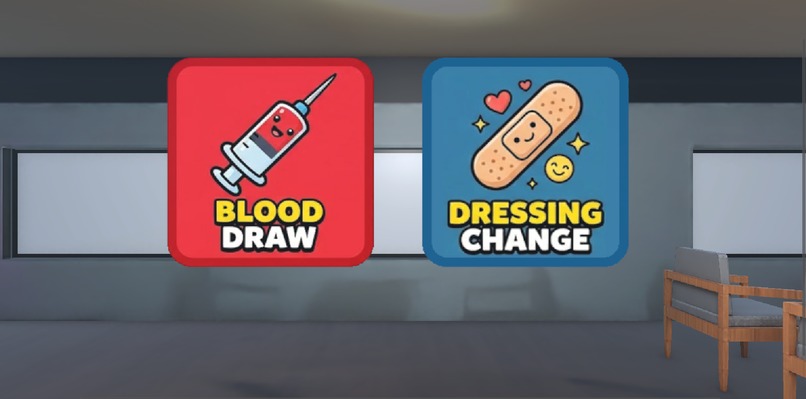
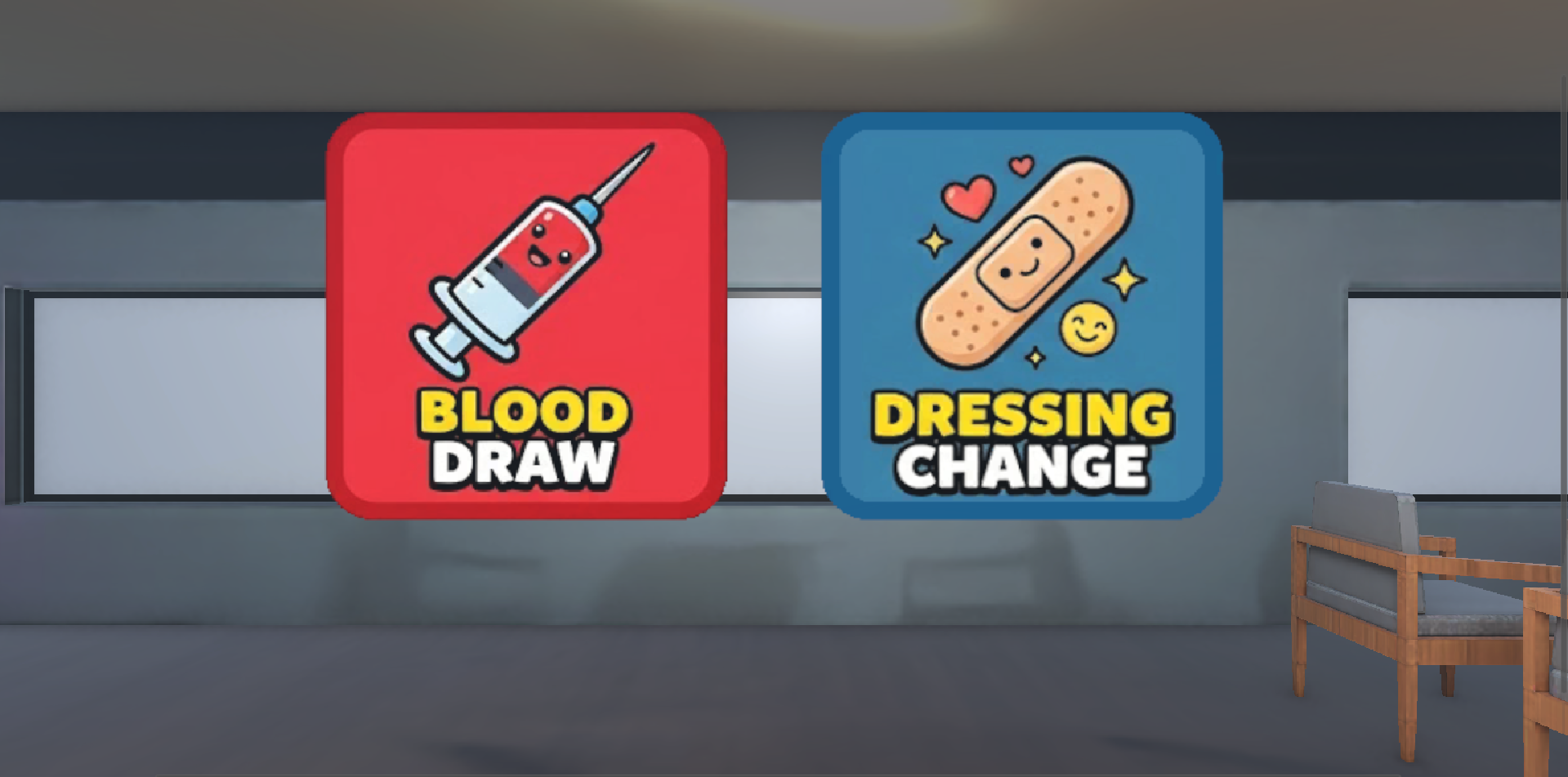
Procedure Selection Screen
-
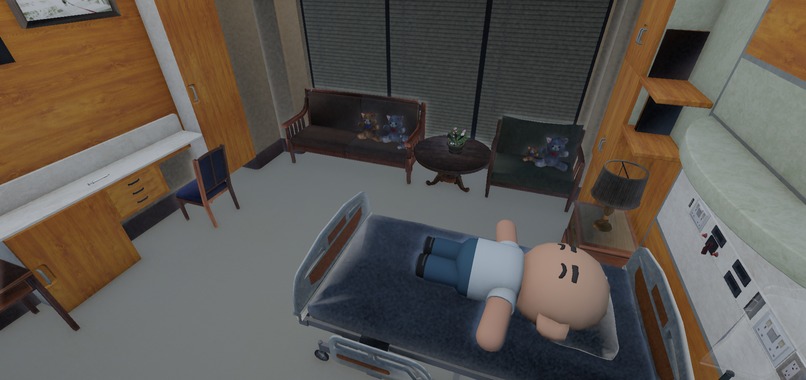
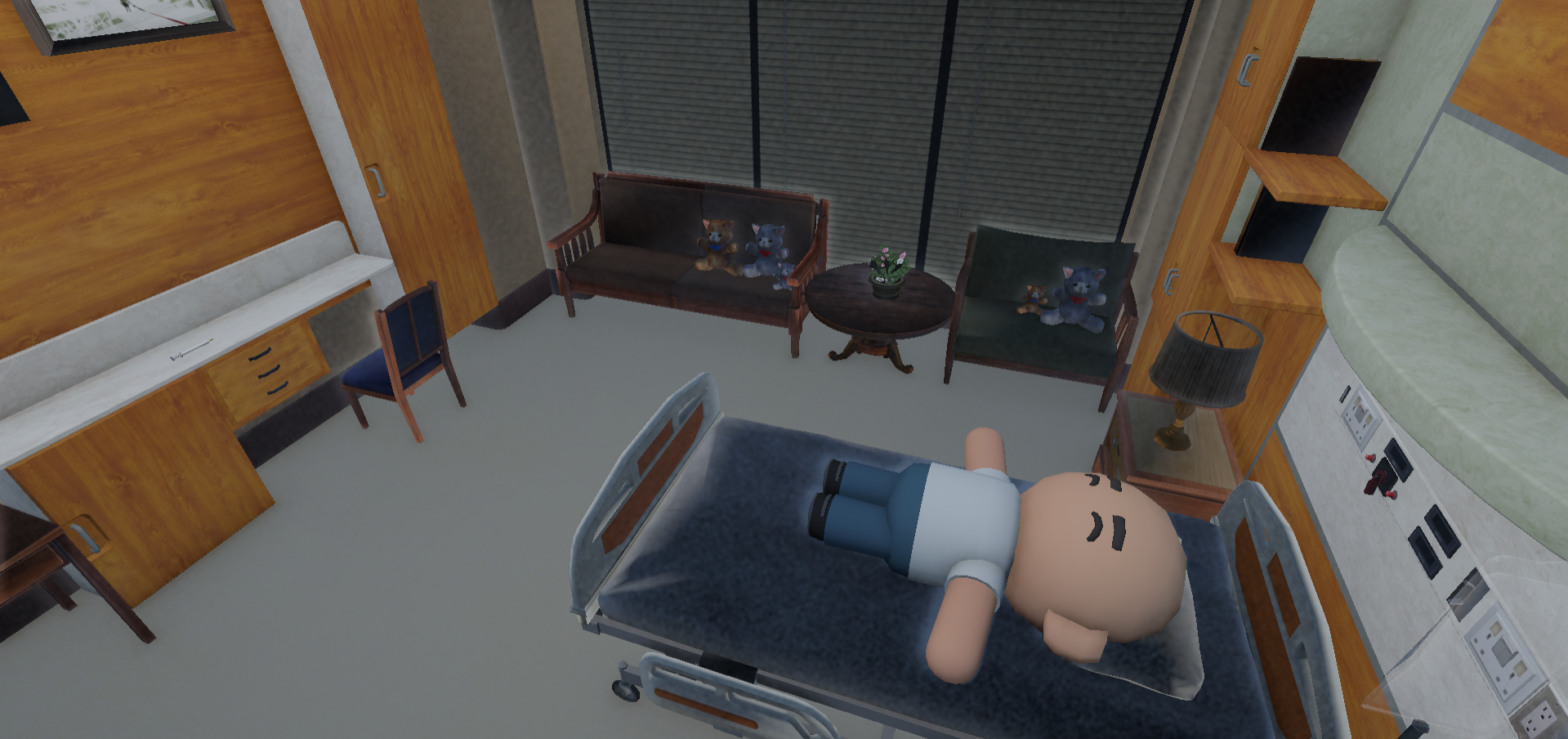
Scenario 1: Blood Draw
-
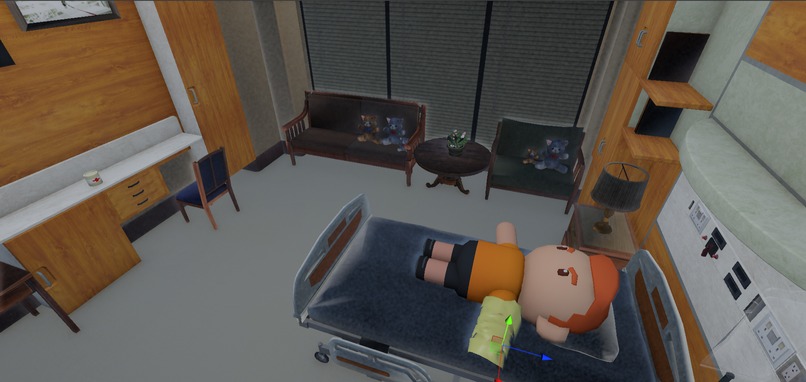
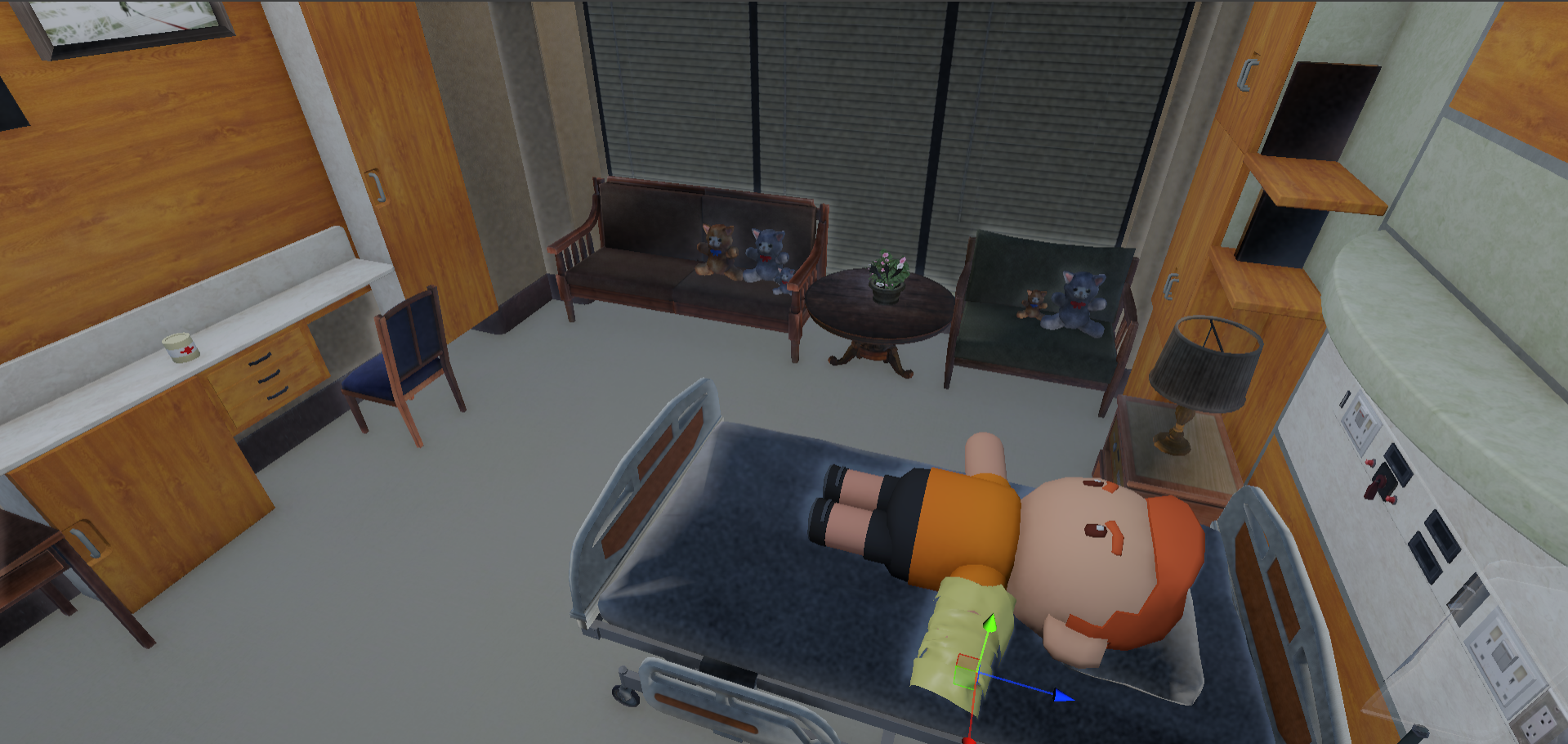
Scenario 2: Dressing Change
🏥 Before You Go — Step Into the Doctor's Shoes
Inspiration
Medical procedures are terrifying for children. Not because they're always painful, but because they're unknown. A needle and a bandage change, these are routine for doctors but completely foreign and frightening for a 7-year-old lying in a hospital bed.
I built Before You Go standing inside Shriners Hospitals for Children. The question that drove me was simple: what if the child already knew exactly what was going to happen because they'd done it themselves?
What It Does
Before You Go is a VR experience for pediatric patients that lets children step into the doctor's shoes before their procedure.
The child puts on a Meta Quest 3 headset and enters a calm hospital waiting room. They choose from 2 procedure cards (more to come):
- 💉 Blood Draw
- 🩹 Dressing Change
They then enter a hospital room where they are the doctor. They pick up the tools, walk to the patient, and perform the procedure themselves, guided by simple step-by-step instructions floating in their view.
For this hackathon I fully built and implemented two procedures: Blood Draw and Dressing Change.
When they sit down in the real chair minutes later, nothing is a surprise.
How I Built It
| Layer | Technology |
|---|---|
| VR Engine | Unity 6.3 LTS |
| Headset | Meta Quest 3 |
| XR Framework | OpenXR + XR Interaction Toolkit 3.3.1 |
| Rendering | Universal Render Pipeline (URP) |
| UI | World Space Canvas + Tracked Device Graphic Raycaster |
| 3D Assets | Sketchfab + Unity Asset Store |
I built the entire experience solo in 48 hours, from an empty Unity project to a fully deployable APK running natively on the Quest 3.
The architecture is scene-based: a lobby scene where the child selects their procedure, and individual procedure scenes for each interaction. All scenes use a shared StepManager system that advances instruction images as the player completes each action.
Challenges I Faced
XR Interaction complexity — Getting UI buttons, grabbable objects, and 3D interactables to all work simultaneously on the same controller was my biggest technical challenge. World Space canvas interaction in VR requires a specific combination of Tracked Device Graphic Raycaster, XR Interaction Manager, and Input Action Manager that isn't well documented.
48-hour scope management — I had to make hard cuts. Hand animations, full biometric integration, and the remaining 3 procedure scenes were all scoped out in favor of a polished, working two-procedure demo.
Child-appropriate design — Every piece of UI, every instruction, every interaction had to be friendly and non-threatening. I iterated on the visual language multiple times to ensure nothing felt clinical or scary.
What I Learned
- Perspective-taking is one of the most powerful anxiety-reduction tools in pediatric psychology and VR is the perfect medium for it
- The simplest interaction mechanic that works is always better than a clever one that doesn't
- Building at a children's hospital changes how you think about every design decision
What's Next
- Brand new art style built from the ground up
- Multilingual support (French, Spanish, Arabic)
- Remaining 3 procedure scenes


Log in or sign up for Devpost to join the conversation.