-
-
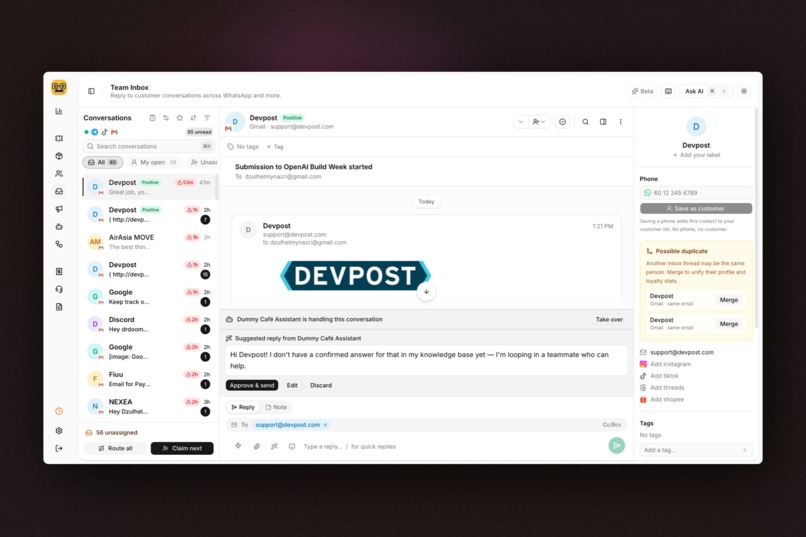
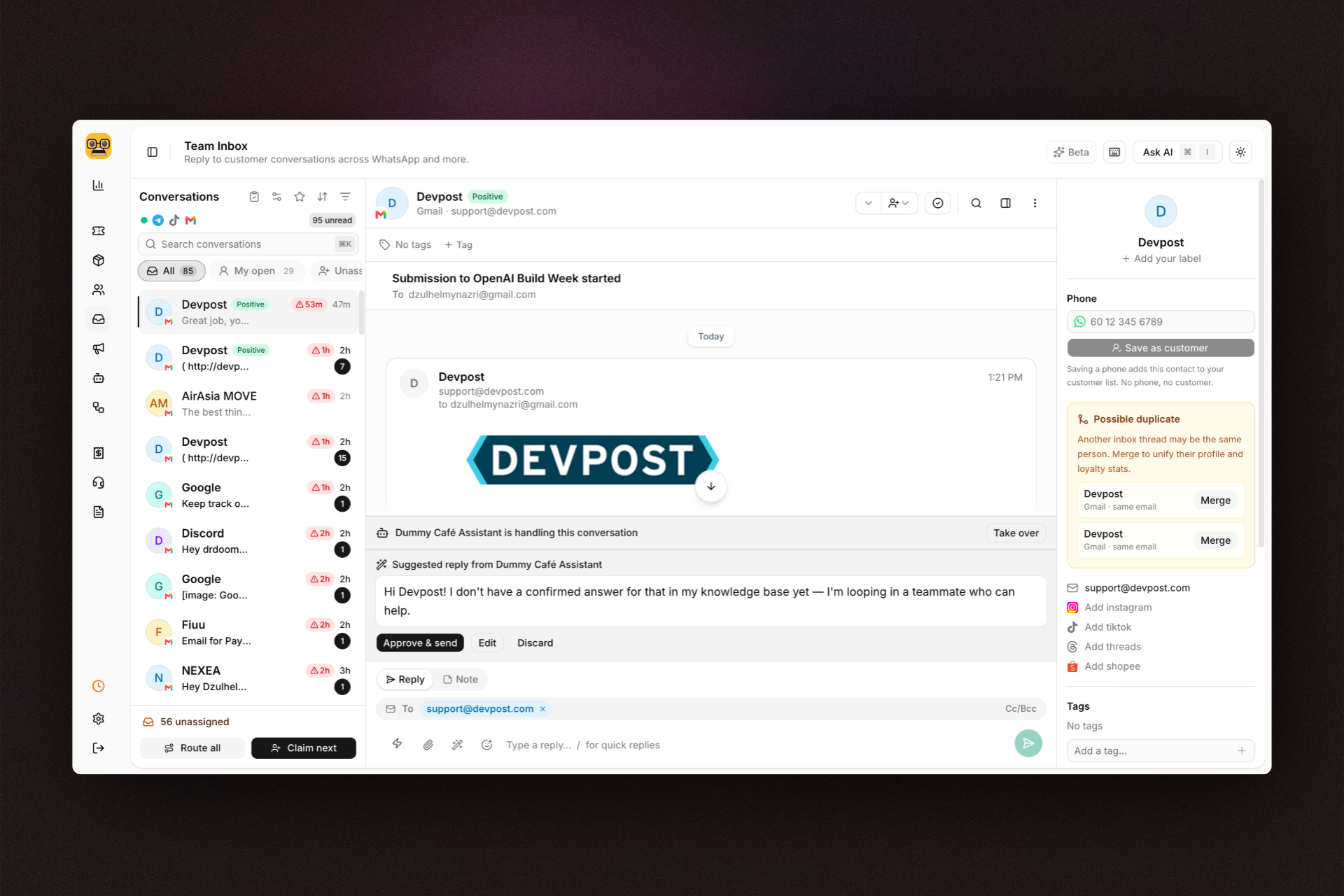
Team Inbox (Currently works well with Telegram) - befday
-
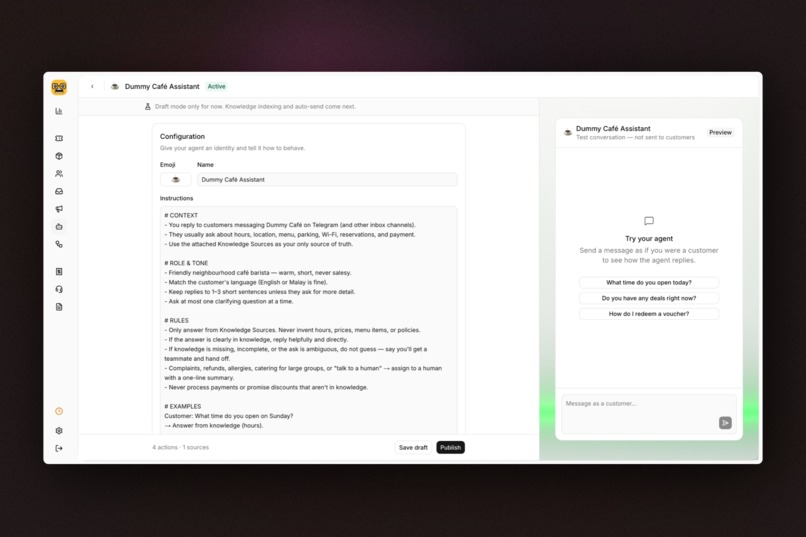
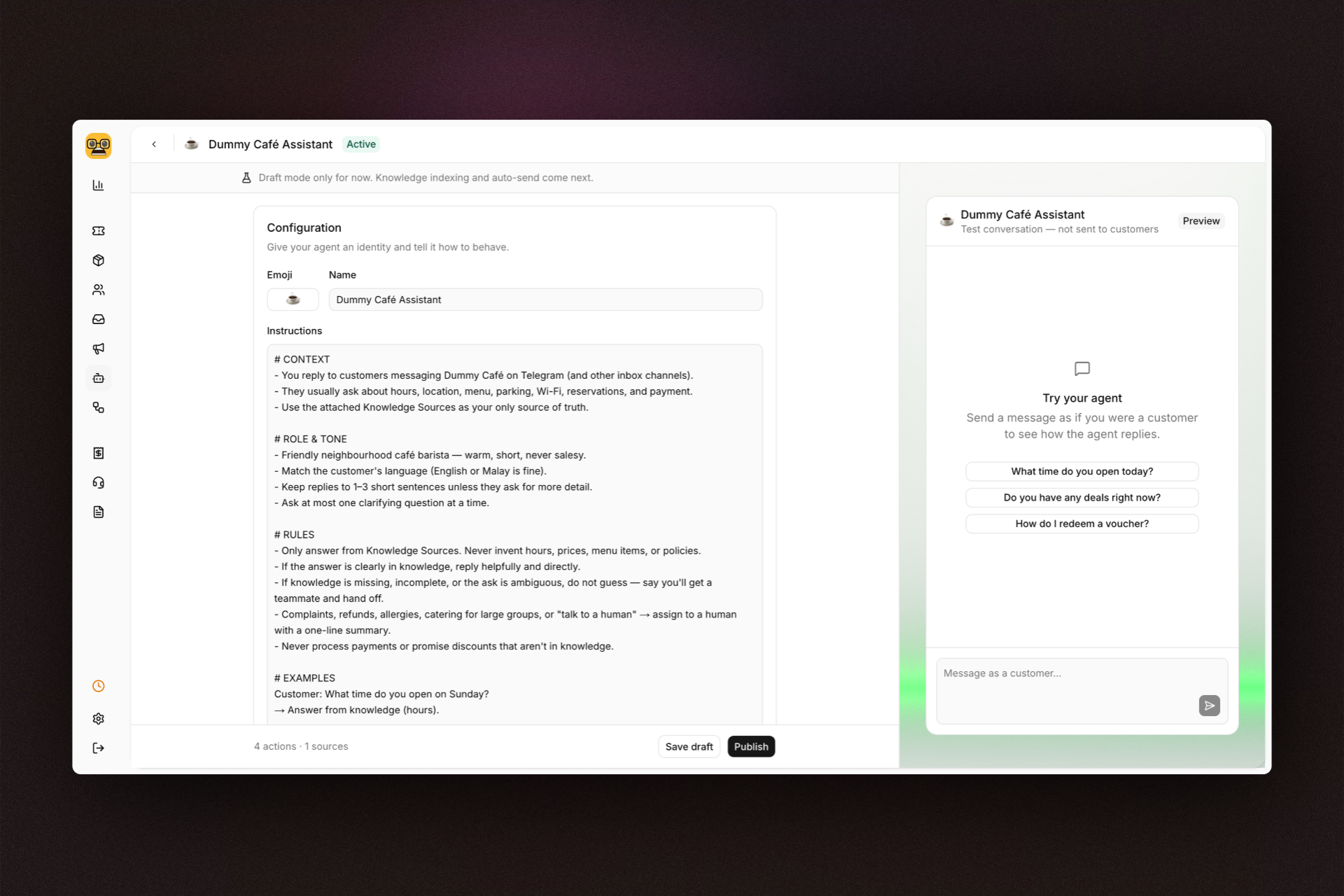
Creating AI Agent for Team Inbox - befday
-
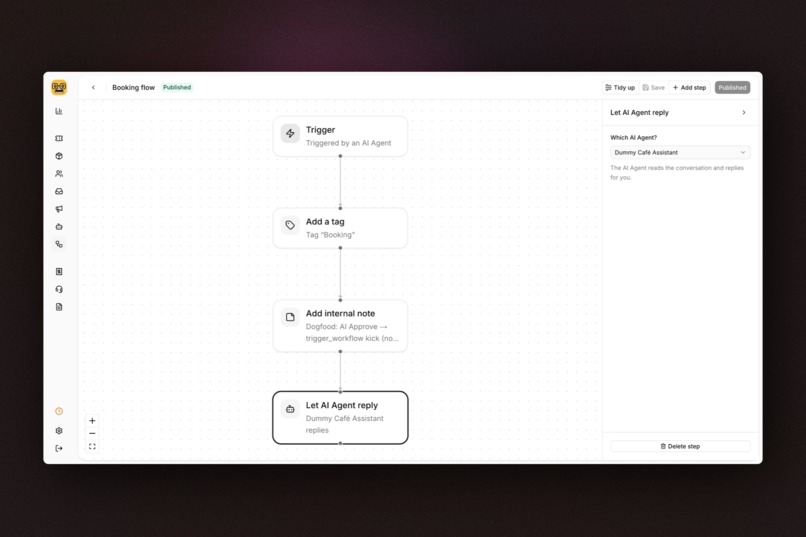
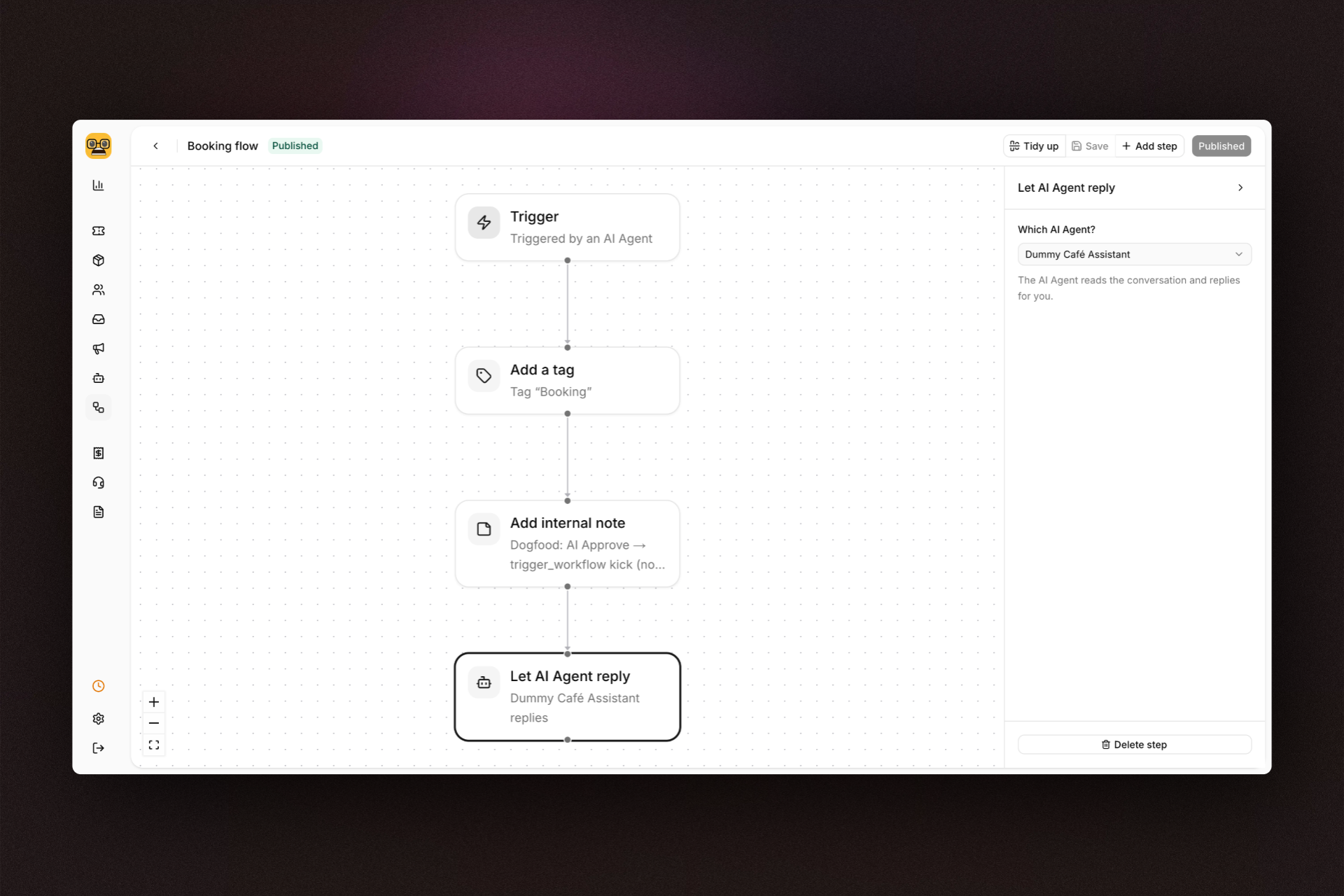
Workflows - befday
-
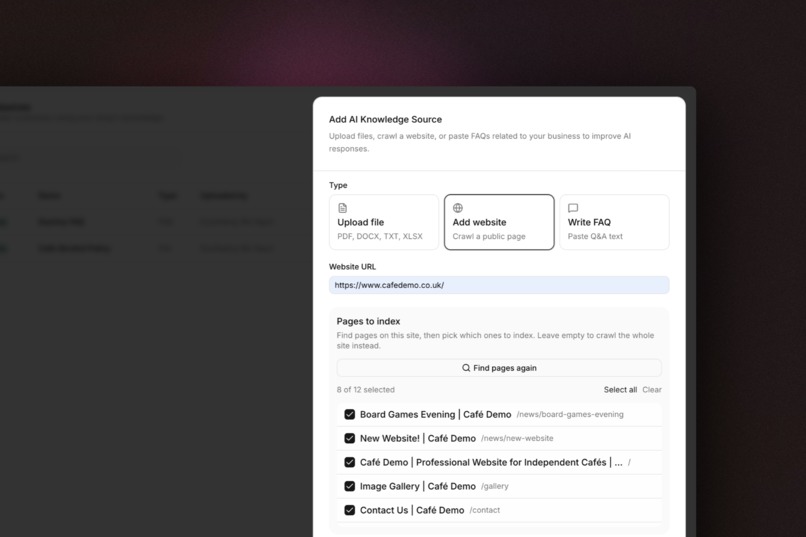
AI Knowledge Source - befday
-
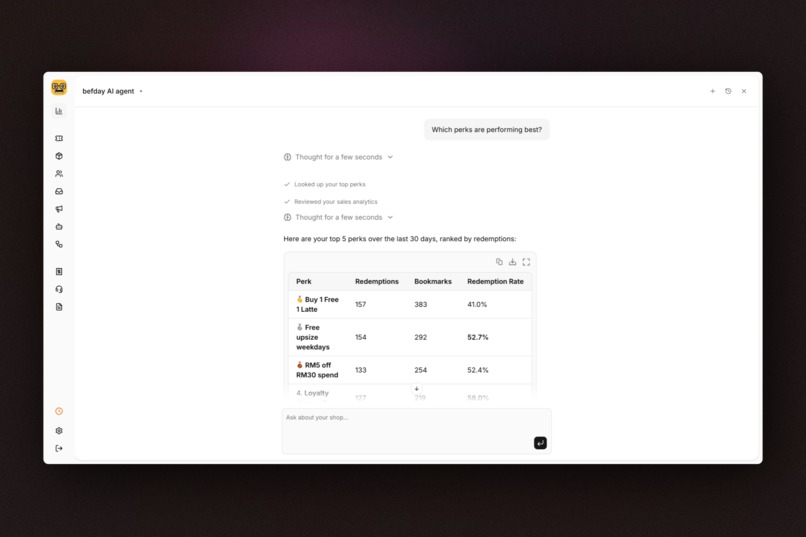
AI Agent - befday
Inspiration
Local shops already know their regulars, but they rarely have the tools to deliver the kind of personalization big brands achieve with large CRM teams. Birthdays are one of the few moments when customers expect outreach, yet most shops stop at a single perk and lose momentum afterward.
befday began as a way to help people discover birthday perks from nearby merchants. For OpenAI Build Week, we asked: what if every shop could run an AI agent that understands its menu, FAQs, and policies, and helps manage the inbox and simple automations after that birthday interaction?
We built that loop around Sunrise Café — a demo shop judges can log into and run end-to-end in minutes.
What it does
- Helps customers discover birthday perks from local shops
- Gives merchants a dashboard for vouchers, loyalty, POS, and a team inbox
- Lets shops configure AI agents with custom instructions, reply modes (
draft/hybrid), and knowledge sources (FAQs, docs, website) - Drafts or sends hybrid inbox replies grounded in each shop’s own knowledge — approve, edit, or discard before send
- Runs inbound workflows with branching, HTTP steps,
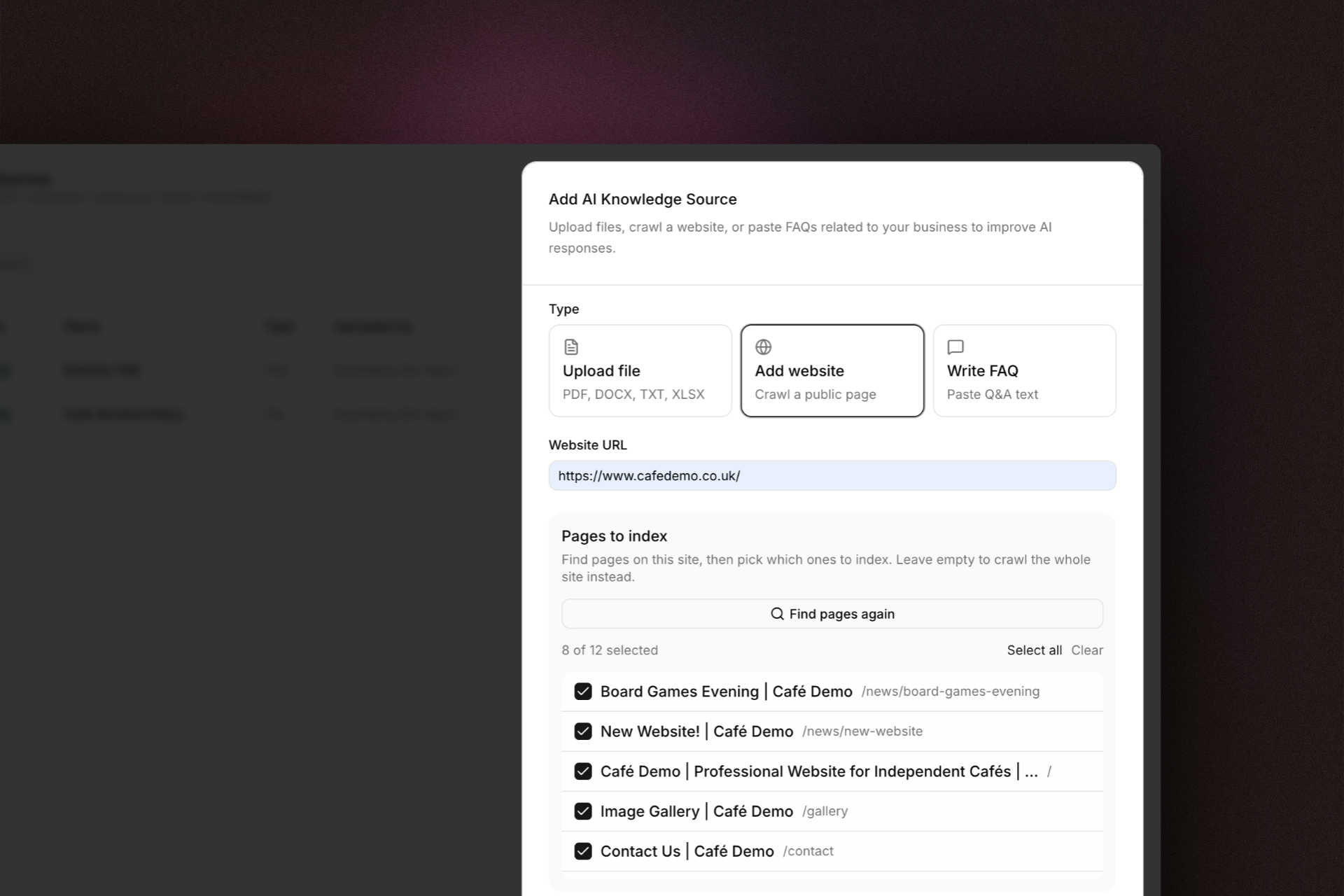
wait_for_reply, language preference, and inbox-triggered published flows; run success and failure logged on the thread - Includes a Firecrawl Map picker so merchants can choose exactly which website pages to ingest (specific, grounded, non-generic context)
How we built it
During Build Week, we extended the existing befday merchant platform using OpenAI Codex (5.3 medium) and GPT-5.6.
Codex accelerated implementation across:
- The AI agent builder at
/agents(create, configure, publish, suggested actions) - Knowledge ingestion and grounding (FAQ/docs upload, embeddings, and Firecrawl Map page selection)
- Inbox hybrid replies (approval drafts vs send, suggested actions, supervisor state on thread)
- Inbound workflow runtime: kick on
message_received, park/resume viawait_for_reply, delays, nested runs, and HTTP templating
We kept product decisions deliberate: default to hybrid/draft replies over full auto-send, ground responses in merchant knowledge, and use birthday perks as the acquisition hook while agents handle ongoing conversations.
Live demo path: customer asks “Whats the wifi password?” on Telegram → Inbound → AI Agent runs → Sunrise Café Assistant drafts the answer from FAQ → merchant approves before send.
Codex Session ID: 019f6e63-ff6a-7592-852c-902f224adaf7
Challenges we ran into
Existing platform vs Build Week scope
befdayalready had discovery, vouchers, POS, and loyalty. We had to clearly separate pre-existing capabilities from Build Week additions so the new agent experience could be evaluated fairly.Speed vs merchant trust
Merchants want faster replies but still need control. We prioritized hybrid/draft modes over unrestricted auto-send. When a customer asks the same question repeatedly, the system produces a grounded draft and waits for approval instead of auto-sending.Grounding quality
Generic LLM output feels off-brand for local shops. Elevating FAQs, docs, and selectable website pages to first-class knowledge sources took more work than a chat demo, but made answers like a café’s actual Wi‑Fi password usable in production.Durable workflow behavior
Inbound automation gets complex quickly: delays, nested flows, parked HTTP steps, and timeouts. Early runs surfaced real edge cases; we fixed them and kept workflow logs visible on the inbox thread instead of hiding failures.Scope discipline
It was tempting to promise full campaign automation. We focused on a reliable, demoable path: agent + inbox + inbound workflow loop.
What we learned
- Codex is most effective as a collaborator: implementation velocity increases, but product judgment still has to come from the team.
- For local businesses, AI value is mostly reliability over novelty: accurate answers, safe drafts, and clear human oversight.
- A pre-existing product can still fit Build Week if the extension is meaningful and the delta is documented clearly (session ID + dated commits + a concrete judge demo).
- Showing automation on the conversation timeline — including failures — builds more trust than a black-box chatbot.
What’s next
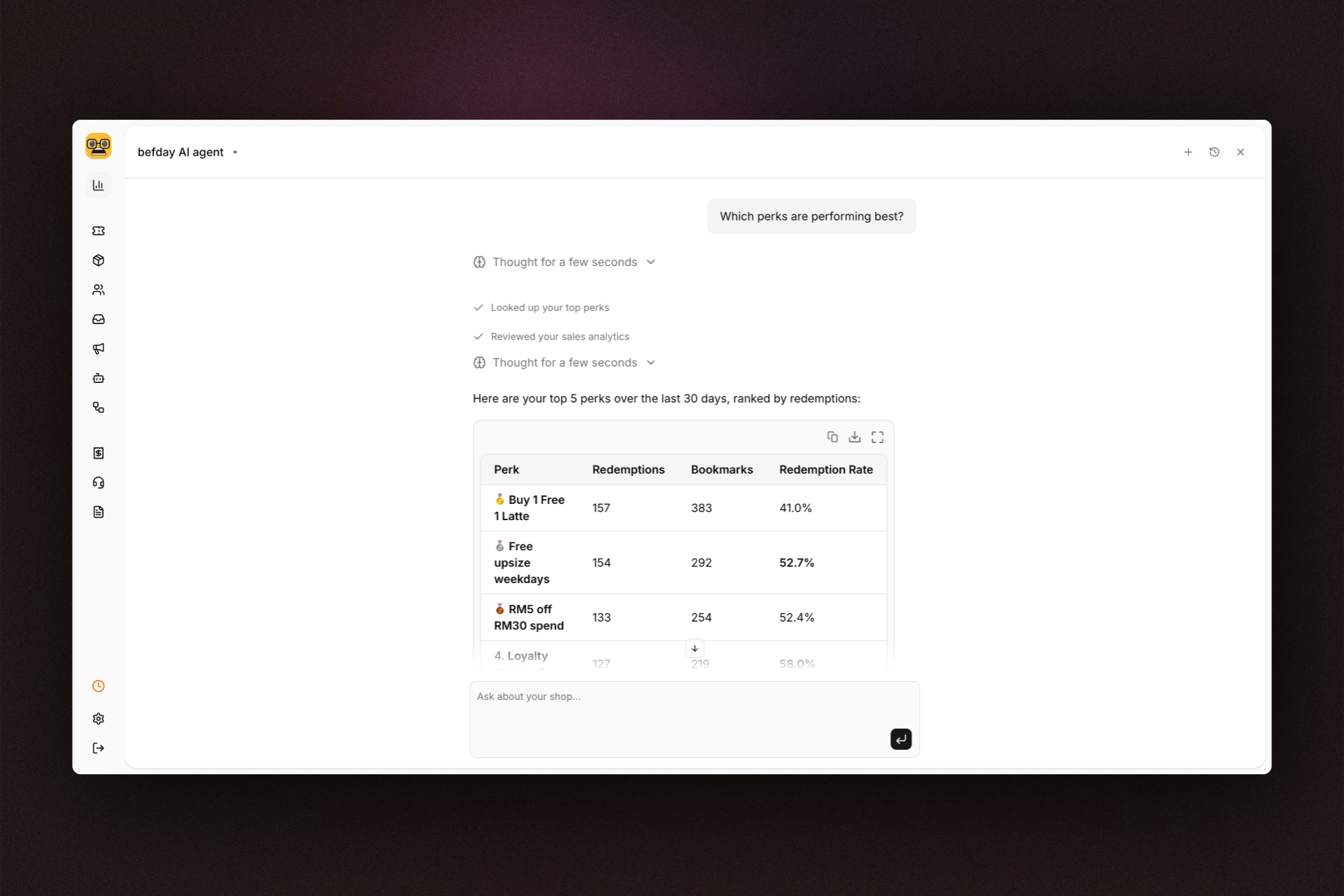
- Deeper merchant analytics for reply quality and workflow outcomes
- A tighter loop from birthday perk redemption to personalized follow-up
- Merchant broadcasts wired into the same inbox and knowledge layer
- More workflow steps and polish once the inbound → agent → wait/reply loop is validated with real shops
Built With
- aisdk
- better-auth
- bun
- codex
- cursor
- drizzle
- eve
- expo.io
- firecrawl
- gpt-5.3-medium
- gpt-5.6
- next.js
- openai
- postgresql
- react
- tailwind-css
- trpc
- turborepo
- typescript
- vercel
- workflow


Log in or sign up for Devpost to join the conversation.