-
-
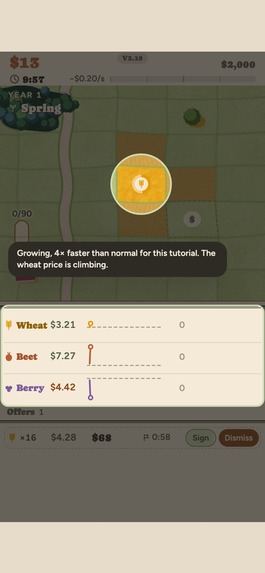
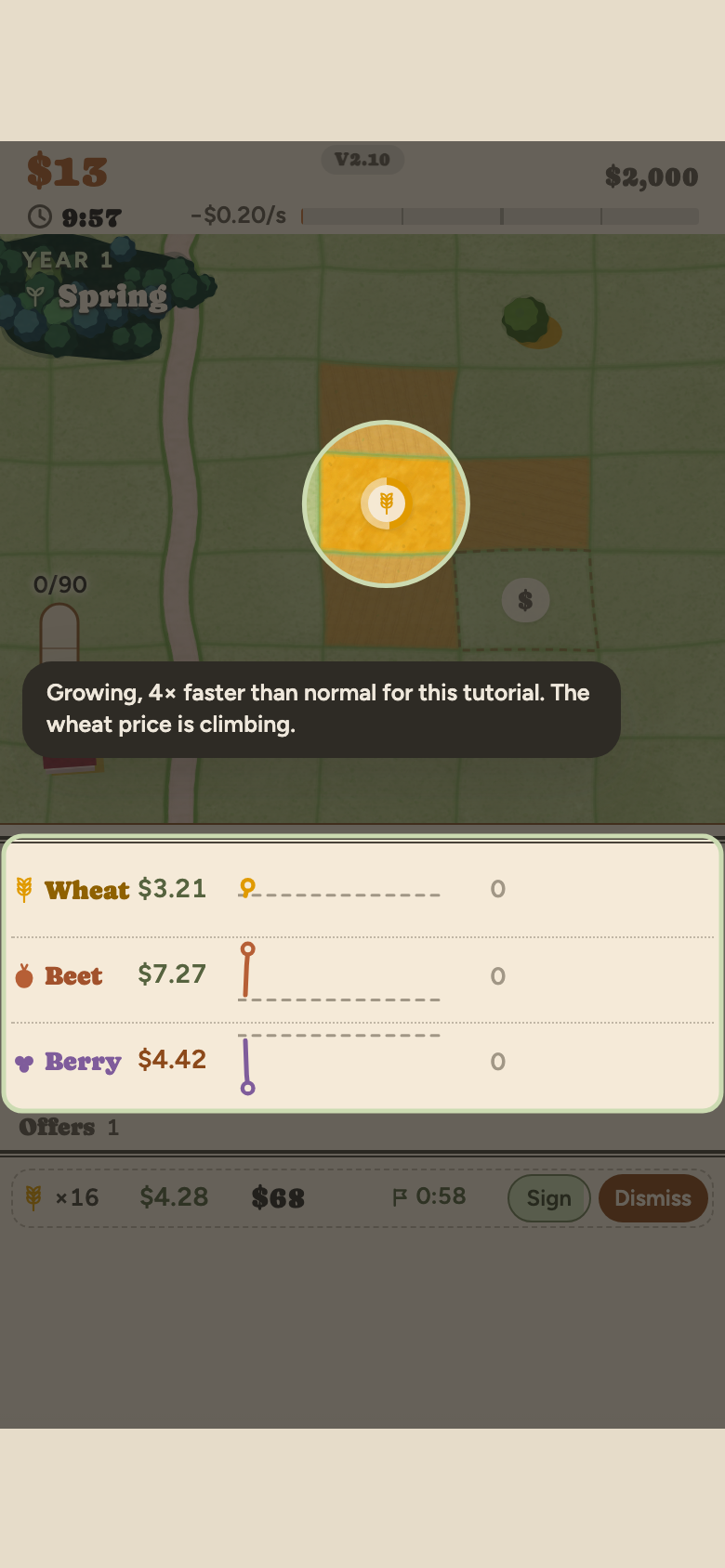
Watch the market prices.
-
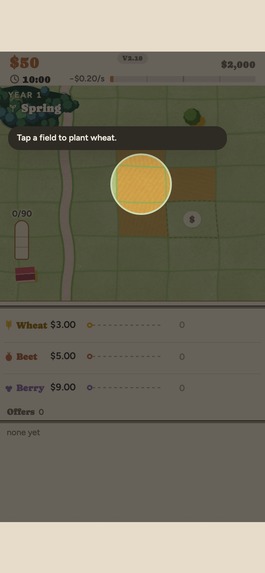
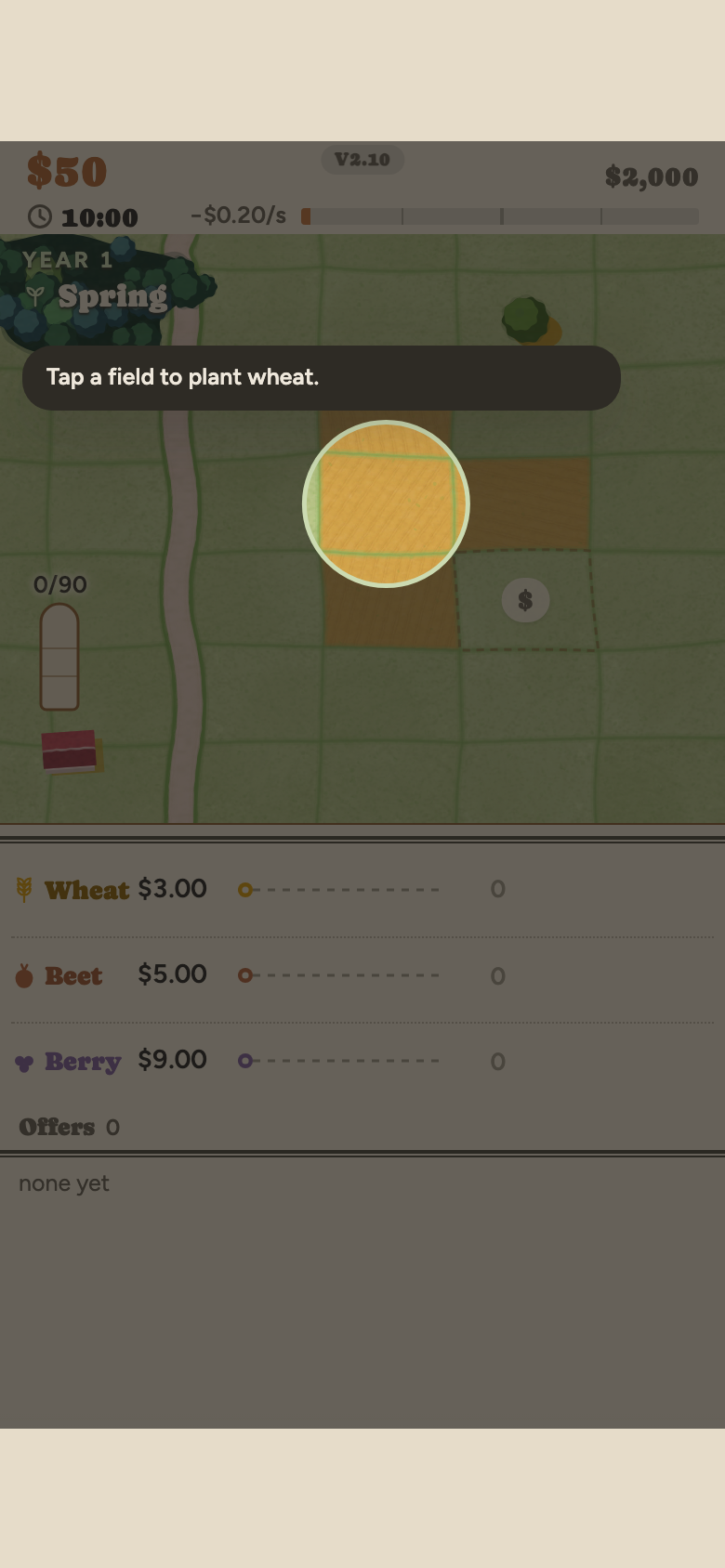
Plant a crop.
-
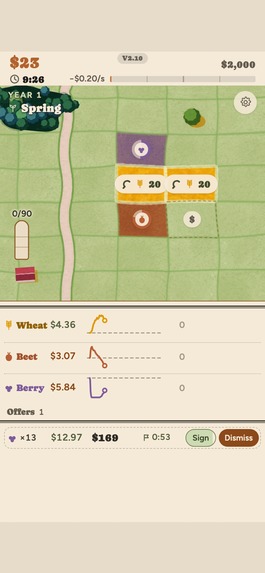
Ready to harvest!
-
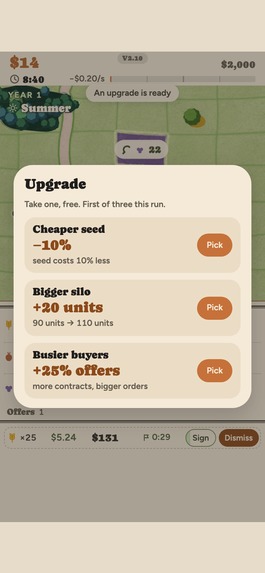
Choose your upgrades.
-
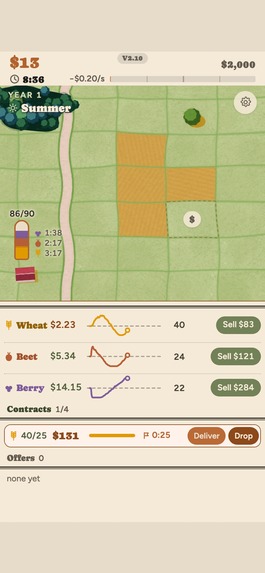
Deliver on a contract.
-
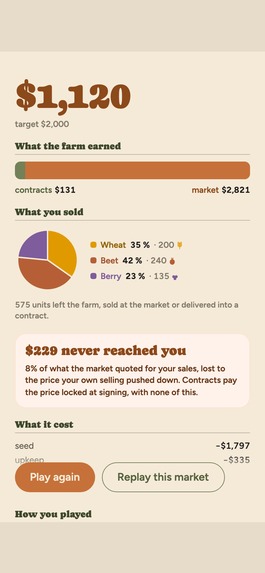
Game stats.
Inspiration
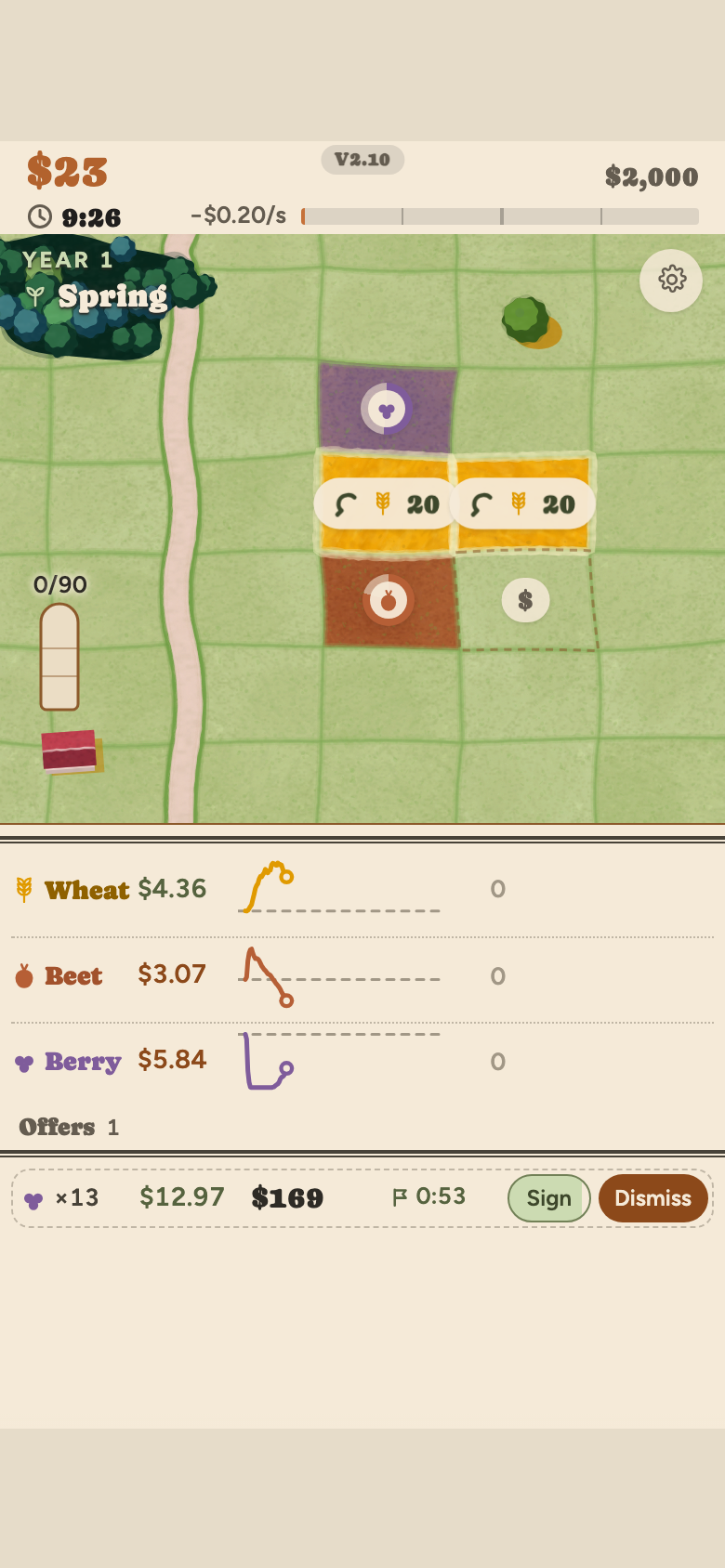
Farmers spend a lot of time watching prices. A crop planted today sells at whatever the market pays weeks later, so they forecast, and they sign contracts when they'd rather have a sure price than a good one. We wanted a farming game about that part of the job. You choose crops by how well you can read their price cycle, plant for the price you expect at harvest, and take contracts to lock in a margin or to bet on a better one. Buying land raises what you have riding on each guess.
What it does
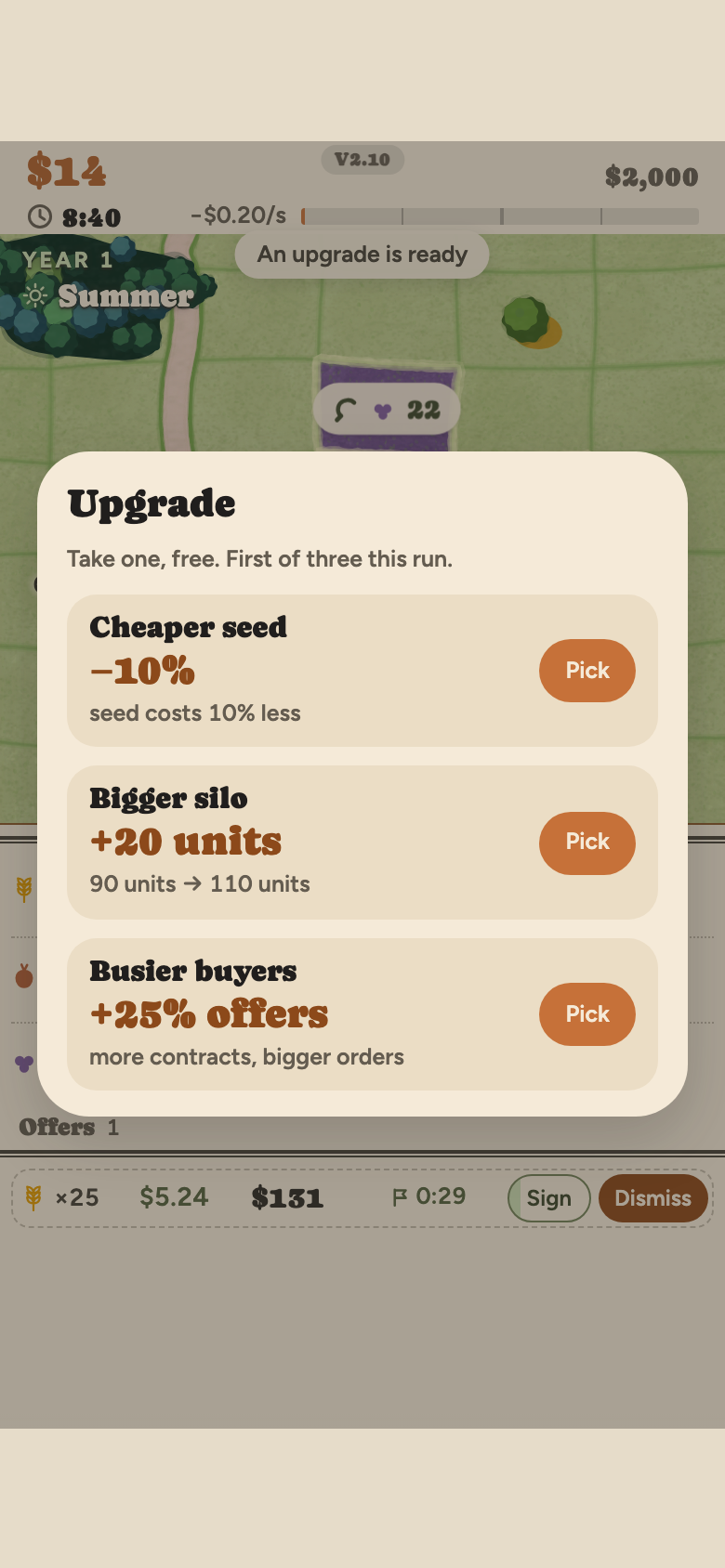
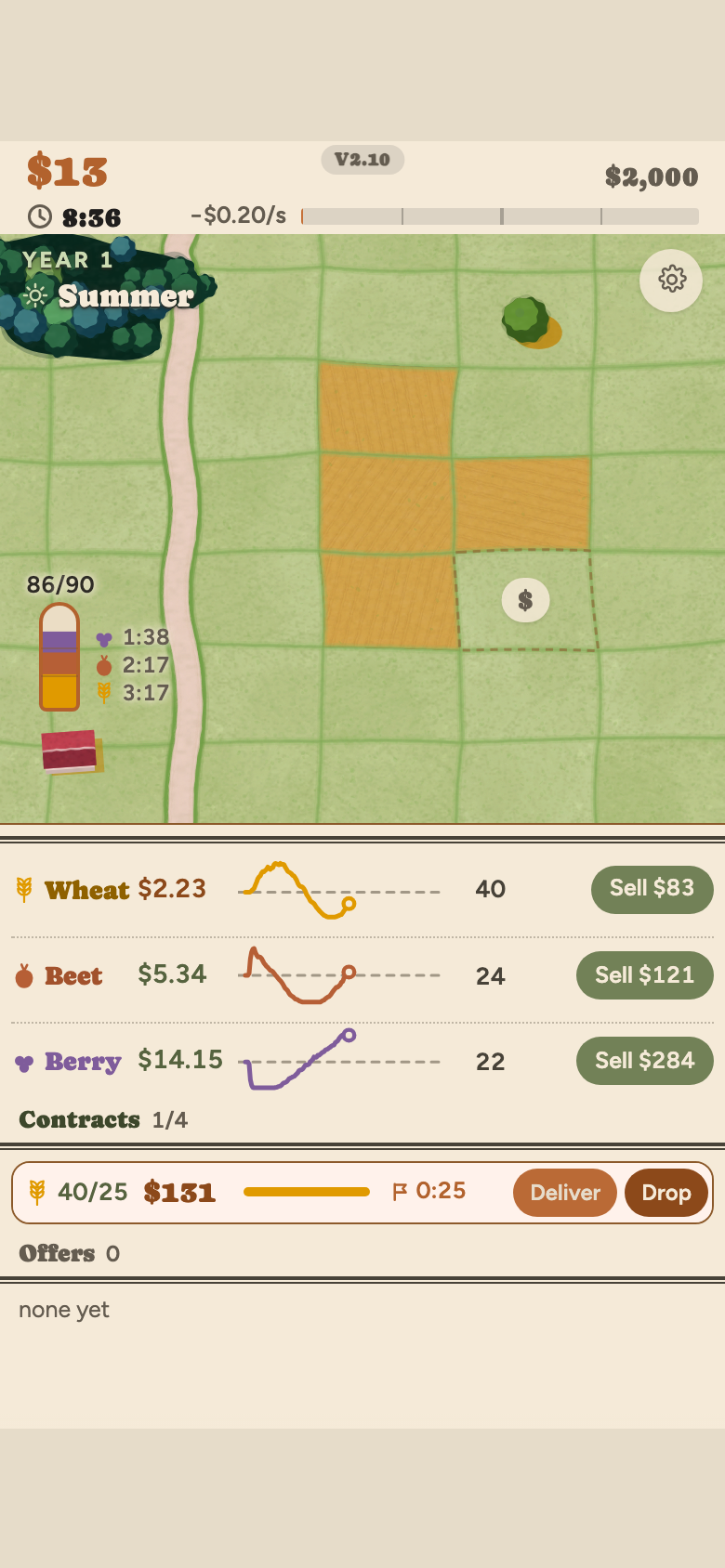
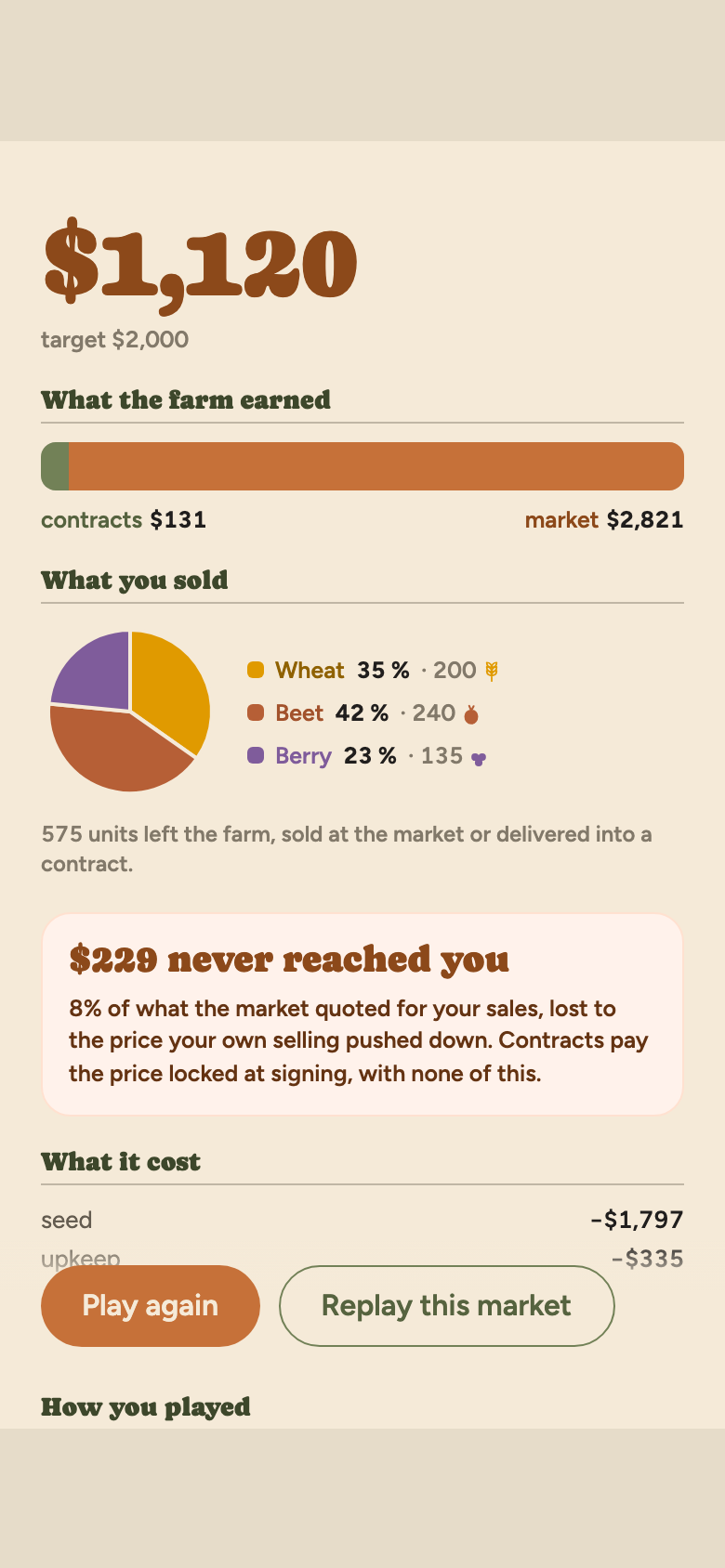
A ten-minute game about planting three crops. Each has its own grow timer and a price that rises and falls in a pattern you can learn. When you harvest, you can sell at the current market price or sign a contract that fixes the price for a given amount and day. Sell too much of one crop on the open market and you flood it, driving the price down. While managing prices, you will also need to buy land and choose upgrades. The goal is to have $2,000 by the end of the ten minutes.
How we built it
The game logic and engine are written in TypeScript, with a React HUD on top. We built it by playing it. Each round of player feedback went back into the design, and we kept iterating until the market felt readable and the ten minutes felt compelling and engaging.
Challenges we ran into
We built and shelved two full redesigns in one week. Faster crops broke the price cycle and made the game easy and chaotic at the same time. The upgrade system favored a few picks over the rest. The UI had to show a lot of actions clearly without crowding the screen, such as the difference between a contract's signing timer and its delivery timer, or how selling too much of one crop moves its price. The hardest part was tuning. How much each crop should cost, how long it should take to grow, how much the silo should hold. Every one of those numbers had to be adjusted, played, and adjusted again before the game felt engaging.
Accomplishments that we're proud of
We are proud that the market is something you can actually learn. A player who pays attention to the price cycle will make more money than one who only looks at today's price, and selling in smaller batches makes a real difference too. We are also proud of how the game is balanced. Every parameter depends on the others, so one change cascades through all of them. Adjust the price of wheat and the other crop prices have to move with it, then the contract sizes, then the silo. Getting all of that to hold together took a lot of careful work.
What we learned
Something that looks like a decision on paper often turns out to have one right answer once you play it. Holding a ripe crop for a better price only helps if you were selling badly to begin with. We also learned that most of a new player's expensive mistakes come from missing something on screen rather than from a bad call, so the game should be forgiving about taps and strict about choices.
What's next for Beet the Market
More parcels of land to buy, along with more crops and more upgrades. Fields of different sizes near natural resources that affect how crops grow. A worker system to help manage more complex crops and more fields. A reputation system with vendors, and more complex contracts to go with it.
