-
-
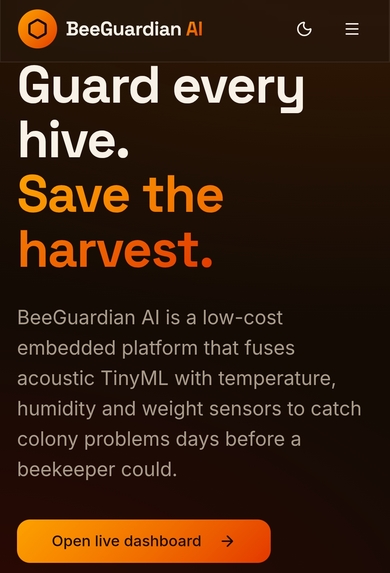
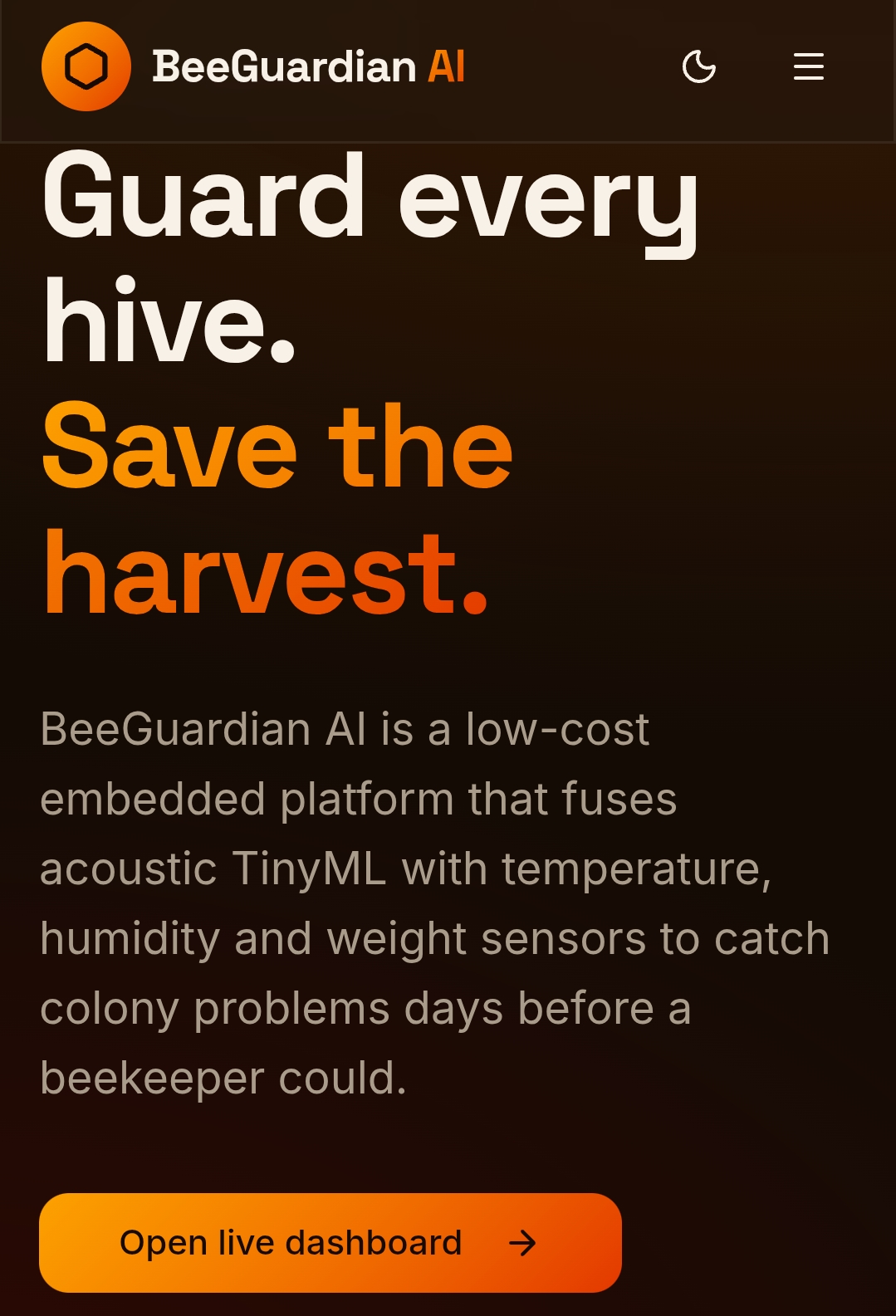
Home bage for the web
-
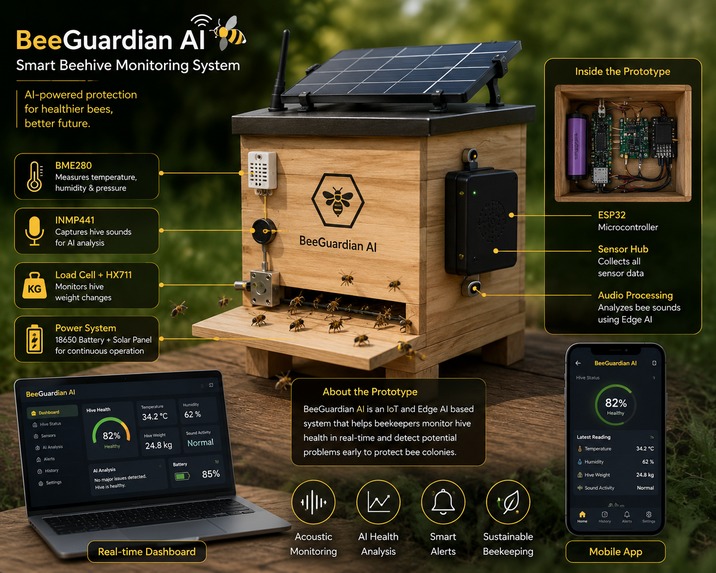
The prototype
-
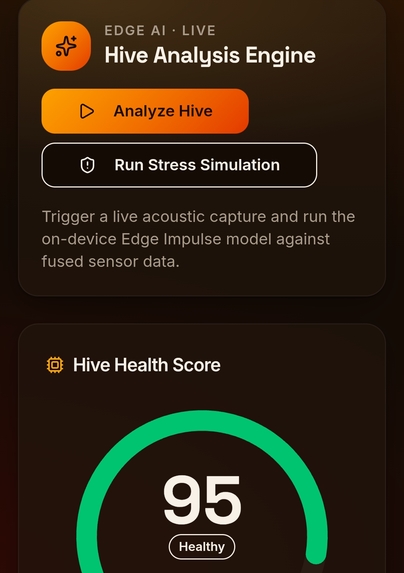
Dashboard
-
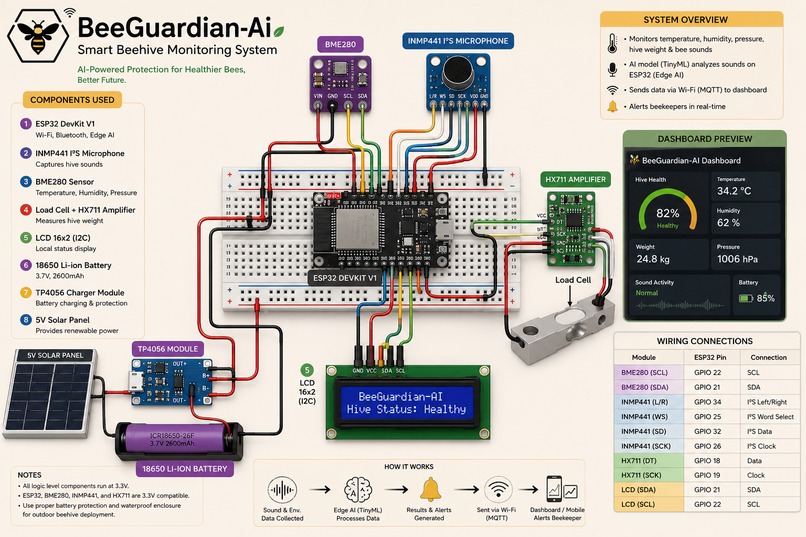
The circuit
BeeGuardian AI
Inspiration
Bees are responsible for pollinating a large percentage of the crops we rely on every day, yet many beekeepers struggle to detect problems inside their hives before it's too late. I wanted to explore how artificial intelligence and IoT could work together to protect bee colonies and support sustainable agriculture. That idea inspired me to create BeeGuardian AI, a smart system that helps monitor hive health and detect potential issues early.
What it does
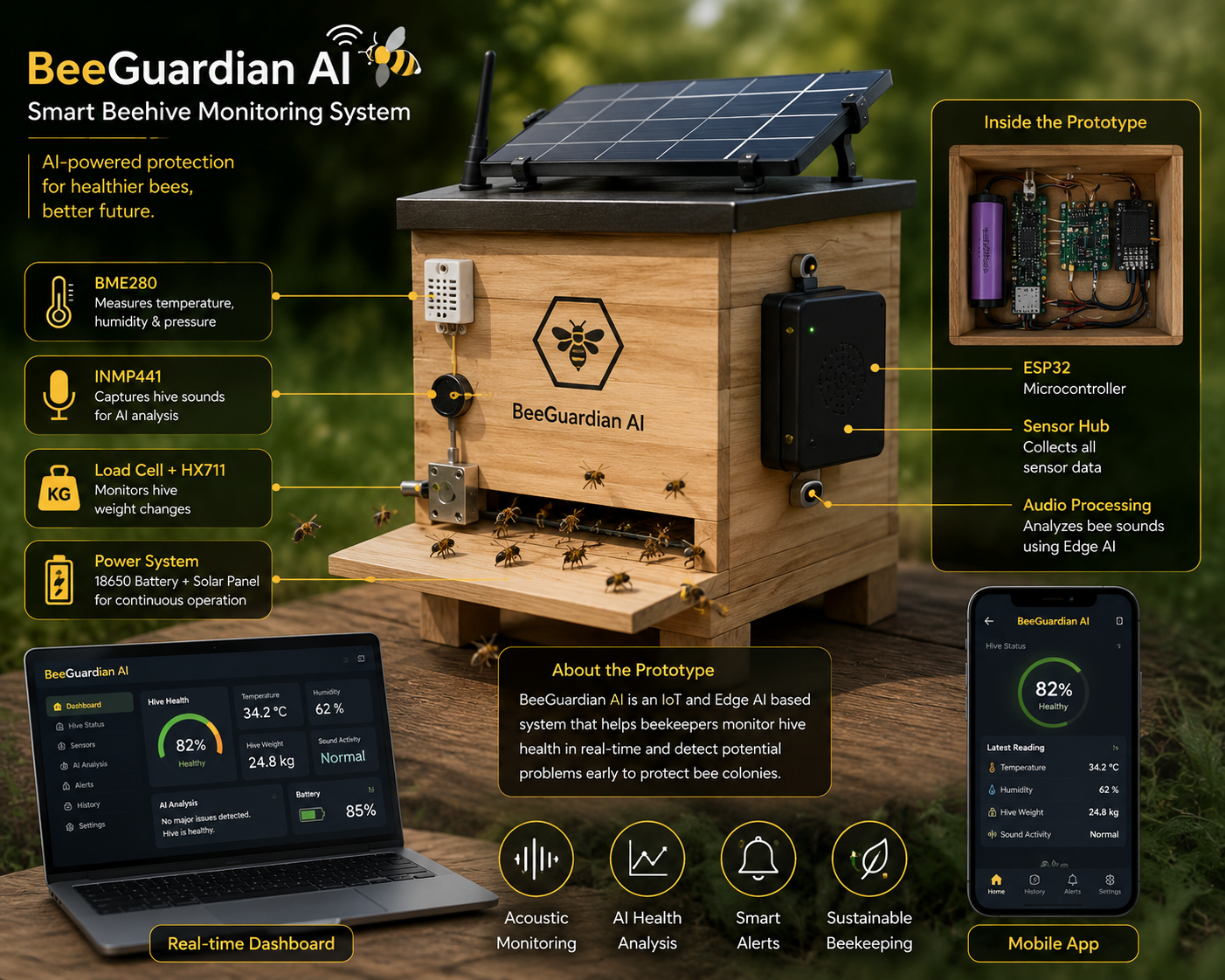
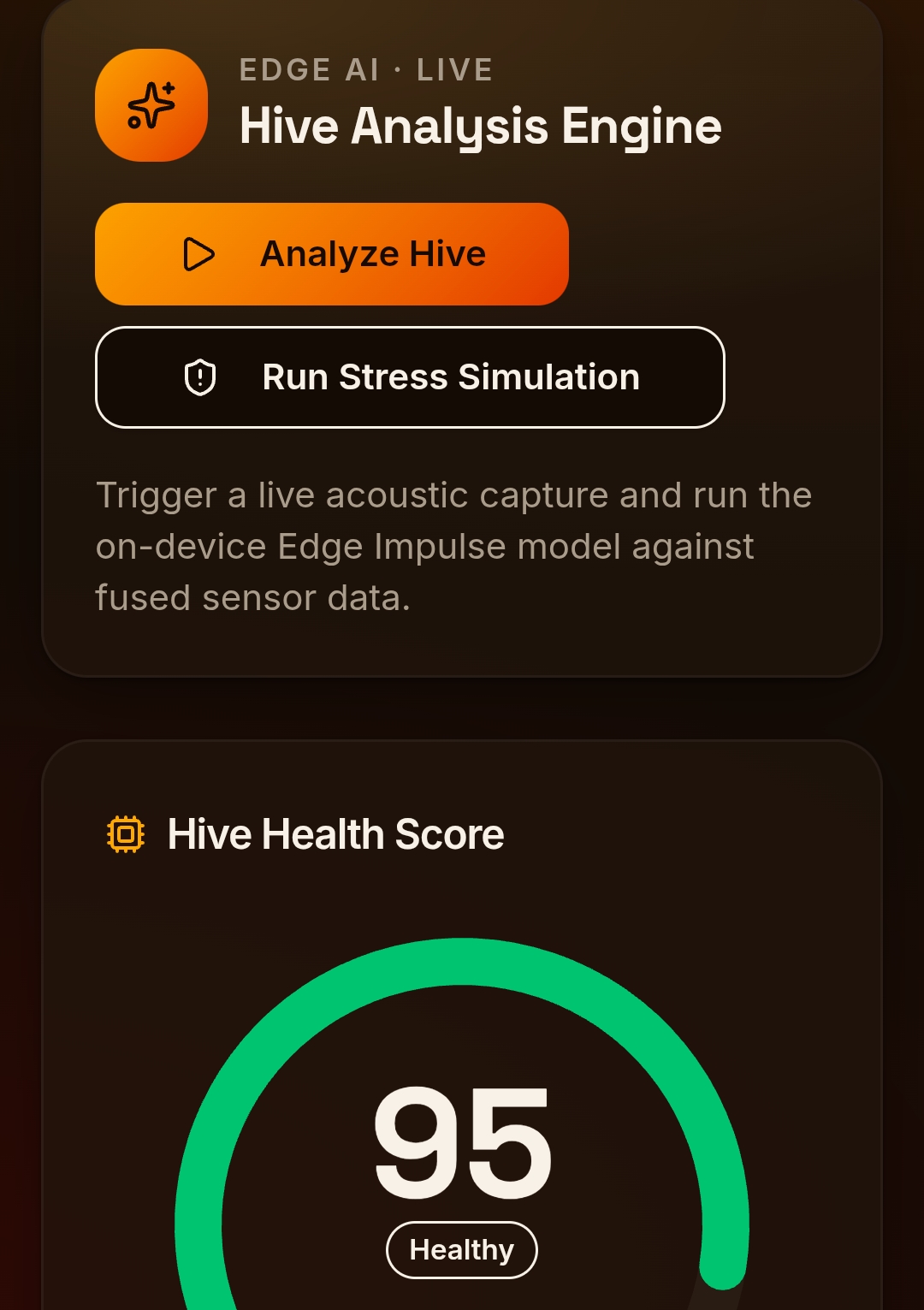
BeeGuardian AI is a smart beehive monitoring system that collects real-time data from the hive using environmental sensors and sound analysis. It tracks temperature, humidity, hive weight, and bee activity, then uses AI to identify unusual behavior that may indicate disease, stress, or other health risks. The system presents all this information through an easy-to-use dashboard and sends alerts when abnormal conditions are detected.
How we built it
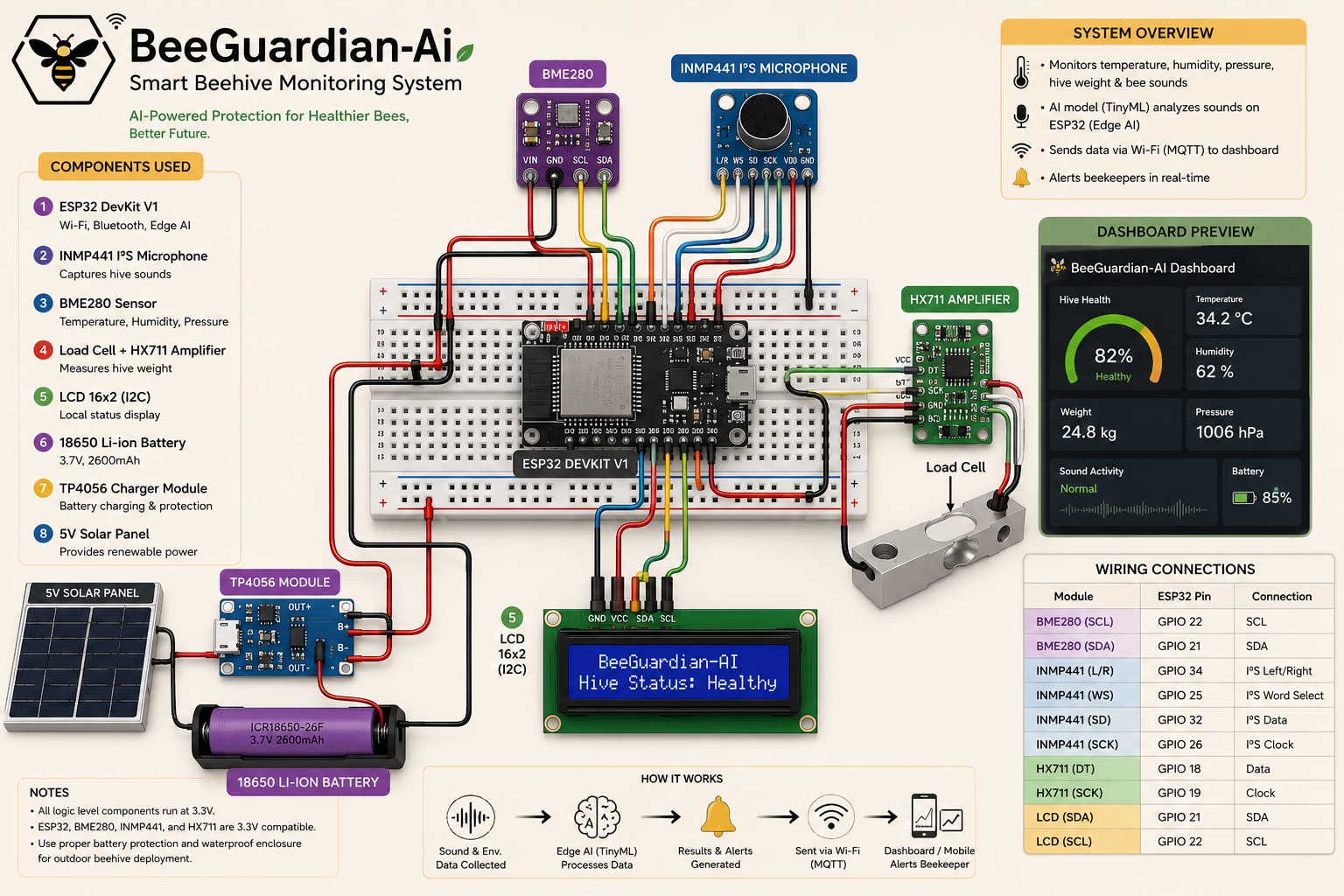
We designed the project as an Edge AI and IoT solution. The proposed hardware includes an ESP32 microcontroller, a BME280 environmental sensor, a load cell with an HX711 amplifier, and an INMP441 digital microphone. For the AI component, we planned to use TinyML to analyze bee sounds directly on the device, allowing faster responses while reducing power consumption. We also created a modern web interface to visualize sensor readings, AI predictions, and the overall health status of the hive.
Challenges we ran into
One of the biggest challenges was researching bee behavior and understanding how environmental conditions and acoustic patterns can indicate hive health. Another challenge was designing an efficient AI workflow that could run on low-power hardware while remaining accurate. We also worked on balancing technical functionality with a simple and intuitive user experience.
Accomplishments that we're proud of
We are proud of developing a complete prototype concept that combines AI, IoT, and sustainability in one solution. We successfully designed a system architecture, user dashboard, and monitoring workflow that addresses a real-world agricultural challenge. The project also demonstrates how Edge AI can be applied to environmental conservation in a practical way.
What we learned
This project taught us a great deal about IoT systems, embedded devices, sensor integration, TinyML, AI-powered monitoring, and UI/UX design. Beyond the technical aspects, we learned the importance of research, teamwork, and designing technology with real users and real-world impact in mind.
What's next for BeeGuardian AI
Our next goal is to build a fully functional physical prototype and collect real bee colony data to train and validate the AI model. We also plan to improve prediction accuracy, add a mobile application with real-time notifications, integrate cloud analytics for long-term monitoring, and explore solar-powered deployment so the system can operate efficiently in remote apiaries.
Built With
- api
- arduino
- audio
- cloudflare
- css
- edge
- esp32
- hivemq
- impulse
- lovable
- mqtt
- react
- recharts
- shadcn/ui
- start
- tailwind
- tanstack
- tinyml
- typescript
- vite
- web


Log in or sign up for Devpost to join the conversation.