-
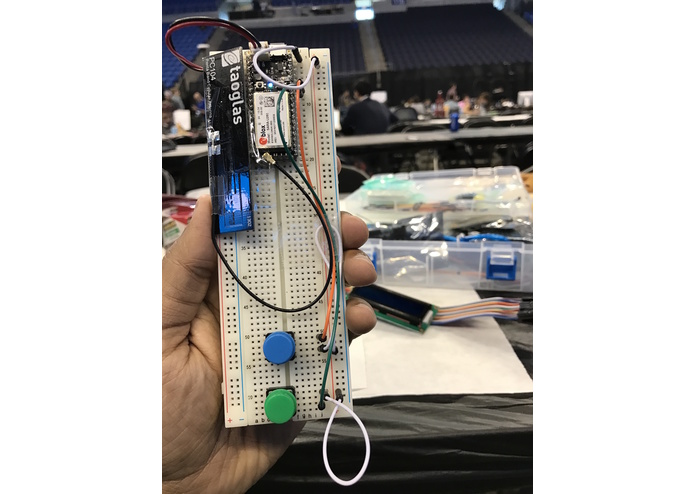
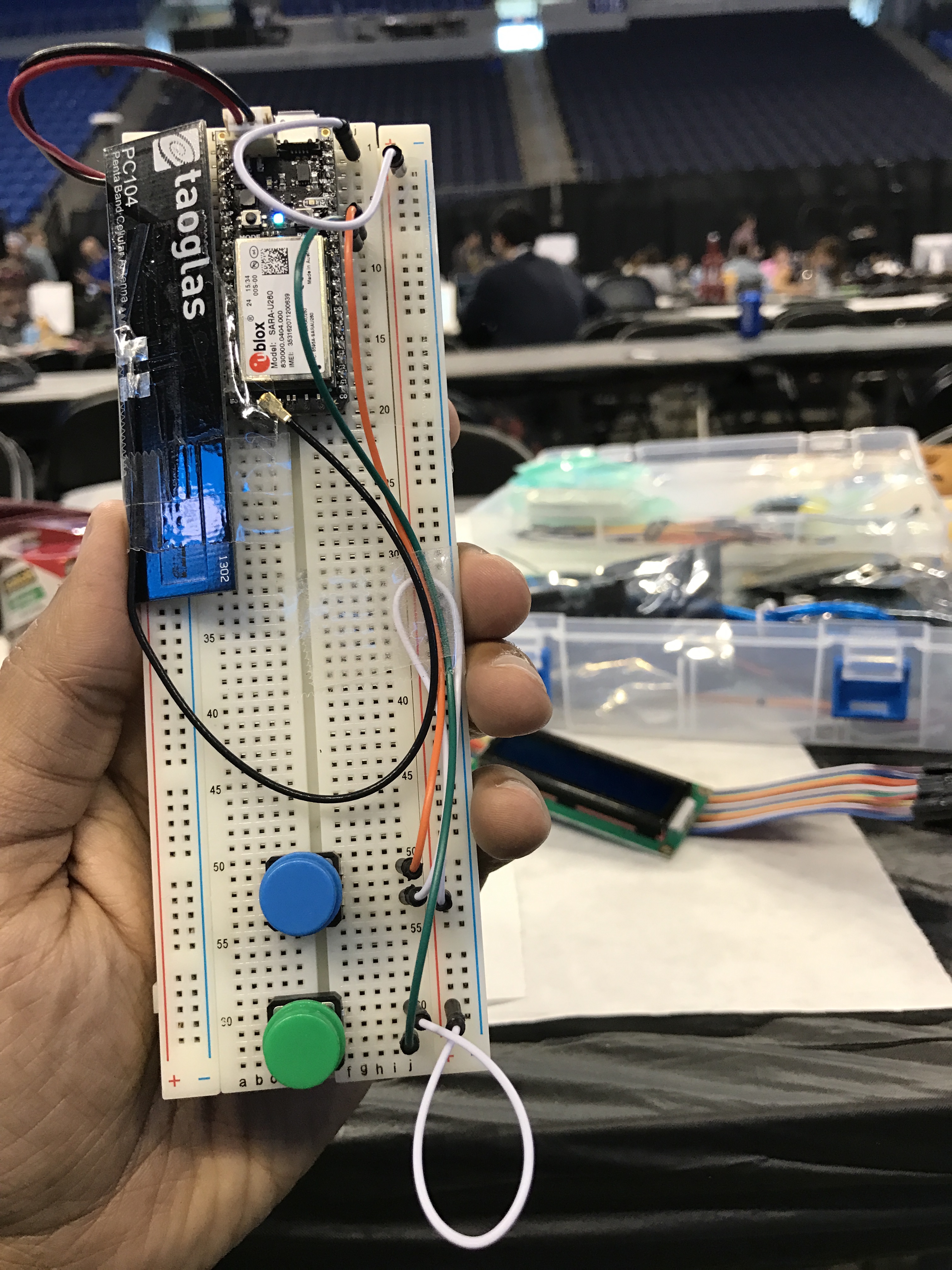
Hardware cellular button
-
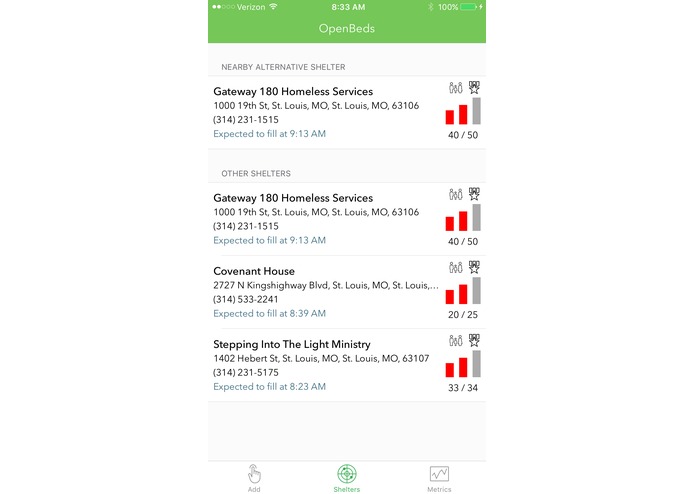
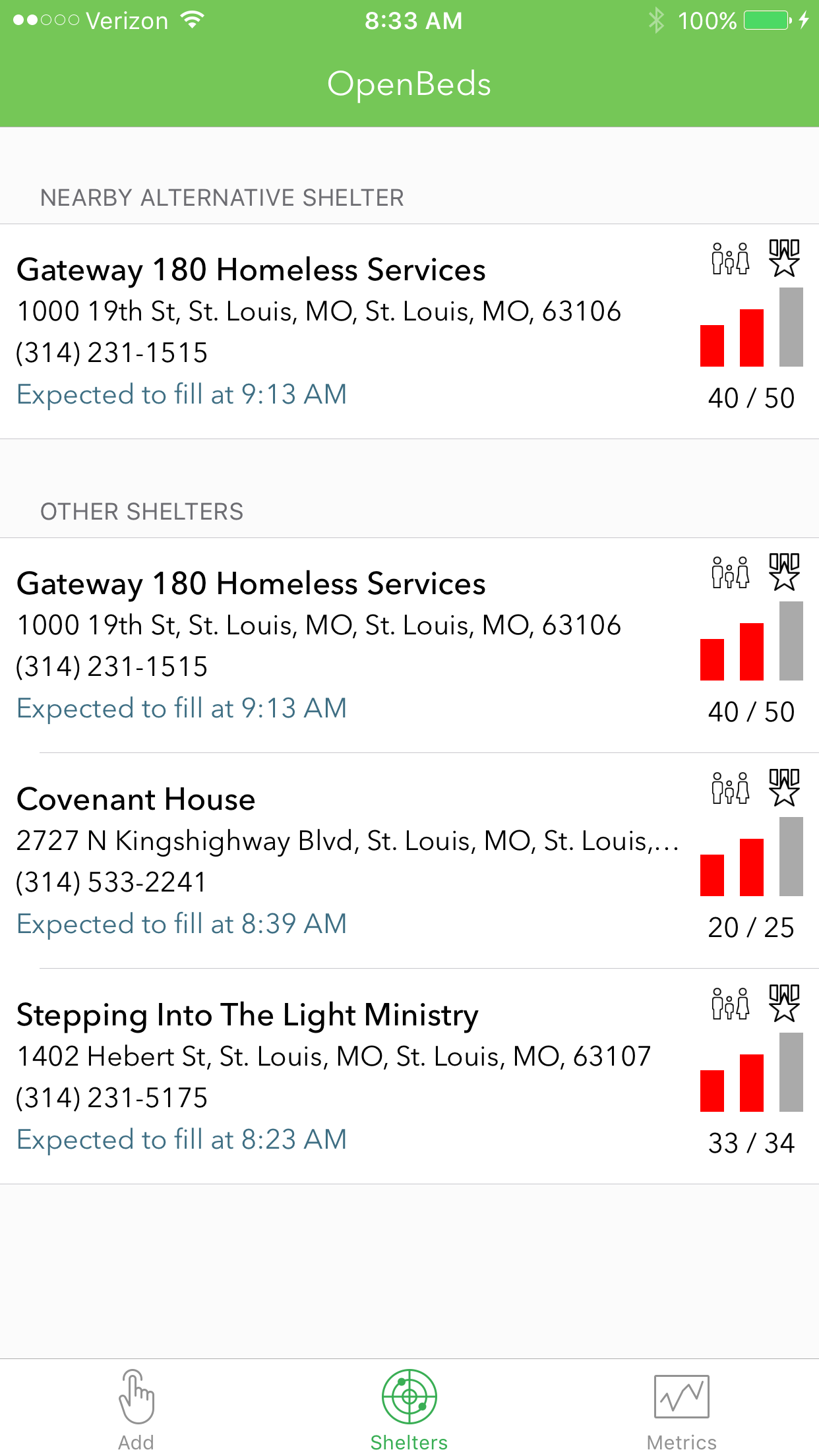
Shelter suggestions
-
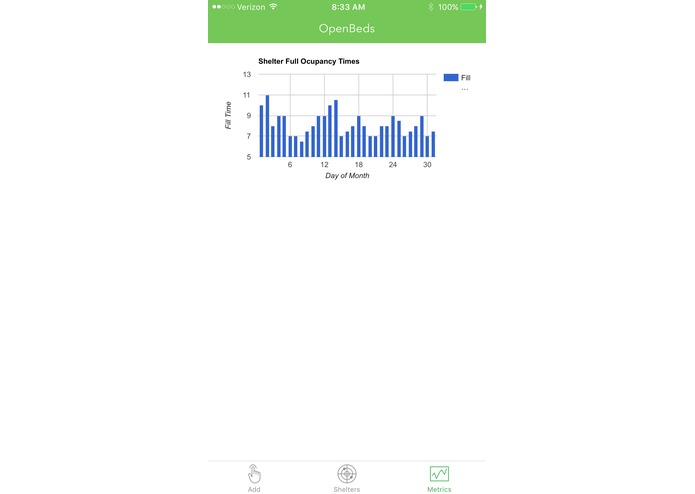
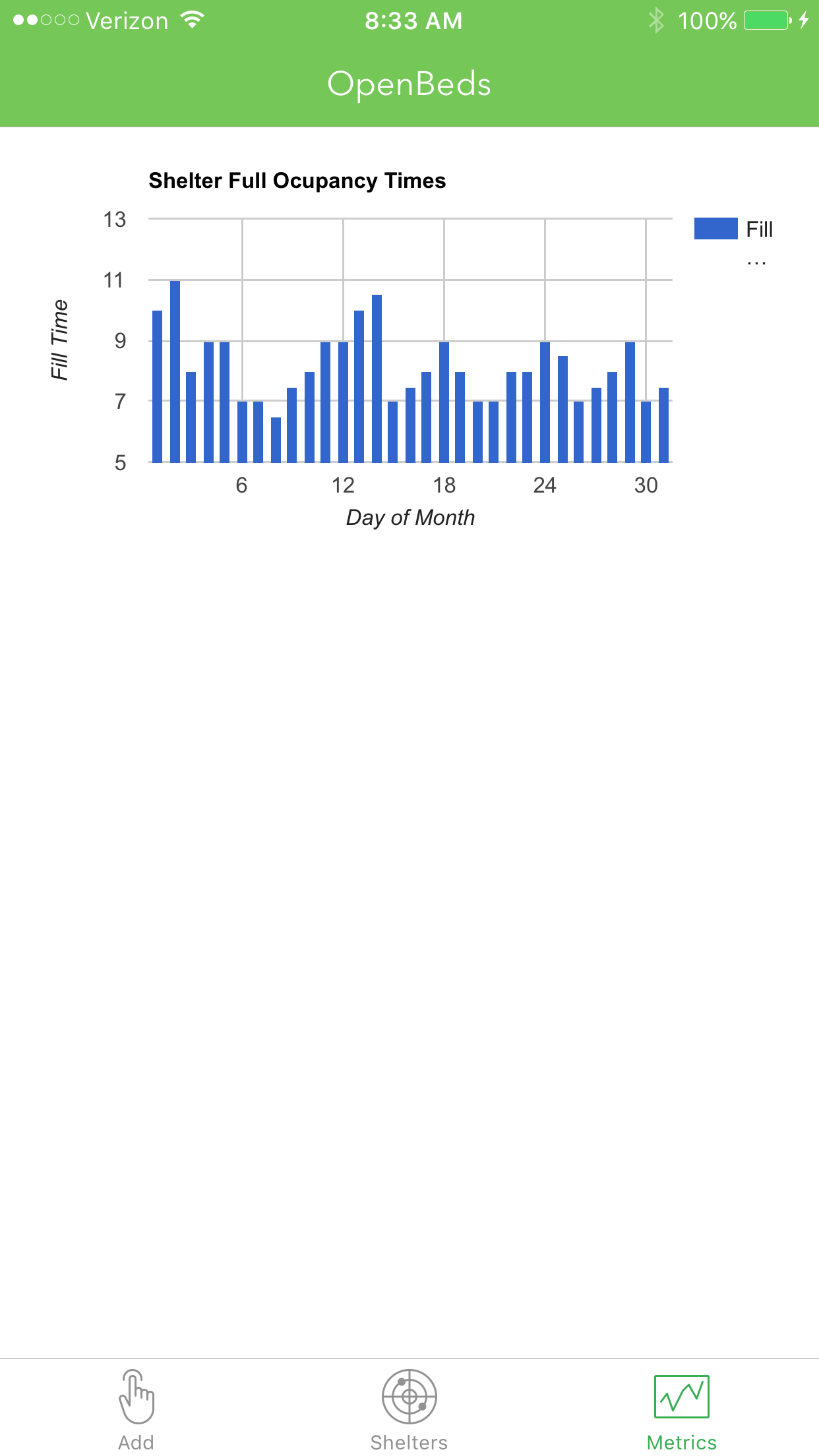
Visualization in-app
-
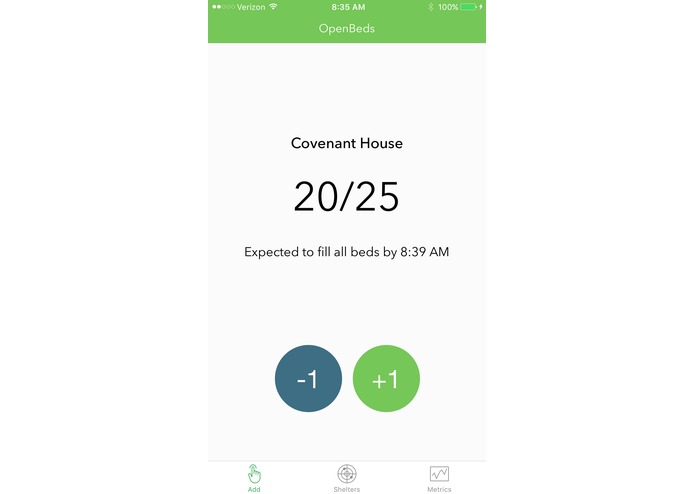
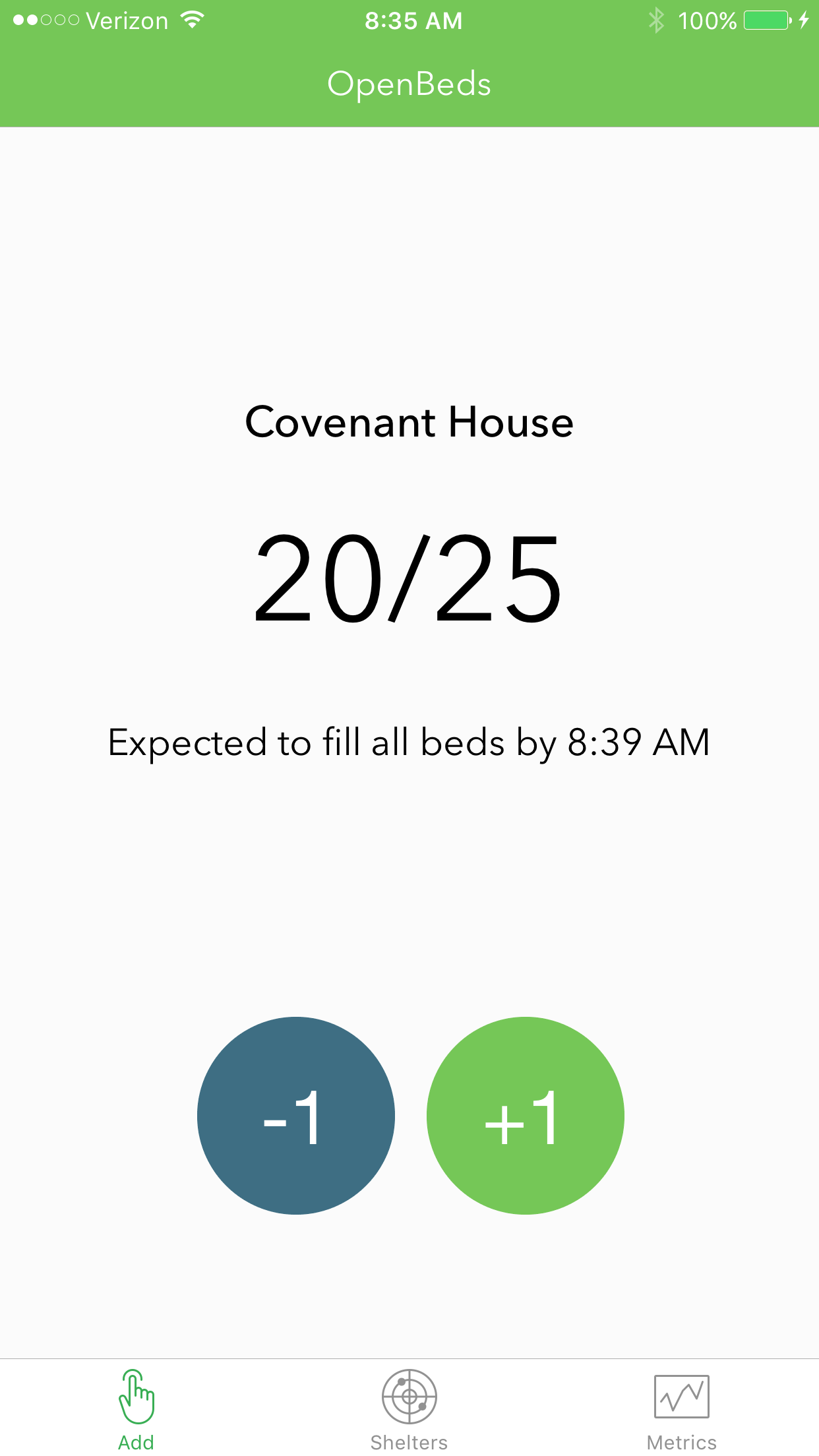
iOS app virtual buttons
-
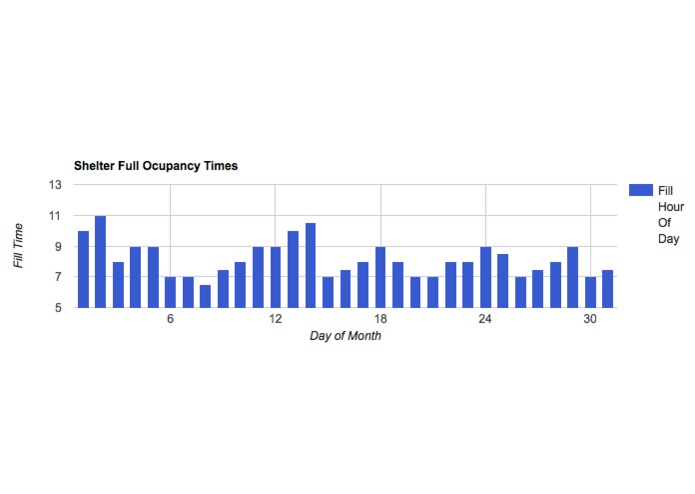
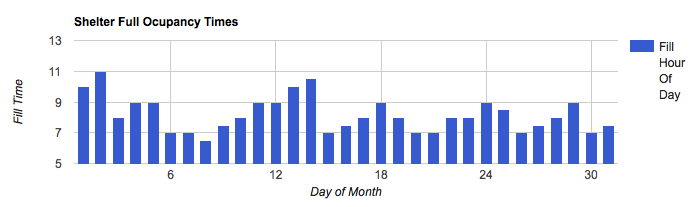
Web Visualization
-
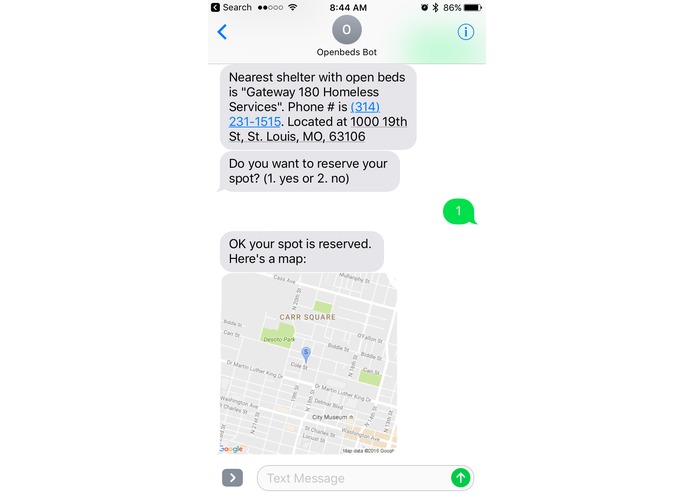
Bot
-
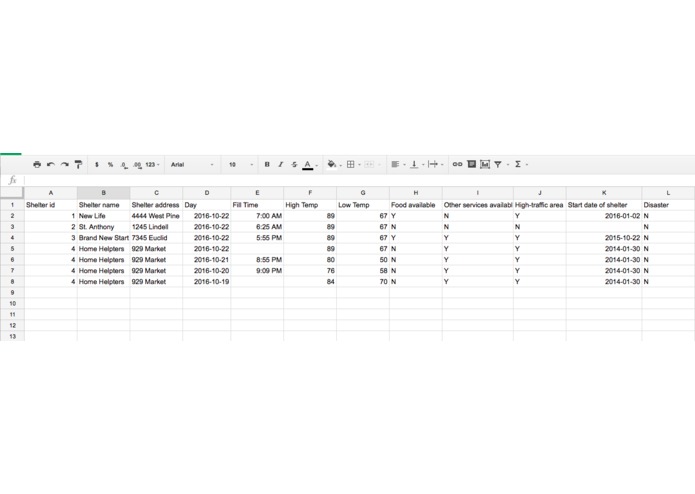
data
Inspiration
Information on bed availability at shelters is located on closed systems. We want to open it up to everyone, and power every project with our predictions service, much like how weather APIs power several other apps. The team was also inspired by stories of filled shelters, the challenges of creating new shelters, and the difficulty in coordinating between shelters.
What it does
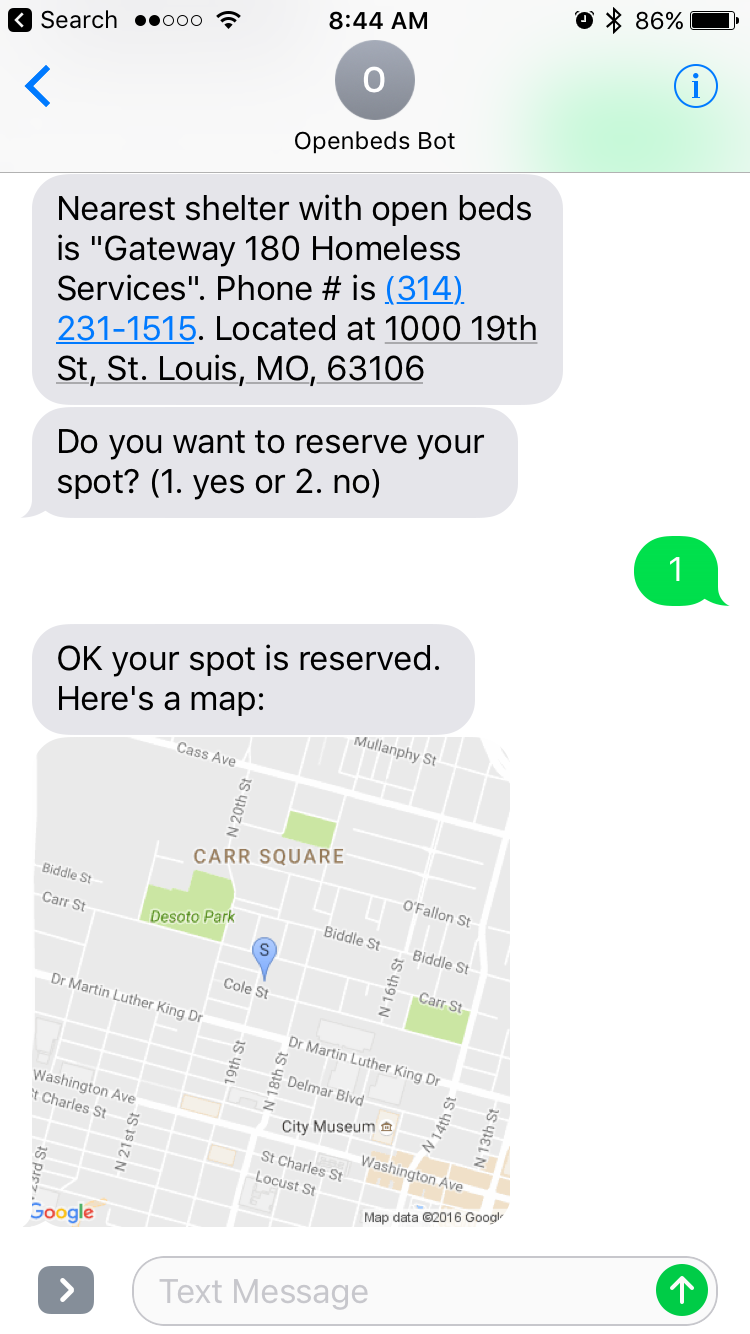
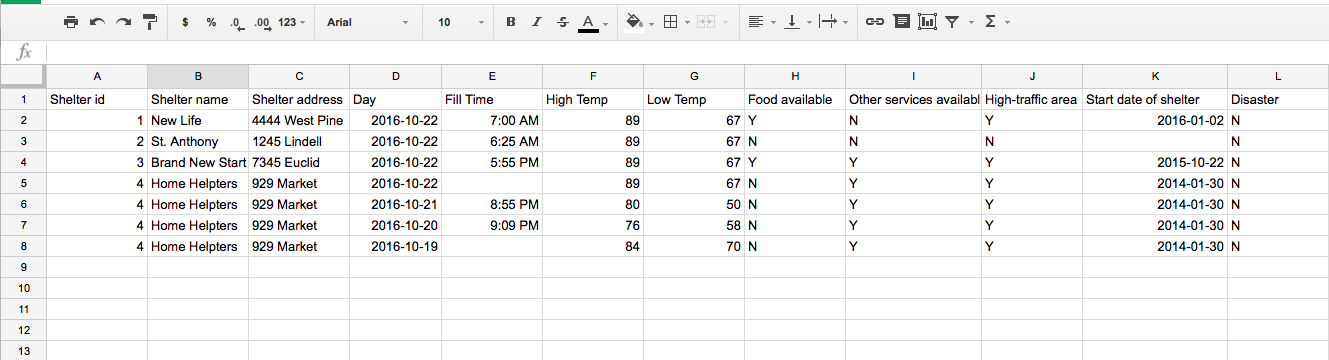
... is a platform that serves up real-time information on bed availability and predictions on when shelters will fill up in an open format that all can use, via public APIs. We've created a few sample interfaces - hardware and software buttons and a bot - to demonstrate the power of opening up this information to all, and provide visualization of shelter fill times.
At any moment, ... can provide a snapshot of the unoccupied beds at every shelter, predictions of when they'll fill up, and suggest the best shelter for a person of a particular demographic, based on their location. The homeless, nearly-homeless, and volunteers can text a bot for the best shelter. Workers at a shelter can read predictions on when their shelter will fill up and where to send people they can't accommodate. And best of all - it's all free and open data. Which means that every HMIS vendor, developer, and curious party can ask these questions as well, as easily as we do.
How we built it
How do we power the platform? Through the simplest of interfaces - a button. Either virtual or in an app, or real on a desk. For the real button we used a Particle Electron. Monitors at the shelter tap a green button for each bed as it's occupied, and a blue button when one is freed up. ... does the rest. It serves data for a shelter-finder bot that's publicly accessible. The bot was built with Microsoft's Cognitive Services like Luis and Bot Framework, and Google Maps for directions. We created a web chart, and created a native iOS app in Swift 3 that can serve as virtual buttons, a dashboard for data visualization, and a list of shelters with predictions on wait times. We built the APIs to be consumed by other products.
Challenges we ran into
We had a major issue with the 2.4 gHz network in the stadium which prevented us from having more interesting buttons. We also wanted to use a more elaborate machine learning model but at least have been able to talk through how we could do analysis on our data and build a predictive model.
Accomplishments that we're proud of
We pivoted from building a broad, complex homeless pickup and intake service to focus on something more tightly-focused and capable of rapid integration into any service. Not an easy move, but we're proud that we did something out of the box. Also, we like our broad range of interfaces - hardware buttons, a mobile app, a chatbot, and a dynamic chart.
What we learned
We learned that the best solution isn't always the obvious solution. And that a massive omnibus project may not always be the best fit. However, we learned that crafting the message pitching a platform is harder than just pitching a single product. We also learned about the different interfaces through which people can interact with our system.
What's next for ...
We'd like to refine the machine learning model, show how a pop-up shelter would occur, and add richer visualizations. Also we'd like to offer an intake mechanism.
Built With
- bot-framework
- bttn
- electron
- google-maps
- luis
- node.js
- swift

Log in or sign up for Devpost to join the conversation.