The Story of bedrock-fallback-engine
💡 The "Aha!" (Or "Oh No") Moment
Building production-grade AI applications on Amazon Bedrock sounds great on paper. You get enterprise security, native AWS integration, and access to top-tier models. But in reality, you also get the dreaded HTTP 429: Too Many Requests.
Picture this: your app is finally gaining traction, users are happy, and suddenly—bam. A random regional hiccup or a sudden spike in traffic triggers a wave of rate limits. Your app hangs, crashes, and user trust evaporates into the cloud.
I looked around for a solution. Most developers were either bolting on massive, unverified third-party tools or writing ugly, nested try-except blocks that made their code look like a plate of spaghetti. I thought, “There has to be a cleaner way to handle this natively within AWS.”
When nobody else built it, I realized I had to.
🛠️ What It Is (And Why It Matters)
I built bedrock-fallback-engine—a lean, zero-runtime-dependency Python library designed to act as a bulletproof middleware layer for Amazon Bedrock. It ensures your AI application has absolute, zero-downtime resilience.
Here is why this approach is fundamentally valid for real-world production:
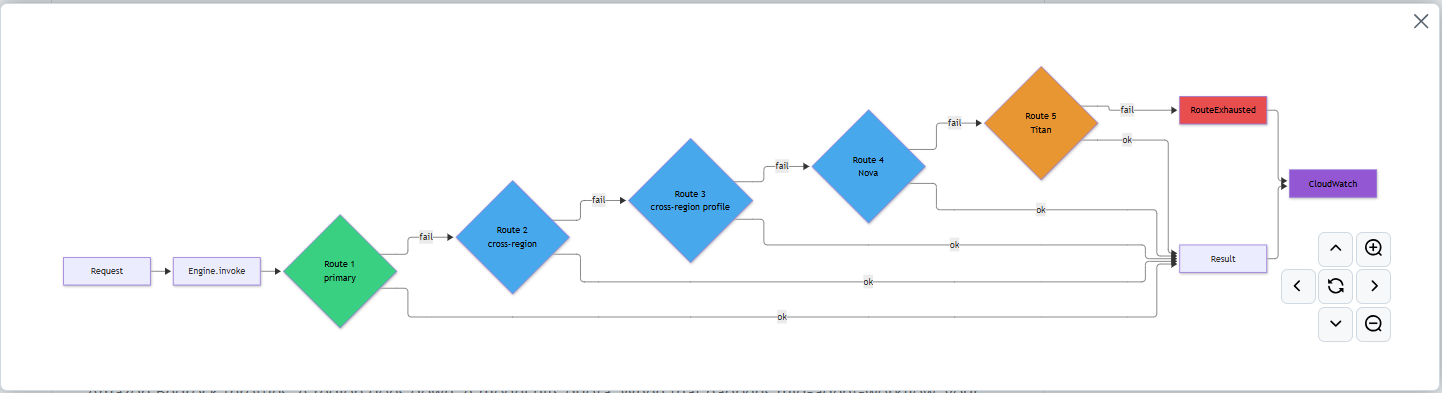
- Intelligent, Multi-Layer Failover: If Claude in
us-east-1throttles your request, the engine doesn’t just panic and throw an error. It automatically reroutes the call to a secondary region, a different model, or an emergency fallback tier based on your exact rules. - Zero External Baggage: I intentionally avoided external dependencies. It relies strictly on Python,
boto3, andPydantic. Your security team won't need a three-week meeting to approve it. - Native Telemetry: Instead of hiding what’s happening under the hood, the engine emits structured metrics (
InvocationLatency,ThrottleCount,FallbackTriggered) directly to AWS CloudWatch. You see exactly when and why a failover occurred.
🧗♂️ The Solo Build Reality Check
Building this alone meant wearing every single hat, which led to a few fun engineering puzzles:
- The Latency vs. Telemetry Dilemma: I wanted real-time tracking in CloudWatch, but synchronous logging would slow the application to a crawl. To fix this, I built a thread-safe, buffered metrics flusher. The happy path stays lightning-fast, while the telemetry uploads quietly in the background.
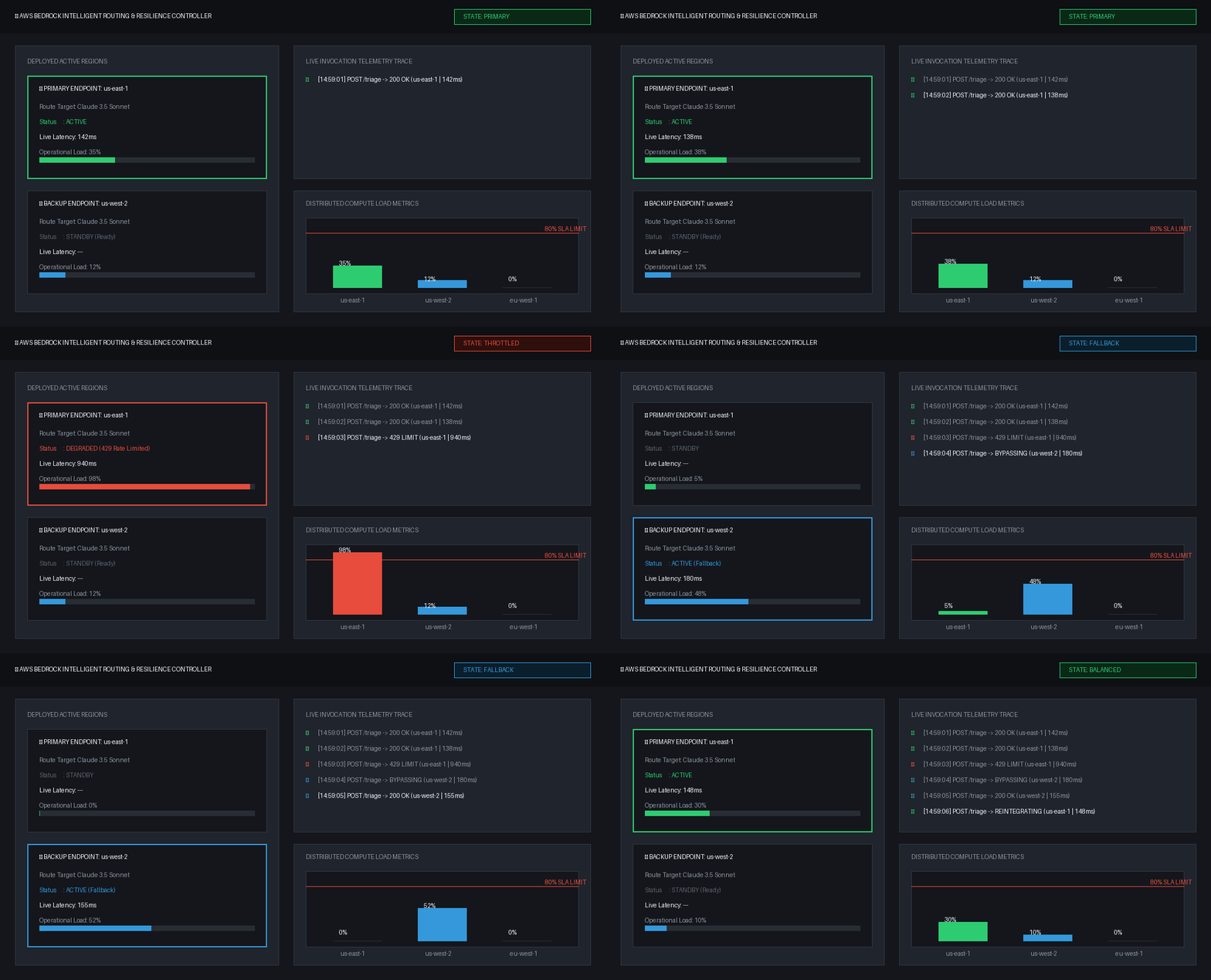
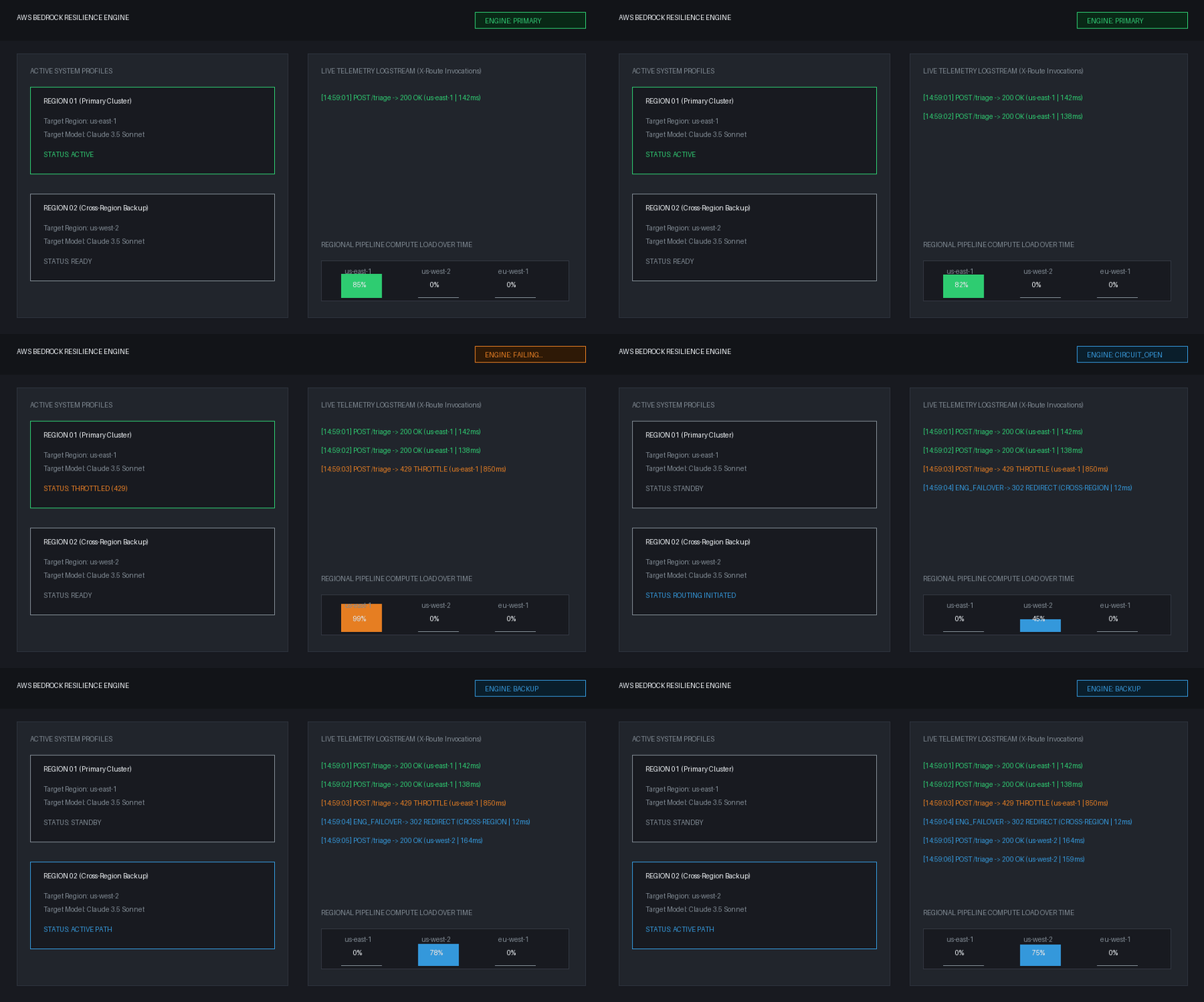
- Testing for Chaos: It’s easy to write code that works when everything goes right. It’s much harder to test what happens when everything goes wrong. To prove the engine actually works, I built a companion FastAPI demo app with a built-in simulation mode. It lets you intentionally inject 429 throttles or network drops and watch the engine smoothly reroute the traffic in real time.
- Proving It Works: I didn’t just write the code and hope for the best. I pushed through 40+ rigorous unit tests, achieving 93%+ test coverage across Python 3.10, 3.11, and 3.12.
🚀 What's Next (The Roadmap)
While the engine is ready for production right now, a project shouldn't stop at the hackathon finish line. Here is where I'm taking it next:
- Smart Cost-Optimized Routing: Right now, failovers happen based on availability. Next, I want to add an intelligent layer that routes requests based on current token pricing differentials across regions, keeping cloud bills down during high-traffic surges.
- Circuit-Breaker Pattern Enhancements: Implementing an exponential backoff cooldown window so that if a specific region or model goes completely dark, the engine stops knocking on its door entirely for a set timeframe, saving precious compute latency.
- AWS CDK / Terraform Modules: Wrapping this engine into pre-packaged Infrastructure-as-Code modules so enterprise DevOps teams can deploy the infrastructure, CloudWatch dashboards, and engine configs in a single command.
🏆 The Verdict
If there is one thing this hackathon taught me, it’s that AI resilience shouldn't be a luxury or an afterthought. By treating failover as a core middleware concern, bedrock-fallback-engine turns unpredictable cloud infrastructure into something you can actually rely on. It drops into any existing Bedrock project in minutes, keeping your apps alive when the cloud gets chaotic.
Built With
- amazon
- amazon-web-services
- bedrock
- boto3
- cloudwatch
- fastapi
- middleware
- pydantic
- python

Log in or sign up for Devpost to join the conversation.