-
-
-

-
-
Create clarity

Inspiration
Gabby Beckford's audience doesn't lack inspiration. They follow her because her message resonates — bet on yourself, take the trip, apply anyway. They see the version of themselves they could be. But between the vision and the action, there's a gap: overthinking, people-pleasing, perfectionism, waiting to feel "ready."
We built Becoming because the self-improvement industry keeps giving these women the wrong tools. Habit trackers add pressure. Goal apps demand discipline. Productivity systems optimize the wrong layer. For women caught between ambition and self-doubt, the problem isn't what they do — it's who they believe they are.
The insight: identity precedes action. If you know who you're becoming, the right decisions follow naturally. If you don't, no habit tracker will save you.
Becoming isn't a productivity app. It's a mirror — held with care — that helps ambitious women stop waiting and start acting like the person they already see.
What it does
Becoming is a creator-led identity-shift app built for Gabby Beckford's audience — ambitious women (20–35) who know what they want but stay stuck in protective patterns.
Core Experience
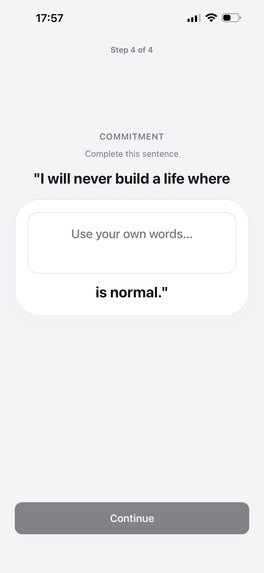
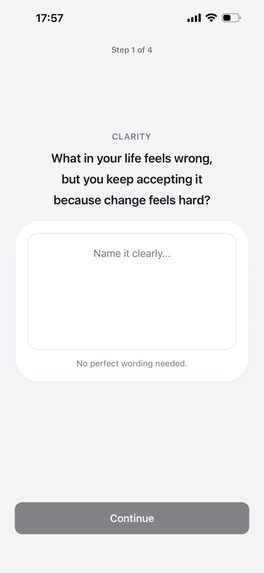
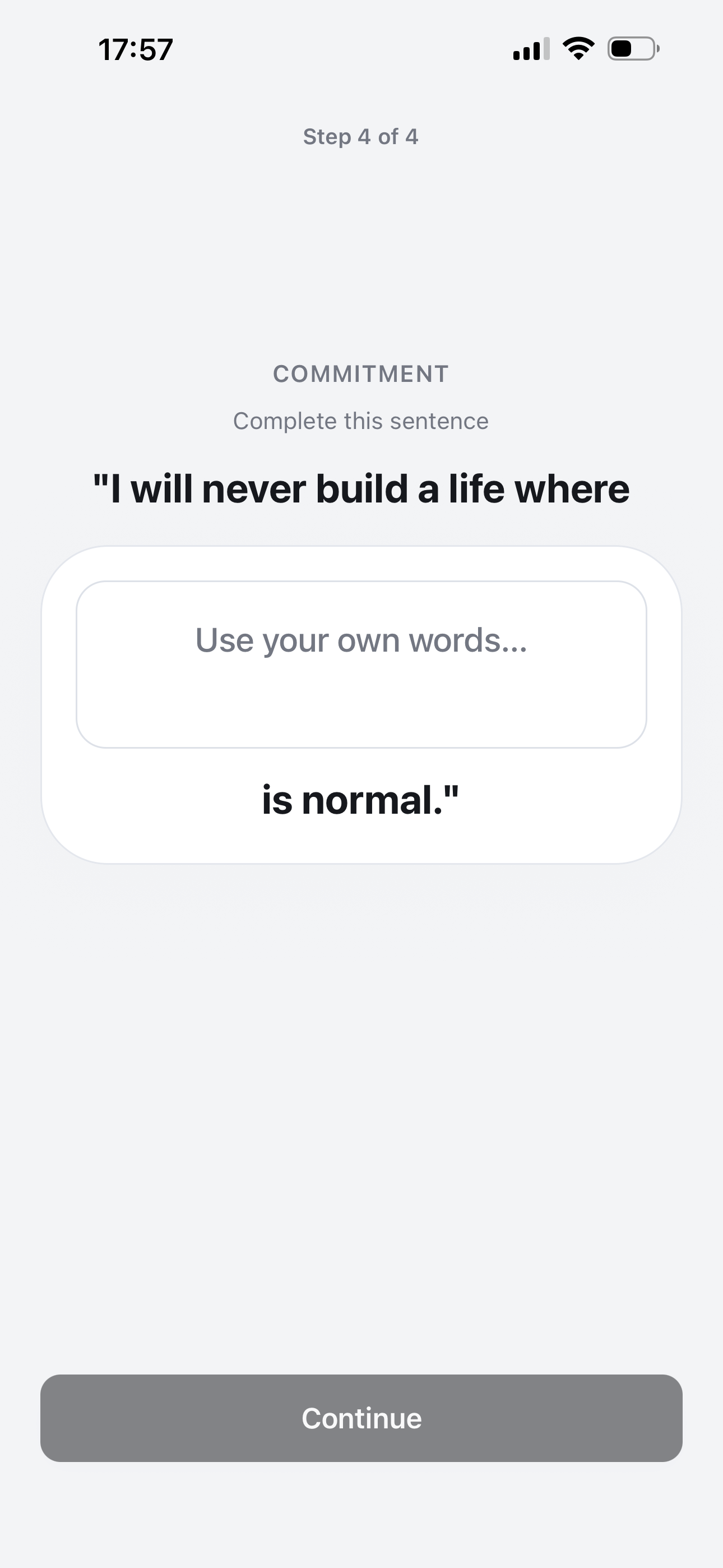
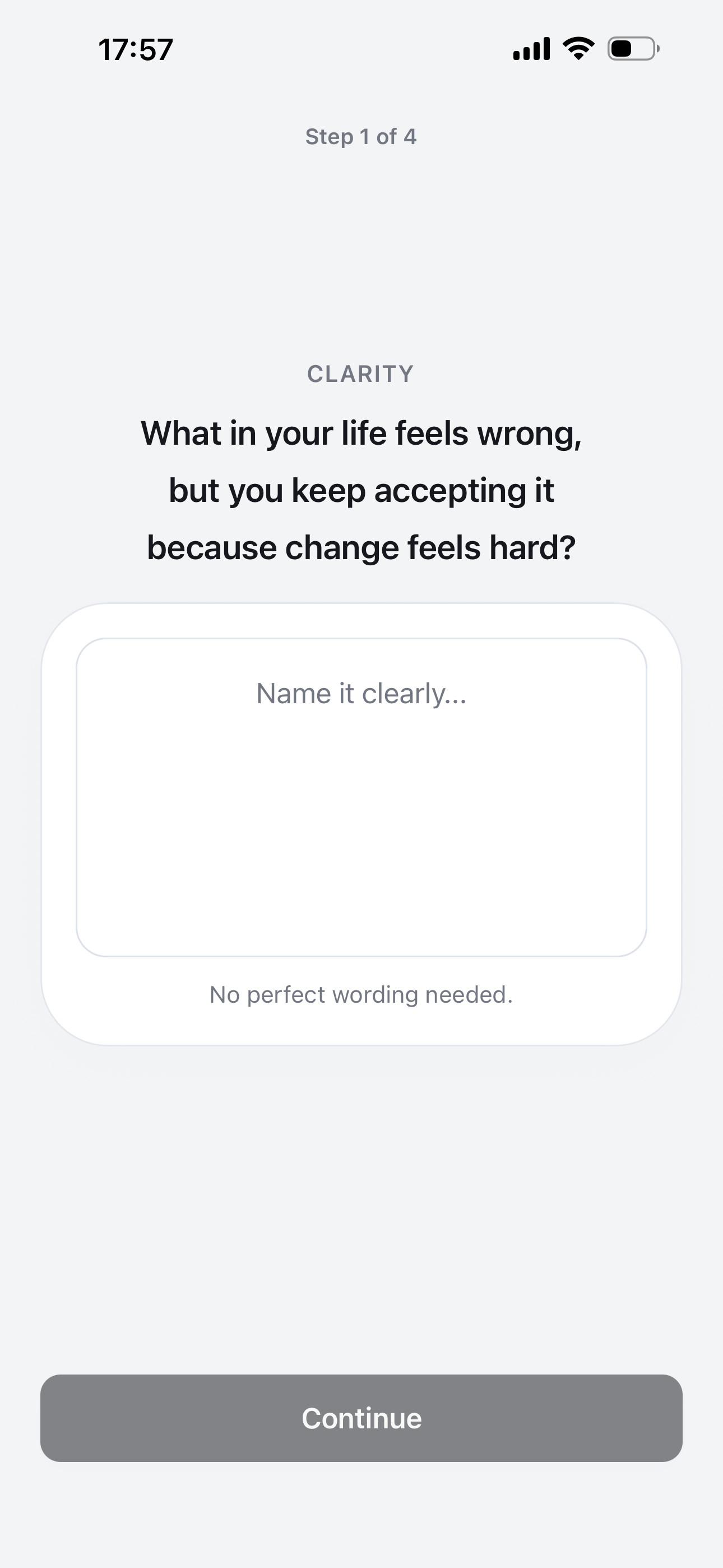
- Phase 1 — Clarity: A guided onboarding that asks honest questions: "What in your life feels wrong but you keep accepting?" — culminating in a "Never Again" commitment that anchors the entire journey
- Identity Board: Six cards that unlock progressively over weeks based on psychological readiness — not app completion. Cards like Daily Anchors, What You're Leaving Behind, Growth Edge, Future You, and Non-Negotiables map your identity commitments
- Daily Check-ins: One powerful question — "What are you trying to protect right now, that your future self would not need to protect?" — with four protection chips (Comfort, Approval, Certainty, Control) that map directly to the patterns Gabby's audience struggles with
- North Star & Signals: Define your direction and track small evidence it's already alive through observation and action signals
- Smart Daily Hints: Exactly ONE context-aware suggestion at the right time — never overwhelming, always relevant. For an audience prone to overthinking, fewer choices means more action
- Phase 2 (Reviews): Weekly and monthly reflection loops that surface dominant patterns and enable conscious identity updates
Monetization with RevenueCat
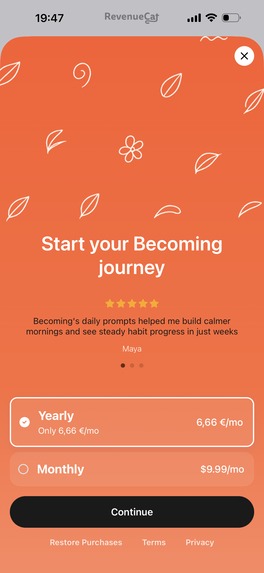
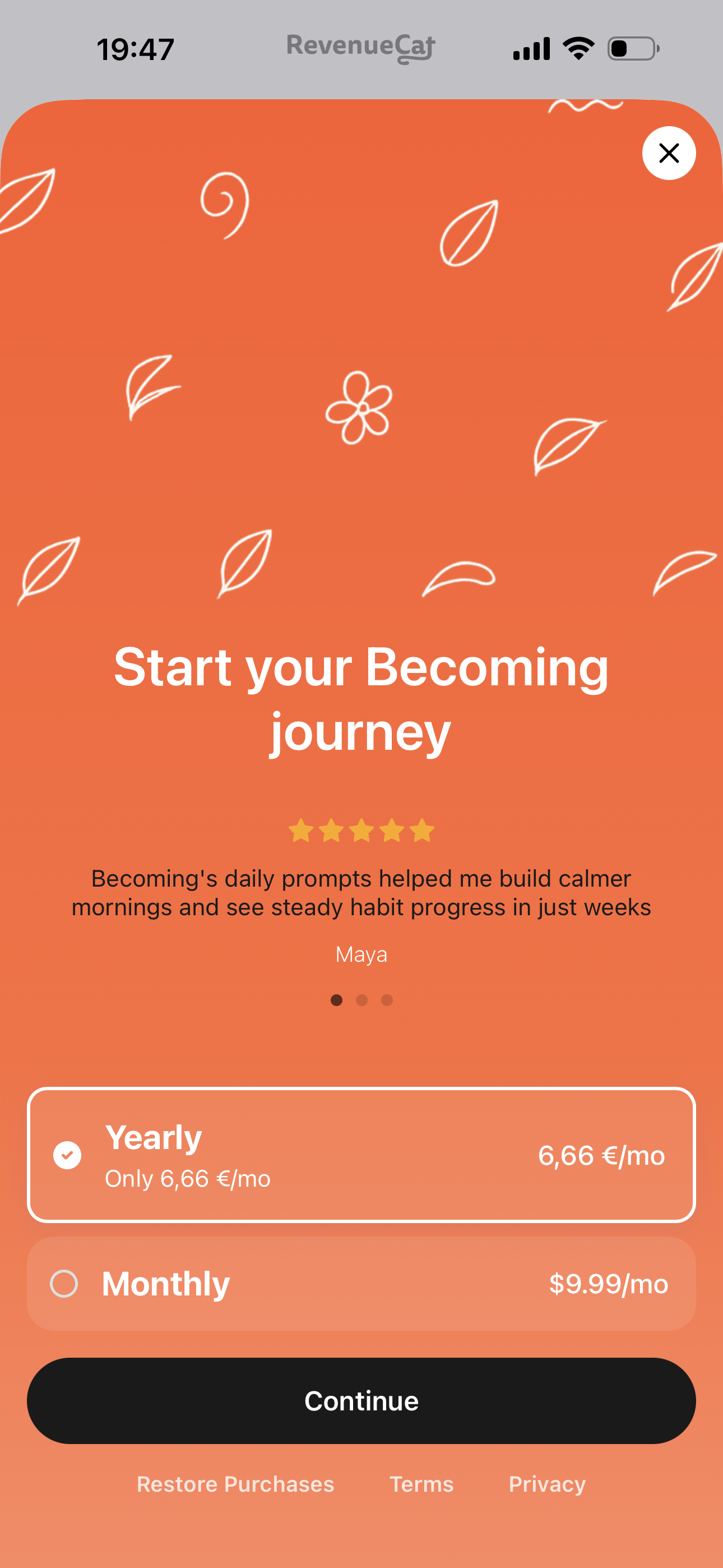
Becoming uses RevenueCat's native paywall UI (react-native-purchases-ui) presented at the end of onboarding — right after the user articulates her "Never Again" statement, at peak emotional investment:
- Monthly and yearly subscription options
- Customer Center for subscription management
How we built it
Tech Stack
- React Native (0.81) + Expo SDK 54 with New Architecture enabled
- Expo Router for file-based navigation
- TypeScript end-to-end
- AsyncStorage for local-first data persistence (all identity data stays on device — critical for user trust)
- React Native Reanimated for smooth spring animations
- RevenueCat SDK (
react-native-purchases+react-native-purchases-ui) for subscriptions
Architecture Decisions
4-Layer Data Model — separating who you're becoming from what you observe about yourself:
| Layer | Purpose | Mutability |
|---|---|---|
| Identity | Phase 1 clarity, Board cards, North Star | Conscious writes only |
| Observation | Check-ins, streaks, operating style | Append-only logging |
| Iteration | Weekly/monthly reviews | Periodic reflection |
| App Meta | Schema version, migrations | System-managed |
Identity data can only be written through identityWrites.ts — a single guarded module. When a user writes her "Never Again" statement or her "Future You" card, that content is sacred.
Progressive Board Unlocking — designed around a core insight about Gabby's audience: these women don't need all the answers at once — they need permission to take the next step. Only ONE card is suggested at a time, preventing the overwhelm that causes them to freeze.
Zero Auto-Generation — every word on the Identity Board is the user's own. The Guided Write flow scaffolds questions and mirrors answers, but never generates content. Your identity should be authored by you.
Challenges we ran into
Designing for overthinkers: Every feature decision required asking "does this reduce decision paralysis or add to it?" We ruthlessly cut multi-option screens. The daily hint shows ONE suggestion. The board suggests ONE card. Check-ins offer exactly FOUR chips. Constraint is the product.
RevenueCat in Expo Go: The native SDK requires native modules not available in Expo Go. We solved this with environment-aware API keys (EXPO_PUBLIC_RC_API_KEY for test store in dev, hardcoded production key as fallback) and EAS development builds.
Progressive unlock timing: Finding the balance between "too fast" (feels shallow) and "too slow" (feels frustrating) for women who are already impatient with themselves. The solution: dual triggers — time-based OR engagement-based — whichever comes first.
Anti-gamification without boring: Gabby's audience is social-media-native — they respond to dopamine. But the app can't manipulate them. Achievements celebrate without creating dependency. Streaks exist but aren't punitive. The design had to feel alive without feeling addictive.
What we learned
Building for Gabby's audience taught us that the hardest design challenge isn't adding features — it's knowing when restraint is the feature. These women are overwhelmed by options, paralyzed by perfectionism. An app that gives them less — one hint, one card, one question — gives them more.
RevenueCat's native paywall UI was a game-changer: replacing our custom paywall screen with RevenueCatUI.Paywall was a net deletion of code, and the result converts better because it looks trustworthy and polished out of the box.
Most importantly: technology can help women stop waiting and start becoming

Log in or sign up for Devpost to join the conversation.