-
-
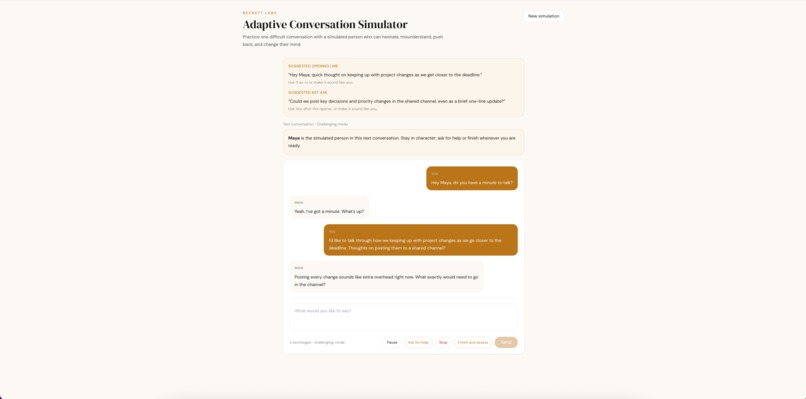
Rehearse a realistic workplace conversation with Maya, a cross-functional project lead.
-
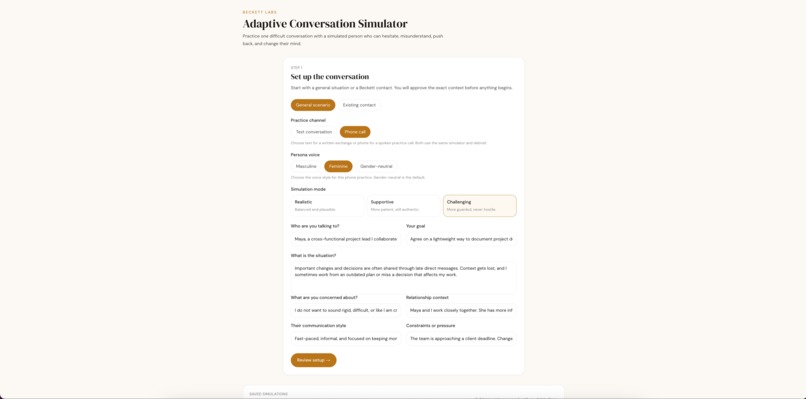
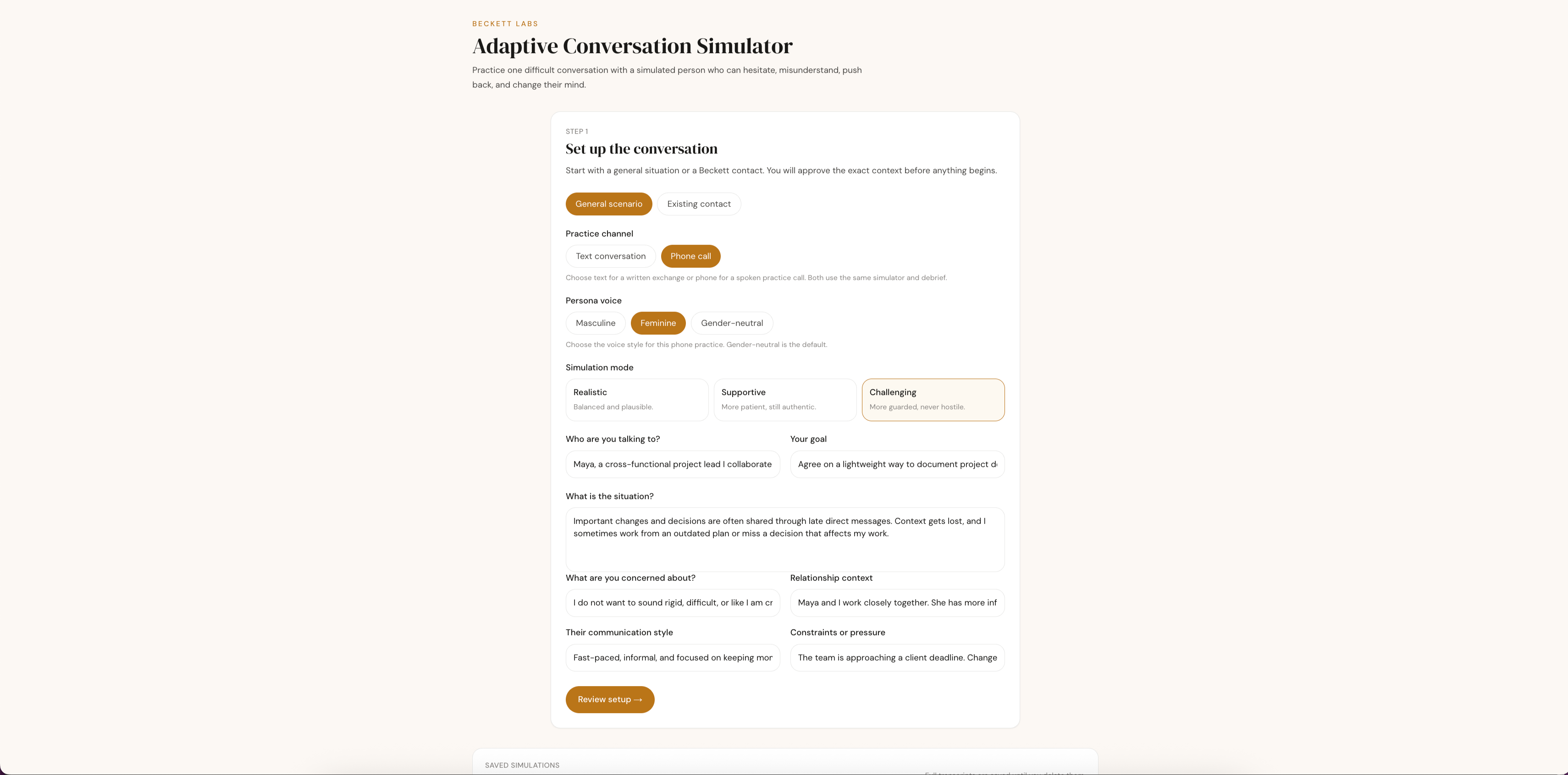
Define the person, goal, concerns, relationship, communication style, and constraints before practicing.
-
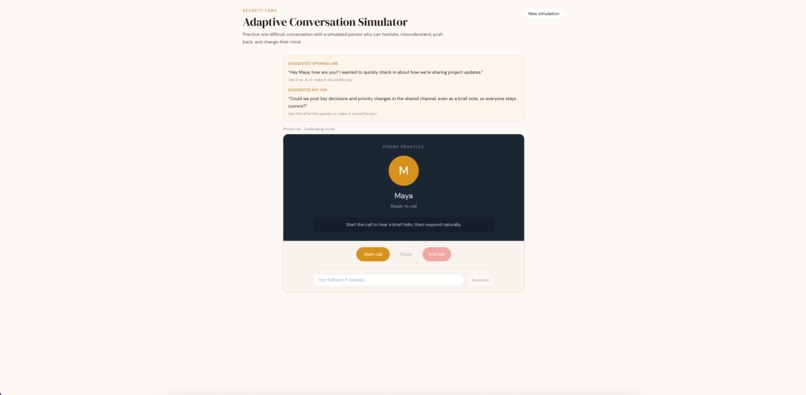
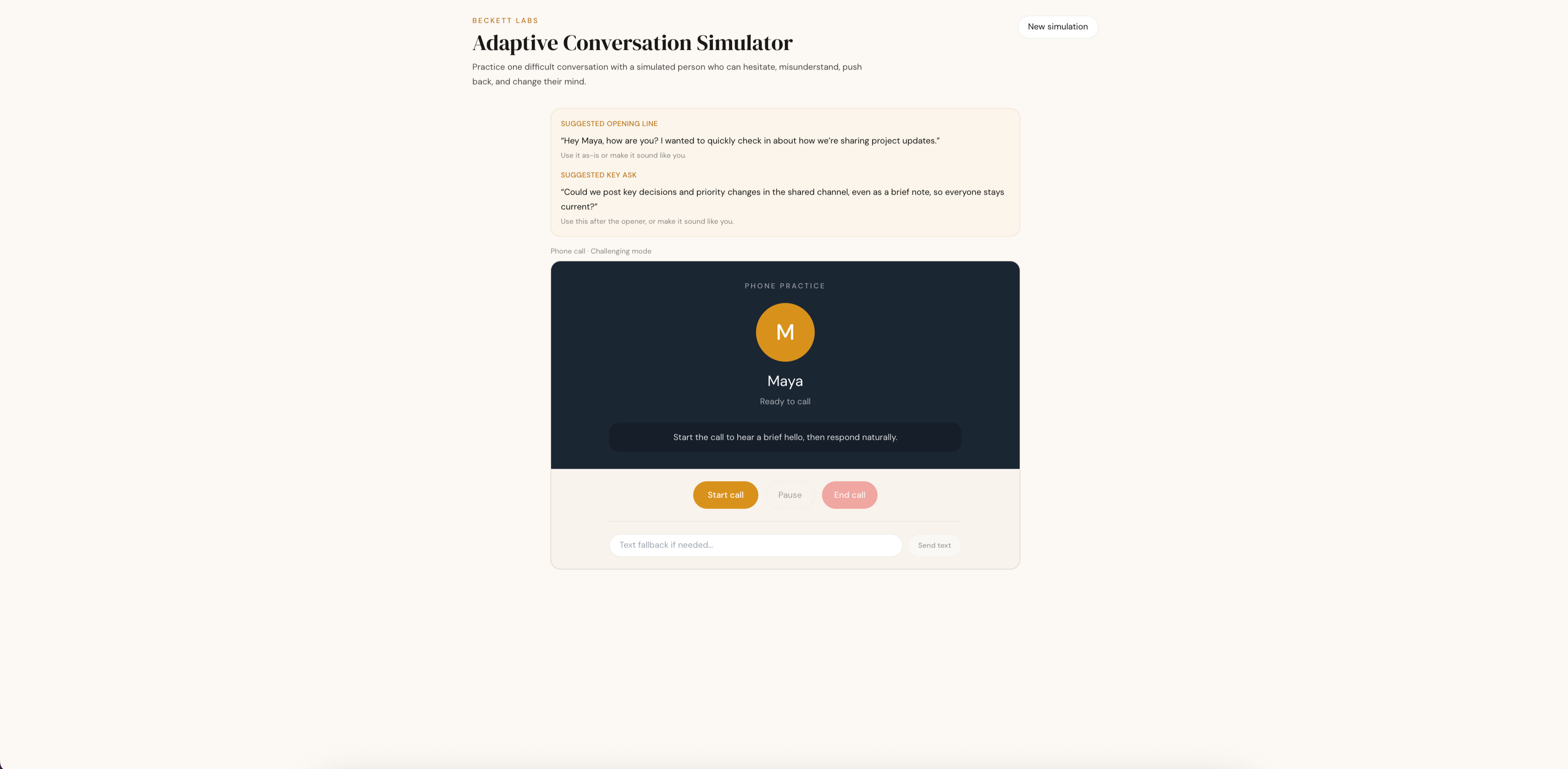
Practice aloud with Realtime audio and GPT‑5.6 guidance between exchanges.
-
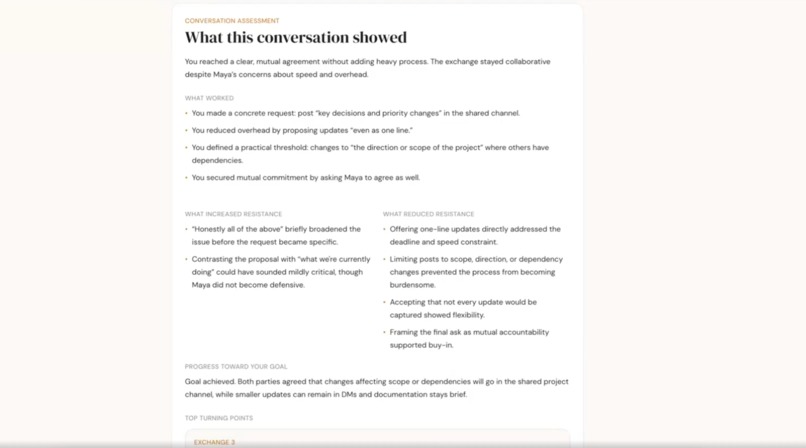
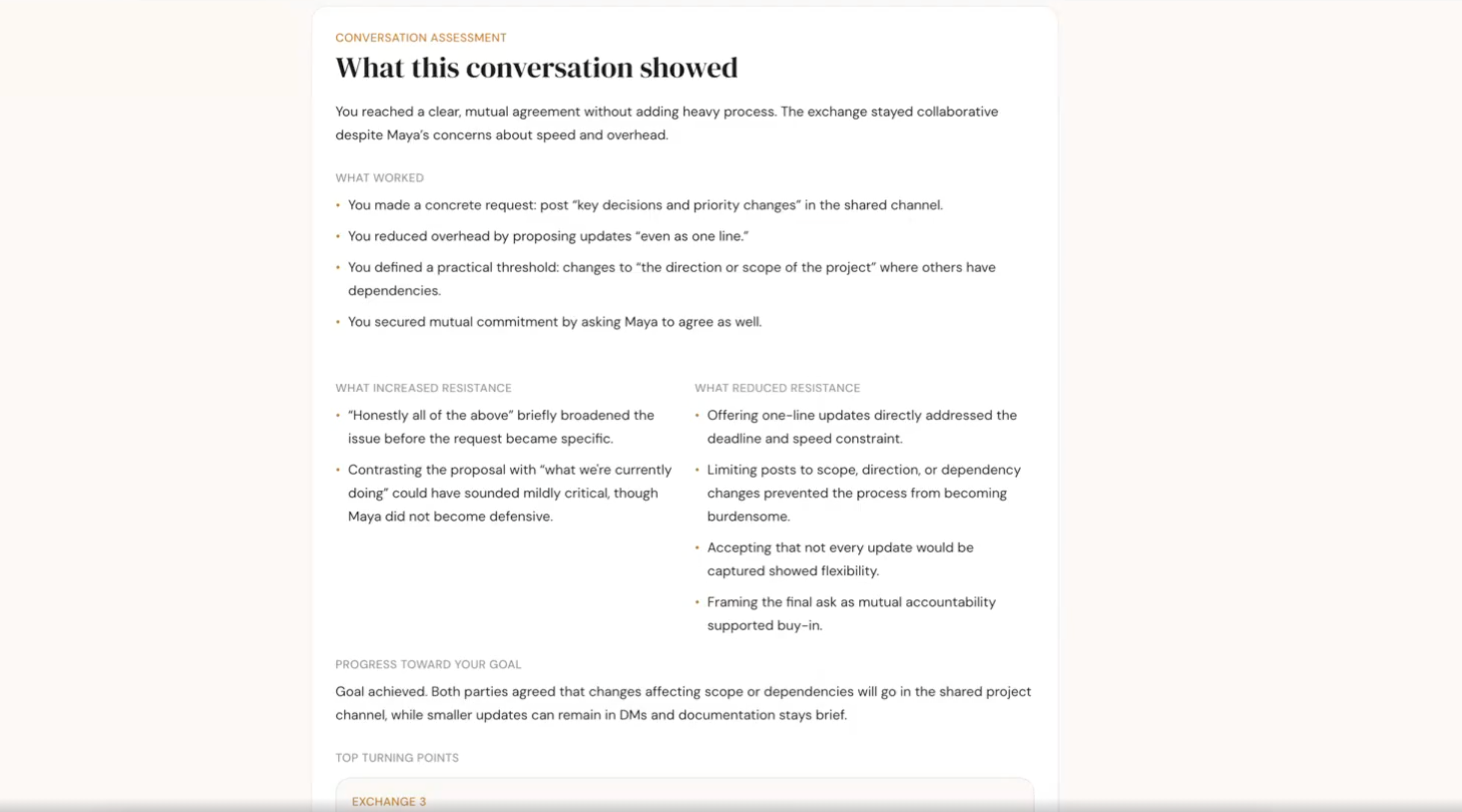
Review turning points, resistance, goal progress, and practical next steps.
Inspiration
Difficult workplace conversations often come with hidden expectations: how direct to be, what someone’s tone means, whether a concern is safe to raise, and what to say next. For neurodivergent workers, that uncertainty can make already high-stakes conversations even harder to prepare for.
I built Beckett to create a private practice space before the real conversation happens. The goal is not to tell someone what to say or replace their judgment. It is to help them rehearse, notice what is changing in the conversation, and enter the real interaction with more clarity and control.
What it does
Beckett is an adaptive conversation simulator for neurodivergent workers.
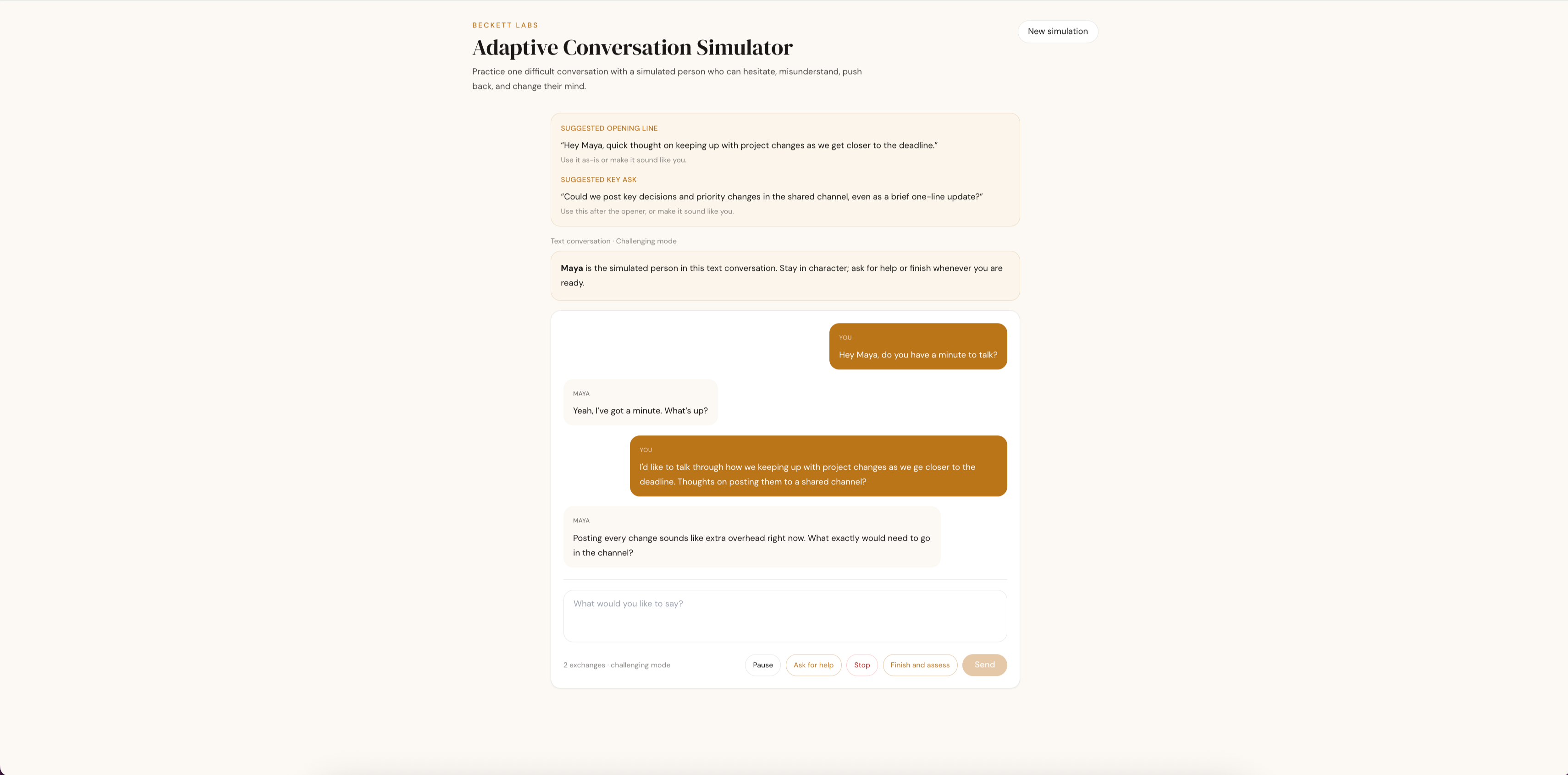
A user sets up a realistic scenario by describing who they need to speak with, their goal, concerns, relationship context, the other person’s communication style, and any relevant pressure or constraints. They can then practice through text or a phone call.
During the simulation, Beckett maintains an evolving model of the simulated person’s goals, concerns, misunderstandings, trust, defensiveness, openness, and the overall conversation trajectory. It can offer a private coaching nudge when a clearer next move would help. At the end, Beckett produces a debrief with turning points, resistance analysis, progress toward the user’s goal, practical guidance, and next steps.
How we built it
We used Codex to build the GPT-5.6 conversation simulator, including session setup, text practice, phone-call flow, private coaching nudges, transcript handoff, and final debrief.
GPT-5.6 is Beckett’s reasoning layer:
- In text mode, GPT-5.6 directly generates the simulated person’s replies and maintains the private conversation state.
- In phone mode, Realtime handles live speech and audio. GPT-5.6 reviews each completed exchange, updates the private state, generates any Beckett nudge, and provides behavioral guidance for the next turn.
- Across both modes, GPT-5.6 generates help guidance, final assessments, turning points, resistance analysis, goal progress, and outcomes.
The simulator was built as a dedicated GPT-5.6 extension, so the work could stay focused while preserving Beckett’s existing product experience.
Challenges
The central challenge was making the simulation feel adaptive rather than like a scripted role-play. A useful practice partner needs to remember what has happened, respond consistently to the user’s choices, and allow the conversation to shift naturally.
We addressed this by separating the live interaction from the reasoning layer. In text, GPT-5.6 generates the simulated person directly. In phone calls, Realtime manages the live audio experience while GPT-5.6 evaluates completed exchanges and guides the simulation forward. This lets Beckett stay responsive without confusing the roles of the audio system and the reasoning system.
Another challenge was providing coaching without taking control away from the user. Beckett’s nudges are private and optional: they identify a possible next move, but the user decides what to say.
What we learned
We learned that the most valuable AI support is often not a perfect answer. It is helping someone slow down, make the hidden dynamics of a conversation more visible, and practice a response that still sounds like them.
We also learned that GPT-5.6 is especially useful as a persistent reasoning layer: it can track an evolving interpersonal context, identify meaningful changes, and turn a practice conversation into concrete, usable reflection.
Built With
- accessibility
- ai
- coaching
- codex
- conversationalai
- gpt-5.6
- neurodiversity
- next.js
- openai
- postgresql
- react
- realtime
- supabase
- tailwindcss
- typescript
- vercel
- workplace

Log in or sign up for Devpost to join the conversation.