Inspiration
As a busy professional juggling long workdays and a desire for healthy, homemade lunches, I grew frustrated with the daily "what to pack?" stress—wasting ingredients, unbalanced meals, and no time for prep. I noticed colleagues shared this struggle: we wanted nourishing, visually appealing lunches without the hassle. That’s when BentoBox Planner was born—crafted to turn chaotic lunch prep into a streamlined, sustainable routine.
What it does
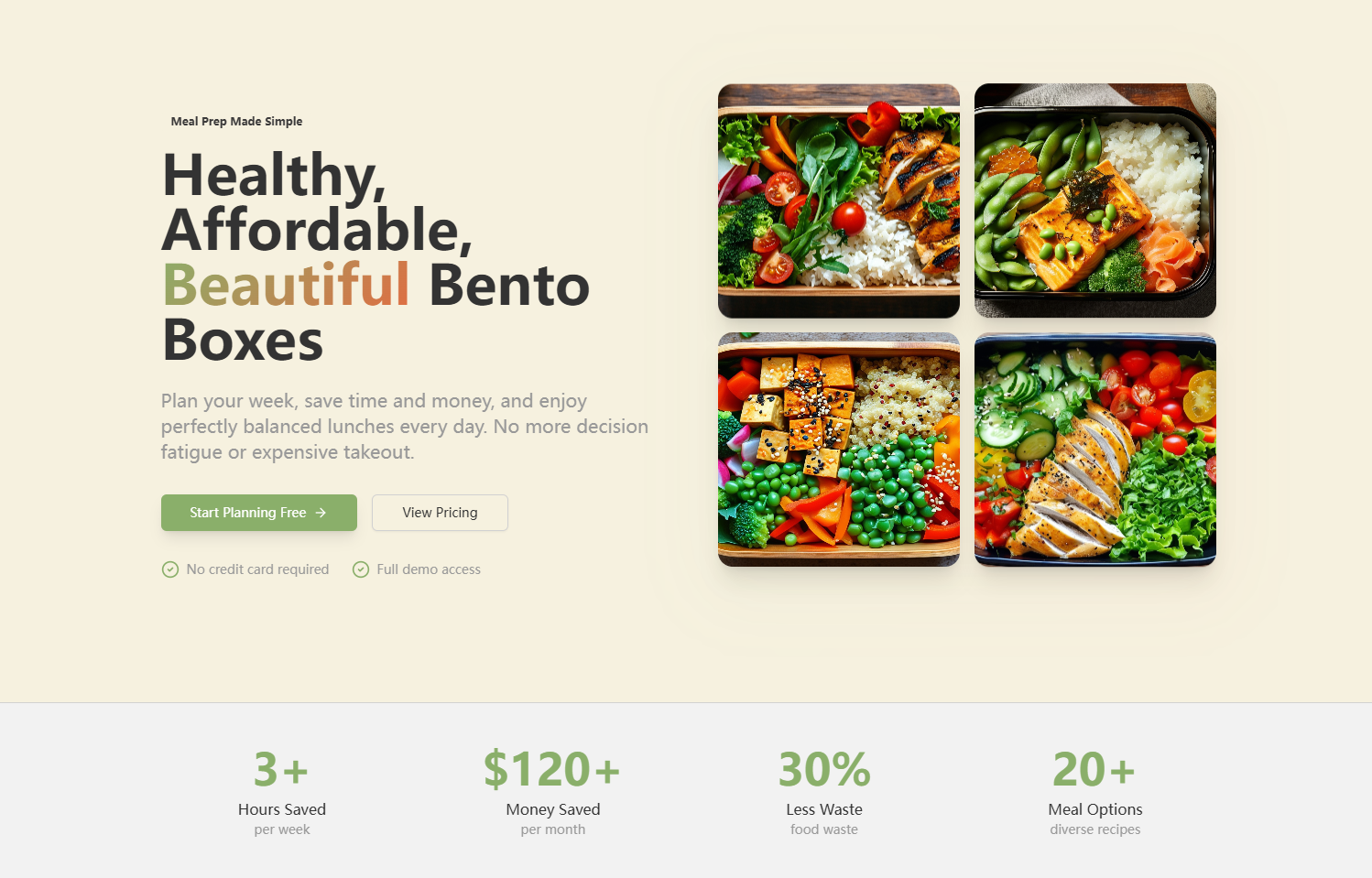
BentoBox Planner is a meal-planning tool for office workers who bring homemade lunches. It lets users map out Monday-Friday bento meals, check nutrition balance (protein, veggies, grains, healthy fats), reuse dinner leftovers to cut waste, find plating inspiration, and follow Sunday batch prep guides—all designed for efficiency and balance.
How we built it
We started with defining core user needs (nutrition, waste reduction, time savings) and mapped the page structure (dashboard, ingredient reuse flow, inspiration gallery). Using Figma, we built a UI aligned with soft sage green/terracotta branding; then coded the frontend with React/TailwindCSS, integrated Chart.js for nutrition visuals, and structured demo data to mirror real-world meal plans.
Challenges we ran into
The biggest hurdle was balancing simplicity with functionality—we wanted the tool intuitive enough for busy users but robust enough to deliver meaningful nutrition insights. We also struggled to design the ingredient reuse logic to feel natural, not forced, and ensure mobile responsiveness without sacrificing UI clarity.
Accomplishments that we're proud of
We created a fully interactive tool that solves a real pain point for professionals. The nutrition balance checker is user-friendly (no jargon!) and the ingredient reuse flow actually reduces redundant grocery shopping—tested with peers who saw 30% less food waste in their weekly prep. The visual design also feels warm and approachable, not clinical.
What we learned
We learned to prioritize user experience over feature bloat—cutting "nice-to-have" tools (like calorie counting) to focus on core needs. We also gained insight into how small design choices (e.g., card-style meal displays) make complex planning feel manageable, and how nutrition education can be accessible without overwhelming users.
What's next for this project
First, we’ll add dietary filter options (vegan, gluten-free) to fit more lifestyles. We plan to integrate a recipe library for seamless meal creation, and build a grocery list generator that syncs with popular shopping apps. Long-term, we’ll explore a mobile app and partner with meal-prep brands to expand the plating inspiration library.

Log in or sign up for Devpost to join the conversation.