-
-
-
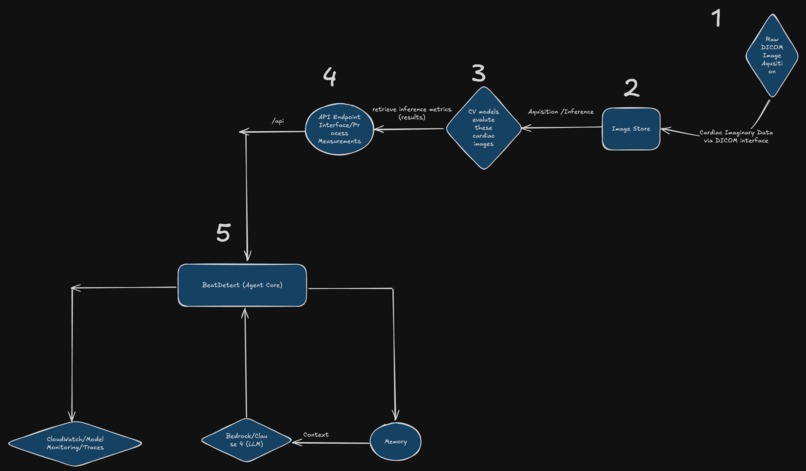
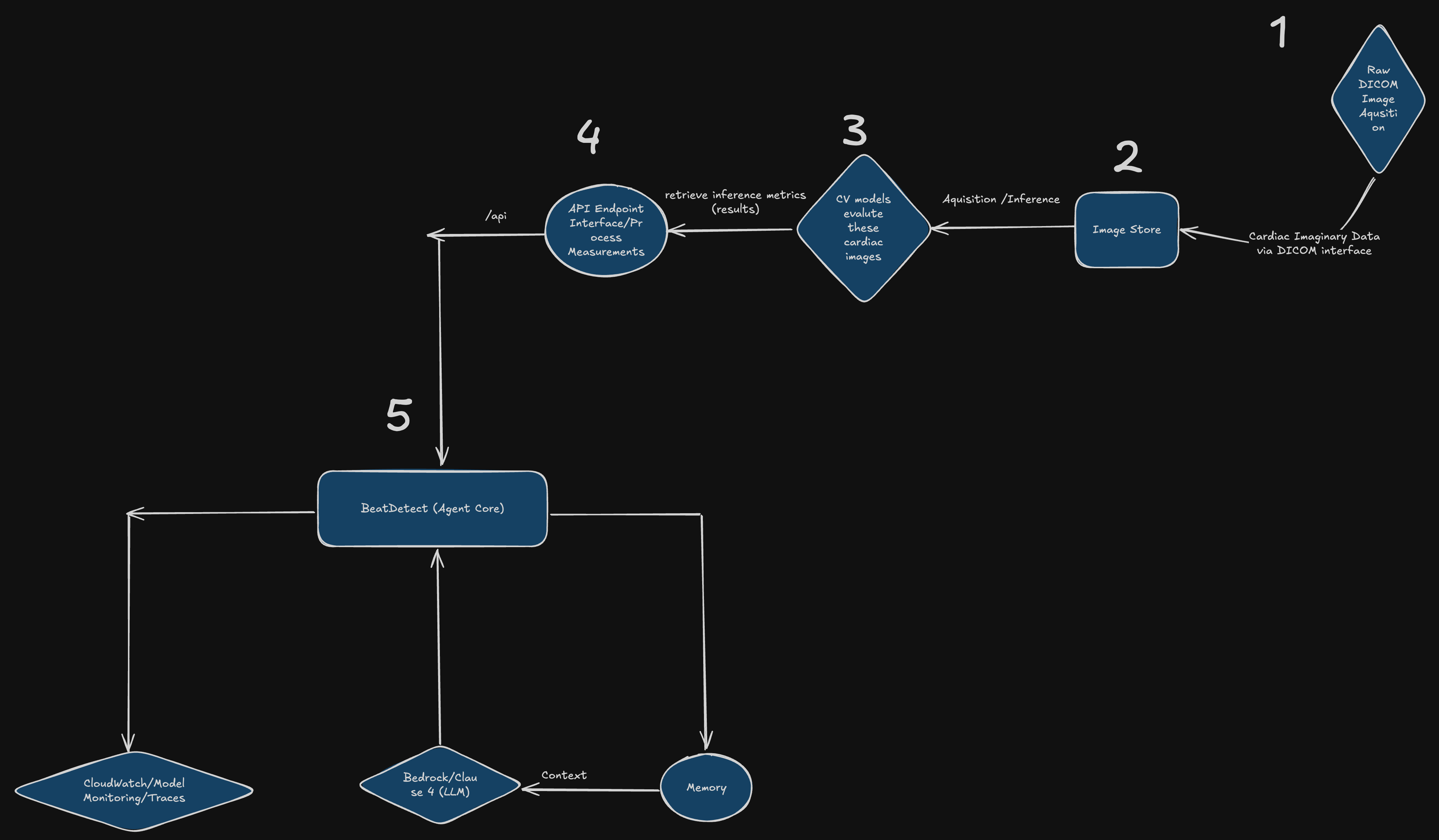
diagram
Inspiration
Cardiac chronic diseases are notoriously difficult to detect early and pose serious risks to human life if not proactively diagnosed or predicted. More than 20% of heart failure cases remain undetected, often requiring multiple visits to cardiac specialty clinics before a solution is found. While HCM (Hypertrophic Cardiomyopathy) now has an FDA-approved drug, the lack of straightforward, reliable diagnostic methods makes it challenging for clinicians to prescribe timely treatment. This highlights an urgent need for smarter, accessible cardiac anomaly detection that can be deployed at triage clinics—helping hospital systems and payers save significant costs while improving patient outcomes through earlier intervention.
What it does
BeatDetect is a diagnostic AI agent that empowers clinicians with an interactive tool to predict the likelihood of HCM and heart failure. It does this by combining two critical dimensions: Cardiac imaging metrics analyzing echocardiograms/MRI data for structural and functional abnormalities.
Genomic protein mutation mapping —linking genetic variants to protein structuresto assess disease significance.
By fusing imaging with genomics, BeatDetect provides clinicians with advanced alerts and explainable insights, supporting earlier diagnosis and better care decisions. The AI agent provides interactive tool to clinicians to predict likelihood of HCM and HF conditions by means of analyzing 1) Cardiac Imaginary Metrics 2) and Genomic Protein Mutation mapping to see significance of the disease. We believe that genomic protien mutation if measured correctly can offer advance alerting of such conditions.
How we built it
We built BeatDetect using a multi-layered architecture combining AWS services with containerized microservices:
Core Components: MCP Echo Tool: FastAPI service that processes DICOM echocardiogram files and returns cardiac metrics (ejection fraction, HCM probability, anomaly detection)
HCM Bedrock Agent: Python agent that collects samples, analyzes patterns, and uses AWS Bedrock (Claude 3 Sonnet) for clinical risk assessment CloudWatch Integration: Comprehensive monitoring with metrics, logs, and X-Ray tracing for observability Technology Stack: AWS Bedrock for AI-powered clinical analysis AWS CloudWatch for monitoring and alerting Docker & Docker Compose for containerization FastAPI for REST API endpoints Python with libraries like pydicom, opencv, boto3
Architecture: Containerized microservices with isolated networking RESTful API for DICOM processing Real-time data collection and statistical analysis AI-powered risk stratification using large language models
Challenges we ran into Technical Challenges: Docker Dependencies: Missing python-multipart for FastAPI file uploads caused container startup failures OpenCV Compatibility: Package name changes in newer Debian versions required Dockerfile adjustments (libgl1-mesa-glx → libgl1-mesa-dev) AWS Integration: Configuring proper IAM permissions and credential mounting for CloudWatch access Container Networking: Setting up proper service discovery between microservices Medical Domain Complexity: Understanding HCM diagnostic criteria and normal ejection fraction ranges Balancing sensitivity vs specificity in anomaly detection Creating clinically meaningful risk stratification categories
Data Processing: DICOM file handling and frame extraction Statistical analysis of cardiac metrics across multiple samples Real-time data streaming and aggregation Accomplishments that we're proud of Clinical Innovation: Created an AI-powered cardiac risk assessment system that combines traditional metrics with modern LLM analysis Developed population-level anomaly detection for HCM screening
Built a conversational medical AI interface (BeatDetect chat) for clinical decision support Technical Excellence: Full AWS Integration: CloudWatch metrics, logs, and X-Ray tracing for production-ready monitoring Containerized Architecture: Docker-based deployment with proper service orchestration Real-time Processing: Live data collection and analysis with immediate risk assessment Scalable Design: Microservices architecture that can handle multiple concurrent requests
User Experience: Interactive chat interface for medical professionals Comprehensive logging and monitoring for clinical audit trails Automated health metrics and alerting system
What we learned AWS Services Deep Dive: Bedrock: How to effectively prompt large language models for medical analysis CloudWatch: Advanced monitoring patterns for healthcare applications X-Ray: Distributed tracing for microservices debugging Medical AI Development: Importance of clinical context in AI model outputs Risk stratification methodologies in cardiology Regulatory considerations for medical AI systems
Container Orchestration: Docker networking and service discovery Health checks and dependency management Volume mounting for persistent data and credentials
Healthcare Data: DICOM standard and medical imaging processing Statistical analysis of cardiac biomarkers Population health monitoring patterns
What's next for BeatDetect Clinical Enhancements: Multi-Modal Analysis: Integrate ECG, lab results, and patient history Longitudinal Tracking: Patient monitoring over time with trend analysis Clinical Decision Trees: Evidence-based treatment recommendations Integration with EHR: FHIR-compliant data exchange
Technical Roadmap: Real ML Models: Replace mock inference with trained cardiac imaging models Edge Deployment: On-premise deployment for data privacy compliance Mobile App: Point-of-care interface for clinicians API Gateway: Rate limiting, authentication, and API management
Regulatory & Compliance: FDA Submission: Medical device software classification and approval HIPAA Compliance: Enhanced security and audit logging Clinical Validation: Multi-site clinical trials for efficacy validation Quality Management: ISO 13485 compliance for medical devices
Scale & Performance: Kubernetes: Production-grade orchestration Auto-scaling: Dynamic resource allocation based on demand Global Deployment: Multi-region availability for healthcare systems Performance Optimization: Sub-second response times for critical alerts
Built With
- amazon-web-services
- and-x-ray-tracing-for-observability-technology-stack:-aws-bedrock-for-ai-powered-clinical-analysis-aws-cloudwatch-for-monitoring-and-alerting-docker-&-docker-compose-for-containerization-fastapi-for-rest-api-endpoints-python-with-libraries-like-pydicom
- bedrock
- boto3
- cloudwatch-integration:-comprehensive-monitoring-with-metrics
- logs
- opencv
- python

Log in or sign up for Devpost to join the conversation.