-
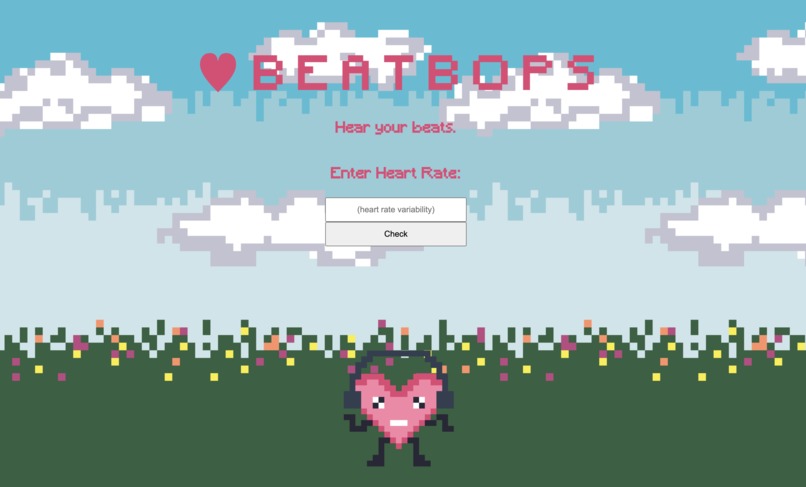
Start page of BeatBops
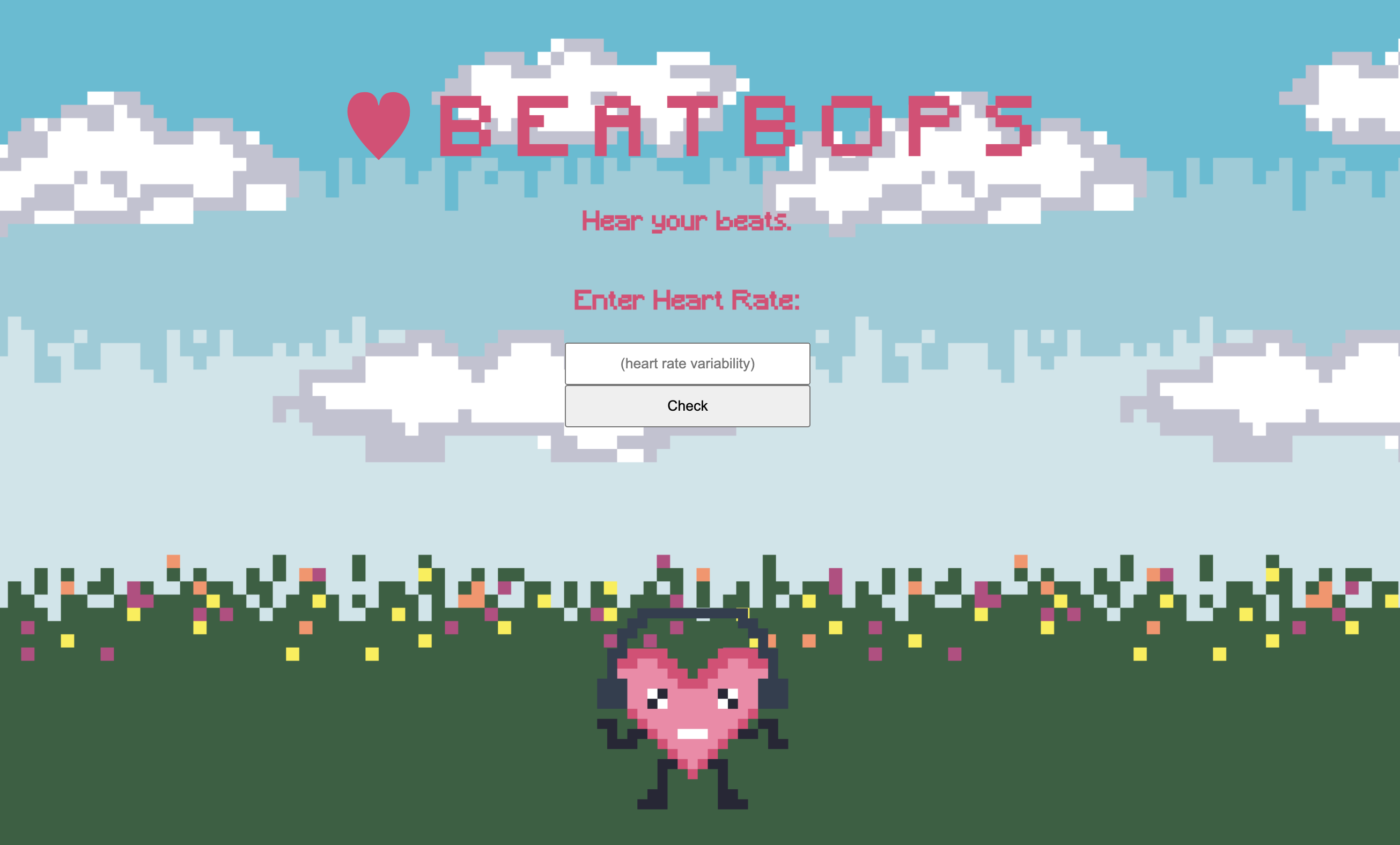
Inspiration
Studies have shown that music-based interventions may reduce stress-related symptoms, prevalent in many mental and physical health conditions such as cardiovascular diseases and anxiety disorders. Inspired by the potential advantages of auditory stimulation, ♥BeatBops aims to improve music recommendations and provide relief by emulating music therapy techniques, using musical elements such as rhythm, tempo, dynamics, and pitch.
References: Allarakha, S. (n.d.). What Is Heart Rate Variability (HRV)? Normal, High, and Low (P. Suyog Uttekar, Ed.). MedicineNet. https://www.medicinenet.com/what_is_heart_rate_variability_hrv/article.htm
De Witte M, Pinho ADS, Stams GJ, Moonen X, Bos AER, van Hooren S. Music therapy for stress reduction: a systematic review and meta-analysis. Health Psychol Rev. 2022;16(1):134-159. doi:10.1080/17437199.2020.1846580
Kulinski J, Ofori EK, Visotcky A, Smith A, Sparapani R, Fleg JL. Effects of music on the cardiovascular system. Trends Cardiovasc Med. 2022;32(6):390-398. doi:10.1016/j.tcm.2021.06.004
What it does
BeatBops uses the Spotify API to create music recommendations based on references such as genre, danceability, energy scores, and more to generate music suited to an individual's heart rate variability (HRV) data, a measure of variations between successive heartbeats. HRV may be used as an observational indicator of health - a low HRV suggests a fight-or-flight response, possibly triggered by negative emotions, while a high HRV, indicates a relaxation state, possibly suggesting a greater cardiovascular health and resilience to stress.
How we built it
We generated song recommendations using Spotify API, and built the backend app through Python, using its micro web framework Flask to implement a web app that executes the Python code. We also used HTML to create and style the display of the application.
Challenges we ran into
Along the way, we ran into some challenges such as restrictions in time and limited experience on the tools we used. Our initial intention was to obtain live heart rate variability data from the Health App from Apple Watches but our attempts were unsuccessful. Further, we struggled to classify HRV levels with Spotify's track audio features due to the current limited research on the effect of music on cardiovascular health.
Accomplishments that we're proud of
One accomplishment that we are proud of is making a project that performs both on the front end and the back end. For all of our teammates, it was our first time learning new tools such as Flask and Spotify API and creating an app that incorporates any API. We are also proud to have spent time designing our app. We take pride in learning this new knowledge and skills that we will continue to practice in the future.
What we learned
Through this project, we learned how important it is to nail down the idea first and foremost, as this possibly would be the most crucial step in starting a hack. We also learned to apply our current knowledge of Python and HTML to create our app collaboratively, and all team members have expanded their coding skills by learning new frameworks and APIs.
What's next for ♥BeatBops
In the future, we would like to develop ♥BeatBops further to use real heart rate variability data from smartwatches to generate the tracks and create a user-friendly interface that can be deployed as a smartwatch app (i.e. WatchOS app). This way, users can use dependable heart rate variability data to generate their own personalized music recommendations. We would also like to do further research on the current literature surrounding the influence of auditory stimulations on physical and mental health to better generate song recommendations that are of benefit to the users.

Log in or sign up for Devpost to join the conversation.