Inspiration
How do you turn a hugely popular party game that involves manuals, wire removing, time management, and lots o' buttons condensed into a physical manifestation?
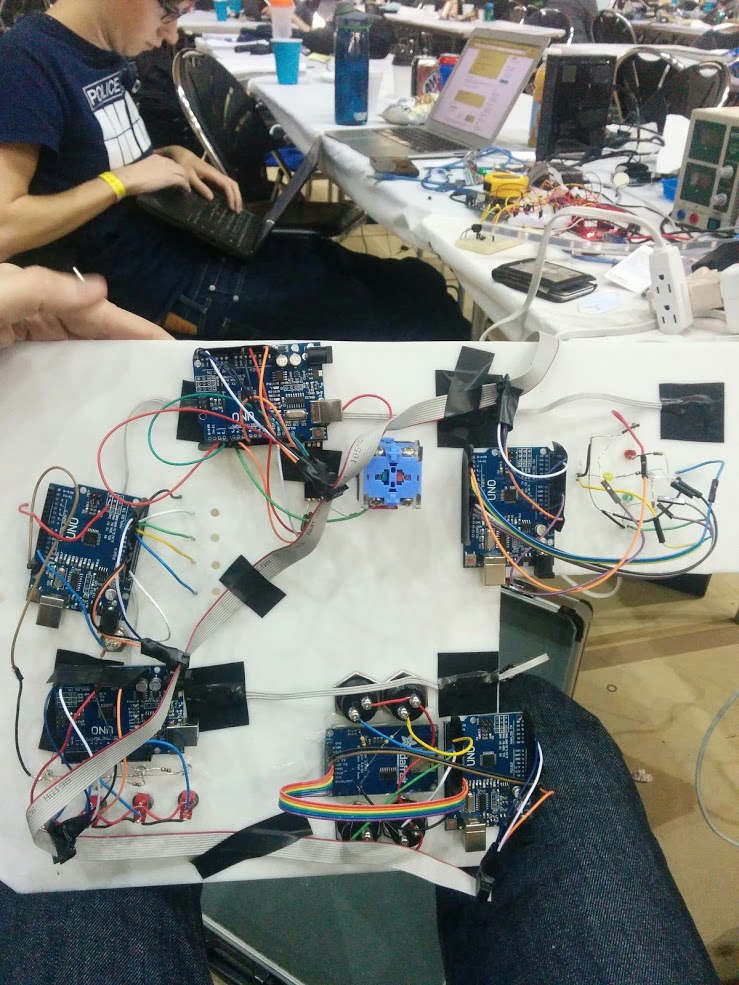
Arduinos.
Lots of arduinos.
What it does
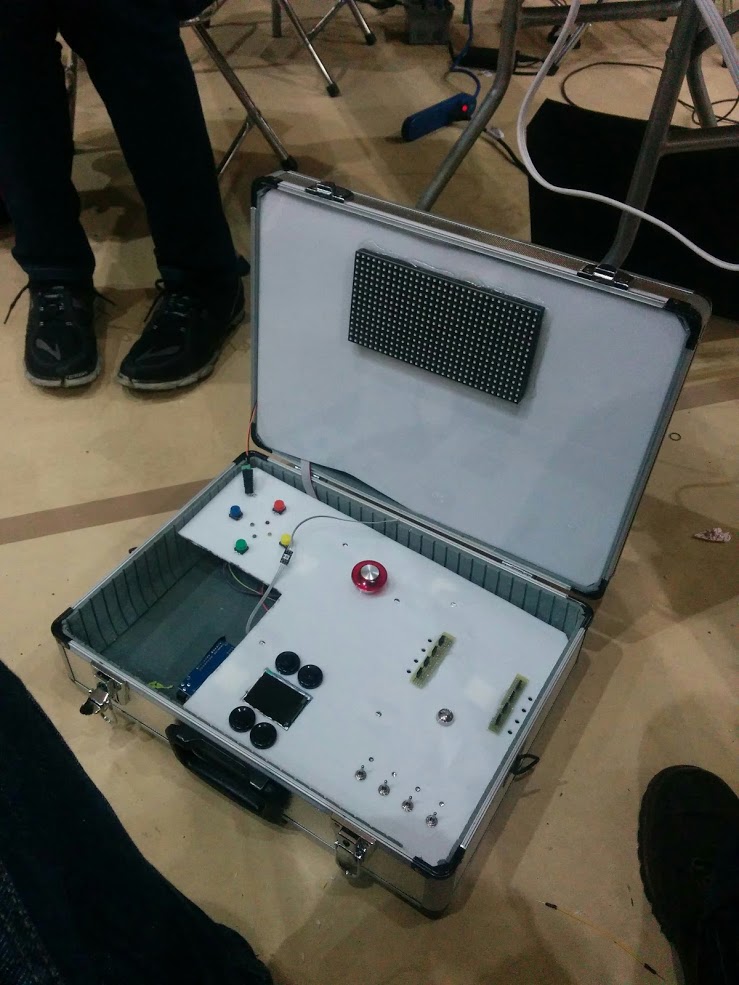
We build a modular puzzle game that is conveniently stored in a briefcase. There are individual modules that have mini challenges that pose a challenge to the user and some friends. The goal for the player is to complete all modules before the time runs out. How do you do this? By using complex manuals and communication between friends to relay relevant information on how to complete each task.
How we built it
The entire setup is built off of a network of Arduinos over I2C and each module deals with an individual puzzle and interfaces with their own peripherals. We individually made each game and introduced a scrambling element that changes how each game works, every time you play it.
Challenges we ran into
Turns out I2C doesn't play fair when moving down from 5V to 3.3V logic [and with a broken level-shifter].
Accomplishments that we're proud of
The entire component structure fits within our briefcase, and has custom drilled holes for each of our parts that the user interacts with.
What I learned
As always, we played the time game close to the chest. Some unexpected behavior always deviates our original plan and causes us to better make use of our time.
What's next for Beat the Clock
More modules! More features! More Arduinos!
Built With
- 7-arduinos
- arduino
- buttons
- c
- c++
- lcd
- led
- raspberry-pi


Log in or sign up for Devpost to join the conversation.