Inspiration
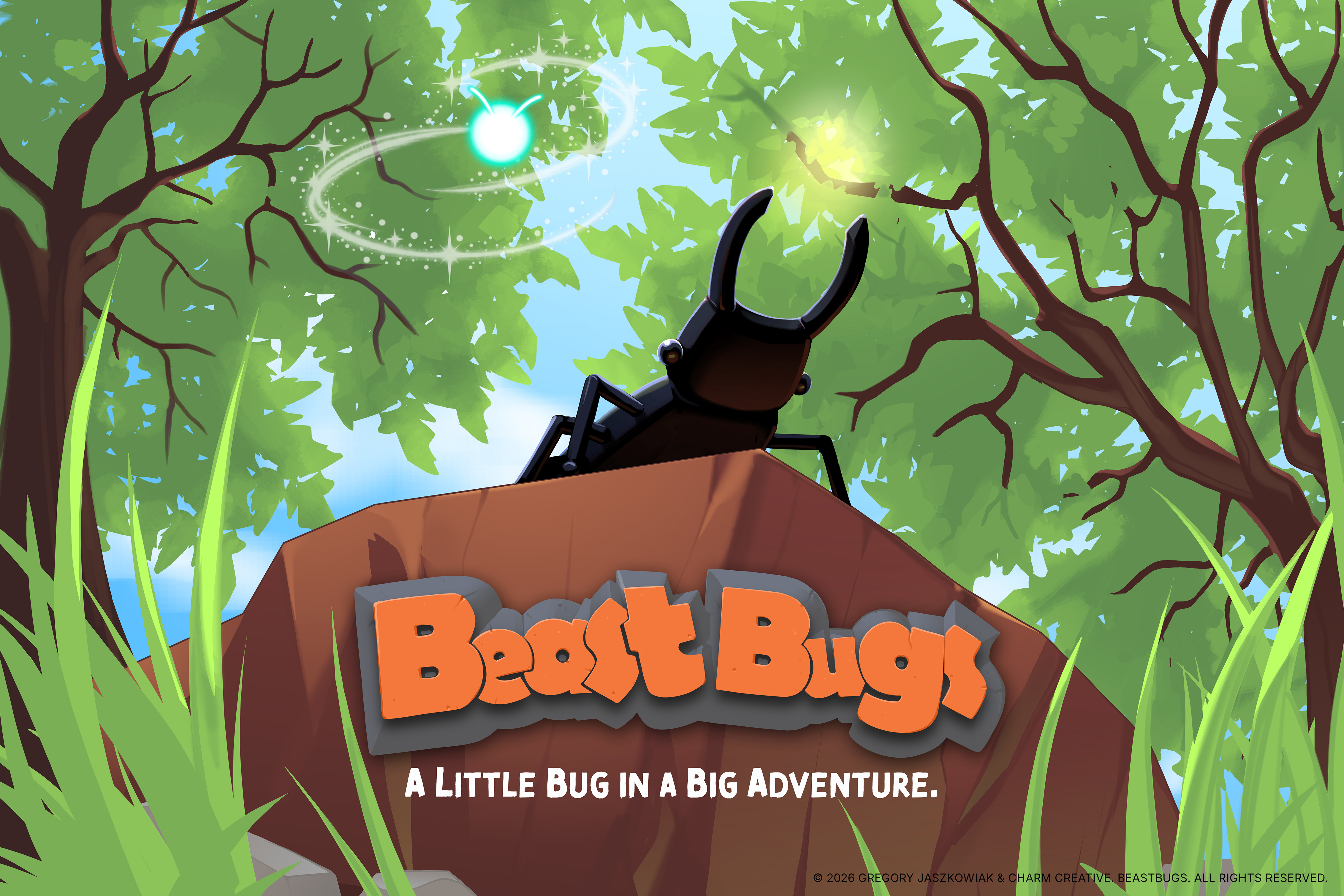
From the creator of “BeastGears” comes BeastBugs, a magical tabletop adventure that’s “bigger on the inside.” The idea grew from watching insects in the grass and imagining their everyday surroundings as a colorful adventure. BeastBugs carries forward the playful, family-friendly design established in BeastGears, while developing its own characters and world.
What it does
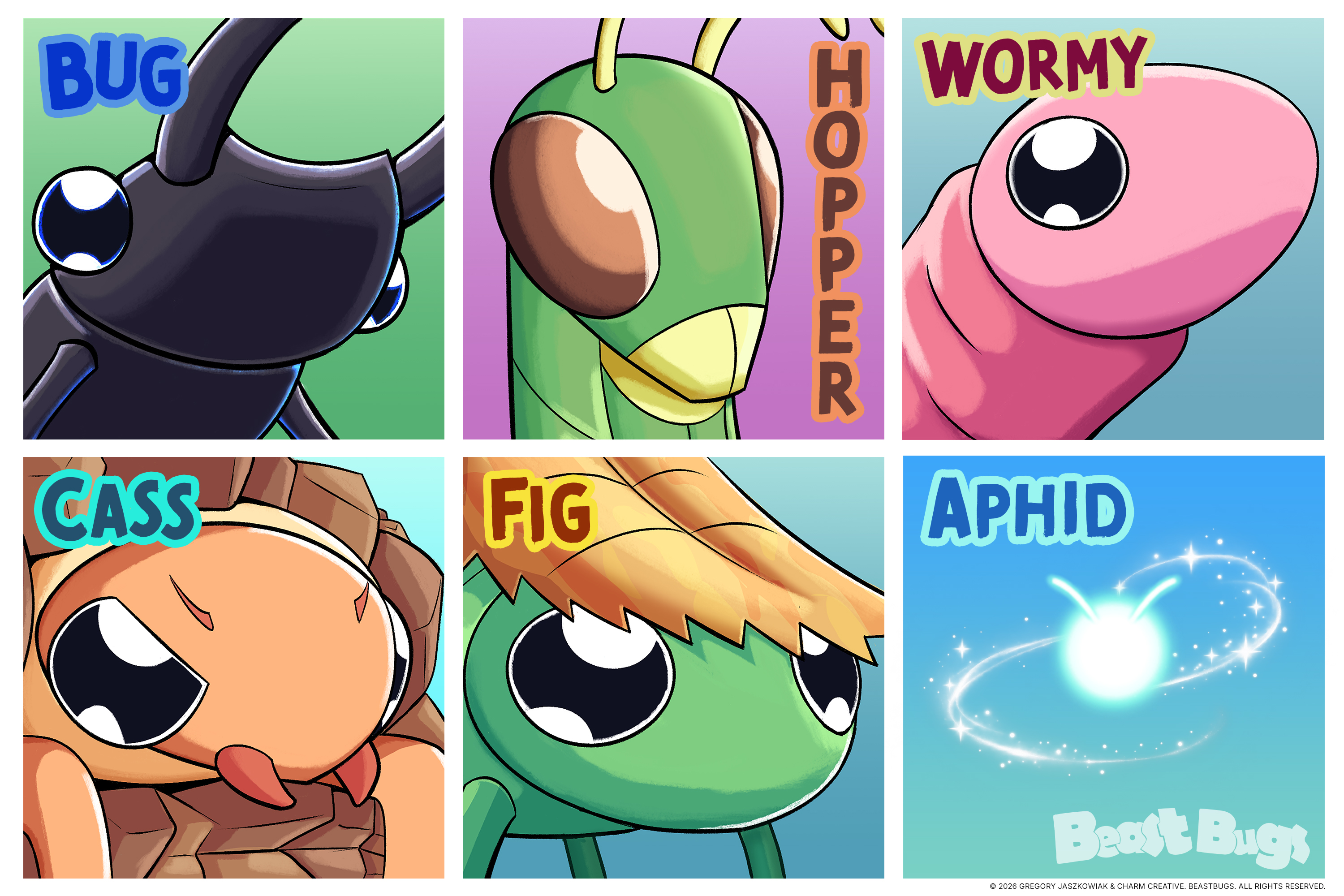
A Little Bug in a Big Adventure. BeastBugs is a hand-tracked adventure game designed with Meta’s next-generation VR glasses in mind. Swept into an unfamiliar forest, a humble stag beetle encounters a colorful cast of characters, dangerous obstacles, and adventure big, and small.
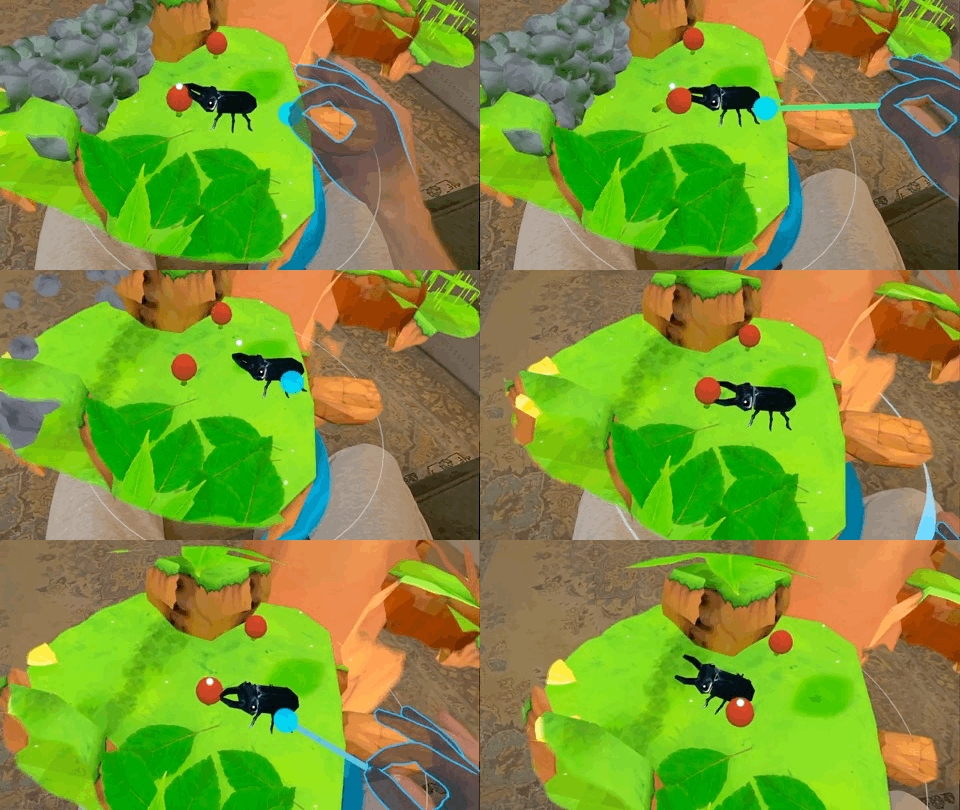
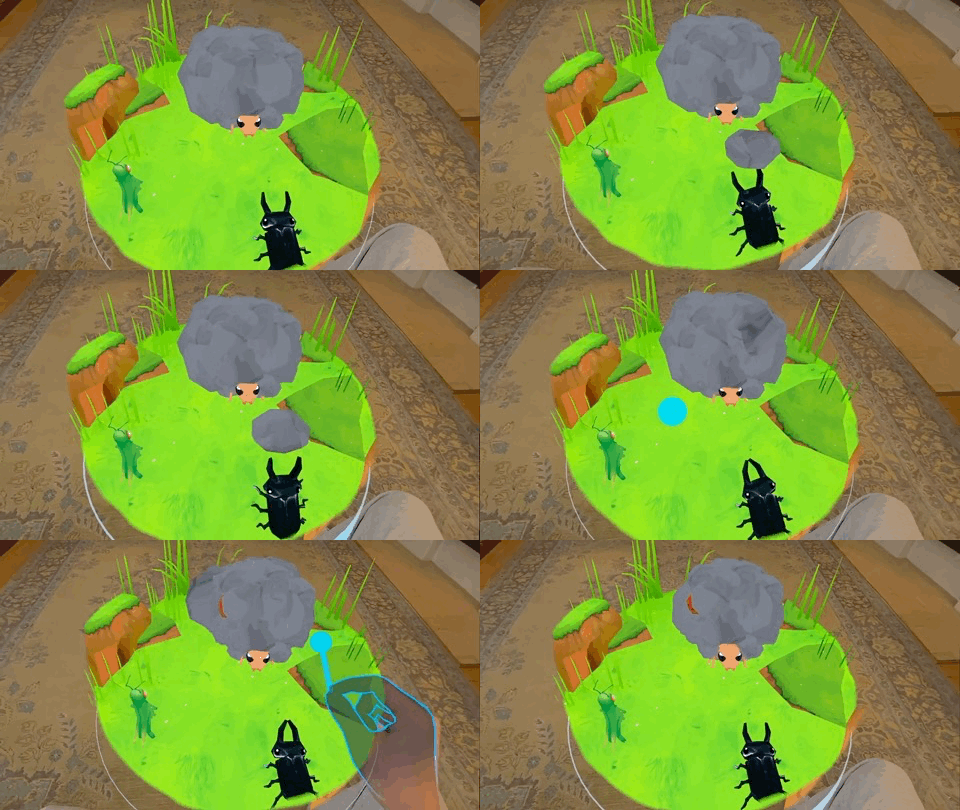
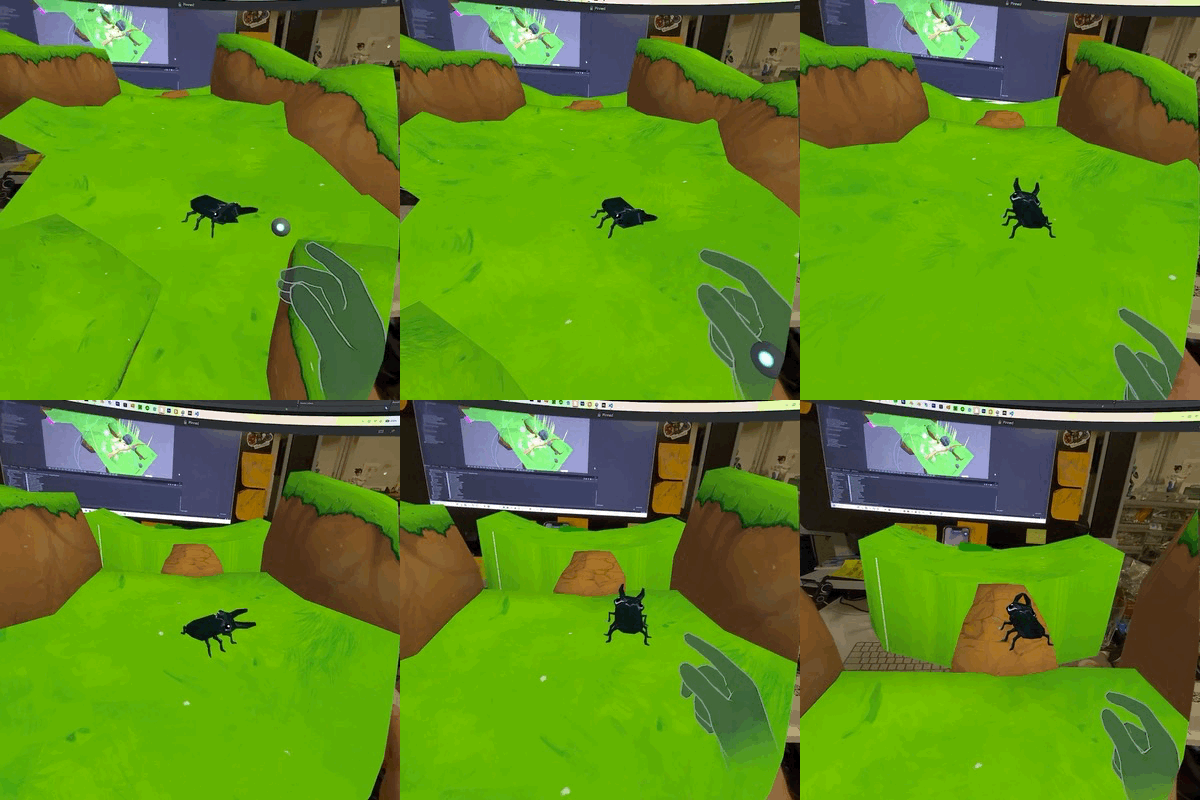
Players guide their hero with a pinch-and-pull slingshot gesture. The single gesture allows the beetle to move forward, mantle ledges, leap, and grab objects. Players learn to operate the stag beetle’s mandibles by pinching with their fingers. The game then interprets the environment and determines the appropriate action, rather than requiring players to memorize dozens of unique gestures.
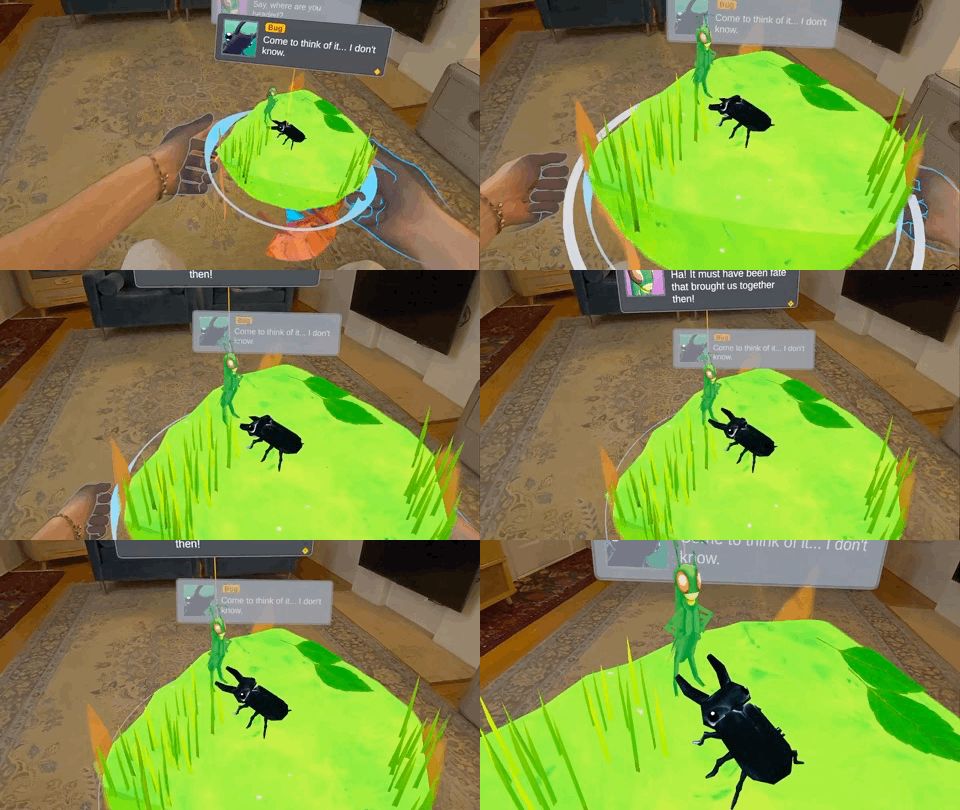
Players can resize the miniature world from a desktop experience down to the size of a mug, adapting the adventure to almost any playspace. The ambidextrous gestures are an intentional design choice for confined spaces, such as an airplane seat. They remain responsive with either hand held close to the body. This eliminates the need for extended arms or broad physical movements and allows continuous play without the constraint of two-handed gestures.
I think of this as boundaryless play: an immersive experience that adapts to the player’s comfort style, rather than requiring the player to adapt to the game. By combining a scalable miniature world with compact, hand-first interactions, BeastBugs takes advantage of MR’s flexibility to make a story-driven adventure accessible in everyday spaces. The goal is to let players explore at their own pace, whether they have a few minutes or want to explore the world longer.
The tutorial is designed to be intuitive. Rather than relying on voice-over instructions or on-screen text, BeastBugs introduces its mechanics through visual cues and interactive discovery. Players learn the gestures by experimenting with their surroundings, making the learning experience a natural part of the adventure and adding a level of mastery to the mechanics.
The onboarding sequence uses ghost hands to demonstrate each gesture, beginning with a simple pinch in the menu and progressing to pinch-and-pull movements. Players practice crossing a bridge with soft guardrails to exercise the newly taught gesture, slowly teasing the player to the next level of interaction.
How we built it
I built BeastBugs in Unity using the Meta XR SDK, Claude, and Blender. I made a modular Bug Brain–Body System that separates the character’s body movements, animations, and actions from the user, supplied to the bug as the brain. By swapping the Brain component, the same character can respond to a hand-tracked player's inputs, scripted events, or NPCs behaving as a “brain,” while retaining its underlying systems.
I also developed a custom XR rig with passthrough and a stencil-mask “diorama camera.” This system controls and orbits the XR rig around any level and can be scripted to “zoom” and rotate the level inside of the playspace to actually direct the gameplay. For example, the system can zoom in to show details of the bug or rotate the level to position a tree in the background, without relying on a traditional camera.
The project began with a gamepad-controlled prototype and progressed to a hand-tracking puppet demonstration. It evolved into a playable adventure featuring context-aware gesture controls, scalable environments, and interactive gameplay.
Challenges we ran into
Finding a simple hand-tracking movement system that supported more than basic walking took several iterations. I rebuilt the controls around pinch-and-pull and developed context-aware actions that use the same gesture for different situations.
As the world became more complex, rendering performance became a major obstacle. I investigated material costs and draw calls, then applied optimization techniques (including baked lighting and draw-call reduction), which I had never done before, to improve performance. Developing flexible NPC behavior was another challenge.
Accomplishments that we're proud of
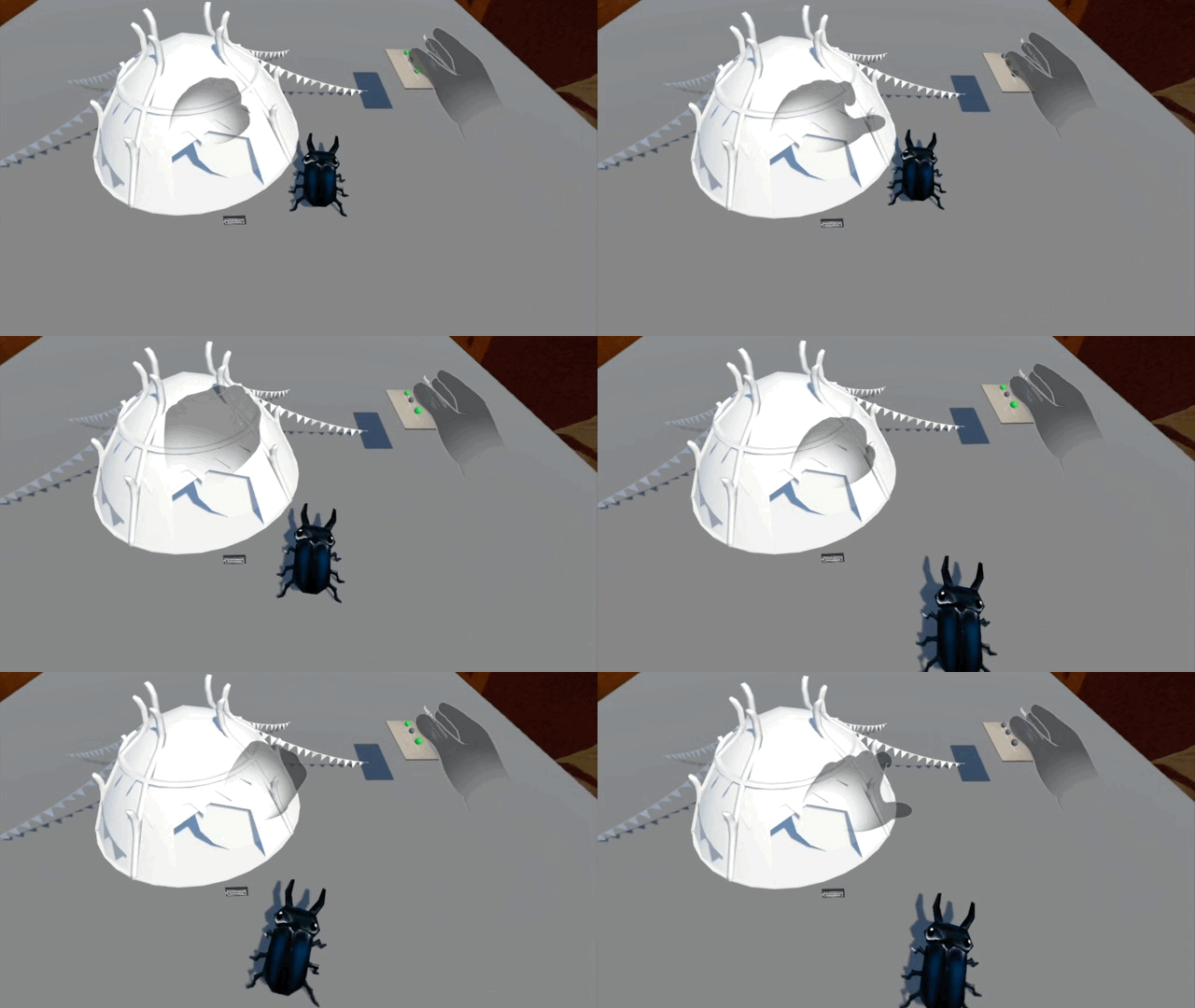
I’m proud of the shift from a limited puppet demonstration (a beetle walking around inside a circus tent) to a playable introduction to a larger adventure with comprehensive movement and context-aware interactions. I also built the modular Bug Brain–Body architecture and learned to blend my art with baked lighting.
Recent playtesting gave me a particularly encouraging result: three players with different levels of VR experience learned to interact with the beetle and started inventing their own ways to play, making jumping challenges for each other. Their enjoyment of exploring the world helped me see where to focus next.
What we learned
I learned how much careful interaction design matters when the player has no traditional controller. I also gained a deeper understanding of Unity rendering and performance as I worked through the challenges of materials, lighting, and draw calls.
BeastBugs was already designed around a compact field of view and small, natural hand movements. After trying Meta’s next-generation glasses at Connect, I recognized how closely the game’s existing design aligned with the new form factor. Feedback from fellow developers and playtesters also helped me reconsider features and prioritize exploration.
What's next for BeastBugs
The competition build is a playable introduction/tutorial to a larger, story-driven game.
The larger adventure is designed around exploration, environmental puzzles, discovering villages, meeting new characters, and unlocking abilities throughout the story.
Playtesting reinforced an important part of my design philosophy: players should enjoy exploring the world as much as progressing through the story. Watching three players with different levels of experience discover the controls and begin creating their own challenges, experimenting with jumping between objects, and finding secrets I had built into the map. The fact that they were having fun was obvious. Their curiosity encouraged me to expand the opportunities for exploration and discovery.
With BeastBugs, I’m continuing the vision I established with BeastGears: building a recognizable brand of charming, story-driven, immersive experiences that surprise and delight. My goal is to create beautifully crafted worlds filled with memorable characters, playful interactions, and unexpected discoveries—places players want to explore and return to even after completing the main adventure.
The stag beetle’s horizontal mandibles already complement the player’s pinching gesture. Future insects could introduce different interaction styles. For example, a Hercules beetle’s vertical pincers could inspire a vertically oriented pinch, while a roly-poly could use a closed fist.


