-
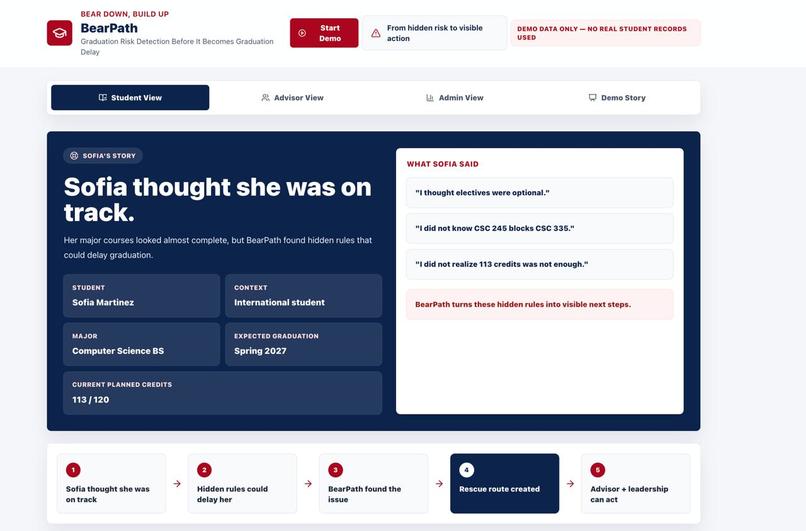
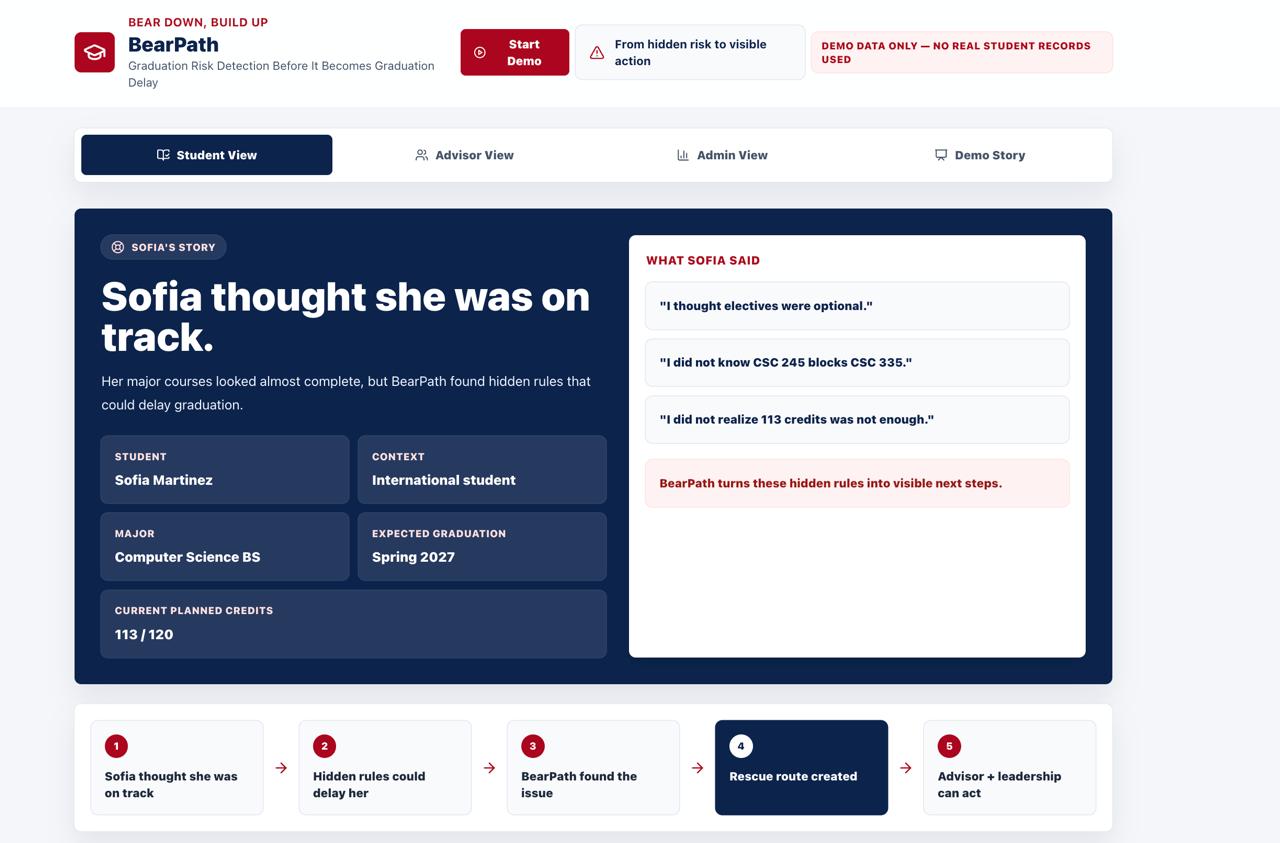
Sofia’s story introduces the core problem: students can feel on track while hidden degree rules create risk.
-
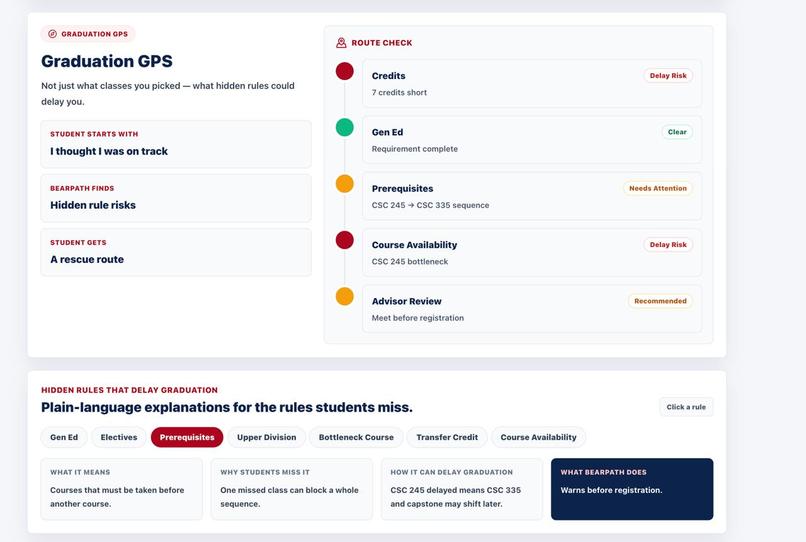
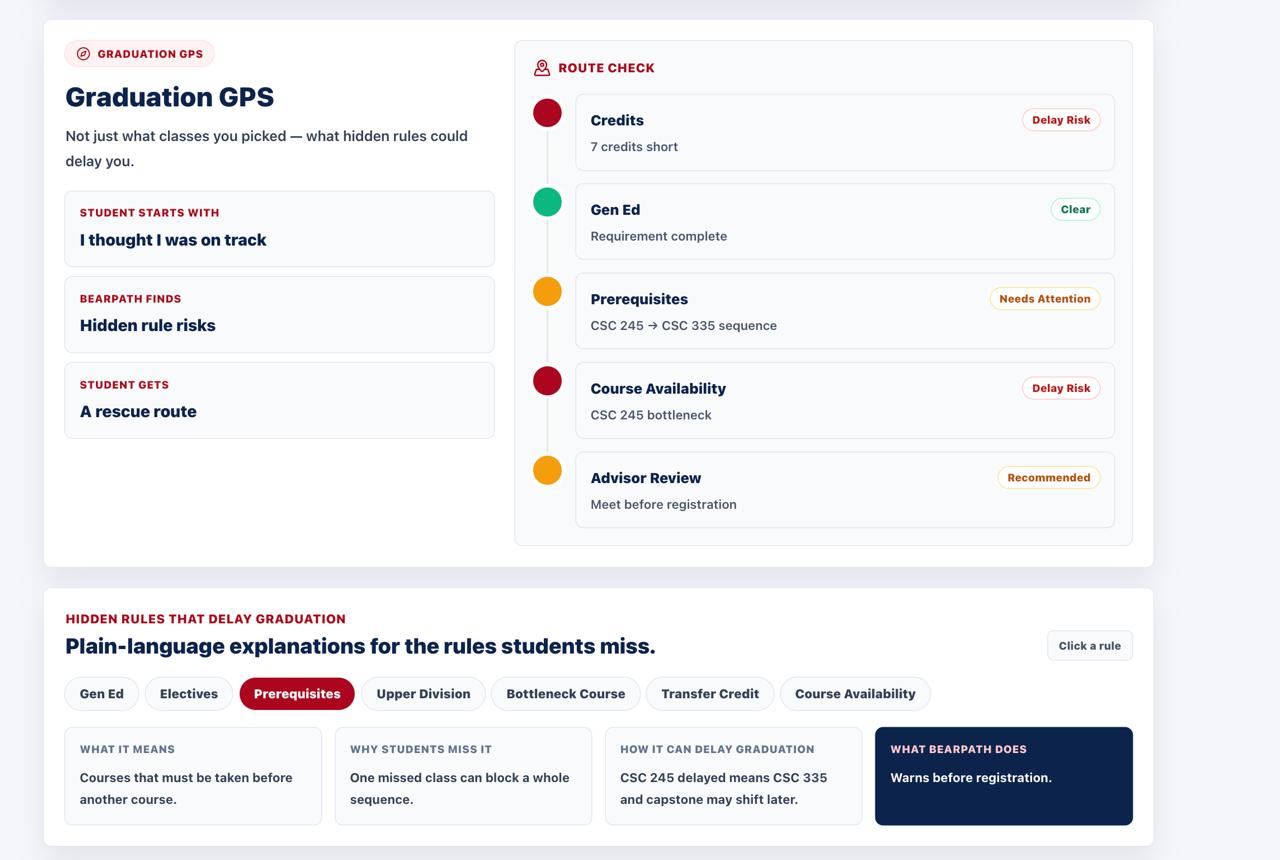
Graduation GPS shows hidden risks across credits, Gen Ed, prerequisites, course availability, and advising.
-
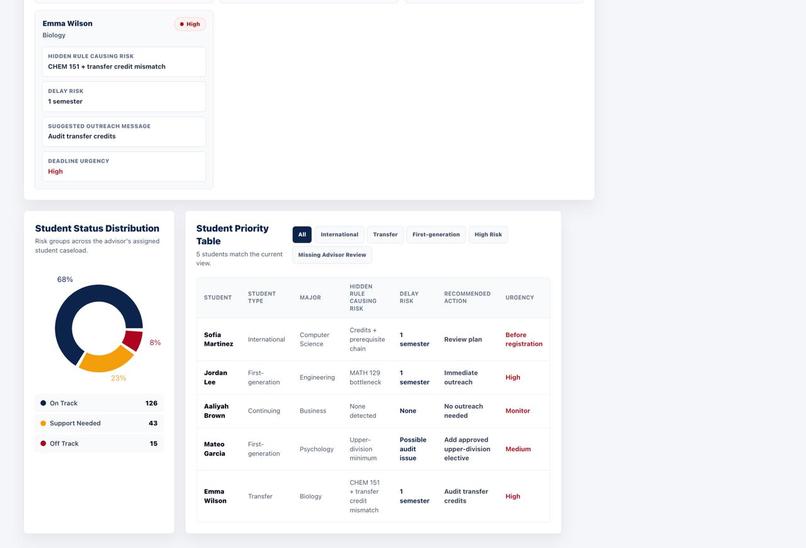
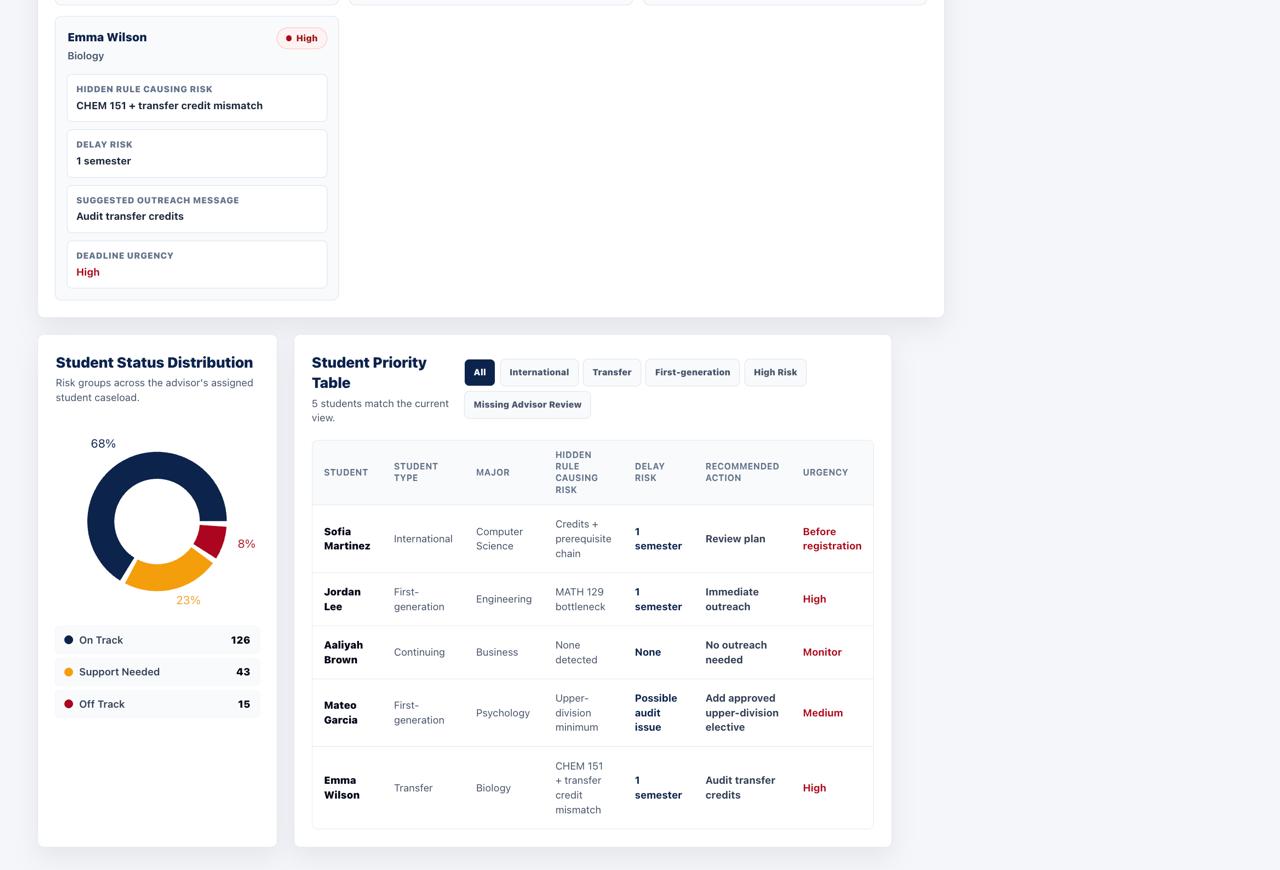
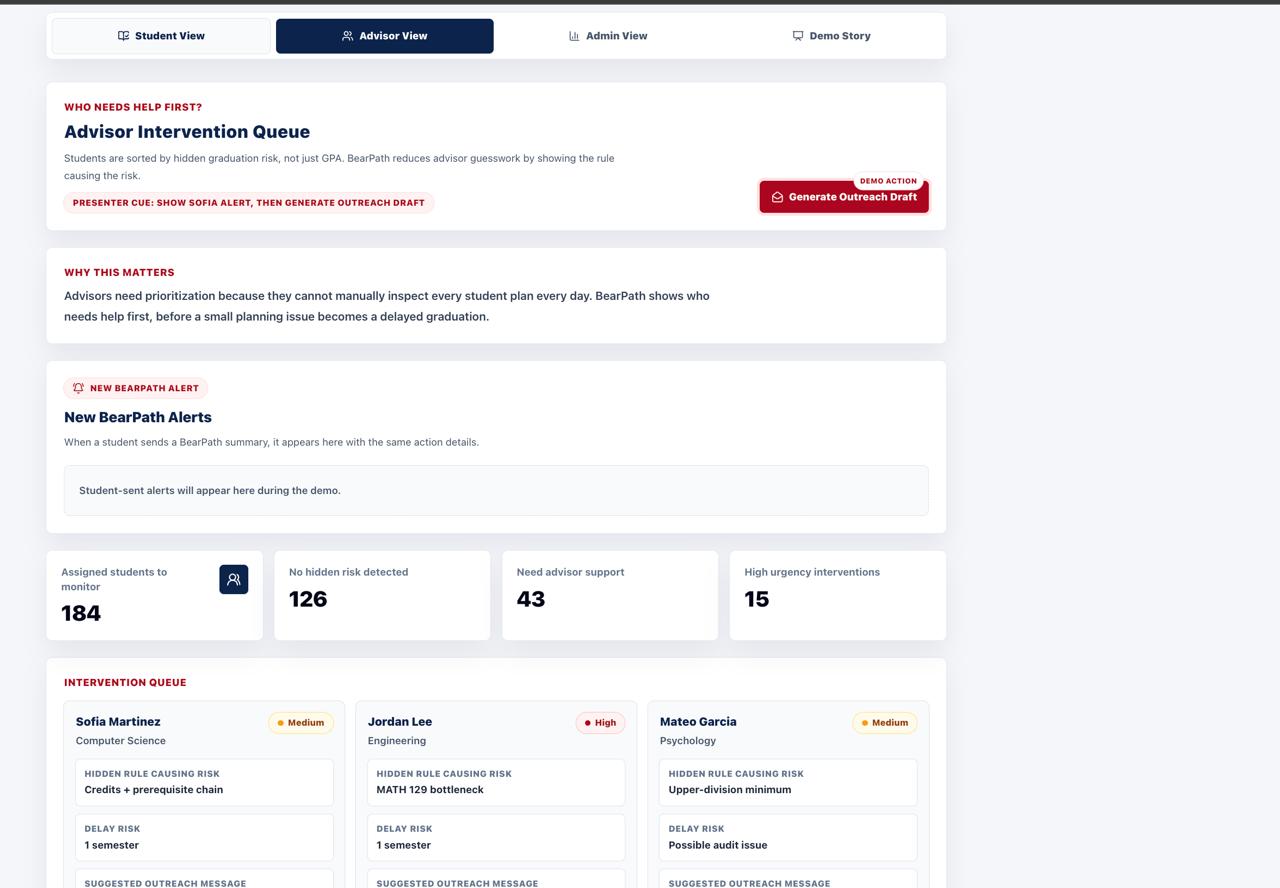
Advisor workload view helps prioritize students by hidden graduation risk, not just GPA.
-
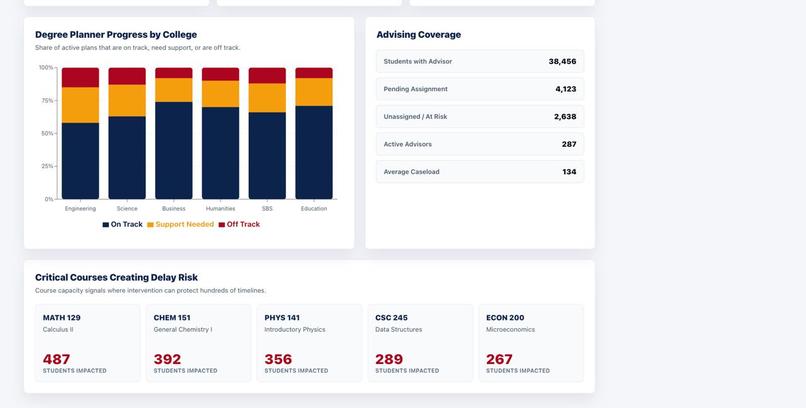
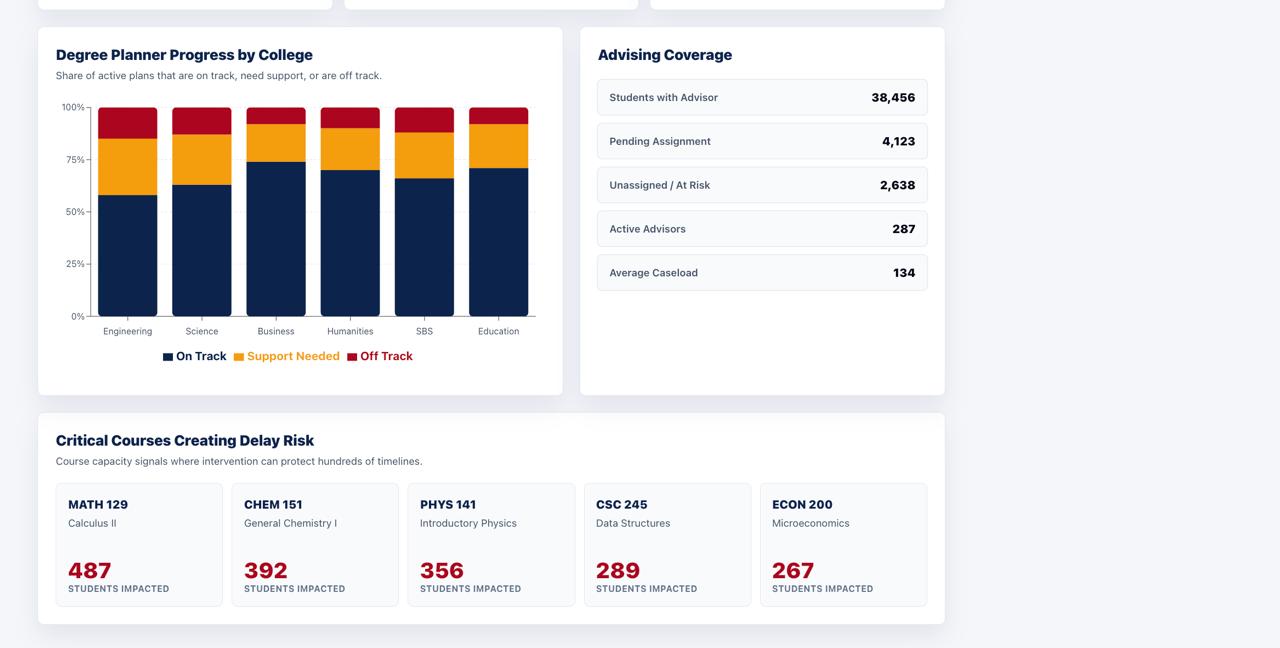
Critical course data highlights where capacity changes could protect graduation timelines.
-
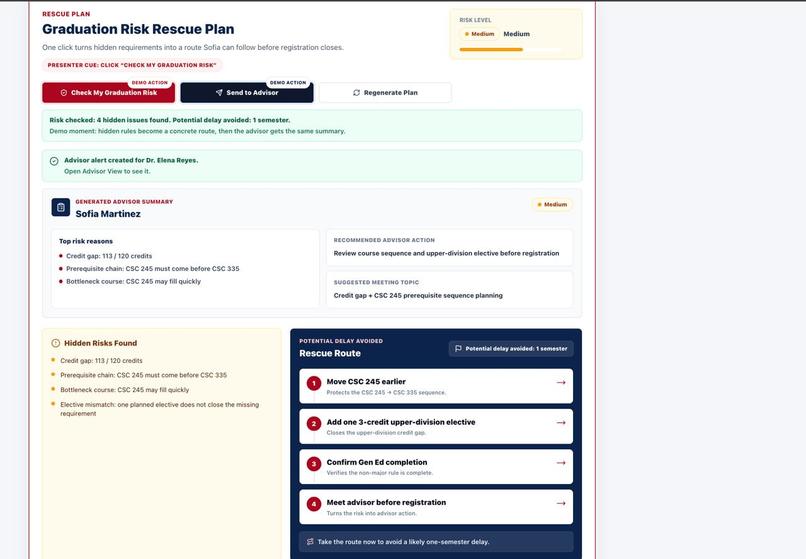
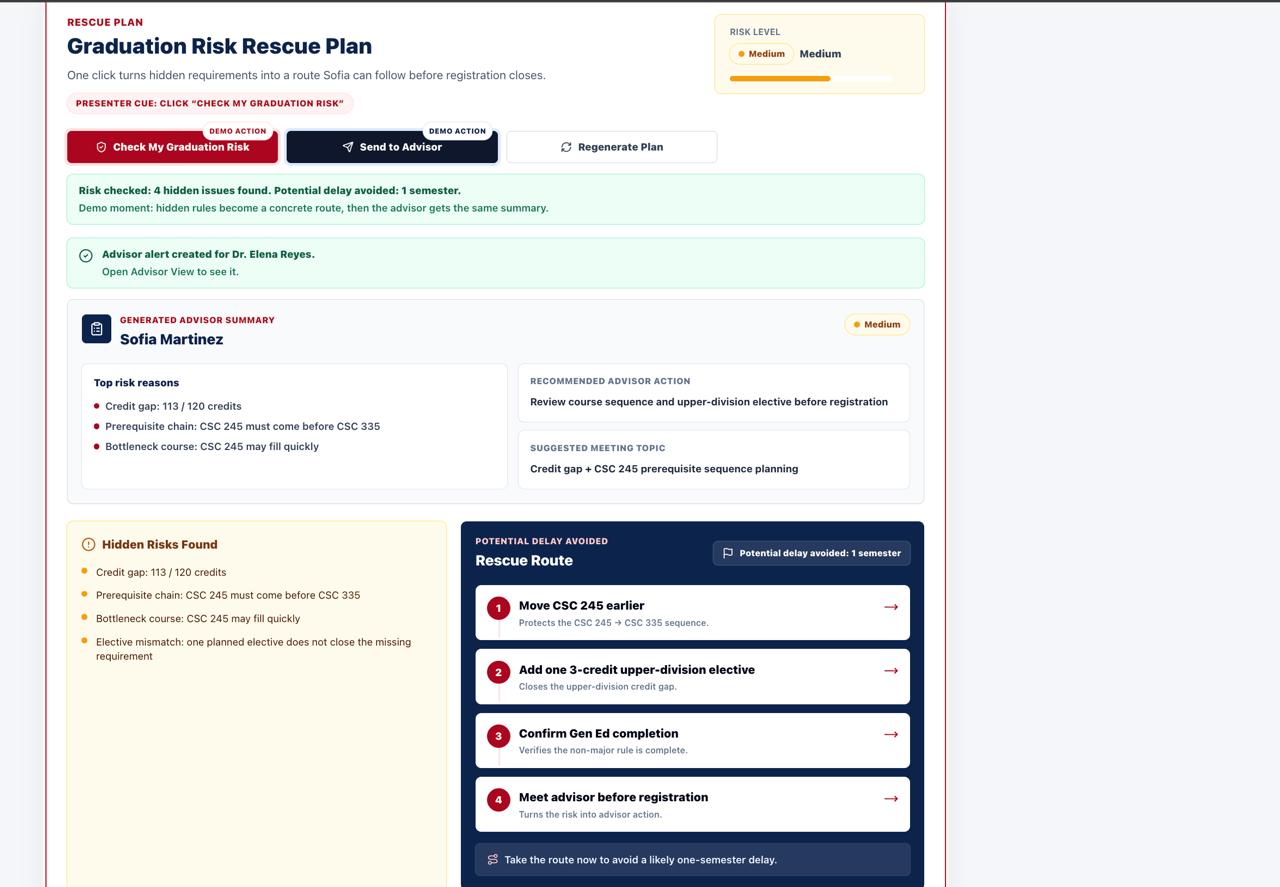
The Rescue Plan finds four hidden issues and turns them into clear next steps before registration.
-
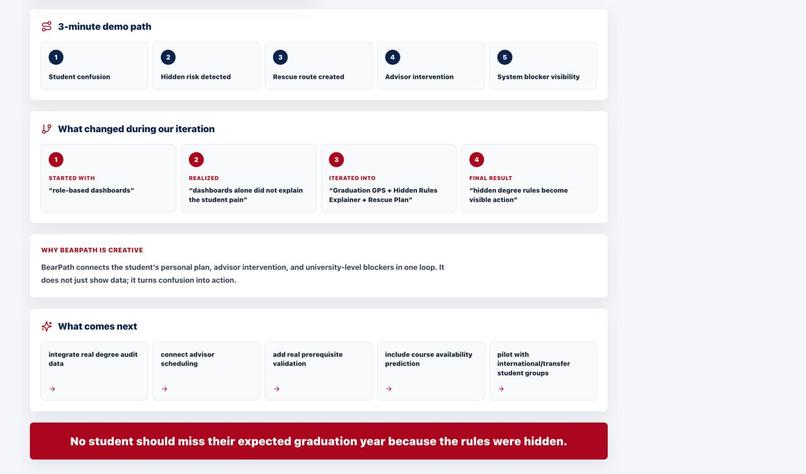
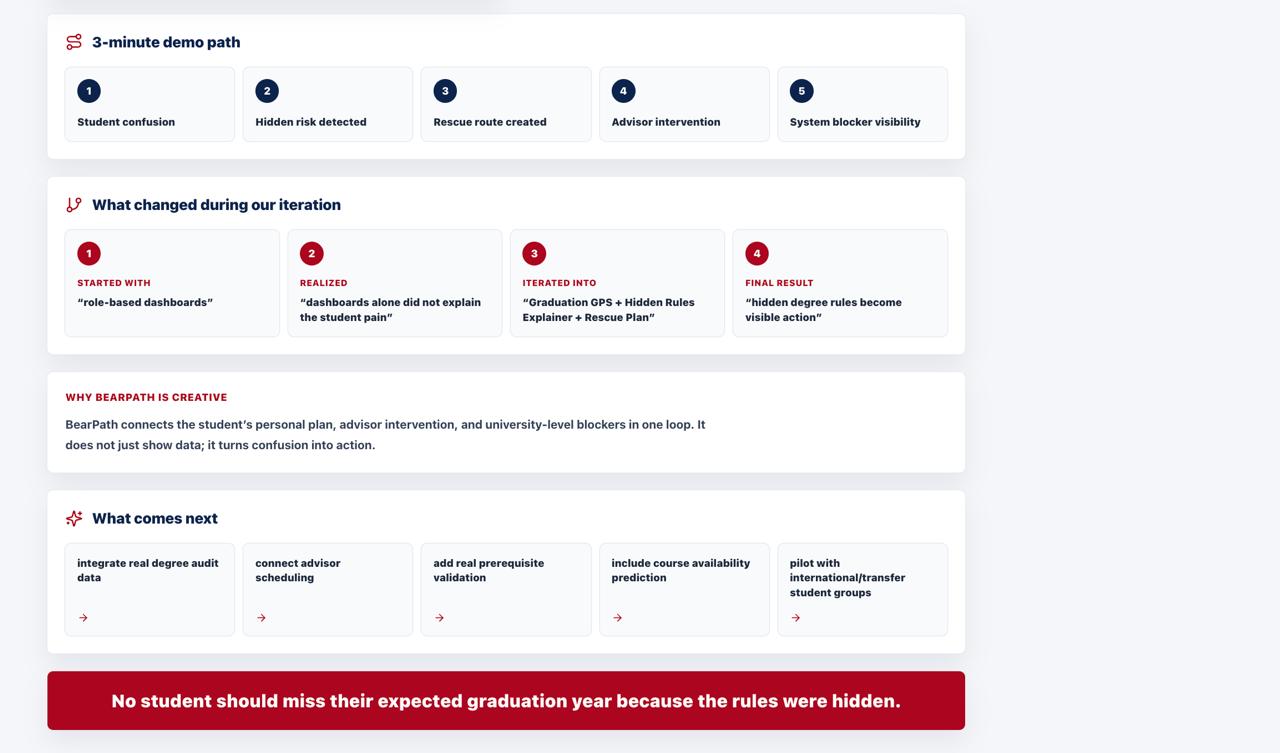
Demo Story explains the hackathon journey: problem, iteration, creativity, next steps, and final impact.
-
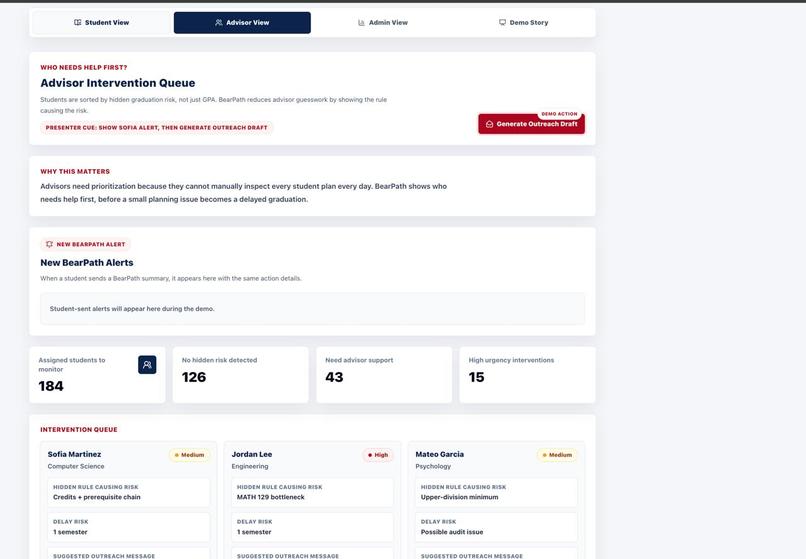
Advisor View shows how Sofia’s risk becomes an intervention queue for timely outreach.
-
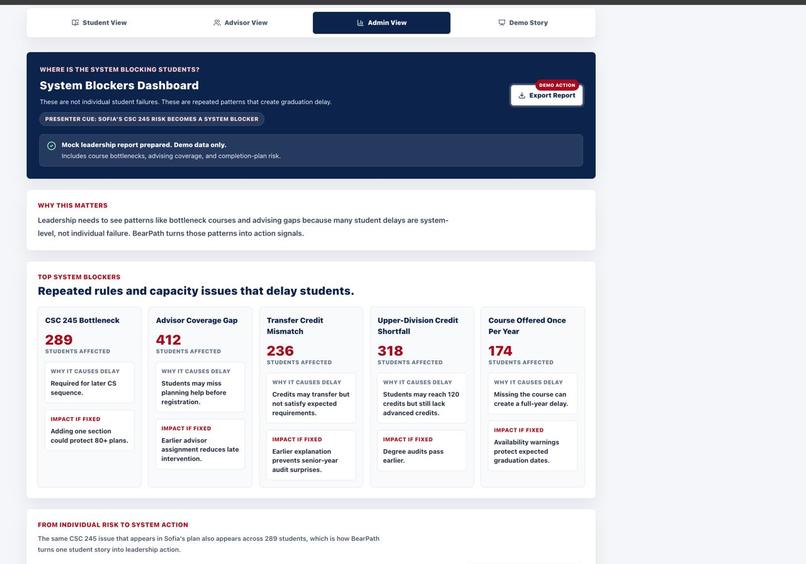
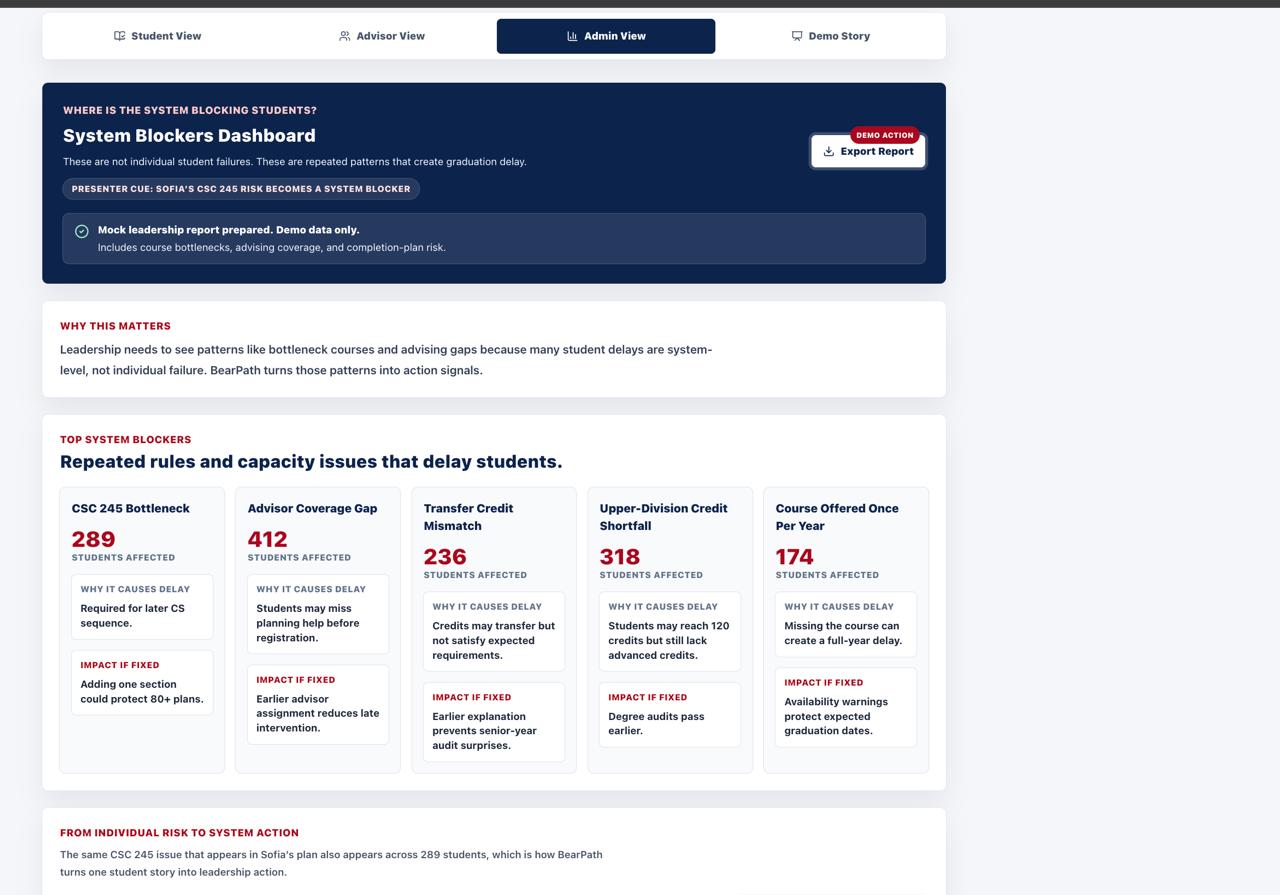
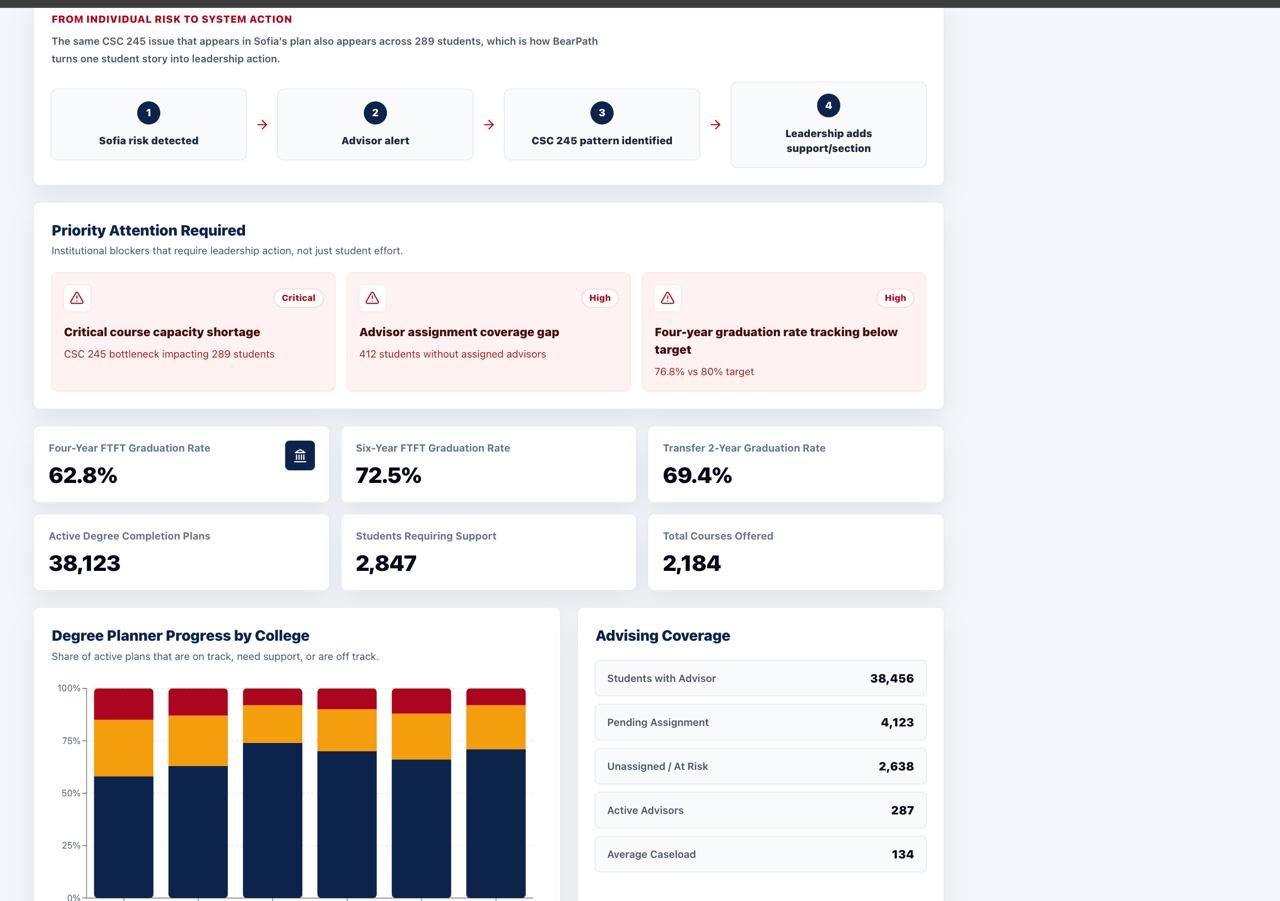
Admin View connects one student’s CSC 245 risk to broader system blockers affecting many students.
-
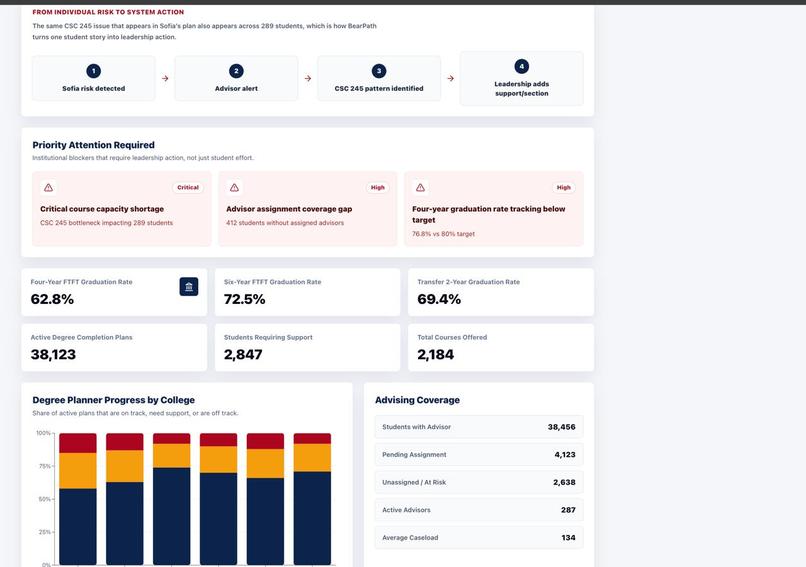
Leadership dashboard shows repeated blockers like advising gaps, bottleneck courses, and credit shortfalls.
Inspiration
We wanted to solve a real student-life problem: many students think they are on track to graduate, but hidden degree rules can quietly delay them.
A student may understand their major, but still miss things like Gen Ed requirements, elective credit rules, prerequisite chains, upper-division credit minimums, transfer credit mismatches, course availability, or advisor timing.
BearPath was inspired by the feeling: “I thought I was on track… until I learned too late.”
What it does
BearPath is a graduation GPS that helps students catch hidden degree-rule risks before they become graduation delays.
It has three connected views:
- Student View: follows Sofia, an international Computer Science student, and shows her Graduation GPS, hidden rule explanations, and a Graduation Risk Rescue Plan.
- Advisor View: turns Sofia’s risk summary into an intervention alert so advisors can see who needs help first.
- Admin View: shows system blockers like bottleneck courses, advising gaps, and transfer credit mismatches.
The goal is to turn hidden confusion into visible action: student risk → advisor support → system-level awareness.
How we built it
We built BearPath as a React + Vite web app using Tailwind CSS.
We used:
- React for the interface and state
- Vite for fast development
- Tailwind CSS for styling
- Recharts for charts
- lucide-react for icons
- Mock data for student plans, course requirements, advisor alerts, and system blocker metrics
No real student records are used. All data is demo data for the hackathon prototype.
Challenges we ran into
The biggest challenge was keeping the prototype focused on the student experience. Early versions felt too much like a generic dashboard, so we iterated toward a more memorable “Graduation GPS” concept.
We also had to show a realistic student-success workflow without access to real university degree audit data. To solve that, we used Sofia’s story and mock data to demonstrate the full loop clearly.
Another challenge was explaining degree rules in a way that feels understandable to students, especially international, transfer, and first-generation students.
Accomplishments that we're proud of
We are proud that BearPath connects three levels of action in one demo:
- A student sees hidden risks early.
- An advisor receives a clear intervention alert.
- Leadership sees repeated system blockers.
We are also proud of the Guided Demo Mode, which makes the project easy to present in three minutes and helps judges follow the story.
Most importantly, the prototype now feels centered on a real student-life problem, not just a dashboard.
What we learned
We learned that degree planning is not only about choosing classes. Students also have to understand credits, Gen Eds, prerequisites, electives, upper-division rules, transfer credits, and course timing.
We also learned that clarity matters. A small prototype can feel powerful when it explains a confusing problem in plain language and gives the user a next step.
What's next for BearPath
Next, we would:
- Connect real degree audit data
- Add real prerequisite validation
- Include course availability prediction
- Connect advisor scheduling
- Test with international, transfer, and first-generation students
- Pilot with one college or department
The long-term goal is to help students avoid graduation delays by making hidden planning issues easier to see earlier.
Built With
- css
- github
- html
- javascript
- lucide-react
- mock
- react
- recharts
- tailwind-css
- vite

Log in or sign up for Devpost to join the conversation.