


What Inspired Us
We built Bearly because we are students who repeatedly fail at studying despite spending large amounts of time on it. We have all experienced the same pattern: hours of re-reading notes, watching lectures at 1.5–2× speed, making color-coded summaries, convincing ourselves we understand—then performing poorly on examinations because recognition is not comprehension. At the hackathon kickoff we admitted this openly. The conversation quickly focused on a shared realization: no tool we use maintains memory of our individual, recurring conceptual failures; no tool forces us out of passive review into active diagnosis; no tool lives persistently on the desktop and intervenes when we begin to procrastinate.
We cross-referenced several foundational findings: Retrieval practice produces substantially better long-term retention than repeated studying (Roediger & Karpicke, 2006). Explaining material in one’s own words exposes gaps more effectively than any other common technique. Spaced repetition aligned to the forgetting curve dramatically reduces knowledge loss over time (Ebbinghaus, 1885; Cepeda et al., 2006). Accurate metacognitive monitoring of one’s own knowledge state is one of the largest predictors of learning success (Dunlosky et al., 2013). Intermittent structured breaks preserve attention far better than continuous work (Ariga & Lleras, 2011).
How We Built the Project
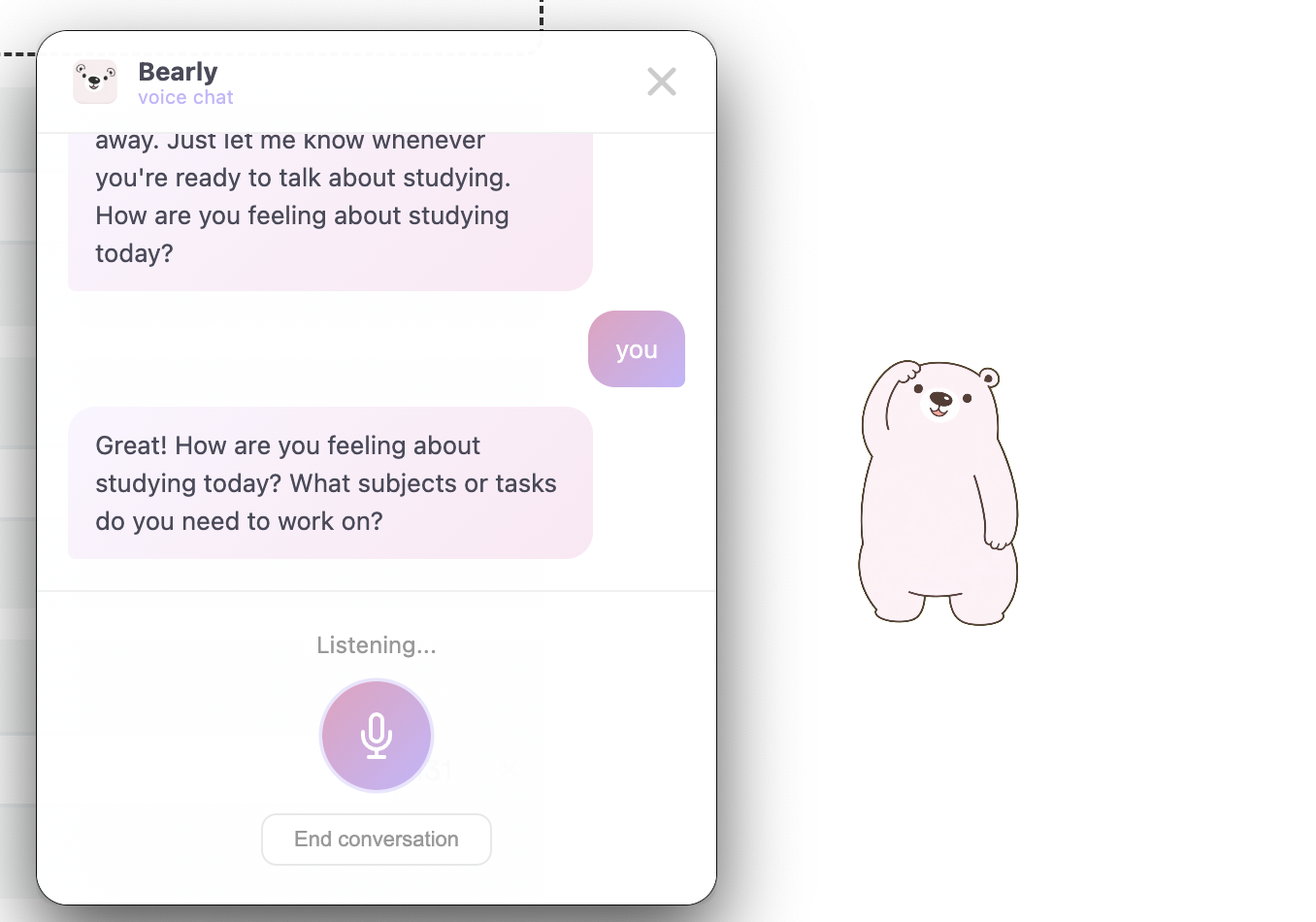
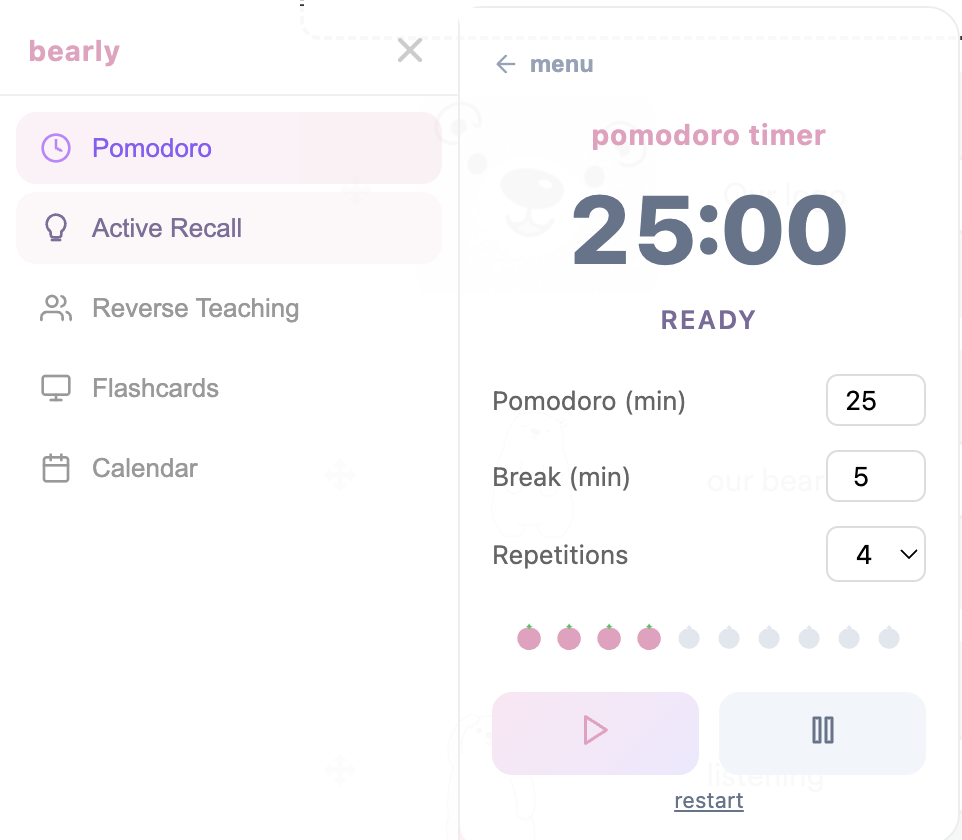
Reverse Teaching loop (explanation → MiniMax gap diagnosis + feedback → automatic flashcard generation into flashcards.json), periodic ninja recall pop-ups, initial Learning Memory profile persistence and prompt injection. Interface refinement by design team—Pomodoro timer, animated flashcard viewer, distraction blur overlay, exam-date calendar with fixed 14/7/3/1-day reminders, PDF text extraction. ElevenLabs voice integration with basic tone adaptation, macOS-native distraction detection (AppleScript for browser checks), end-to-end testing on real lecture notes and problem sets, final demo rehearsal.
All user-specific data (flashcards, profile, session history) is stored locally in the application data directory. macOS behavior is markedly more reliable than Windows.
Challenges We Faced
Cognitive collapse after ~18 hours: logical errors became frequent and were defended with misplaced confidence. Windows platform incompatibility: distraction detection via PowerShell failed repeatedly; we documented macOS as the target platform rather than attempting full cross-platform support. API rate limiting: ElevenLabs throttled voice demos during practice runs; we prepared and used text fallback in the live pitch. Over-ambition: ideas for passive webcam-based energy estimation and deeper content analysis were abandoned to protect core loop stability. Team coordination overhead: eight contributors in one physical space produced frequent verbal overlap; we switched to dedicated text channels mid-night to reduce interference. Sustained physiological strain: near-zero sleep, inadequate nutrition, caffeine crash, repetitive strain from prolonged typing and mouse use.
Built With
- electron
- elevenlabs
- javascript

Log in or sign up for Devpost to join the conversation.