-
-

App Icon
-
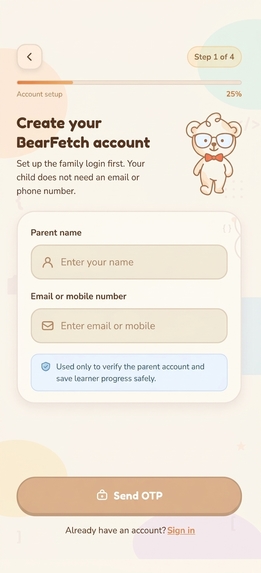
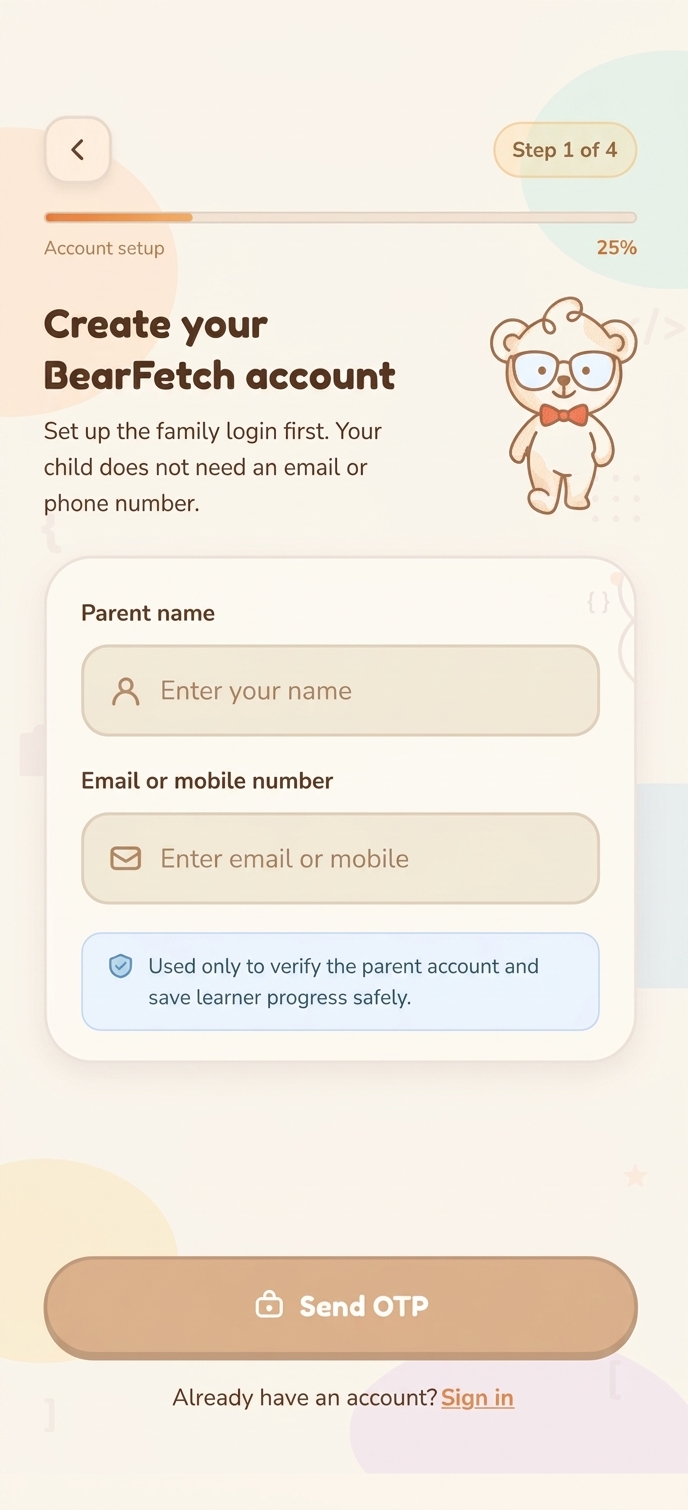
Sign-Up Page
-
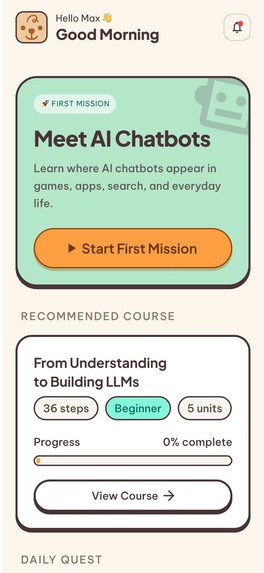
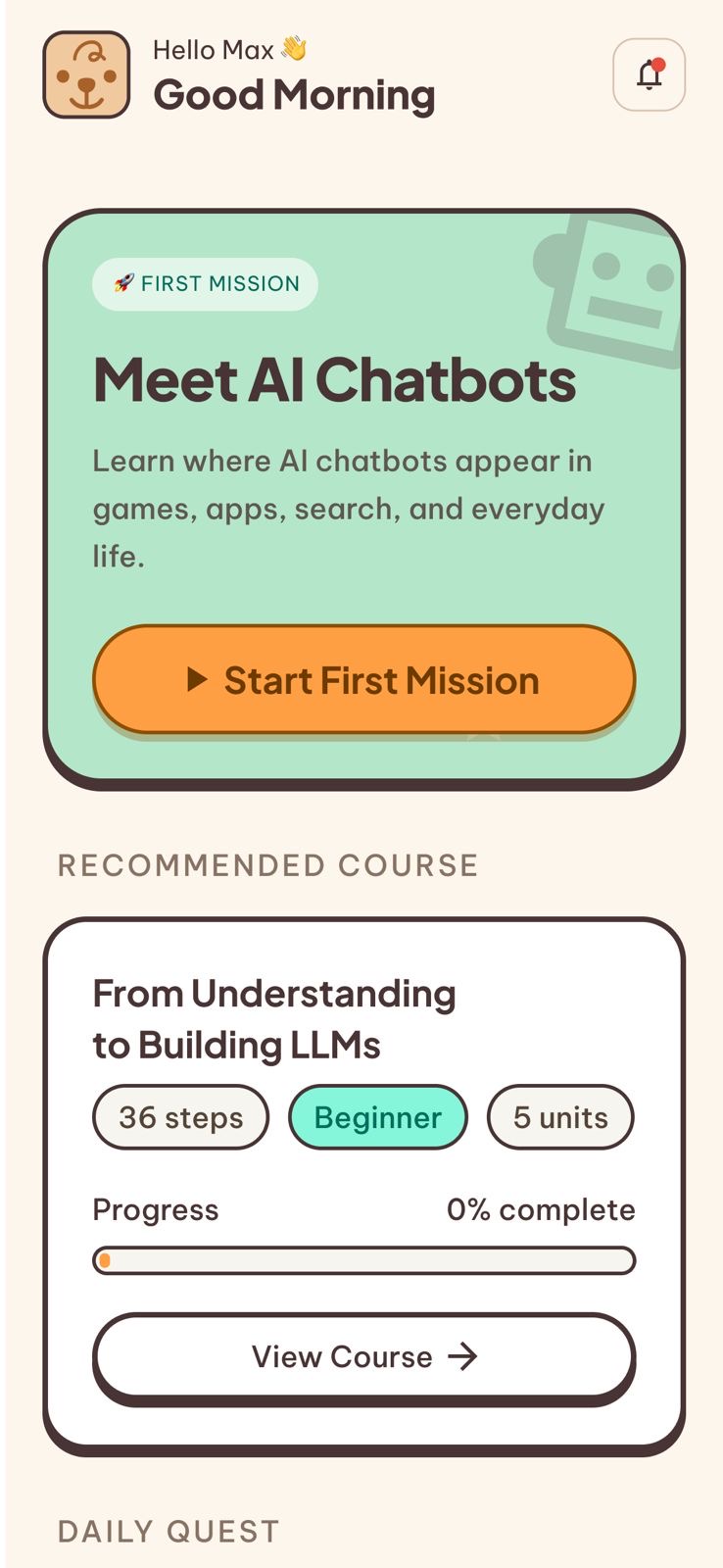
Home Page
-
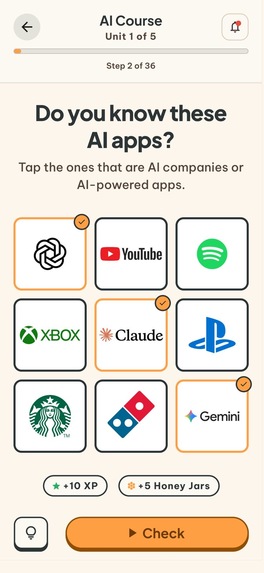
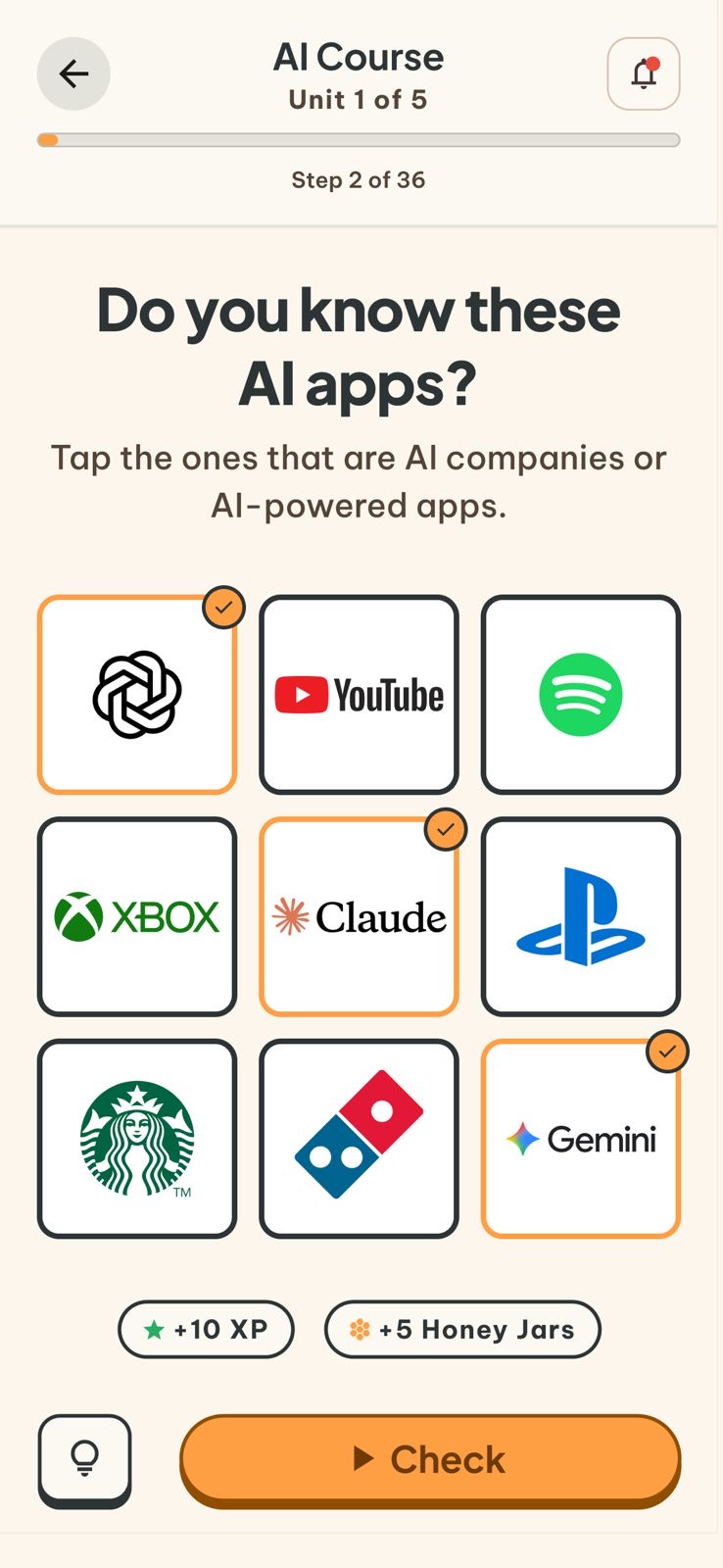
One of our activities!
-
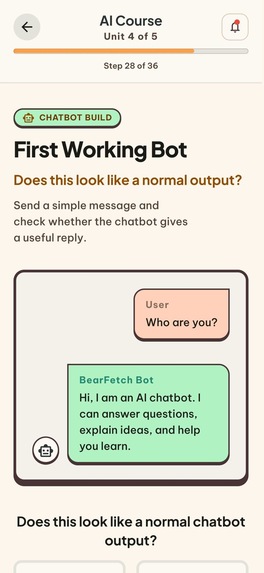
Another activity!
-
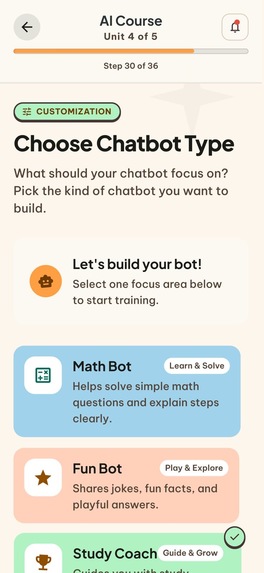
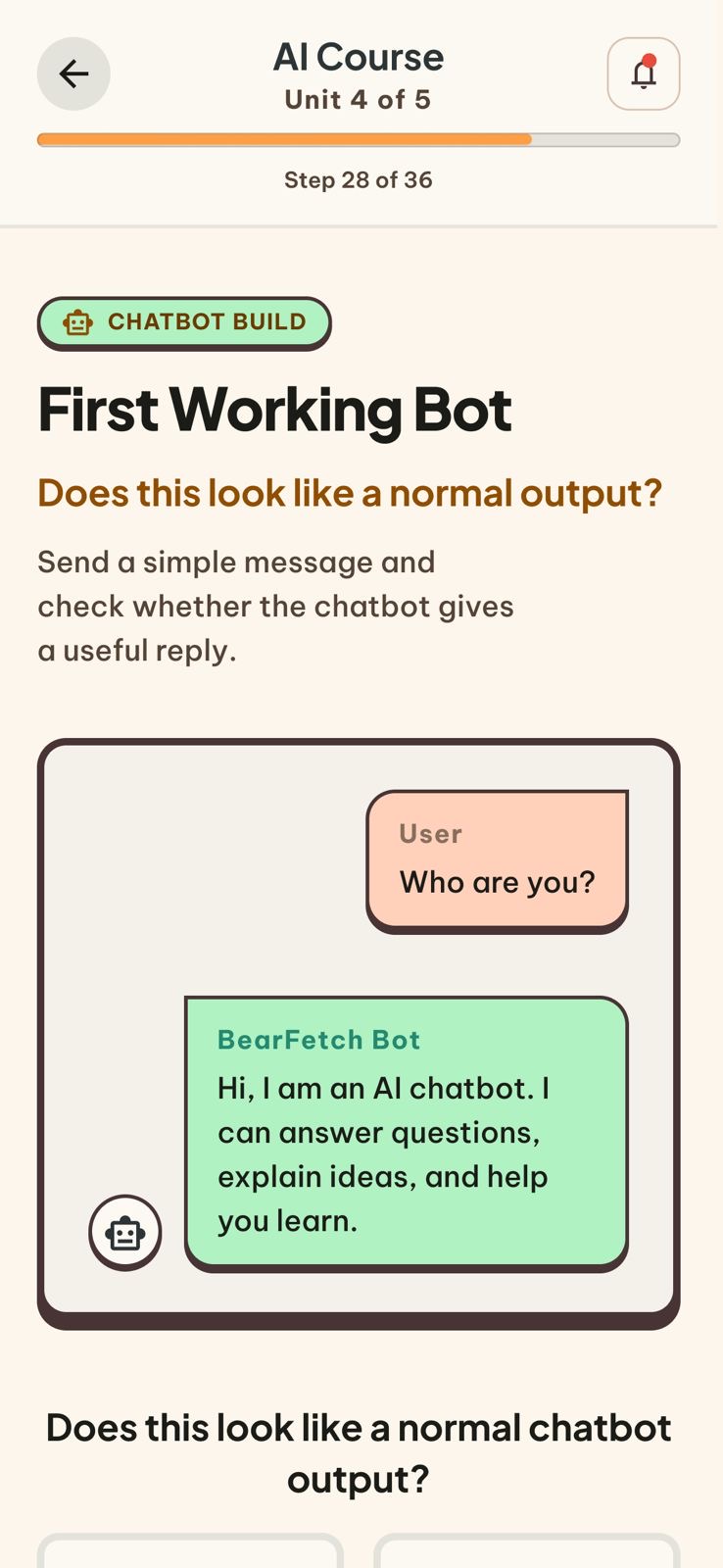
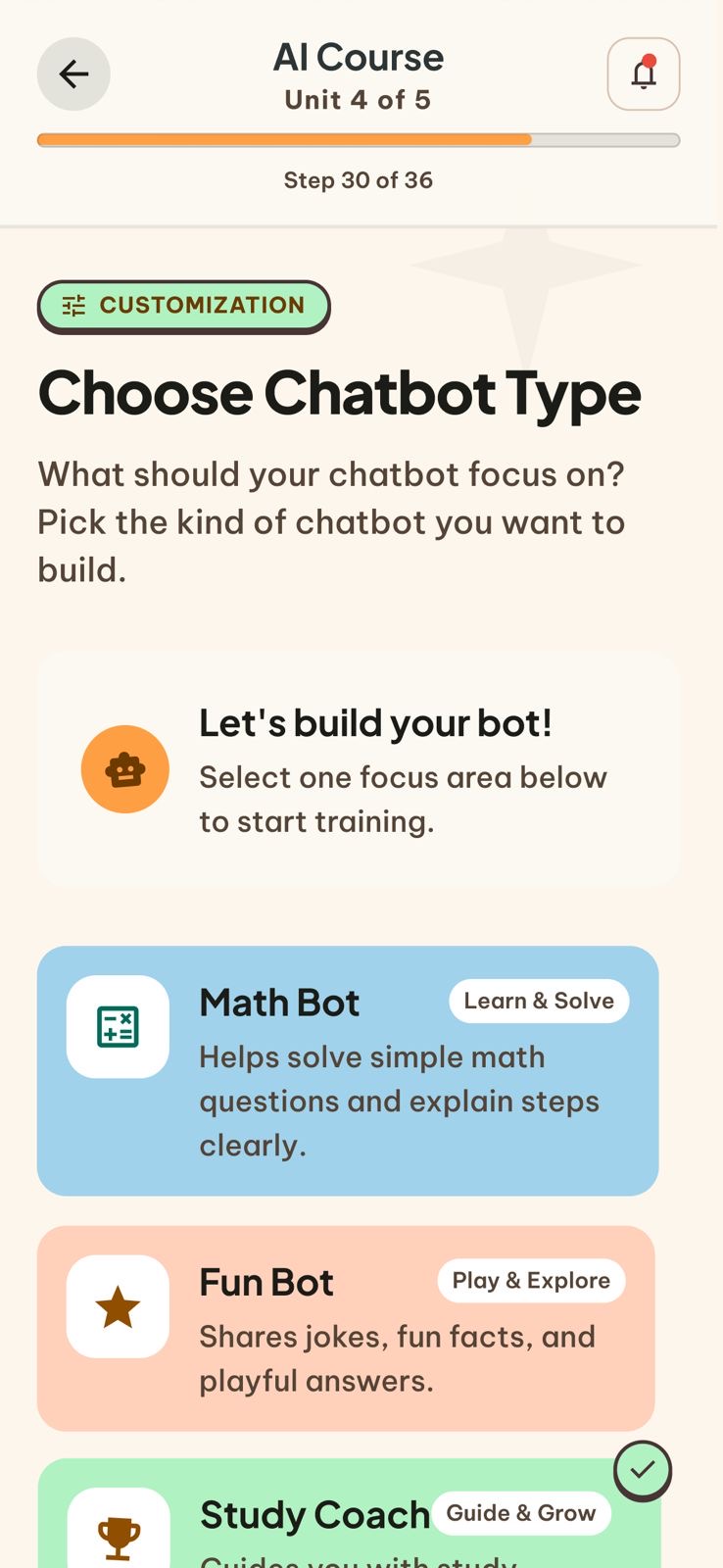
First step to Chatbot Building interactive activity

Inspiration
Students are already growing up around AI. They use it to search, write, create, and solve problems, but being able to use an AI tool is different from understanding what it is doing, how it can be used responsibly, and how to apply it effectively.
That gap is what led me to build BearFetch.
I wanted to approach AI education differently from a traditional course. Instead of asking students to read through long explanations and then answer a quiz, I wanted the learning itself to be interactive. BearFetch was designed as a gamified learning environment where students can learn an AI concept, immediately interact with it, receive feedback, and continue building on that understanding.
I also wanted AI education to feel practical. A student should not finish a lesson knowing only a definition of a chatbot or a prompt. They should understand what those concepts mean and eventually be able to use them to solve problems and build something of their own.
That became the foundation of BearFetch: make AI understandable, interactive, and useful for students.
What it does
BearFetch is a gamified AI learning app for K–12 students. The current app is centered around my first course, From Understanding to Building LLMs, which contains 5 units and 36 steps at a beginner level.
The course is intentionally built around different forms of interaction rather than repeating the same quiz format. Students identify examples of AI in everyday life, complete fill-in-the-blank activities, construct sentences using word blocks, interact with a simulated chatbot, compare how different prompts change the style of an AI response, and assemble the components of a chatbot in the correct order.
The course also progresses beyond explaining AI concepts. In the capstone, students choose a chatbot type such as a Math Bot, Fun Bot, or Study Coach, select training examples for it, test it with a prompt, see the resulting response, and decide whether the response was helpful. This gives students a first hands-on experience with the process behind building and testing an AI system rather than only answering questions about one.
When a student completes the course, BearFetch summarizes the topics they mastered, including AI Chatbots, Tokens & Words, Prediction, Prompting, and Bot Building. The student also receives an AI Explorer Badge, an LLM Starter Certificate, XP, and Honey Jars.
Honey Jars connect learning to the rest of the app. Students can spend them in the Shop on cosmetic items such as hats, glasses, backpacks, and other accessories, and those items can be visibly equipped on their bear. This makes the reward system part of the actual experience rather than something disconnected from the learning.
The app also includes a parent side. BearFetch uses a family-account structure so the parent creates the account and learner profile, while the child does not need their own email or phone number. In Parent Settings, the app also makes its data model explicit: family-account information, learner profiles, progress, rewards, and accessories are stored, while the app states that activity answers and chatbot simulations are not stored.
How I built it
I built BearFetch as a mobile application using React Native with Expo, while designing the product around a structured progression from individual activities to complete courses, rewards, and parent-facing progress information. The interface, visual system, mascot, course experience, and activity structure were designed specifically around making a technical subject approachable to younger learners.
A major part of the build was creating enough variety in the learning interactions that students are actively doing something at every step. The course moves between questions, construction-based activities, simulations, comparisons, and a hands-on chatbot-building capstone instead of treating AI education as a sequence of static reading screens.
I also built the student and parent experiences as connected parts of the same product. Students have their own learning progression, rewards, and customization, while parents have a separate view into the family account and the student's progress.
For monetization, I integrated the RevenueCat SDK into the parent side of the app. The current implementation uses RevenueCat to power Progress Insight, a one-time $4.99 purchase associated with the product bearfetch_progress_insight_lifetime. In the submitted build, the purchase is demonstrated through RevenueCat's Test Store, which is a development/testing environment rather than a live customer transaction. The test purchase updates the purchase state and activates the corresponding entitlement inside BearFetch. RevenueCat's documentation describes Test Store purchases as sandbox data that behave like real purchases for testing, including triggering entitlements and updating customer information.
The important part for me was not simply adding a purchase button. I wanted the purchase to have a clear relationship with the product itself: the student generates measurable learning progress, the parent can access a deeper Progress Insight experience, and RevenueCat provides the entitlement layer that determines whether that experience is unlocked.
Challenges I ran into
One of the biggest challenges was deciding how to make AI education both technically meaningful and accessible to younger students.
AI concepts can become abstract very quickly. Terms such as tokens, prediction, prompting, training data, and chatbot architecture are not naturally intuitive for a younger learner, so I had to think carefully about how to turn each concept into something a student could actually interact with.
That is why the course uses several different activity formats. A student may first encounter an idea through a simple explanation, then apply it in a word-building activity, see the concept behave inside a simulated chatbot, and eventually use it in the capstone. The goal was to make the progression feel understandable without stripping away the underlying idea.
Another challenge was balancing gamification with the learning itself. I did not want rewards to become the entire reason students continue using the app. Honey Jars, XP, badges, certificates, and cosmetics are meant to reinforce progress that already comes from learning.
I also had to think about the parent/student relationship. BearFetch is designed around a family account rather than requiring a child to independently manage an email or phone number. The parent experience therefore needed to provide meaningful visibility into progress without turning the student side of the app into an adult-facing dashboard.
Finally, I had to think about monetization in a way that actually belongs in an educational product. RevenueCat gave me the infrastructure to implement and test a purchase flow, but the harder product question was what a parent should receive in return and how that purchase could eventually create value beyond a single transaction.
Accomplishments that I'm proud of
I am proud that BearFetch is more than a collection of UI screens or a concept prototype. The current build contains a complete first AI course with 5 units and 36 steps, a variety of interactive activities, a chatbot-building capstone, course-completion rewards, a functioning in-app reward economy, student customization, and a separate parent experience.
The learning experience also has a clear progression. A student begins by understanding basic AI concepts and everyday examples, moves into more specific ideas such as tokens, prediction, and prompting, and finishes by applying those concepts to a chatbot they configure and test.
I am also proud of the connection between learning and the rest of the product. Completing lessons produces XP and Honey Jars, those Honey Jars can be used in the Shop, and the resulting customization is visible on the student's bear.
On the parent side, I successfully integrated RevenueCat into a real purchase flow. The current hackathon build demonstrates the $4.99 Progress Insight purchase through RevenueCat Test Store, and BearFetch responds to the resulting entitlement by showing that lifetime access is active. This gives me a working foundation for the monetization system I plan to develop further.
Most importantly, I am proud that the product reflects an idea I have continued refining: AI education should not stop at explaining what AI is. Students should have opportunities to interact with it, understand its behavior, and eventually build with it.
What I learned
Building BearFetch taught me that educational software requires a different kind of product thinking from simply building a functional app.
An activity can be technically correct and still fail to teach effectively. A concept can also be simplified too far and lose the substance that made it worth learning in the first place. I learned to think more carefully about the progression between activities and about what the student is actually doing, not just what information appears on screen.
I also learned that gamification works best when it reinforces an existing behavior. XP, Honey Jars, badges, certificates, and customization have value because they are attached to learning progress. They are not the product by themselves.
Another lesson was that the parent and student experiences need to support one another without becoming the same experience. Students need an environment that is engaging and understandable; parents need a clear way to understand whether that learning is actually happening.
The RevenueCat integration reinforced a similar lesson on the business side. A monetization system is much stronger when it is tied to a clear piece of product value. Integrating the SDK was the technical step; deciding what a parent should actually be paying for was the more important product question.
What's next for BearFetch - AI for Students
The current Progress Insight purchase is the beginning of the monetization model I want to develop, not the final version.
My longer-term concept is to turn the parent-facing experience into a continuous learning loop:
Learn → Measure → Report → Recommend → Practice → Improve
Instead of treating a progress report as the end of the process, I want student performance to become an input into what happens next.
A future version could use the student's demonstrated strengths and gaps to generate a more useful Progress Insight for the parent, then connect those results directly to the student's next learning actions. A student who is struggling with prompting, for example, could be directed toward a specific follow-up lesson or targeted practice set. A student who is already strong in one topic could move forward rather than repeating material they have already mastered.
This is also where I see the RevenueCat integration evolving.
The current implementation demonstrates a one-time Progress Insight entitlement through RevenueCat. My longer-term concept is to adapt that foundation into an ongoing parent-to-student learning loop, potentially through a recurring plan that unlocks continued progress insights, personalized recommendations, and targeted practice.
The important distinction is that I do not want to monetize access to learning itself in a way that undermines the product's purpose. Instead, the paid experience is intended to provide parents with deeper visibility into the student's development and then turn that information into something useful for the student.
In other words, I want the value of the purchase to extend beyond a report.
The report tells a parent where the student is.
The recommendation tells them what to do next.
The practice experience gives the student a way to act on that information.
And the next progress measurement shows whether that intervention actually helped.
That creates a much more connected product than a standalone paid document, while giving RevenueCat a meaningful role in the product architecture: managing the entitlement that unlocks the parent-facing growth experience.
This is a future direction, not functionality I am claiming is already shipped in the hackathon build.
Beyond monetization, I plan to expand BearFetch's curriculum, add additional AI topics and building experiences, and continue developing the platform around the same principle that shaped the first course: students should leave BearFetch with more than familiarity with AI. They should have a practical understanding of how it works, how to use it responsibly, and how they can use it to create and solve problems themselves.
THANK YOU!!!
Built With
- android-studio
- dart
- figma
- flutter
- java
- onesignal
- recend
- revenuecat
- supabase


Log in or sign up for Devpost to join the conversation.