Inspiration
The name of our project was inspired by the fairytale of Jack and the Beanstalk, where a boy named Jack unknowingly caused an enormous, magical beanstalk to grow so tall that the beanstalk connected the ground and the clouds. Through creating new social media and match-making platform, we wanted to create an easy way for anyone in the world to help foster and strengthen social connections no matter how far the distance.
With family and friends spread out around the world after the COVID-19 pandemic, we are seeing that now more than ever before are people feeling more isolated, lonely, and bored at home. Therefore, to tackle the increasing need for more social interaction that does not require physical closeness, we wanted to create a new social media platform focused on sparking social interaction and helping others to reconnect with their family, friends, and the online community.
What it does
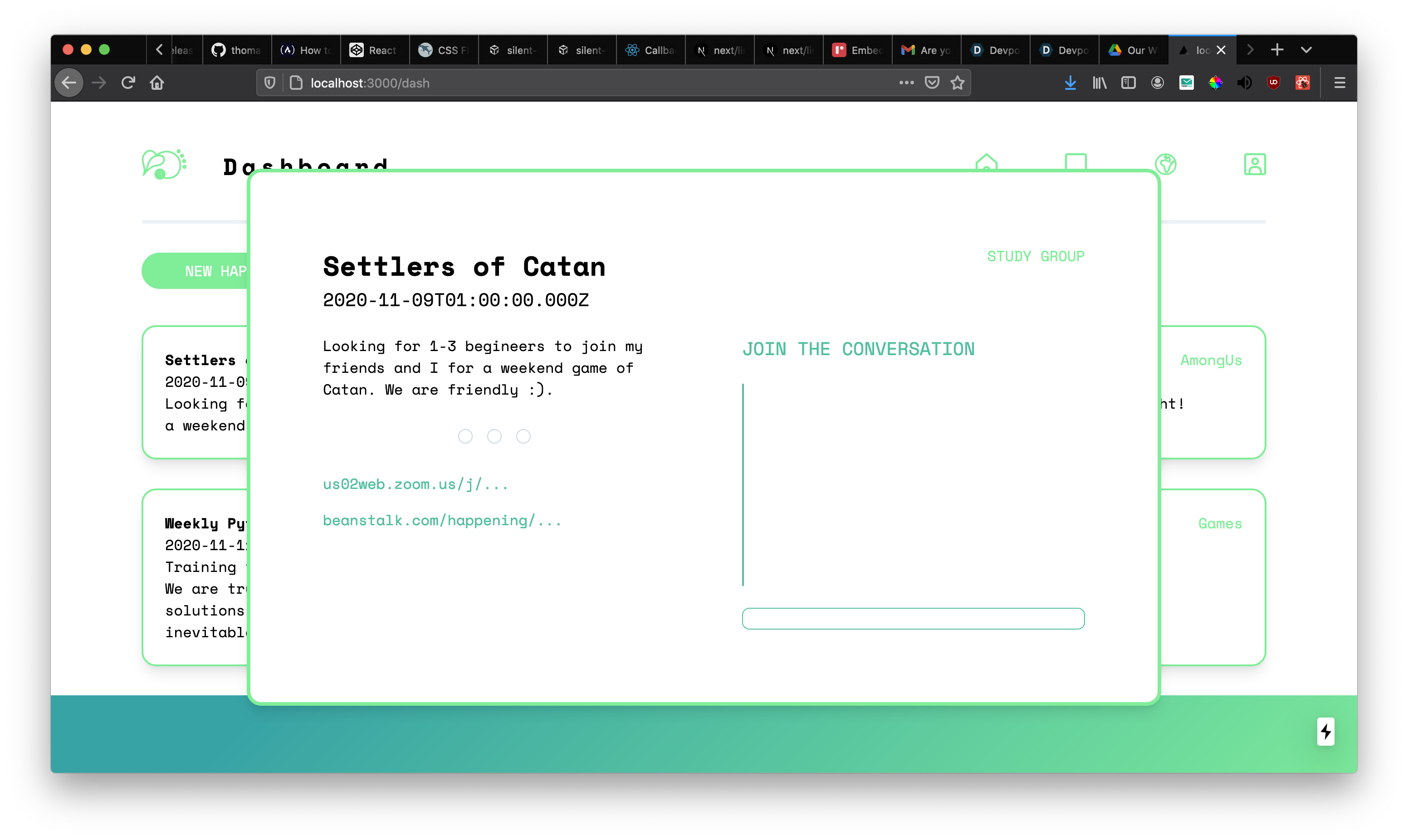
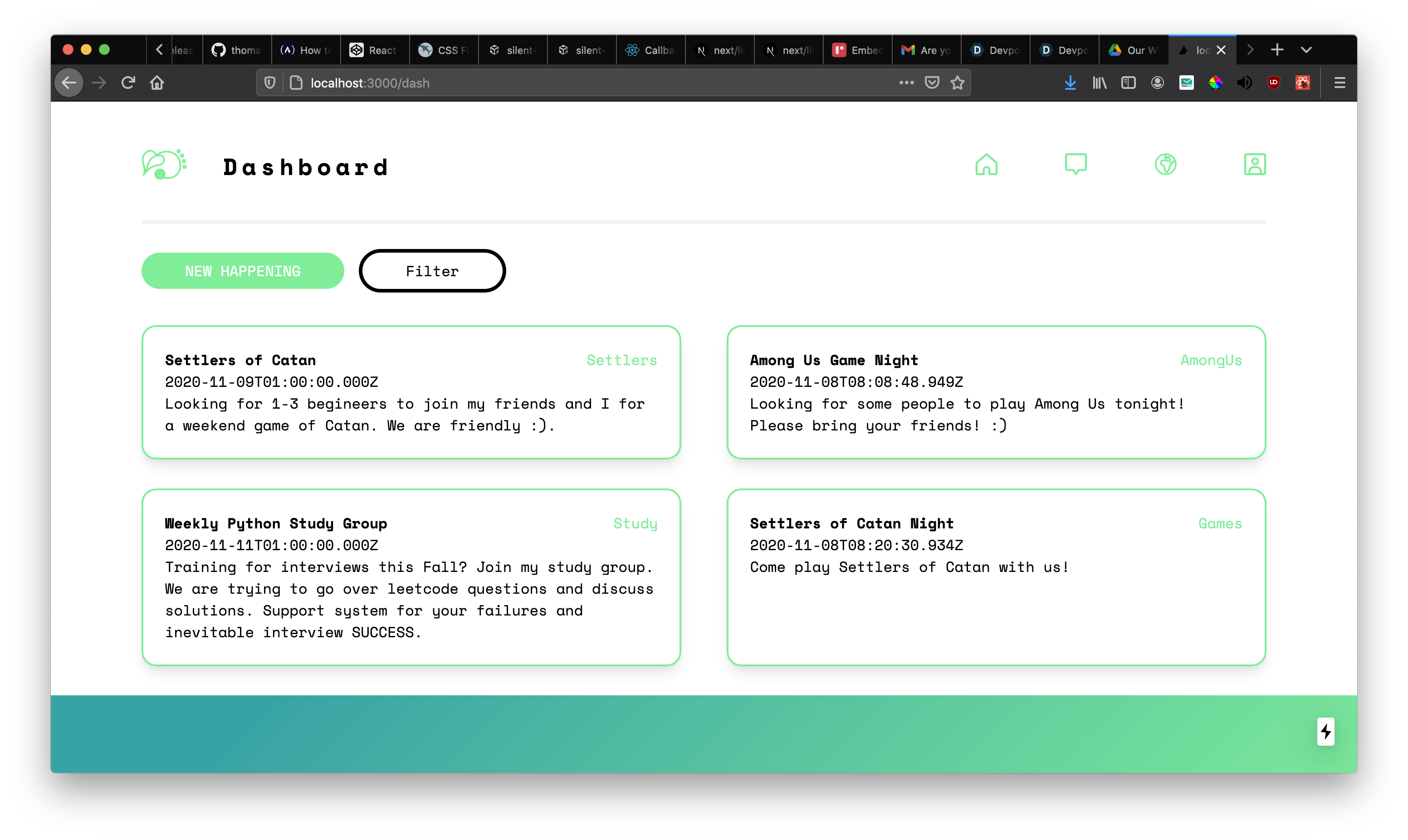
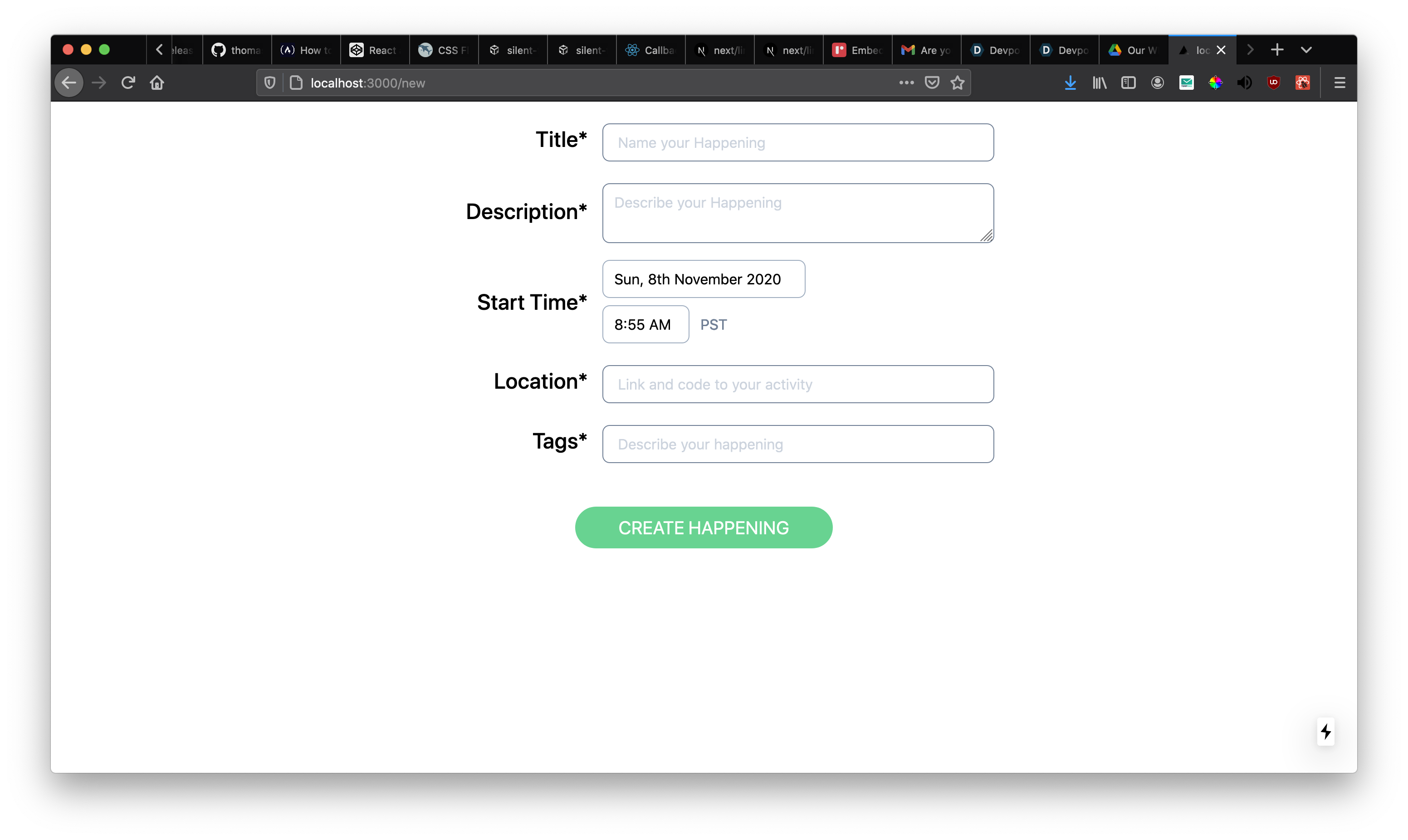
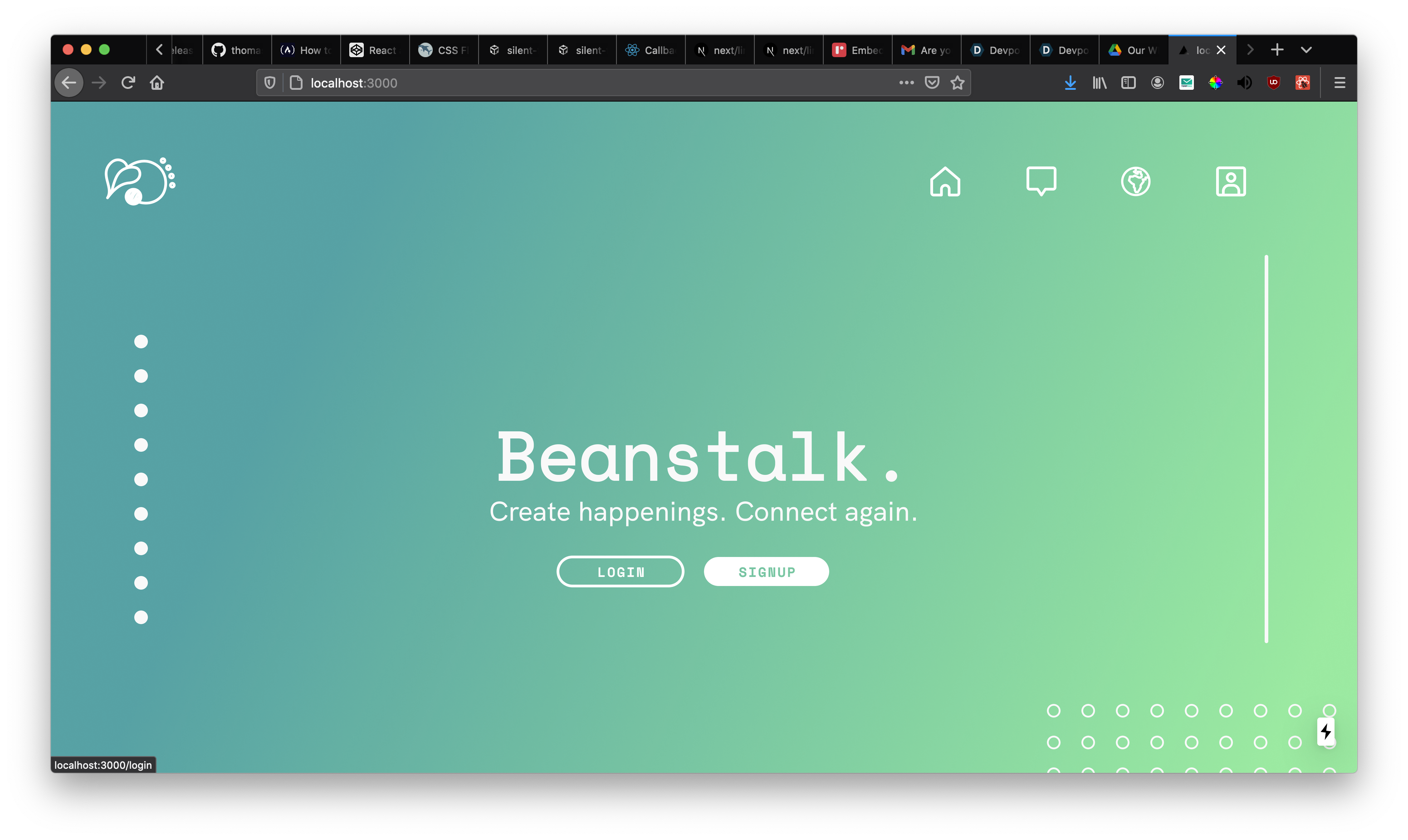
Beanstalk helps its clients create public or private 'Happenings' , view 'Happenings' world-wide, and add as well as message their 'Friends'. A Happening is an event that users can post to find people to share a connection with. For example, a Happening can be used to find others with whom to play games of Among Us, plan a movie night, and study together for school. This matchmaking process where people can find human connections while isolated indoors is something that we've found lacking since the pandemic started, so our goal is to bridge that gap and target the loneliness and isolation many of us are feeling.
How we built it
We used Figma to translate our initial ideas into conceptual designs with wireframes and mocks. Our backend is a nodejs server which uses Google authentication to manage user signups. Our frontend stack is a Nextjs project using the Reason language to compile into Javascript React code.
Challenges we ran into
There were a lot of learning challenges that we encountered with this project. For example, we used an obscured language (Reason) for the frontend. Reason is an ocaml-based syntax that compiles into Javascript code, which has been steadily growing in support over the last few years. Still, compared to established languages such as Javascript, community support is lacking so it was a challenge to debug problems. We experienced many issues compiling the Reason code to javascript.
We also ran into friction connecting the backend server to our frontend site. We do not have much experience with the process and there were many steps that we should have taken beforehand to ensure a smooth connection between the backend and frontend.
Accomplishments that we're proud of
We are proud that we have been able to get a core functioning product completed in less than 24 hours. We needed to learn many new technologies to complete this project, so we are happy to have something completed that we can share with others :)
What we learned
As touched on in the challenges section, we learned that before beginning implementation, we should establish an interface between the frontend and backend developers so that it is clear what inputs and outputs are needed on both sides once the two are connected. This is a lesson that we will take into our next hackathon which will greatly speed up development time.
A lot of us also learned new technologies for the first time so that we can hop in and assist teammates when needed. For example, some of us learned frontend css for the first time.
What's next for Beanstalk
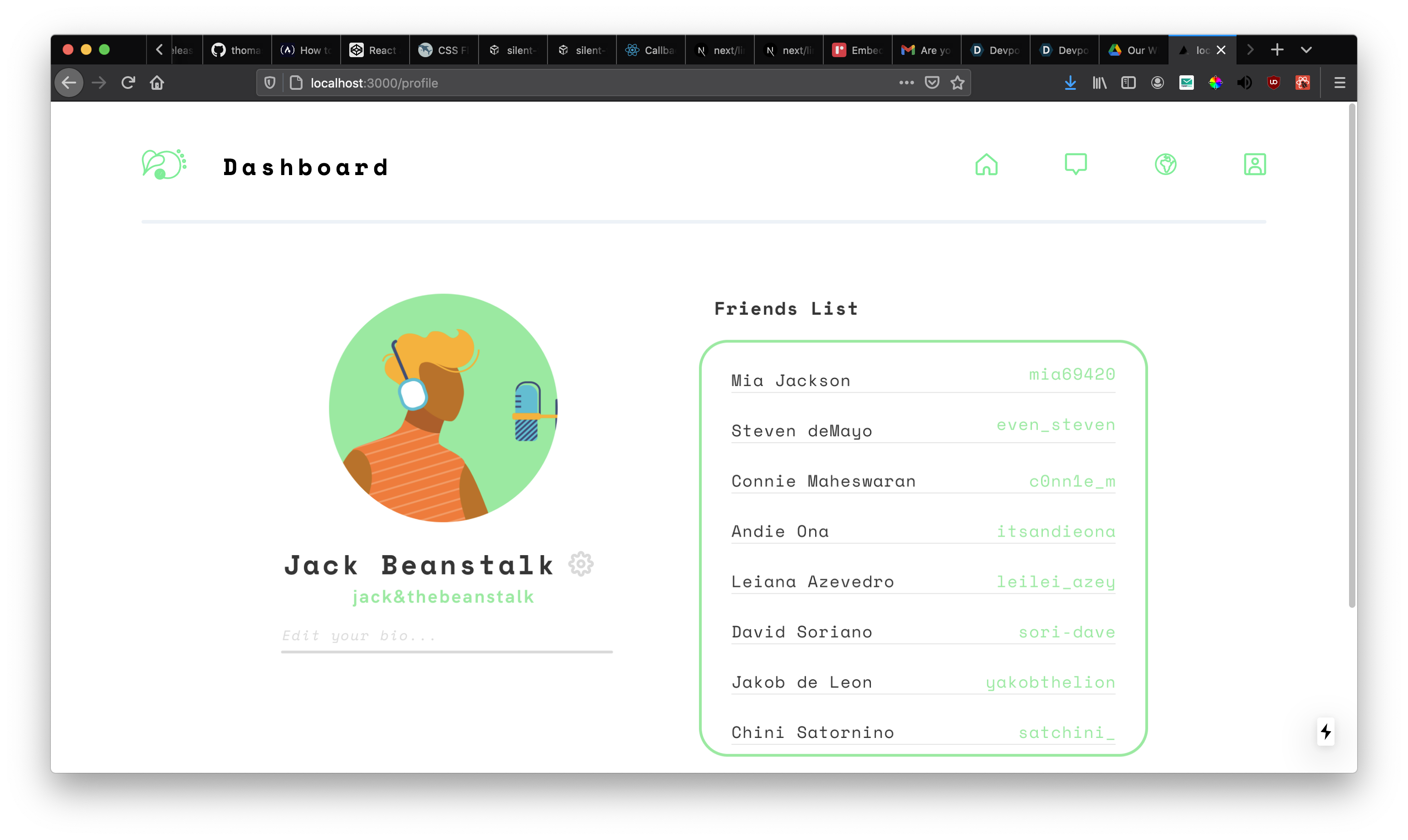
We would like to take Beanstalk and extend our vision of creating a more connected world during the pandemic. Our goal is to flesh out the features which we were not able to finish, such the profile page and messaging inbox, to offer a more complete experience. Then we would like to release our product and generate use feedback so we can begin adding new features.
Check out our introduction video here: https://youtu.be/EkKDie5BVdU
Built With
- css
- figma
- html5
- javascript
- nextjs
- react
- reason


Log in or sign up for Devpost to join the conversation.