-
-
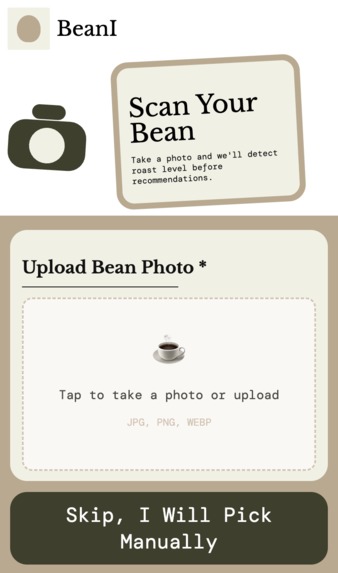
Bean Scanner CV Model
-
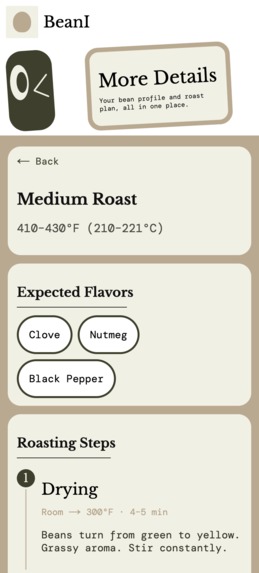
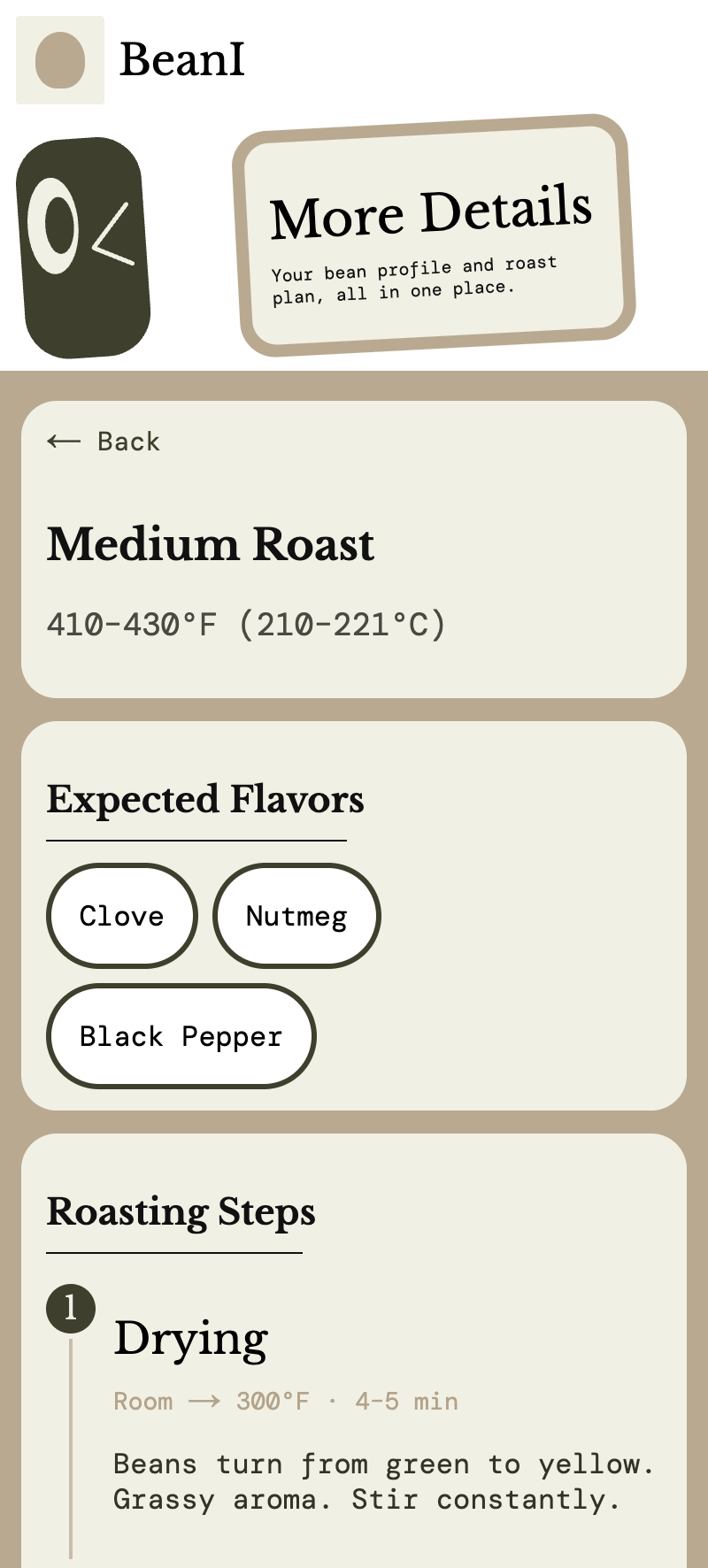
Resulting Recommendations and Tips
-
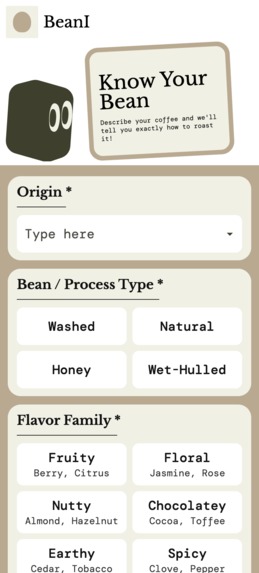
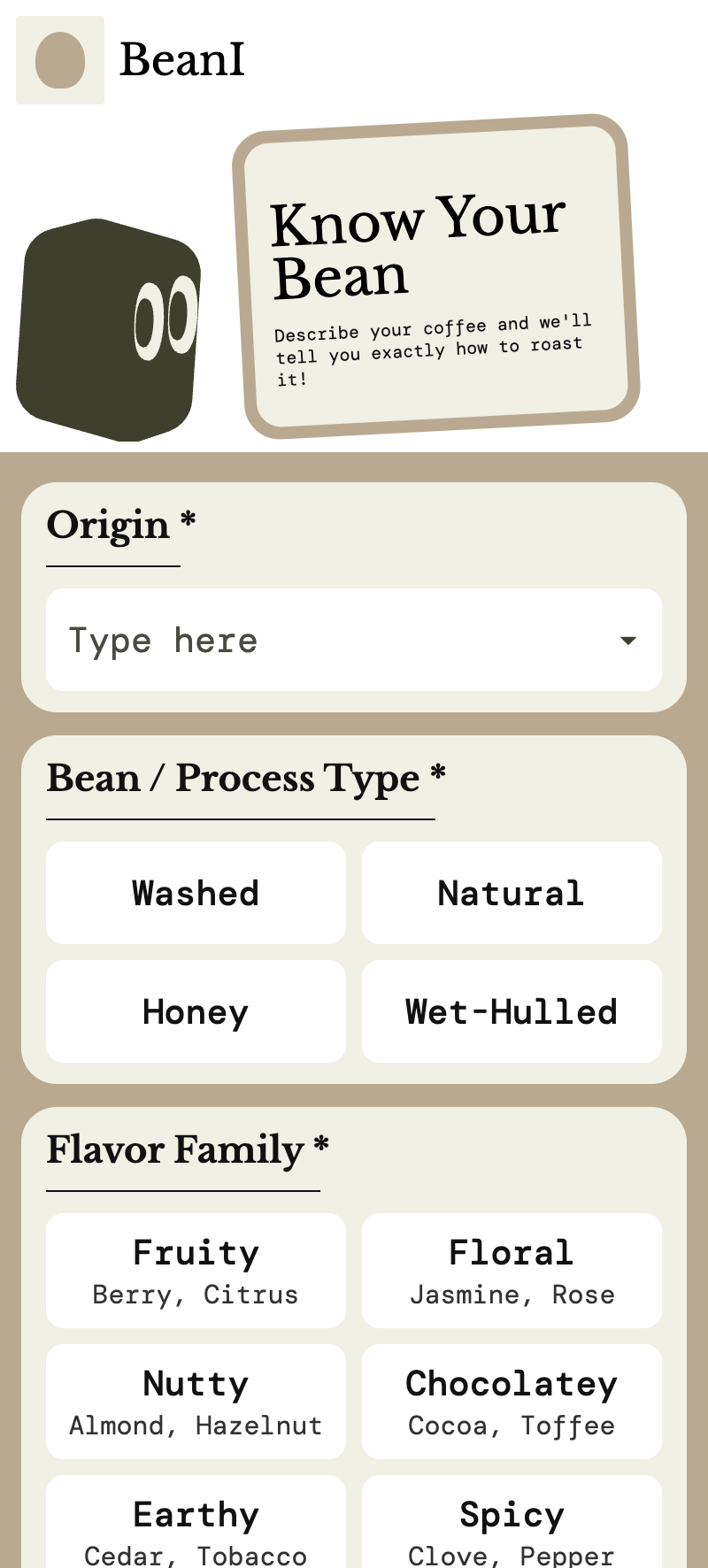
Manual Bean Specification Input
Inspiration
Roasting coffee at home showed how hard it is to find clear, consistent guidance for different types of green beans. Online advice is scattered, contradictory, and often aimed at professionals. We wanted a simple way for home roasters to understand their beans and get reliable recommendations without guesswork.
What it does
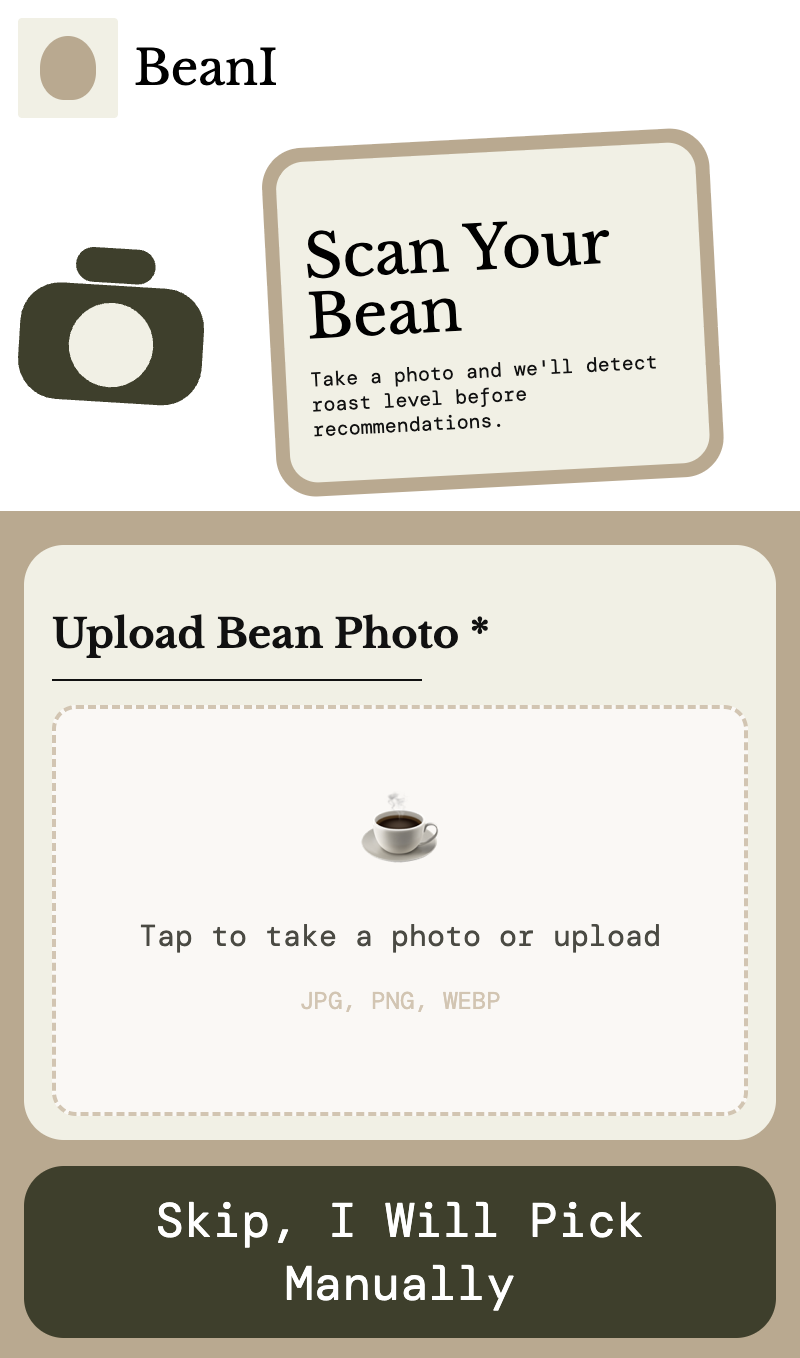
BeanI analyzes coffee beans and generates tailored recommendations for roast level, roast timing, brewing methods, and drink styles. Users upload a photo of their beans, the system identifies key traits, and a state‑machine translates those traits into practical, beginner‑friendly guidance.
How we built it
We trained a computer vision model on a labeled dataset of coffee beans to classify roast levels and extract meaningful bean characteristics. On top of that, we built a deterministic recommendation engine using a state‑machine that encodes roasting logic. Each bean trait moves the system through a series of states that narrow down the ideal roast and brew recommendations.
Challenges we ran into
Training the CV model to accurately distinguish roast levels was difficult because the visual differences between light, medium, and medium‑dark roasts are subtle. We also had to design a recommendation system that feels intelligent without relying on generative AI, which required translating expert roasting knowledge into clear, rule‑based logic.
Accomplishments that we're proud of
We created a full pipeline that turns a simple bean photo into actionable roasting and brewing guidance. The CV model reached strong accuracy, and the state‑machine produces consistent, interpretable recommendations. The tool makes home roasting more accessible and reduces the confusion beginners often face.
What we learned
We learned how nuanced coffee roasting is and how challenging it can be to encode that nuance into a system that remains simple for users. We also learned that deterministic logic can be more reliable than AI when expert knowledge is well‑structured. Training vision models on subtle differences taught us a lot about preprocessing and model tuning.
What's next for BeanI
We plan to expand bean‑trait detection to include processing method, density class, and defect detection. We want to add roast‑tracking so users can log results and refine future roasts. Longer term, BeanI could support a community‑driven database of beans, roast curves, and flavor outcomes to help home roasters learn from each other.
Built With
- figma
- next.js
- python
- typescript


Log in or sign up for Devpost to join the conversation.