Inspiration
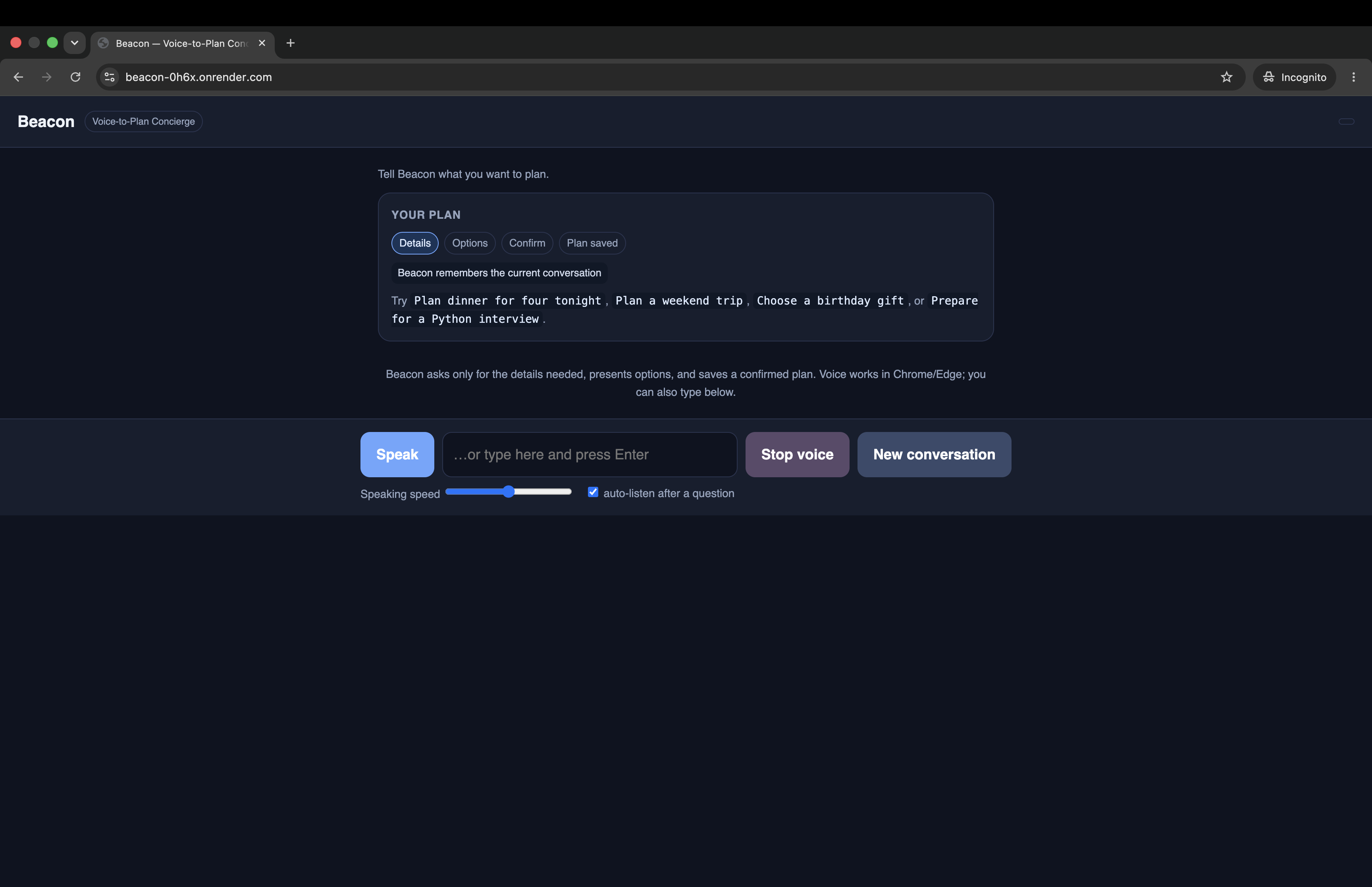
Most AI assistants answer one prompt and stop. For real tasks such as planning a trip, choosing a gift, preparing for an interview, or organising an event, people need a conversation that remembers context, asks only useful questions, and reaches a clear decision.
Beacon was built to make voice interaction feel more practical: speak a goal, refine it together, compare options, explicitly confirm a choice, and keep an auditable record.
What it does
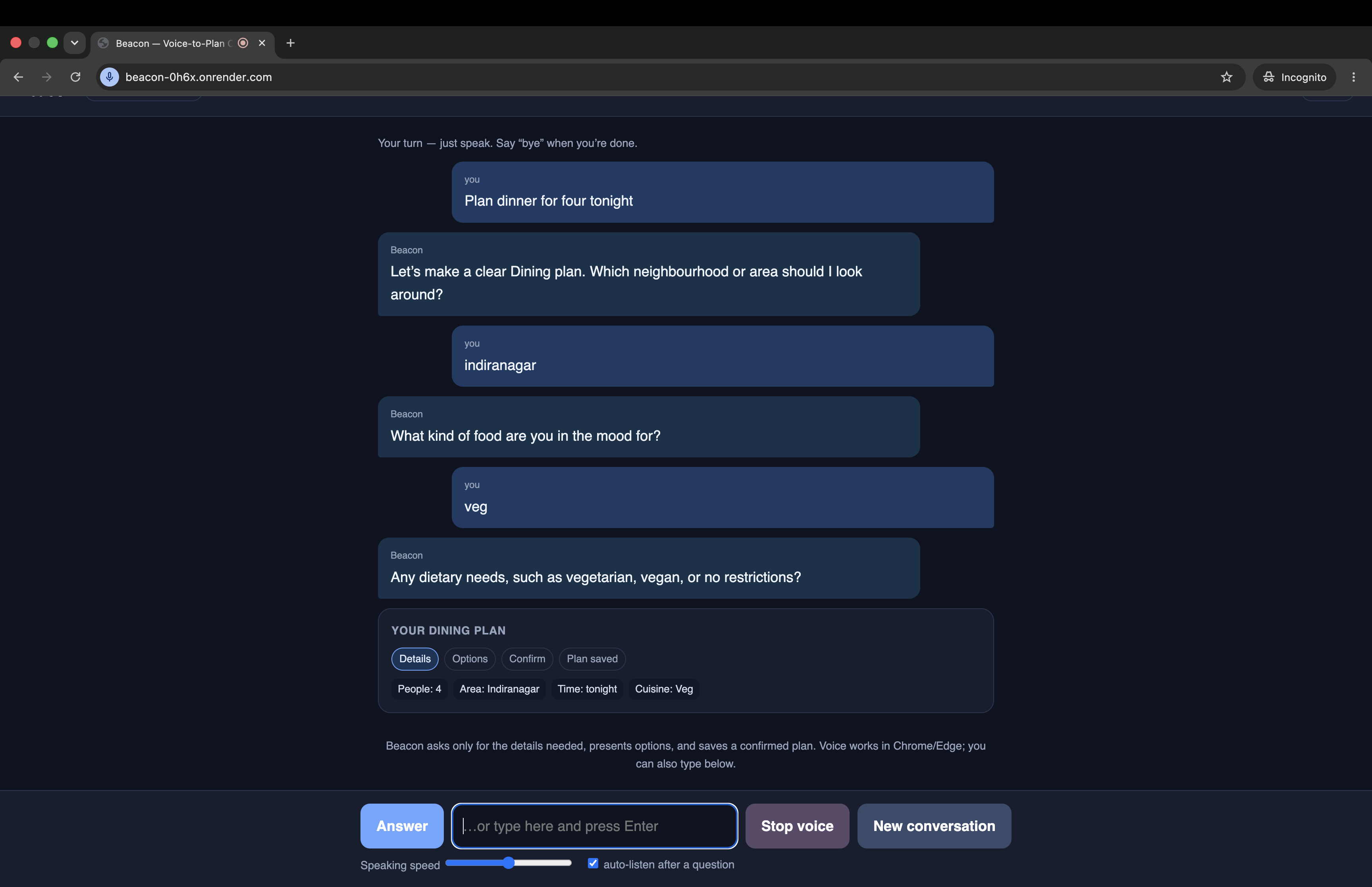
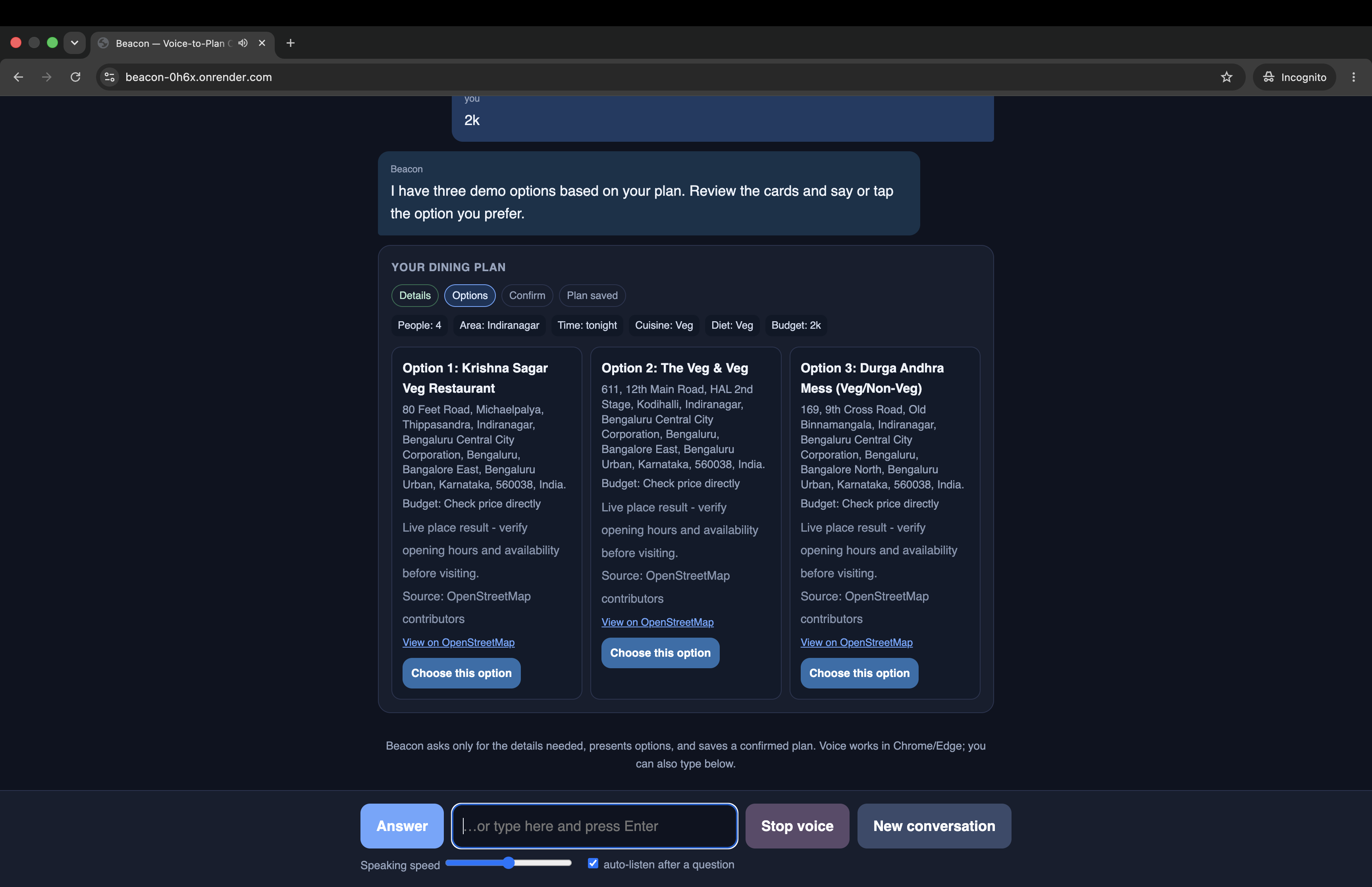
Beacon is a voice-to-plan concierge. It:
- accepts spoken or typed goals;
- identifies planning domains such as dining, travel, gifting, study, and open-ended tasks;
- collects the missing details through short voice-friendly questions;
- presents three transparent plan options;
- requires an explicit “yes” before saving a final plan receipt;
- supports PDF receipt downloads and retains recent sessions in SQLite;
- always honours “bye” and “stop” through deterministic code, even if the LLM is unavailable.
How we built it
The frontend uses HTML, CSS, JavaScript, and the Web Speech API for speech recognition and text-to-speech. The backend is Python with SQLite for persistent sessions and transcripts.
Beacon uses a provider-agnostic LLM layer, so it can work with Gemini, Groq, OpenAI, Anthropic, DeepSeek, Ollama, and compatible providers through environment variables. It is packaged as one Docker service for Render deployment.
Challenges we faced
The main challenge was making voice interaction reliable. Speech events can arrive late, text-to-speech can continue after a user starts fresh, and a user must always be able to end a conversation. We added guarded speech cancellation, fresh-session handling, polling safeguards, and deterministic exit detection.
Another challenge was keeping LLM output dependable. Beacon validates structured planning output and falls back gracefully if a provider response is unavailable or malformed, so the conversation remains usable.
What we learned
We learned that a useful voice assistant needs more than a chat response. State management, concise spoken replies, explicit confirmation, reliable exits, and durable transcripts are what turn an AI conversation into a trustworthy planning experience.


Log in or sign up for Devpost to join the conversation.