-
-
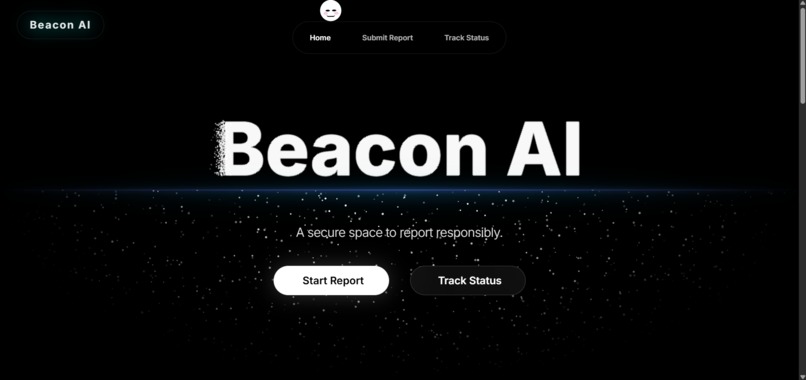
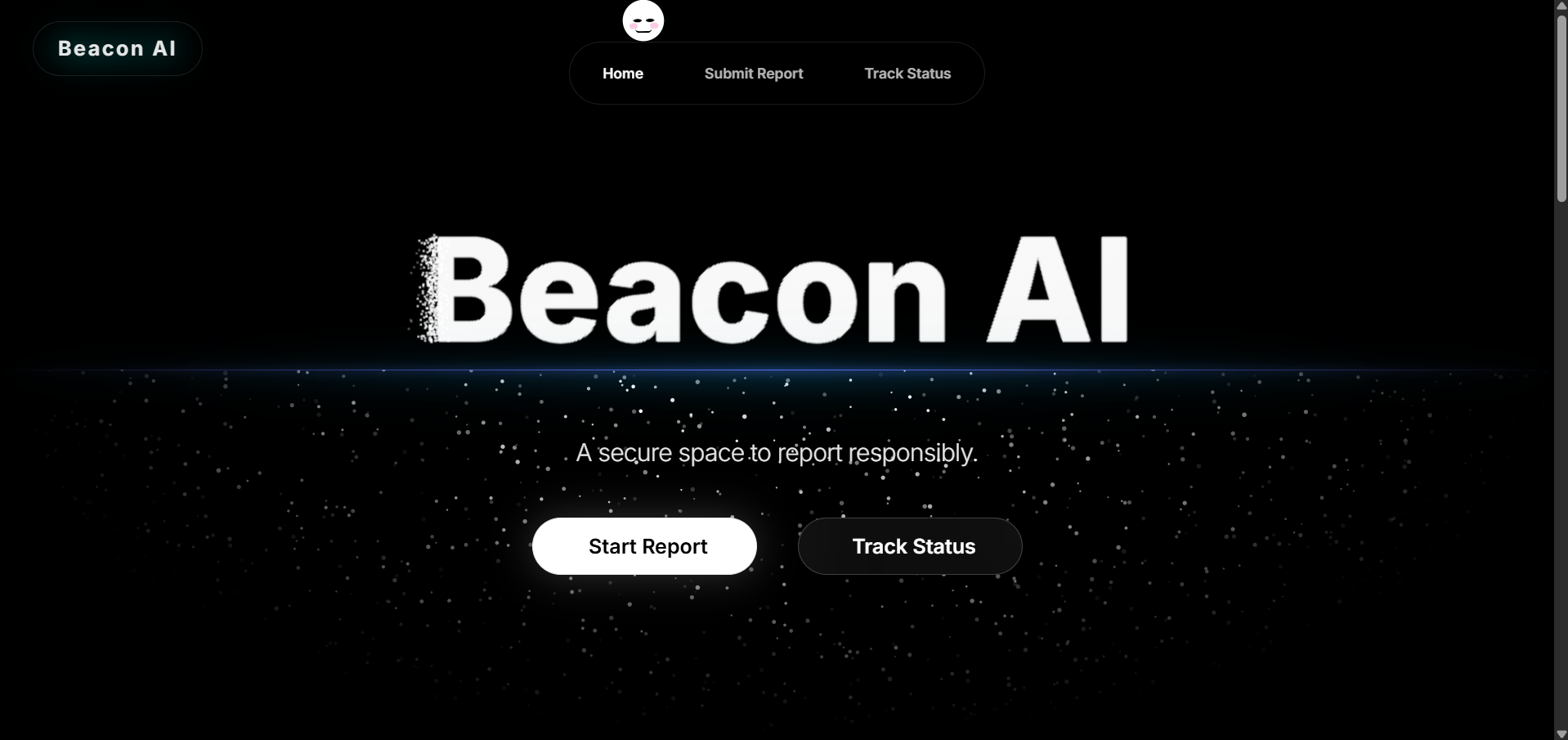
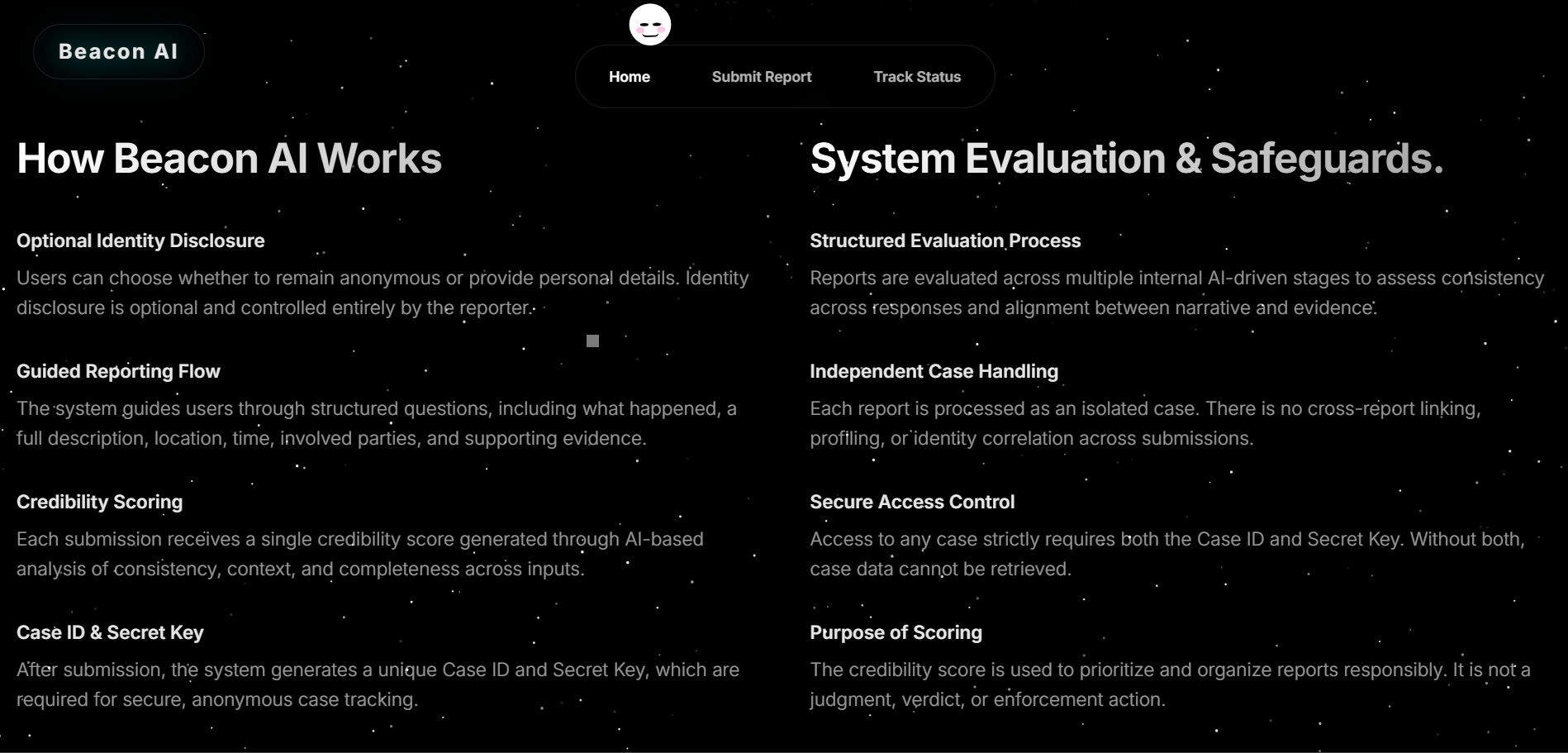
Home Page - Hero Section
-
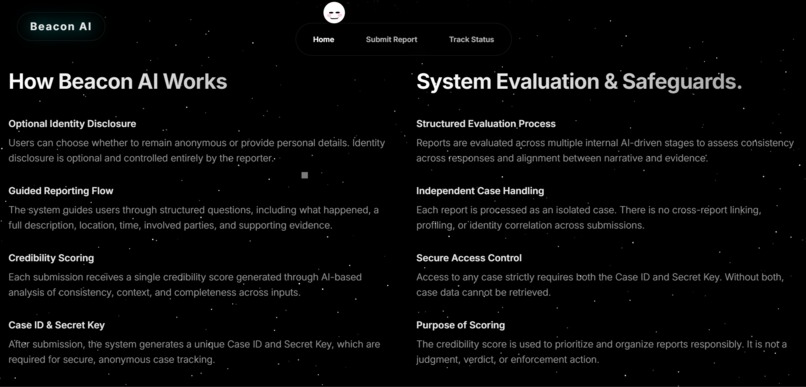
Home Page - Info
-
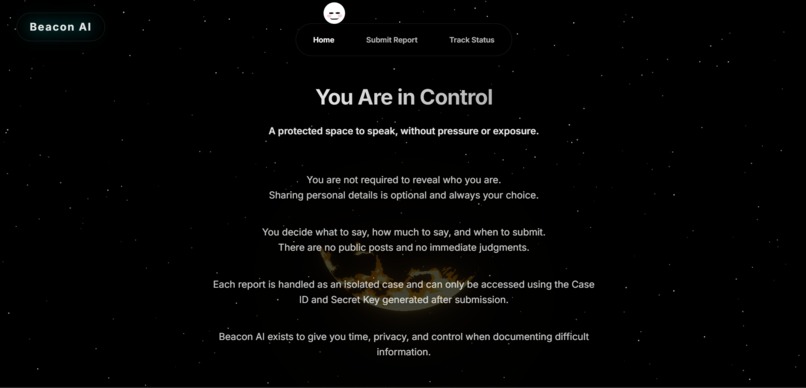
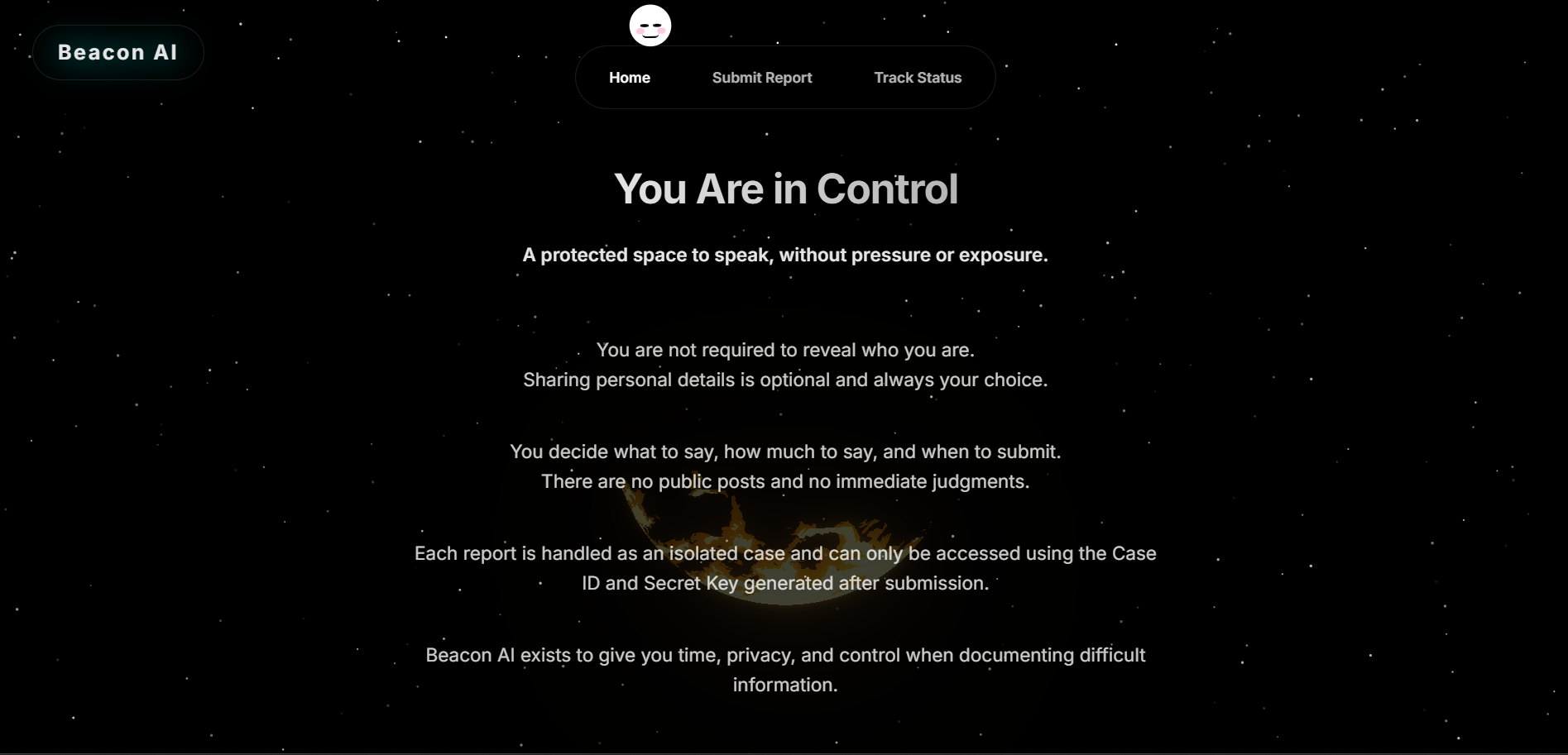
Home Page - Principle
-
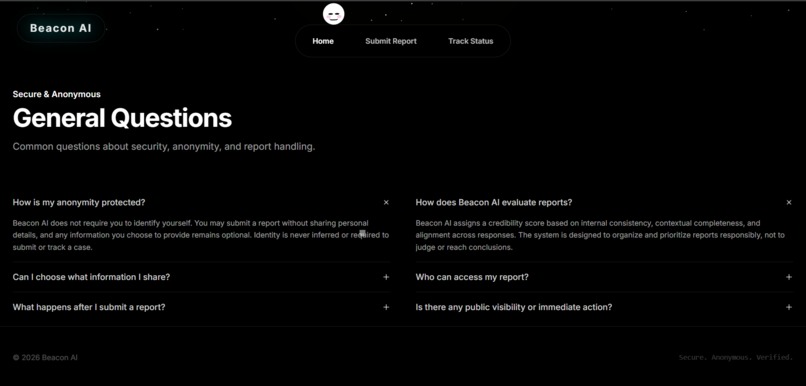
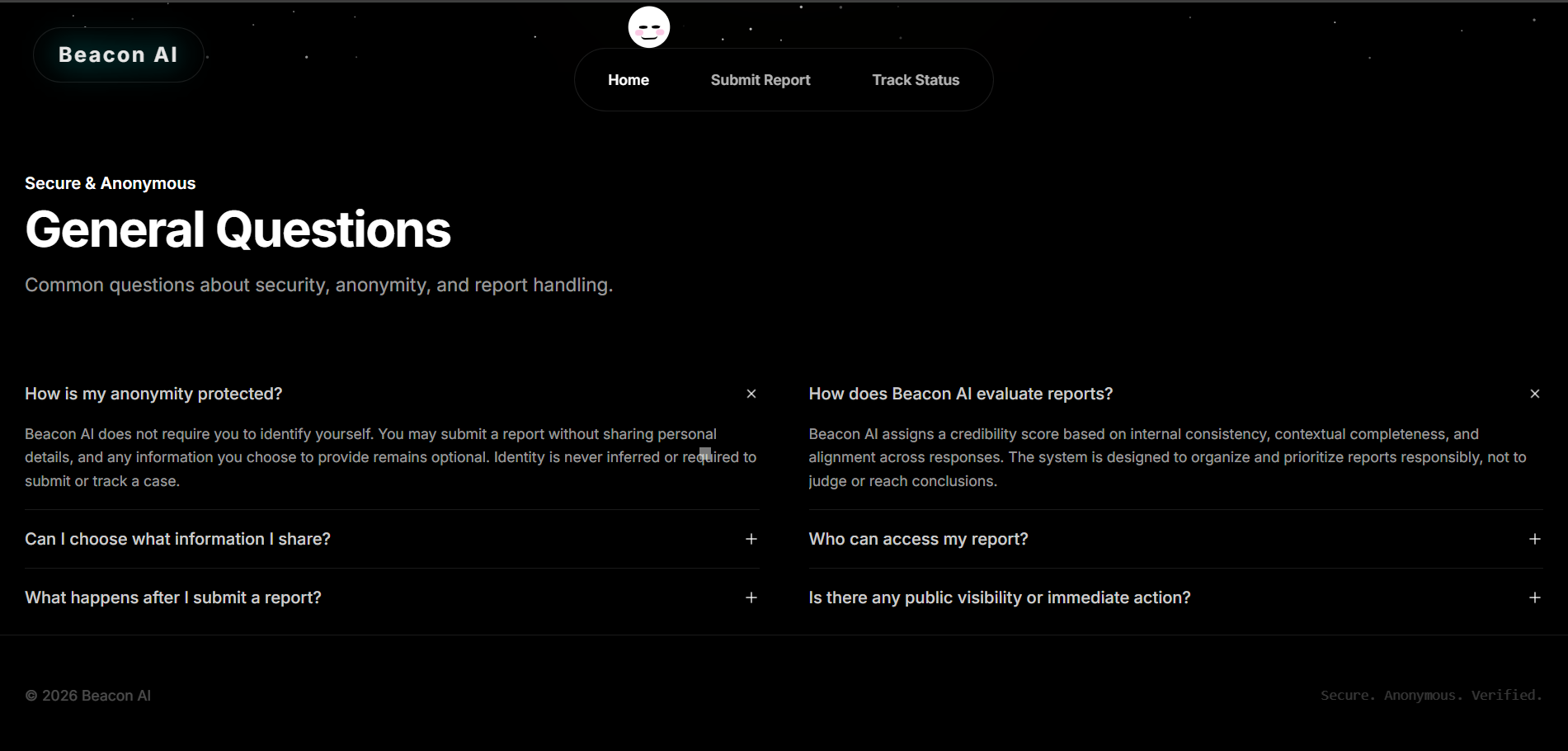
Home Page - FAQ
-
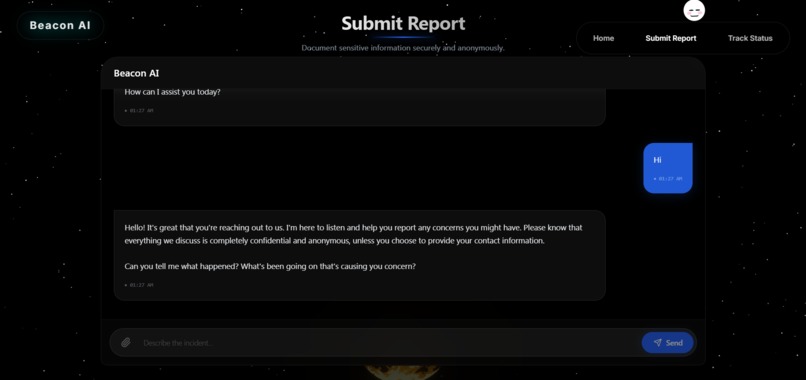
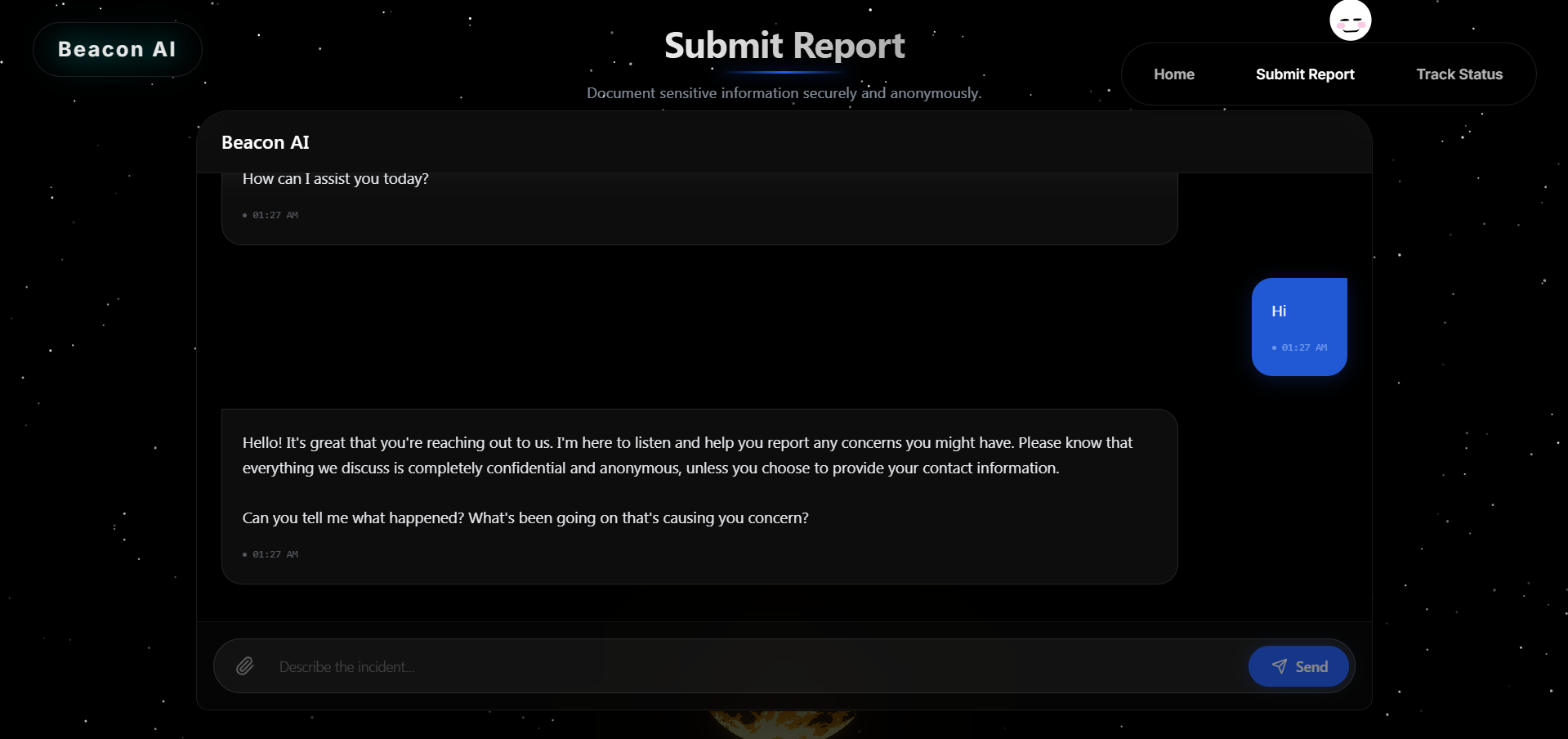
Report Page - Chat
-
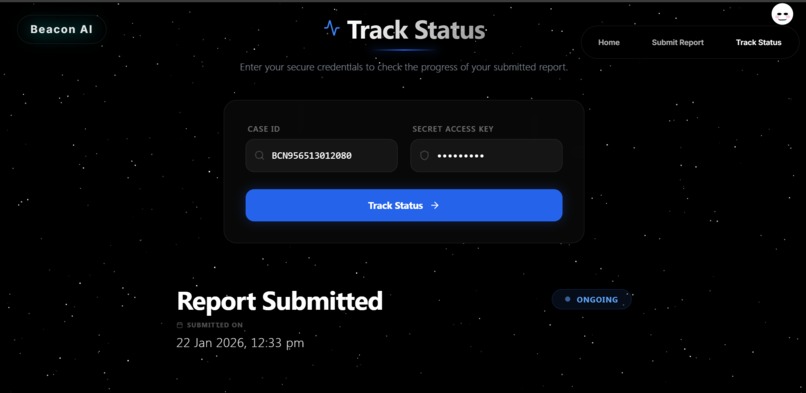
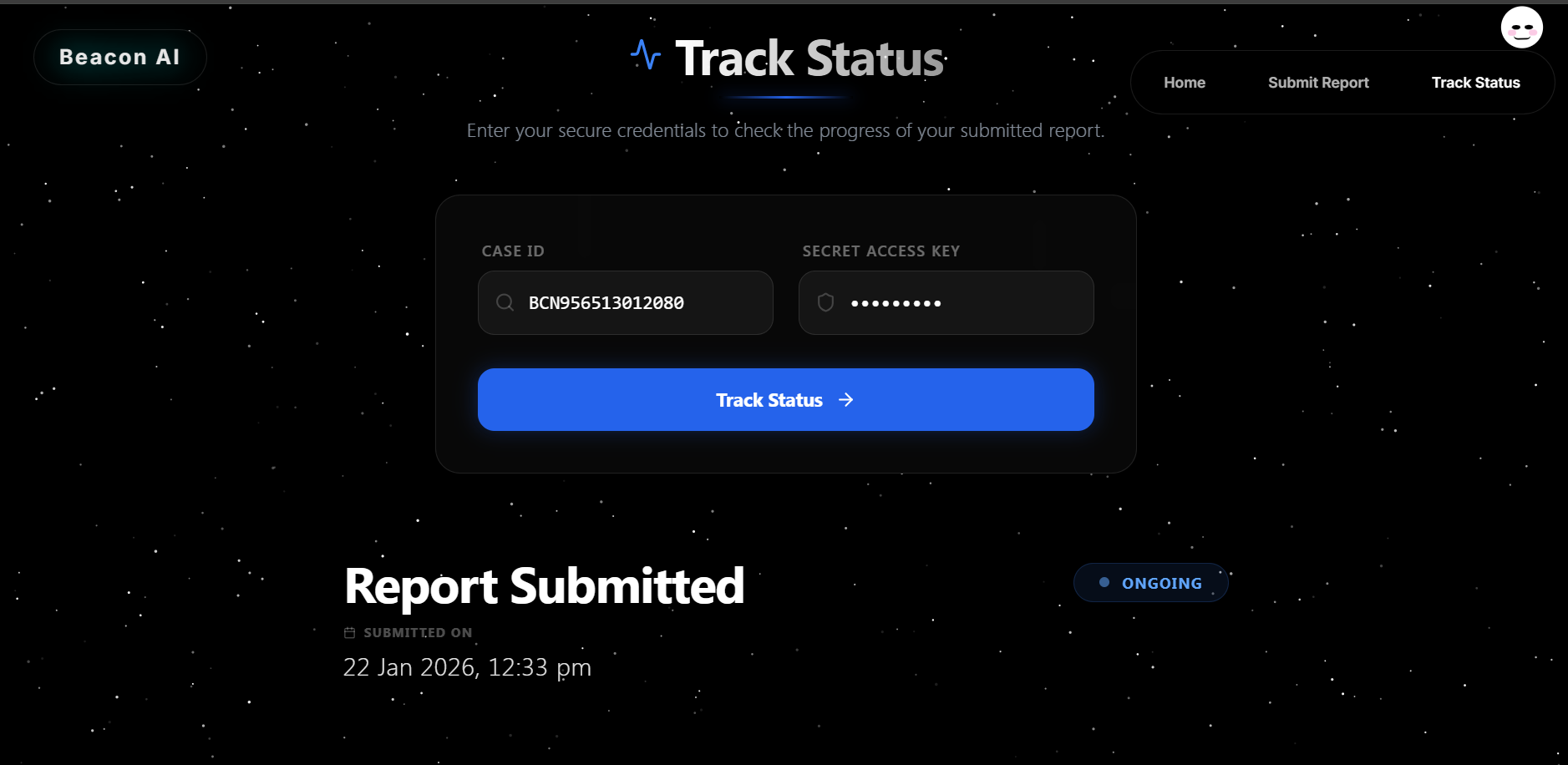
Track Status Page - Report Status
-
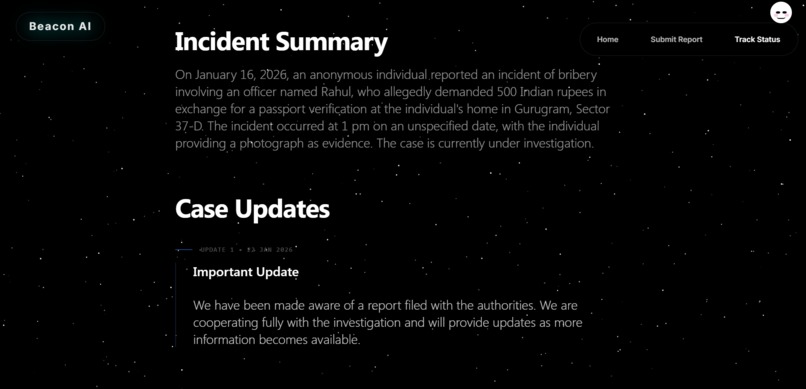
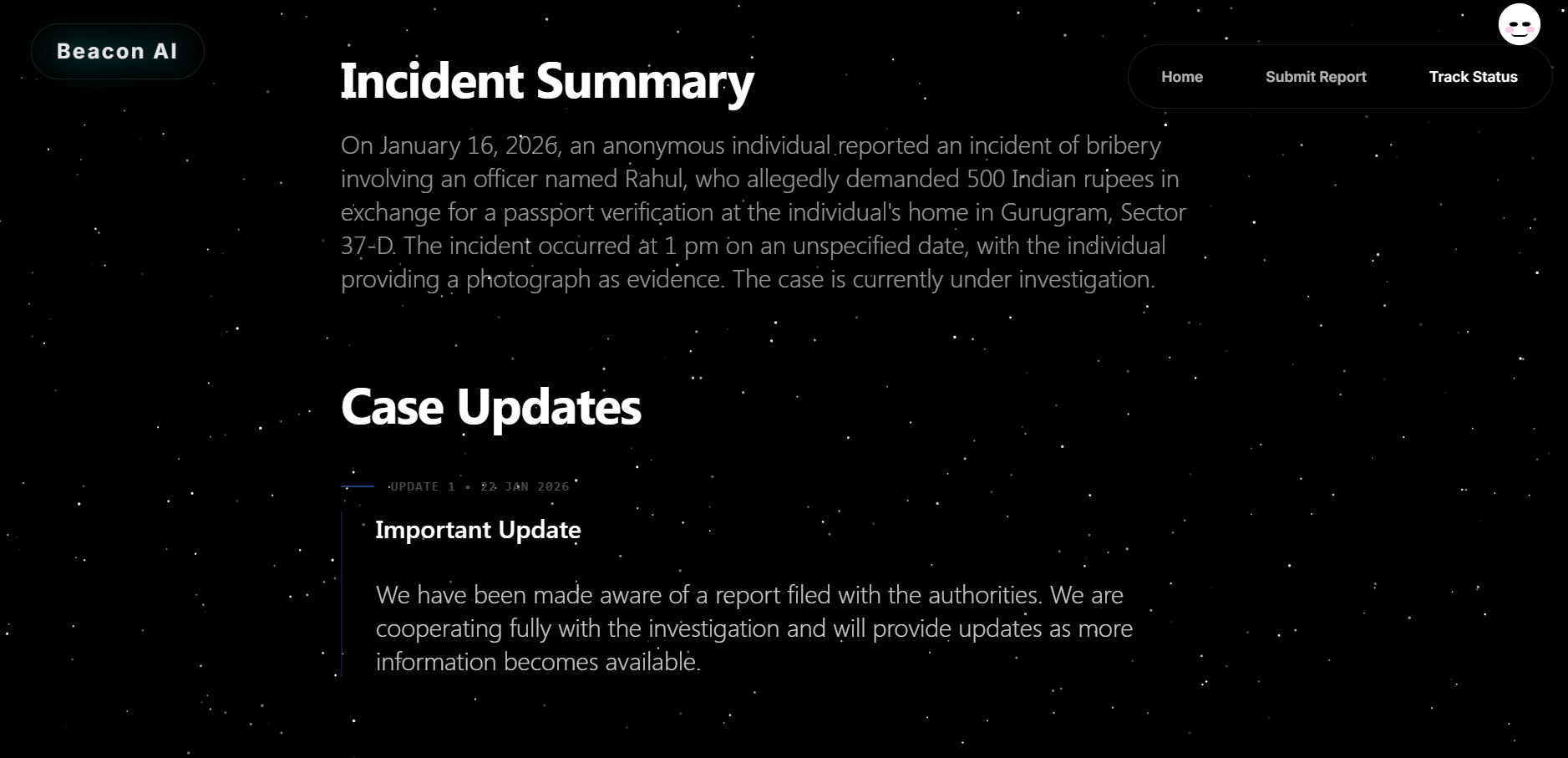
Track Status Page - Incident Summary & Case Updates
-
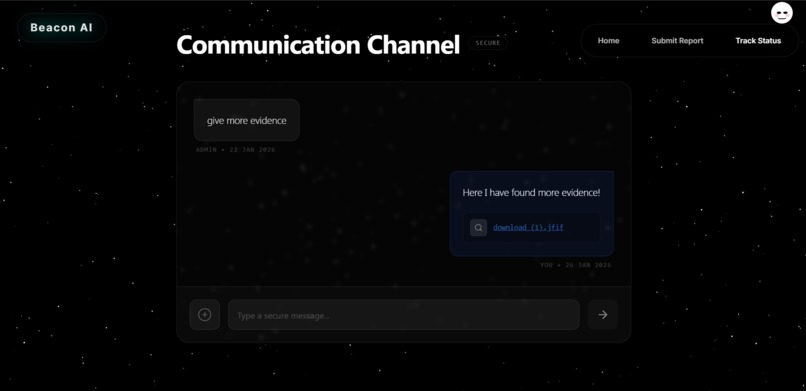
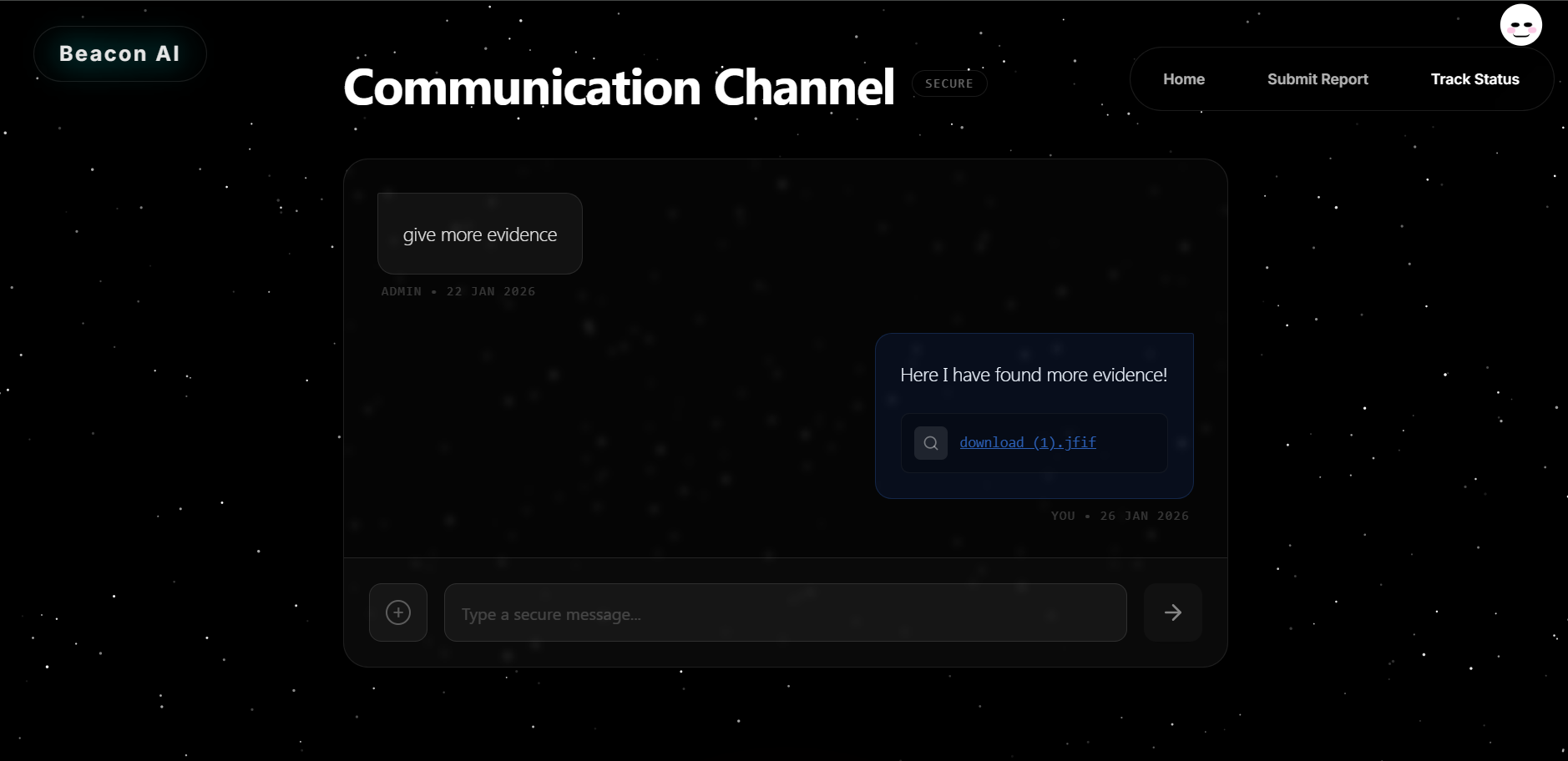
Track Status Page - Communication Channel
-
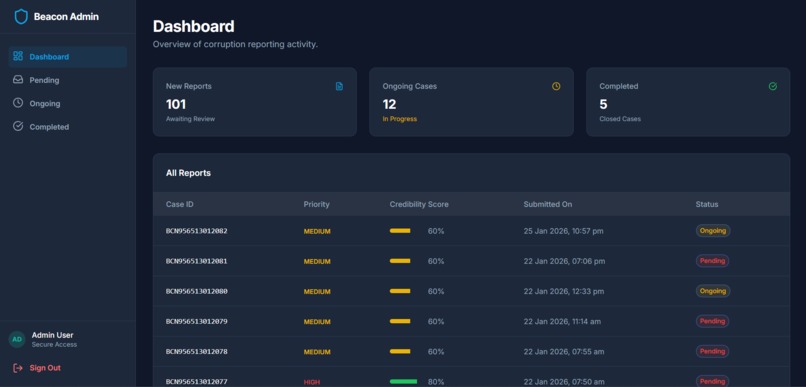
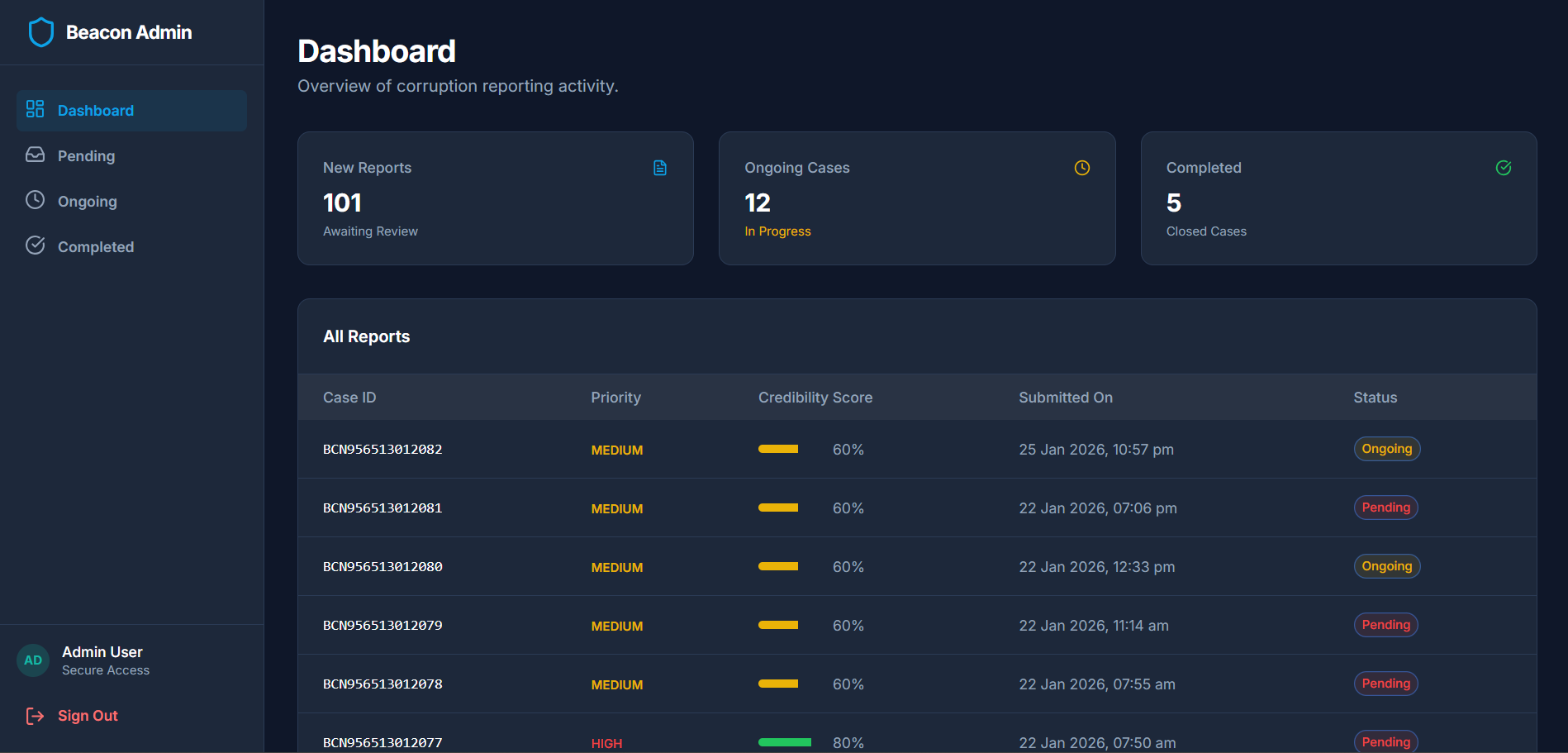
Admin Portal - Track all Cases
-
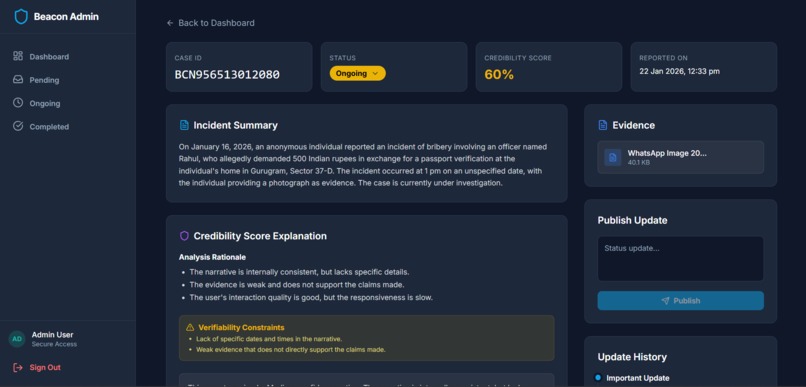
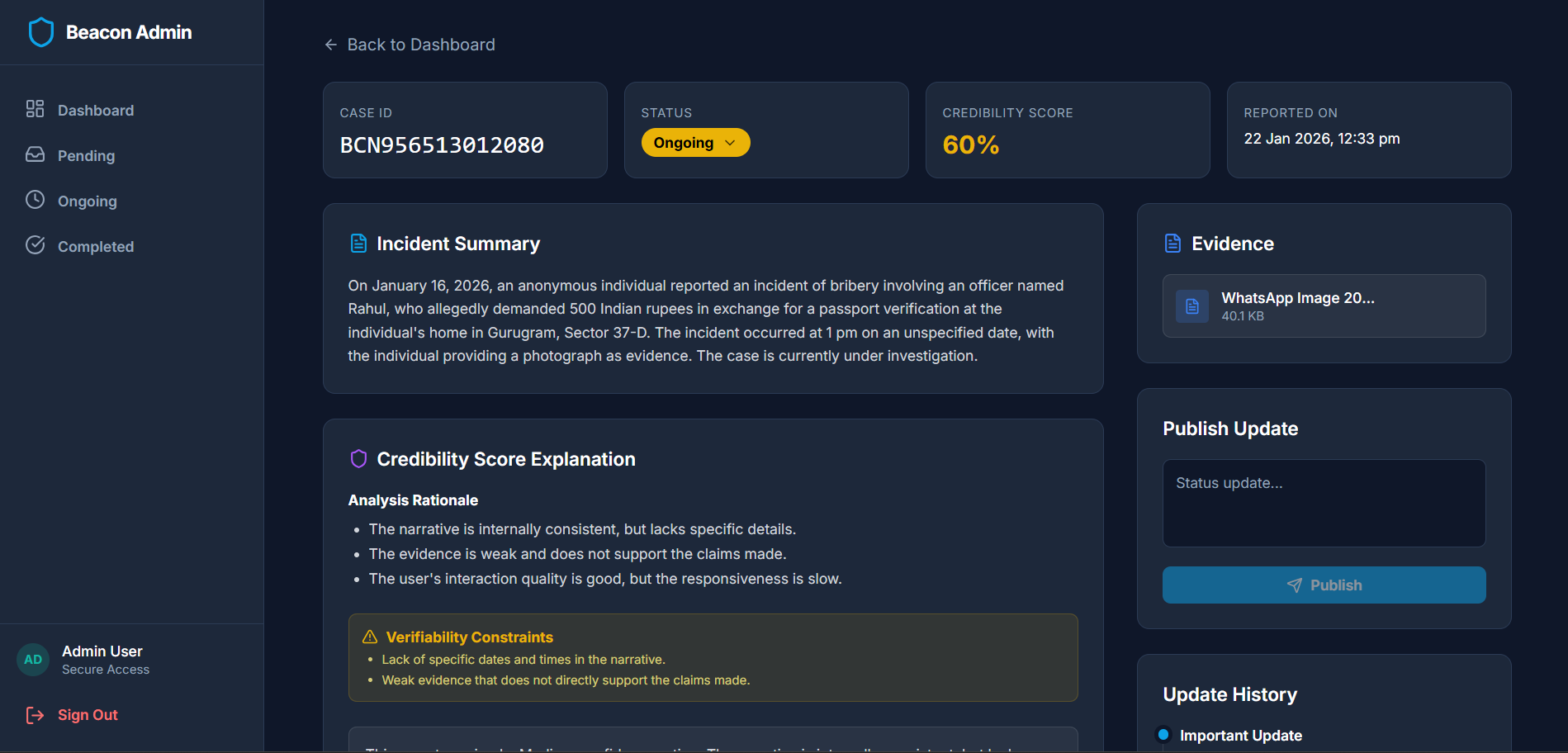
Admin Portal - Detailed info for a particular Case
-
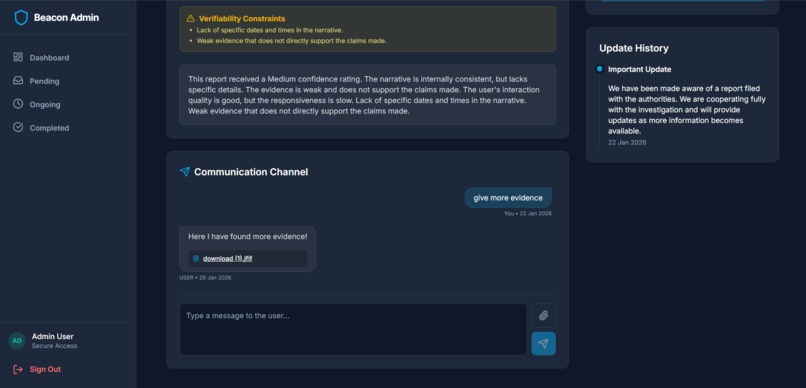
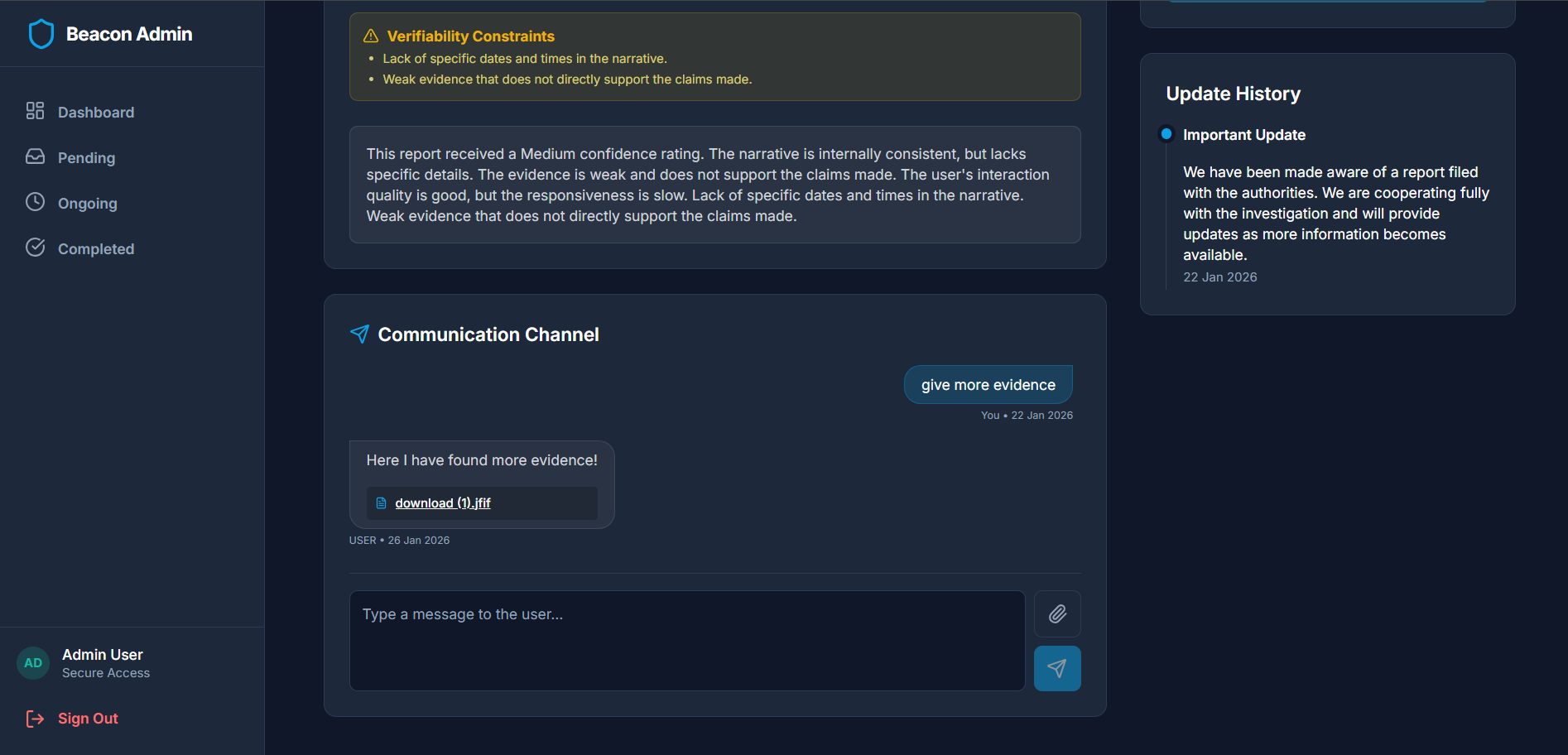
Admin Portal - Detailed info for a particular Case (Continue)
Inspiration
Beacon AI was inspired by a simple but difficult problem: people want to report wrongdoing, but they do not want to risk their identity, safety, or career.
Our initial idea focused on enabling citizens to report corruption and misconduct to governments or NGOs in a safe and anonymous way. During real-world discussions with authorities, we learned that trust, anonymity, and evidence credibility are the hardest parts of any reporting system.
That feedback led us to recognize that the same problem exists inside organizations. Employees often face similar fears when reporting unethical behavior, harassment, or misuse of power. Beacon AI evolved into a platform that can serve both public reporting and internal organizational reporting, using the same core principles of anonymity, transparency, and accountability.
What it does
Beacon AI is an anonymous reporting and case management platform that works without user accounts or sign-in.
A user reports an incident through a conversational chatbot that asks questions step by step and collects structured inputs. The user can submit text, upload evidence files such as images or documents, and provide additional context.
Once the report is submitted:
The system generates a unique Case ID and a Secret Key The user can track the case status using only these two values No personal information, email, or login is required Beacon AI applies AI-based credibility scoring that evaluates the report using both the written description and the evidence provided. The system produces:
A credibility score A clear explanation of why that score was assigned This score helps admins understand how strong a report is and assists in filtering out spam, low-quality, or potentially false reports On the admin side:
Admins access a secure portal They receive an incident summary and the credibility score explanation Admins can update the case status as Pending, Ongoing, or Completed All status changes are instantly visible to the user on the Track Status page Beacon AI also enables two-way anonymous communication:
Admins can request additional details or evidence Users can respond, upload more files, or clarify information Communication happens in real time without revealing identity or requiring sign-in This creates a complete feedback loop while preserving anonymity on both sides.
How we built it
Beacon AI was built as a full-stack, modular system.
A responsive frontend for users and admins A chatbot interface for guided reporting A backend API handling case creation, tracking, messaging, and file uploads Secure storage for evidence files AI services for summarization and credibility scoring A privacy-first design with no authentication system for users The architecture supports both public sector use cases and private organizational deployments, with AI as an assistive layer rather than a decision maker.
Challenges we ran into
We faced several significant challenges:
Designing true anonymity while still enabling case tracking Enabling two-way communication without user accounts Safely handling sensitive evidence uploads Deploying under strict infrastructure and cost constraints Addressing concerns around AI usage and data security raised by government stakeholders One of the biggest challenges was balancing AI usefulness with trust and compliance expectations.
Accomplishments that we're proud of
Built a fully functional anonymous reporting system end to end Implemented case tracking using only Case ID and Secret Key Enabled real-time two-way anonymous communication Created explainable AI credibility scoring Designed an admin portal with full case lifecycle control Successfully adapted the product based on real stakeholder feedback We are especially proud that Beacon AI works without requiring users to sign in at any stage.
What we learned
Anonymity is meaningless without transparency and follow-up Evidence handling is as important as report text AI must be explainable in sensitive systems Governments and organizations have different trust thresholds Strong systems evolve through real feedback, not assumptions This project taught us how complex trust-based systems truly are.
What's next for Beacon AI
Next, we plan to:
Focus on organizational and enterprise deployments for internal reporting Improve compliance and audit tooling Explore self-hosted deployments for governments and regulators Beacon AI’s mission is to make reporting wrongdoing safe, anonymous, and actionable, whether in public systems or private organizations.
Built With
- alembic
- api
- axios
- codespring
- css
- docker
- eslint
- fastapi
- framer
- git
- github
- html
- httpx
- javascript
- lucide
- next.js
- ocr
- opencv
- passlib
- postcss
- pydantic
- pymupdf
- python
- python-jose
- radix
- react
- react-markdown
- sqlalchemy
- structlog
- supabase
- tailwindcss
- three.js
- tparticles
- typescript

Log in or sign up for Devpost to join the conversation.