In-Person Project
Inspiration
Our inspiration for Beacon came from witnessing the struggles of individuals with ALS, Parkinson's, and severe mobility impairments as they attempted to communicate their most basic needs. We saw the profound isolation that occurs when someone's mind remains sharp but their ability to express themselves diminishes. The emotional toll of being unable to request water, express pain, or simply connect with loved ones inspired us to create a solution that requires virtually no physical capability beyond eye movement.
What it does
Beacon is a holographic communication system that projects a floating interface in the user's field of view, which they can navigate entirely through eye movements. Using eye-tracking technology, users can select needs, emotions, and messages that are instantly transmitted to caregivers' devices. The system adapts to the user's environment—whether hospital, care facility, or home—and learns their communication patterns over time. Beacon enables users to control their environment, express complex thoughts, and maintain meaningful connections without requiring physical mobility.
How we built it
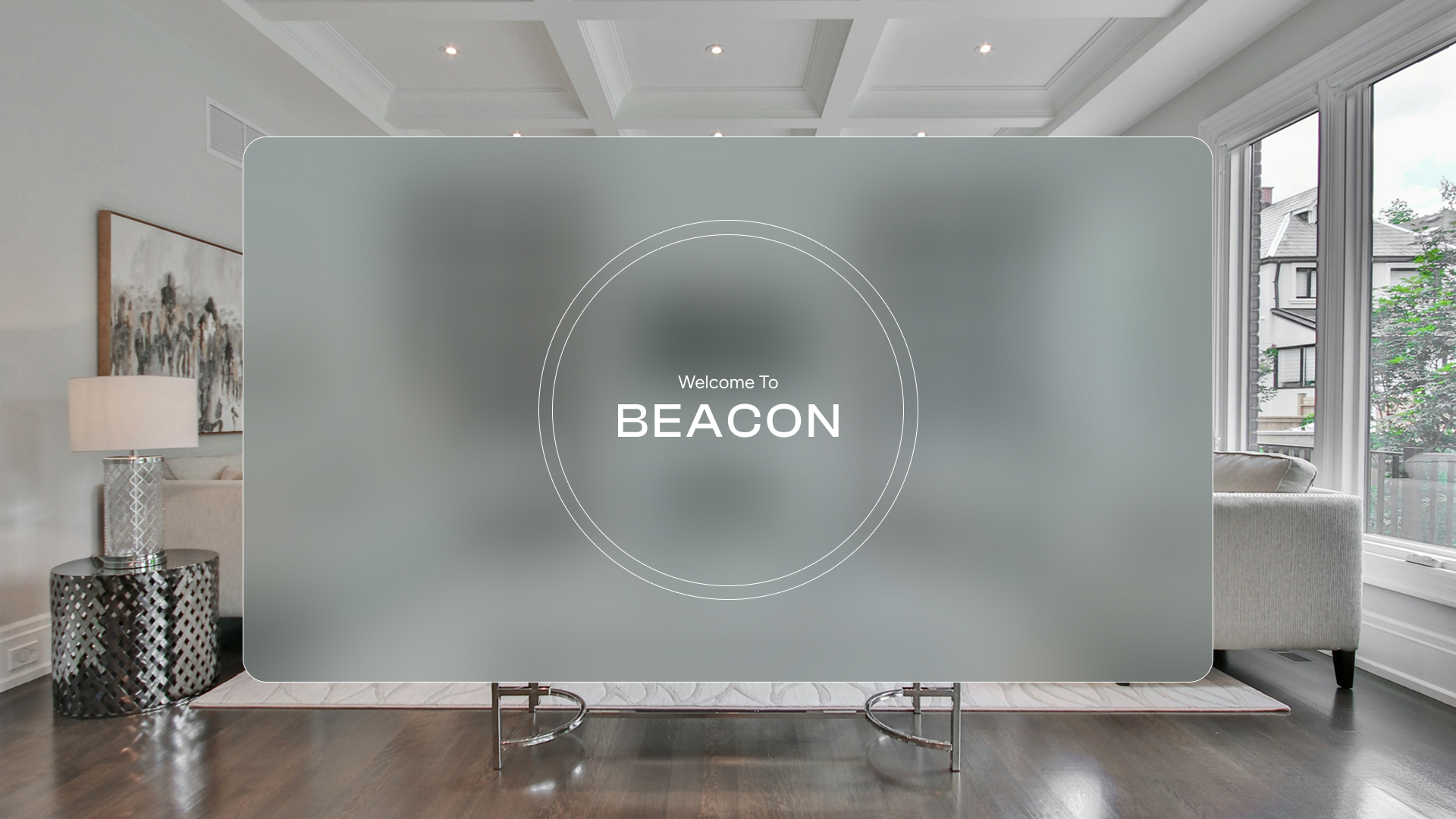
We designed Beacon as a holographic interface in Figma, focusing on creating a circular menu system with optimal visibility for users in reclined positions. We mapped the eye-tracking interaction flow to account for limited movement capabilities, incorporating dwell-time selection and confirmation animations. The companion app was designed to seamlessly receive and respond to communications while providing caregivers with insights into patterns and trends. Our prototype demonstrates how the projected interface appears from the user's perspective and how caregivers receive notifications through the companion application.
Challenges we ran into
Designing for extreme accessibility presented unique challenges, particularly in creating selection methods that work for users with involuntary eye movements or fatigue. We struggled with balancing the need for a simple interface against the complexity of human communication needs. Ensuring the holographic projection would be visible in varying lighting conditions without being disruptive was particularly challenging. Additionally, we grappled with how to provide confirmation feedback to users without requiring physical responses, ultimately developing a visual and auditory system that acknowledges selections without requiring additional input.
Accomplishments that we're proud of
We're particularly proud of our innovative approach to the "dwell time" selection method, which adapts to each user's capabilities and fatigue levels. Our circular menu design successfully balances visual simplicity with functional depth, allowing access to hundreds of communication options through just a few selections. We also developed a thoughtful emotional expression system that goes beyond basic needs to enable users to maintain their sense of humanity and connection. Finally, we're proud that our design centers patient dignity in every aspect, recognizing that communication is fundamental to human experience.
What we learned
Through this process, we gained deep insight into the psychological impact of communication barriers and the importance of design that preserves dignity. We learned that effective accessibility requires adaptation to individual capabilities rather than a one-size-fits-all approach. The project taught us to reconsider fundamental assumptions about human-computer interaction when physical touch is not possible. Perhaps most importantly, we discovered that the most meaningful innovations often come from designing for the most constrained use cases—solutions that work for users with profound limitations often benefit everyone.
What's next for BEACON
We envision expanding Beacon to incorporate more customization options, allowing users and caregivers to build personalized communication libraries. Integration with smart home systems would enable direct environmental control beyond communication. We plan to develop a machine learning component that can suggest likely needs based on time of day, medical schedules, and past patterns. Long-term, we aim to partner with healthcare systems to conduct clinical trials, refine the technology based on extensive user feedback, and eventually create an affordable, portable system that can transform quality of life for millions with communication barriers worldwide.
Built With
- figma

Log in or sign up for Devpost to join the conversation.