-
-
App icon
-
-
-
-
-
-
-
Inspiration
Beach days should feel effortless, but the details around them rarely do. Favorite spots, visit memories, ratings, and packing reminders often end up scattered across notes and apps—and many beaches have unreliable connectivity. BeachLog was inspired by the idea that a beach companion should work anywhere, respect privacy, and help people enjoy the coast instead of managing data.
What it does
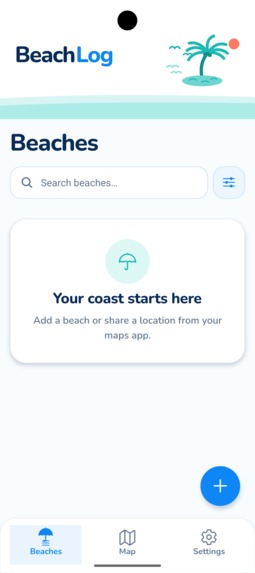
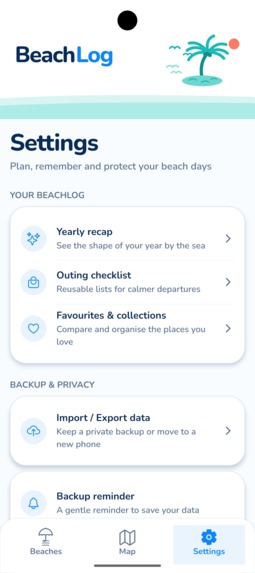
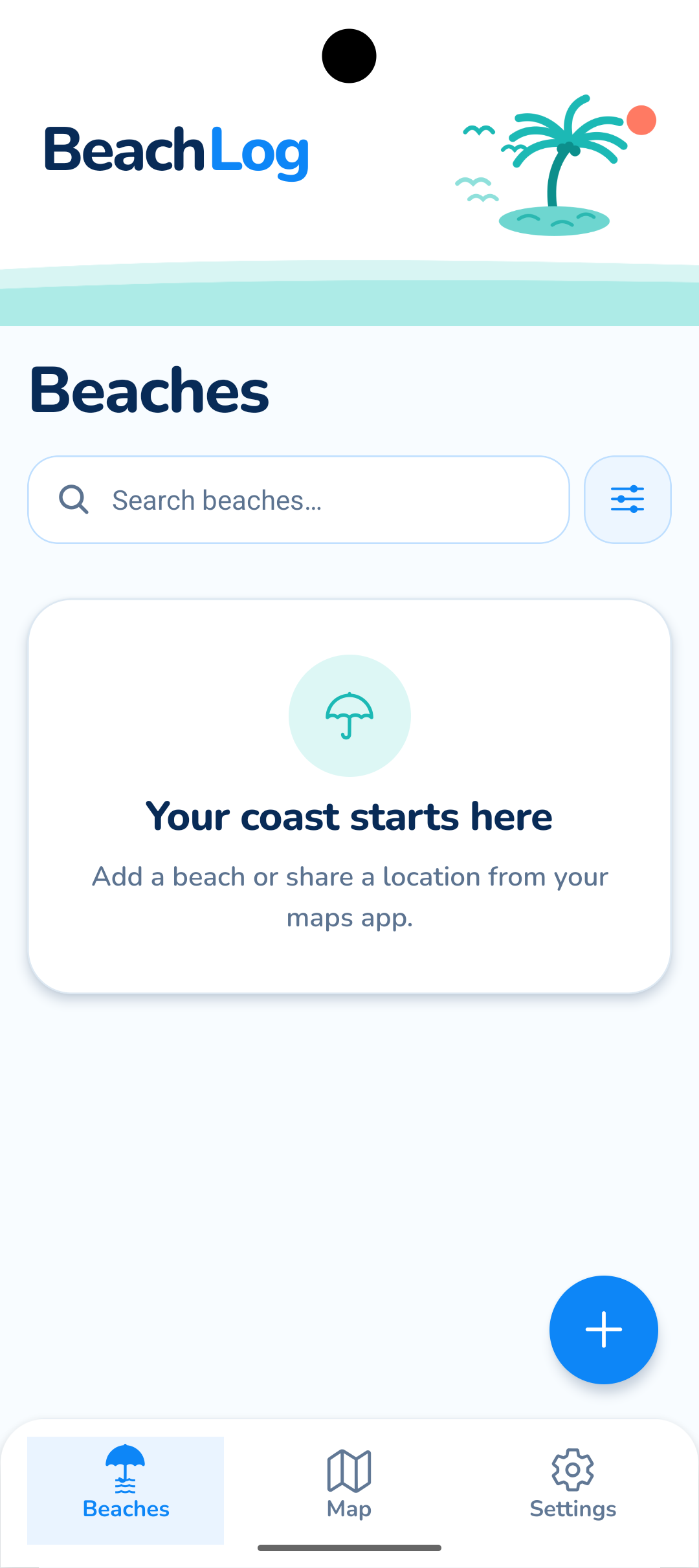
BeachLog is a private, offline-first companion for beach lovers. It lets people:
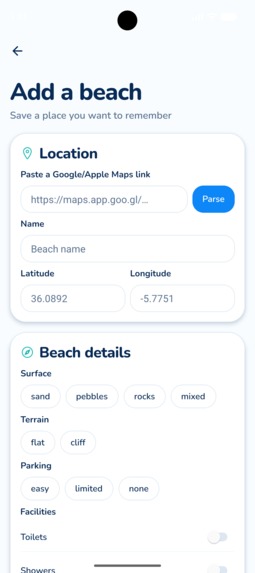
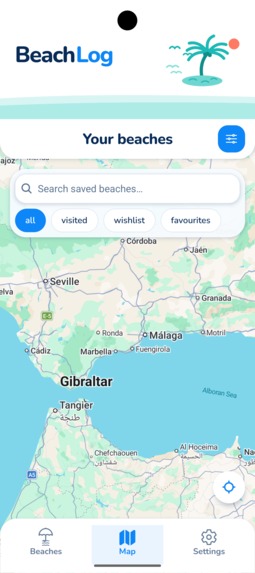
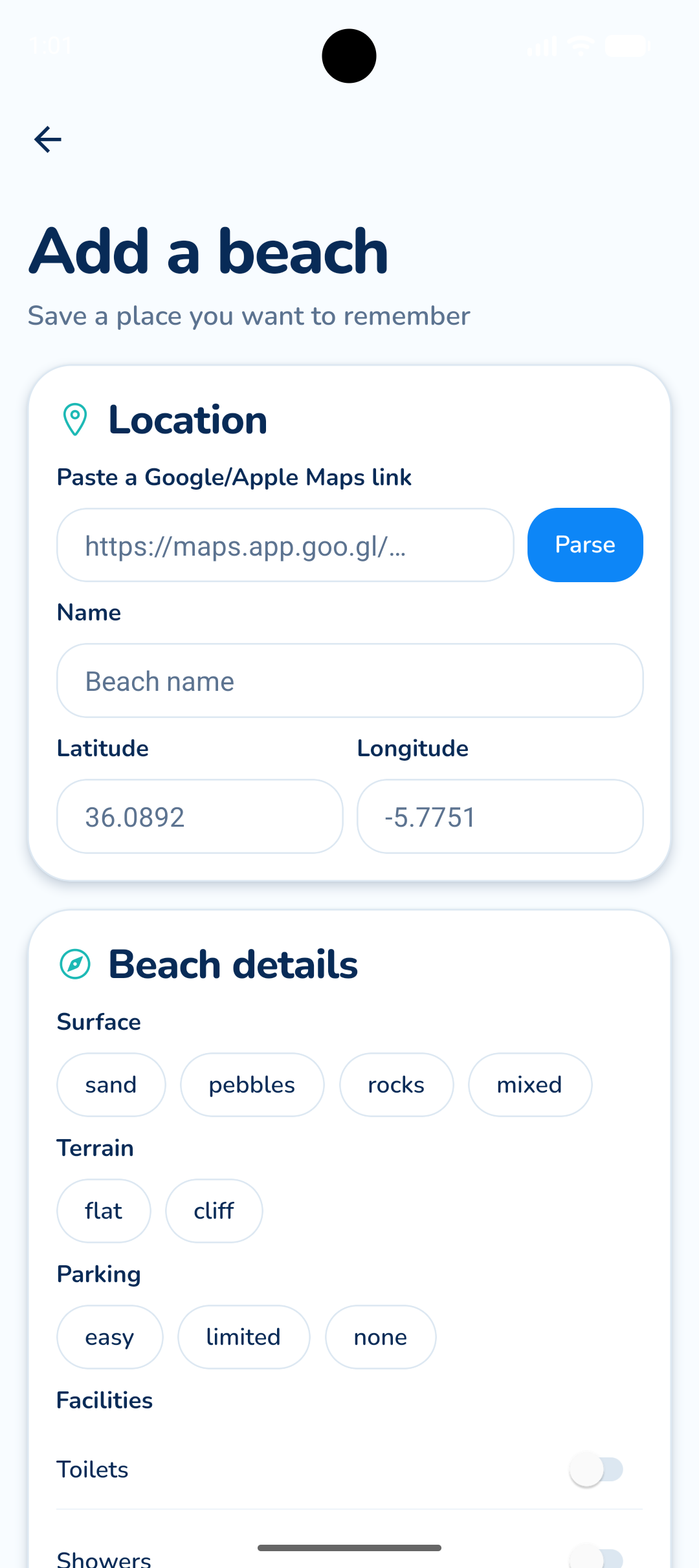
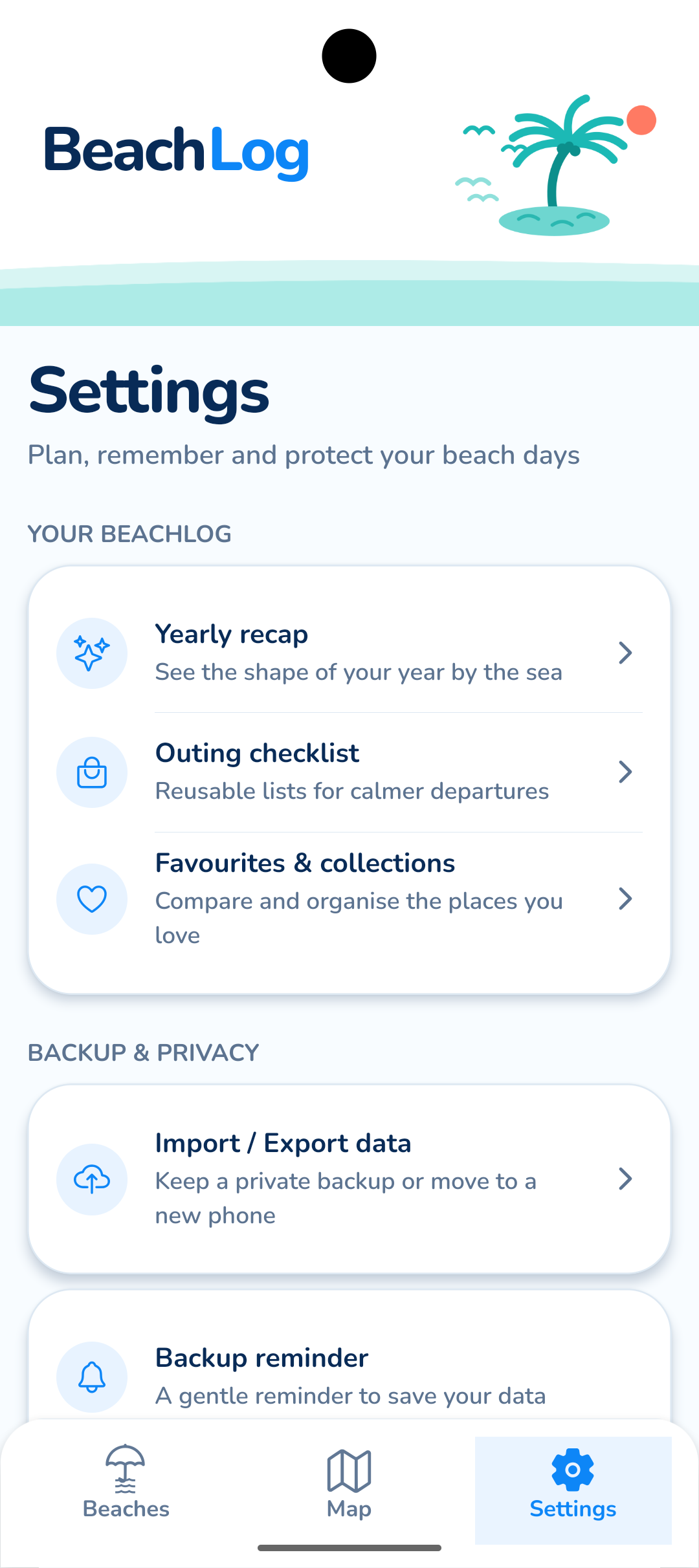
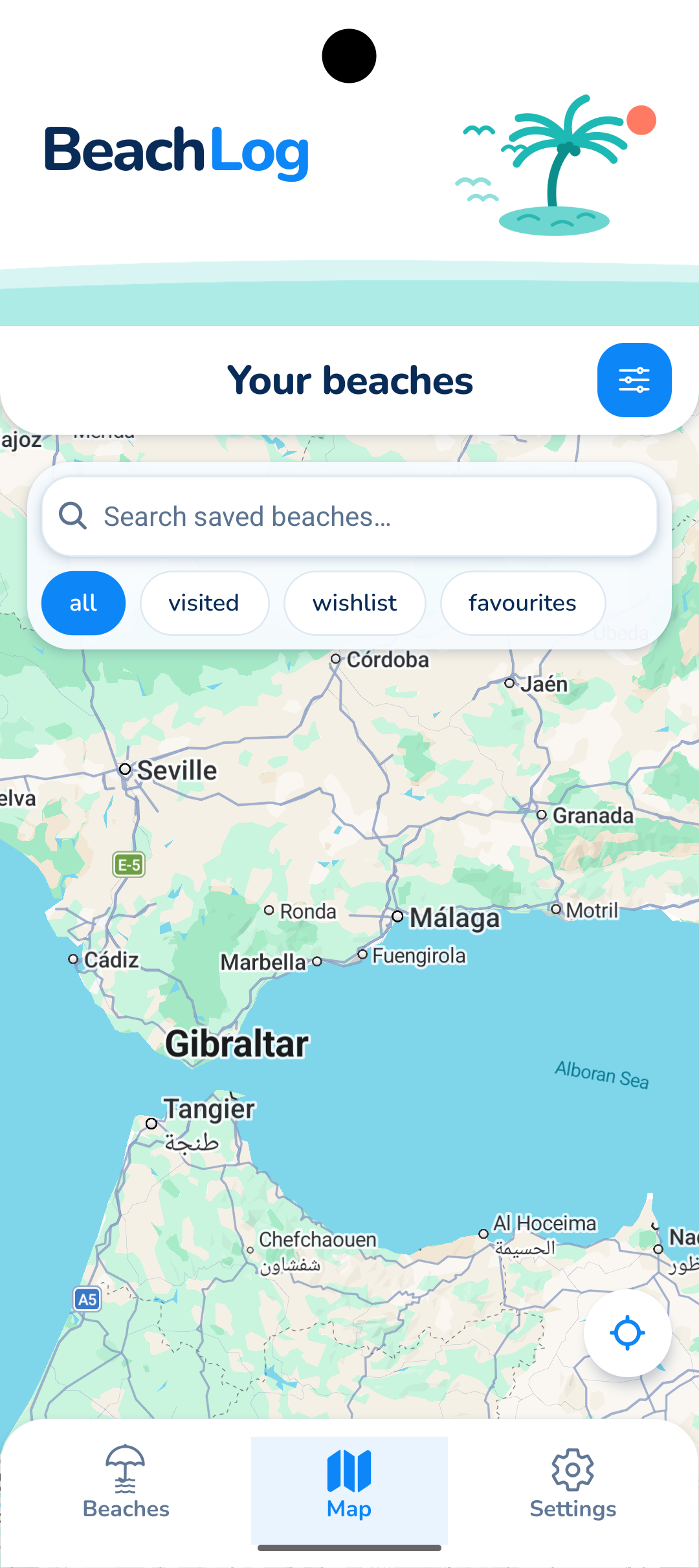
- save and organize favorite beaches
- log visits and build a personal beach history
- rate beaches after each trip
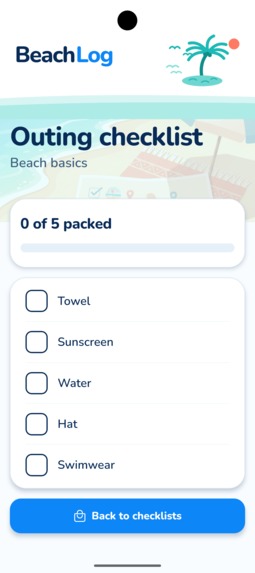
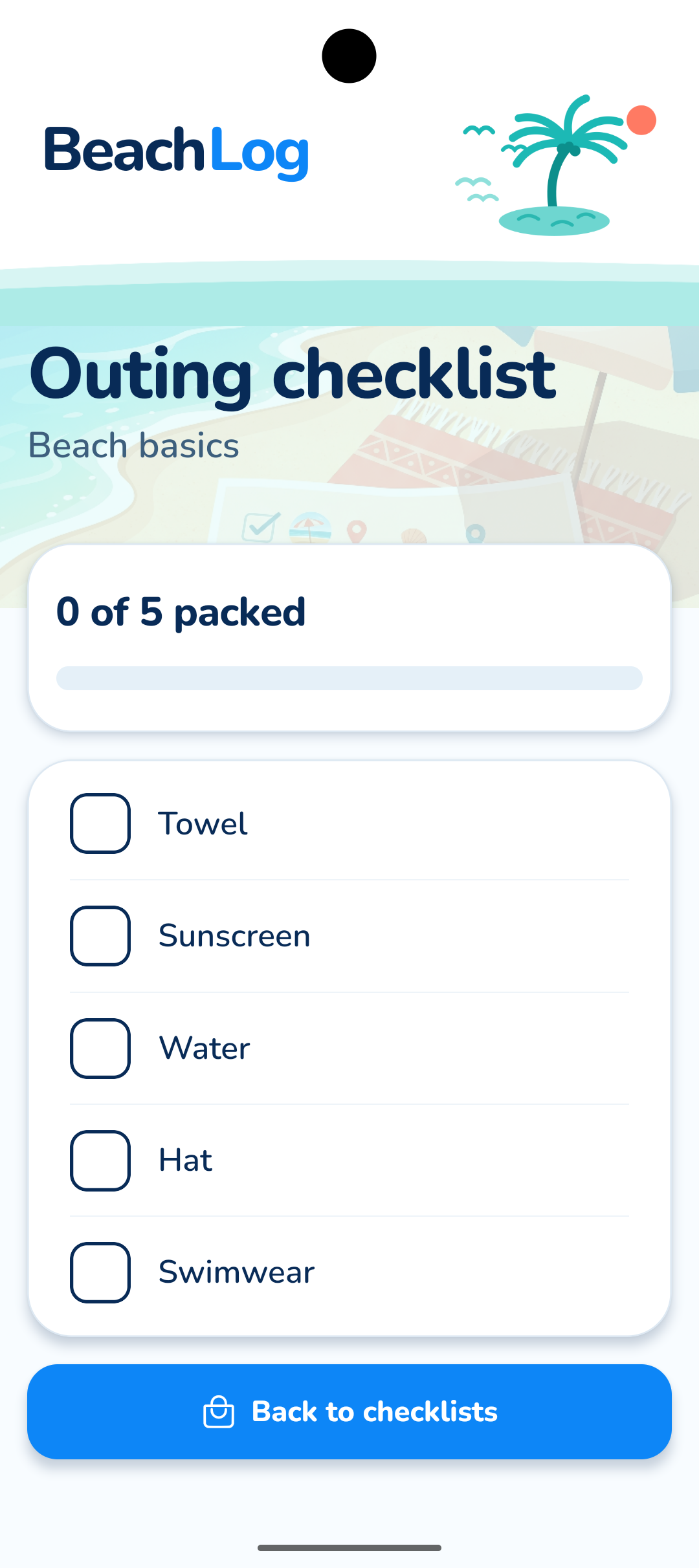
- prepare reusable packing lists
- revisit past seaside adventures
- keep their information on their own device
The result is one focused place for planning a beach day and remembering it afterward, without requiring an always-on connection or a cloud account.
How we built it
BeachLog is being built as an Android app around a local-first experience. Core beach, visit, rating, and packing-list data remains useful offline and stays private on the device.
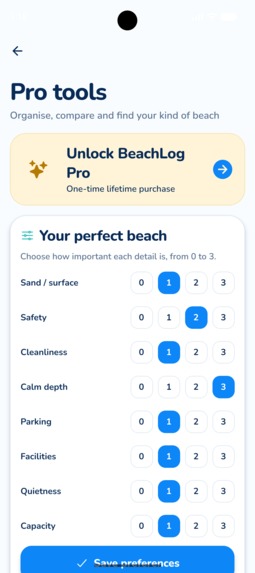
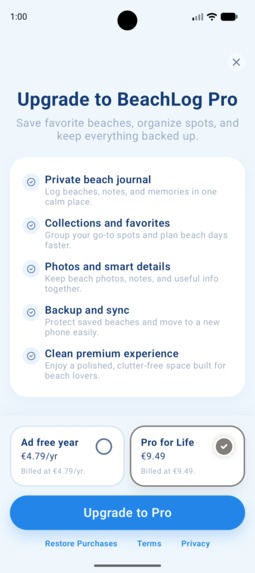
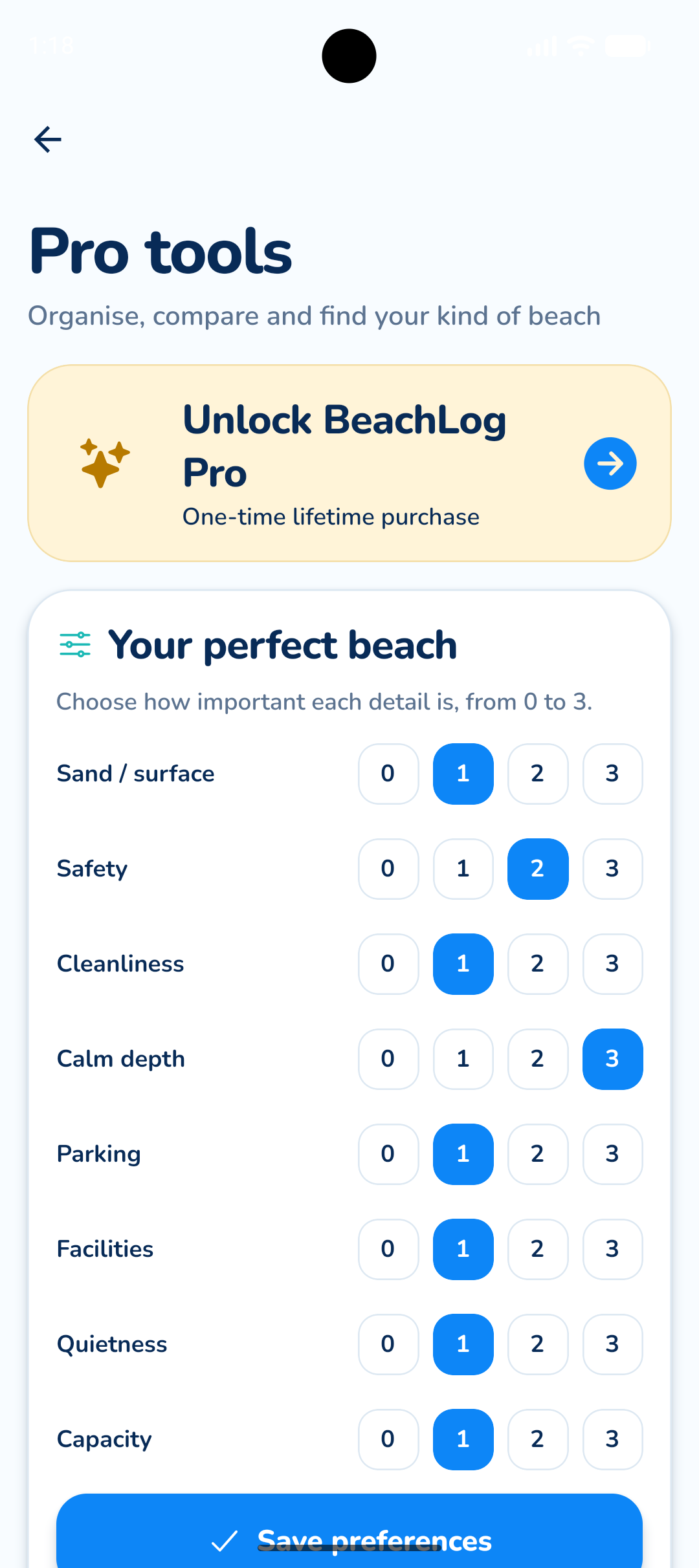
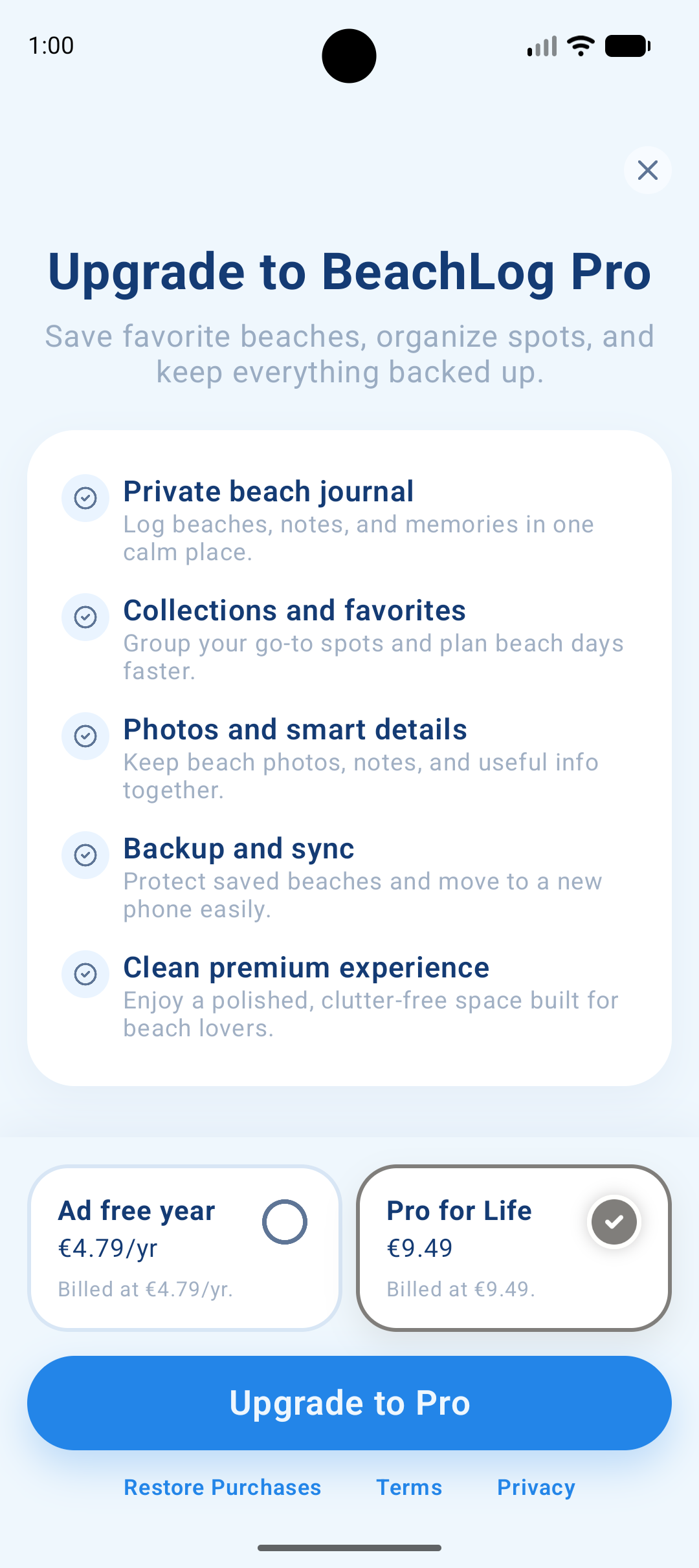
For monetization, BeachLog integrates RevenueCat as the subscription and entitlement layer. RevenueCat provides the paywall foundation and connects premium access to Google Play, keeping purchase logic separate from the core product experience. The Android build is currently distributed through a closed Google Play alpha track for testing.
Challenges we ran into
The main product challenge was making several small tools—favorites, visit logging, ratings, packing, and memories—feel like one coherent companion rather than a collection of unrelated screens.
A second challenge was combining an offline-first, privacy-conscious app with store-backed subscriptions. The everyday experience must remain dependable when connectivity is poor, while purchase state and entitlements still need to behave correctly when the app reconnects.
Configuring and testing the full monetization path across the app, Google Play, and RevenueCat also required careful coordination: products, offerings, paywalls, tester access, and purchase validation all have to agree.
Accomplishments that we're proud of
We are proud to have turned the idea into a focused Android experience that works offline, keeps personal beach history private, and brings planning and memories together in one place. We also completed the core RevenueCat and Google Play configuration, created the paywall experience, and moved BeachLog into closed alpha testing.
What we learned
BeachLog reinforced that offline-first design is more than data storage—it shapes navigation, state handling, and the promises a product makes to its users. We also learned how much end-to-end detail sits behind a simple paywall, and how RevenueCat can centralize that complexity while keeping the app experience focused.
What's next for BeachLog
Next, we plan to gather feedback from alpha testers, complete end-to-end purchase testing, refine the paywall and premium experience, and keep improving the way people plan, record, and relive their beach days.
Built With
- android
- beach
- google-play
- ios
- revenuecat

Log in or sign up for Devpost to join the conversation.