-
-
-
-
-
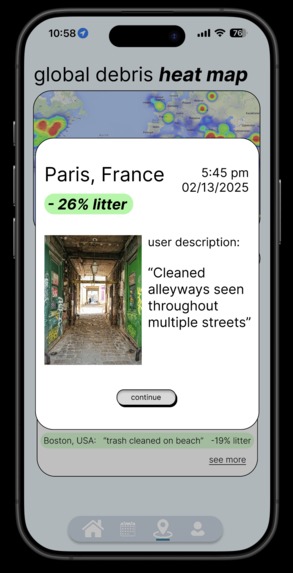
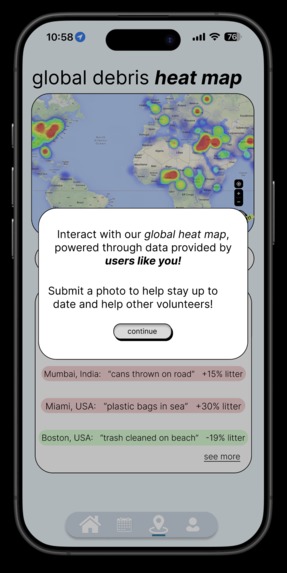
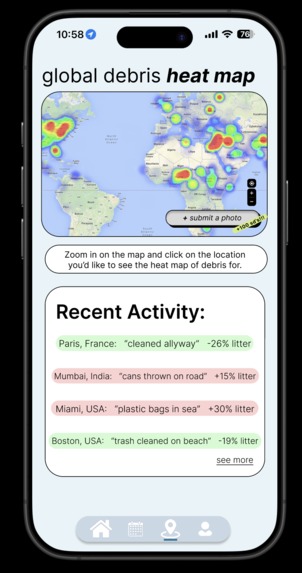
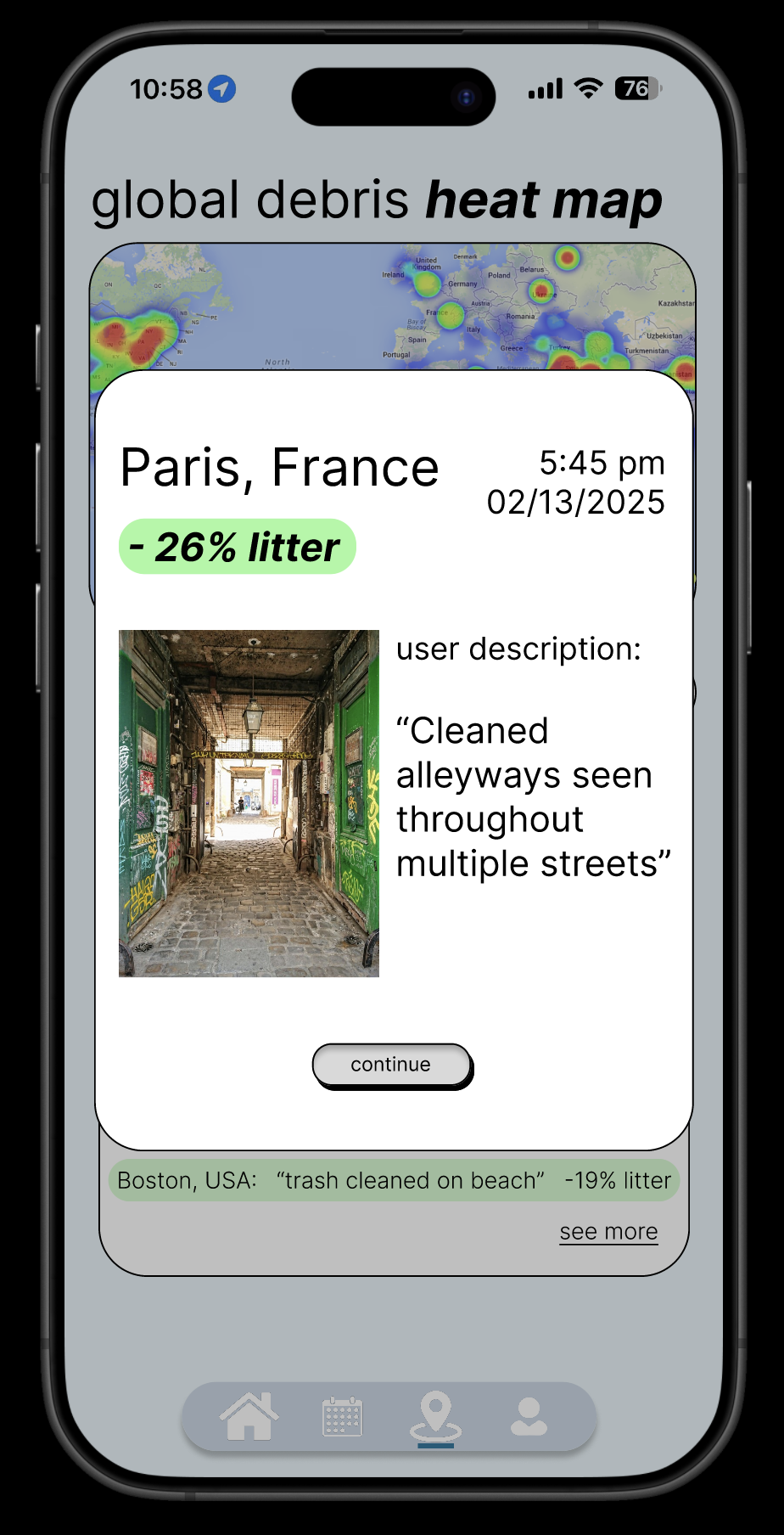
Example of user inputted data that powers our map.
Inspiration
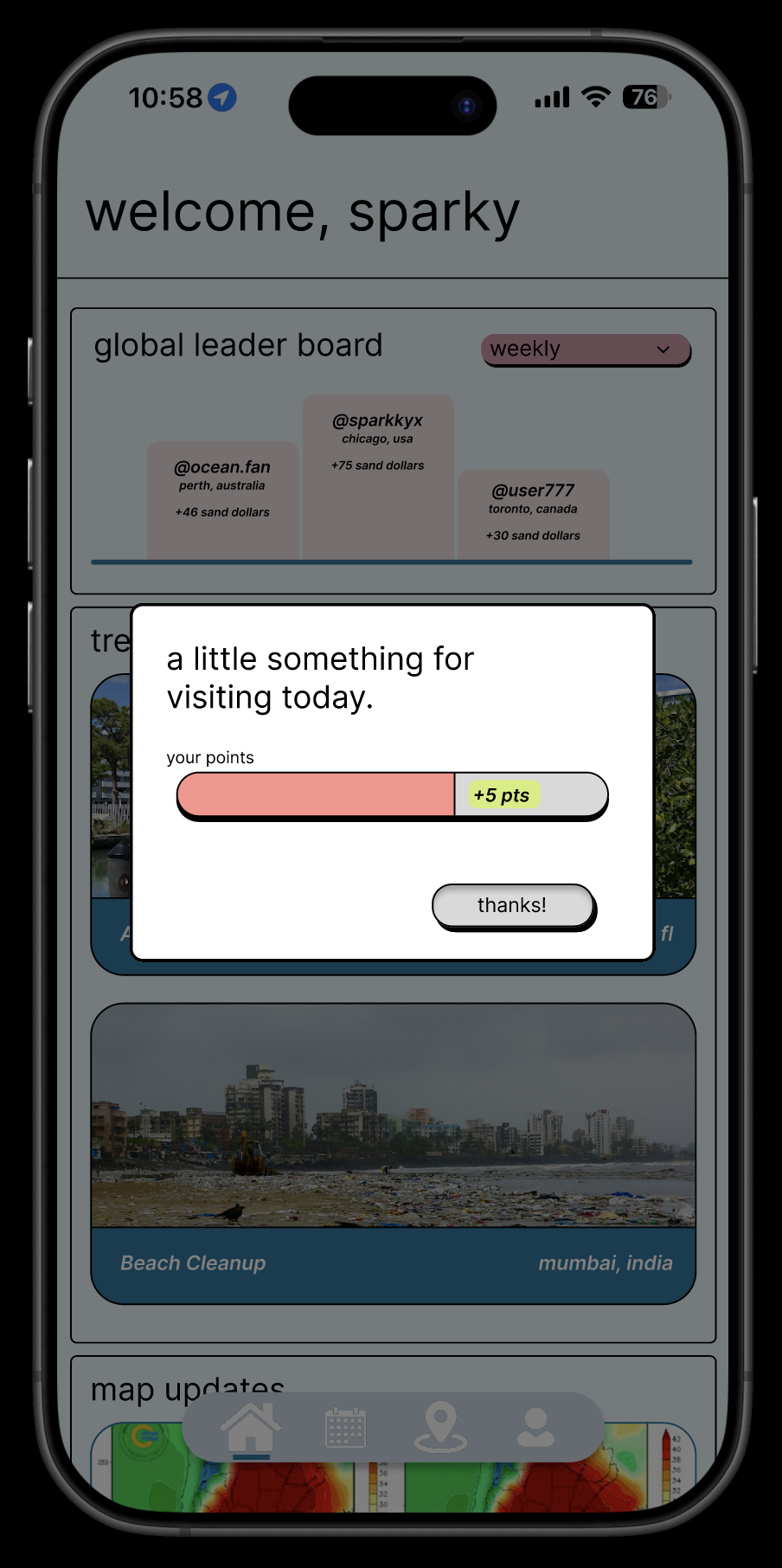
We were inspired by the Seas the Design track - chosen because ocean and beach conservation is very important to us. Research shows that 52% of the world's turtles have consumed plastic waste, which can rupture their internal organs and cause intestinal blockages, causing the turtles to essentially starve to death. Knowing these distressing facts, we agreed that most people want to help, but may not be aware of volunteering opportunities near them or of ways to collect information. We are also inspired by recent technological advances in AI/ML. We believe if leveraged properly, AI/ML can help maximize our impact. As such, we used Figma to create an app that would allow people to submit pictures of trash on their beaches and view a heat map of where trash is most concentrated, alongside being able to view and organize volunteering opportunities to help clear both the trash and the map.
What it does
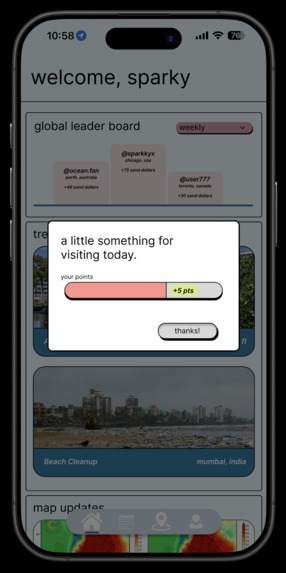
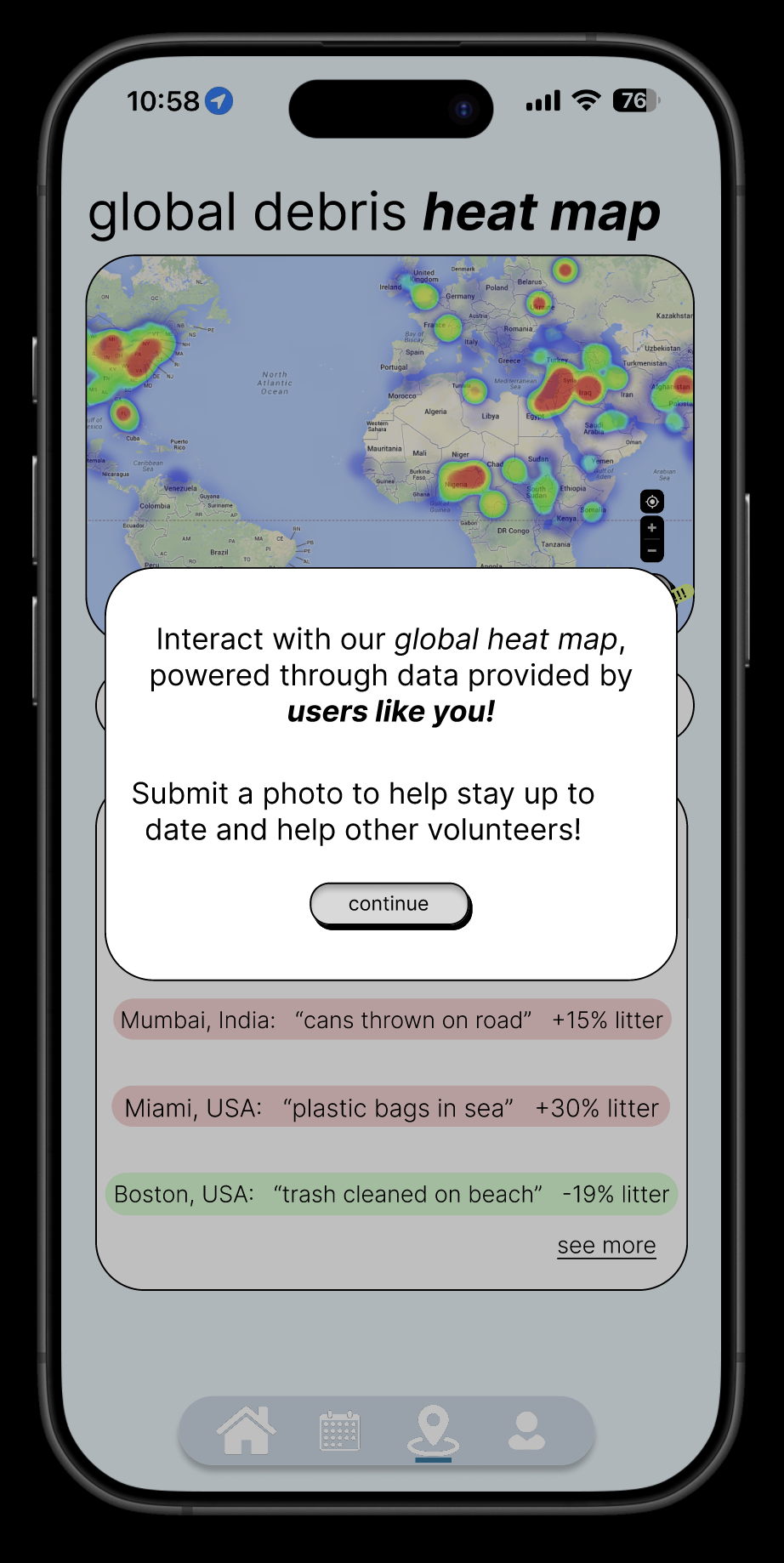
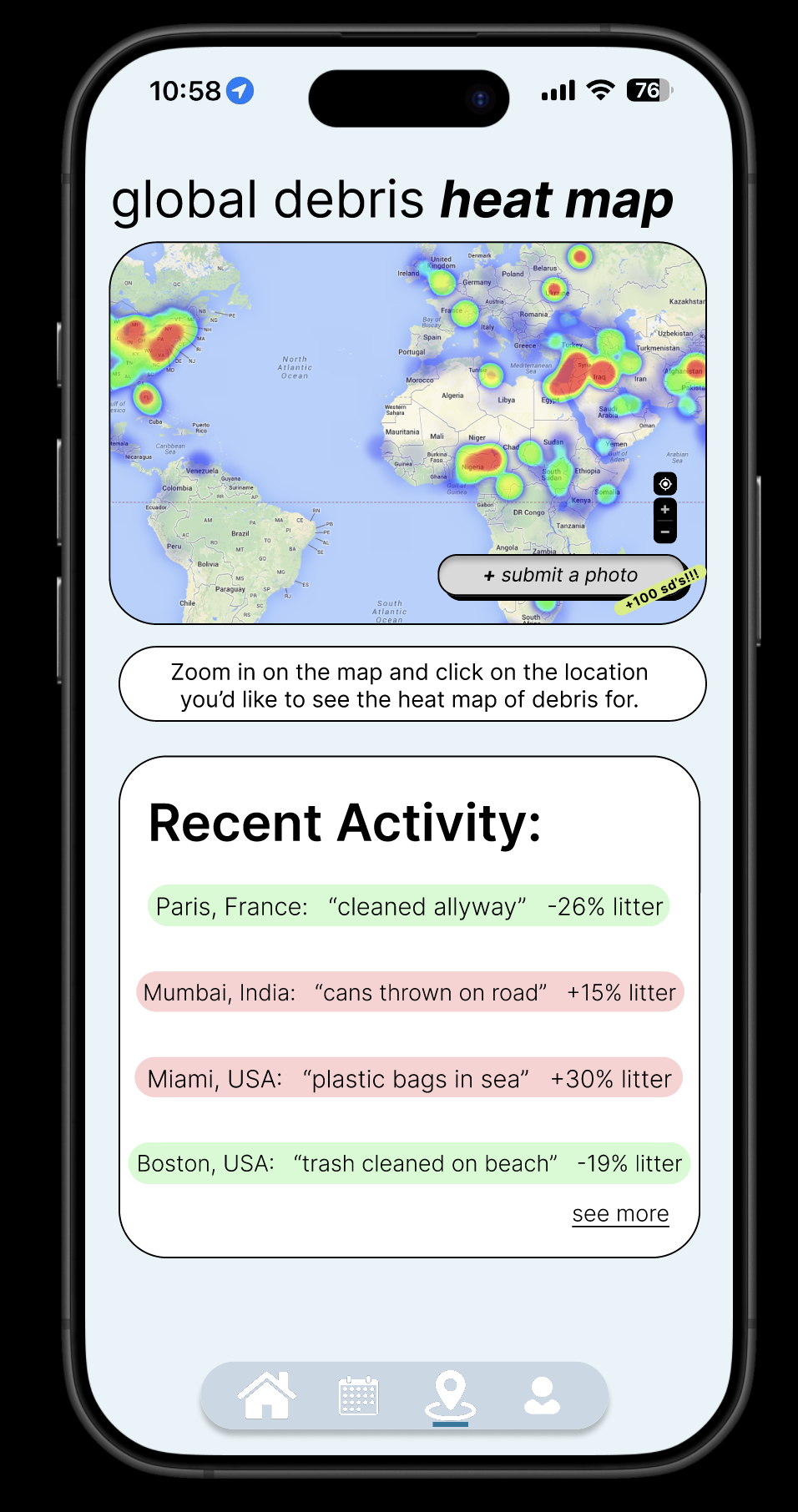
The foundation project is a rewards system called "Sand Dollars" that users are able to trade in for rewards (donations to orgs and vouchers to ocean-friendly businesses), through partnerships with local companies. Users can earn sand dollars by participating in community initiatives to benefit the community and the ocean. Users also have the option to see a global heat map of where most trash (based on user-reported data and images) is located in order to take steps to help clean it up. When a user takes an image of trash on the beach, this information is analyzed and output to the user, while also sent to internal systems for processing in order to contribute to and create a more accurate heat map.
How we built it
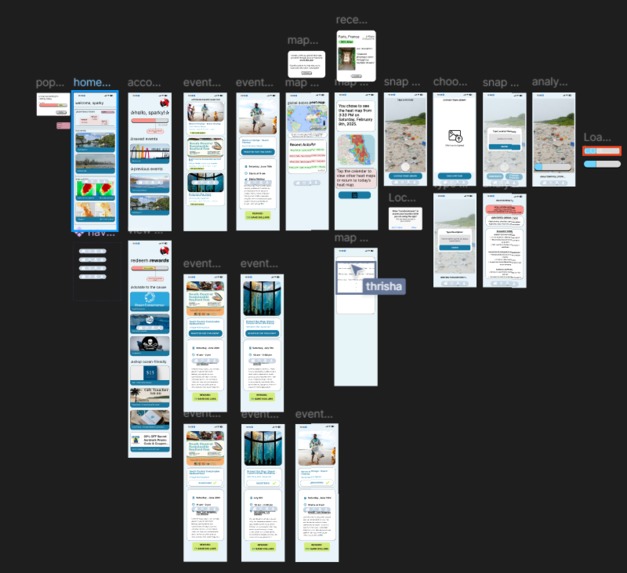
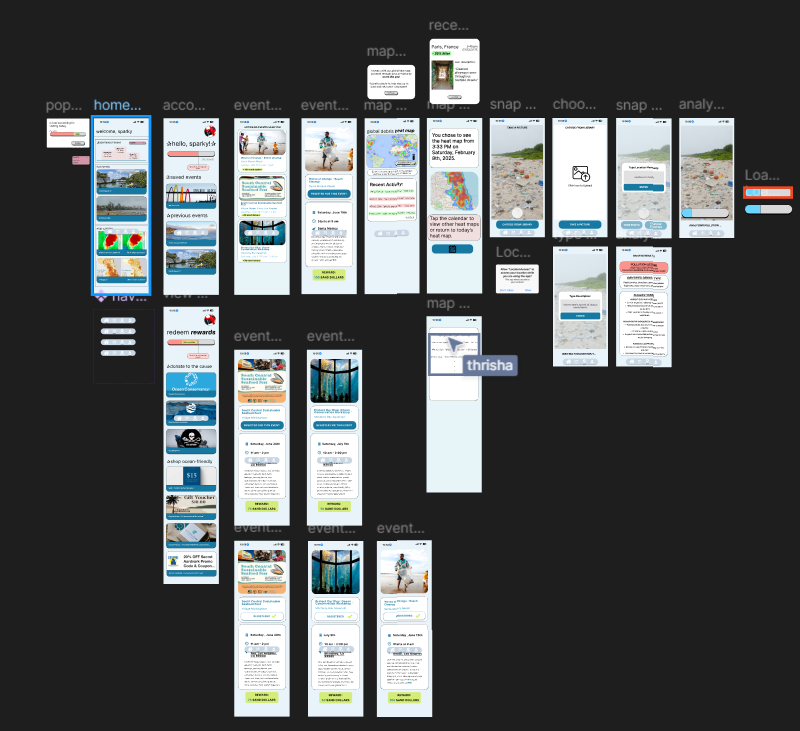
We built our project using Figma, design knowledge, and stakeholder insights to create an intuitive and user-friendly solution.
Challenges we ran into
One challenge we faced was during ideation. Initially, we assumed that only those near beaches could contribute to reporting and cleaning up litter and debris pollution in oceans. However, through research, we realized that pollution from anywhere can ultimately reach the ocean through rain, drains, wind, and wildlife. This led us to broaden our approach-rather than limiting the application to coastal areas, we aimed to include and educate those living inland, spreading awareness about how everyone can play a role in reducing ocean pollution.
A technical challenge we ran into was ensuring harmonious alignment of all of our Figma pages - we have a lot of moving parts in our project, so making sure that features such as the navigation bar show up properly on each page are essential in ensuring the cohesion of the project.
Accomplishments that we're proud of
We take pride in our concept and integration of AI/ML. Volunteering is important to all of us, and any ways to encourage other users to take the step to better their community and planet is a welcome one. By encouraging users to upload photos, we fuel a real time debris pollution heat map for all to see. Our data collection leverages the concept of existing AI/ML technologies to classify user images and upload the resulting data in the database.
What we learned
What we learned is how to use Figma, as much of our group was not entirely familiar with Figma before beginning the project. We also honed our skills in design and learned from other apps such as Starbucks to what keeps users coming back.
What's next for Beach Believers
Next, we want to actually create and code the app and ensure that it is compatible with IOS and Android. After that, we want to create the website version of our app to ensure accessibility regardless of device.
Built With
- figma

Log in or sign up for Devpost to join the conversation.