-
-
PREVIEW
-
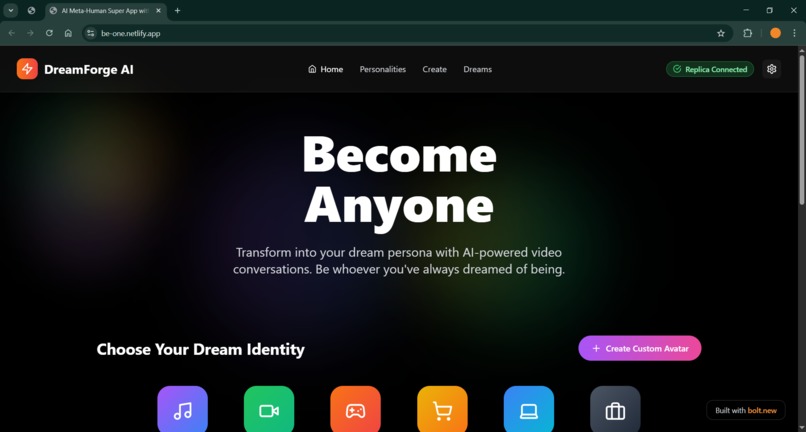
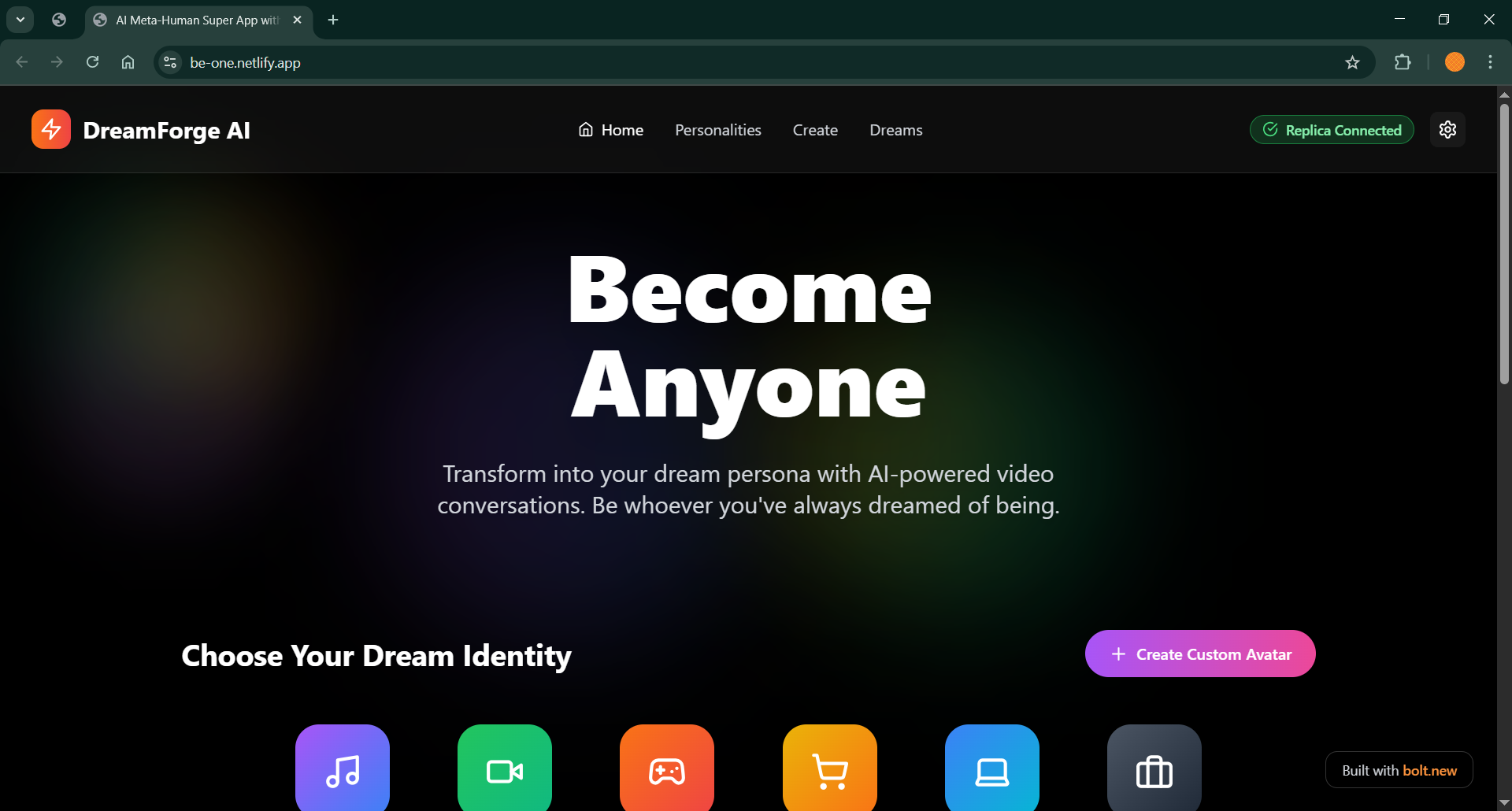
CORE UI
Inspiration
I wanted to be a doctor. Now I can’t even relate — life took me elsewhere. But deep down, I still wonder what it would’ve felt like to see myself as a medical professional. That seed of curiosity sparked be.one. Thanks to Tavus, I no longer have to wait for another lifetime. I can now be the version of myself I once dreamed of — or explore entirely new ones — through personalized, AI-powered video agents. be.one is about reclaiming possibility.
What it does
be.one is a platform that lets users become anyone — not in a fictional or roleplay sense, but through AI-driven video identity. Using Tavus's avatar generation and conversational AI capabilities, it creates dynamic, lifelike video agents that speak, respond, and express as “you” — or as the version of you you’ve always imagined. Whether it's a doctor, a teacher, an astronaut, or a future CEO, be.one allows you to visualize and interact with those versions of yourself — powered by real conversations.
How I built it
I used Bolt.new as my development framework to quickly design, prototype, and iterate on the user experience — from agent setup to video playback and user onboarding. For the core AI avatar functionality, I integrated Tavus, which provided the tools to generate photorealistic, personalized avatars capable of dynamic video responses. The result is a seamless solo-developed system that lets users upload a prompt, select a persona, and see themselves come to life in a fully AI-generated video dialogue.
Challenges I ran into
Creating an emotional connection with an AI-generated self wasn’t easy. The biggest challenge was making the experience feel authentic — not uncanny or gimmicky. Integrating Tavus required careful calibration of inputs and scripting logic to make the avatars feel truly "you." On the frontend, crafting an interface that balances imagination with usability — while still maintaining speed — pushed me to rethink how identity-based tools should feel.
Accomplishments that I'm proud of
As a solo creator, launching a platform that allows people to connect with alternative versions of themselves — visually and emotionally — is something I’m deeply proud of. Seeing someone’s face light up when they see themselves speak as a doctor, artist, or leader for the first time — that’s the moment be.one exists for. It’s not just technology. It’s identity, reimagined.
What I learned
I learned that aspiration can be engineered — not to fake reality, but to give people a lens to explore who they could be. I also saw how tools like Bolt.new and Tavus can empower solo developers to deliver cinematic, AI-rich experiences with minimal overhead. More than anything, I learned that digital identity doesn’t need to be static — it can be expressive, interactive, and profoundly personal.
What's next for be.one [Conversational Video Identity Engine] Next, I’m expanding to profession-based journeys — so users can simulate conversations, challenges, and dialogues specific to a career or life path. I’m also building a “memory” layer so the avatars can retain context over multiple interactions. Eventually, be.one will become a platform where anyone — regardless of background — can explore aspirational versions of themselves and converse with the lives they never got to live.
Built With
- bolt.new
- tavus

Log in or sign up for Devpost to join the conversation.