-
-
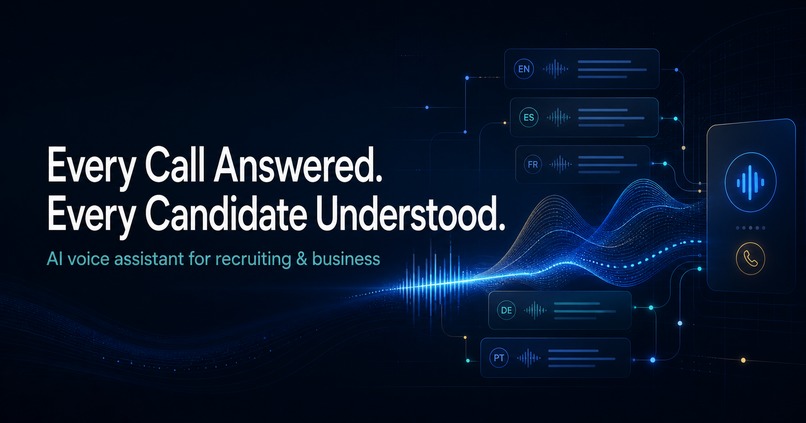
Landing Page
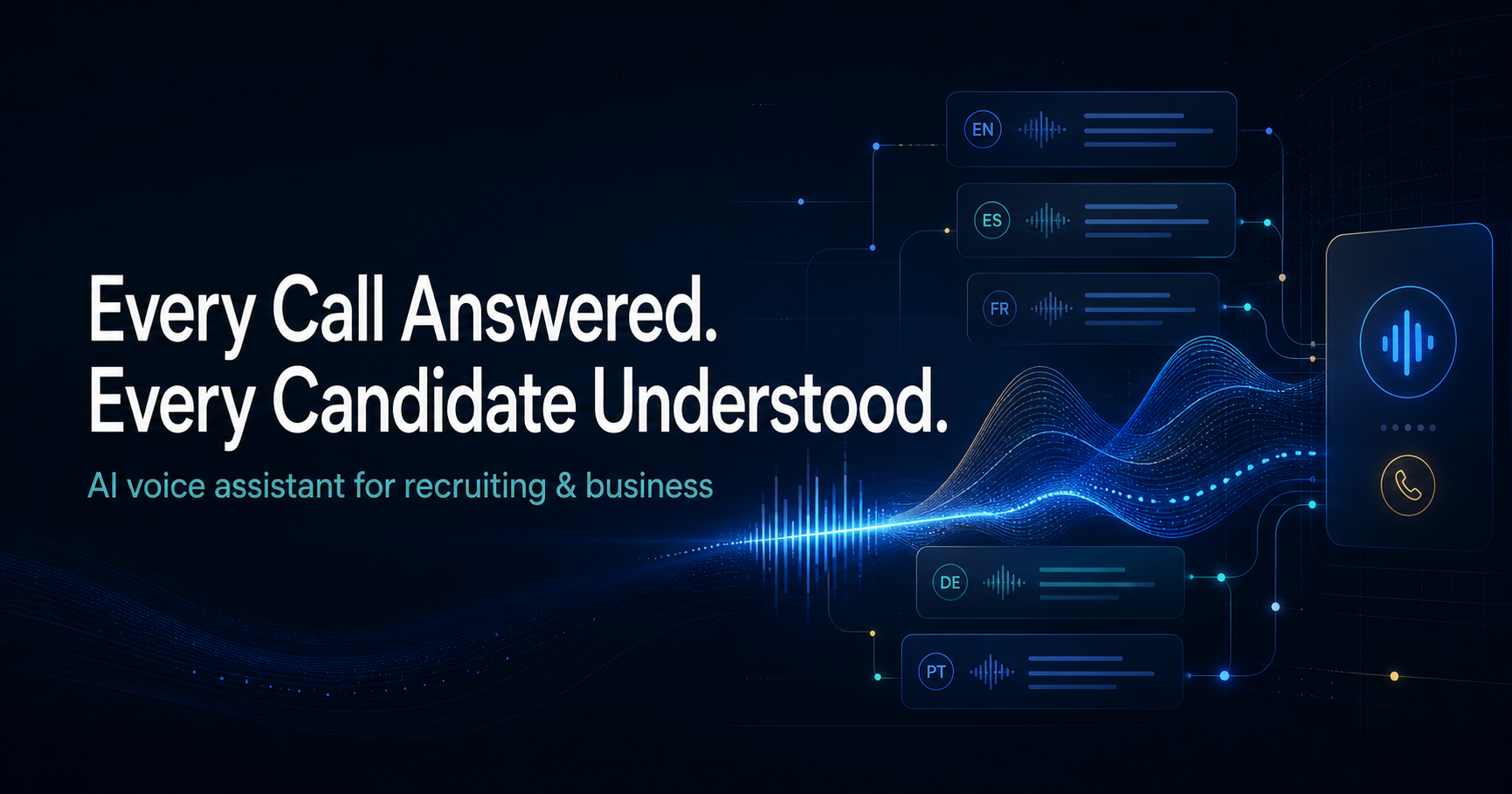
Inspiration
Recruiting opportunities often begin with a phone call, but candidates do not always call during business hours or communicate most comfortably in English. Missed calls, incomplete voicemails, repetitive screening questions, and language barriers can slow down both candidates and recruiting teams.
BDT CallBridge explores a better model: an always-available multilingual first point of contact that helps people and AI agents move a recruiting conversation forward together—without replacing the recruiters who build trust and make decisions.
What it does
CallBridge is a public, interactive demonstration of an AI voice assistant for recruiting and business communications. It shows how an assistant can:
- Answer candidate and client calls around the clock
- Adapt to a supported language when the caller needs it
- Present an original Spanish conversation alongside an English translation
- Organize qualifications, availability, disposition, and recommended next steps
- Support approved intake, scheduling, routing, and escalation workflows
- Hand context back to a human recruiter instead of making hiring decisions
The experience contains no real candidate data, live telephony, accounts, analytics, or database. All people and contact details shown are fictional demonstration data.
Why WebMCP
WebMCP turns CallBridge from a page an agent can merely read into an experience an agent can operate. The application registers three bounded tools with document.modelContext.registerTool(...):
- show_multilingual_call_demo opens the original Spanish conversation, English translation, or structured call summary.
- explore_recruiting_use_case navigates to the recruiting workflow matching the visitor's goal.
- prepare_consultation_brief creates a visible, non-persistent brief from business type, priorities, and language needs.
Each tool reuses the same React state and scrolling behavior as the human-facing controls. When an agent invokes a tool, the interface updates visibly and the agent receives a structured response. Humans set the goal and remain in control; the agent removes navigation friction and helps them reach the relevant information faster.
How we built it
CallBridge is a responsive React and TypeScript application built with a Next.js-compatible App Router through Vinext and Vite. It is packaged for Cloudflare Workers-compatible execution and hosted publicly with ChatGPT Sites.
Custom CSS creates the animated waveform, call console, translated transcript, configuration panel, sample result dashboard, responsive grids, keyboard focus states, and reduced-motion behavior.
WebMCP tools are registered once on the client with an AbortController lifecycle. Tool execution updates visible UI state, scrolls the relevant section into view, and returns clear content to the calling agent. No tool transmits or persists personal information.
Challenges
The biggest challenge was designing actions that are genuinely useful to agents while remaining narrow, safe, and understandable to humans. We avoided vague do-everything tools and exposed three tasks with explicit JSON schemas and visible outcomes.
We also balanced a realistic recruiting scenario with responsible demo boundaries: no fake performance metrics, invented compliance claims, deceptive live-call behavior, or automated hiring decisions.
Accomplishments
- A polished public experience that explains multilingual recruiting calls in seconds
- Three imperative WebMCP tools connected to visible UI state
- A human-centered model with clear AI disclosure and escalation boundaries
- A zero-storage demo that is responsive, keyboard-friendly, and reduced-motion aware
- Public ChatGPT Sites deployment plus an open-source repository and MIT license
What we learned
WebMCP makes the browser itself a collaboration surface. The best agent tools are meaningful product actions that keep the person oriented by updating the same interface they can see and control.
What's next
Future versions could connect approved telephony, scheduling, and recruiting systems; add consent-based call handling; support more configurable languages; and measure whether agent-guided navigation helps teams reach the right configuration faster. Human oversight, transparent disclosure, and minimal data collection would remain core requirements.
Built With
- chatgpt
- cloudflare-workers
- next.js
- openai
- react
- typescript
- vite
- webmcp

Log in or sign up for Devpost to join the conversation.