Inspiration
The architectural design industry is facing a serious challenge of protecting the intellectual property rights of its creators. In recent years, there has been an increase in the incidents of theft or misuse of copyright of building designs or interior items such as chairs, tables, and others. According to a study by the American Institute of Architects, there were more than 120 cases of copyright infringement in the US until May 2023. On November 2023, Indonesian police arrested a perpetrator who misused a non-commercial architectural design license to build housing. The architect sold an architectural design for non-commercial purposes, only to discover the buyer had used it to develop a residential complex, losses experienced are calculated to reach $40k. The rise of generative AI tools also has sparked lawsuits. Authors and artists claim that these AI systems use their work without permission, raising questions about protectability under copyright law. AI tools, including those used by architects, can generate novel designs. However, reliance on AI may pose copyright risks.Some studios already use AI image generators for design ideas, but the protectability of AI-generated designs remains uncertain
What it does
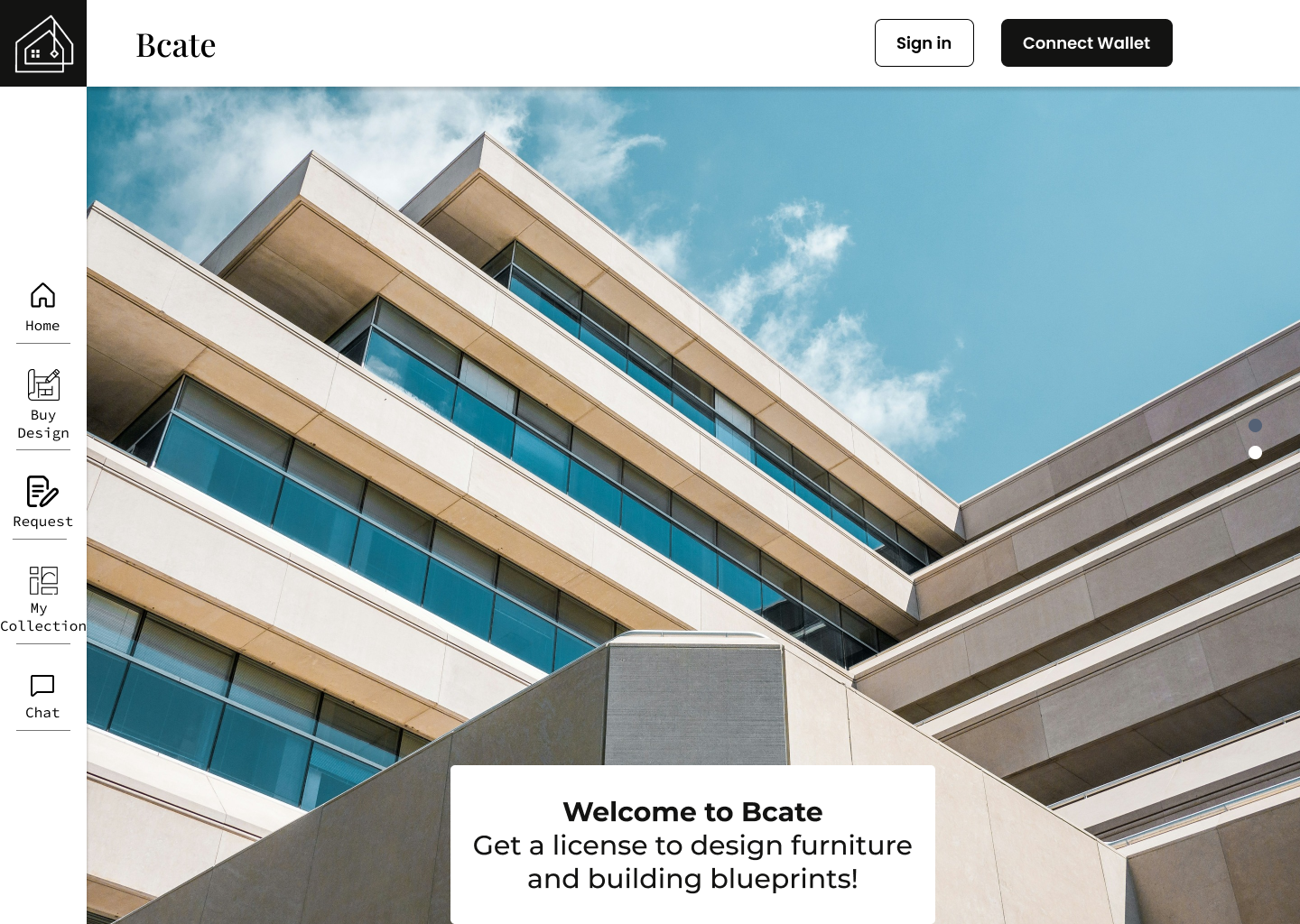
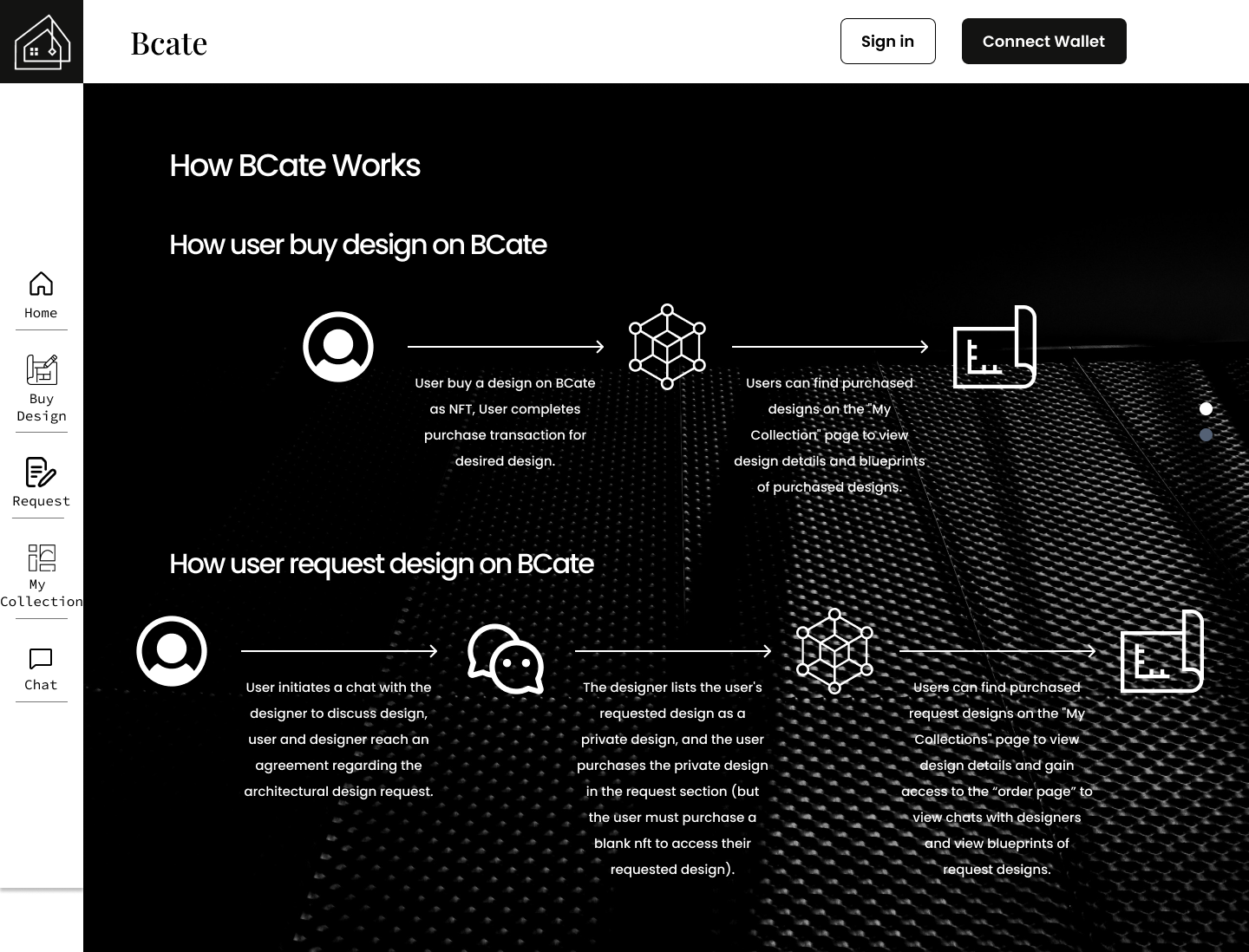
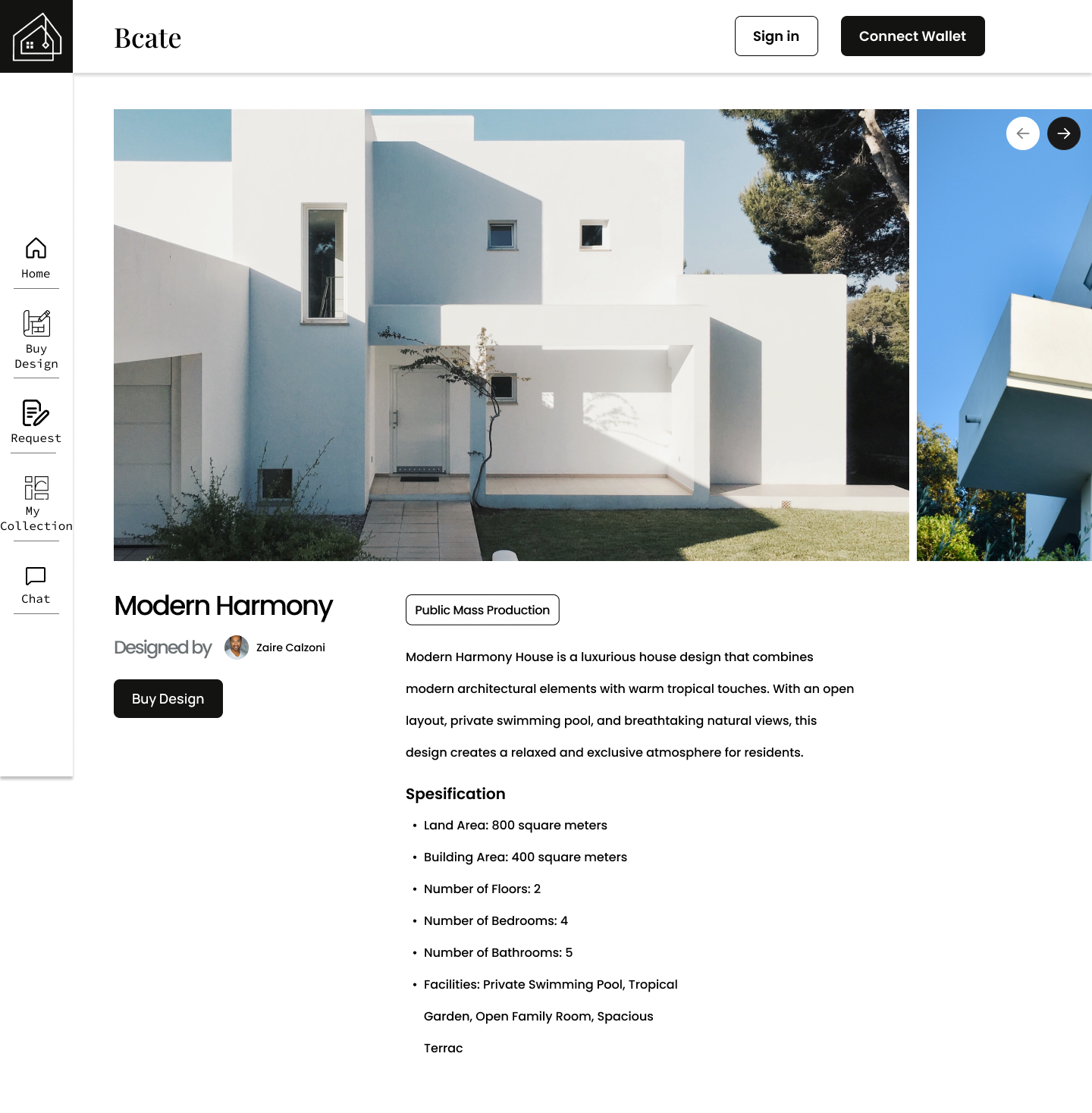
To solve the problem that we mention above, we created BCate. BCate is a platform that aims to solve this problem by using blockchain technology to create a secure and transparent marketplace for architectural designs of buildings and interior goods. BCate allows designers to upload their blueprints and register them as non-fungible tokens (NFTs) on the blockchain. NFTs are unique and indivisible digital assets that can represent the ownership and provenance of any type of digital or physical item. By using NFTs, BCate ensures that the designers have the exclusive rights to their works and can control who can access, use, or modify them. To ensure the sustainability of this project, we have collaborated with more than 15 architects and interior designers in SEA to participate in our project. Our community has also grown tremendously in the last 6 months to increase awareness of our product adoption. We have also responded to several feedbacks and feature requests from our community to continue to provide the best user experience for our users.
How we built it
At BCate, we wanted to create a platform that provides robust protection and seamless usability for both architectural designers and buyers. Our goal was to tackle the increasing issue of copyright infringement in architectural and interior design through a secure, transparent, and user-friendly marketplace. Here’s how we built BCate:
- Collaborating with experts To ensure that BCate meets industry standards, we collaborated with over 15 architects and interior designers across Southeast Asia (SEA). Their expertise allowed us to tailor the platform to the needs of real-world professionals, making it easier to showcase their work while maintaining control over how their designs are used. Their feedback has been invaluable in shaping our features and design flow.
- Our user Feedback Our platform evolved based on feedback from the community of architects, designers, and users. Some key features we developed include
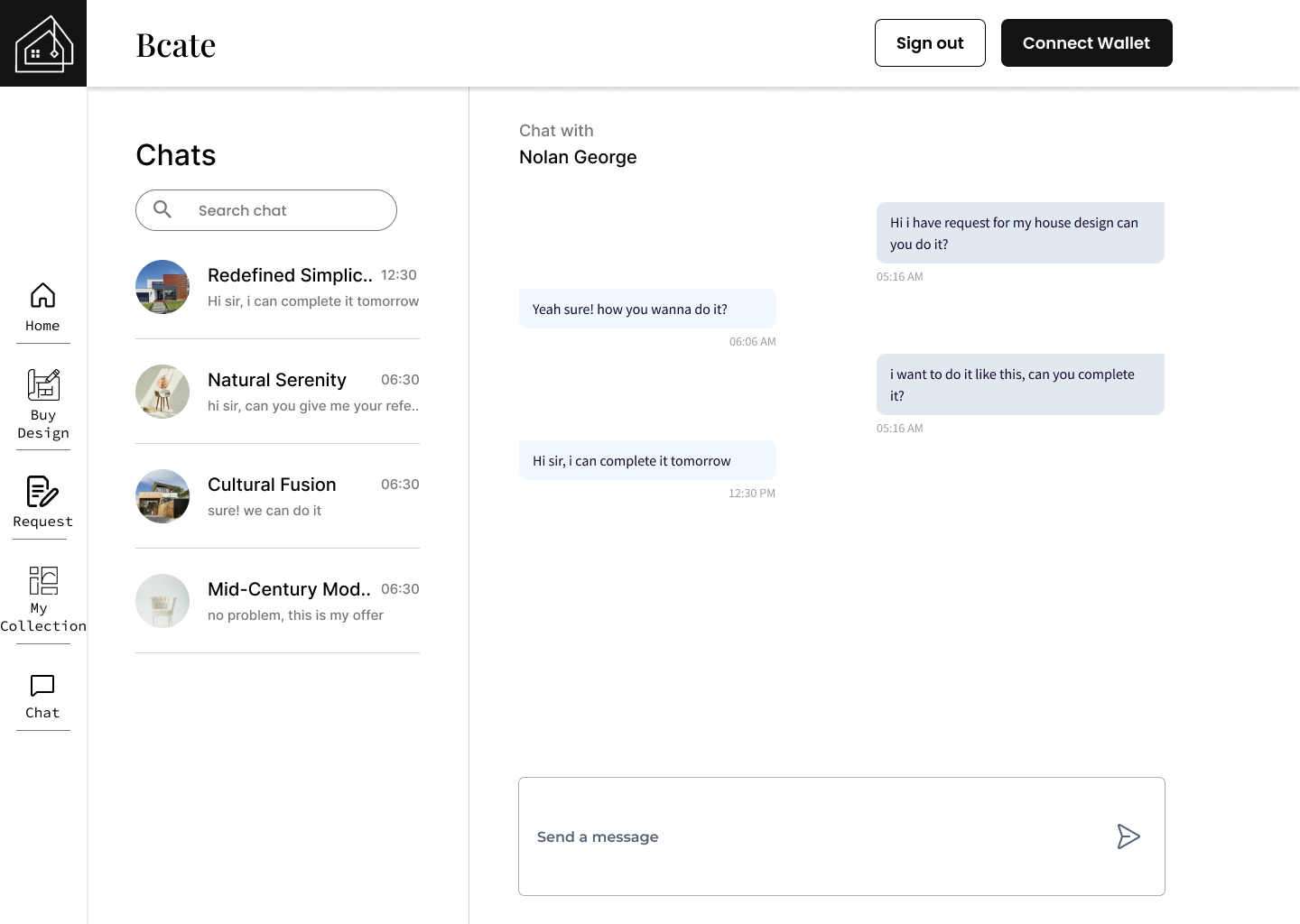
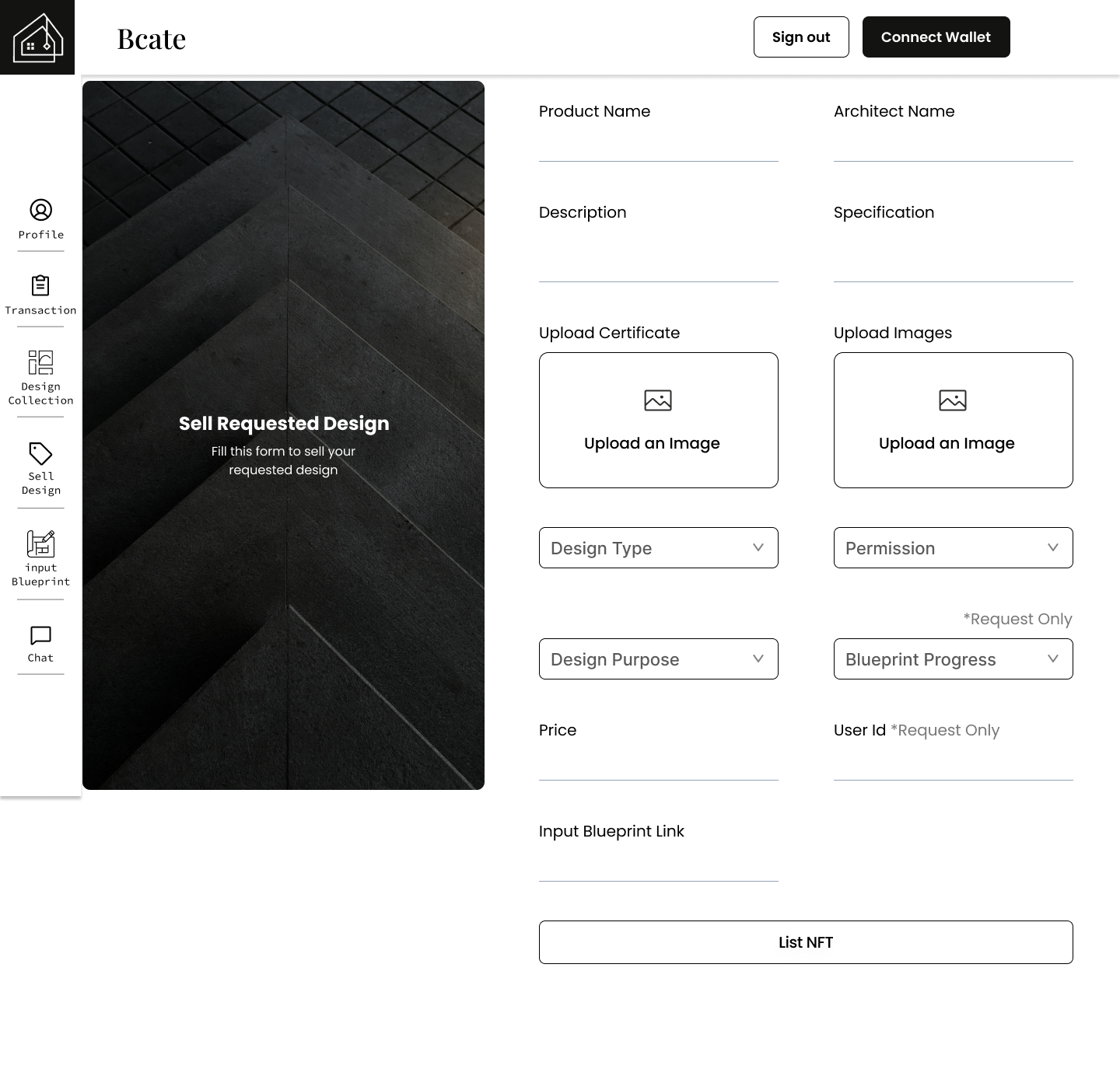
Request Design: Users can request custom, exclusive designs through a direct consultation with designers on the platform. This not only ensures exclusivity but also simplifies the process of matching designers with potential buyers.
Chat with Designers: To facilitate communication, we integrated a chat feature, enabling users to directly consult with designers, ask questions, or make requests for design modifications.
Design Usage Permissions: Designers can set clear terms for how their blueprints can be used, including options for personal (non-commercial) or public (commercial) use. This feature empowers designers to maintain control over their work even after it's sold.
Claim Blueprint Flow: We improved the blueprint claiming flow after a purchase, making it more intuitive for users to access the NFTs they own while ensuring that the process is streamlined and user-friendly.
Challenges we ran into
Defining and enforcing design usage rights was another significant hurdle. Designers needed a way to limit the use of their designs, whether for personal or commercial purposes, while buyers needed clarity on what they could or couldn’t do with purchased designs.
We created two distinct usage permission types: personal (non-commercial) and public (commercial) use. Our platform tracks these permissions on the blockchain, providing a clear and verifiable record of rights for both parties. This ensured that designers maintained control over how their designs were utilized, even after the sale.
What's next for Bcate
As we continue to evolve and adapt to the needs of our users and the architectural design industry, several exciting developments are on the horizon for BCate. Here’s what you can expect in the coming months:
- Listen to user feedback Continuing our commitment to user experience, we will implement a structured feedback loop where users can easily suggest improvements and report issues. This will help us prioritize developments that matter most to our community.
- Expand our Designer We aim to grow our network of architects and interior designers beyond SEA, reaching global talents. By partnering with renowned design institutions and industry events, we will create opportunities for more designers to showcase their work on BCate
Built With
- bttc
- nextjs
- solidity

Log in or sign up for Devpost to join the conversation.