
IMPORTANT: BaziLantern is mobile-first. For the intended experience, please open this link on a phone or use a 390 × 844 browser viewport: https://bazilantern.com/ The desktop UI is not yet optimized or has added more features. Please use the mobile web browser to access it.
Inspiration
Most AI astrology products begin with an open-ended chatbot. That makes the output easy to read, but difficult to inspect or trust. I wanted to build the inverse: calculate first, expose the evidence, and only then ask AI to explain the result.
What BaziLantern does
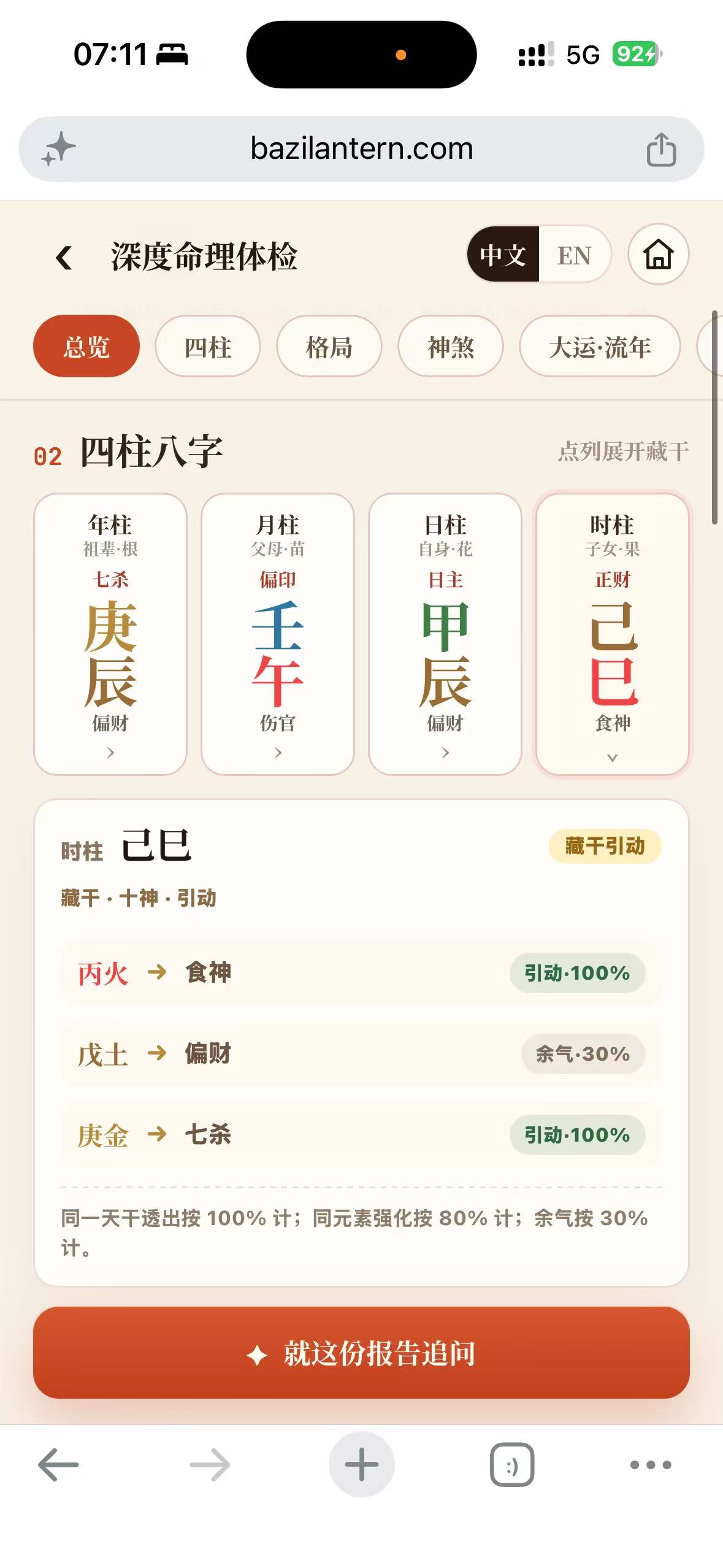
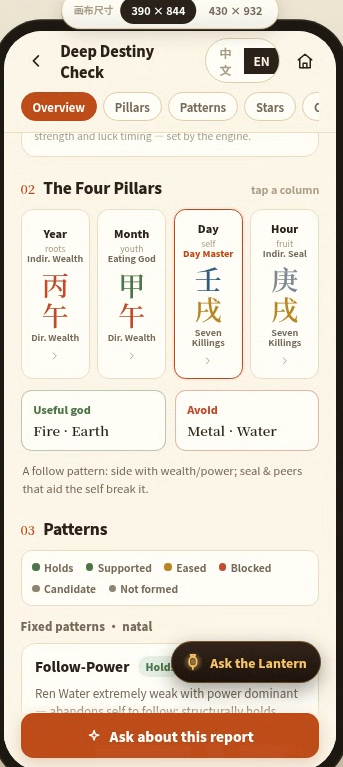
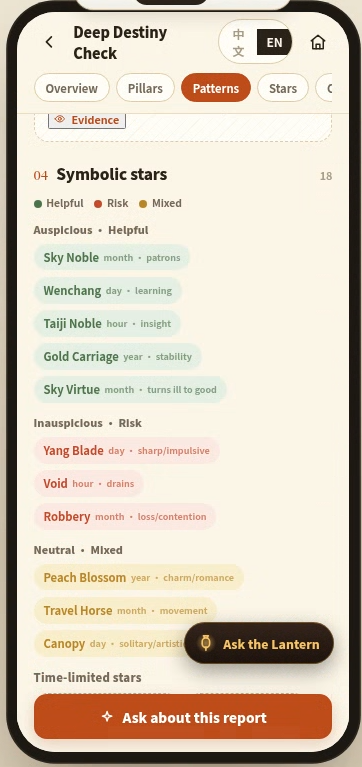
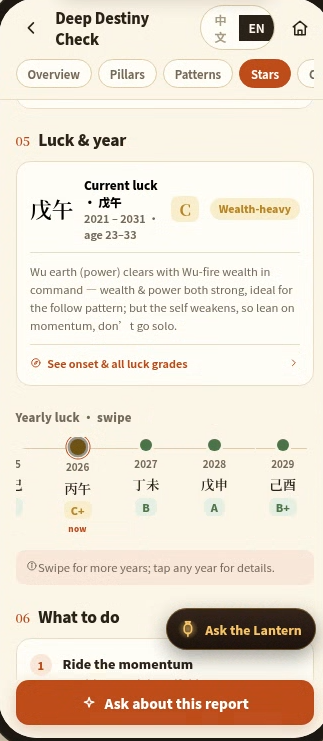
BaziLantern turns a traditional Four Pillars (BaZi) chart into an explainable personal decision map. A deterministic TypeScript engine calculates the chart, hidden stems, Ten Gods, luck cycles, formations, symbolic relationships, scores, confidence, and source status.Furthermore, it employs a complex engine to calculate the time-limited and original patterns formed by the judgment conditions of hundreds of ancient texts on patterns and auspicious/inauspicious stars, the major luck cycles every 10 years, and the annual luck cycles. Tested on 25 friends, the accuracy rate reached over 80%.
The AI layer receives that structured evidence packet and may explain it in accessible language, but it cannot silently rewrite the chart, score, confidence, or provenance. Missing birth time lowers confidence, unknown locations are not guessed, and unresolved source questions remain visible rather than being presented as established facts.
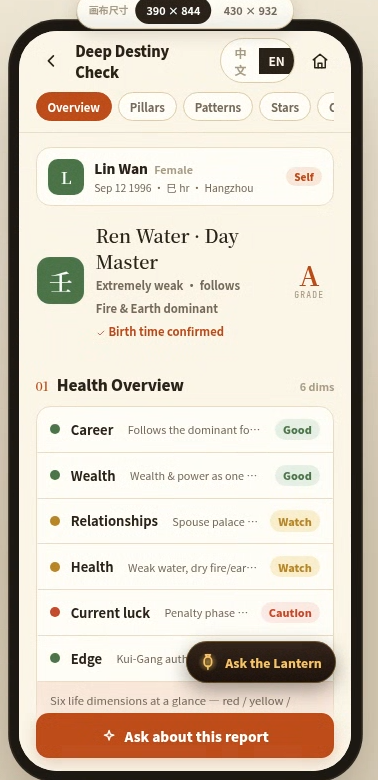
The mobile-first Life Audit presents the result across six dimensions and lets users inspect not only a conclusion, but why it appeared and which rule activated it.
Furthermore, I designed a four-layer memory mechanism. The first layer contains all the raw data from the user's chat; the second layer includes time and event markers; the third layer is a more concise regional summary; and the fourth layer is the most concise master table, with each context including all the content from the fourth layer. I also designed a dream mechanism: when the user goes to sleep at night, the four layers of memory automatically check for conflicting content, content requiring secondary confirmation from the user, and what content the user cares about most, which will emerge the next day for the user to decide.
How I built it
The deterministic domain engine is the source of truth. It produces stable semantic identifiers and evidence contracts consumed by the web UI, regression tests, and review tooling. AI narration sits downstream of those contracts.
During OpenAI Build Week, I used Codex with GPT-5.6 to:
- harden evidence contracts and authority boundaries;
- expand source-aware interpretations;
- add privacy and semantic-version guards;
- generate regression tests;
- review implementation drift across long-running work;
- document exactly where deterministic computation ends and AI narration begins.
GPT-5.6 was used as a development and auditing agent, not as a replacement for the runtime calculation engine.
Challenges
- Translating a traditional rule system without turning ambiguity into fabricated certainty.
- Keeping generated language consistent with deterministic grades and evidence.
- Handling missing birth time, location accuracy, true-solar-time boundaries, and source conflicts.
- Preserving traceability while hundreds of rules and tests evolved across a long-running project.
Accomplishments
- A working mobile-first Life Audit rather than a generic astrology chatbot.
- Deterministic chart and rule computation separated from AI narration.
- Inspectable evidence, confidence, and source status for major conclusions.
- Regression and freeze guards that detect unintended semantic drift.
- A production demo that judges can test without rebuilding the project.
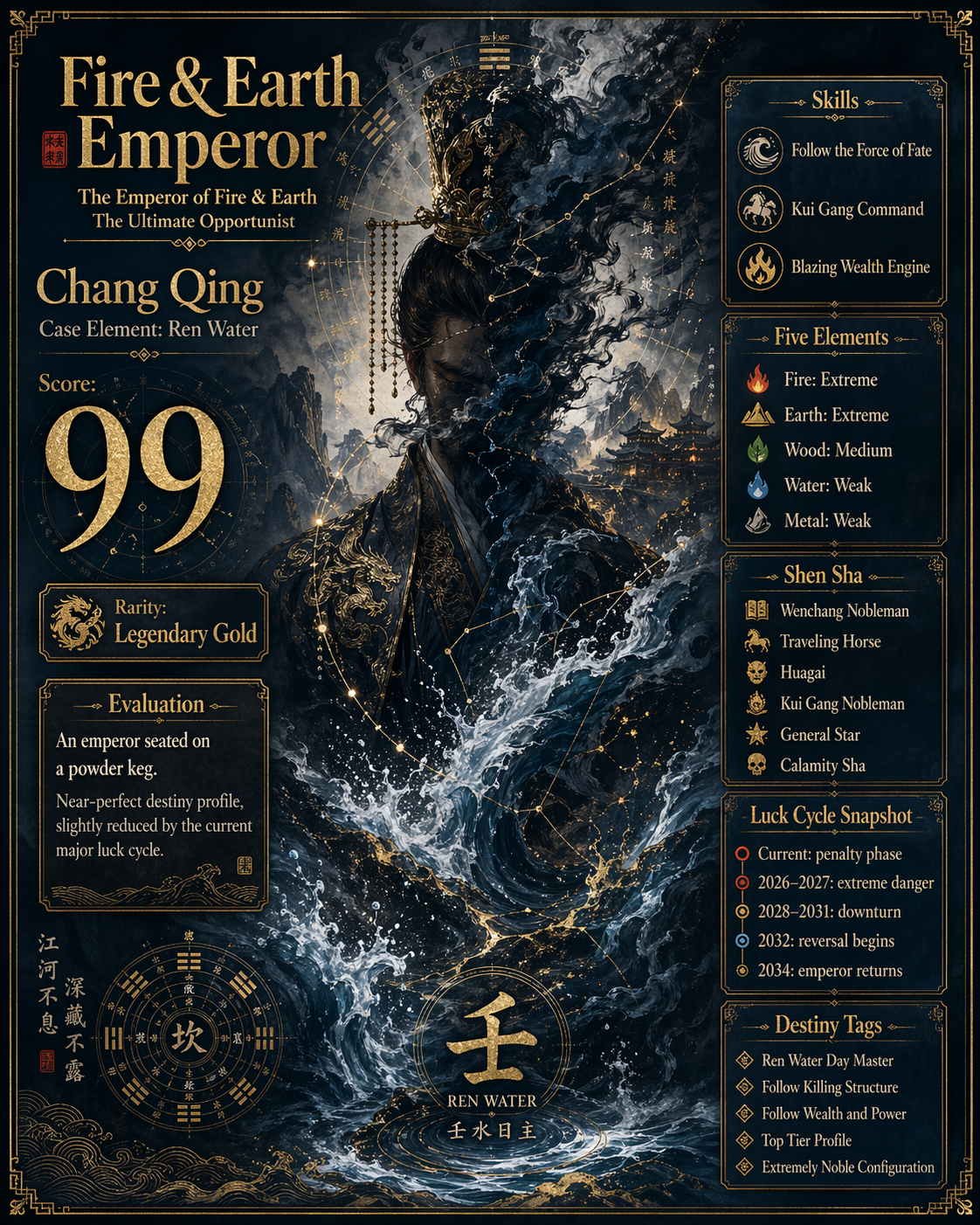
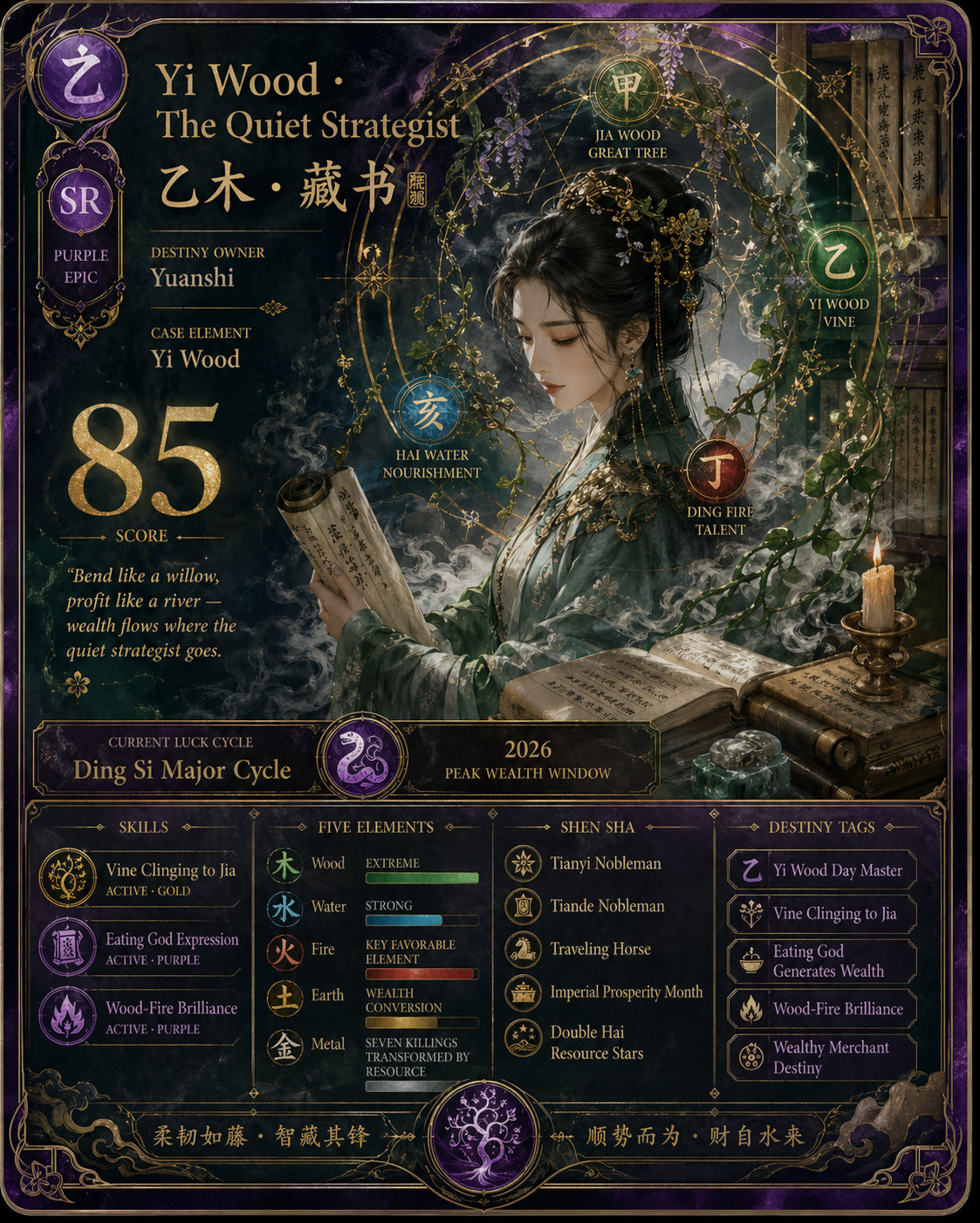
The gallery also demonstrates five English chart-card rarity prototypes generated from a custom prompt system. They show the intended visual direction; the production image-generation path is still undergoing end-to-end reliability validation.
What I learned
For culturally complex domains, fluent model output is not enough. Computation, evidence, source status, uncertainty, and language generation need explicit authority boundaries and independent tests.
What's next
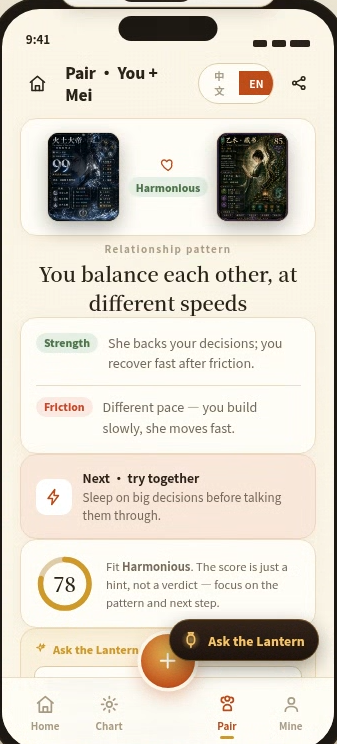
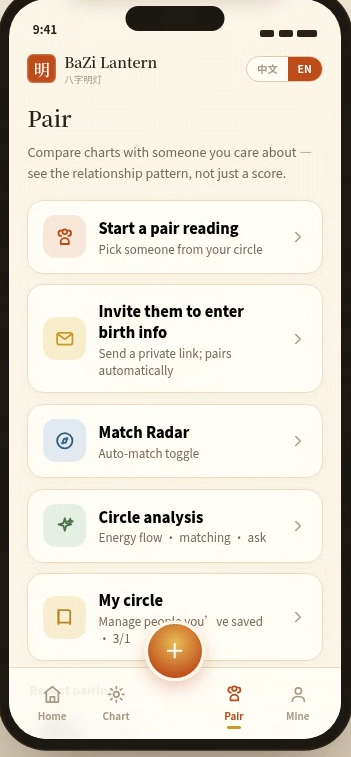
We'll continue refining the life engine, further improving synastry charts for two individuals and multiple individuals within close circles, and exploring how a single event can trigger diverse reactions within those circles. The raw image processing will now use the OpenAI API. The memory mechanism is complete but not yet implemented and needs to be added.
- Evidence-first relationship comparison and interactive dual-chart analysis.
- Production hardening for shareable chart-card generation.
- Broader English localization.
- User-feedback calibration that never silently alters the deterministic source record.
For self-reflection and cultural exploration; not medical, legal, financial, or predictive advice.
Built With
- gpt-5.6
- next.js
- openai-codex
- react
- typescript

Log in or sign up for Devpost to join the conversation.