-
-
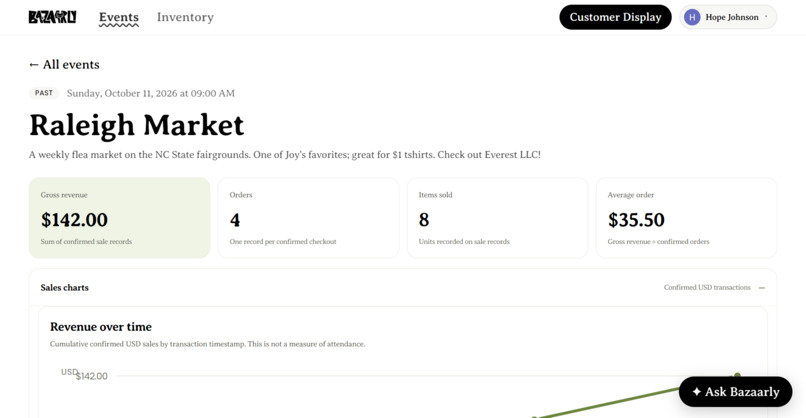
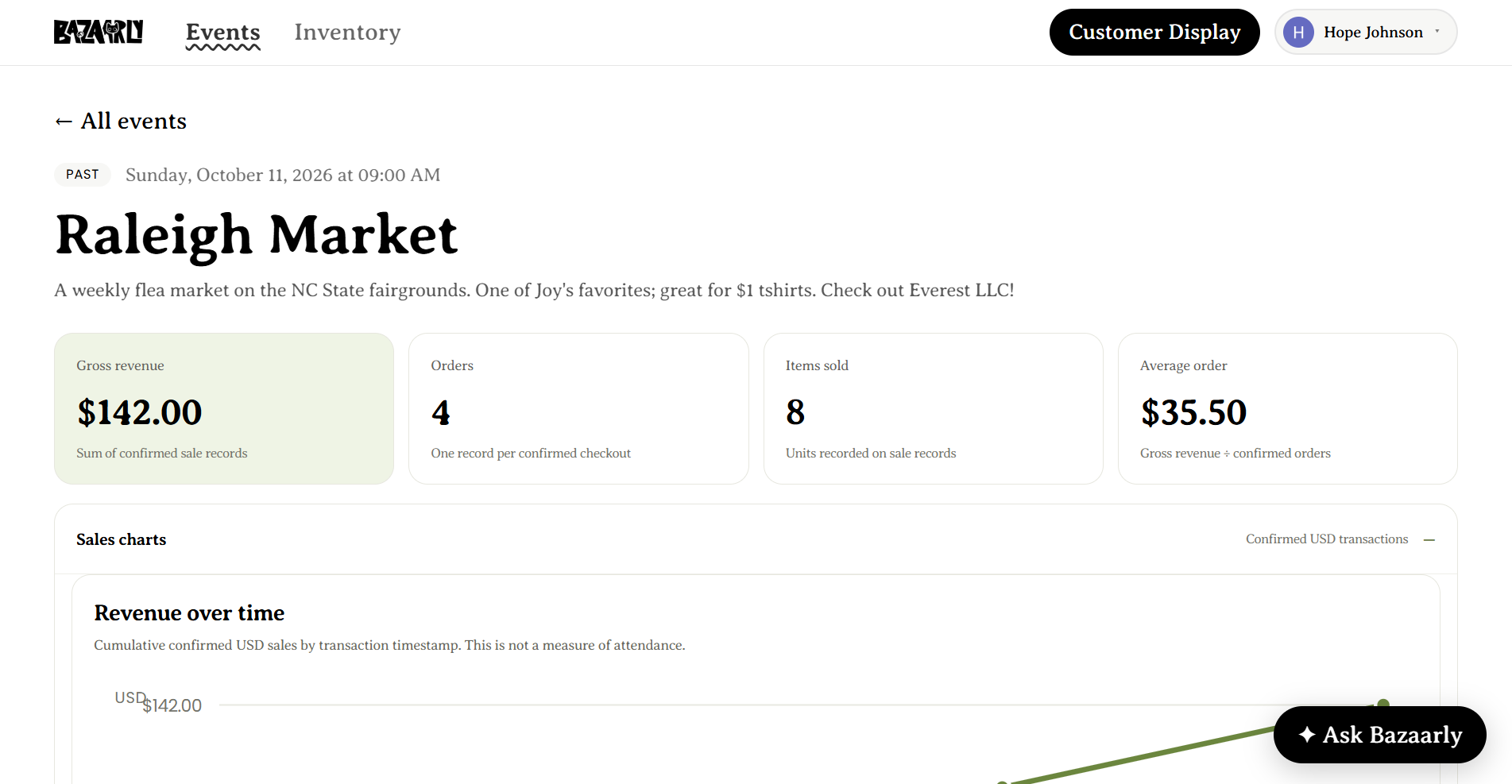
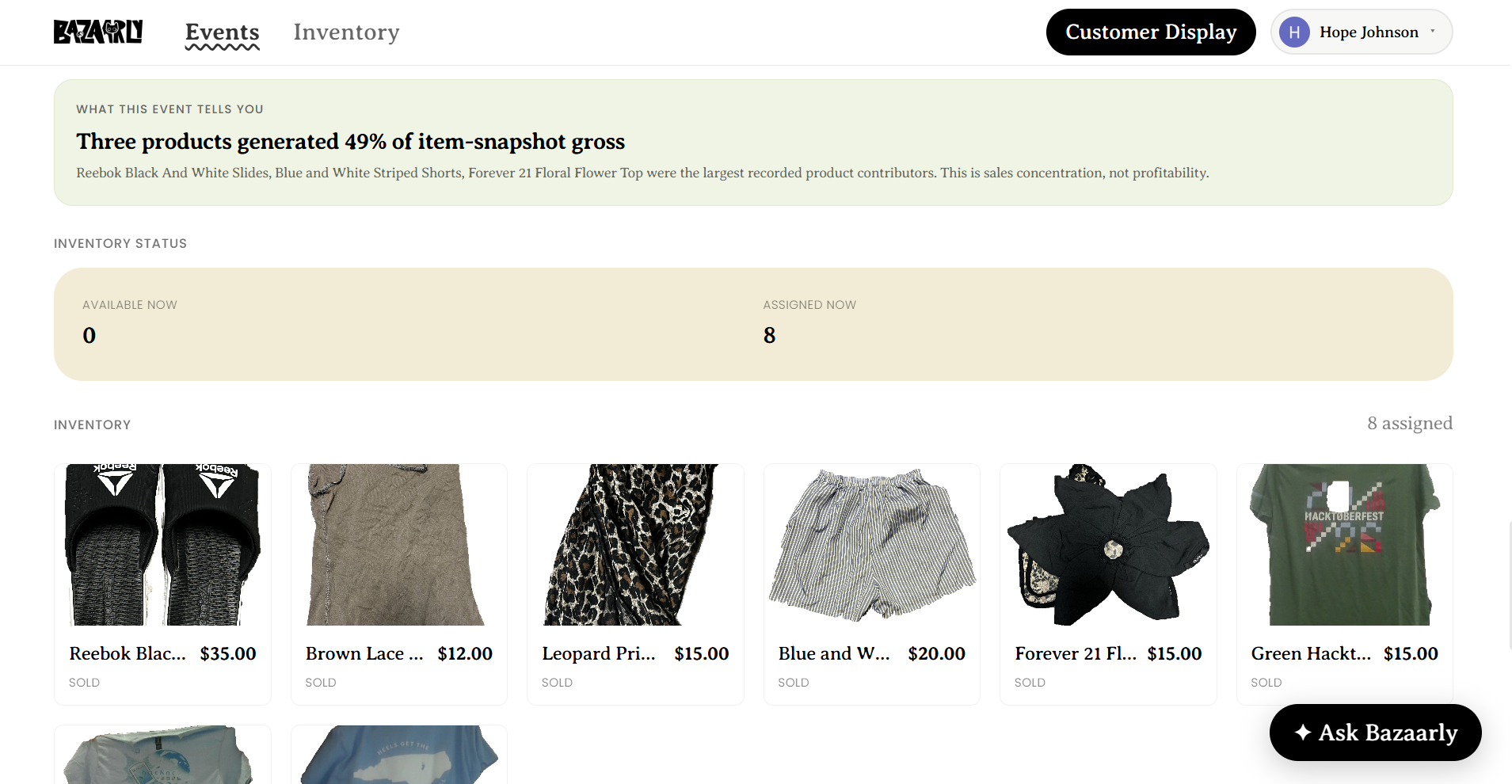
Event Dashboard for a "Raleigh Market" event
-
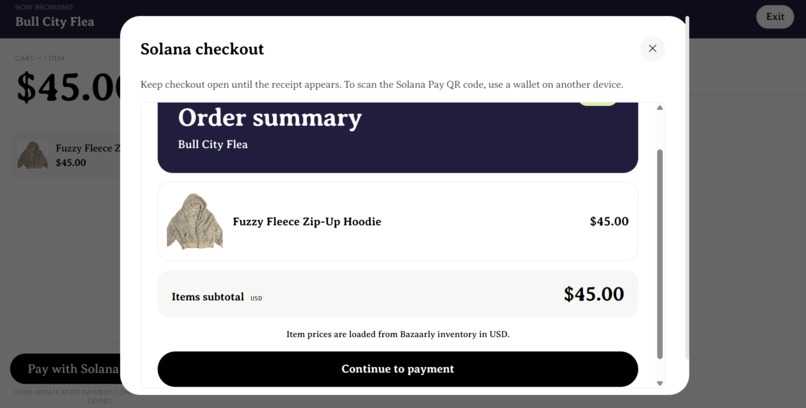
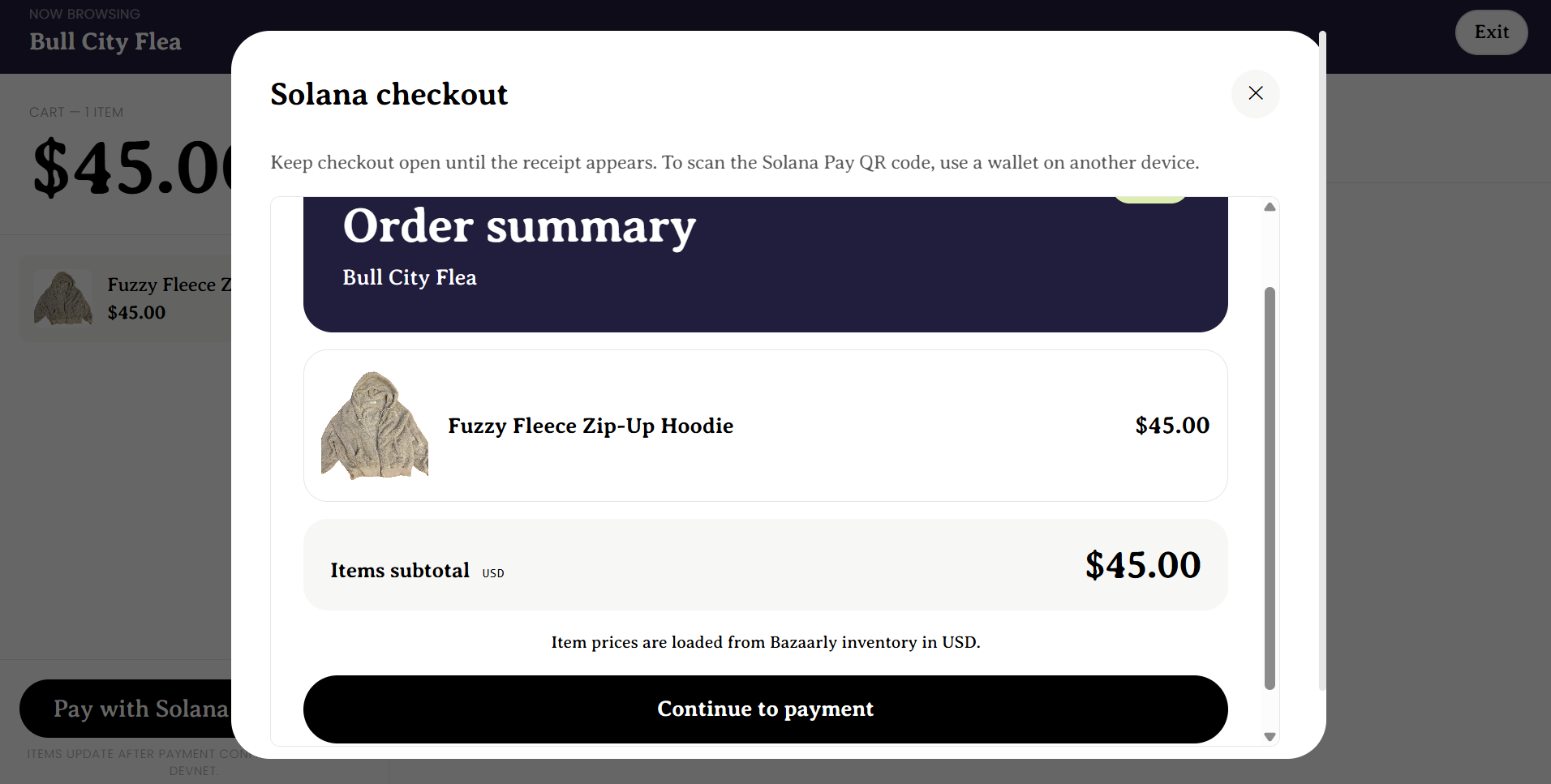
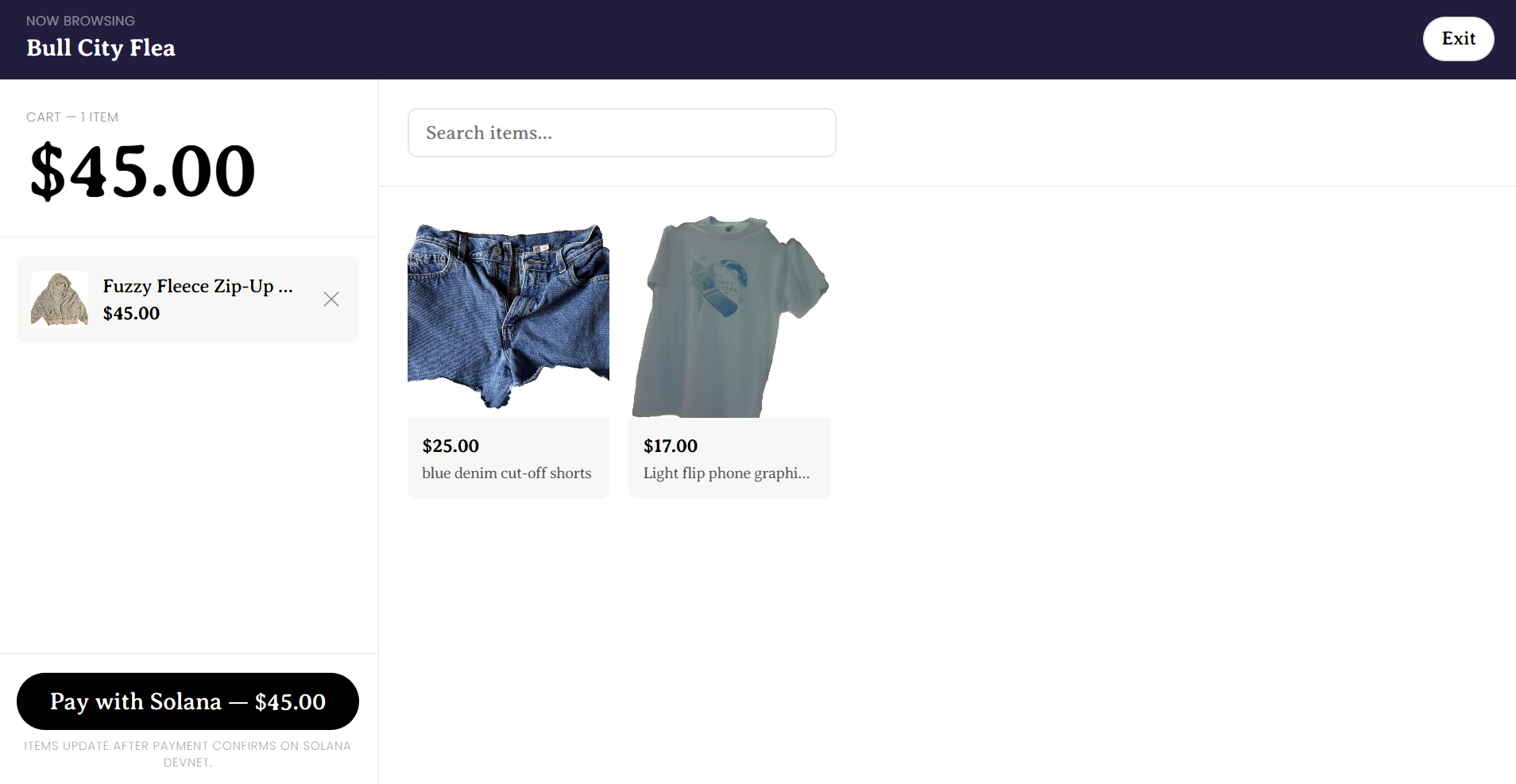
Customer view: Checking out with Solana Payments
-
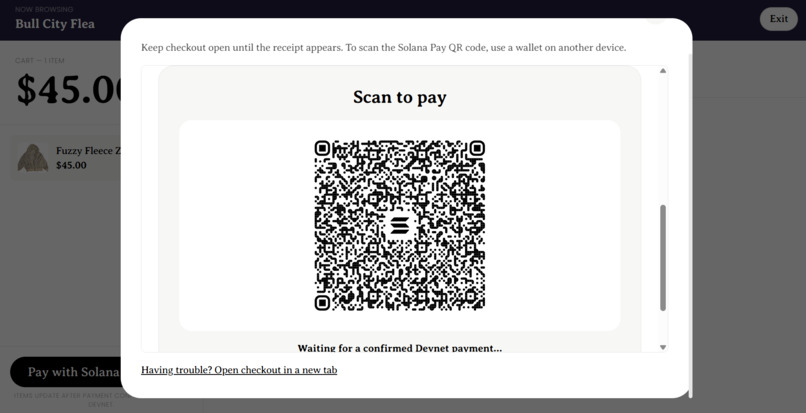
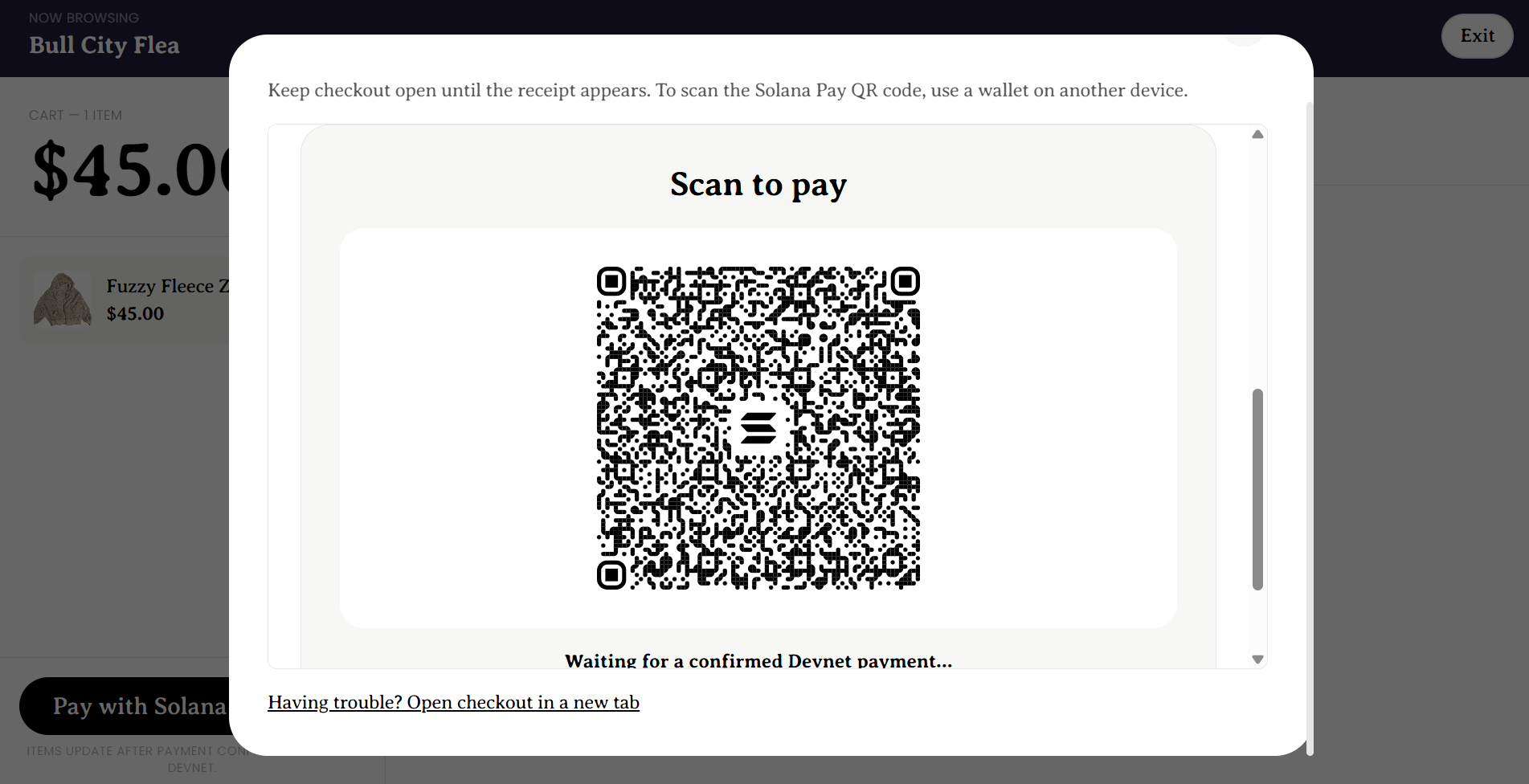
Customer view: QR code generated for Solana payment which is tracked as sale for vendor
-
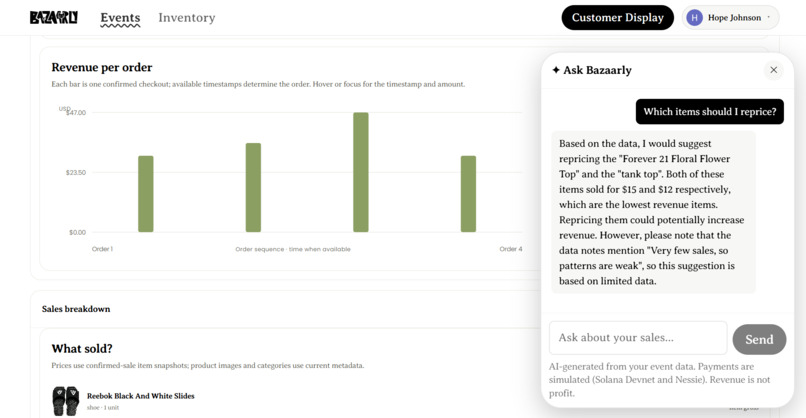
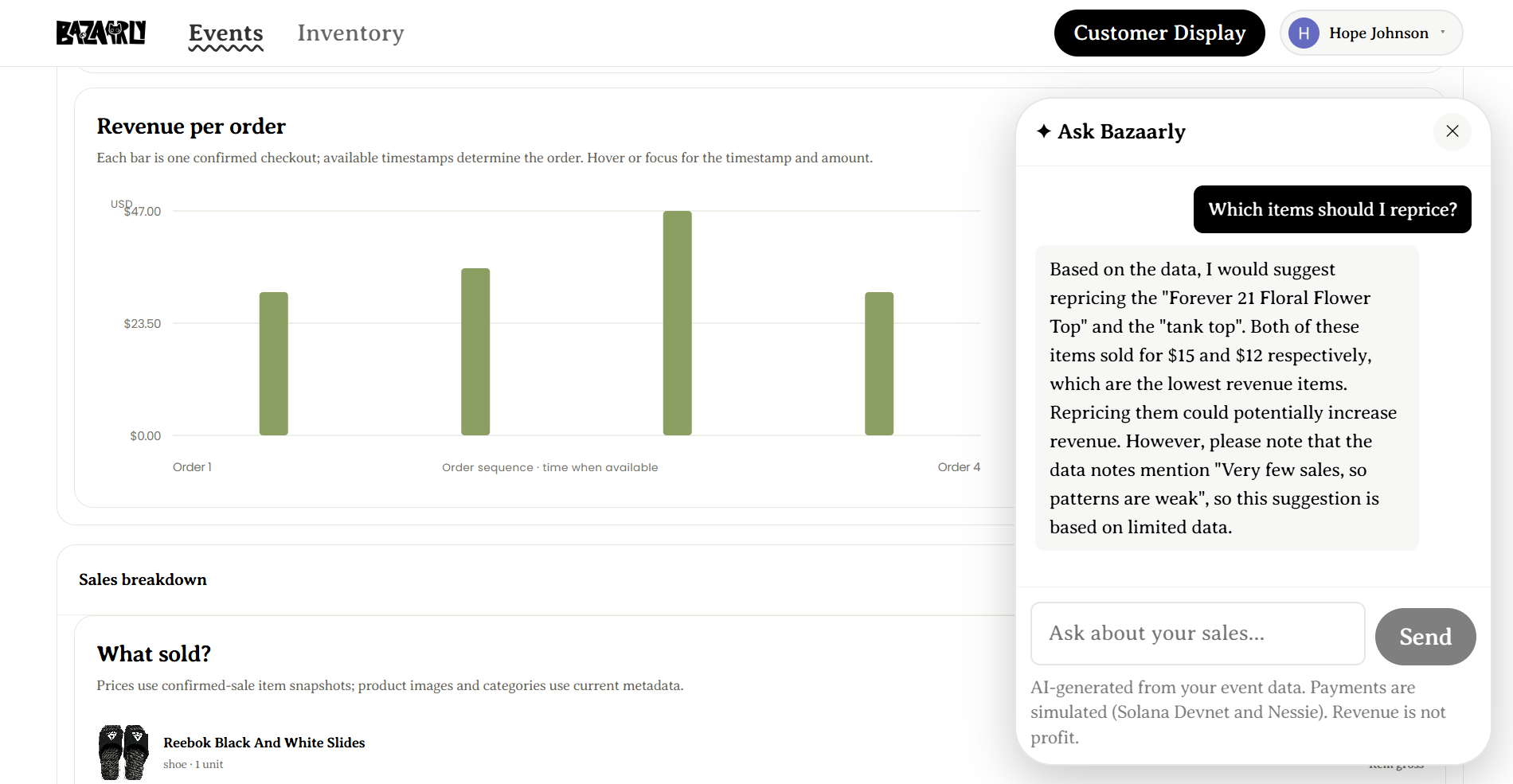
Event Dashboard continued w/ use of "Ask Bazaarly"
-
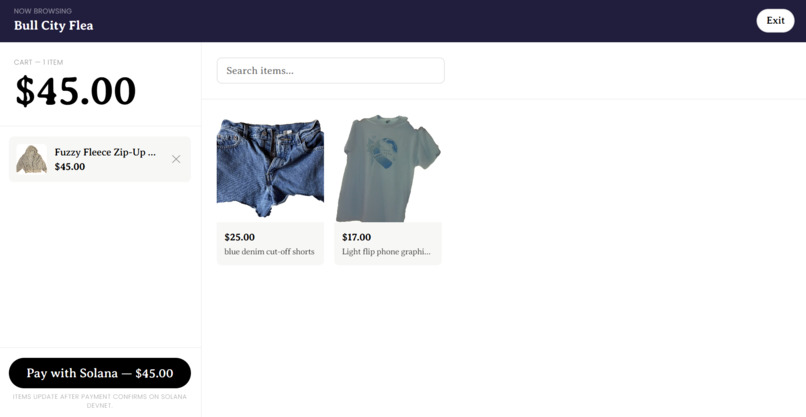
Customer view: adding items from event inventory to cart
-
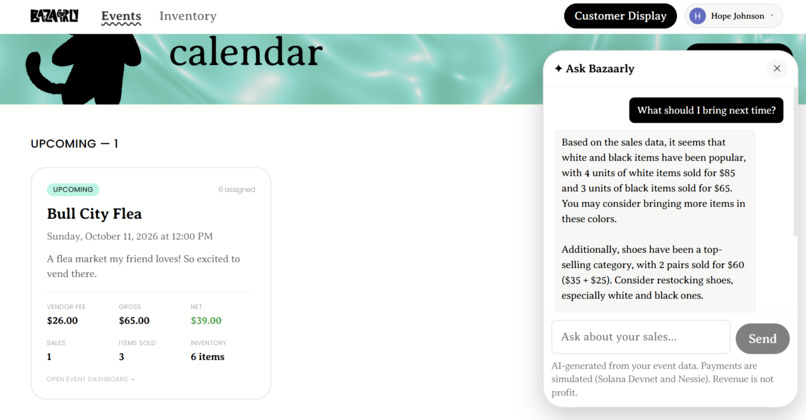
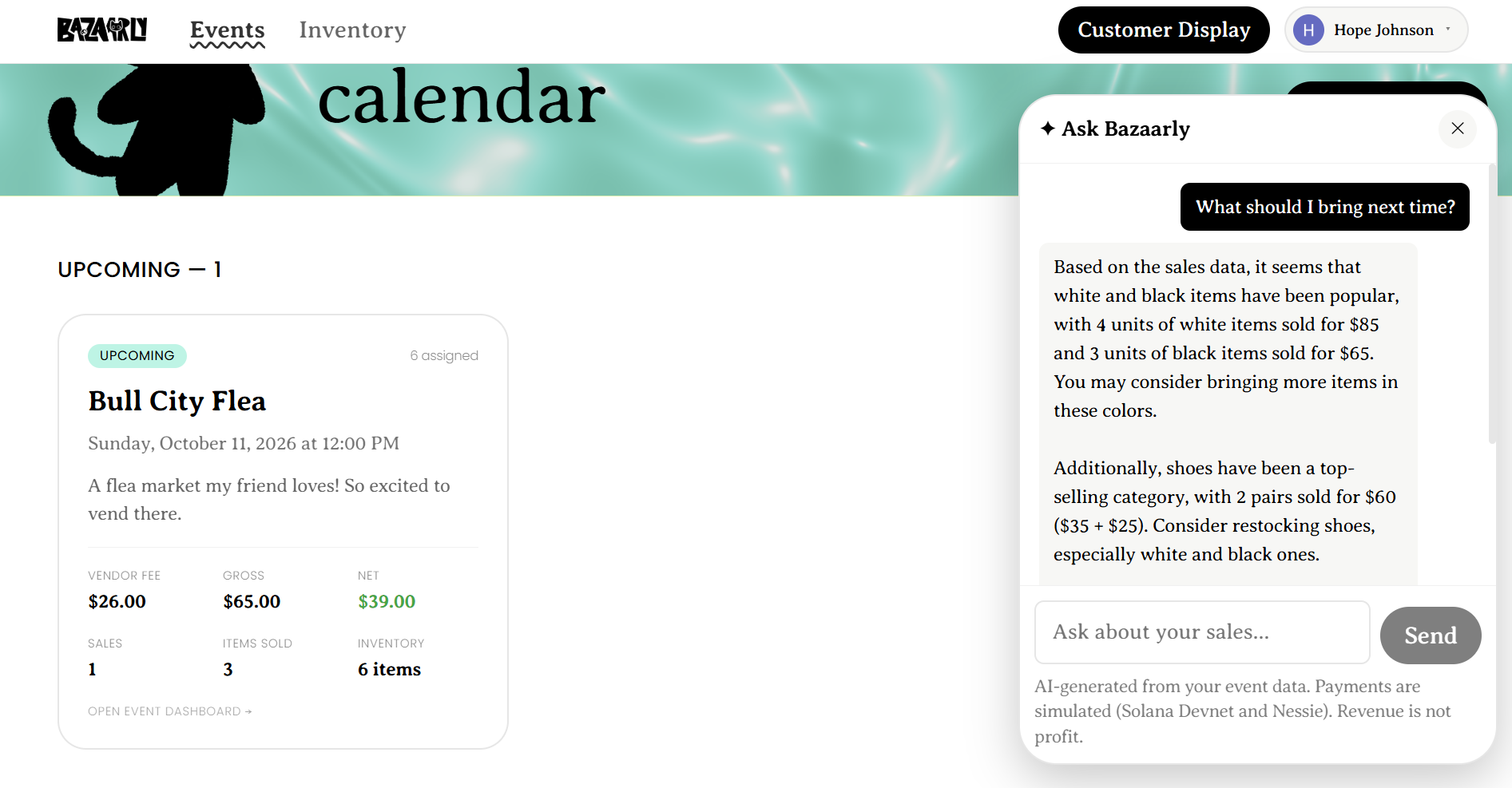
Using "Ask Bazaarly" the business advice AI chatbot on Events Page
-
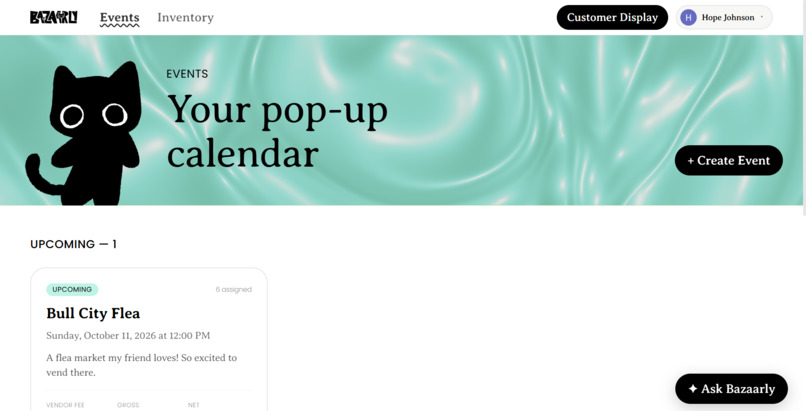
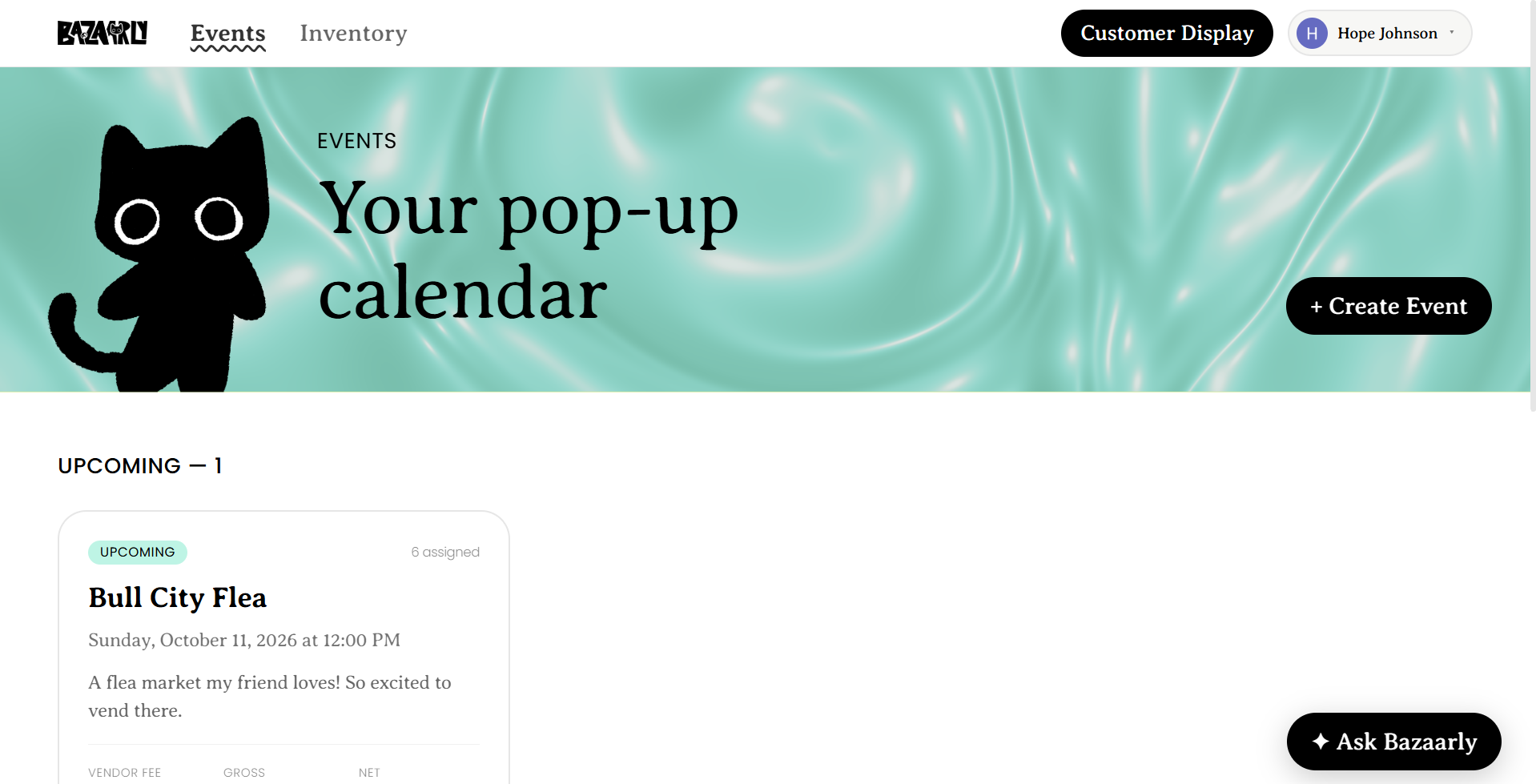
Vendor Events Page (Landing)
-
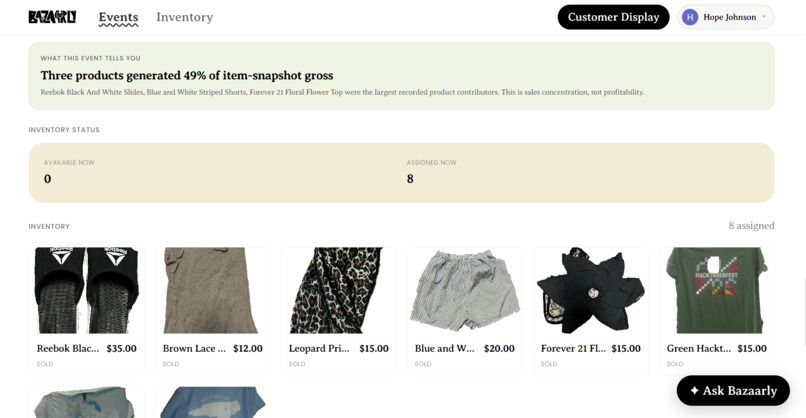
Event Dashboard continued: event overall insights & inventory list
-
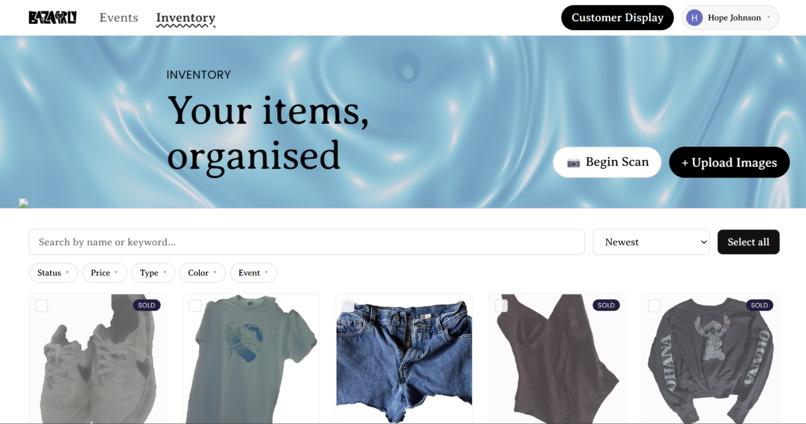
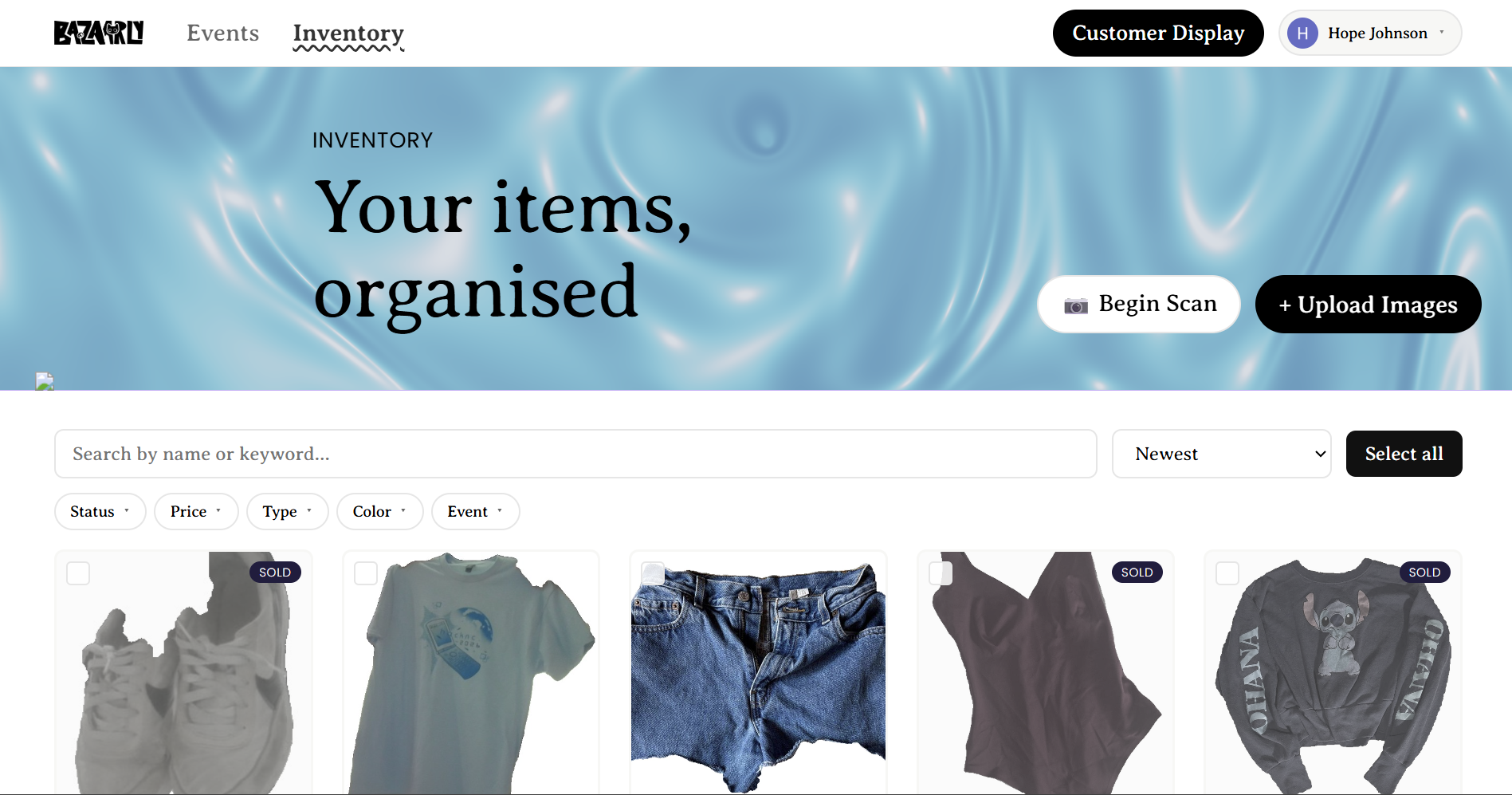
Inventory page for vendors
Inspiration
One of our teammates has a friend who runs a flea-market stall selling apparel. From hearing about their experience, we saw how much work goes into running a small pop-up business: keeping track of products and stock, recording payments, understanding expenses, and figuring out how much the event actually earned. These tasks often live in different places, which makes it difficult to get a clear picture during or after an event. A vendor might know that some items sold, but still have to reconcile sales, remaining inventory, transaction activity, and event fees before deciding what to bring next time. That conversation inspired us to build Bazaarly: a tool that connects event inventory and checkout with financial tracking and sales analysis. We want vendors to spend less time piecing together records and more time understanding how their business is performing.
What it does
Bazaarly is a React and TypeScript dashboard for pop-up apparel events. Vendors can organize garment inventory by event, review product details and stock statuses, and see sales activity associated with each event. The checkout prototype uses Solana Pay on Devnet. A customer can initiate a payment for an item, and Bazaarly records the sale only after the payment is confirmed on the Solana network. Event sales records and summaries use the item’s USD price, so vendors can review results in familiar dollar values. This is a Devnet prototype; it does not process real-money payments. For each event, Bazaarly summarizes confirmed revenue and sales activity, with product and category breakdowns. It also tracks vendor-fee coverage and provides a sales ledger for reviewing recorded transactions. Vendors can compare completed events to understand how their results differ and use that information when planning future inventory. We also explored using the Nessie sandbox banking API for a financial-management dashboard. The prototype is intended to help vendors review simulated account and customer activity, track money coming in and going out, and get a clearer view of cash flow. Nessie provides simulated banking data, so this part demonstrates the dashboard concept rather than connecting to a vendor’s real bank account. In addition, we developed a separate Snowflake Cortex sales-consultant prototype. It accepts uploaded sales CSV files, calculates metrics such as total revenue, average order value, and category mix, then passes those figures to a language model to support evidence-based recommendations. A vendor could use it to examine which categories contributed most to revenue or whether sales were concentrated in lower-priced items. The Nessie financial dashboard and Snowflake consultant are prototypes; they are not yet connected to Bazaarly’s live sales records. The consultant uses the data in the uploaded CSV and does not claim to have access to live fashion-trend data.
How we built it
The main Bazaarly dashboard uses React and TypeScript for the user interface, with Firebase and Firestore for application data. Events and inventory are organized so vendors can review products and sales in the context of a specific event. The Solana Pay checkout runs as a separate app and connects to Bazaarly through the checkout flow. We treat a sale as complete only after the Devnet transaction is confirmed; creating a payment request alone does not add a confirmed sale to event analytics. The Nessie prototype uses simulated banking data to demonstrate cash-flow and customer/account activity views. The Snowflake Cortex consultant uses a Node.js backend: it processes uploaded sales CSV data and calculates metrics on the server before sending the structured figures to the model.
Challenges and lessons
A key challenge was deciding when a sale should count as a sale. A checkout request and a confirmed on-chain payment are different events. We designed the prototype so event reporting relies on confirmed payments, helping keep the sales ledger and analytics tied to completed transactions. We also learned that QR payment compatibility can vary between wallets and devices. A payment flow that works in one wallet may behave differently in another, so wallet interoperability needs testing as part of the checkout experience. Another challenge was bringing financial activity and sales analysis into a useful view without overstating what the prototypes can do. Nessie’s simulated account data can demonstrate how a cash-flow dashboard might work, while Snowflake Cortex can analyze metrics from an uploaded sales file. Neither prototype currently reads live financial or sales data from the main Bazaarly app.
What's next
Our first priority is letting vendors record what they paid for each item when it’s added to inventory, so Bazaarly can show true profit and margin by item, category and event instead of just revenue. We also want to test with real vendors to see whether the insights change how they stock and price. Nessie is a sandbox, so a production version would need a real financial-data provider and a secure connection to vendors’ accounts.
Built With
- capital-one-nessie
- clip
- express.js
- fastapi
- firebase
- firebase-authentication
- firebase-storage
- firestore
- google-gemini
- nessie
- node.js
- opencv
- python
- react
- rembg
- snowflake
- snowflake-cortex
- solana
- solana-pay
- typescript
- vite


Log in or sign up for Devpost to join the conversation.