-
-
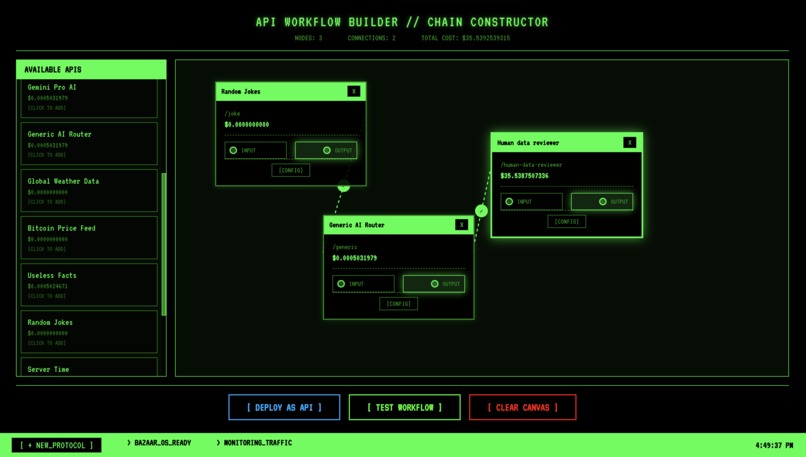
Chaining tool
-
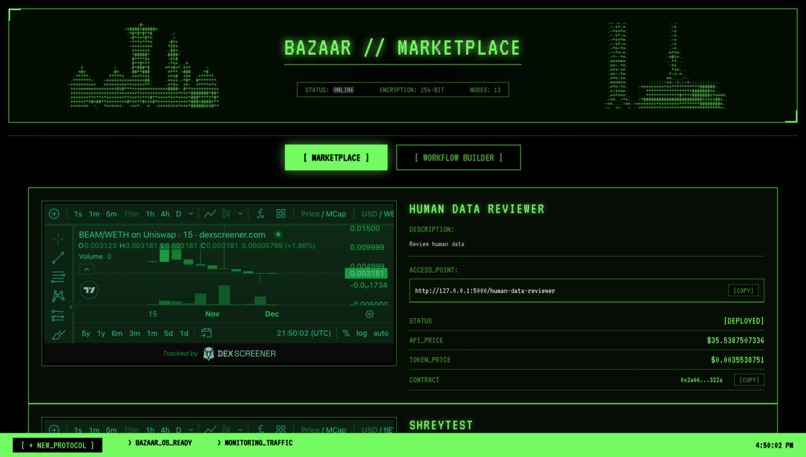
Bazaar shopping new APIs
-
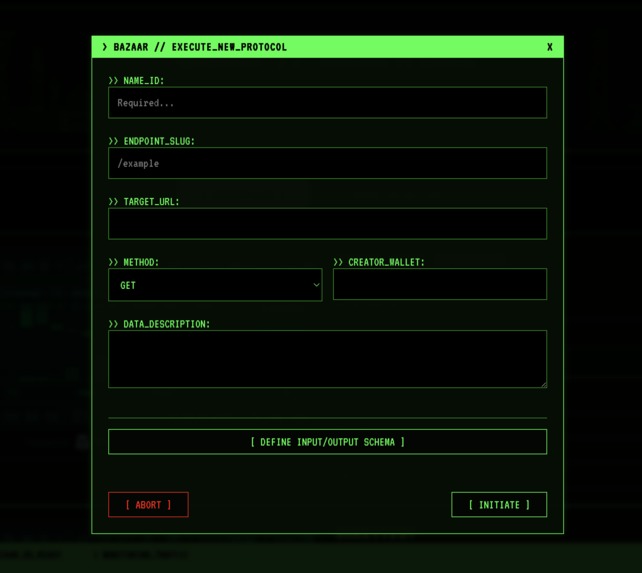
Launching an API + token
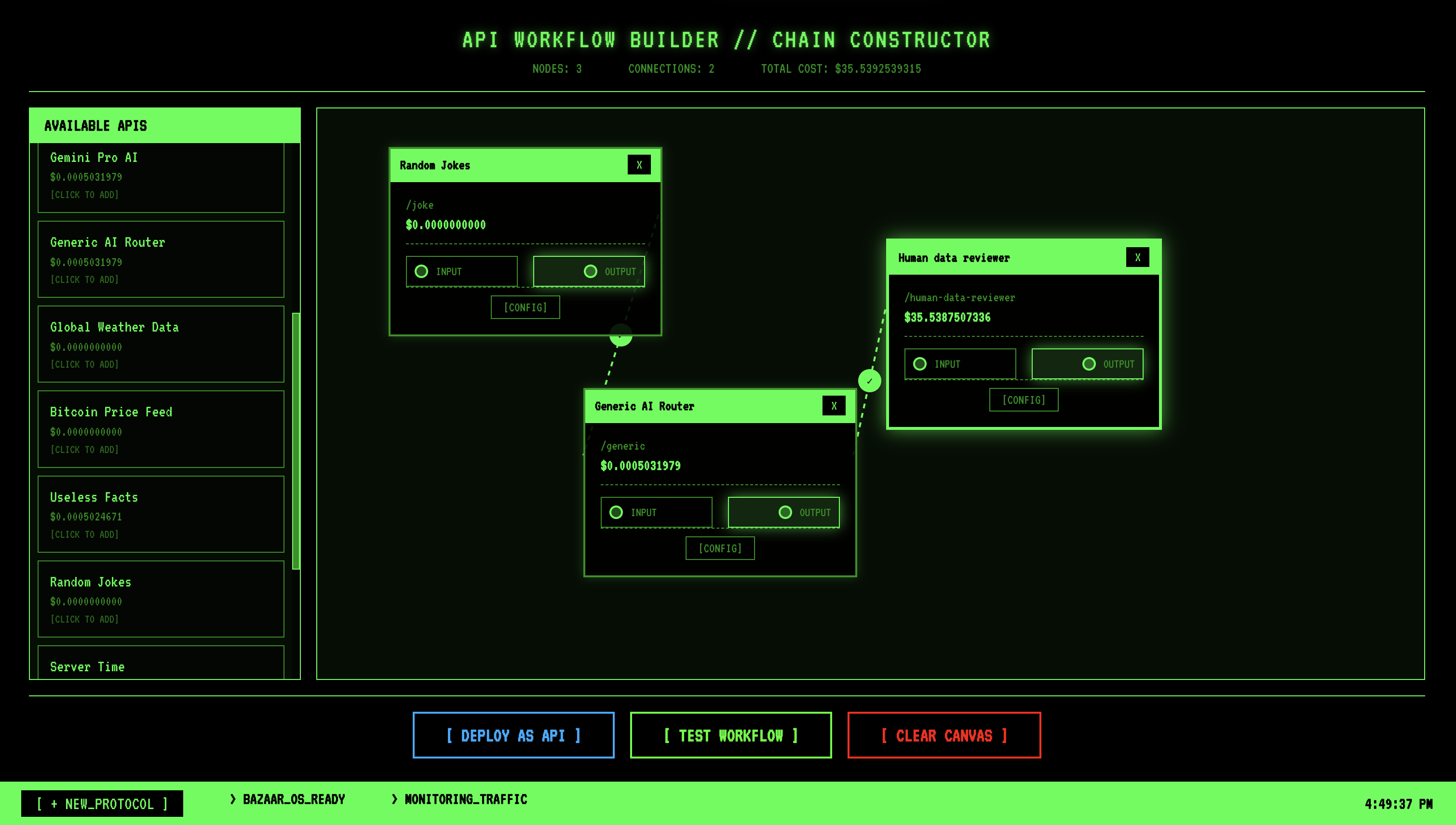
Bazaar
Demo Video
https://www.youtube.com/watch?v=8rU6OIX4LAM
Description
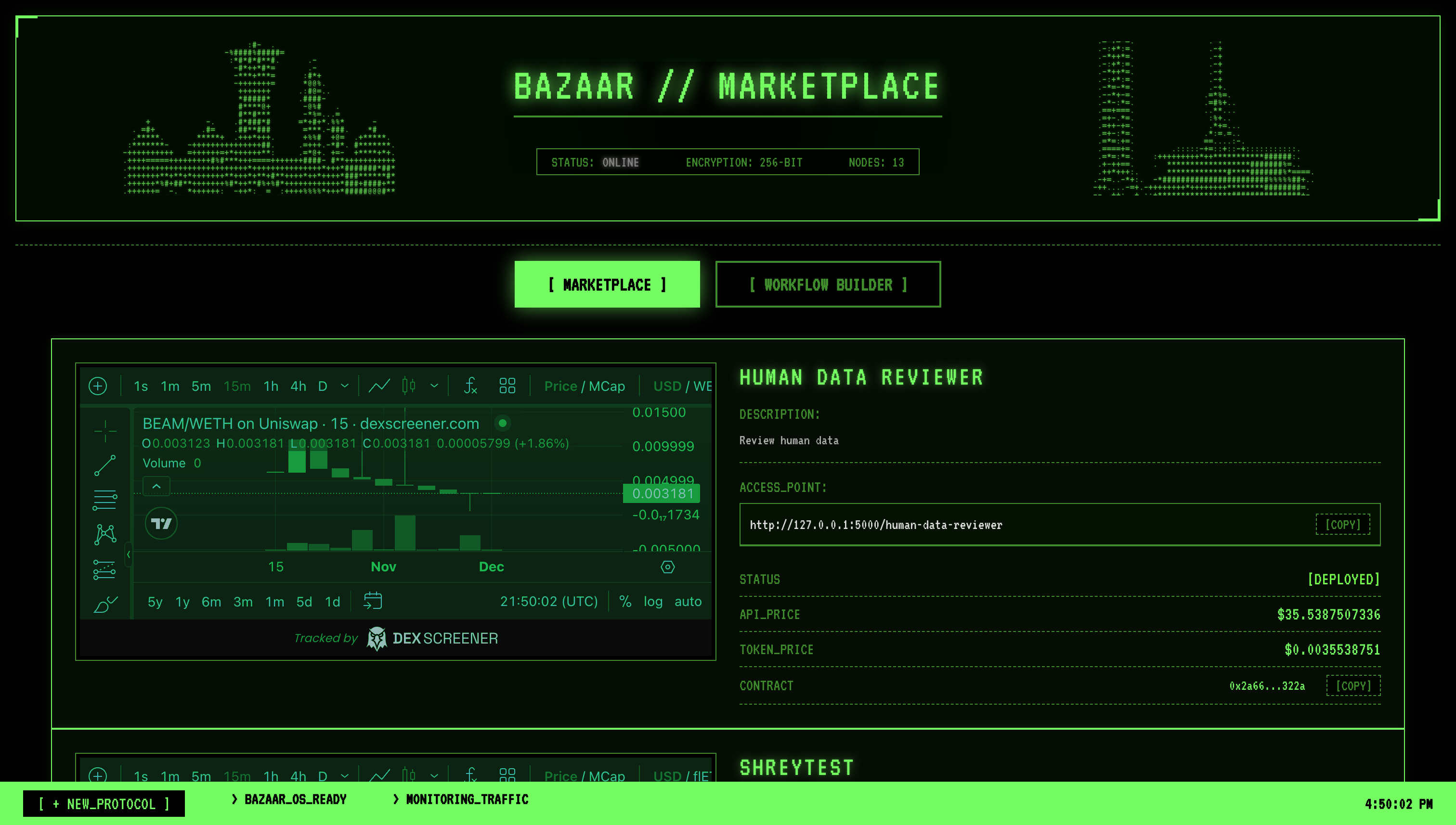
Bazaar tokenizes API pricing structures, creating a dynamic marketplace where each API has its own tradeable token. Similar to how BaseApp and Zora tokenize creator coins, Bazaar tokenizes API access.
Each API is priced per usage according to the market value of its token. For example, using Gemini 3.0 may require spending a $GEM3 token, while Claude usage uses a $CLAUDE token. As token prices fluctuate based on demand, API costs automatically adjust—higher demand increases the cost, while lower demand decreases it.
By tokenizing API pricing, markets become flexible and efficient. Developers can buy tokens, trade with other APIs, sell excess API credits, and take speculative positions on API tokens. Self-correcting prices regulated by supply and demand optimize production and consumption, minimizing deadweight loss and maximizing social marginal utility.
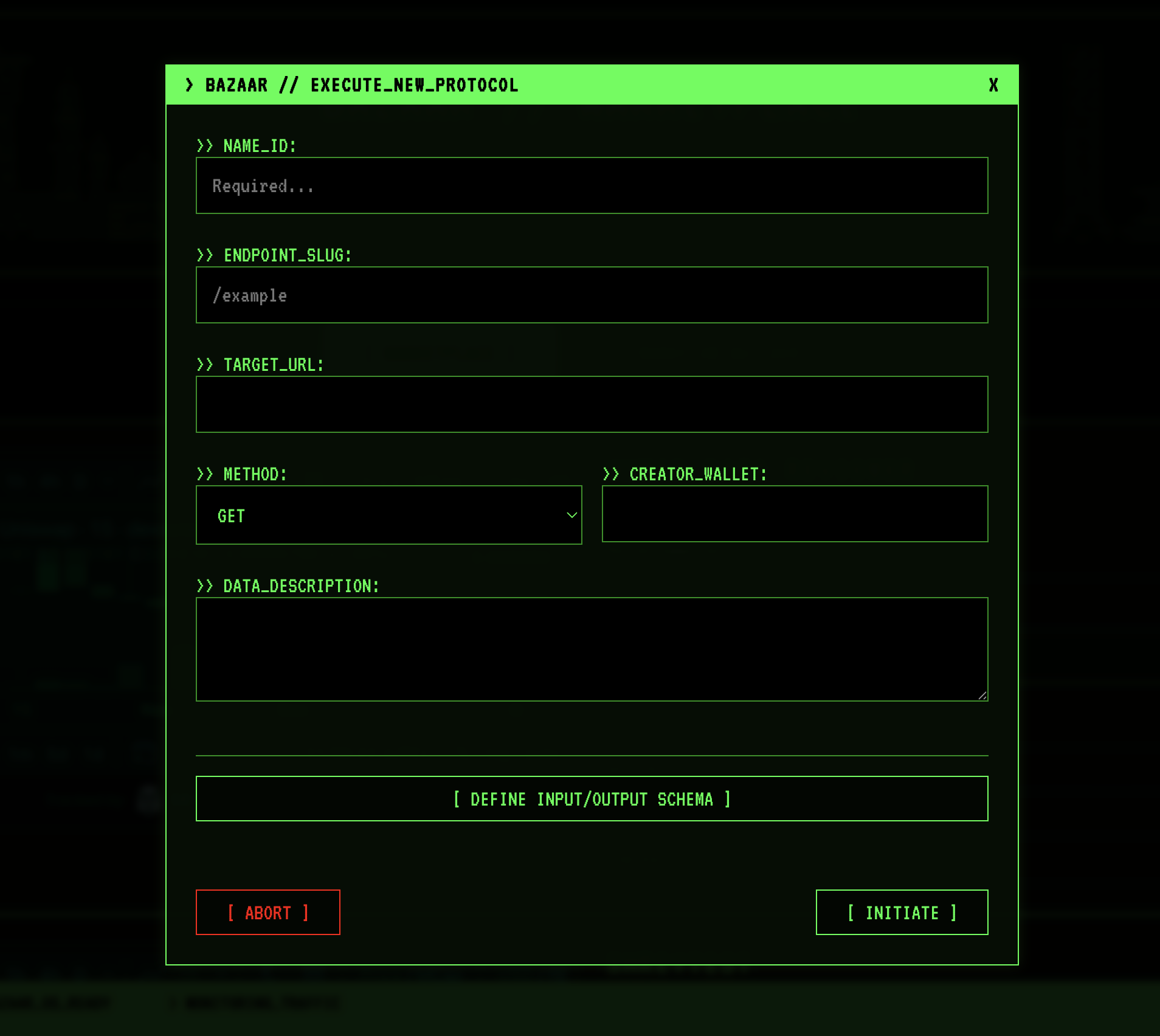
Bazaar integrates with x402 for dynamic payments and Flaunch for token launches and bonding curve mechanics. A Flask backend manages API metadata and interfaces with a React frontend for trading and calling APIs.
Technical Summary
Problem Being Solved
API pricing is static and disconnected from actual demand/supply because rates are sticky. Providers must guess rates, leading to inefficiencies, wasted resources, or overcharging users. Bazaar addresses this by creating market-driven pricing that adjusts dynamically based on real demand.
Layer 2 Advantages (Base)
Bazaar is deployed on Base because we can get low fees, fast transaction settlement, and built-in support for x402.
- We use x402 to handle the automatic API payment system.
- We use Flaunch API to create bonding curve price updates to handle the pricing, order matching, etc.
- We use dexScreener to serve the pricing data for each API.
EVM Stack Usage
- API tokens are launched via Flaunch, which handles bonding-curve pricing, liquidity, and trading.
- Payments and API usage enforcement are handled through x402.
Off-Chain Components
The Flask backend manages API metadata, triggers Flaunch token launches, and wraps APIs via x402. The React frontend provides a user-friendly interface for uploading APIs, viewing tokens, trading, and calling APIs. All heavy logic for pricing, token mechanics, and payment settlement is delegated to Flaunch and x402.


Log in or sign up for Devpost to join the conversation.