Inspiration
This is the beginning steps in creating a autonomous battlebot. Autonomy is a necessary field which incorporates various disciplines of engineering. Autonomous driving has the potential to increase safety through application of adversarial avoidance developed for simulated war safety.
What it does
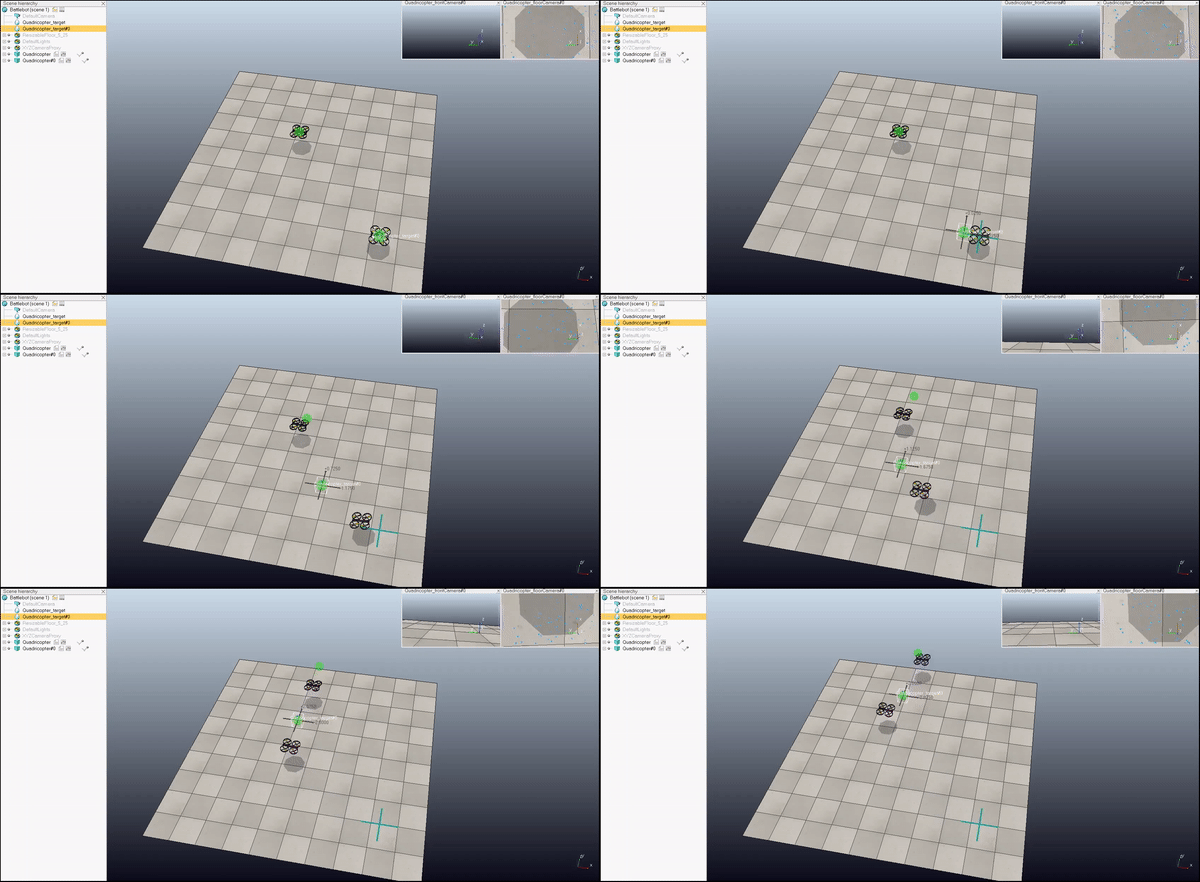
Uses the estimated adversary's kinetics to predict an anticipated trajectory to facilitate effective avoidance. Utilizes a weighted cost function which maximizes distance from projected curve and includes an interior penalty function to avoid exiting battlefield theater.
How we built it
Generated original code for finite difference methods to determine velocity, acceleration, position estimation, and both cost functions. Interfaced with V-rep to create an aesthetically pleasing and easy to use simulator.
Challenges we ran into
Interfacing two programs which run fundamentally different languages. Tuning cost functions gain parameters. Adjusting project scope to meet time constraints in Hackathon.
Accomplishments that we're proud of
Developed a working code which provides robust collision avoidance of a stochastically driven adversary,
What we learned
Tuning system response is a difficult process which involves prudent parameter selection that could be improved by a automated heuristic approach.
What's next for Battlebot Collision Avoidance Algorithm
Incorporating a vision system that will estimate positions of adversaries and battlefield boundaries. Also, having an offensive mode which will be balanced between risk seeking and risk adverse modes.
Built With
- matlab
- v-rep


Log in or sign up for Devpost to join the conversation.