-
Battery Passport & Lifecycle Intelligence System (BPLIS)
Inspiration
The rapid adoption of electric vehicles is helping reduce carbon emissions, but it is also creating a new environmental challenge: battery lifecycle management. Millions of lithium-ion batteries will eventually reach the end of their primary use, and without proper tracking systems, many are discarded inefficiently or recycled improperly.
Currently, there is no standardized digital identity or lifecycle record for EV batteries, making it difficult to monitor their health, determine second-life usability, or ensure responsible recycling.
This inspired us to build a system that can track the entire lifecycle of a battery, improve transparency, and support a circular economy for electric vehicle batteries, directly contributing to global sustainability goals.
What it does
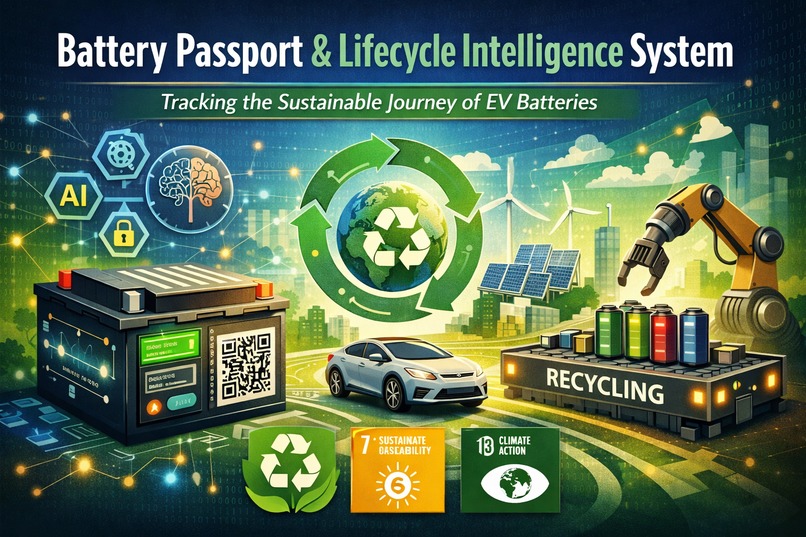
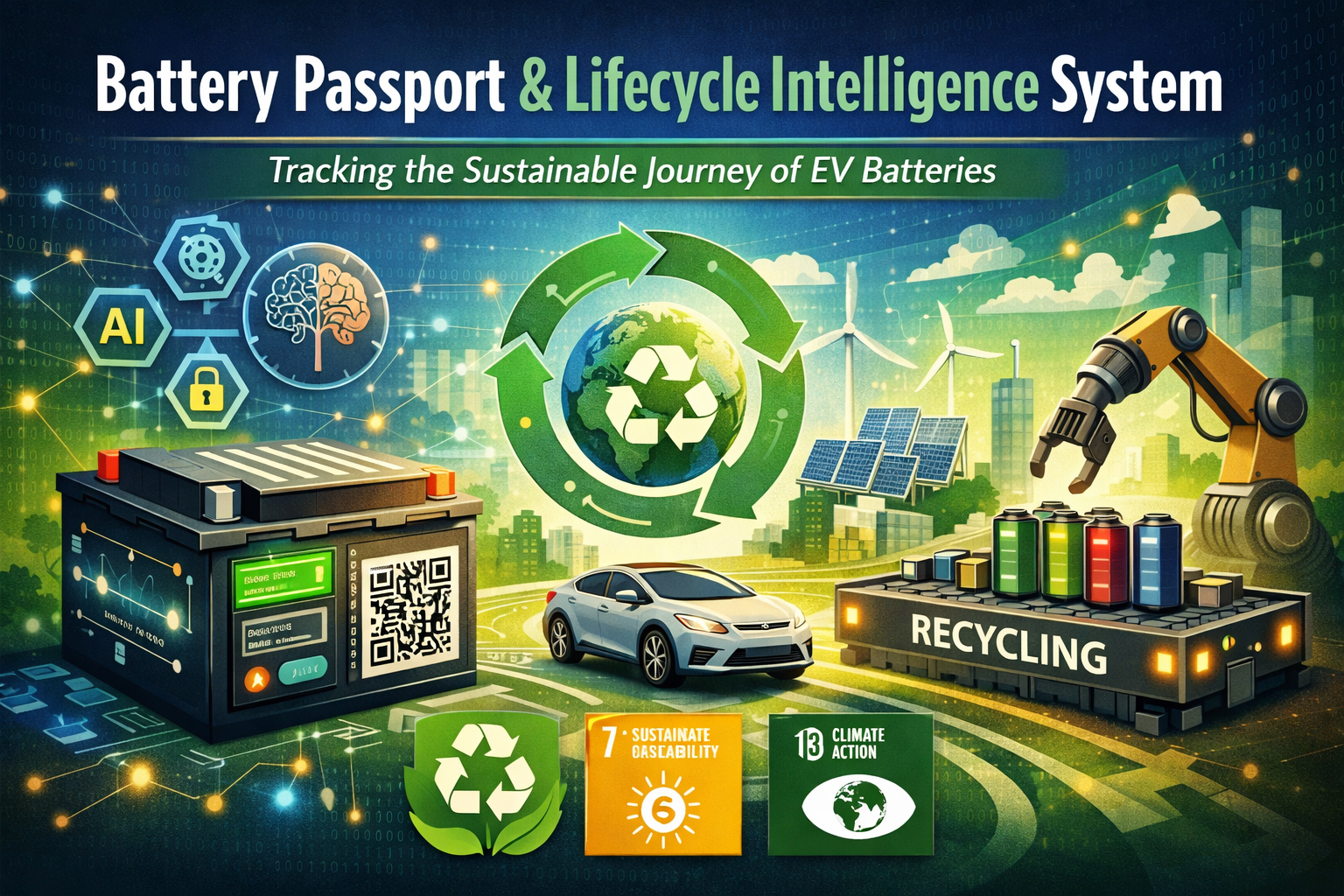
The Battery Passport & Lifecycle Intelligence System (BPLIS) creates a digital passport for EV batteries that records their health, usage history, and lifecycle events.
The platform:
- Uses machine learning models to predict battery health and degradation.
- Simulates CAN bus vehicle data to monitor battery parameters.
- Stores lifecycle records securely using blockchain-based logging.
- Tracks the battery from manufacturing → active vehicle use → second-life applications → recycling.
This enables manufacturers, regulators, and recyclers to make data-driven decisions about battery reuse, safety, and disposal, improving sustainability across the EV ecosystem.
How we built it
We built BPLIS as a modular system combining data simulation, machine learning, and decentralized data storage.
- Battery data simulation: CAN bus data was simulated to represent real vehicle battery telemetry such as voltage, temperature, and charge cycles.
- Machine learning: A predictive model was developed to estimate battery health and remaining useful life.
- Blockchain ledger: Lifecycle events such as ownership changes, maintenance records, and recycling information were securely logged.
- System interface: A dashboard was designed to visualize battery health metrics and lifecycle history for stakeholders.
The architecture ensures that battery data remains transparent, traceable, and tamper-resistant.
Challenges we ran into
One of the biggest challenges was simulating realistic battery data, since real EV telemetry datasets are difficult to obtain.
Another challenge was designing a system that integrates machine learning predictions with blockchain storage, while ensuring the data flow remains efficient and interpretable.
We also had to carefully structure the lifecycle records so that the system could represent multiple battery stages, including second-life energy storage applications.
Accomplishments that we're proud of
We successfully developed a working prototype that demonstrates how EV batteries can be tracked using a digital passport system.
Our system shows how AI-driven battery health prediction and blockchain-based lifecycle records can work together to improve sustainability in the EV ecosystem.
Most importantly, the project presents a practical framework for enabling circular battery management, which directly supports global sustainability initiatives.
What we learned
Through this project, we gained deeper insights into the technical and environmental challenges surrounding EV battery management.
We learned how machine learning can be applied to predictive maintenance, how decentralized ledgers can provide tamper-proof lifecycle records, and how combining multiple technologies can create more reliable sustainability solutions.
The project also helped us understand the importance of designing technology with real-world scalability and environmental impact in mind.
What's next
In the future, we plan to expand the system by integrating real EV battery datasets and IoT-based telemetry instead of simulated data.
We also aim to improve the machine learning models for more accurate battery degradation prediction, and develop APIs that allow manufacturers, regulators, and recyclers to interact with the battery passport system.
Ultimately, our goal is to evolve BPLIS into a scalable platform that supports global EV battery traceability and circular energy systems, helping accelerate the transition to sustainable mobility.
Built With
- blockchain
- can-bus-simulation
- cloud-computing
- data-analytics
- ethereum
- flask
- iot
- machine-learning
- node.js
- python
- react
- rest-apis
- scikit-learn
- smart-contracts
- telemetry
- tensorflow
- web3

Log in or sign up for Devpost to join the conversation.