Inspiration
BatteryShield AI – AI-Powered Battery Theft Detection and Smart Surveillance
Battery theft is a growing concern in electric vehicles, warehouses, industries, and battery storage facilities. Traditional CCTV systems only record incidents but do not actively detect theft in real time. We wanted to build an intelligent system that not only monitors battery assets but also immediately detects suspicious activity, alerts users, and stores incident history.
Our goal was to create a low-cost AI-based surveillance solution that improves battery security using computer vision and real-time monitoring.
What it does
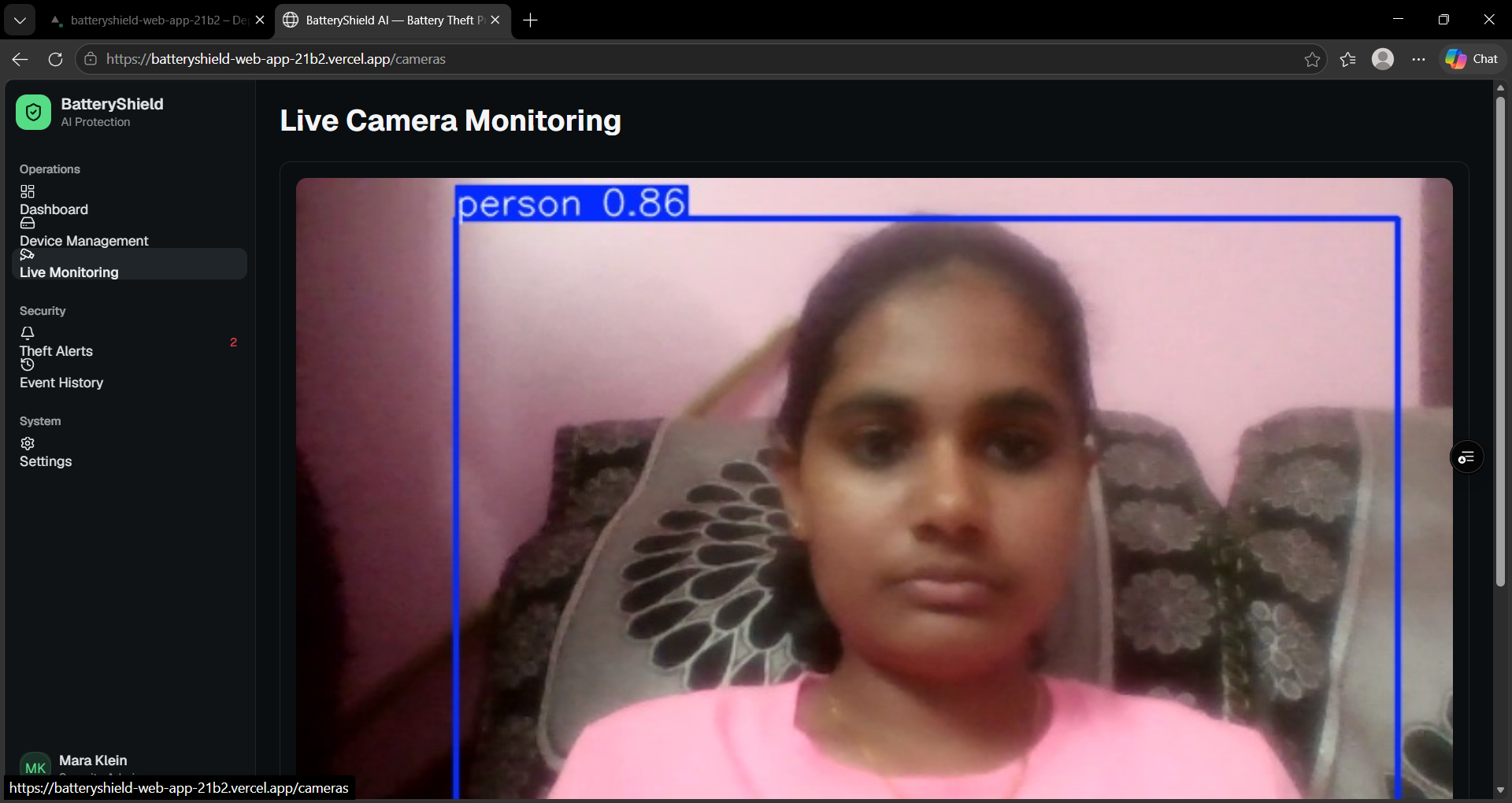
BatteryShield AI continuously monitors a live camera feed using an AI-powered object detection model.
When suspicious battery movement or theft is detected, the system:
- Detects the battery using YOLOv8.
- Triggers an instant theft alert.
- Plays an emergency alarm.
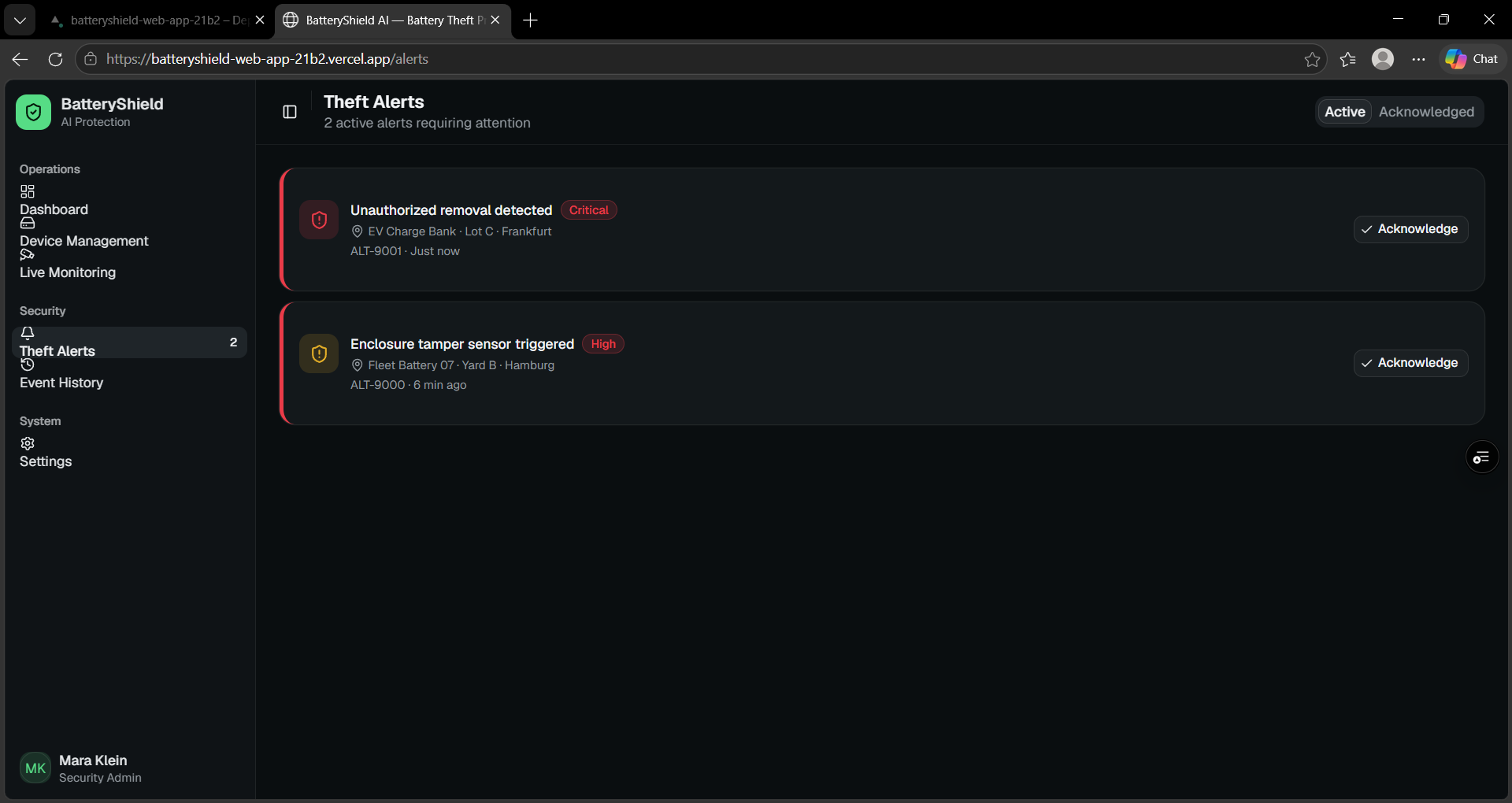
- Displays live alerts on the dashboard.
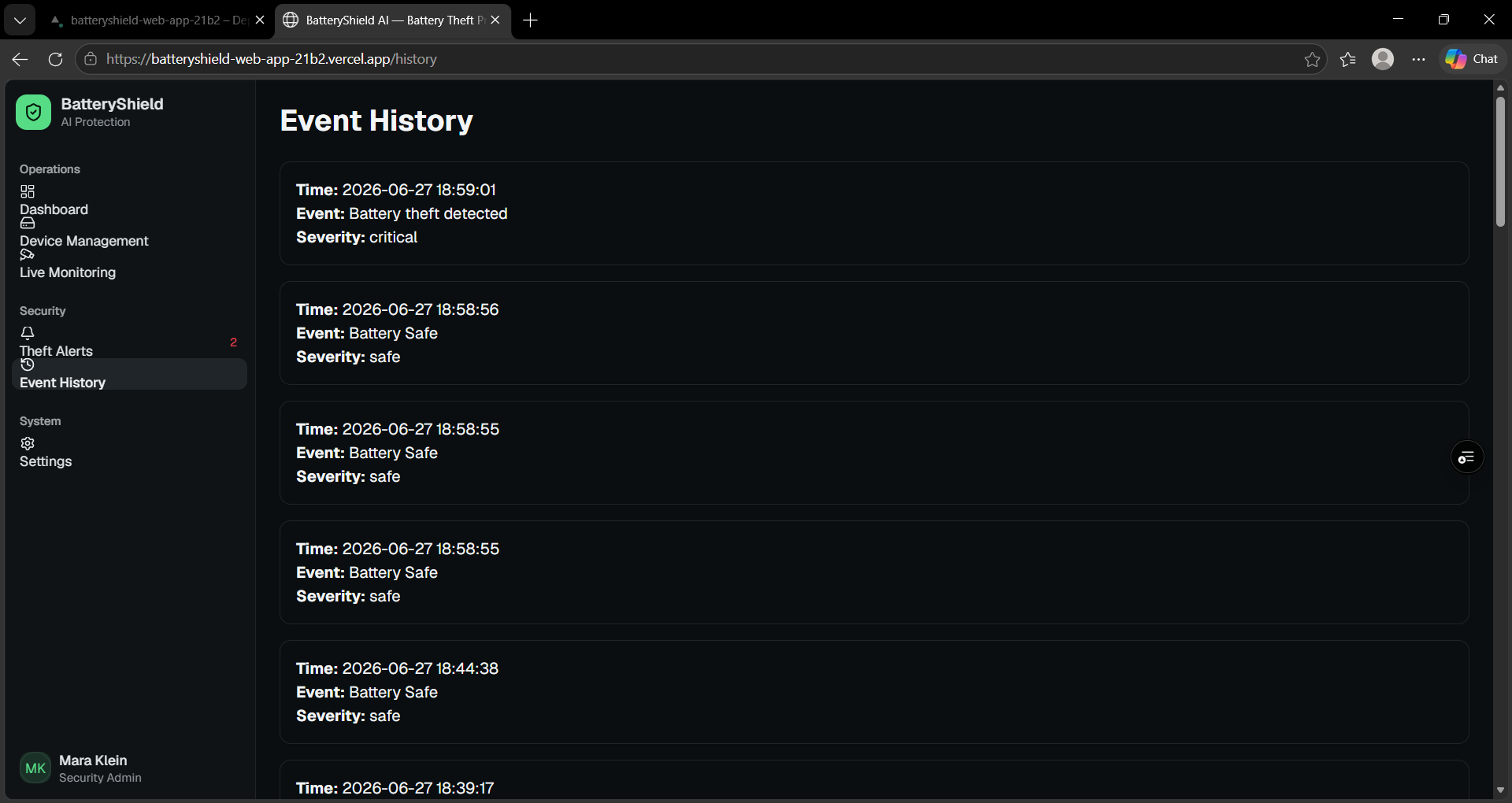
- Stores event history for future investigation.
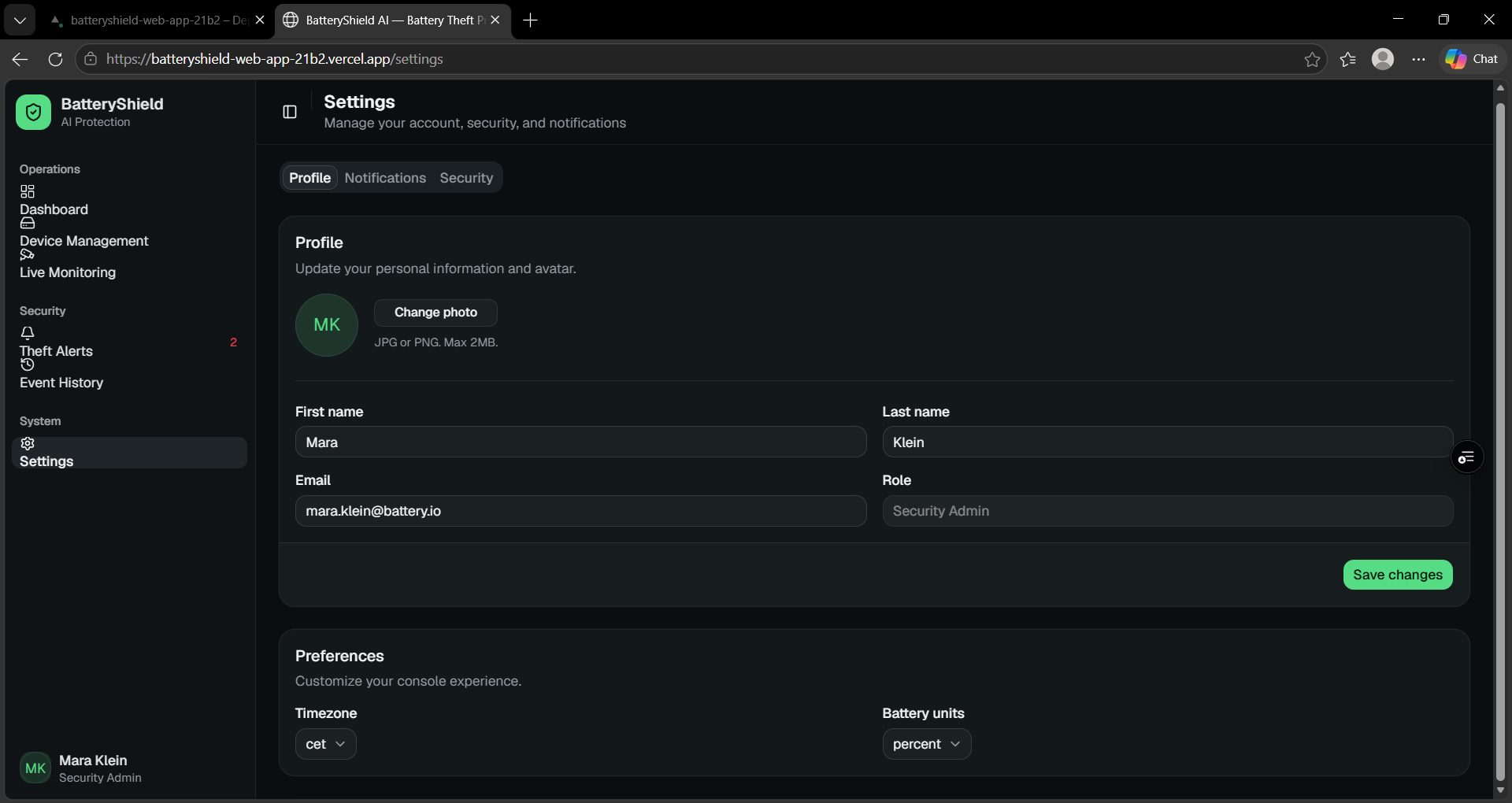
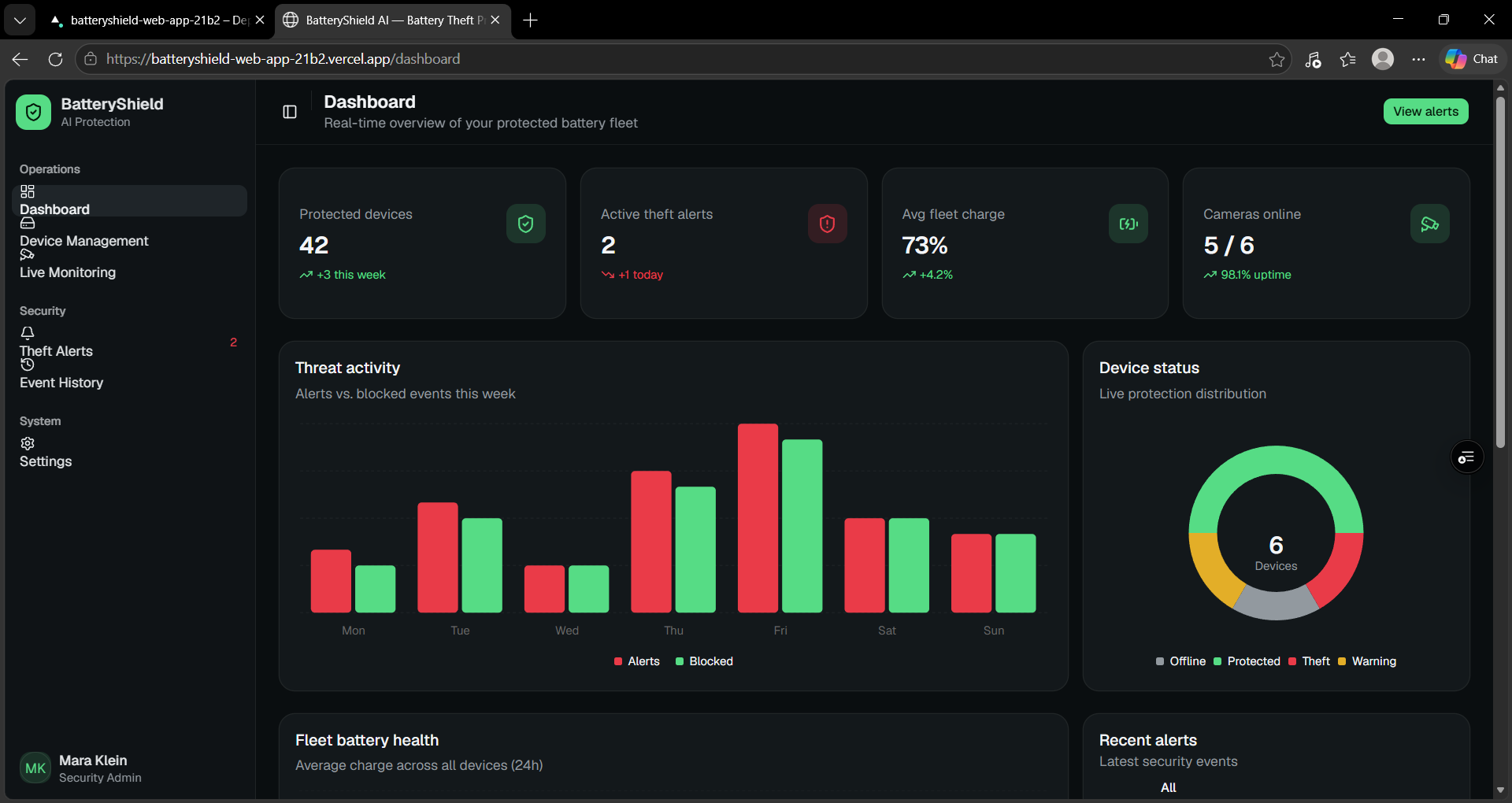
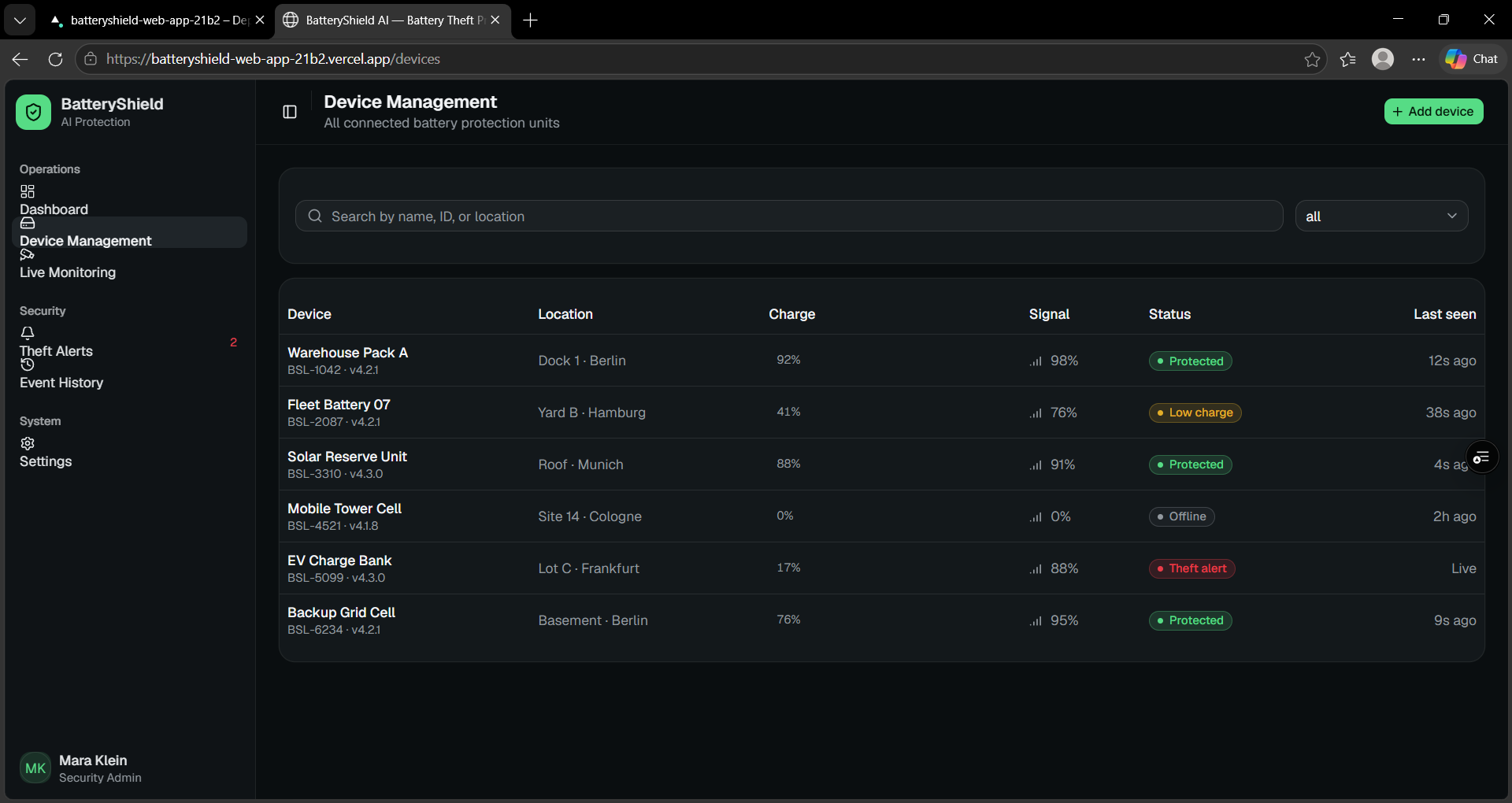
- Provides a modern web dashboard to monitor system status.
The platform enables users to monitor battery security remotely through a responsive web interface.
How we built it
Our project combines Artificial Intelligence, Computer Vision, Backend APIs, Cloud Services, and a modern frontend.
AI & Computer Vision
- YOLOv8
- OpenCV
- Python
The AI model processes live video frames and detects battery movement in real time.
Backend
- Flask
- REST API
- DynamoDB (AWS)
- JSON event storage
The backend manages alerts, stores history, and communicates with the frontend.
Frontend
- Next.js
- React
- TypeScript
- Tailwind CSS
- shadcn/ui
The frontend displays:
- Live alerts
- Battery status
- Threat history
- Interactive dashboard
- Device monitoring
Deployment
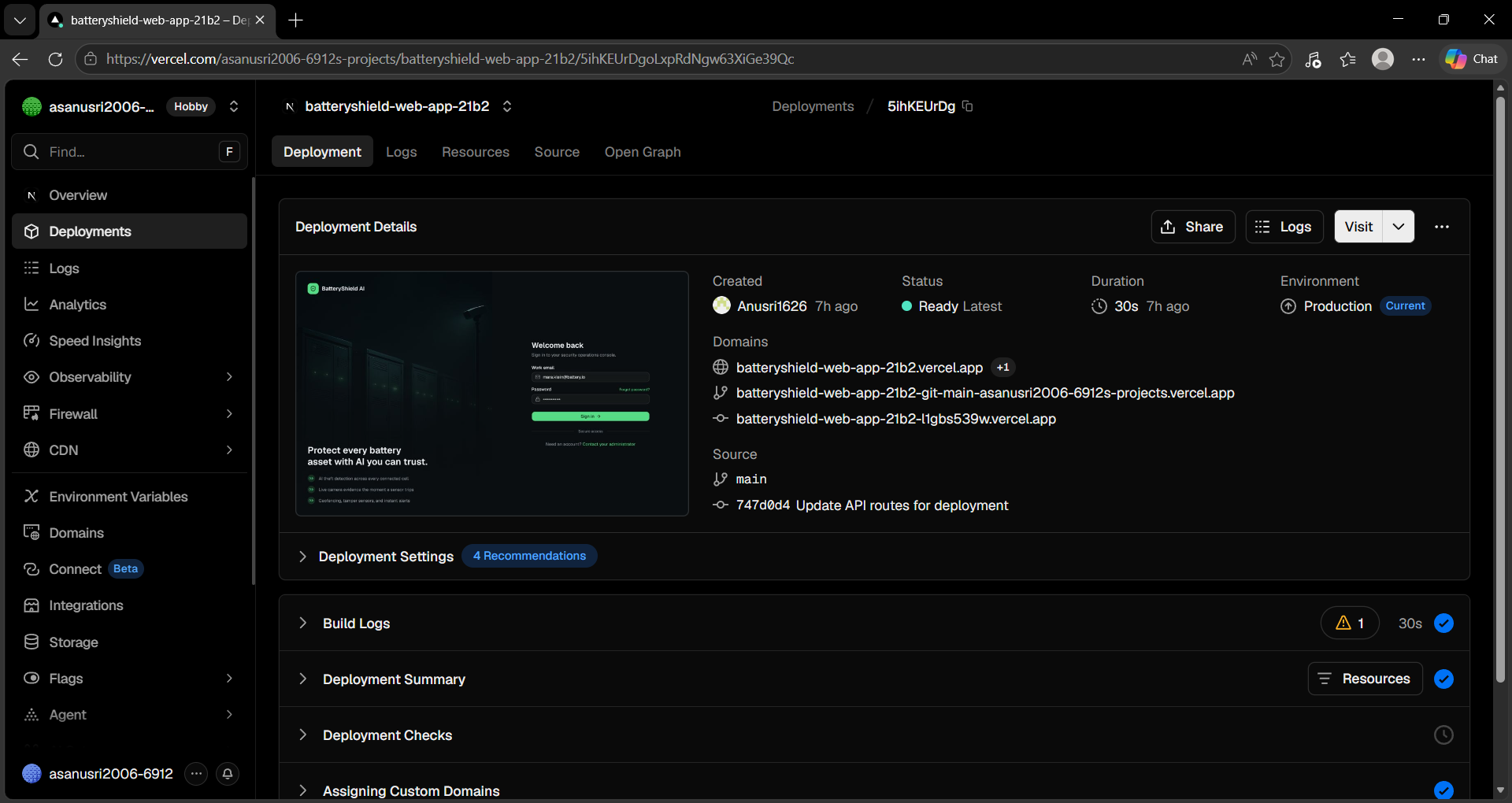
- Vercel (Frontend)
- GitHub
- ngrok (during live testing)
Challenges we ran into
Throughout development we encountered several technical challenges:
- Integrating the AI detection model with the web application.
- Establishing reliable communication between the Flask backend and the Next.js frontend.
- Managing API routing and deployment.
- Handling browser security restrictions for alarm audio playback.
- Exposing local services publicly for testing and demonstrations.
- Optimizing the dashboard for responsive performance.
Each challenge improved our understanding of full-stack AI application development.
Accomplishments that we're proud of
- Successfully integrated YOLOv8 with a real-time web dashboard.
- Built an end-to-end AI surveillance solution.
- Implemented instant alert generation.
- Developed a responsive and modern user interface.
- Connected backend APIs with live frontend updates.
- Successfully deployed the frontend for public access.
What we learned
This project helped us gain practical experience in:
- Computer Vision
- AI model integration
- Flask REST APIs
- Next.js application development
- React state management
- Cloud deployment
- GitHub collaboration
- Real-time application architecture
We also learned how AI systems can be transformed into practical security solutions.
What's next for BatteryShield AI
Future enhancements include:
- Mobile application support.
- SMS and email notifications.
- Push notifications for critical alerts.
- Multi-camera monitoring.
- Cloud-hosted AI inference.
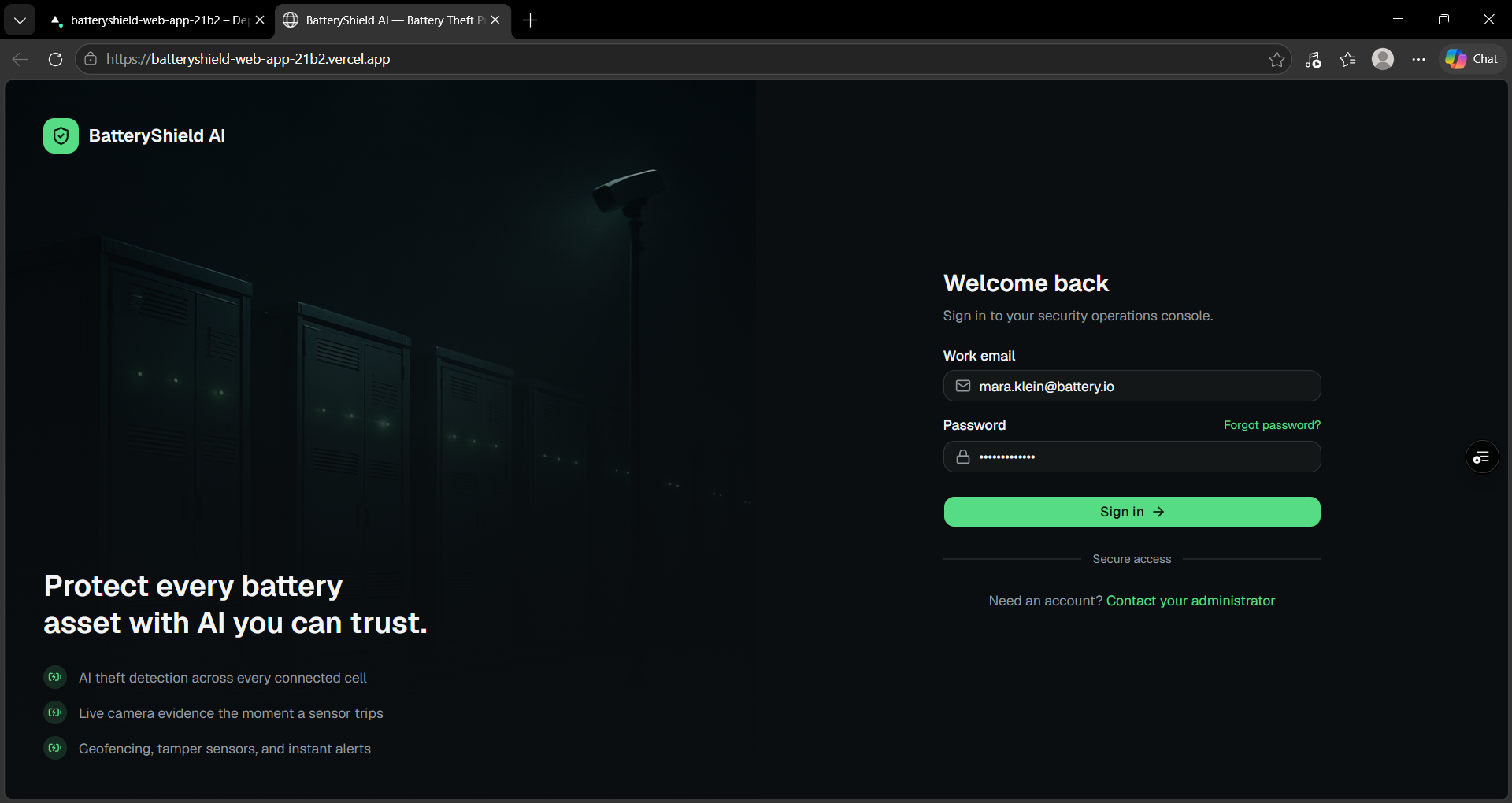
- User authentication and role-based access.
- Analytics dashboard for theft trends.
- Edge AI deployment on Raspberry Pi and NVIDIA Jetson devices.
Tech Stack
- Frontend: Next.js, React, TypeScript, Tailwind CSS, shadcn/ui
- Backend: Flask, Python
- AI: YOLOv8, OpenCV
- Database: AWS DynamoDB
- Version Control: GitHub
- Deployment: Vercel, ngrok
Vision
BatteryShield AI aims to make battery storage and electric vehicle ecosystems safer by combining Artificial Intelligence, Computer Vision, and Real-Time Monitoring into one intelligent security platform.
What it does
BatteryShield AI is an AI-powered battery theft detection and monitoring system that enhances battery security through real-time surveillance. Using a YOLOv8-based computer vision model, the system continuously monitors live video feeds to detect unauthorized battery movement or theft.
When suspicious activity is detected, the system instantly:
- Identifies potential battery theft using AI.
- Triggers a real-time alert with an alarm.
- Displays live notifications on a web dashboard.
- Records the event for future analysis.
- Enables remote monitoring through a responsive web interface.
The solution helps improve battery security in electric vehicles, warehouses, charging stations, and industrial environments.
How we built it
We developed BatteryShield AI by integrating artificial intelligence with a modern full-stack web application.
AI & Computer Vision
- YOLOv8 for battery detection
- OpenCV for real-time video processing
- Python for AI inference
Backend
- Flask REST API
- AWS DynamoDB for storing alerts and event history
- JSON-based event management
Frontend
- Next.js
- React
- TypeScript
- Tailwind CSS
- shadcn/ui
Deployment & Tools
- GitHub for version control
- Vercel for frontend deployment
- ngrok for backend testing during development
Challenges we ran into
During development we faced several technical challenges:
- Integrating the YOLOv8 model with the Flask backend.
- Connecting the Flask backend with the Next.js frontend.
- Managing real-time communication between AI detection and the dashboard.
- Configuring cloud deployment and public access for demonstrations.
- Handling browser autoplay restrictions for the alert alarm.
- Debugging API routing, CORS, and deployment-related issues.
- Optimizing the system for smooth real-time monitoring.
These challenges helped us improve our understanding of AI deployment and full-stack development.
Accomplishments that we're proud of
- Successfully built an end-to-end AI-powered battery theft detection system.
- Integrated real-time computer vision with a responsive web dashboard.
- Implemented live alerts and event history tracking.
- Created an intuitive and modern user interface.
- Connected AI detection with cloud-based monitoring.
- Successfully deployed the frontend for public access.
- Demonstrated how AI can solve real-world security problems.
What we learned
Working on BatteryShield AI gave us hands-on experience with:
- Computer Vision using YOLOv8
- OpenCV for real-time object detection
- Flask REST API development
- Next.js and React application development
- TypeScript and Tailwind CSS
- AWS DynamoDB integration
- GitHub collaboration and deployment workflows
- Cloud hosting and application deployment
- Building complete AI-powered full-stack applications
Most importantly, we learned how to transform an AI model into a practical real-world security solution.
What's next for BatteryShield AI
We plan to expand BatteryShield AI with several advanced features:
- Mobile application for remote monitoring
- SMS, email, and push notifications
- Multi-camera monitoring support
- User authentication and role-based access control
- Cloud-hosted AI inference for improved scalability
- Battery analytics and theft trend visualization
- Edge AI deployment on Raspberry Pi and NVIDIA Jetson
- GPS integration for battery location tracking
- Predictive analytics for battery health and security risks
Our vision is to build a smart, scalable, and affordable battery security platform that protects valuable battery assets using Artificial Intelligence and real-time monitoring.

Log in or sign up for Devpost to join the conversation.