-
-
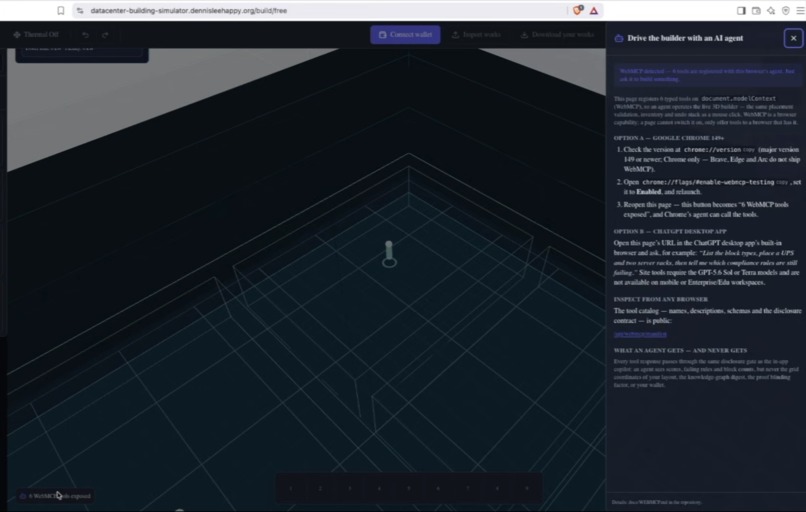
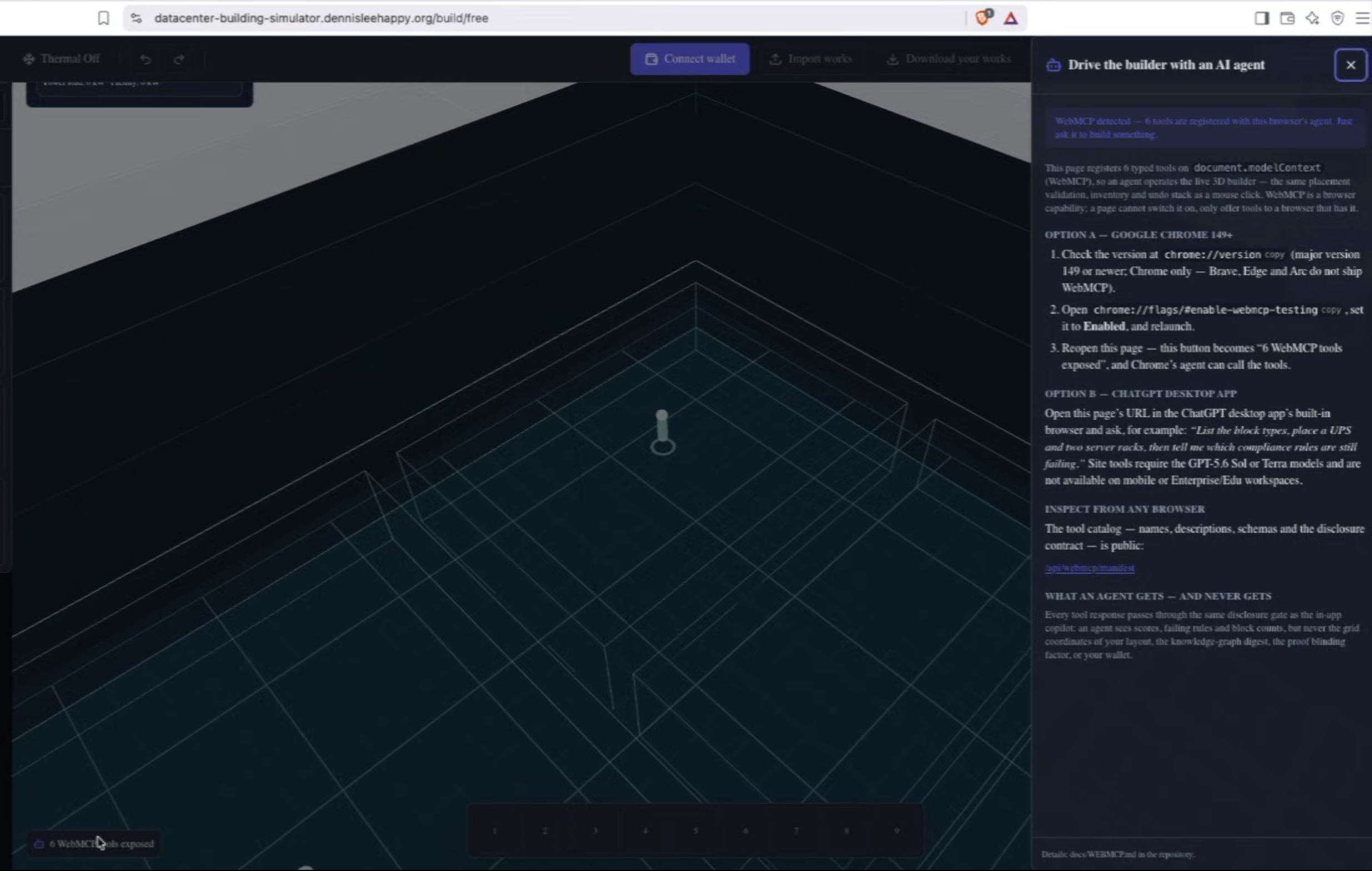
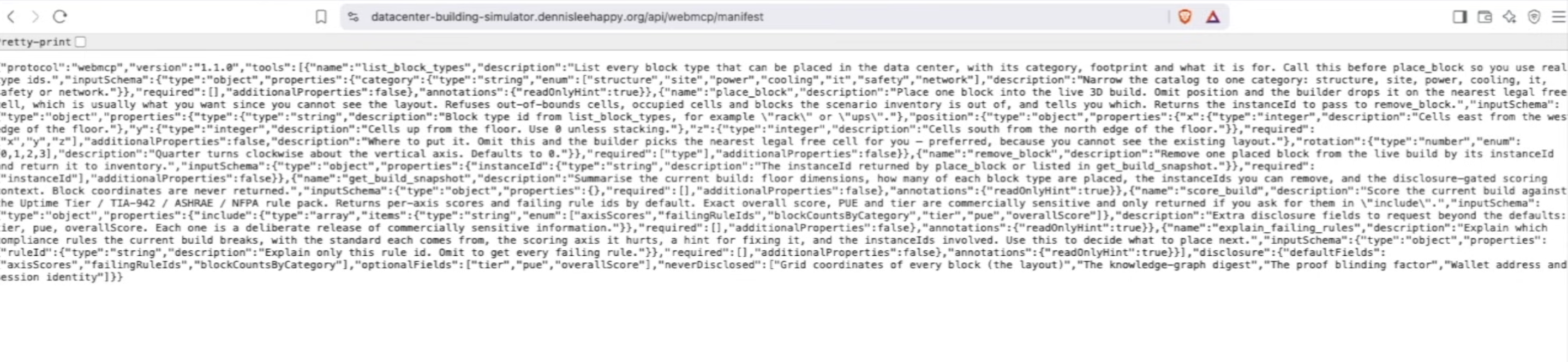
1. explanation of using webmcp in this project(6 tools)
-
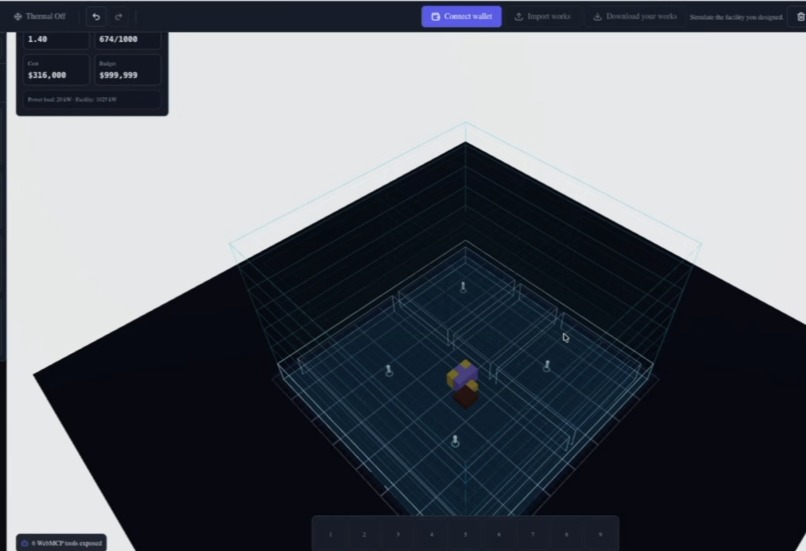
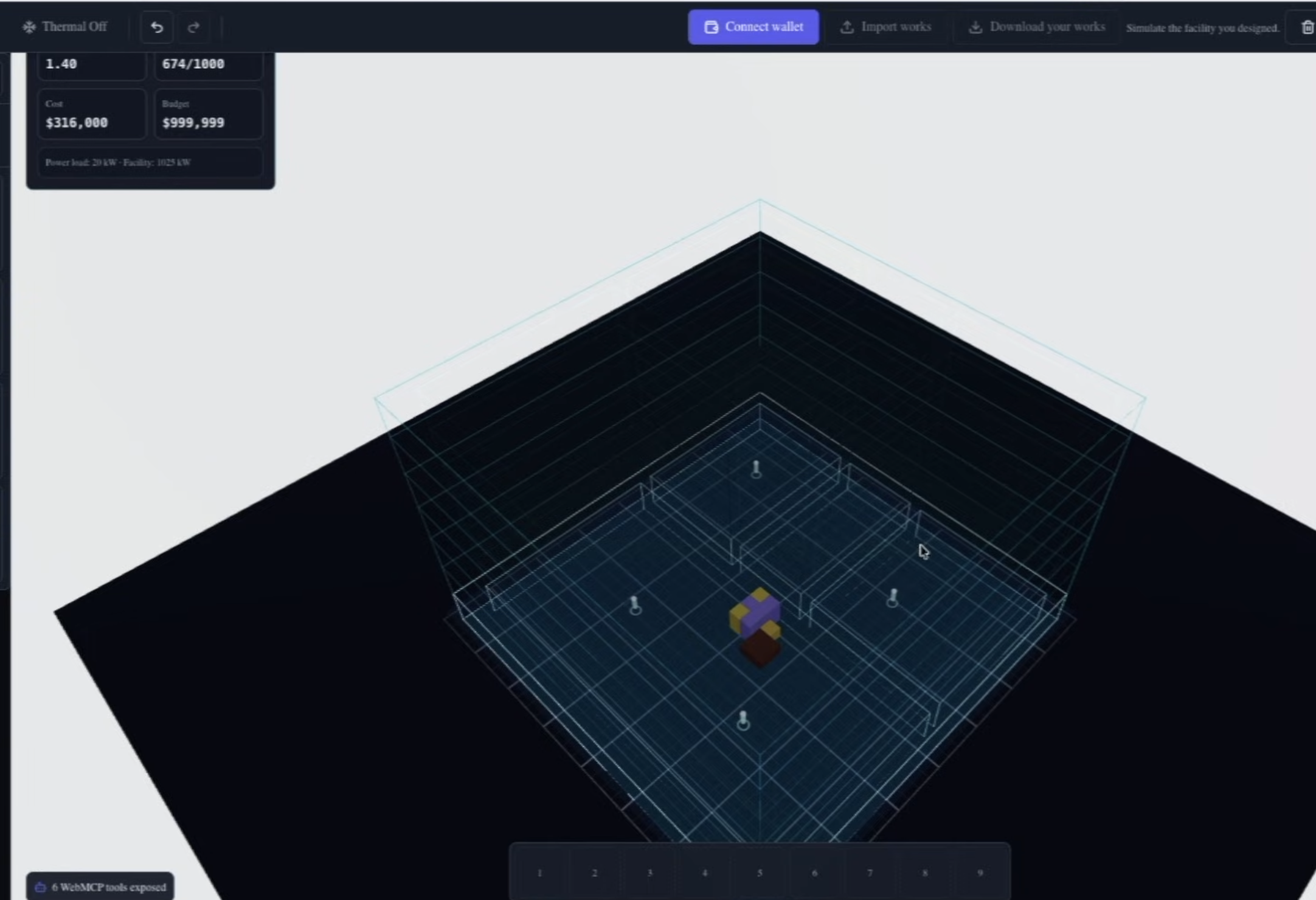
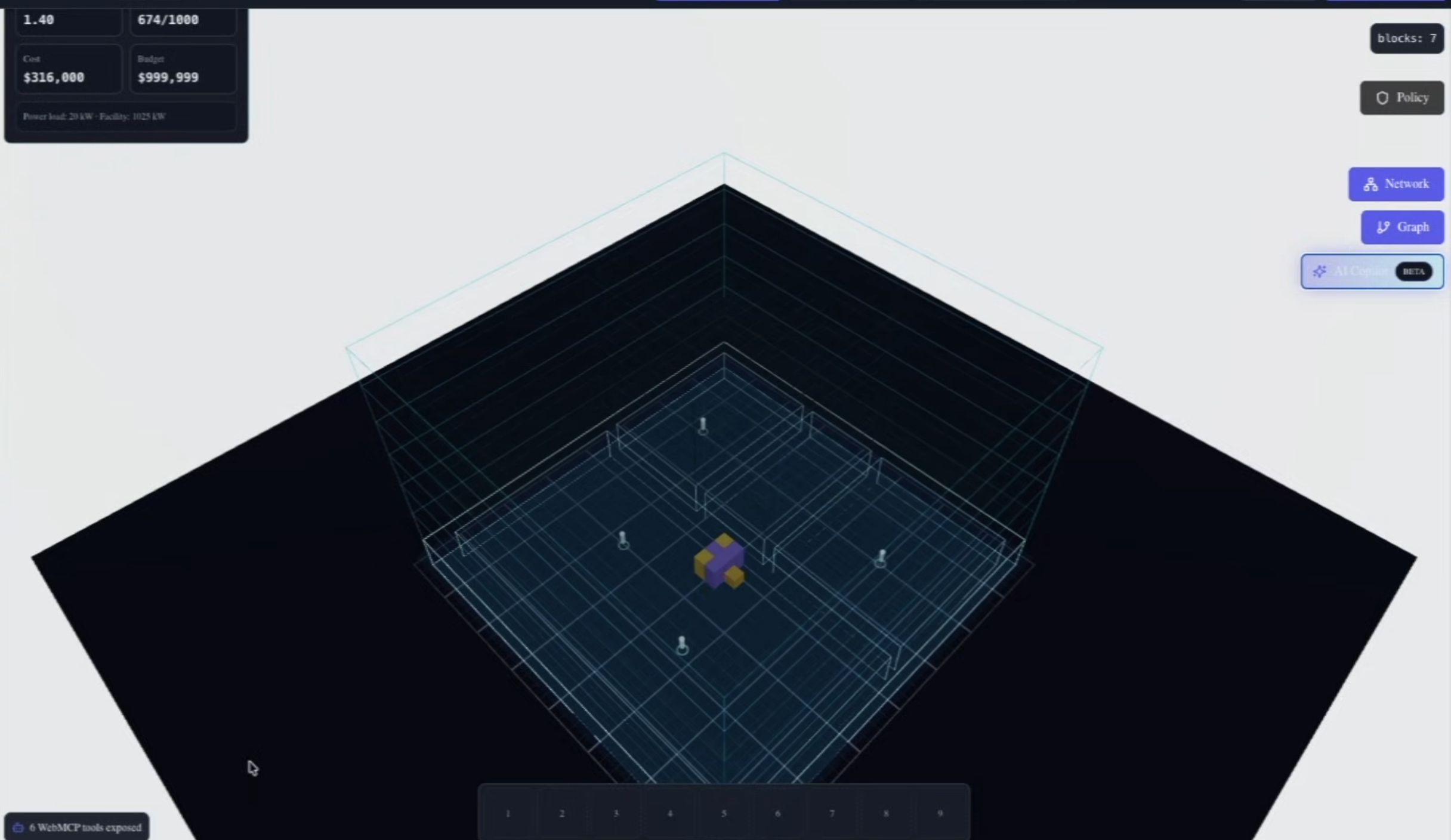
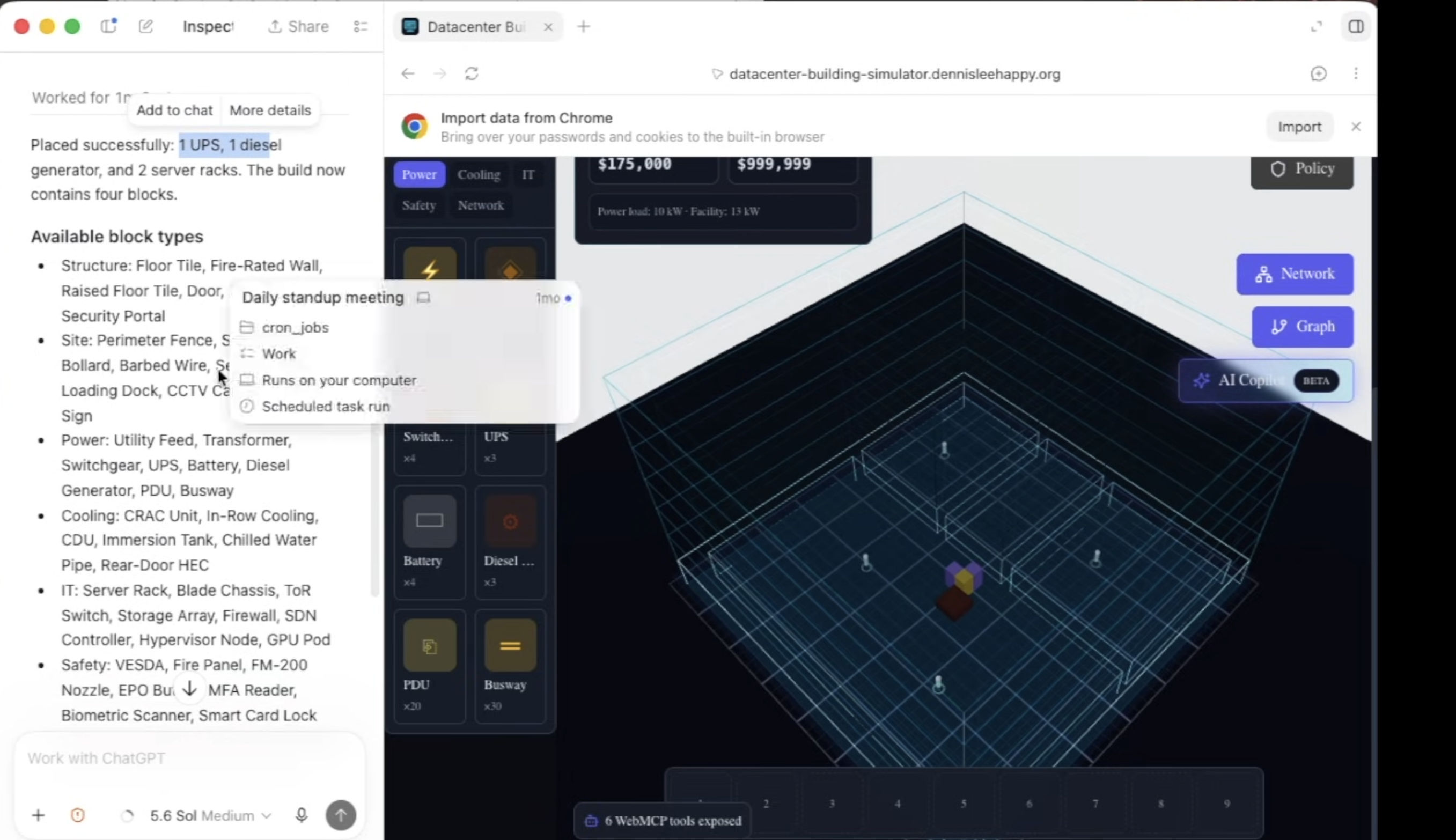
2.1 agent itself build the datacenter
-
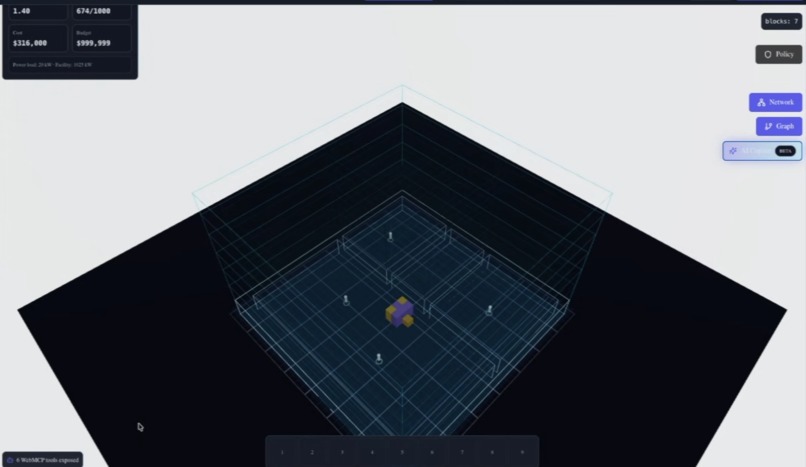
2.2 agent itself build the datacenter
-
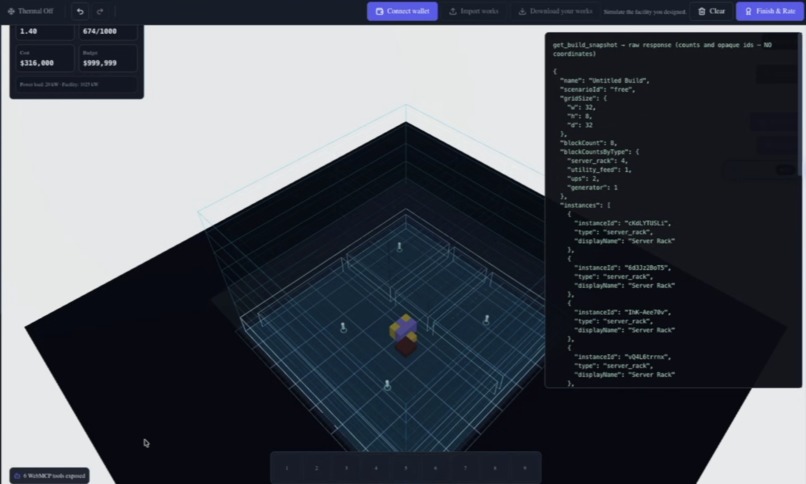
2.3 agent checking building standards and regulation rules
-
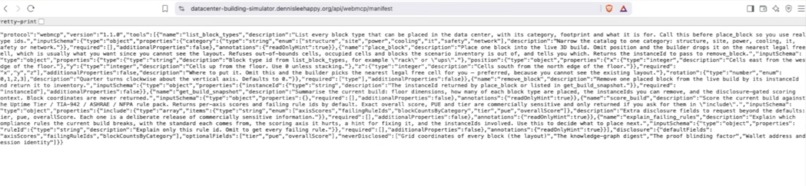
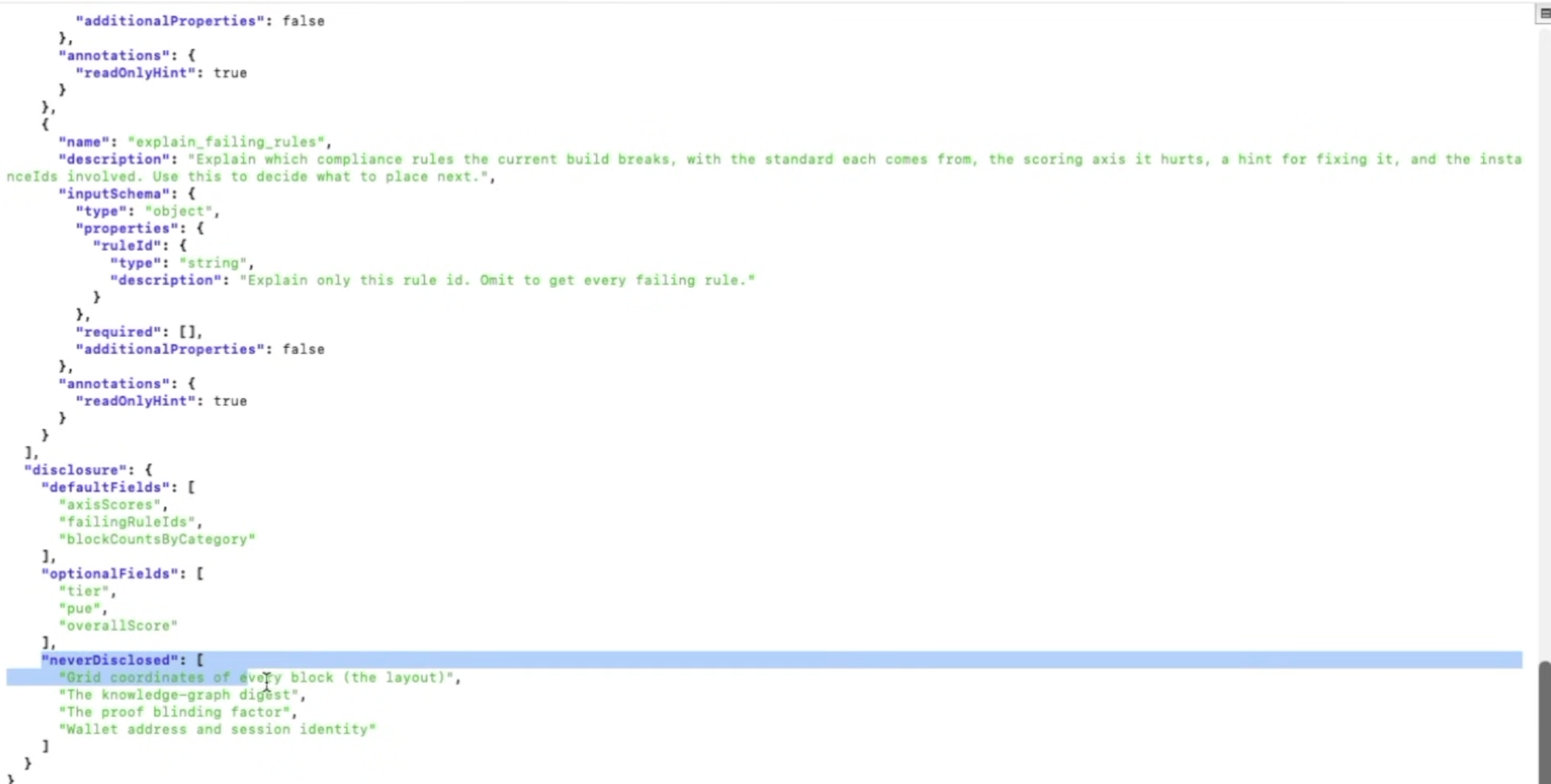
3. agent generate datacenter schema manifest
-
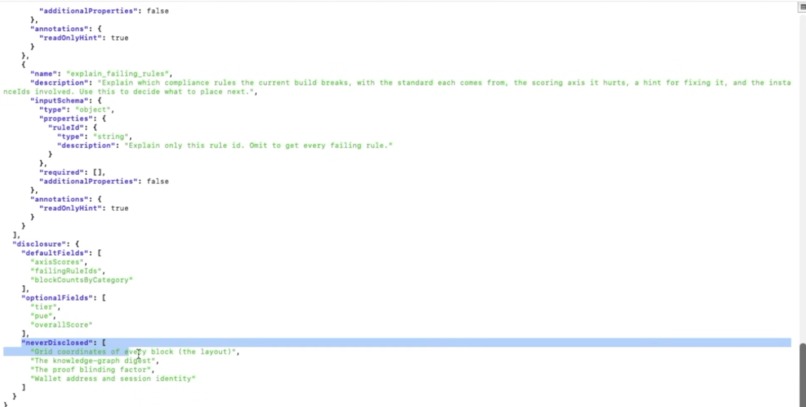
4. using cli to get 3. agent-generating datacenter schema manifest
-

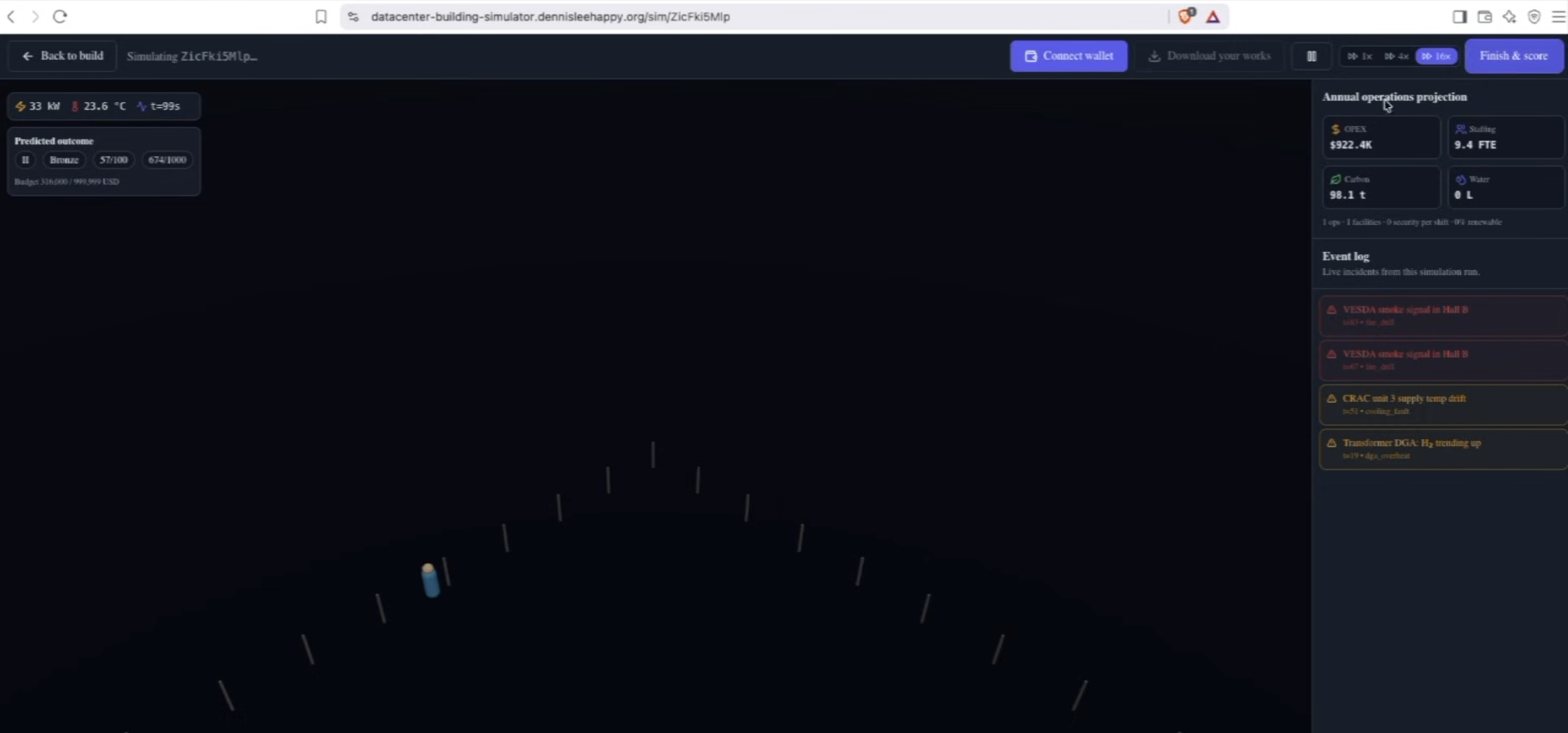
5. simulation process
-
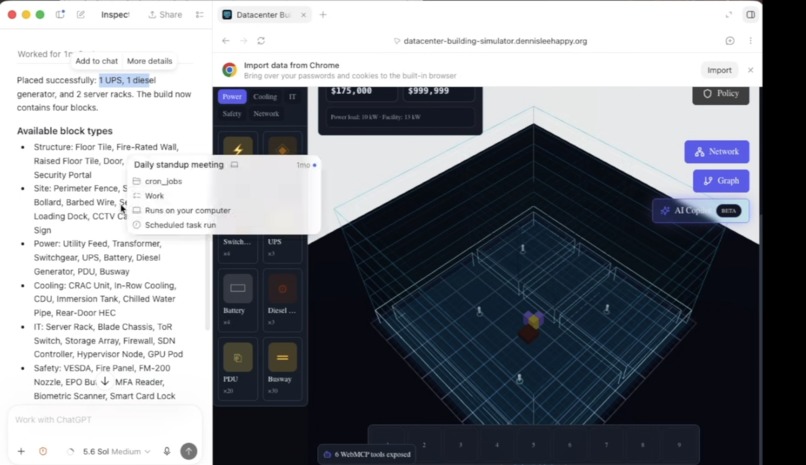
6 in chatgpt desktop, using web mcp to let agent itself(5.6 SOL) build the datacenter
-
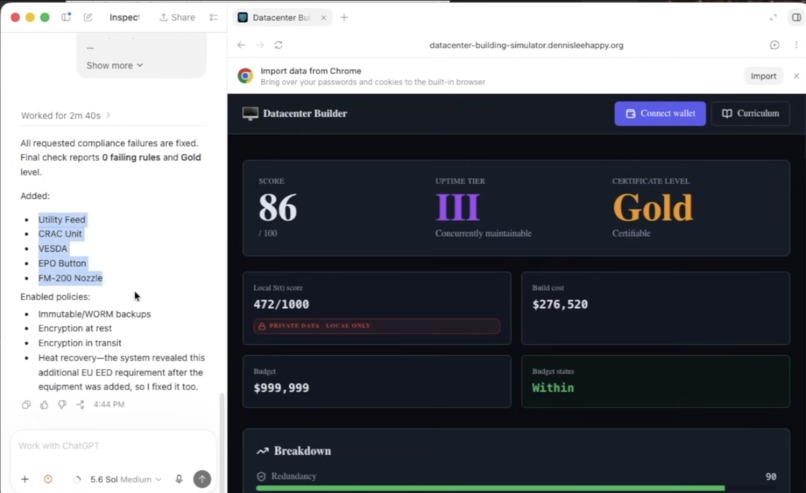
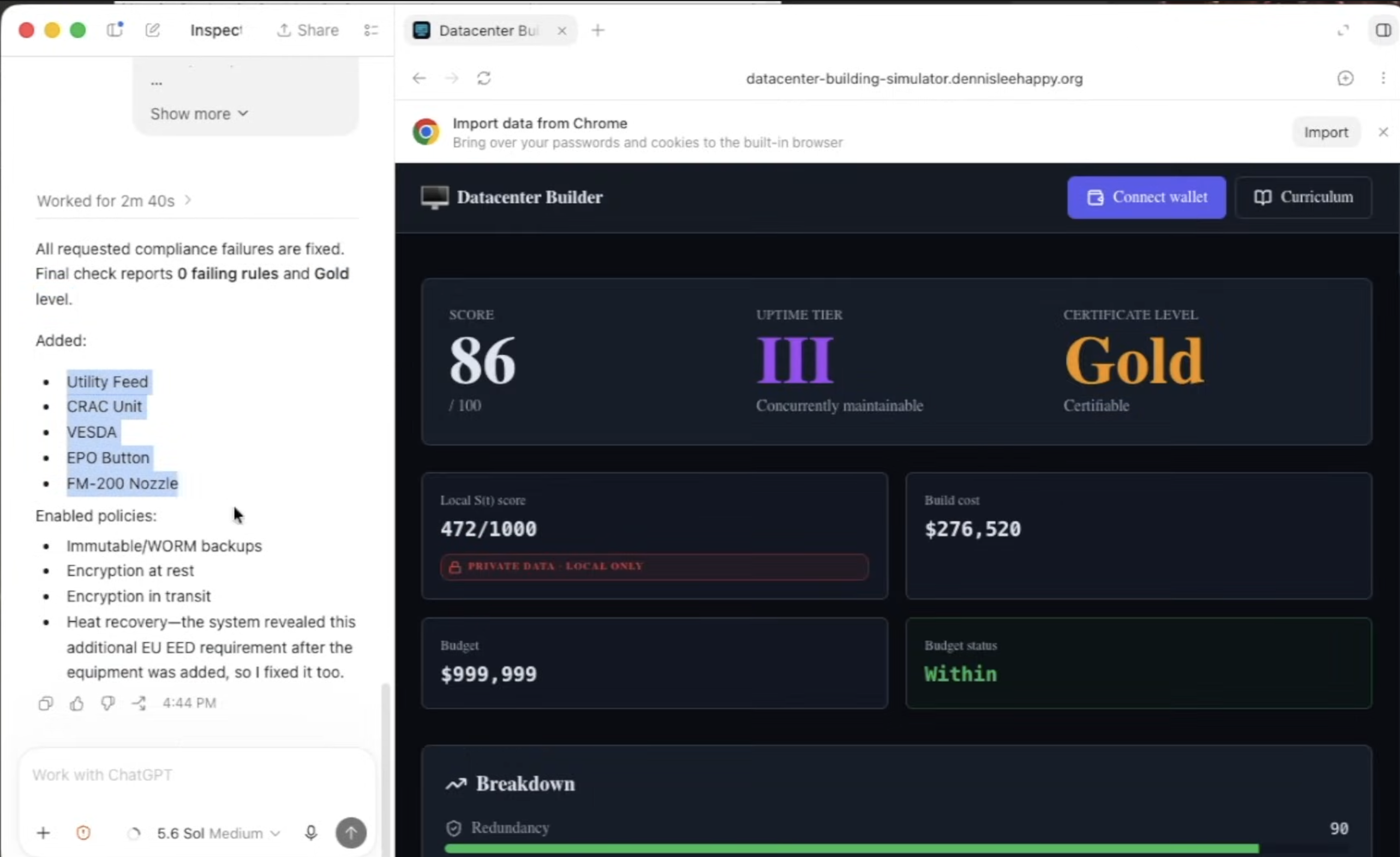
7. in chatgpt desktop final building results/explanation/and certification.
Inspiration
Durning the process of preparing CCSP, we've learned that data center's real PUE, cooling architecture and physical layout are commercial secrets — yet every certification scheme on earth asks the operator to hand exactly those numbers to an auditor to earn a badge. Also, we happened to be micraft and lego fans.
We wanted to remove that trade-off: design a facility in a 3D voxel builder, score it deterministically against 13 real international standards, and publish only the verdict — never the design — via a zero-knowledge proof.
Then WebMCP arrived and raised a second, sharper question: if an AI agent can operate your builder, how much is it allowed to know? An agent is a third party in every sense that matters — it is a language model, it keeps transcripts, and it is not the person who drew the layout. That made our privacy problem and the agent problem the same problem, and this hackathon the natural place to solve it.
What it does
- Build — a 32×8×32 voxel grid, 47 block types across structure, site, power, cooling, IT, safety and network.
- Simulate — SimCity for facilities: NPCs walk the floor, live power/thermal gauges, deterministic staffing / OPEX / carbon / water projections.
- Score — 37 rules, every one citing a real standard (Uptime Tier I–IV, TIA-942-C, EN 50600, ASHRAE TC 9.9, NFPA 75/76/855, ISO/IEC 27001, EU EED, and more). Six axes roll into one score:
$$S = 0.20 \cdot \text{redundancy} + 0.20 \cdot \text{power} + 0.15 \cdot \text{cooling} + 0.15 \cdot \text{safety} + 0.15 \cdot \text{efficiency} + 0.15 \cdot \text{security}$$
- Prove — a real Noir + Barretenberg (UltraHonk) proof generated in the browser in ~1.4 s, asserting one sentence and nothing more: "I know a design whose digest is D, which rule pack V scored ≥ threshold T."
- Mint — the certificate becomes a Soulbound ERC-721 on Polygon / Ethereum / BSC / Base / Arbitrum / Optimism.
- WebMCP — the builder page registers 6 tools on
document.modelContext, so an agent sitting next to the page operates the live 3D builder: the same Zustand actions a mouse click calls, the same placement validation, the same undo stack.
| Tool | What it does |
|---|---|
list_block_types |
The 47-block catalog: id, category, footprint, tags |
place_block |
Place a block — position optional; omitted, it snaps to the nearest legal free cell |
remove_block |
Remove a block by instance id |
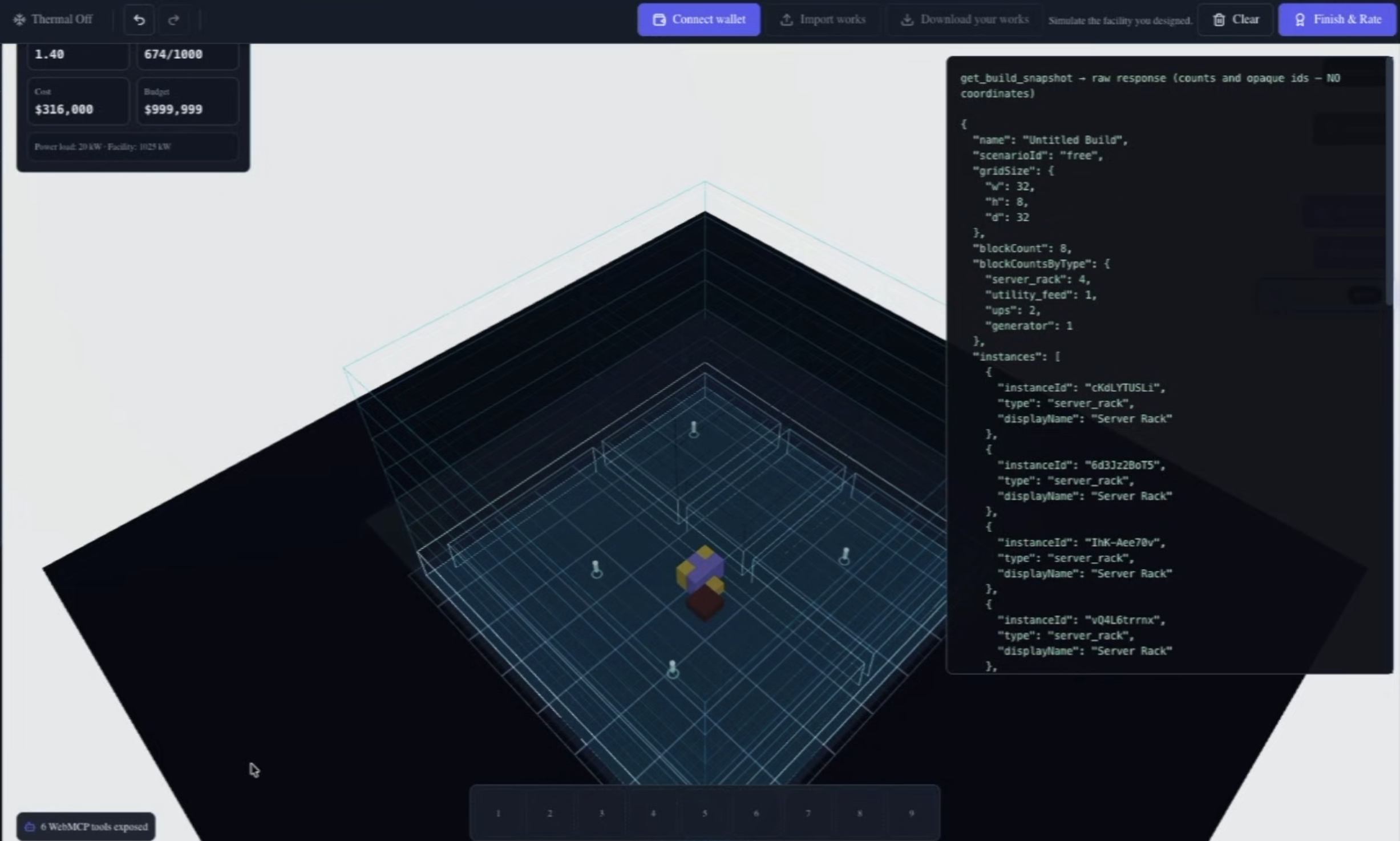
get_build_snapshot |
Counts by type, floor size, instance ids — disclosure-gated |
score_build |
Per-axis scores, failing rule ids, cert level — disclosure-gated |
explain_failing_rules |
Each failing rule with severity, cited standard and a fix hint |
Built With
- barretenberg
- chatgpt-desktop
- cloudflare
- cloudflare-workers
- compact
- erc-721
- ethers
- indexeddb
- midnight
- nextjs
- noir
- playwright
- r3f
- react
- robot-framework
- solidity
- three.js
- typescript
- vitest
- wagmi
- webmcp
- zero-knowledge-proofs
- zod

Log in or sign up for Devpost to join the conversation.