
🚀 Our Story
Across our careers in tech, one recurring pain kept surfacing-for developers, teammates, and project managers alike: managing tickets and boards.
On paper, ticket management sounds simple. In reality, once development goes full throttle, a gap quickly forms between the actual state of the project and the state reflected on boards.
This gap exists largely due to communication breakdowns:
- PMs don’t always understand the real complexity of tasks.
- Developers don’t always have enough context to estimate accurately or guide newcomers.
- Tickets go stale, estimates drift, and boards stop reflecting reality.
Bassist exists to close that gap-using automation and LLMs to keep project state, tasks, and execution in sync.
💡 The Solution
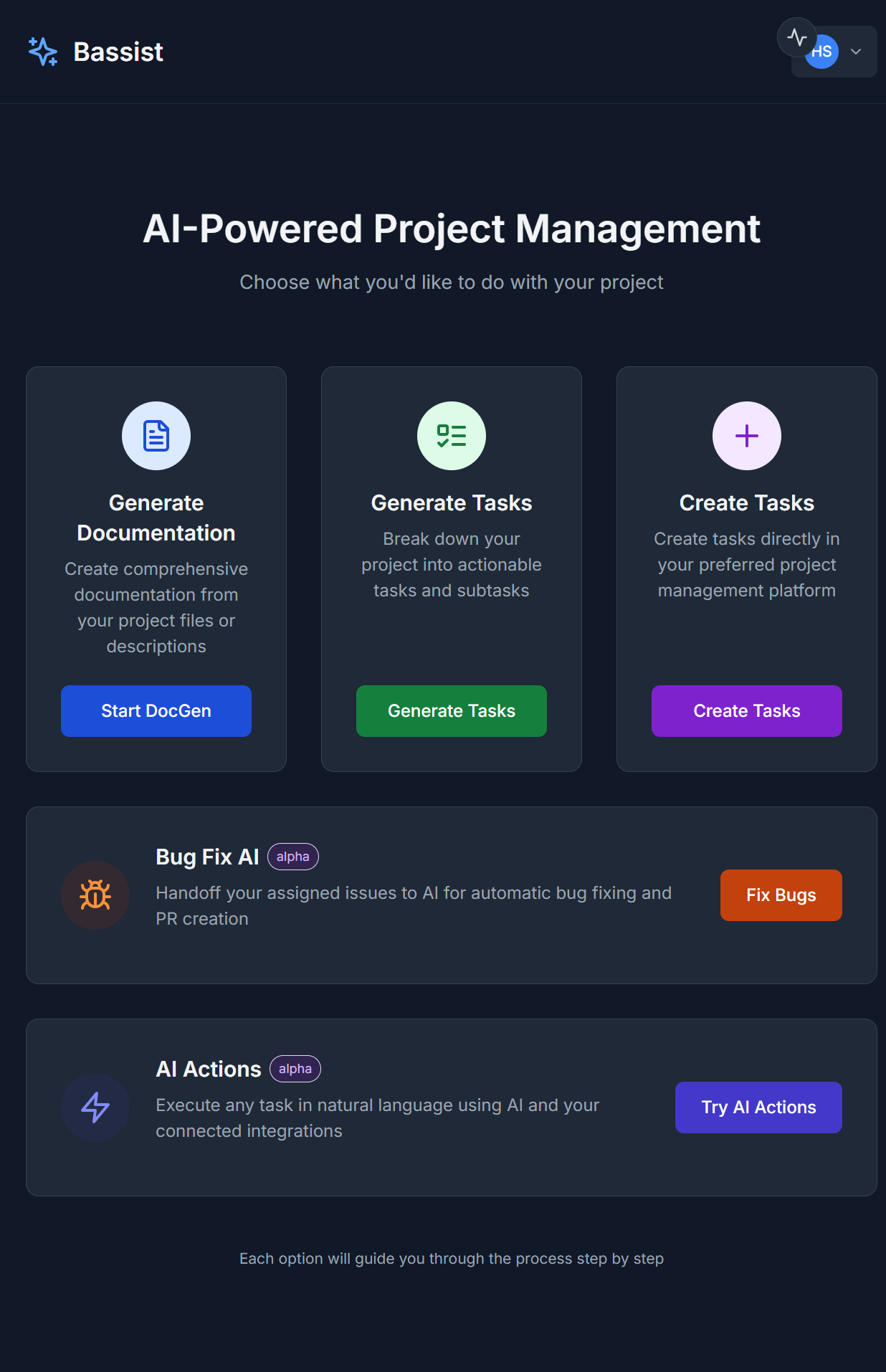
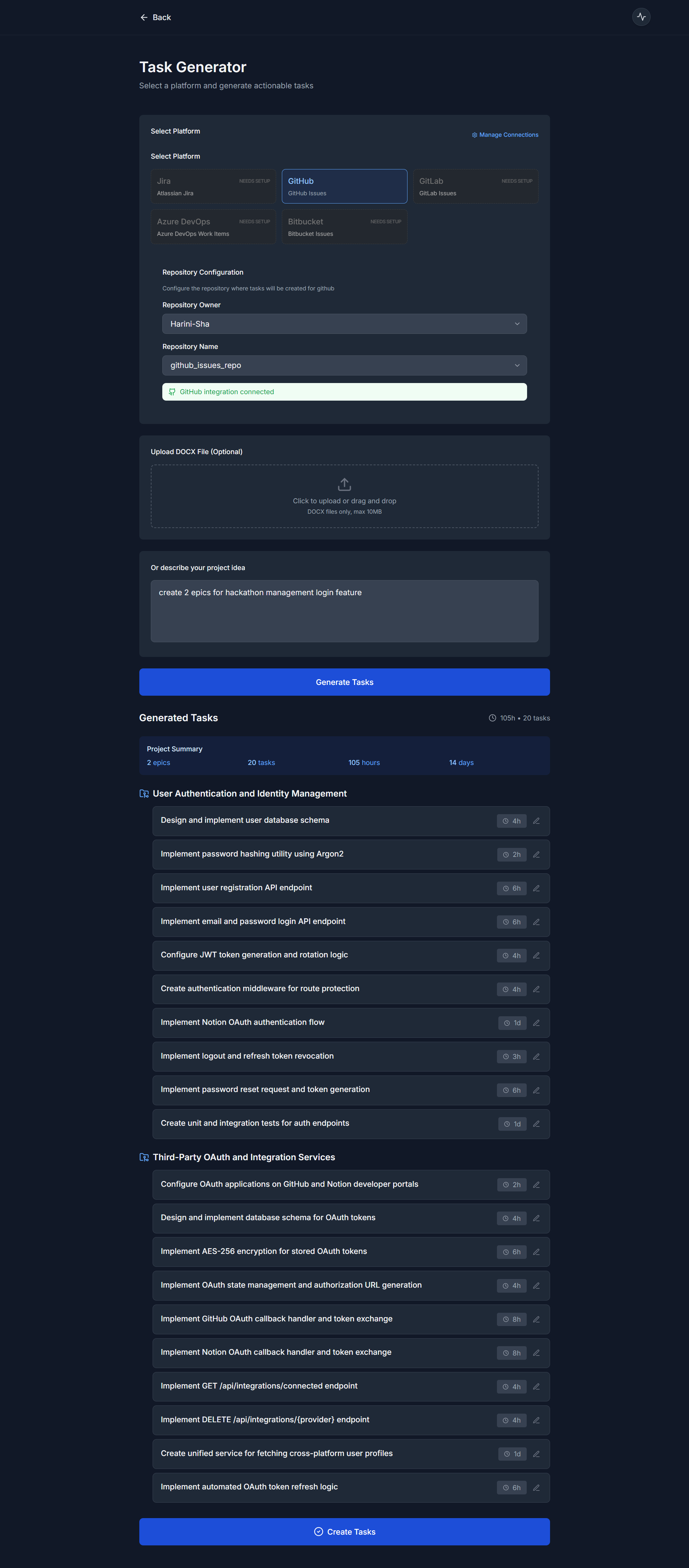
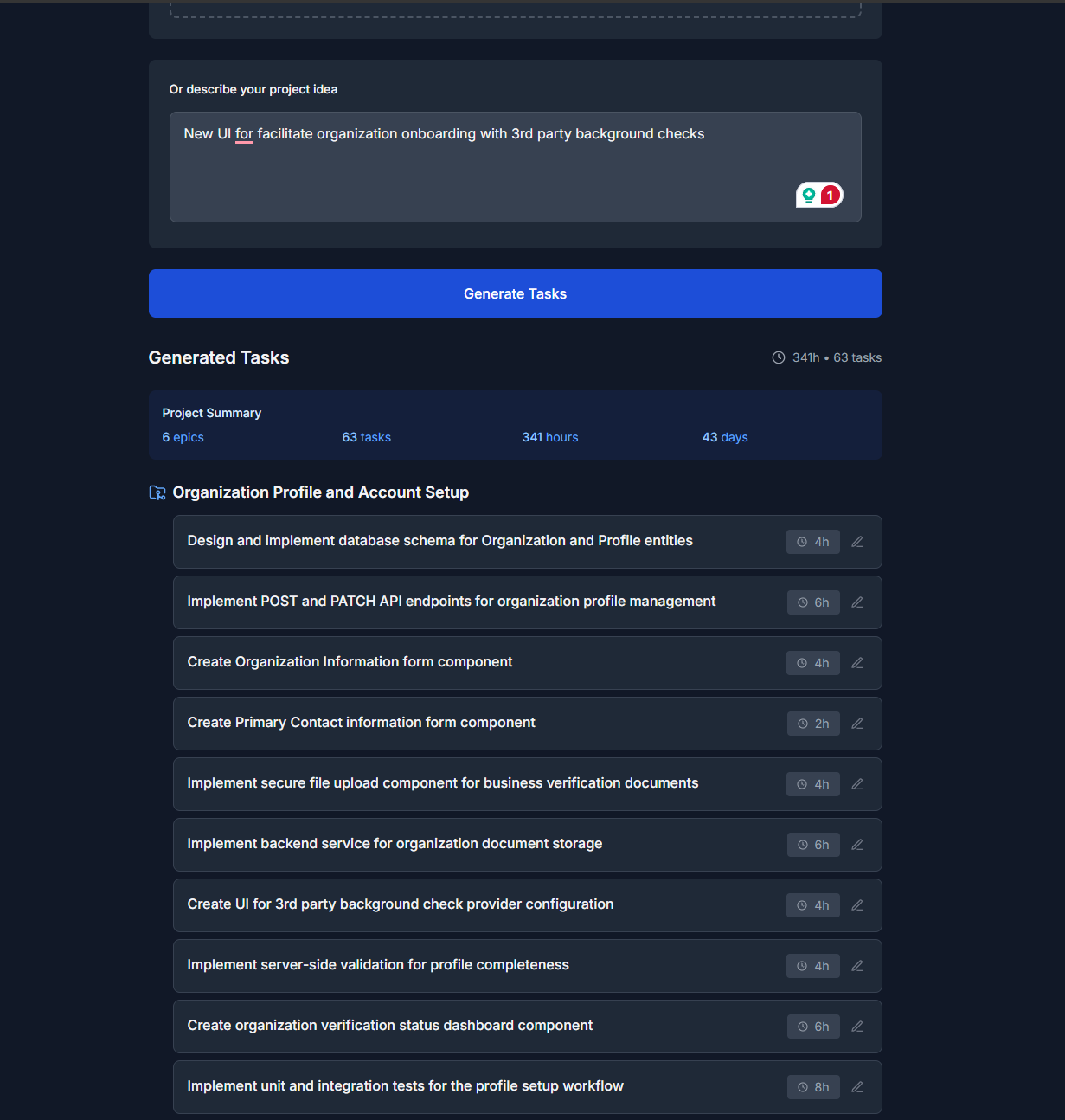
Bassist allows you to define a project topic and then autonomously manages the workflow end-to-end:
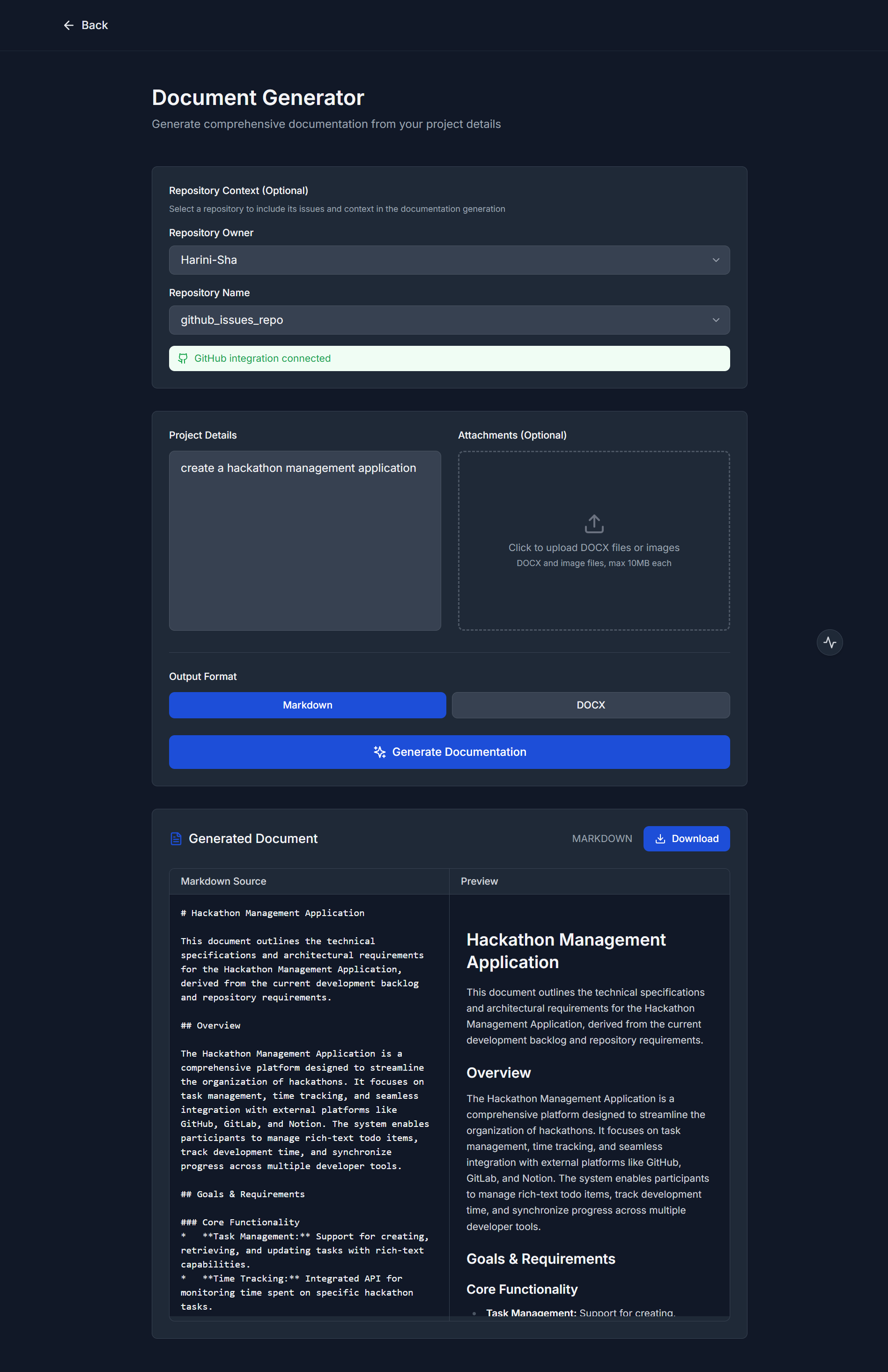
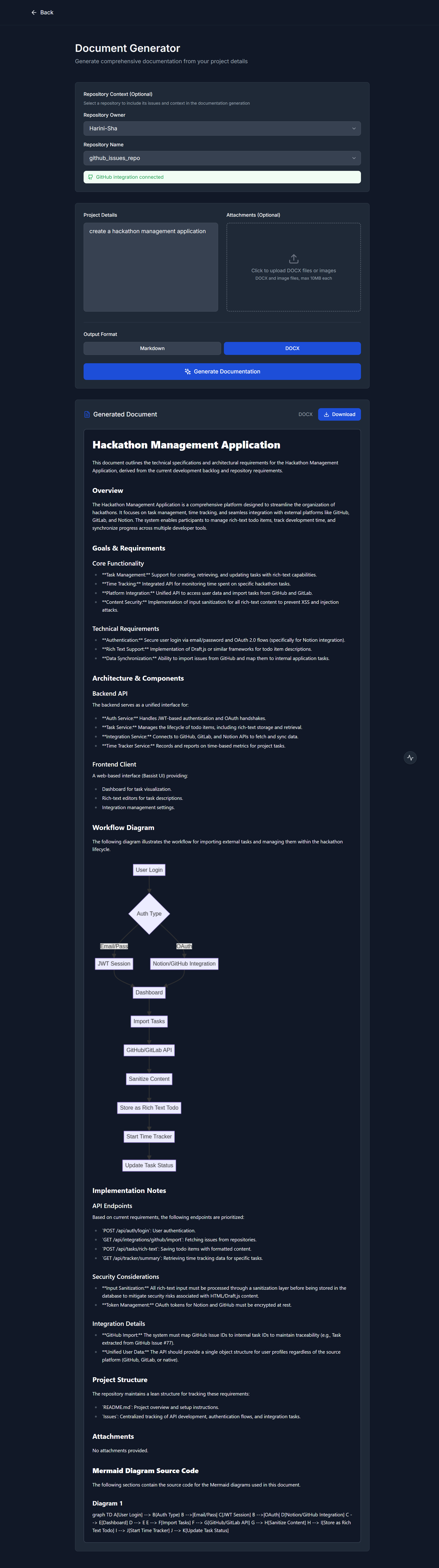
Documentation Generation
Automatically creates structured project documentation from high-level input.Task Generation with Estimates
Generates task lists with estimates derived from:- Past project data
- Historical task patterns
- General project context
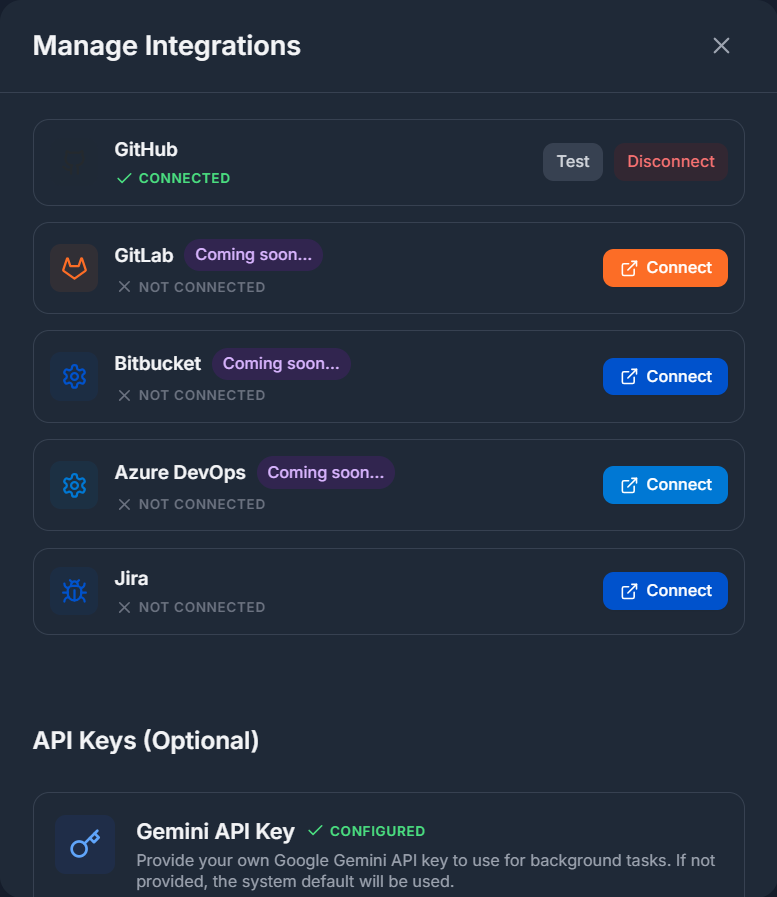
Multi-Platform Ticket Creation
Syncs tasks directly to platforms like:- GitHub
- GitLab
- Jira
- and more
- GitHub
Agent-Driven Execution
Tasks can be handed off to AI agents that:- Fix bugs
- Implement features
- Learn from open & closed tasks
with human-in-the-loop when required.
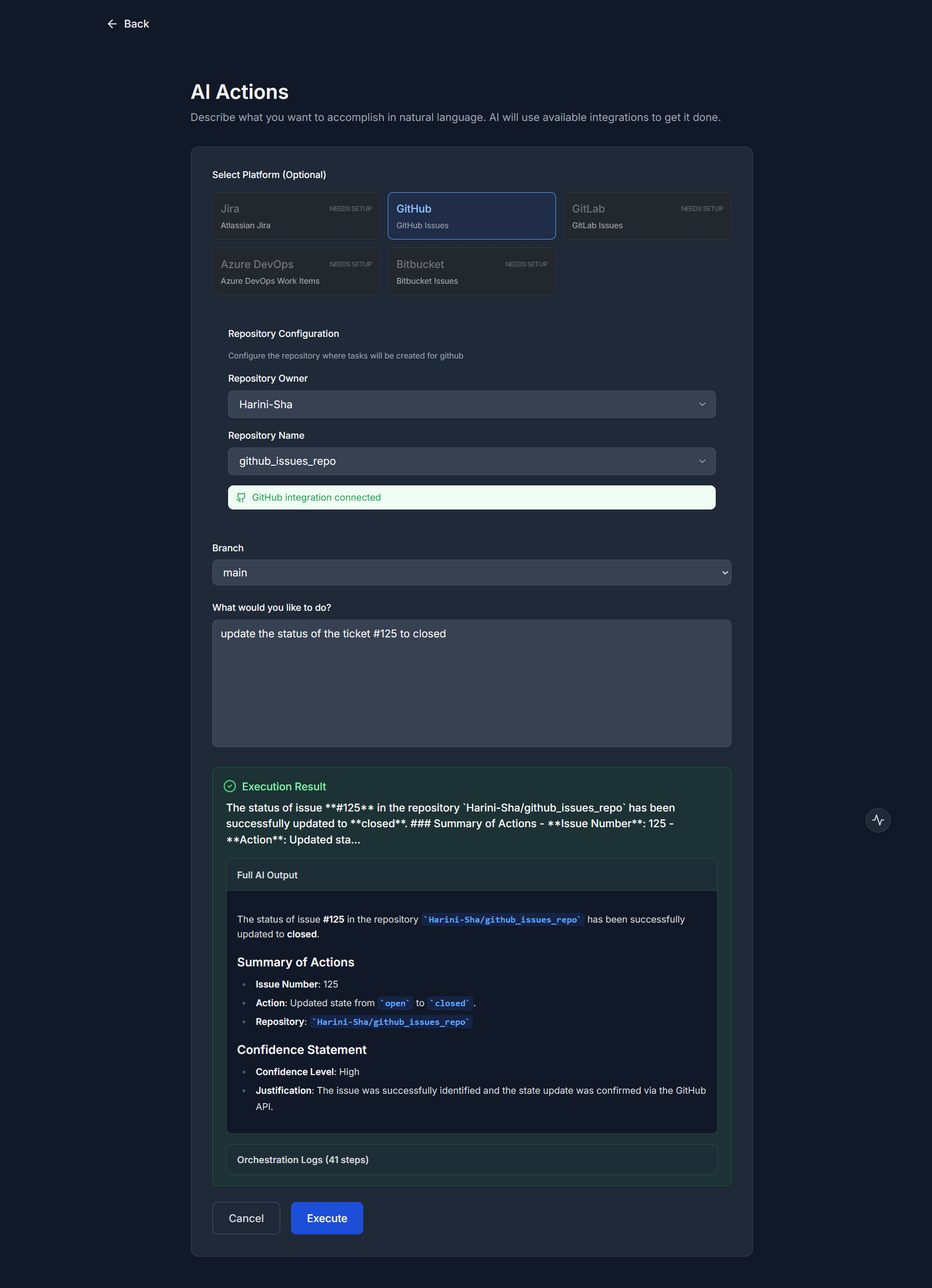
AI Actions
Ask natural-language questions like:- "What’s blocking this sprint?"
- "Why is this task delayed?"
- "What changed since last week?"
📚 What We Learned
Prompt Engineering
One truth became obvious very quickly:
Garbage in, garbage out.
There is no shortcut to good prompts.
They must be explicit, intentional, and iteratively refined.
Structured Output from LLMs
LLMs are powerful-but unreliable without guardrails.
We learned to:
- Use schema validation (e.g.,
zod) - Write stronger system prompts
- Implement retry loops
- Perform careful string parsing and sanitization
This significantly improved frontend reliability.
MCP - When to Use It (and When Not To)
We started with the wrong assumption-and learned the hard way.
Our initial goal was learning and experimentation. But once Bassist evolved into a user-facing product, reliability and predictability became non-negotiable.
This shift forced us to rethink:
- Where MCP fits
- Where deterministic systems are required
- Why "AI replacing jobs" is still far from reality 😉
LLMs are incredible assistants-but not autonomous replacements.
🛠 How We Built Bassist
Bassist began as a CLI tool used internally for personal and work projects.
Typing commands repeatedly became tedious-so we added a UI.
That’s when Bassist started becoming a product.
Early versions:
- Were heavily MCP-centric
- Routed nearly every user action through MCP
- Were slow, hard to debug, and unpredictable
Through iteration, we:
- Converted the CLI into a server
- Built a minimalistic UI
- Re-architected the system to be customer-centric, not just an LLM wrapper
Thanks to:
- Google’s excellent GenAI SDK documentation
- Transparent pricing
- Strong frontier-level Gemini models
Choosing Gemini as the core model was a no-brainer.
Challenges We Faced
Over-Reliance on MCP
We initially tried to use MCP for everything.
Problems:
- Slow execution for basic tasks
- Tool-selection errors
- Difficult debugging
- Unacceptable unpredictability for end users
Solution:
- MCP was removed from the core execution path
- Reintroduced as an extension platform via AI Actions
Result:
- Massive performance improvement
- More predictable behavior
- Easier debugging and maintenance
We’ve built systems that can act autonomously-but they still have a long way to go.
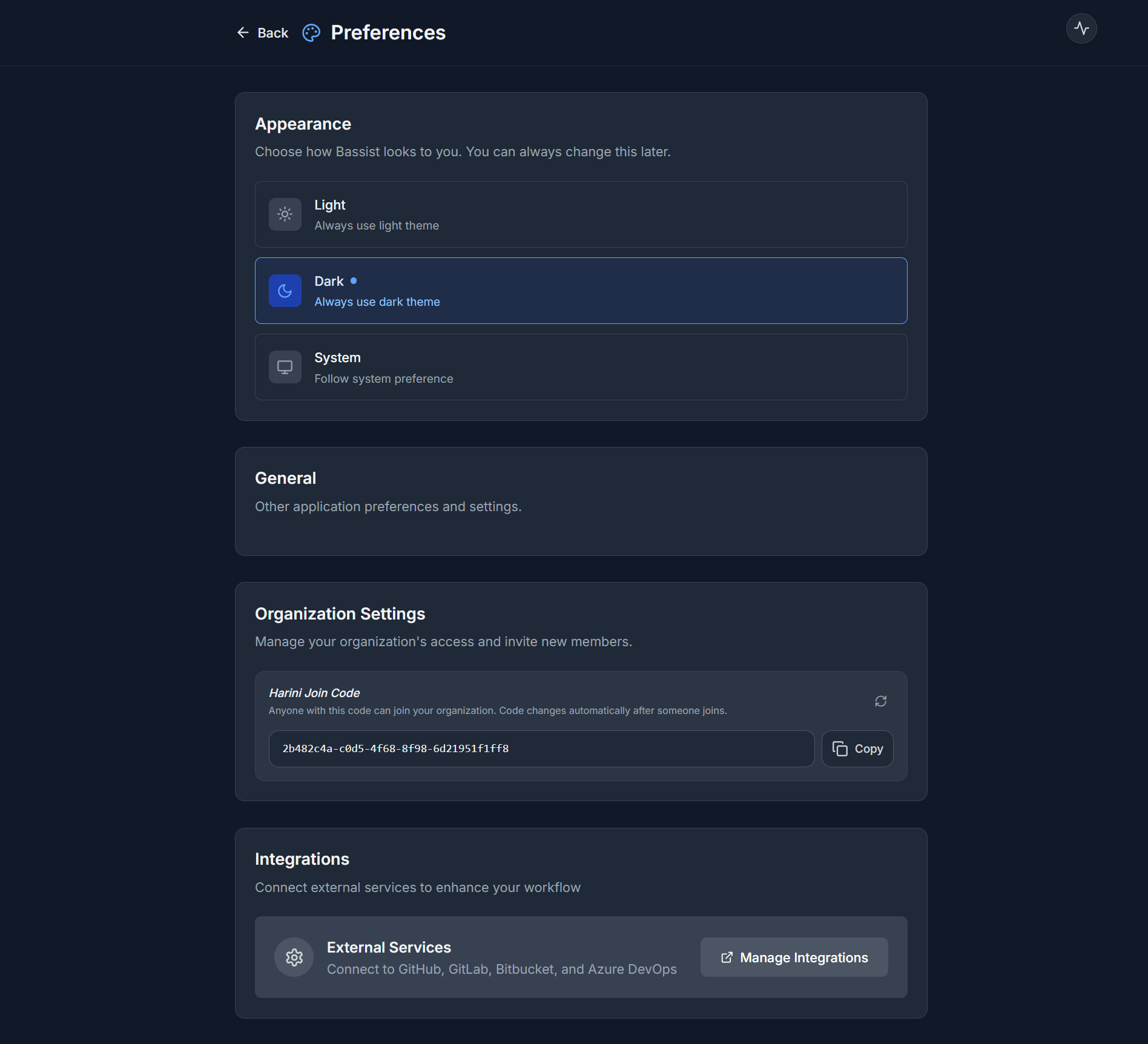
Managing Multiple Integrations
Integrating platforms like GitHub was surprisingly complex:
- Each platform behaves differently
- Error handling varies wildly
- Maintaining strict schemas for both LLMs and the database was painful
Refactoring these integrations from an MCP-centric design to a hybrid architecture tested our patience-but paid off.
Streaming & Parsing LLM Output
Streaming responses are inherently unpredictable.
Our core principle:
Errors are acceptable. Broken UI is not.
We ensured:
- The UI never crashes
- Failures are recoverable
- Users always receive actionable feedback
Prompt Predictability
LLMs are probabilistic-not deterministic.
We stopped chasing "perfect predictability" and instead:
- Upgraded model versions
- Added validation layers
- Implemented retry strategies
This dramatically increased the success rate of structured outputs.
🔮 Future Scope
- AI-driven project analytics
Examples:- "How many people do I need to ship this before monsoon?"
- "Will this sprint finish on time? If not, why?"
- Support for more LLM providers and model selection
- Expanded integrations
- Publishing deep-dives on real-world LLM usage
- Sharing lessons learned while continuing to improve Bassist
We’re building Bassist not just as a product-but as a learning platform for better AI-assisted software development. We are alwasy looking for everyday problems to be solved and we are curious how we can contribute to the society with tech and LLMs integrated in to tech


Log in or sign up for Devpost to join the conversation.