-
-
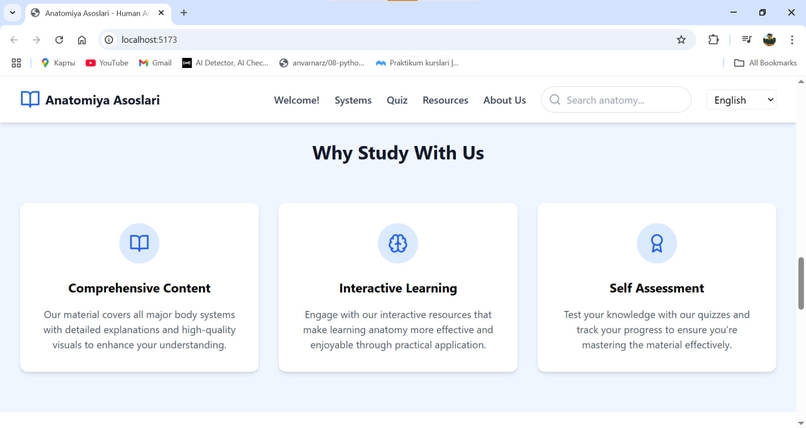
why study with us
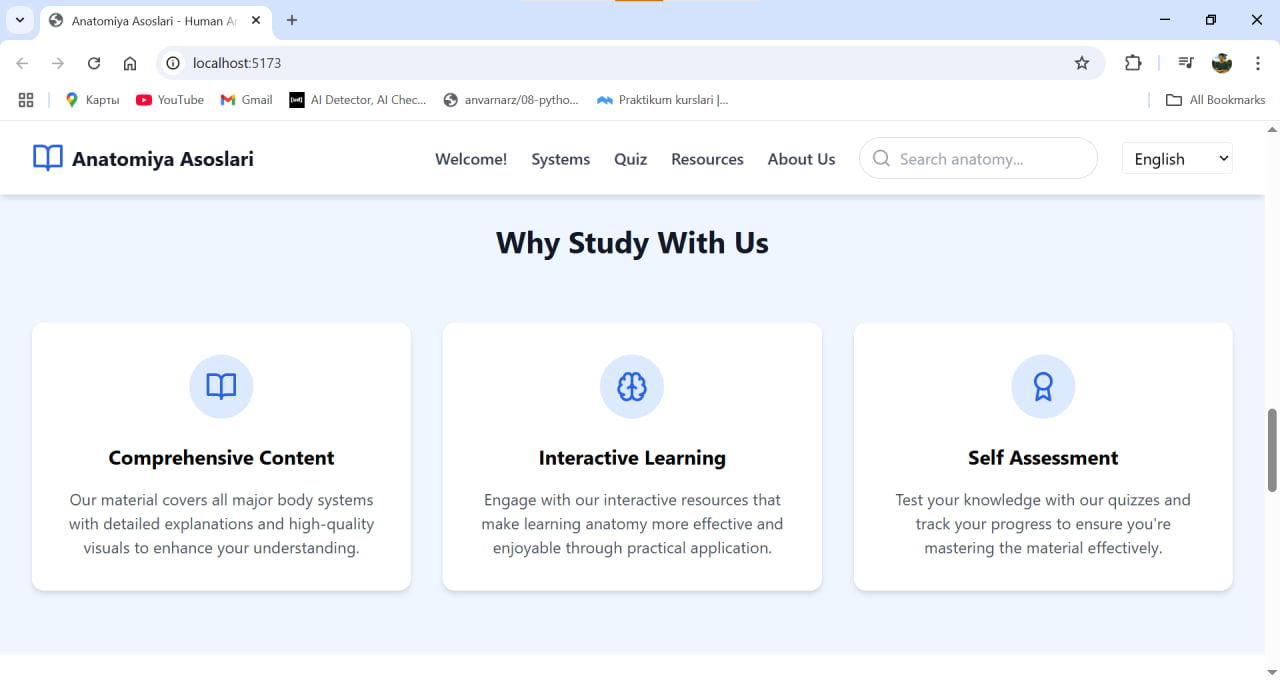
Inspiration The inspiration for Anatomiya Asoslari came from our own experiences as students and educators in the medical field. We noticed that many learners, especially in Central Asia, face significant barriers when studying anatomy: limited access to quality resources in their native language, outdated textbooks, and a lack of interactive learning tools. We wanted to bridge this gap by creating a platform that not only provides accurate and up-to-date anatomical information but also does so in multiple languages, making it accessible to a wider audience. Our goal was to make anatomy engaging, interactive, and inclusive, so that anyone—regardless of their background or language—can develop a deep understanding of the human body. What it does Anatomiya Asoslari is a comprehensive web application designed to facilitate the study of human anatomy. The platform offers: Multilingual Support: Users can seamlessly switch between Uzbek, English, and Russian, ensuring accessibility for a diverse user base. Interactive Learning: The site features detailed illustrations, interactive cards, and quizzes that help users actively engage with the material. Resource Library: Students can download high-quality study materials, including guides, diagrams, flashcards, and videos, to support both online and offline learning. Self-Assessment: Built-in quizzes allow users to test their knowledge and track their progress across different anatomical systems. User-Friendly Interface: The application is designed to be intuitive and responsive, providing a smooth experience on both desktop and mobile devices. How we built it We developed Anatomiya Asoslari using a modern web development stack: Frontend: Built with React and TypeScript, ensuring a robust, maintainable, and scalable codebase. Styling: Tailwind CSS was used for rapid UI development and to achieve a clean, modern look that adapts well to different screen sizes. Internationalization: We integrated i18next and react-i18next to manage translations and enable real-time language switching throughout the app. Component-Based Architecture: All features are organized into reusable components and pages, making it easy to add new content or features in the future. Content Management: All textual content is stored in structured JSON files for each language, simplifying the process of updating or expanding translations. Challenges we ran into During development, we encountered several challenges: Translation Accuracy: Ensuring that all scientific terms and educational content were accurately translated into Uzbek, English, and Russian required careful research and review. User Experience: Designing an interface that is both visually appealing and easy to navigate for users of all ages and backgrounds was a complex task. Responsive Design: Making sure the platform works flawlessly on a variety of devices, from smartphones to large monitors, involved extensive testing and adjustments. Content Organization: Structuring the educational materials in a way that is logical, comprehensive, and easy to access for users with different learning goals. Accomplishments that we're proud of We are proud of several key achievements in this project: Multilingual Functionality: Successfully implementing seamless language switching and providing high-quality translations for all content. Educational Value: Creating a platform that genuinely helps students and educators by offering reliable, interactive, and engaging resources. Design and Usability: Delivering a polished, modern interface that enhances the learning experience and makes complex information approachable. Team Collaboration: Working efficiently as a team to bring together diverse skills in design, development, and content creation within a limited timeframe. What we learned This project taught us valuable lessons in both technical and non-technical areas: Internationalization Best Practices: We gained hands-on experience in managing multilingual content and designing for a global audience. User-Centered Design: We learned the importance of gathering feedback and iterating on the user interface to meet the needs of different learners. Collaboration: Effective communication and task management were crucial to our success, especially when working under time constraints. Continuous Improvement: We realized that educational platforms must evolve with user needs and technological advancements, and we are committed to ongoing development. What's next for basics of anatomy Looking ahead, we have ambitious plans for Anatomiya Asoslari: Interactive 3D Models: We aim to integrate 3D anatomical models and animations to provide a deeper, more immersive learning experience. Personalized Learning: Introducing user accounts and progress tracking will allow learners to customize their study paths and monitor their achievements. Expanded Content: We plan to add more languages, cover additional topics, and collaborate with medical professionals to ensure the highest quality of information. Community Features: Building a community forum or Q&A section where users can ask questions, share resources, and support each other in their studies. Partnerships: We hope to partner with educational institutions and organizations to broaden our reach and impact. We are excited about the future of Anatomiya Asoslari and are committed to making anatomy education accessible, engaging, and effective for everyone.
Built With
- react
- tailwand
- vite


Log in or sign up for Devpost to join the conversation.