-
-
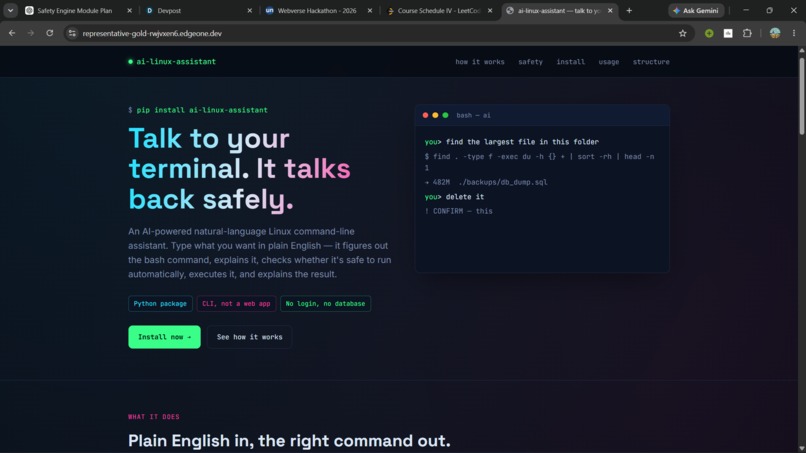
Guide Page -1
-
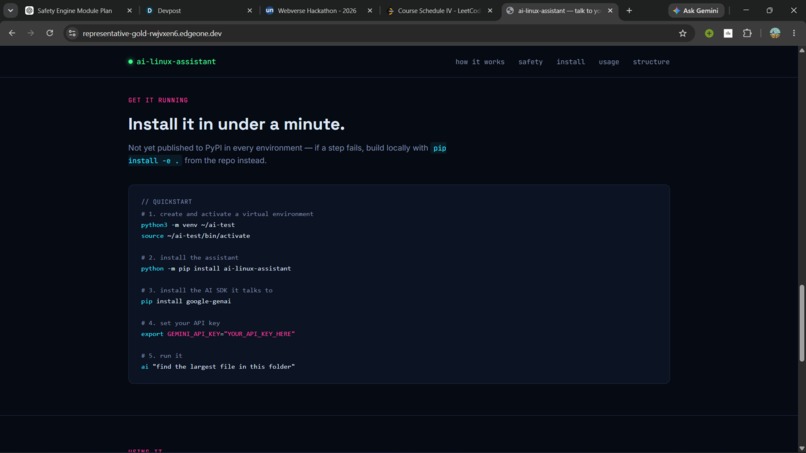
Guide page-2
-
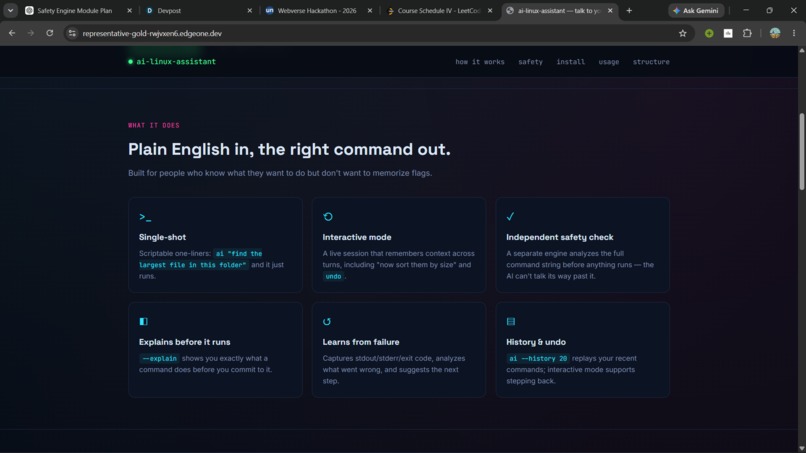
Guide page-3
-
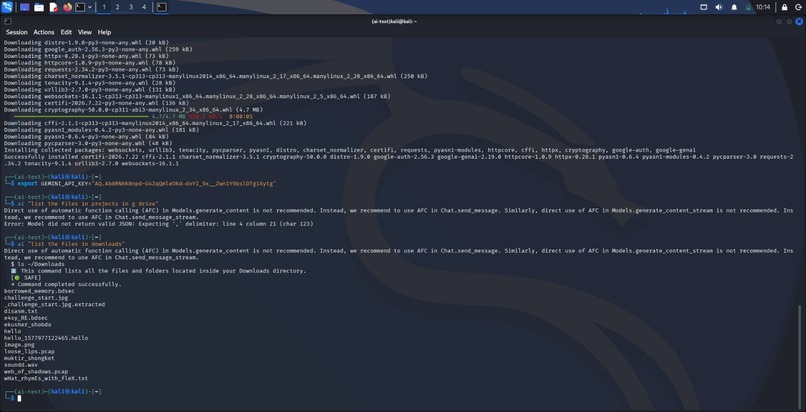
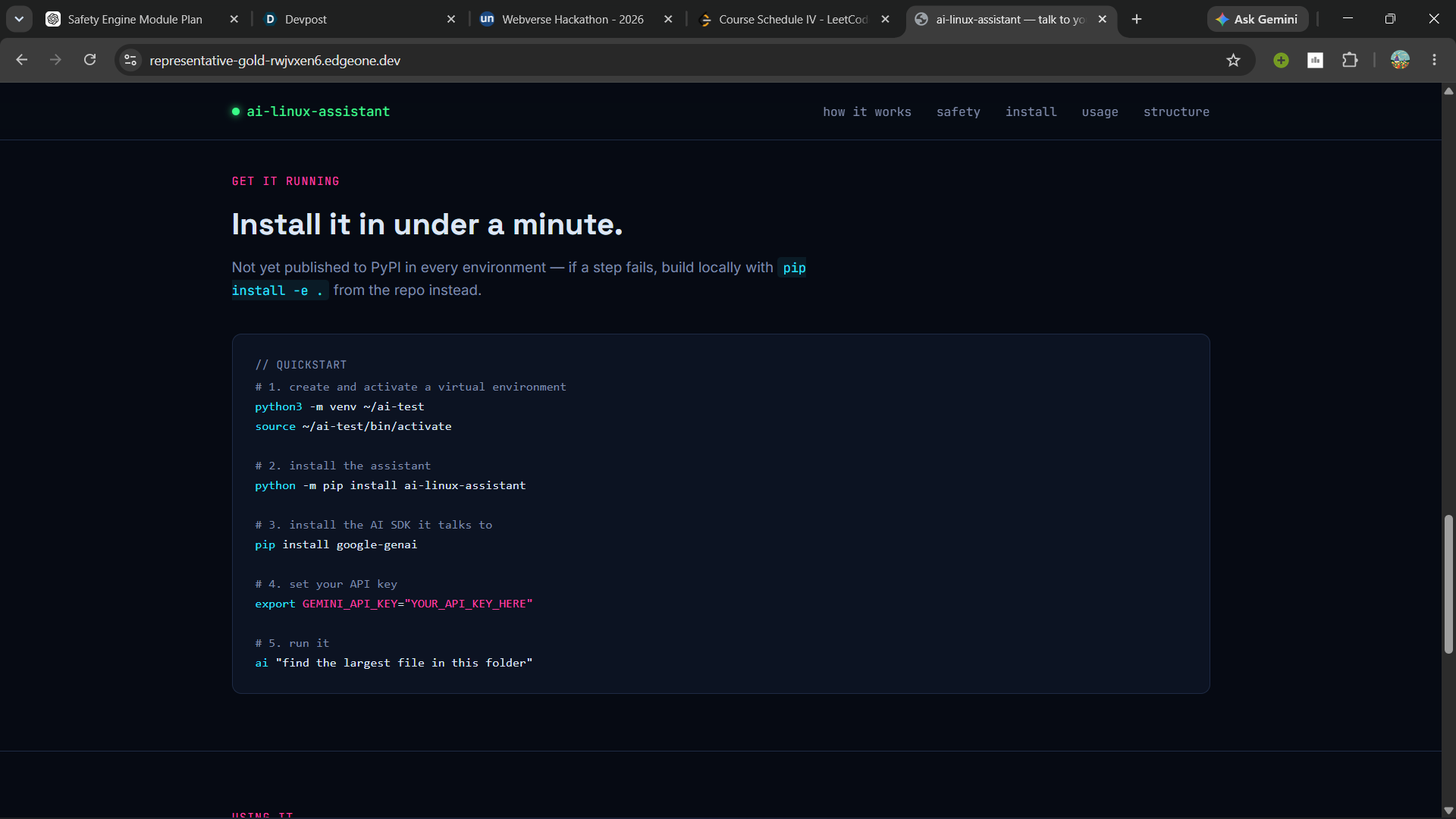
Package installation
-
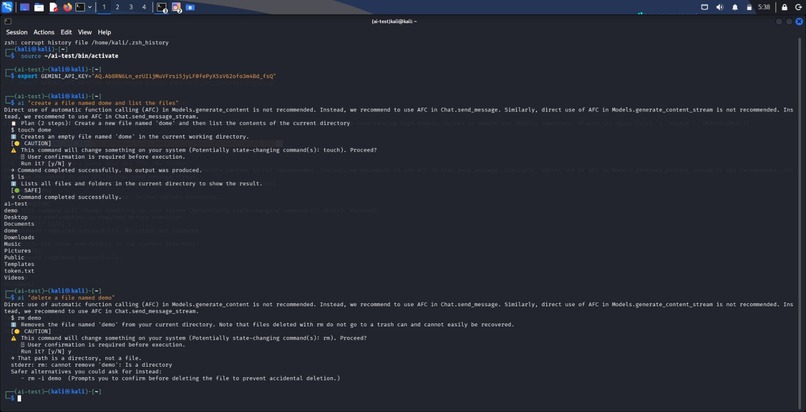
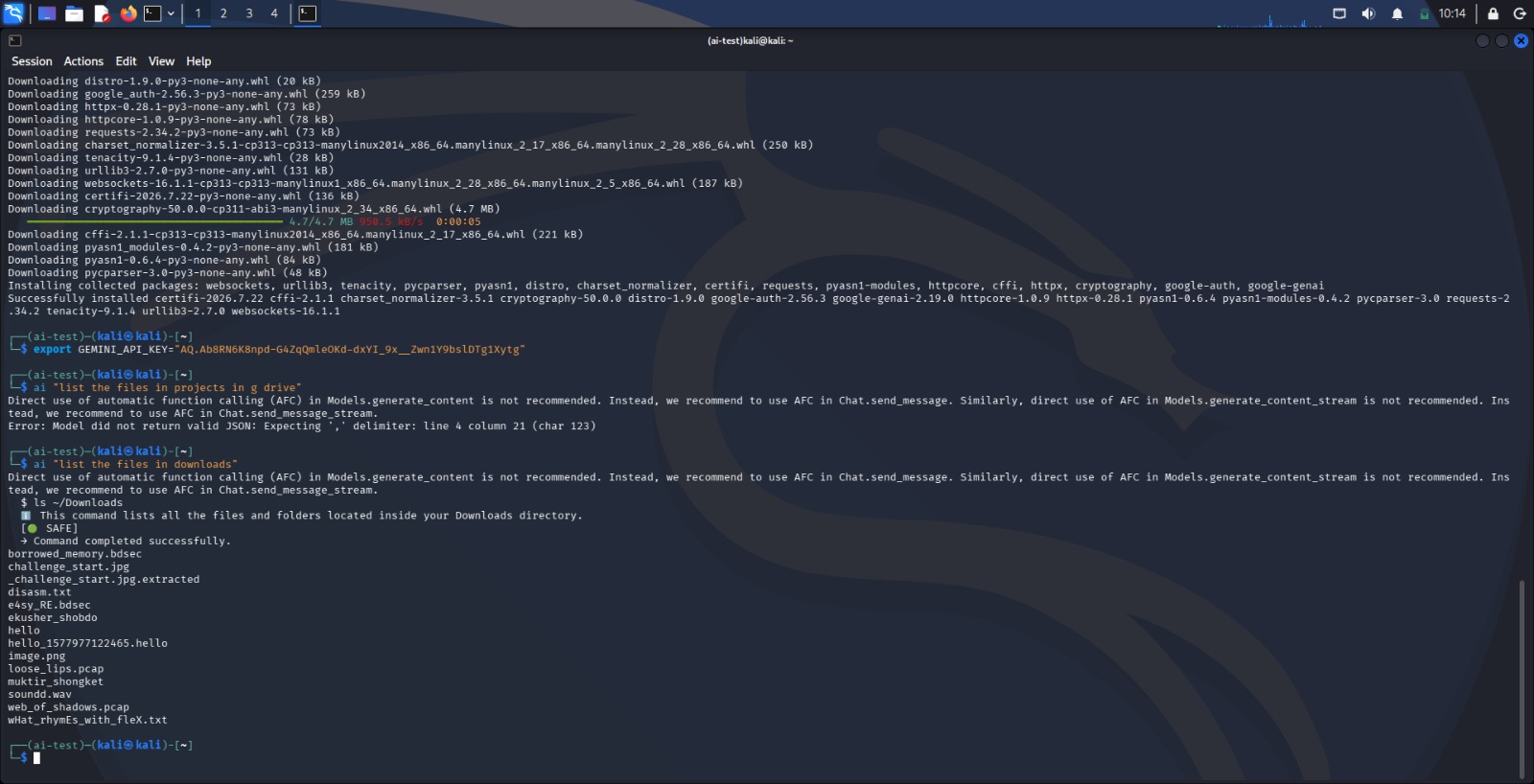
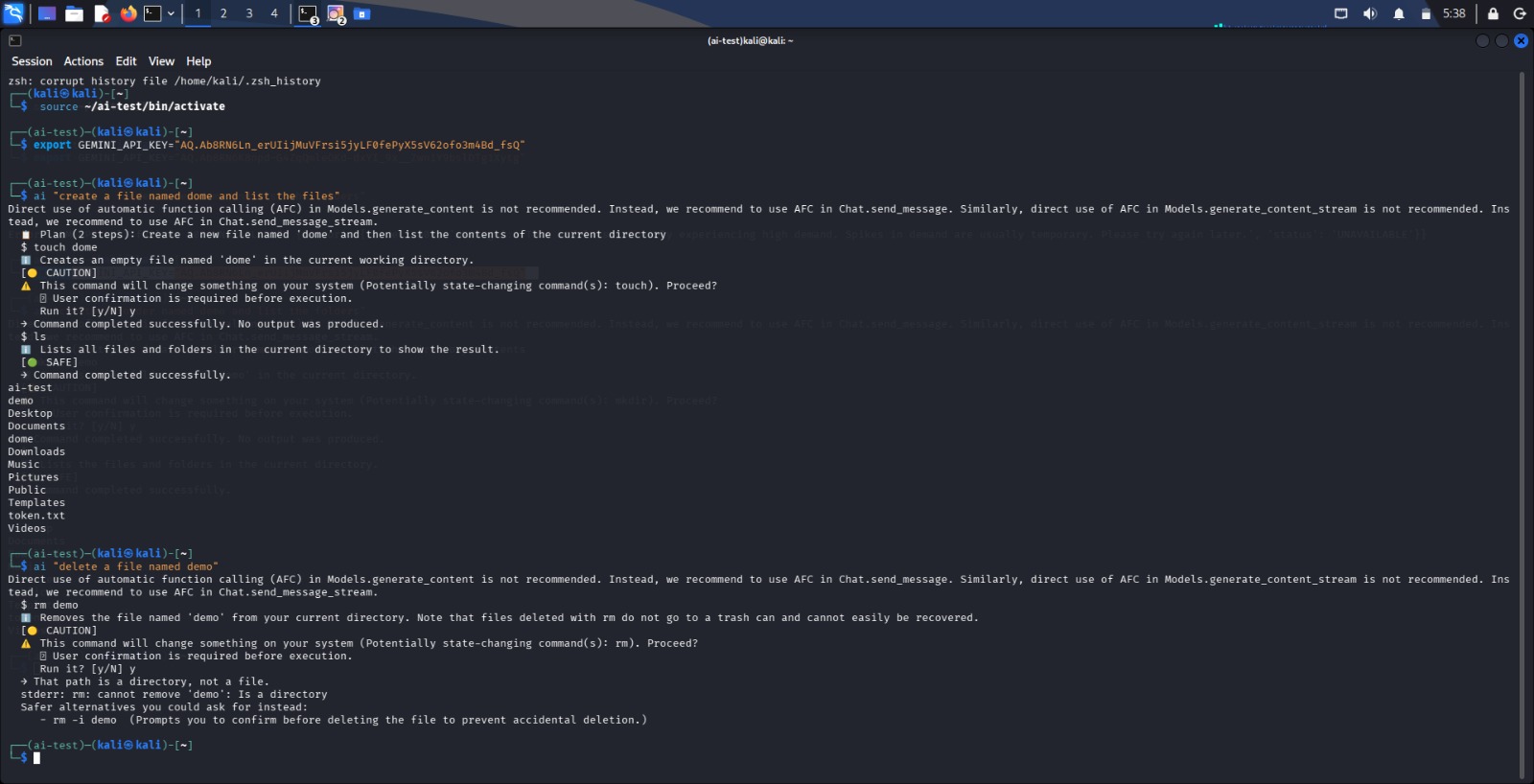
Multi command in one time
Inspiration
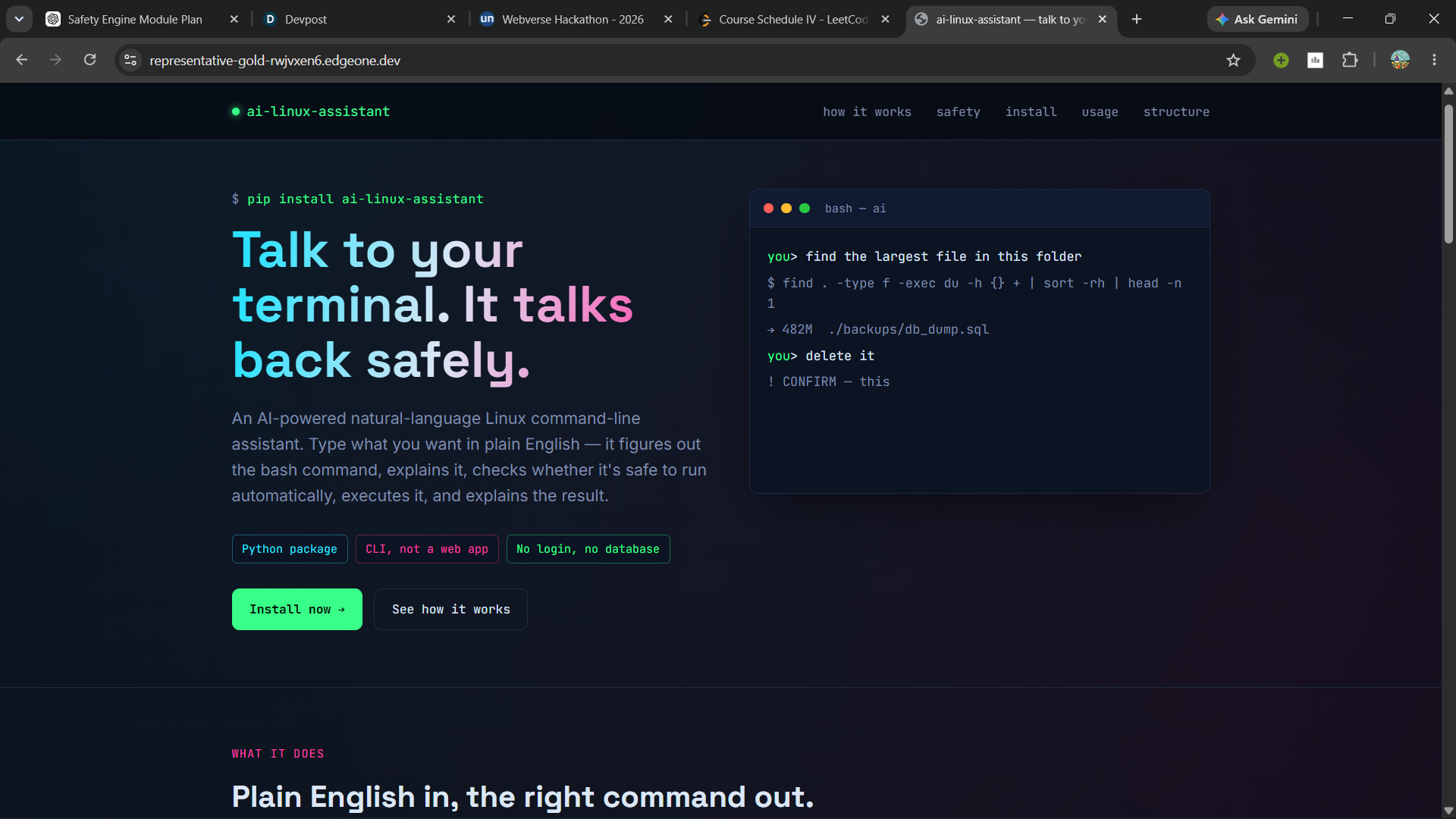
Linux is powerful, but its command-line interface can be intimidating for beginners. Users often need to memorize commands and understand complex syntax before they can perform simple tasks. We wanted to create a bridge between human language and Linux, allowing users to simply describe what they want while keeping command execution safe and controlled.
What it does
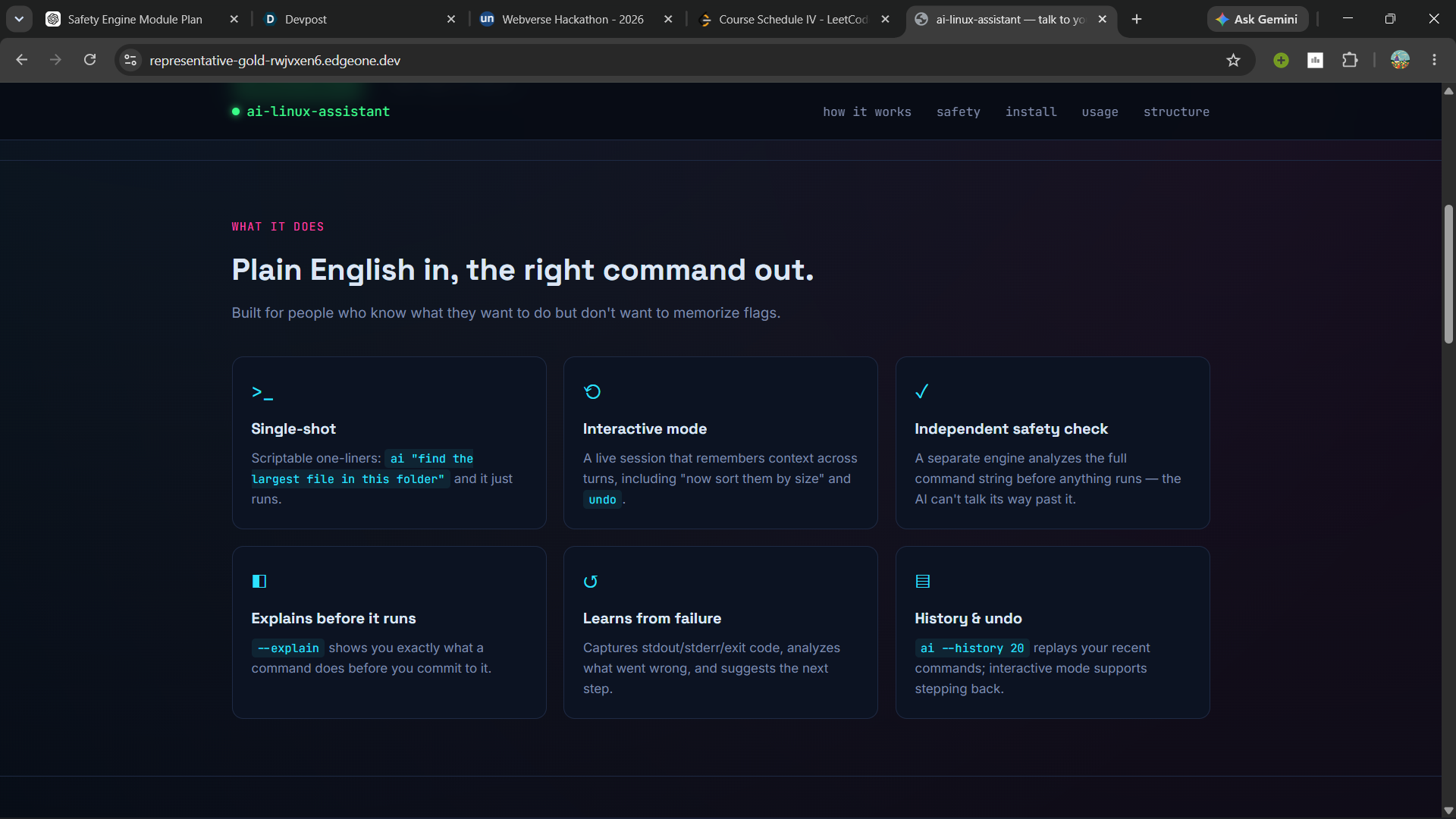
Bash-Mate is an AI-powered Linux Bash assistant that converts natural-language requests into Linux commands. It understands user intent, generates and explains commands, analyzes their safety, and controls execution. Read-only commands can run automatically, while commands that modify data or the system require user confirmation. Critical and dangerous commands are blocked.
How we built it
We built Bash-Mate as a modular Python package designed for Linux. The system uses the Google Gemini API for natural-language understanding and command generation. A custom Safety & Permission Engine independently analyzes generated commands before execution. Approved commands are executed through Bash, while outputs and errors are analyzed to provide useful feedback and suggestions. The project is structured for Python packaging and future PyPI distribution.
Challenges we ran into
Safely executing AI-generated shell commands without restricting the assistant to a small fixed command list. Distinguishing read-only operations from commands that modify files or system settings. Detecting risks in complex commands involving sudo, pipes, redirection, chaining, and command substitution. Integrating different modules developed independently by team members. Ensuring Linux/Bash compatibility while developing and testing in different environments.
Accomplishments that we're proud of
Built a working natural-language interface for Linux. Successfully integrated AI-powered command generation. Developed an independent safety layer with ALLOW, CONFIRM, and BLOCK decisions. Designed the system so read-only commands don't require unnecessary confirmation. Added beginner-friendly command explanations and result/error analysis. Created a modular architecture suitable for packaging and future PyPI distribution.
What we learned -
We learned that building an AI system that interacts directly with an operating system requires much more than generating correct commands. Security, validation, execution control, error handling, and user experience are equally important. We also learned the importance of clear module interfaces and independent validation when multiple developers work on the same system.
What's next
Bash-Mate-Improve command-risk analysis and protection against more complex shell attacks. Expand context awareness and multi-step task handling. Improve error diagnosis and intelligent suggestions. Add stronger dry-run and command-preview capabilities. Improve testing across different Linux distributions. Refine packaging and documentation for PyPI release. Continue improving the assistant's reliability, usability, and safety.

Log in or sign up for Devpost to join the conversation.