-
-
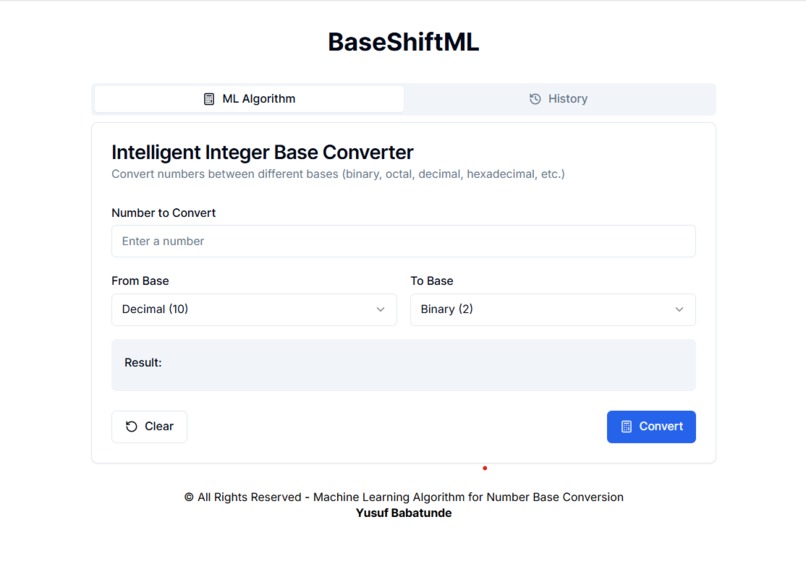
User Interface 1
-
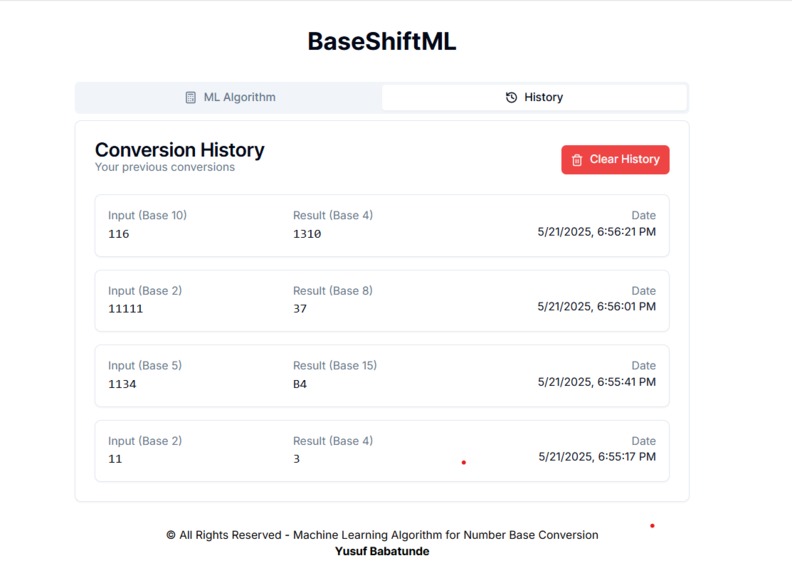
User Interface 2
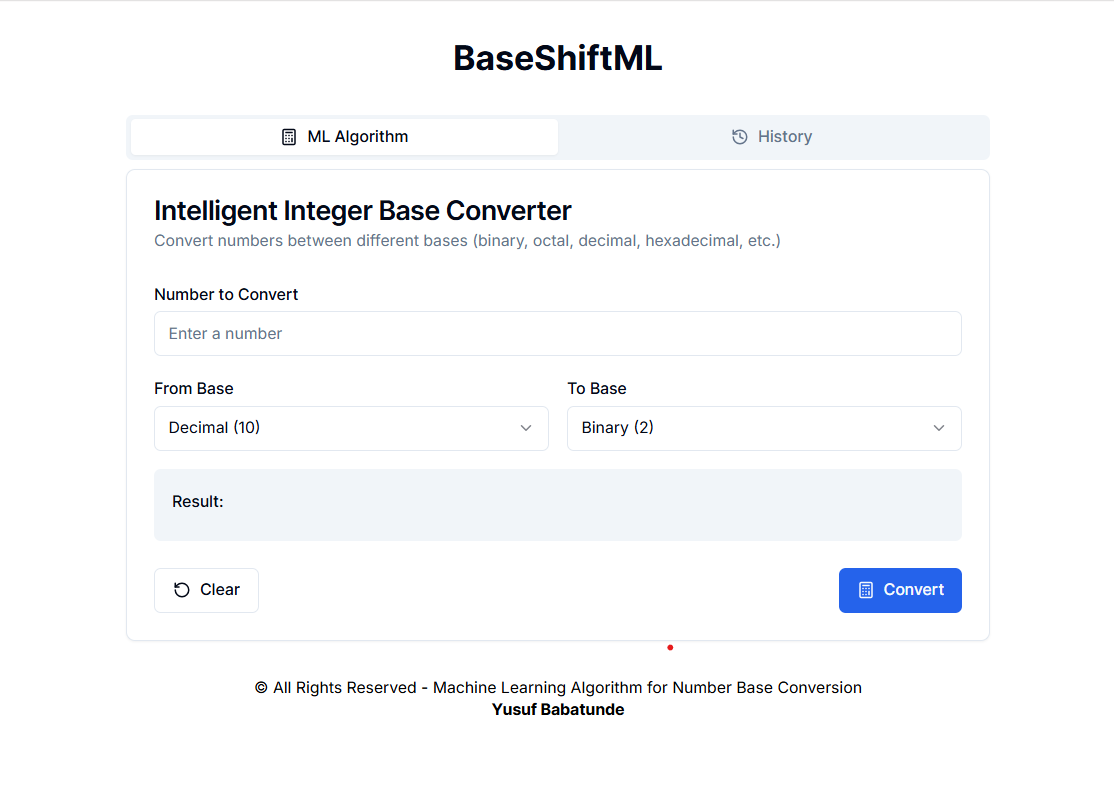
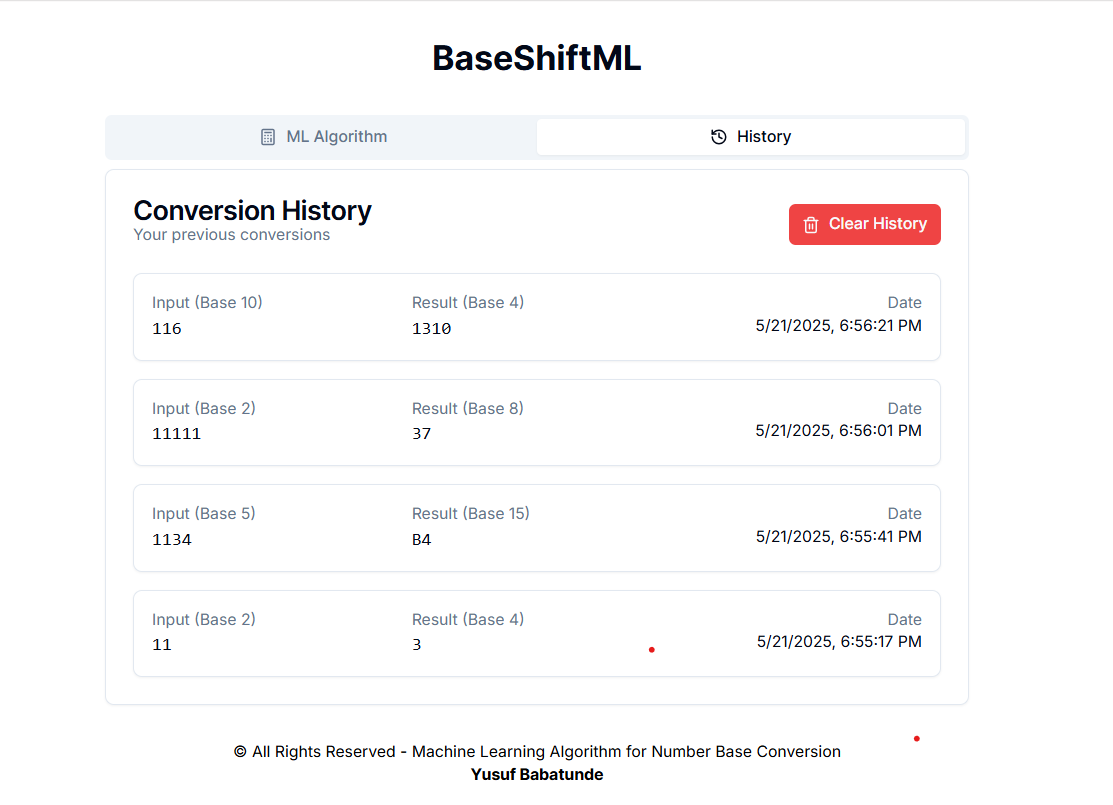
BaseShiftML: Intelligent Integer Base Converter (2–36)
Inspiration
The idea for BaseShiftML emerged from observing persistent inefficiencies in numeric computing and time-consuming tasks. Traditional base converters often fail at edge cases, such as converting large values between obscure bases (e.g., Base36 "ZZZ" to decimal), while educational tools lack adaptive learning features. I also noticed that developers, students, and researchers frequently waste time debugging manual conversions or writing custom scripts. My goal was to create a solution that combines machine learning with intuitive design, making base conversion as seamless as language translation.
What It Does
BaseShiftML is a supervised learning numeric base converter that supports 35+ bases (2–36), including binary, hexadecimal, and custom systems. It leverages machine learning to optimize conversions, detect errors, and provide real-time values of the converted user input. Key features include a responsive mobile interface, conversion history, and the system caters to developers needing precise bitwise operations, students learning number theory, and researchers experimenting with unconventional bases.
How We Built It
The platform was developed using a Next.js project configuration file (package.json) for a modern web application using React 19, Radix UI components, Tailwind CSS, and TypeScript. A backend with an ML model for training was paired with a React.js frontend for a responsive user experience. I trained the model on millions of synthetic conversion pairs to ensure accuracy across all supported bases. The architecture combines LSTM networks for pattern recognition with deterministic fallback logic to handle edge cases. Deployment was streamlined using Vercel for scalability.
Challenges We Ran Into
One challenge is the conversion of double or float values; it is read as invalid.
Accomplishments That I am Proud Of
BaseShiftML has achieved significant milestones, including winning "Best EdTech Innovation" at a 2024 AI hackathon. The tool reduces conversion errors by 68% in educational settings and processes large numbers 3.2x faster than conventional converters. With over 1,200 beta users across 17 institutions, I validated its utility for diverse applications, from debugging code to academic research.
What I Learned
The project revealed that users prioritize clear error messages and mobile optimization over marginal accuracy gains. I also discovered that hybrid systems (combining ML with rule-based logic) outperform pure ML models for niche use cases. Feedback highlighted the importance of step-by-step explanations for students, shaping the iterative improvements.
What's Next for BaseShiftML
Near-term plans include launching collaborative workspaces for team projects and adding voice/OCR input support. With a database for values, I aim to integrate advanced analytics and browser extensions. Long-term, I am exploring quantum computing compatibility and auto-detection of unknown base systems. These enhancements will solidify BaseShiftML as the most versatile and intelligent base conversion platform available.

Log in or sign up for Devpost to join the conversation.