Inspiration
I work in cross-border e-commerce and brand business, and before this project, I had almost no software development experience. While living and working in Thailand, I repeatedly noticed a social moment that happens at parties, bars, and group gatherings but is rarely designed for.
Most gatherings do not become lively the moment people arrive. After dinner, and before everyone fully relaxes into the atmosphere, there is often a social gap. People are already sitting together, but they may still be checking their phones, making fragmented small talk, or struggling to interact naturally because they have different personalities, do not know each other well, or speak different languages.
This problem is especially visible in Thailand, a multilingual and multicultural country where locals, expats, and travelers often meet in the same social setting. A single table may include people from different countries, with different languages, personalities, and social habits. First-time acquaintances, friends of friends, and more introverted participants often need a simple shared activity to help them connect.
The problem is not that people do not have phones or that games do not exist. What is missing is an interaction format designed for the real gathering environment—something that requires almost no learning, does not require everyone to download an app, is not dependent on one language, and allows the whole group to participate immediately.
BarPlay is designed for that social gap between people arriving together and actually starting to connect.
It did not begin with a technology or an AI feature. It began with a real-life observation. I first defined the social context, game mechanics, user experience, group interaction, multilingual requirements, and local cultural needs. Then I used Codex to gradually turn those ideas into a working multilingual product.
Social sharing is also a natural part of this experience. When people go out for dinner, parties, or nightlife, they already enjoy taking photos, recording videos, and posting moments on platforms such as TikTok and Instagram. BarPlay is therefore designed not only to help people break the ice offline, but also to turn game results, funny challenges, and shared moments into content that can be quickly generated and shared.
For users, this makes it easier to capture and share a memorable social moment. For the product, every shared result can become a natural distribution channel, creating organic exposure, friend invitations, and user growth without depending entirely on paid advertising.
This project showed me that AI does not replace the ability to discover real needs or understand human behavior. What it changes is the barrier to execution. It allows someone without a traditional software background, but with real-world insight and product judgment, to turn an observation into something people can actually use.
What it does
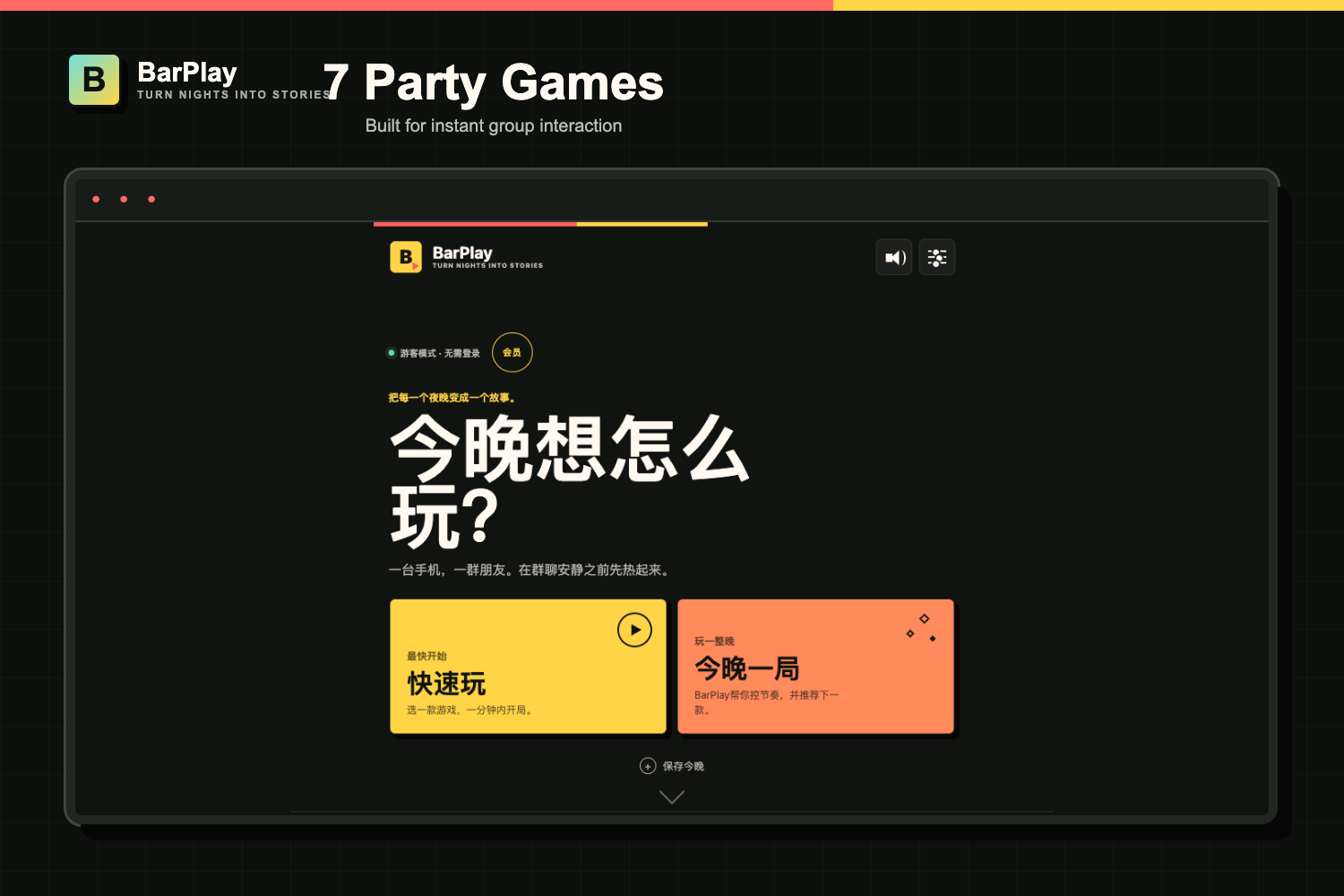
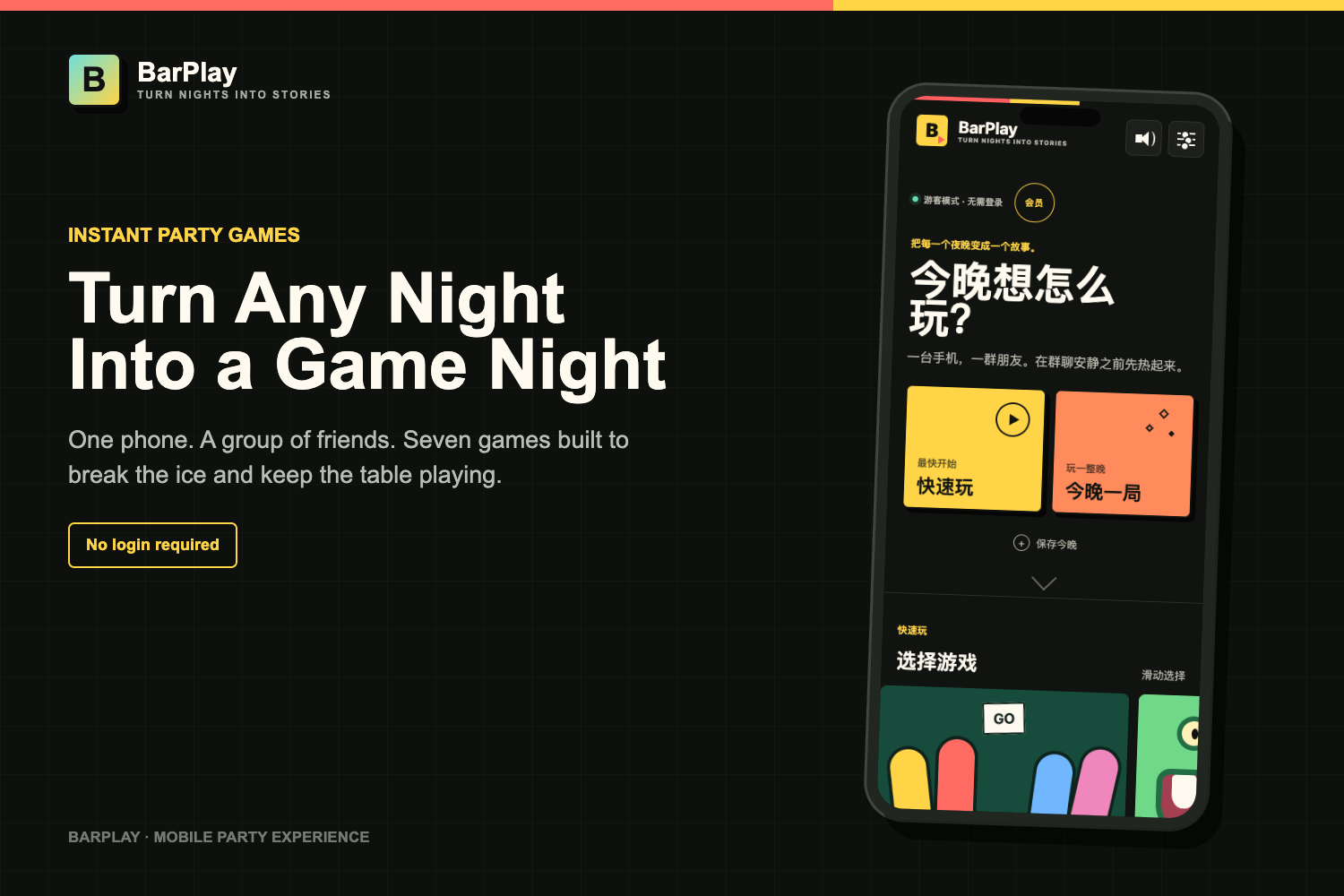
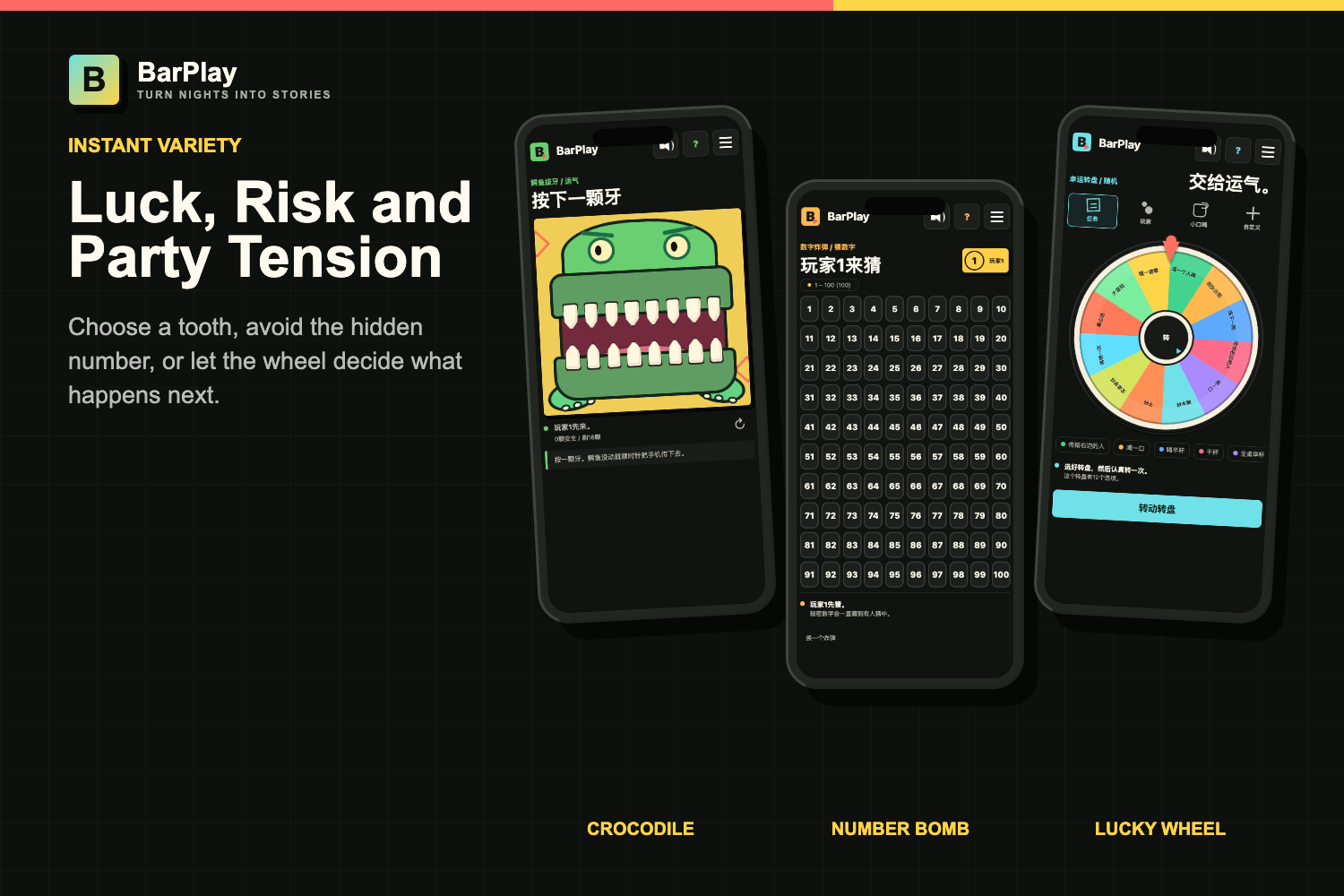
BarPlay is a digital party host designed for bars, nightlife venues, and real-world social gatherings.
Instead of simply offering party games, BarPlay helps people break the ice, organize group interaction, and create memorable experiences together.
It currently includes eight interactive games:
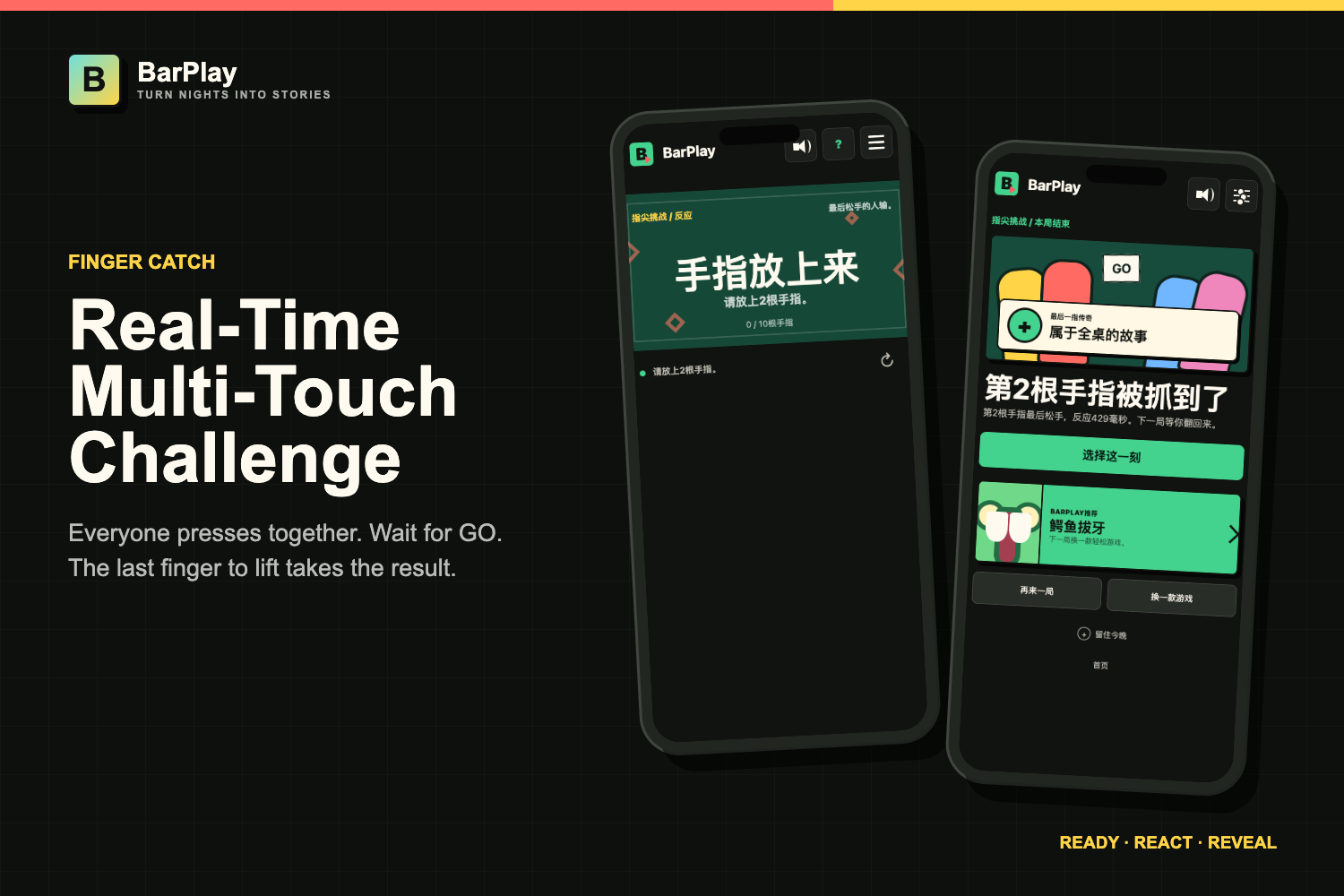
- Finger Catch
- Crocodile
- Number Bomb
- Lucky Wheel
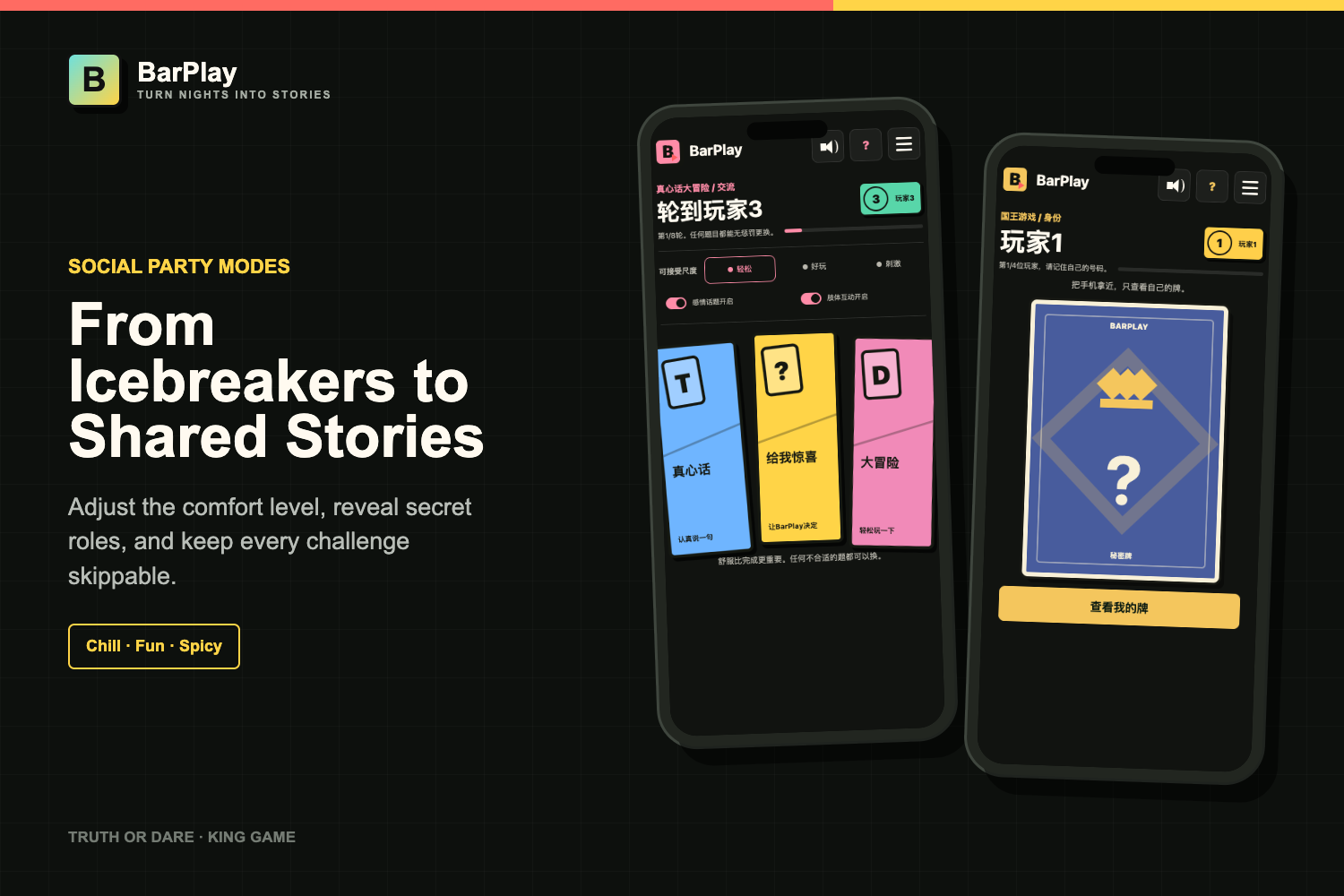
- Truth or Dare
- King Game
- Time Guess
- Reaction Challenge (including Classroom, Muay Thai, and Songkran modes)
Beyond the games, BarPlay also includes:
- Personal achievements
- Team records
- Party recap cards
- Funny Forfeit Notes
- Photo and video memories
- Full-screen danmaku display
- Strobe effects
- Random player selection
The product supports English, Chinese, and Thai, allowing users to switch languages instantly. It also supports both drinking and non-drinking modes, and players can start immediately without downloading an app or creating an account.
How I built it
BarPlay was developed with AI-assisted workflows throughout the entire product journey.
AI helped me brainstorm ideas, design game mechanics, improve the user experience, generate multilingual content, debug code, test features, and iterate much faster as a solo founder.
The application itself was built using HTML, CSS, Vanilla JavaScript, ES Modules, Vite, and localStorage.
I intentionally kept the architecture lightweight so the product loads quickly, remains inexpensive to operate, and can be easily deployed as a LINE Mini App.
The games share a common state and action structure, while multilingual localization keeps the experience consistent across English, Chinese, and Thai.
Challenges I faced
The biggest challenge was not simply building more games, but making every game feel like a real social experience instead of feeling like a random generator.
Multi-touch interactions, mobile browser compatibility, timing accuracy, animation feedback, multilingual layouts, and state recovery all required continuous iteration.
Localization was another major challenge.
Party culture is different in every country. Content designed for one market cannot simply be translated into another. Questions, punishments, and social interactions all needed to respect Thai culture, personal boundaries, and different drinking preferences.
Finding the right balance between fun, inclusiveness, and cultural relevance became one of the most rewarding parts of the project.
What I learned
I learned that a successful party product isn't about adding more features.
It's about creating the right rhythm for people to interact naturally.
The most important parts are:
- letting users start playing within seconds
- making the rules simple and intuitive
- creating anticipation before every result
- giving clear and satisfying feedback
- helping the group move naturally into the next round
- making every gathering easy to remember and easy to share
I also learned how valuable AI can be for a solo founder.
AI became much more than a coding assistant. It helped organize ideas, review product decisions, accelerate development, maintain project consistency, and dramatically shorten the journey from concept to a working product.
What's next
The next step is to bring BarPlay into real bars and social venues across Thailand for user testing and continuous iteration.
I plan to improve multi-touch performance, complete the LINE Mini App experience, expand Thai-localized content, introduce richer party memories, intelligent recommendations, and one-click sharing to platforms such as TikTok, Instagram, and Facebook through automatically generated highlight videos and recap content.
The long-term vision is not simply to build more party games.
It is to build a digital party host that helps people break the ice, interact naturally, laugh together, and create unforgettable memories in the real world.
Technology shouldn't replace human interaction. It should make human interaction easier to begin.
Built With
- ai
- audio
- chatgpt
- codex
- css3
- es-modules
- html5
- i18n
- javascript
- liff
- line
- localstorage
- mini-app
- mobile
- multilingual
- openai
- vite
- web


Log in or sign up for Devpost to join the conversation.